Summer is on so let's go back in time for this week's post. Let's travel back to rediscover that nebulous time between the week and the weekend that has been muddied over the decades: Friday Night. More than anything, I want to touch on what it was and why it mattered more than the nostalgia that remains around it.
First, watch the video above to get a handle on what exactly we're talking about. It's not an easily definable thing we're going to be talking about from here on in.
You might think that Friday night is still a big deal these days, but it isn't to the same extent it once was. This is for multiple reasons. "Friday Night" was a cultural institution when everyone had more or less the same work and school week, with the same promise that weekends would be for you and those around you and no one else. It was your time. This is what made Friday Night such a powerful force. Everyone was off at the same time, with the same options, and in the same communities, and that knowing shift is what drove a lot of what made it all so enchanting.
Work exists for leisure, not the other way around, which means that leisure has to be more meaningful than work. Therefore, once the weekend actually comes, it is anyone's guess as to what happens next. It's a whole other world divorced from the long week being left behind. The actual activities on the weekend itself don't matter as much is the reality that it's time for you and yours, and the world comes in distant second. But that's the weekend: not what lays between it and what was left behind.
Friday Night, however? That's where the magic is.
Friday is a lot of people's favorite day of the week because of more what it symbolizes than what might actually occur during it. A Friday symbolizes a coming break from work and a retreat into leisure. Nights are already seen as the leisure time (it is when most people sleep, after all), but when you add in the weekend ahead and (usually) the lack of no big plans ahead, it makes Friday Night a time of endless possibilities. You can do anything, and anything can happen.
It isn't so much what you do, but the knowledge that you can do it. This is your true reward for getting through the week, and it is what made the work truly worth getting through. Friday Night represents real freedom, the kind we tend to get less of these days regardless of your age or station in life. Everyone had the same shared experience, which is what made it all the better. you could also meet anyone, and you were all on the same equal ground and in the same mindset.
No one really says this anymore.
I try to be careful with these subjects on here, mostly because it is easy to fall into the nostalgia trap of thinking old things were better simply because they were old. It's what I and many others my age did when we were young, but I think at this point the conversation has moved beyond nostalgia arguments when industries are collapsing and the online space is rotting away at faster and faster speeds. We're trying to find that place we lost before we lose the chance to rediscover it for good. What people are looking for is that intangible space between the past and the present, the spot that we can't seem to find, and put something down there to begin building on.
A sort of new monoculture? Who can say, but it's something we know we lost and something we know we need to regain.
Nostalgia isn't really an argument anymore as much as it is now a Brand like everything else, and you already realize that, as does everyone else. You don't actually want the 1980s or the 1990s or even the 2000s back. You want that cohesiveness and sense of belonging and wider societal purpose they had in spades compared to now. You want to be able to go out and find things with other people as curious as you are: someone to connect with and something to find. The loneliness epidemic is not just for single males, after all. It effects everyone living in a world where fragmentation through consumption is the end goal. This world is the end state of striving for perfect individuality, after all. The perfect individual is alone.
But perfection isn't possible. Convenience doesn't necessarily make things better, either. Those were things taken for granted back then, and now we can't even entertain going back to it again. However, the Friday Night experience we all want and desire, is not possible in a world of easy convenience. It requires being able to go out and find people who think, act, and believe, at least a little like you do: a cohesive communal experience where anything can happen. That is a big part of the magic.
That requires risk, but it requires risk of a different sort: where putting yourself out there doesn't result in an internet video from someone who thinks so little about their neighbors that they will toss them to the sharks and be rewarded by those around them for doing so. It requires a world where you can talk about the same things with people you barely know and find yourself at least a little better off for it. You can't do that if your neighbor has nothing in common with you and has no desire to even try to connect. It's a two way street, and that isn't where we currently are now.
Perhaps this is why the past is currently looked at with more curious eyes beyond the nostalgia, and why Zoomers and younger are hungry for it despite having no memories of that era. We all know the way things are isn't sustainable and is not ideal, but we don't know how to retain what we lost without pretending the clock is a different time than it is.
The point is that making everything more convenient hasn't really made anything better. Yes, we still get good books, video games, and music, but we were already getting those before. What it hasn't done is made our quality of living better as a whole. Life itself hasn't benefited from these changes, which is how a nebulous feeling like Friday Night became a pale shadow of what it once was. Yes, you can go out somewhere, but Everyone won't be there which means Anything can't happen. The magic is no longer there, just as the majority no longer is.
It's gone, but the hunger for it remains.
And that's what we need to get back.
So the next time Friday Night rolls around, think twice about what it really means, and what makes it truly so special. Perhaps if we try to reclaim that feeling, we can come that little be closer to reclaiming that certain undefinable quality we can't seem to nail down. It can't hurt. In fact, it'll only bring us closer, in the end. What else can be better?
Been a crazy February, and March isn't looking to slow down. Here's hoping the weather does, at the very least. I'm still working slowly on various projects and dealing with some annoying real life things, but I'm also still thinking about topics to discuss with you all.
And today's is a good one, so let's get right to it.
Recently, one of the topics that has been running through my head (to the point it became a topic on my podcast), is the subject of Edutainment. It's more about how the definition of Edutainment has stayed the same over the years, but its perception since I was a kid has changed, and not for the better. What was once seen as a joke is now taken seriously, and it has made entertainment and art as a whole considerably worse and less inspiring. I don't think anyone can deny this with a straight face: Edutainment is lame, but now we insist it's not..
The reason for this change is still quite unclear to me, though it's undeniable that a shift exists, at least with those around my age and slightly younger. At some point we came under the delusion that Edutainment was not only extremely effective (it isn't), but it's also worth defending and reshaping entertainment around (it's not).
But there is no reason for this silly belief. Edutainment is a perversion of both entertainment and education, taking the worst parts of both without offering anything in return to make up for its deficiencies. An invention of the 20th century in an attempt to subvert the mass media landscape, all Edutainment has ever done is fail and leave no mark on the minds of its viewers beyond mockery and a neutering of both Entertainment and Education. It just doesn't work.
The reason for this is because both Entertainment and Education exist to do different things, and cannot be crossed over with the other in a satisfying way. Of course this does not mean you cannot be entertained while learning or learn something from entertainment, but that those are secondary to the primary reason said things exist in the first place. You can't prioritize both. It's simply impossible.
Entertainment exists to entertain, it is primarily for leisure. It is meant to allow the audience to relax and unwind, to allow the audience to rest in the place they have chosen to lay their head down. Art exists to allow the patron to appreciate a slice of reality from an angle they might not have expected. There is a sense of trust between the artist, the art, and patron, that involves both understanding and like-mindedness. They all come together to connect for a wider purpose for everyone involved.
No one engages in art and entertainment to be educated: they come to be enlightened. There is a very subtle, but important, difference here. Enlightening means to be shown a world apart and yet close to the one we live in and seeing a new side of it. It does not mean teaching or lecturing the audience about a specific subject. This difference is not as appreciated these days, but it's still reality, and one of the reasons the audience trusts the mainstream industry less and less.
We have lost the original point of what we're doing.
Education, on the other hand, exists to instruct and teach. It requires a very specific type of relationship between the two parties, one above the other. This cannot be an equal relationship where one gives and one takes: it involves one side deliberately speaking down to another party in order to educate them on the subject the student agreed on in order to be there in the first place. This is why so many kids don't learn much in school: they not only didn't agree to this relationship, they also aren't looking to learn in the first place. Education only works when the relationship is agreed upon and the student and instructor are engaged and on the same page. It cannot work otherwise.
This is the opposite of how art and entertainment works. One is done on even ground, the other is not. It's a fundamental difference which precludes any sort of mashup from working, and they clearly do not from any example we have seen over the past decade especially.
Edutainment dilutes entertainment by making its focus on that unequal partnership with the audience. It also dilutes education by masking it in a fog of entertainment and blunting any point that is supposed to have been gotten across through learning. In essence you're getting entertainment without the wonder and mystery, and you're getting education without the focus and clearcut language and relationship between a student and teacher. You are getting the worst version of both at the same time.
And everybody knows this.
This is why obvious propaganda like Captain Planet was a punchline among all the kids when it came out. Everyone knew what it was and it was terrible at doing what it wanted to do. The lessons were unsubtle and not very clever, and the entertainment value was stunted so that those kids wouldn't get the wrong impression of violence or adventure as anything but controlled and neutered. Neither of these approaches satiate childhood wonder.
It was much like how Peggy Charren and her ACT group forced educational content into kids shows and was never not a punchline in the schoolyard. Remember the GI Joe lessons at the end of episodes? The ones that had nothing to do with the show and were crammed in? That was because of her and her ilk. If you don't remember that then there is also the Sonic Sez segments in the Sonic cartoon which had marvelous lessons such as "Don't climb into the dryer" which is as ridiculous as it sounds. You can also find them on YouTube with a comment section filled with people laughing at them, some of which weren't even around when said shows aired.
This is how you know they failed at what they were doing.
All this aside, an other issue is that this lame moralizing occurs while at the same time executives and parent groups keep dictating what sorts of "lessons" shows should be taught to the kids, thereby affecting the creation of these series from people that had nothing to do with their creation. Again, all this was supposedly for kids but no kids liked them and they were always treated as lame punching bags, which is how they stayed for decades.
But recently that changed as the people now in charge of the entertainment industry have decided they want to lecture the customers in everything, because they see themselves as above those they are supposed to entertain. It doesn't matter what gets put out, if it has the correct message then it is considered a net good and anyone against what they are doing, for whatever reason, must be a Bad Person. There is simply no other explanation for this madness. This would be like if those parent councils browbeat all the kids back in the day who made fun of Captain Planet for being lame: Who cares if it's lame, it's right!
The thing is, it actually doesn't matter if it's right or not: it has failed as entertainment. It has focused on the lecturing first and left the entertainment a distant second in consideration, and the audience can tell. This approach is a dead end, and it's why no one in charge of these industries can produce anything of value that connects with a wider audience anymore. They can't do this because their priorities are backwards and they have no intention of being humble and realizing that.
This doesn't mean you can't "say something" in art and entertainment. It's more that what you say is meant to be baked in to the piece you're creating. The themes and meaning come from the story the artist has to tell. It comes from the music, the art, the creation, itself. This is how you sometimes get interpretations of pieces not originally intended by the creator. It isn't because either party is wrong but because they see reality from different angles and are able to come together over the piece and find new wrinkles in it together. Regardless, it is impossible to create art without meaning, but it is possible to miss the meaning in the creation process. This is because the primary importance is in the creation: not the intended meanings.
Another way to put it is that education is about learning what you can and can't do when learning about a subject; entertainment is about seeing all the subject has to offer. They are entirely different approaches that cannot mix together.
Edutainment is one of the worst and most embarrassing failures of the 20th century and it is one that has no business carrying over in the 21st. No one learns anything from it, and no one is entertained by it, and yet we pretend it is successful when both the least imaginative and most didactic people are the ones who push for it, thereby proving its failure right out of the gate. If this is the kind of people edutainment produces then it's clearly well past its expiration date.
Instead, let's strive to improve both the dismal state of modern education and create a new ecosystem for art and entertainment. They both need it instead of us constantly hiding behind a failed mutation that has no place in today's climate.
And maybe we can finally leave the failures of the past behind us. We can finally have those better ways we were promised long ago. We're well past due for a new golden age of art and entertainment. Let's make it, together!
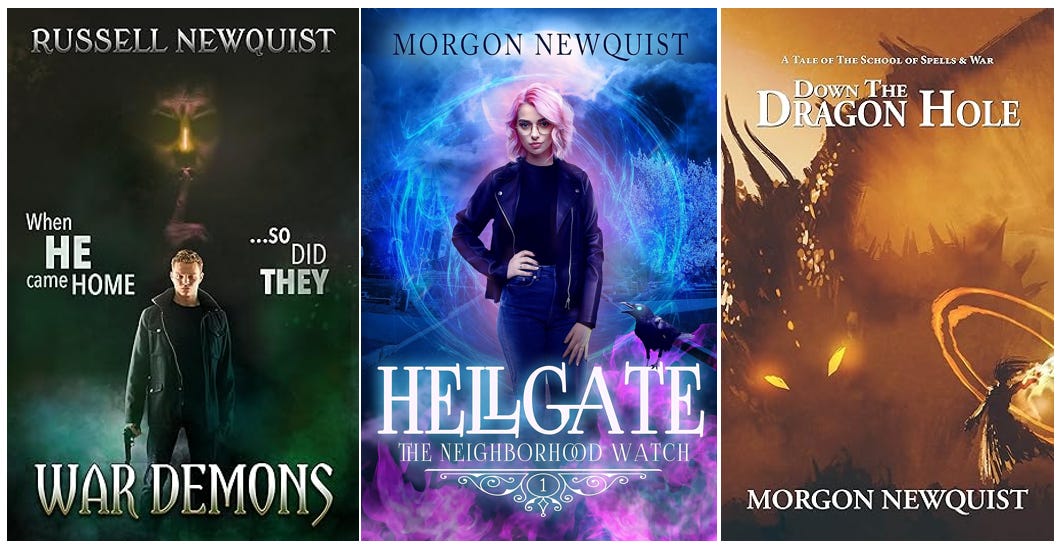
Russell and Morgan Newquist have long been active members in the Based Book community. Through running Silver Empire press, and through their own novels, they set an example for us all how to create and promote Based Books.
Now, their daughter, Sera, is suffering from serious cardiac problems, and Russell and Morgon have had to travel hours away from home to ensure that Sera gets the care she needs.
They will need to be at a downtown hotel within walking distance of the hospital, and that can get pricey. Plus all the other expenses that come with a crisis of this magnitude. Let’s help them out
Russell and Morgon have made it clear that any money not used directly for the expenses of this event will be donated to the Children’s Hospital of Alabama because they treat everyone regardless of ability to pay.
You may donate directly via GoFundMe, and consider also picking up one of their excellent books.
Driven by vengeance, Michael Alexander enlisted in the Army the day after 9/11. Five years later, disillusioned and broken by the horrors he witnessed in Afghanistan, Michael returns home to Georgia seeking to begin a new life. But he didn’t come alone. Something evil followed him, and it’s leaving a path of destruction in its wake.
The police are powerless. The Army has written Michael off. Left to face down a malevolent creature first encountered in the mountains of Afghanistan, he’ll rely on his training, a homeless prophet, and estranged family members from a love lost...
But none of them expected the dragon.
Jim Butcher’s Harry Dresden collides with Larry Correia’s Monster Hunter International in this supernatural thriller that goes straight to Hell!
Emilia King has made an art of bad choices. Just ask her mother, she’ll tell you every single thing she’s done wrong for years.
When her latest bad choice changes the locks to their apartment and leaves all her stuff on the doorstep, Emilia can’t bear to hear “I told you so” one more time. So she moves in with her grandfather. Then she can have some space to figure out who…and what she wants to be, without her mother breathing down her neck.
What she finds there is anything but peace. Her grandfather battles invisible creatures in the dark. Neighbors torn apart by wild beasts.
Not to mention the moody, gorgeous man across the street with the motorcycle. The kind of man that’s her kryponite.
But when her grandfather falls ill, his position of head of the Neighborhood Watch falls to her. And in this neighborhood, it’s more than measuring grass height or catching petty thefts.
Alis was a quiet librarian at the campus library of the School of Spells & Magic - that is, until the sword wielding buffoon Cahan had the audacity to battle a dragon in her library! Now she's following him off on some foolhardy adventure. As they try to save the university from the mysterious Formless, she fights an equally important battle - to maintain her self respect!
The School of Spells & War is an ongoing collection of old fashioned sword-and-sorcery adventure stories following a wizard and warrior duo as they galavant across the continent of Thillon. Good-humored, powerful warrior Cahan and intelligent, skilled wizard Alis work together to serve their university, the school of spells and war, by battling dragons, investigating plots against the king, hunting witches, and dealing with the ongoing threat of the ancient and mysterious Formless.
Here’s to a speedy and successful recovery for Sera, and thank you all for being part of the Based Book community.
I hope you're doing well. It's getting cold fast around here, and boy am I tired of the weather already. It's only December too! We still got a whole season ahead of us.
Not much of a post this week with the holidays swinging around soon, but I wanted to put this one out regardless. Given that books are ostensibly the main subject of the blog, or at least very adjacent to it, I wanted to take them on in today's post. It's also been a fairly consistent topic in a lot of circles recently, so it's probably time to focus at least a little on them.
What makes reading so important? You've almost certainly heard it was at some stage in your life, and it's almost just as certain that whatever reason you were given chased you away from reading instead of towards it. Why is that? We should consider that.
We have a lot of questions to ask before we can get answers.
Why you should read classics? What even is a classic? Do they exist? Why do they matter? All of these are important queries to ponder, though they are rarely asked even by those in charge. These are valuable questions that don't tend to get answered these days, or if they do they tend to be stock unsatisfying ones that have led to the current widespread literacy problems we've been suffering since the end of the 20th century.
I've made plenty of jokes about how when I grew up the Boomers in charge made reading seem very unappealing or lame, epitomized in the infamous "Chicken Lover" episode of South Park with the bookmobile guy. If you're old enough, you remember that stereotype he embodied. That joke character is the exact stereotype that turned reading from a hobby into being a social issue and punchline, and one that made it lacking in all excitement and masculinity. This is the key reason males of my generation and younger drifted away from the medium.
Of course it didn't start there: Golden Age Siffy Fandom hated masculinity, as you can see reading literally any article on the subject from the time, but it was a logical conclusion to make. The "Chicken Lover" character is no different from the pencil neck degenerate who hated Edgar Rice Burroughs and seethed over Ray Bradbury getting attention for writing the wrong stories. In fat, they are basically the same character.
The parting with masculinity and males was a long time coming, and even when the industry had a lifeline with books like Goosebumps or Harry Potter that actually did appeal to males, the publishers went out of their way to shake that potential base as soon as they could. In the process, the audience has fled and to this day has no interest in coming back. As a result, OldPub has labeled itself as anti-male, in that males deliberately keep their distance from it. You can argue with the verbiage or their intentions if you want, but it is clear that they did it to themselves by choice.
That aside, reading has been dying for a good while. Something must be done to stop the hemorrhaging. However, that is only half the problem.
The other side of it is the question of how we bring people back to reading? That is what we must ponder. It's not a simple task and it requires a lot of work to answer. One thing that won't work, however, is finger wagging and making mandatory book lists of the sort that chased the wider masses out in the first place. The primary goal should be to make reading exciting and engaging, and that means finding and highlighting exciting and engaging books that do more than check boxes. In NewPub, there is no shortage of work being published that does this. The issue is more in finding it in the typhoon of books out there. In OldPub, the problem is backwards: there is much uninteresting material being pumped out, and it is extremely easy to find. Getting that straightened out should help the confusion and help the space grow.
The above video on learning what a classic book actually is and what it should entail is a good way to understand how to read in a world where reading is frowned upon. Well, unless we are discussing fanfic (and that will be for a future post), and the like. The fact is that there are a lot of reasons to read, and the classics can give you all of them at once. This is why they are classics and why they should be seen as the goal of the medium, something to aspire to beyond the bare minimum.
Unfortunately, the way they've been taught has not only damaged their reputation, but also the process of reading altogether. And what this hatred of reading has lead to a society that simply can't and doesn't want to read or process entire segments of knowledge that were once common not that long ago. This bad way of teaching is responsible for the destruction currently plaguing not only the entirety of the arts and entertainment sectors, but all of society itself.
As can be seen here:
This wider problem is not improving, and it will not until true value is placed on literacy again. This is because it turns out that reading is important, but not for lame and embarrassing Baby Boomer reasons like "magic" or "imagination" (though you don't hear those hoary tropes anymore, as if they meant nothing to those in charge to begin with), but because it is actually important to form us as people and a society. Literacy is a non-negotiable, as we're quickly rediscovering.
Reading is important to process the world around and above us, the universe inside and outside, the long gone past and the upcoming future, and each other. If we cannot do that anymore, then we are destined to implode inside ourselves. The world we inherited will lose everything we were supposed to carry on and leave us barren. If that happens, then all of this we have gained from our ancestors will have been for nothing. We're already losing important parts of ourselves for no good reason, and at this rate the next generations having nothing to start with will only make it more difficult for them to build on anything or succeed.
Current ways are simply not working.
Of course none of it is hopeless, but the amount of time being wasted clinging to dead industries and mechanisms that no longer (and probably never did) work, is holding up any real change in a direction we need. Instead we linger in talks about endless IPs, meaningless trope checklists, and how to wring more money out of dwindling audiences. None of these address the issue, and we all know it, but for whatever reason the conversation keeps circling around to them over and over.
True change starts from the bottom up. The base is what has to be build upon. Why is this hobby, this art, and this medium, important in the first place? What makes it so valuable, and why do we need to treat it more seriously? Why does all of this matter in the first place? We need to figure that out before we lose even more of our reason to create at all.
We're ready now. It's no longer the '90s and cynicism and overbearing sarcasm is finally dying, as is the irony poisoned sincerity that was big in the '00s. We have a path forward out of this pit at the bottom of this endless cycle we have been trapped in for so long.
I don't know about you, but the sudden winter weather has been quite the pain to deal with. Was hoping for things to ease in a little more, however it doesn't seem like it's going to let up. We're just going straight into cold weather, it seems. What a pain.
That aside, let's get to it.
Today's topic is less about the contents of the above video in question (though not entirely) and about the great message included inside of it. Today we will discuss what truth in storytelling is supposed to amount to and how it can be used to dishonestly divert attention or focus by those who engage in it honestly. This is hard to describe so I'll try to e straightforward about it. Essentially, storytelling is truth telling, it is meant to impart reality on the audience... which is why it can be used to lie about reality instead. And there are countless examples of just that out there, especially today.
In essence, stories are powerful and are meant to present truth to both the teller and the audience, and it takes a special kind of deceiver to weaponize that against the people who are meant to be the audience. And deceiving is almost expected these days.
To sum it up: stories might not be obviously true on a surface level but they are always meant to be epistemically true. When your audience sits down to listen to you at the campfire, they are expecting a true story. If they're not it's only because they've been lied to so much they are skeptical by default. This is not how it's meant to be, but storytellers over the past century have deliberately soured the relationship with their audience due to the antisocial crowd in charge of the large industries. And now stories are seen as completely disposable and throwaway.
So what does it mean to be epistemically true and how did the subversive crowd lie about it? That is a bit complicated, but the long and short of it is that they didn't just outright lie to audiences: they told the true . . . to a point. They used the truth to wedge themselves in to present lies as truth. The way this is done is quite interesting. This process means that storytellers can focus on part of the bigger picture that is True while ignoring the whole, thereby lying by omission and manipulating those they see as beneath them. The thumbnail topic in the above video about the "Satanic Panic" is one such issue that is still bandied about today.
Before anyone rolls their eyes and starts smugly typing their expert opinion, it might be wise to ask why this is being brought up at all in today's topic. The reason is that the "Satanic Panic" is a media buzzword used to distract from the epistemic truth in order to frame a different lie as reality instead. Let's get into how that works.
This process of lying by omission is an appeal to emotion using massaged facts in order to avoid considering a larger truth. But this is only part of it. This whole mechanism prevents a sort of epistemic investigation of the larger project, a form of propaganda made to stunt thinking. In fact, it's the most effective kind of propaganda there is, because it it isn't straight out lying: it is using a piece of truth to cover the bigger picture. It is the worst kind of manipulation there is.
Let me explain further, using a similar example we still hear plenty about today. This isn't meant to be directly political, but since it involves political decisions that changed an entire industry, it's unavoidable.
Why does no one ask why Bill Clinton's Telecommunication Act of 1996 enabling Clear Channel to rise and Al Gore's wife persecuting an entire industry then lead those same people who had their careers directly harmed and industries gutted led to those same people to vote for them and enabled their destruction. How does one support those who directly harmed them without even a second thought or doubt? Where does that attitude come from? As we've seen, it did not fall out of the sky: it was constructed.
Why do supposed anti-censorship crowds today still obsess over the above "Satanic Panic" half truths while ignoring the existence of entire organizations like the ACT and people like Peggy Charren who broke the back of the animation industry in the west and eventually allowed Japan to eat their lunch? It's because they were told half a story and never investigated further, because it seemed truth enough, even though it wasn't actually so when one looks into it. The woman who gutted the animation industry and children's programming was awarded the presidential medal of freedom for doing so, and once again no anti-censorship soldier ever speaks on it.
Isn't that amazing? It really shows how effective half-truths are to outright lies, and it's why this has been the way it's been for so long. It's a winning tactic for subversives.
This is the larger point being made. These are all half truths meant to obscure a larger and more important Full Truth, and to this day there is a whole generation that consider themselves experts on all the above subjects despite not knowing half the story. This is by design. It's very diabolical when you think about how it's done. In fact, it's the sort of thing people increasingly hate journalists for today, because they only investigate half truths that look at a small piece of the picture due to being taught the larger one doesn't actually exist at all. Only their pet causes matter, not what led to said causes existing or what supporting them might lead to in the future. What are causes and consequences? They don't matter aside from the one narrow subject. After all, it's about Your Truth, not The Truth, and that makes all the difference. The Self comes before all else.
The largest issue with the 20th century was exactly this obsession with fragments at the expense of the whole. Investigation for the cause of half truths, not epistemic ones, and this lack of care for the whole is what lead to the alienated culture we live in today, and the loss of a high trust society and shared language and customs. We are currently living in the late stages of this way of thinking, and still repeating old half truths constantly to keep us locked there.
How do we get out of this? There isn't an easy answer to that. Much of this is simply decay and entropy not being fought against. Much like the so-called "Quiet Revolution" in Quebec, it's just a fancy name for moral laziness and lack of care for the wider picture. Unless decay is actively fought against and reversed, the state of things will not get better, and everyone knows it. Whether they accept this Full Truth or not is another story. However, it will change. Much like how the younger generations now think the status quo from the past quarter century is lame.
Here are some examples of this happening right now:
Whether you agree with the language or specific examples in the above is not quite the point. It's more that the younger generations are not as satisfied with half truths as ours were taught to believe wholeheartedly since the 20th century established its new reality as default. The younger generations know something is wrong on a deeper level and that the answer is to not shut up and do what those in charge say to do. Whether that is due to generations of broken promises and dead end thinking is to be seen, but the status quo will not continue on this way.
They want to keep digging for a better truth than the ones they were told to accept. This is going to lead to something quite different than the 20th century we've left behind.
If anything, this should all be an encouraging sign. Whatever we think is coming is probably not what is actually on the way, but it hardly matters since Truth always eventually wins in the end. Half truths and lies eventually fall away to the mists of time even if we don't care to discover them for ourselves. It just Is.
And after that? Well, that's when the real building begins.
Until then, keep your chin up and eyes forward. December is almost here and so is the cold pushing in. Let's get through it same as we always do, and see what lies ahead.
We've talked about the lonely generations reaching middle age and what we can do about it, but how about going back a little and seeing where it first became visible? Today I have visual evidence of the originating point for an entire generation, the one most well known for being trapped in their memories and nostalgia. I'm, of course, talking about Gen Y. An entire generation that came of age during the eye of the hurricane that cracked during Cultural Ground Zero and bottomed out during their early adult years in the '00s.
We all know how that story went in that first quarter block of the 21st century. But what was it like being Gen Y before everything collapsed? Well, I can actually give you an example of what my generation was like right this very second!
The above video details the rise and fall of Generation Y centered on one figure who was infamous in the early popular era of the internet. This was the early '00s back when social media was just getting off the ground and Gen Y was learning how to use YouTube to express themselves. In case you haven't realized it yet, the subject is about the Spoony One himself, one of the early wave of those internet reviewers. While it might seem odd to bring up this one figure and his downfall, and you might even consider him an outlier to that generation, there is a very good reason that his rise and fall endures as a cautionary tale despite the countless internet figures that come and go everyday. No one is waiting for the Gamedude to return, for example.
It's been nearly two decades and yet still people think of Spoony. Why is that? Why of all those figures is he the one that elicits the most nostalgia for that specific time and place that is gone now, more than others from the time? Even the above video maker, being a younger figure, was a member of his audience who looked to him to learn about certain things. Even now he still thinks Spoony has something the others didn't. Let us look into why so many think so, and ponder if that is truly the case or just wishful thinking.
The Angry Video Game Nerd is still popular. He's still working at it. It is the same with the Nostalgia Critic. James Rolfe and Doug Walker are the names everyone in these circles knows. These two are still among the biggest in their niches despite the passage of decades since their early beginnings. Most of the others have disappeared, some have imploded, some have even died (RIP Armake21), but despite it all, there is one critic that so many await a return for to this day to resume his career as if nothing has happened. That is Spoony. If you know anything about the era, you are even probably nodding your head along with that, even if you might not understand why. Why is it that nostalgia for Spoony remain over all the others?
The logo you might remember
Unfortunately, there is a realization here, and one his audience all knows deep down. He cannot really return, and we will get to why that is soon. I promise, we will discuss it soon enough! First let us discuss his initial popularity to set it up.
The early era of internet critics back in those early days of YouTube and social media were mostly just AVGN rip-offs. We all know it now, but we also all knew it at the time. There was a demand for over the top deconstructions of childhood favorites, and boy oh boy were many Gen Ys ready to fill that niche. There were almost as many angry reviewers as there were stars in the sky, and none of them really lasted beyond that initial year or two.
Most of these figures are watched for nostalgia's sake today, ironically, though they are an interesting window into an era of the internet and culture long gone today. Despite that, however, there were a few that stood out in the crowd. Aside from the above big dogs like James and Doug, the one that almost reached their level, and many would say even now was their equal, was Spoony of the Spoony Experiment. But he wasn't just an angry reviewer. Unlike the others, he wasn't a character, he wasn't overblown or cartoony, he was just himself and really excitable and personable about what he covered. Spoony loved cool things, movies, games, TV shows, wrestling, whatever, it didn't matter. His excitement was palpable, whether he liked something or not and it was always fun to hear him talk about what he enjoyed.
In those days, it was like meeting a friend and talking about things you both had in common, and it was refreshing. For Gen Y guys, we all knew someone like him, or had a bit of him inside us, or understood where he was coming from even when we didn't agree. For younger audiences he was like an older brother showing them obscure and wild entertainment from the fringes you might never have seen otherwise. Even now in the modern corporate and "professional" YouTube world there isn't really anyone else like him. The world to Gen Y was exciting, there were cool things to be found everywhere, and those things were going to be good in the end.
And then they weren't. This is where we get to those days of the later '00s where the bleakness started to take hold of the generation. Spoony was not only not an exception to this: in many ways he was the posterchild for it all. Those were rough times.
Spoony's downfall was a tough one to watch, even at the time. Though he became an internet punchline, unlike many other early internet figures that crashed and burned, Spoony's was different. Even as he faded away, to this day a not-insignificant amount of people await his return. There is a good reason for that, despite everything that happened, many still wait for him. It will probably never happen, and it should be discussed why.
As mentioned before, check out the above video for details on what exactly happened. In retrospect, his "controversies" are actually quite tame (and water under the bridge at this point), but one part sticks out more than all of those. There is a moment in Spoony's rant at the end of his Ultima series, the last large project he did before he flamed out, that tips his hand. One can feel his despair over everything he loved turning to shit, getting worse, and imploding, and that there was nothing he could do about it. This was clearly meant to cap the video off with a gag, but his clear disappointment over his precious memories being destroyed and being forgotten by the passage of time and corporate avarice, and how nothing will ever be good again, ended up reflecting the feelings of much of his audience at the time. The elephant in the room is that we all knew it was true, and we all knew we lacked the power to save anything at the time. It was the source of Gen Y's despair at the time.
That rant is a good example of that era of Gen Y existence when the warmth of youth has finally faded and left us in the empty cold of the late '00s/early '10s, a hopeless era where loneliness and alienation became common, and it did not feel like any light was coming. The realization was that everything we thought we loved was purposefully being destroyed (and it was), and that without it our generation did not think we had meaning otherwise.
Infamous, but not the low point.
This is why Spoony will not return. Not because he cannot get past that despair, he can, (we very much all can) but that the realization is that those products are not what made those times great. It wasn't the IPs, the logos, or the carboard boxes and jewel cases. Those could be cool, but they weren't the source of enjoyment. When the nostalgia fades, what remains are the ideas, the spirit, the connection, and the sense of higher purpose al the best art and entertainment points toward. At this point, Gen Y is not reveling in the past: they are moving forward using the past as a way to shine a light into newer unexplored territory of the like we never imagined back then.
The reason Spoony can't come back is because there's no more nostalgia for him to mine, and he doesn't need to do that anymore. It's been recorded and shared with the world. His part in that Experiment is over. So now what? If Spoony wanted to come back, it would have to be to move forward in the same way his cohort is starting to. He wouldn't be able to do the same thing anymore.
Were Spoony to return, not only would his demons have to be beaten, but he would have to be in a better place to show those waiting for him a better way out of the pit not only he, but his entire generation, had been trapped in. Some are still there, too. In essence, they may think they want Spoony to taken them back to the past, but what they actually want is to be brought to the future, and they still think he has the ability to that. Maybe he does.
Does the above sound strange? Are members of Gen Y, or his younger watchers in the Millennials, really still waiting for a reviewer who stopped reviewing years ago? They are waiting for something, and probably more than they think they are. Well, the audience waiting for him is waiting for him because he reminds them of themselves. Spoony has always been a reflection of who the audience thought they were, wanted to be, or knew someone like. They live in the same fallen world as he does and wish desperately for the parts of them left behind in that nostalgic haze to also be saved with the rest of them. If he can make it, they all can, essentially.
In the '00s we were told everything old sucked, was useless, and had no value. Now, in the '20s, a quarter of a century removed, we realize how wrong that was. If it had no value we wouldn't have been able to connect with any of it, we wouldn't have huddled around YouTube comments on videos and pages (until those were removed) had countless response videos, or taken to forums and social media to talk amongst ourselves over it. We ad it all in a cloak or sarcasm and irony to detach ourselves, but we all knew it mattered. That is why when it disappeared, a level of despair fell over us all. We didn't realize what we had until it was gone. It was the connection itself that mattered, and that is why we still talk about these things even so many years removed from them.
The old days were good, not perfect, but good. We salvaged what we could from them to bring what mattered forward, but those days are gone and over with now. We can't just marvel at and swim in the past. We need new ways to look forward. We don't need dead IPs, franchises, or corporations, to rule our future. We need to be able to look ahead to something better than what we grew up with. Spoony himself is a relic of that era, but he's also a person. He's a human being who can't live there any more than we can. You can visit the past anytime, but no one else is there anymore.
It is the same when a new multiplayer FPS comes out and people hope against hope for it to be a draw for multiplayer. They want desperately to return to the good times. They want the "community" to return, be it Call of Duty, Overwatch, or even Unreal. They all know it won't happen, it can't happen, but they desperately desire that lost connection again.
But what was the essence of that connection? Playing with strangers? No, it was a variation of an earlier phenomenon.
When one looks at old photos of LAN parties over two decades ago you just realize none of these new games will ever compare, and they don't. Part of the appeal has always been friends, acquaintances, and neighbors, getting together to have fun over the same thing. We all desired that connection. We don't have those anymore, though. There are no communities, no one has the time, and everyone is off in their own little spaces, which means there will never be anything that lives up to the way it once was. That's just the blunt truth.
Waiting for Spoony to return is a lot like waiting for those local communities to return. They're gone and not coming back. You can go back to the past but, again, no one else is there anymore. One can build something different, perhaps something better, but it will only come from taking in what came before and applying it to the future. That is what Gen Y's job will be: to be the preservers and the ones carrying the memories forward to apply in new situations. Our job is to not linger and drown: the hour is much, much too late for that.
At this time, I think most of us have figured this out. We are building, working, and striving for something better. The age for lingering and pining is over and done. That's a good thing: we can always improve and grow.
If Spoony does come back I would hope he's a completely different person, like the rest of us, finished with living in the past and hopeful for a better future. I would hope he could escape those demons of those darker years and build something new. They are over for the rest of us now, but it doesn't mean we have to leave everything behind. We just have to understand where we are now, and what we can offer that no one else can.
Gen Y's worst days are behind us. It won't be perfect going forward, there will be a lot of rough waters and tough times, but we're finally moving out of the pit of the past and ready to carry ourselves forward. It's about due, but we finally know what we can do now. We don't need permission, we don't need to bend the knee to people who hate us, and we don't need to fade away. We won't be defeated. In fact, we will win.
As we head into August and the later days of summer (where hopefully the heat finally begins to taper off), lets take one look back at the loneliness epidemic plaguing the modern world. We've discussed it plenty of times before on this blog and elsewhere, and have gone through plenty of examples both in the arts and in general where it remains prominent, but I don't believe we have ever compiled it in one easy to digest source like the above documentary from ColdFusion has. Where did it come from, and where is it going? And how do we escape?
Suffice to say, everyone is aware of the overall problem on some level and many even realize the cause, but attacking the source is a whole other ballgame that is going to take some time. It's not going to vanish overnight. It's not country exclusive either, as it has roots in not only the West, but also other areas like Japan, China, Korea, and is even starting to grow in places like Africa. Alienation and atomization is quickly becoming the legacy of the 20th century, and it's not one we should be proud of.
At the same time, there has been a vibe shift in the overall culture. This goes beyond politics and voting habits, though those have obviously changed as well, and moves more into the space of the intangible. As someone who was around in the nadir of materialistic nihilism (the '00s) it is very easy to see the change in the way the average person sees meaning and the purpose in their lives. The snark and the irony poisoning is finally falling to sincerity and hope, something we have all needed desperately since the pit that was 2001. Sometimes it has to get worse before it gets better, after all.
Part of admiring the past today comes from hating the present, but it should never be forgotten that said era is also what lead us here to where we are now. We cannot mindlessly ape it, but take what we need to move forward and understand the context for it all.
It's over and gone.
It's been said before that the middle is disappearing, but outside of the context of the middle class it also refers to the neutral ground on the purpose of your existence. Lines are forming everywhere that we had once deliberately blurred. You either believe your life has meaning and that we can fix things, or you don't believe it does and will fight to destroy everything while fooling yourself into thinking you're helping. The two attitudes are very different, one straightforward and one backwards, but the latter is dying as materialism has been exposed to be a dead end ideology. Only by realizing what we lost can we hope to make it better.
I don't tend to talk politics here because I don't have much to say on the topic. There are too many talking heads, grifters, and opportunists to count, most of which share and don't share aspects of my views. However, the default in that segment of modernity has changed so much that I think it is worth mentioning at least a little in regards to this topic. It's also another area where neutrality has disappeared which is probably a good thing because no one caring about the overt self-destruction of everyone and everything is how the problem outlined in Bowling Alone went unaddressed for over a quarter of a century. We all saw it coming, but we did nothing.
This piece by Dave Greene, also known as the Distributist, outlines in detail how the default thought of the 20th century, materialist progressivism died. I'm not going to go into it here as it is very long and in depth, but as someone who came from that place and knows others still there, he goes over where the ideology is, why it's dead, and why the sooner we finally give up on it the sooner we can finally build something better. Institutions like Hollywood, big business and big tech, and those with skin in the game are also starting to realize it, but they are behind on everything. This is the big reason why independent creators and artists have seized control of the arts and entertainment so abruptly: they see the writing on the wall. It's just up to the people in charge to finally process it.
Of course I'm not claiming to know all the answers, but as someone who has been blogging for over a decade now I can tell you things are most definitely not where they were back what I started. It's been a long time coming and the shift is very subtle, but the small things always add up. Within the next decade we will finally escape the grasp of 20th century materialism and despair and build something better. It's inevitable now, it's just a question of how much you're willing to let go of to make it happen. People like you are already helping with that right now simply by supporting NewPub, independent, and smaller artists, writers, creators, and entertainers, and contributing to the undeniable vibe shift currently occurring in the culture. Again, you might not have noticed it but the change is real. We just have to be engaged in it. Soon enough we will be able to form new connections and leave this present behind for better things.
It's only a matter of time.
In other news, I recently did a podcast on the series Cobra Kai and looked at just why it resonated where just about every other cash grab reboot and remake failed, and the answer turned out to be quite interesting. It might also be a sign of change, just not in the way anyone might think. We all realize what a waste the early years of the 21st century are and now we need to make up for it with something more than we had.
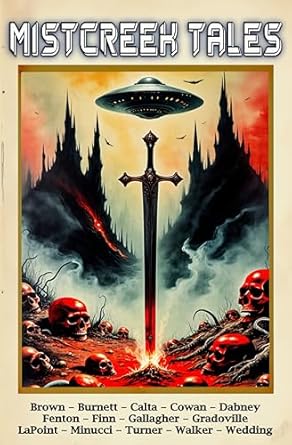
That is what the reason anthologies like Rock and Roll Mercenaries exist for: they highlight part of the 20th century we loved that is currently fading away. Those days are gone, so we must take what we learned, celebrate them, and move on into the new times ahead. We need the past to move into the future, but we also cannot live there, not forever. The last 25 years spent clinging to the previous century has told us that much.
I was also on the Scifi4Me podcast about a week ago with some of the guys in the above anthology. We talk about writing and stories in it! It's well worth the watch though we only show up in hour two the whole thing is worth it. Watch it here!
Like I said, there's a big change coming. Nothing will be the same again.
There's been much discussion recently of reclaiming smaller things we've forgotten over the years, perhaps even subtle things we hadn't even considered before. One of the recent discussions has centered around "slop" and what we've allowed our entertainment and art to fall into. We've essentially given up trying or aiming for anything higher, our priorities on other things.
Another related and yet less talked about topic, is the loss of the Third Place. One might argue the loss is at the crux of everything we've been going through since Cultural Ground Zero put a wrecking ball to everything so long ago.
If you've been interested in the decay we've been going through for any amount of time by now then you've almost certainly heard of Robert Putnam's Bowling Alone, a book that came out a quarter of a century ago which saw all the patterns that had already formed and the cracks that led to pale artificial replacements like "Geek Culture" to consume an entire cohort of youth into a New Religion and way of life. The problem became centered on the "Normie" and the solution was to relate to those who consumed the same product you did instead. There was nothing else to it. You were a Victim and everyone was out to get you.
And, obviously, that mentality didn't work out too well.
One of the expressions no one had really brought up over this quarter century was the idea of the "Third Place" in life, something Bowling Alone described as its main thesis, and something which has faded away into irrelevance in the war on everything that is modern life. All this despite the fact that we clearly desire connection while fighting hard against finding it at the same time. It's a giant mess, but we're used to it by now. We don't want to accept it's not normal or healthy, for whatever reason. And we're paying for it.
The video above gives a good description of the topic. The Third Place is, as described, the third important place in life. The first being Home and the second being Work. Home is where we can relax and recharge on our own and with those closest to us. Work is where we show another side of ourselves, using effort to achieve something separate from Home and our relationships there. You know how you always felt awkward as a kid when your parents talked to your teachers? There's a reason for that. Instinctively, you knew those two places should be separate. Mashing those together hasn't been all too great a change either, but that's not the topic today.
The Third Place is a neutral public space between the other two where we can connect with other people away from the others. In fact, part of the three places that makes them important is that it disconnects us from the other two and gives us a break and a way to discover new sides of ourselves. All three are important.
The third can be as simple as a restaurant, a bar, or a club, a place where you are detached somewhat from the other two places, throwing in some unpredictability and odd comfort into your day to day routine. And it no longer exists in the modern world.
The issue is that all three places have been heavily damaged in recent years. Home has turned into a bunker from the world, a place where Work is not only brought into but made the place where it is frequently done the most. Work has no stability and therefore contains no trust or growth of basic work relationships beyond tentative trust for as long as your inevitably short employment exists for. The Third Place, however, is completely gone and destroyed from modern life, taken out back and shot. And we're feeling its effects today.
There is no public neutral place to go, and they are rapidly dying out. In the process, we are losing community connections and turning into a block of strangers who sometimes see each other when we dare go out to... well, to do what? Going out is now seen as an annoyance, taking you away from your bunker. It's a nuisance, not a break. Eventually, the way things are going. we won't even need to go out to get groceries anymore. Then what happens?
All of this is killing community worse than Putnam ever imagined it would. Remember, his book was written before social media, lockdown world, and door dash. We've fought hard to kill off connection since Bowling Alone first released, and we're not quite turning it around yet. Local life is dying everywhere as we anticipate plugging into the cloud instead.
I know where I am the streets are fairly deserted and even the weekend makes no difference anymore. It is a ghost town of door dash drivers and empty buildings and sidewalks. There are no clubs, no hobby groups, not even church gatherings, anymore. It's just a large concentrated block of people who do everything they can to avoid each other. That's all it is and all it has become.
What is being built up by this attitude? What is the purpose of burrowing away into ourselves at the expense of both our own health and everyone else around us? We all know the answer to that, and we're well aware of where we're going is not anywhere good.
On the plus side, this topic is being brought up again more and more in discourse, because now there is no one who doesn't know, and doesn't pretend, that any of this is leading to a healthier society. We know it's not. We just have yet to figure out a solution beyond fancy words and promises. We need more than that. The answer involves bringing back the Third Place, and until we do, we'll be trapped circling the drain.
That's all for this week! Have yourself a good rest and get ready for March! We're almost there and out of the endless winter.
*Note: Today's post was originally posted on the Patreon! Join to get early posts on top of podcast episodes and new book serializations!*
Today's going to be a little bit of a reflection. Take it with a grain of salt, but I usually talk like this when trying to figure things out internally.
A long time ago it used to be well understood that what you did is what mattered. No matter what bluster you had behind your words, no matter how many wheels you greased, and no matter how many popular buzzwords you spoke to get your foot in the door, in the end it came down to what you did. You couldn't rest on puffing yourself up forever to gather audience attention. If you didn't act, it didn't matter. And we would ourselves back up our beliefs by holding such people's feet to the fire to ensure that they acted.
In other words, we valued the truth, and we valued those who fought for it. If you were a faker, you would get found out soon enough.
That doesn't happen so much anymore. Instead we let anyone above us do what they want as if they simply need to repeat the right codewords and they can have carte blanche to run roughshod over whatever or whoever they want. Simply look at any legacy industry and see them being run into the ground by these exact people these days. Nothing is growing, it's all shrinking. It ties in to our obsession with surface level aesthetic and appearances over proper depth and meaning. Juvenile and shallow. It's no coincidence such folk communicate mainly with teenage snark and prepubescent name-calling. This is who we let in the door, juvenile and bitter.
Who cares if the Superdude comic (this is a general example, not literal) has him murdering and dehumanizing large swaths of the population through silly speeches--it is a comic produced by DC Comics, therefore you need to swallow and accept it as scripture. Meaningless words. None of it has value. But it does send signals to the right people, and that's all that matters. The connection is gone, now it's all lectures.
Everyone seems to know it, but no one really has answer. After all, how do you compete against an industry that simply isn't interested in you? You can't, really. All you can do is vote with your feet, as the saying goes.
And it seems like exactly that is happening.
But, at the same time, who am I to complain about such things? Am I not doing exactly what I'm complaining about above? As a writer, am I not the purest example of words and not deeds? In a sense, yes, and that is one of the many reasons writers no longer command the same sort of respect they once did. We wasted our opportunity and lost the audience's trust. Too few are unwilling to put their money where their mouth is and it has lead to ruin. All we have to do is say the bare minimum of buzzwords and get all the rewards and kudos, or so we think. There's more to left than momentary profit, and we all realize that on some level.
Any man or woman who creates has a duty to use their creation to try and understand more about themselves and others. They must move outward from inward. The other choice is to either pander to the lowest common denominator or to produce propaganda to drag others down, neither of which is art--it is a grab at respectability with the in-crowd, whatever in-crowd that might be, in order to fit in with some pre-established group. This is the perfect example of words instead of deeds. It is about what you say and not what you do. This is anti-art and therefore should be discouraged. Unfortunately, in the modern age, this is the default way of being and is very much encouraged. Unfortunately, it is to our detriment.
Now we desire those buzzwords and ingroups more than we desire art or Truth, and it has led to a giant mess of an industry no one can believe in anymore.
So how does one change that? How do we reverse course this late in the game? How do we do it when no one in charge wishes to listen?
More so, how does one become someone whose words are meant to explain their own actions to others instead of lecturing or pandering instead? How do you avoid talking at others and forcing yourself down their throats instead of just communicating and presenting your ideas for consideration with insistence of acceptance? How does one avoid tripping over that line and losing their way in a medium that incentives losing your way to begin with? There is no guidebook or manual for this kind of thing, after all. It's all so very confusing.
I say this because it has gotten to the point that I don't think I properly understand how to bridge words with actions anymore. I thought I did, but it's only gotten more complicated as I've gotten older and as the industry has gotten more blunt and surface level. How much of myself is to be put into what I say before it just becomes jabbering nonsense detached from actions? When does it cross the line into being real and not foolish hopes or projections onto others?
When do I lose connection and begin drifting off into the void, never to return? That's something I think about a lot.
Many have wondered why I tend to avoid using larger words in my writings, those the ones intellectuals pepper their own works with to sum up larger thoughts, and the reason is that I want to remain crystal clear in what I say to as many people as possible. I don't want to rely on stopgaps, especially when such stopgaps are so easily weaponized these days.
While words matter, so too does the intent behind what we say with them. I do not want to waste them on filter words and cobbled together codewords for a select few who have the matching code rings to decipher them. I want to reach as many as possible, and I don't think it can be done by purposely obscuring my meaning with unneeded clutter. I could be wrong about that, but at this point I think it's the only path forward for me. I have to find a new way forward somehow.
Does anyone, these days?
I've written before about slogans and the insidious way they can be used to kill communication, but that is because of how powerful words are to begin with. They can persuade and they can inspire and, under the right conditions, can also manipulate and destroy. Sticks and stones may break your bones but words will be the motivator for them to be used against you in the first place. Therefore we should take them seriously and learn what they're for, and how to use them in better ways.
Perhaps this post is a call for responsibility among those who use words, much like they are for any other weapon. I know I need that reminder a lot. You need a license for most weapons, but you don't need anything for words. I suppose the closest thing would be "credibility" which is given by publishers or editors these days, in rapidly decreasing amounts. But aside from that, it's free game. And there isn't any way to control who gets influenced by what, as OldPub is very quickly learning. We're all speaking into the void these days, and that does not seem to be changing.
So what is my role as a writer? How do I shape my words into deeds? Can I live the lives my protagonists do, even from my comparatively less exciting existence? Is my way of acting through art used to inspire or to build up? To do it the right way?
There are always a lot of questions, but asking questions is a lot easier than finding answers. It's especially difficult to find answers when no one is on the same page anymore. These days it's a free-for-all, and I'm not convinced that's entirely a good thing.
I don't want to puff my own chest up too much, merely try to figure out how art crosses the line from posturing into accomplishing. Accomplish what, you may ask? I can't really say. Perhaps the expression it wishes to get across from artist to audience. There is a reason for all art, just like everything else. Figuring that reason out, however, is the problem, especially for someone like myself who is not the quickest or sharpest. If it was so easy our industries wouldn't be falling apart as we speak because of their complete inability to do anything but posture. There has to be an answer out there beyond what we've been doing.
What that is, however, is the question.
The Phantom War serialization and the Cannon Cruisers podcast, for instance, are my way of filtering all the influences I had growing up into a coherent world that makes sense of it all in the present. I hope I'm getting that feeling across, but telling a story, and talking about them, is the only way I can do so. Finding that undefinable thing that strikes, that hits deep in a way that remains with you, and then trying to explain it to others is a hard task to accomplish. It might just be a fun action story of adventure, but it still means everything in the world to me. Why does that connect so much? All I can do is as the question over and over, trying to find the answer.
Perhaps that's the point? Can't say that I know. The whole purpose of this post is to try and understand it, after all. I'm not sure if I'm any closer now than when I started, but at least I gave it a try. I can't do much else but try. That's what most of us are doing in this ever fluctuating scene: simply trying to find out way forward.
Things change as you get older, as we all know very well, but it's what sticks with you as you age that starts to mean more to you as you contemplate your mortality and where it is you're heading towards. If a silly movie like Bloodsport has stuck with me since I was a young runt, there is probably a reason it has lasted so long where something like, say, Care Bears, has not. What is it that sticks, that refuses to go away, that which sticks with you through the wild times rippling around us? That's what I want to find, and that's what I want to show to others.
And if I can do the same with my own work then all the better. All I can do is to try harder and hope it works out better next time.
Maybe that's what action is to a writer: striving to express the truth no matter what gets in the way. Who knows, but I'm going to figure it out, even if it takes ages. It's all I can do.
Hey, it's just going to take a whole lifetime, that's all. No big deal! Not like I have anything better to do with this skill I've been given. Here's hoping we can all connect more as we try to figure it all out. In the end, that's what we're all here together for, right?