Showing posts with label writing. Show all posts

Tuesday, July 28, 2026

Destruction Incorporated


Welcome back to the wasteland!

Been a bit, but I don't want to waste any more time, so let's get into it. Not a long one today, and yet there is a bit to discuss.

I don't think I have to tell you much about the mess that is OldPub, the old publishing industry sometimes mistakenly called "TradPub" (there is nothing "traditional" about them), and how far they've declined. It's fairly obvious just from one perusal of the shelves of your local big bookstore that they are far beyond irrelevant despite all the money and "prestige" they have behind them. It's all flooded with Japanese manga for a very good reason, and that's because the industry has long lost the plot in connecting with the average reader. They have to outsource it now.

However, it is also good to remember how this all happened. There are are more and more people joining these niche spaces every day, trying to understand just what might have happened to lead us to this position where everything is so fractured. Why are bookstores completely barren of new material from this side of the world, why is what little there so formulaic and vapid, and why is a foreign culture leading the charge for our own entertainment instead? Not to mention, there are still plenty of older folks who have been around for a while who don't quite understand all of this, either, and mistakenly blame Japan for this situation. Lots of fingers pointing in different directions. All of them should be pointed at OldPub itself.

This is kind of an odd situation, if one thinks about it for more than a second. Theoretically, manga could be topped. However, what requires that to happen requires a total overhaul of how OldPub functions. It's simply not going to happen. There is way too much ideology and far too many fragile egos in play for any kind of reversal. It will all simply crumble away just as the infrastructure built by previous generations does. It is now Destruction Incorporated, and the idea of selling art and entertainment instead of religious pamphlets is far too absurd to continue. If it wasn't there would be discussions going on between parties instead of endless lectures from the failures in charge of the rusted mechanisms.

And to think it all started because the adults in charge forgot how to say no, and let in fanatics to destroy their own hard work from under them. It's not that absurd, however. In fact, it happened before! You probably even know to what event this statement refers to.

The blueprint for the sort of literary takeover that destroyed OldPub is epitomized by the siffy cultists way back in the 1930s, who then seized the industry in the 1940s and turned a market for normal people into their own fetish playground. The pulp revolution over the last decade specialized in the rejection of their frame of "Don't Read Anything Before 1940" to discover just how much fantastic writing was buried for petty political reasons and deliberately left out of print. You can read more about this specific problem in The Last Fanatics where I discovered it for myself as I was writing about it. If one cares about art at all, OldPub is a failure at preserving any of it.

For a more general picture of what is going on now, I suggest the above video showing how the Literary Cartel used the Fanatic blueprint to do the same thing to the wider industry. Books about nothing written to no one and heavily leaning upon gimmicks and the promise of becoming a micro niche celebrity is what the Literary Cartel decided to do to their industry. It's like its own Oprah's Book Club, complete with the advertisement of religious cult figures for whatever ideology OldPub wants to foist on you.

We live in an age off closed of silos where no one interacts outside of them or attempts to connect to a wider culture, or can even imagine one existing, therefore all that is left is ruling the tiny sandbox of the few peasants still unlucky enough to be there. There is no ambition to reach anything wider, nothing but lecturing, browbeating, and celebrating death and dismantling. Us Against Them, over and over again, repeat until infinity.

But how did they do this? What is the secret formula that allowed this cartel to create such a wasteland of entertainment and edification?

By creating a formula for doing it. Art formulas have not solved a single problem over the past century, but boy are they the main culprit in causing a lot of them!


The subject of formulas has become radioactive as a discussion point in recent years, though there isn't any reason it should be. It's very clear to anyone paying attention that every art formula that has popped up in the last 30 years or so does not work for the simple reason that none of them have produced classics or done anything but shrink the market into the exact situation it is in now. All it has done is enshrine fetishes as genres and to lash out at anyone outside (and even inside!) of the small and ever-shrinking spaces.

You don't have to like the current anti-formula (if that's what you want to call it) zeitgeist, but it is an inevitable kickback from people who had to sit aside and watch the destruction happen despite their plentiful warnings that it would lead to exactly this. The obsession with formula implies a distrust in the artist and the environment that might allow him to foster in, saying that in order to succeed there is somehow a one fits all pattern that will mold his unique vision into something Better. Though, again, if that were the case: why has it not happened yet?

The second video above from the same creator goes into the process of creative death through formulas in depth even more than usual video on the subject. The fact of the matter is that art requires identity given from the unique circumstances around the artist's life that lead him to where his is. If the only thing he has to express are the same buzzwords in the same delivery and from the same social positions and the same "Global Standards" approach to not rocking the boat as every other "individual" in the scene, then why would the audience be interested? At that point, it's all interchangeable and meaningless. What is the purpose of consuming slop like this?

When the people in charge tell you that shrinking is growing and ignorance is freedom, what is an artist supposed to gleam from it? How can you connect when the industry tells you that you are meant to be just another cog in the crumbling machinery instead?

Fanfiction writers in particular find the idea of being against the inarguable failing state of modern writing beyond the pale. After all, they saw how all the major IP franchises were brought down by fanfic-tier thinking and the resulting yawn the audiences let out in response. It doesn't even matter if the product "makes money" when it's out of the conversation in a few months anyway. At some point, instead of being a hobby, fanfic writing took over the corpo jobs to pump out more content. Nothing is being explored, because there is nothing left to explore in these properties, it's instead being rehashed and exploited.

This isn't to say there's no value in fanfic writing, but it has always meant to be what it was and never anything more. It's a hobby, not a career. By removing it from its context it has become as polluted as everything else in the industry has. Now there is no ambition beyond endlessly reheating and recycling so the dying system that hates you can stay afloat for five more minutes. What other reason would it have to act this way?

No one in the industry wants to do anything but put out Content, and that is proven, as the second video shows, to be the actual focus of Creative Writing courses in Current Year. It's far off from the purpose of writing, or even creating any kind of art, but is inevitable when the industry itself is run lock, stock, and barrel, by a small group of people who have very limited imagination or idea of what art is even capable of in the first place.

All they care about is the club. Just like the siffy crowd did way back in 1939 when they were figuring out a way to control the industry for themselves. That game has remained unchanged, regardless of the players in it.


This is the end result of unimaginative people running industries that are supposed to run on imagination. They not only cannot imagine appealing to people who aren't them, they think slogans and checkboxes are the end goal and height of art. There is nothing more than this.

How exactly do you reason with that? The simple answer is that you don't. The industry's death spiral is as comical is it is unbelievable, but it's also understandable in a climate where fanaticism is more important than connection. Say that right things and get rewarded, even if your actions don't match up with your words. None of it matters except cynical grifting and elbowing others out of the way for your share of the scraps, leading to a vapid climate of art and entertainment that chases all the normal people off. Eventually all you're left with is a gaggle of ladder climbers scrambling for the top rung that leads out of the sewer. It isn't taking you anywhere higher. Why are you even in the sewer to begin with? That's as much as can be imagined these days.

Without a monoculture to rally around, the audience will not demand better, because they have other options. Instead of complaining, they walk away, leaving the people in charge smug in the thought that their art must be top notch since no one is complaining about it. No, they just gave up on you instead, which is way worse. They don't even care enough to tell you they hate it. This should be the worst place for a creative to be, yet it's the one most strived for these days.

This leaves the "mainstream" to wither away, fighting for the last scraps as it all comes caving in. This leaves us all in those silos to pursue our own individual goals, never to interact with each other ever again. Whatever the end goal of all this modern nonsense is going to look like, I don't think anyone particularly knows or, honestly, cares.

Eventually there will be another monoculture again. It's unavoidable since it is part of human nature to need community and a way to express creativity in a way that benefits more than just themselves. Until then, however, all we can do is watch and observe as the Fanatic philosophy formulizes itself into death cult ritual and obliterates itself in the resulting purity spiral. And hopefully we never let this destructive behavior take hold again afterwards, though that is obviously hoping for a lot. It'll take a lot of time and effort, but hopefully it'll happen one day.

Regardless, Destruction Incorporated is simply the way the people in charge have decided to run things until the clock runs out. Let's see how it works out for them.


Saturday, January 31, 2026

World of Pulp


Welcome back to the wasteland!

It's been a crazy decade+ since the pulp revolution first kicked off in earnest way back on those initial blog posts (since collected in one book here). No one would have guessed way back then that so much of what was being said would become standard advice in the NewPub world after over half a century of slander and libel against them proved so effective. At the time it felt like an uphill battle to even give the pulps are fair shake at all.

Back when I first published in 2016, no one was talking about the pulps as anything but either a problematic punchline, or something you had to scrub clean if you wanted to take advantage of what they created. In the time since that era, however, things have changed 180 degrees in the opposite direction. Now saying that you are inspired by the pulps is a selling point to just about anyone looking for something to read.

The pulps have gone from persona non grata into being the belle of the ball. It's still a bit hard to believe for anyone who has been around that long.

The above video is just one example of many in how newer writers are no longer told to tiptoe around the idea of the pulps, especially in a market hungry for something exciting and outside of OldPub's safe boundaries. You can do anything, and all writers and readers need to know that: the dusty old formulas are done and finished. The best example we have are the pulps, and now everyone knows it. Go big or go home.

This is now considered mainstream advice to read and learn from the pulps, without even considering any "problematic" elements, and that would have been unthinkable even a decade ago. Even those in more normie adjacent spheres and platforms say the same thing.

Here is another example from not so long ago of someone praising the pulps from an angle no one would have considered before recent times:


If you haven't noticed, the "problematic" nature of pulps was either barely mentioned or not even talked about at all, which would have been unthinkable post-1940 before now. This is the shift I mentioned way back in the Pulp Mindset: the writing world is different now and the future is in NewPub where the rules have radically changed.

And as things change, so to does how we print and acquire our books. There is more to discuss outside of the stories themselves.

You probably noticed, for instance, how bad Amazon has gotten recently. The downgrade isn't just for general consumers but also for writers and readers as well. It's not only harder to reach customers or gain any momentum on a dead algorithm, but it's also difficult to find a price balance that matches the quality writers want to deliver and readers want to pay for. The options are not exactly getting better any time soon.

This also ties into the recent death of the best available print option for books, the mass market paperback. With OldPub ceding the field and giving up on reaching normal people, what can those in NewPub do to change this?

Here is a report from NewPub maverick Kristen McTiernan, the "No-Nonsense Editor", on some of the new publishing options going forward due to Amazon's collapse, her focus on using pulp as the guiding light.


Not only do we have to consider changing our stories, but now the very formats they are being distributed into may very well change in the near future as well. Whatever is left of the old 20th century OldPub model is slowly crumbling away.

And, to be honest, it is more than overdue.

We're a quarter of a century into the 21st. That's 1/4 of the way into a new era and one rapidly escaping the clutches of a dead time and place. It was never going to stay the same forever.

As can be gleamed, there is much to ponder going forward into the Unknown, but it is more than clear that the status quo will not be so for very much longer. What we thought we knew turned out to be not as much as we figured, and now it's time to correct course. And it looks as if what that entails will be revealed sooner than later.

Whatever happens going forward from here, should be very interesting to see.

Thanks for reading, and I'll see you for the next one!


Saturday, January 17, 2026

"Do You Understand?"


Welcome back to the wasteland!

We're finally in 2026 and the new year. Hope I didn't keep you waiting too long!

As you can see, things are a little different around here these days. Posts will come out when they come out, and will be about whatever I can make them about. However, most of my writing energy is focused elsewhere this year so it'll probably be a light one for posts. Regardless, here I am, and here is the first post for 2026.

Today's subject is not entirely related to the video above, though it is included in the subject. I realize what a controversial topic the AI thing is and how there are so many triggerwords that set emotions off in different directions when heard or read, but I'm hoping we can bypass all of that to talk about it from a different angle. Instead of talking about "real" or "fake" I want to talk about the future and how we're going to process information. 

The Second Story's video is specifically on how AI is coming about at a bad time for literacy and making it worse, which no one really denies, and she is very thorough in her argument. Whether you are all-in on or staunchly against AI, the truth of the matter is that there are positives and negatives to it neither side wants to acknowledge in order to keep their position pure and just. We can admit that. That is fine and all, but that means there are angles that can't be discussed without a portion of those involved in said argument flying off the handle in a fit or rage or smarmy sarcasm. This isn't exactly a productive use of anyone's time.

None of that will help with today's subject. I want to talk about a part of this whole debate that is never really addressed at all.

Now I know how divisive or tiring the topic might be, but I want to specifically point out one part in the video itself to focus on today. This is on how AI affects not art or even writers or artists, but on cultivating readers.

The clip is here:


For as long as I've been alive, and maybe for yourself as well, we've been very busy trying to automate the world to make it easier. The question might be to ask "easier for who?" but even that is not necessarily the subject for today's post.

The end goal of modern society for at least as long as HG Wells was talking about "The World Brain" and what "we should do with ourselves" has been a conscious effort from a gaggle of late 19th/early 20th century materialists to create Eden on Earth. All we had to do was train human beings with the right keywords and phrases and eventually they will become like algorithms themselves, endlessly operating until they fall apart with age to be replaced with new cogs in the machine. Heaven on Earth for those in charge.

However, without any theory of what human beings are beyond meat puppets on strings, they also hold no value of them as living beings because "living" is a vague term that can mean whatever you want. In essence, human beings are nothing but pawns on the board that get instantly replaced with new ones, because that is how those in charge think the world works. They don't actually have any theory in mind for groups or individuals, they don't care who anyone is or what they're apart of, all they want is new pieces to constantly replace old ones.

What's worse is that they don't even remember why they're playing this game in the first place. To them, it's just How It's Done, because that's how their father and grandfather and great-grandfather operated, oblivious in the knowledge that the period they live in is an anomaly in human history, not the advancement of it, and that it is very clearly coming to an end. Whether they realize that of not is irrelevant aside from the fact that they are clearly losing control.

This doesn't mean they will be "overthrown" or "destroyed" or any fancy buzzwords they taught us from the fiction and fictious accounts of history they allowed to be spread, but that they are decayed along with everything else. They might think they're winning, and in a material sense they probably are, but in the end they will also be a cheap mockery of what came before. They do know this. The question is if they can gather the strength to avert from the iceberg before it's too late and they end up like every other era in history they pretend never happened.

So what does all this have to do with literacy?

The point is that we were never taught to actually process information or learn. We were taught to react to key words and phrases to guide is into our slot to keep the factory chugging along, even as it falls apart around is due to misuse. "Literacy" has never actually existed to make us smarter or to build anything new, because that would go against the Spirt of the Age. Those were always just buzzwords to keep us in line and to puff our chests out. Remember the Kid Who Reads archetype from the '90s? The "reading is magic" and "imagination is everything" hokeyness? Those weren't done to make anyone more imaginative or to be better readers. If they were, and if everyone remembers that happened, because it did, why do less people read than ever before in human history?

And no, this isn't about the younger generations, because I can see the technological excuses coming a mile away. I'm talking about the older generations, the ones that were reading Harry Potter while playing Grand Theft Auto: Vice City or Goosebumps while playing The Legend of Zelda: Ocarina of Time decades ago. Why don't they read anymore? They indulged in Reading Rainbow like everyone else, and they read when they were younger. So why not now?

We might be "busier" but every generation was busy and yet they all found time to read. One could also point out OldPub's complete collapse and failure to create readers (In truth, their job is to pass on the "correct" knowledge and behaviors, not teach creativity or spread imagination), but that wouldn't also explain the aversion to indie spaces or classics. At some point, literacy changed focus to relying entirely on catch words and social pressure at the expense of even understanding regime propaganda. They don't even want us to think that much anymore.

Perhaps that should be the question we ask when the fading culture of today drops things on our laps: how will this help us escape the trap we've been stuck in for so long? Will this get us out of the failed utopia of HG Wells and his World Brain? If not, then how is it designed to keep us there and what can we do differently?

For now, we can only ask questions, but if we aren't allowed to ask them, or even teach others how to ask, then we'll be stuck in the loop, destined to decay with the system that created it. And maybe that's the lesson in all this.

Anyway, thanks for reading and welcome to 2026! I'm not sure when the next post will be, but I will thank you for reading for so long. It's been a blast.

Have yourself a good week and I'll see you again.


Saturday, December 20, 2025

Weekend Lounge ~ The End of Fanfiction


Welcome to the weekend!

The year's almost over, so let's settle in with a good topic today. It can't decide if it wasn't to be snowy or cold where I am, so hopefully it's been steadier for you. Regardless, we've got less than a week until Christmas and less than two until the end of this very strange year. Let's get into it with a topic we've touched on before.

We're going back to the well again with the topic of fanfiction. Particularly we're going to discuss the fanfic mindset and what it has led to doing to creativity. The recent above video by The Second Story on topic blew up, as it usually does with this channel, because it hit on an industry taboo that has been choking the scene for over a quarter of a century at this point. Some of the backlash has been expected, but the larger point needs to be addressed: how did we get to where we are? It didn't fall out of the sky, and one of the sources of fanfic brain comes from the idea that nothing new can really ever be made, which explains a lot about today's climate.

So while we all know the weaknesses of fanfic (and even fanfic writers themselves know it), we still insist on dragging it into everything creative we do as if we need to. Why is that? Why do we insist on fanfic brain over using creative muscles to make something new? Why do we even glorify our inability to fashion originality? It is strange.

And why do we continually reward the lowest common denominator while we also admit it is also the lowest common denominator? This seems obviously destructive, and yet we persist in insisting it is the way it needs to be.

Part of this is due to the IP-heavy way we think about creativity and storytelling. We think about storytelling like children think about toy boxes. "I will have my own Star War", "My MC is just like Goku", "my setting is similar to Asimov but with a twist", and so on. It's "toyboxing": insisting on playing in someone else's world while simultaneously seizing control of it for your own gain. It's using someone else's work as a crutch while also trying to turn it into a strength at the same time. Fanfic brain at this stage has become terminal.

Essentially, we want to make "our own" versions of something else more than we want to make something original or say anything new. In essence, we want to endlessly replicate the feelings we experienced when we were kids experiencing this New Thing for the first time, and while there is nothing wrong with that on a surface level, there is a certain mentality that comes along with it that has very much become harmful. We would rather keep toyboxing than actually create or build anything at all.

As has been said relentlessly, there is no such thing as anything truly original, just reiterations on old ideas. This is true. It is the main reason modern genre checkbox obsession has become so limiting and heavily outdated, because we've been expected to rehash the same corporate IP ideas for over half a century at this point.

However, when one is inspired by something, it is usually because it means they have something they themselves wish to express influenced by that original source. To be honest, this is how we get all the best art and entertainment. This chain of influence is what makes it all so fascinating and all so human at the same time. This is what creation is.

Fanfic is the opposite of this. It is the equivalent of playing toys with your action figures to invent new scenarios alone in your room. The thing is, this is supposed to be done as a child when the imagination is still in development, when you still don't know what it is that speaks to you about these things. At the same time, fanfic is this process but with writing. It is a launching pad for younger people to help understand what it is that truly matters about what they love and either move on from it as they get tired of it, or move into writing original works inspired by what they love and contribute to the culture they grew in. The point is that this stuff is a starting point, not an end point.


"Toyboxing" 


But that isn't how it works anymore in our industries.

Now the mainstream is filled with people who see storytelling as little more than toyboxing and writing rooms as little more than fanfic factories to push their own head canon onto an audience that either must except it or go away. They don't really want to create: they want to usurp and become that thing that first inspired them in the first place by wearing its skin and commanding respect. They don't actually want anything new, they don't truly want to express anything, and they aren't at all looking to entertain. They just want their immature selfish desires validated, their fanfiction to be the new canon, and the obvious worship that follows.

It is a poisoning of the relationship between not only art and artist but between audience and artist. It is twisting the good to be purely in the service of selfish consumption. Everybody is an island, after all! Either get on mine, or get out. That's just where we are.

The issue isn't that any of this fanfic process exists at all, after all it pretty much always has and always will. The problem is that this is almost the entirety of not only the mainstream entertainment industry and a large portion of the independent one to. It's the baseline instead of a fringe, like it once was. Which medium is this description referring to specifically? That's the fun part: it's every single one of them. This is everything now.

Musicians wanting to be Led Zeppelin is nothing new, but they used to discover their own original sound along the way to becoming their own band. That doesn't happen anymore. Being inspired by the Simpsons meant something when it was the wittiest show on television, but not when it equates to being another clone with nothing to add to the conversation except cruder jokes and dumber dads with evens stiffer animation. What is the point of such a show, and what does it add to the conversation? Then there is the recent process of taking an old IP you might not have even grown up on and "updating" it for Modern Audiences while gutting it of everything that gave it that character in the first place. Toyboxing at the expense of the audience? That's just cultural vandalism, the obvious endpoint of fanfic brain. None of this aspires to grow anything, leaving the culture stagnant.

It doesn't aspire to be anything except either a thumb in the eye to enemies or a pat on the back from allies. That isn't art. It's junk. And it's the climate we operate in now.

The entire point of creating is to put something of your own out there into the world, to make your mark while simultaneously honoring what came before. The current way it is done of perverting the past while spitting on it and sneering at those you are meant to be communicating with is completely backwards. That is why it does not resonate. That is why the divide between audiences and artists and entertainers only seems to widen.

Until we move on from mocking while stealing from those who came before, the fissure will only widen. Not to say all fanfiction does this, but those with fanfiction brain definitely do lean in this direction in how they worship one part of the whole. It isn't everyone who writes fanfic, but the seed of the mentality is still very dangerous to where it should not be as widely spread as it has been over the past few decades. It cannot be the majority of art and entertainment, because when it is it becomes today's climate.

Nobody wants that, not even those currently in charge of these industries and doing this exact thing right now. It's all just a big mess of half-formed ideas couched with relationship drama that doesn't ever lead anywhere. No one can seem to write a happy ending anymore if they can't ever actually put their toys away for good.

So we must move on from this mentality into better things. It is the only way we can finally leave the mistakes of the past century behind. What else can we do but move on, and try for something a bit more satisfying than that which lead us to where we are?

Let's just hope that next time we remember what it's all for, and it's not ourselves and our own ego. There is more to existence than playing with our toybox while forcing others to watch, and we need to start showing it once more. We need to tell stories again.

And we will. The era of fanfiction is over. What comes next is to be seen. We still have to build it, after all.


Saturday, November 8, 2025

Weekend Lounge ~ Choose Your Future


Welcome to the weekend! We made it to November!

I hope you're all doing well as we stumble into the colder months of the year. Now that we're heading towards the end of this very, very, very, strange year, we can finally talk about a bit more of a generalized subject not relating to said weirdness. Today, we're talking about what we really want in a story: what we really want out of art and entertainment.

Blog favorite YouTube channel, The Second Story, has been on quite the streak for some time now, digging into not just the writing industry, but also the tropes and ideas that have let it spin out into the gutter over time into what it is today. No one agree it's in a good spot now, but we also don't agree on how to fix what's wrong. So it is nice to see a place offering a real analysis that goes beyond catchphrases and cliches into one that bigger issues might be. However, this analysis is not for nothing or even really click-baiting, but in actual real attempting to steer discussion on topics no one was considering before: ones that need discussing.

Today's video subject is no different. In fact, it has more to do with a lot of The Discourse today than we might think at first.

The question of heroism in this video centers on what exactly a hero is. Mainly, it centers on how what a hero is and how it depends on the health of the very populace said stories are made for (as well as who is writing them). Whether the audience wants to read about white hats succeeding and protagonists to look up to, or whether they want to look down at the hero to give themselves a boost in their own life, all depends on the era and the times the stories are written in. In other words, "Anti-heroes" in a sense don't really exist: it's all perspective of the times and those living in them.

Stories are not propaganda, despite what some will say. Stories are a window into the times they are written, showing what the people thought and believed, and how they behaved. What they are is a time capsule of an era and place that cannot be replicated (hence why revival movements never stay still too long) or explained otherwise without context. When you read a book you are looking into a world beyond just the plot and the characters. You are connecting with a whole other space beyond even that. This is what makes writing (and all art, honestly) so fascinating.

There is more to life and art than repeating mottos for the mob of your betters in order to nod together over and be tossed approving glances. We always need to aim for more than that bare minimum. But the times we live don't want their artists to aim high. They want them to fall in line with entropy and slowly fade away.


Writing aims high. The industry? Not so much . . .


Not to say any of this is new. Of course it isn't, there is plenty of bad art and entertainment out there, and there is much that come across as horribly dated simply for being filled with copy-pasted buzzwords, tropes, and acceptable topics of the time period it was writing. What is missing is that such art was looked down upon even at the time. All the more reason not to do it today. It didn't work then, it won't work now.

However, there did used to be alternative scenes and industries. Those have all gone away, but there is still a nostalgia for them. It has given us the illusion of more choice in a sense (as far as the mainstream goes, it was objectively better in selection and variety before), but when one looks into what the gatekeepers were trying to do it back then shows the decay over time into what it is today. We just didn't see it at the time because most of us were young or not plugged in.

It's one of the reasons so much 1980s and 1990s era art has remained so popular, even with younger generations not alive for it: people are desperate to see into a more exciting world, and the one we have now is simply not adventurous, ambitious, or hopeful. The audience want it to be but the industry will not provide that to them. Their inability to live in the present or look to the future means the only place left to dive into is the past. The loss of a monoculture and that a shared wider understanding of reality is still desired, and I'm sorry to say that they cannot get that in modern art regardless of how good it is. You can still get attention saying Lord of the Rings sucks; you won't get any saying King Leper is amazing. They want to feel part of a larger conversation before anything else, including engaging in art. That's just the way it goes.

When this era is looked back on in the future it is almost certainly going to be one of confusion, like a minefield that has expended all its explosives. Why is there so much good art that was barely touched on while crusty corporate swill that expired decades previously got all the cultural discussion will certainly be a big topic. That is due to the lack of cultural cohesion of these times, and it cannot be avoided. However, it will certainly not stay this way forever. It never does.

The 2020s are half over and we still have not quite gotten a defined identity or style to set us apart, and without a monoculture we probably will not, but what we can still do is seek Truth above all and find connections that way. Through the desire for more and higher places we can come together in a more natural way, a way that can allow true flourishing in the arts. This post- Cultural Ground Zero era will probably be defined as a Dark Age of some kind, where treasures will have to be unearthed long after the fact. As it is now, it's merely a mess that cannot be cleaned up.

Then the question becomes in how one can form a defined identity to connect with audiences in this era without having any shared Truth or traits beyond surface level. It is not impossible, nothing is, but how can we even begin looking for the answers? The preview of what this will look like is reflected in the above video's discussion on anti-heroes. So much of what shapes us is dependent on the era and also shared understanding of who we are. That doesn't go away even if there is no wider culture to connect us together. As can be seen by the way we behave even in these times of atomization, we still desire that safety net. We always will.

So without such a thing being enforced from the top down or without those old peer groups that don't really exist or care about each other anymore, where would it then be formed today? Where would it even come from, and is there a way out?

There is, but it's not an easy or satisfying answer. In fact, it's kind of a cliche one to suggest, not that we'll hold that against it. Sometimes the truth is really that obvious.


Standards like this benefit no one.


There is something to be said about not worrying too hard about the outside world when writing or creating. After all, there is not much you can change or effect, so why worry about it? All you can do is what you can do, and not much else.

This is true. What you can do is limited, and you should never forget that. We all have things we want to do, and ambitions above us, however we need to remember we're a part of this, not above or beyond it. We're not Futurians: we don't have to mutate and die.

However, we still live in this world. We are still affected by it, we still react to it, we try to understand it, and we try to see where it's all going. All of that is unavoidable when creating art, even if the piece is deliberately ignoring all those questions in order to reject the discussion. This isn't political, social, or religious: it's just how art itself works. Art is all those things, and none of them, at once. To pick the process apart further is how you get propaganda, and how you lose audiences. All we want is to find a way this all comes together in a way that makes sense relative to the era we live in.

This isn't a call to tell anyone how to create, because that makes no sense. Part of what makes art so great is seeing how others approach certain subjects and ideas with their own angle or thoughts on the subject. Anyone who insists on rules around the creative process itself, or on what can and cannot be addressed in the creation, does not care about art itself.

Despite that, we also aren't in the 20th century anymore. It must be repeated until it finally sinks in. Wholesale rehashing of ideas and tropes from over a quarter of a century ago in an attempt to ignore the way things are now only works if you have something to add to the conversation of the world we live in. This is why old IPs are dying: their time and place has passed and their relevance cannot be replicated, especially when the creators themselves are either gone or uninterested in anything beyond their checkbook. There is nothing there anymore, and no matter who gives their "interpretation" of said properties to make them "relevant" to today, it can't change that reality. Those days are gone, and they cannot be replicated or relived. We have to find new paths.

But you already know that. We all know that. The path now is in choosing what future we will have next. What kind of hero are we going to be? What will we see as the anti-hero in this new era? Exciting times are ahead of us, and we still have yet to finally reach them.

It'll only happen when we finally choose a future worth having. That is going to happen sooner than we might think, but it's not something we should ever stop aiming for regardless of the end result. We're always going to want more. Hopefully this time it's the right kind of more we decide to aim for. We're about due!


Saturday, October 11, 2025

Weekend Lounge ~ What Happened to Writers?


Welcome to the weekend!

We made it to October and the weather finally shifting to something seasonal, so let's really get into something eerie for the spooky season. Once again, we're going to go into today's creative climate, a horror unto itself.

Much has been said and written about how terrible the education system has been for fostering creativity and imagination, but in the end it's still not enough for the simple reason that it's frankly not good enough. We are all hungry for more.

This isn't just about the US, either, but a worldwide phenomenon of machinery designed to turn both the individual and the collective into a machine meant to churn out whatever the top of the chain desires. This mentality has turned all mainstream entertainment into pure swill bailed together by tired 20th century tropes and franchises meant to educate the ignorant masses into worldviews and behaviors that might have felt fresh 100 years ago but are clearly outdated today. We've gone over that before, so there's no sense rehashing it. Artificiality has always been valued over creativity.

As the above video shows, the system itself is not designed to stir the imagination, no matter how many TV shows or movies you see or remember that told you how important "Creativity" was, in the end it was never about that. It was only ever pretty words meant to boost the ego and coax all potential creatives to follow the same path to deliver the same Content. And looking at the modern climate today, it feels like a joke from a '90s animated sitcom. That is because it is.


And that was made in the '90s. Nothing has improved since then, but clearly it was an issue even back then. In Current Year, the film industry now is on its last legs.

So how do we create a system that incentivizes creativity over slop? Humanity over artificialness? Excitement over formula? How do we overhaul the 20th century machinery that has ground to a stop here in the 21st?

Many complain about how the AI explosion fosters an environment of lowest common denominator storytelling to churn out product, but the truth of the matter is the industry has been incentivizing it themselves over decades now. The above video from the '90s highlights the mentality as it already existed back then, and it's much worse today.

The problem has always been the artificialness has been baked into the education artists receive themselves. One cannot explore outside the socially acceptable ideologies of today. One  cannot look beyond the genres the mainstream has decided are all that is, even as their stores empty and their sales crater. One cannot experiment because safety is incentivized and mass produced to blot out anything else coming up.

As the below thread shows, the issue with artificiality is not the lowering of the bar, that is already on the floor and has been for decades. The problem has always been that the education system has always desired it end there. Blaming AI for it is missing the forest for the trees. The system was always going to lead here, and it is the root of all this.


From this X thread


The biggest problem with all of this is that there is no easy solution. There is no switch one can flip to making everything better. In order to even begin to fix if requires an honest reflection and reassessment of a lot of bad ideas that have come since the industrial revolution kicked into high gear and became a religion for materialists. We simply aren't there anymore, no one thinks that way or believes it, and yet we float on rehashing it to diminishing returns. Now there are no returns at all.

We know the education system does not produce creative people. It also does not produce writers, filmmakers, musicians, artists, or critics. Yes, people go into these schools and come out in those professions, but next to none are actually made into those things from what they learn. Kids are instead turned into automatons and widgets for the crumbling machine, meant fulfill roles no audience wants and job positions that are quickly fading away. It is detached from reality, and we all know it.

So why are we still operating in this way?

As I said, blaming AI at this juncture is stopping well short of the problem. Even if it went away tomorrow, it wouldn't stop how the audience has been trained to Consume Content and expect beltline product pumped out indefinitely. That isn't going away. All this AI stuff is simply doing exactly what those in charge want. (Which is why they are already using it without saying anything at all, and audiences will eventually accept it. Anything to keep the flood of Product going forever.)

The only way out is reorienting of systems and thought processes. The 20th century is done, as been said countless times, so why are we still clinging to it? What advantage do we have clinging to dying systems and ideas that have proven to be dead ends?

We don't train creatives. Arguments could be made that we never have, but we certainly do not do it today. We have Content Creators, not artists or creatives. All we want is nothing and everything at the same time, and that is why we have no need to educate or train anyone. And that is how you get today's dead culture. Nothing is being made: it's being produced.

We require a re-enchantment of the world, a detachment of cynicism, subversion, and emptiness. The only way to get that is to admit where we are now was a mistake and won't lead anywhere else. We have to move on.

Let's not worry too much about a dead past, but work to build a living future. It's going to happen eventually so there's no sense wasting time. We can start today.


Saturday, July 12, 2025

Weekend Lounge ~ Are Heroes Dead?


Welcome to the weekend!

Been quite the scorcher around here since July started. I hope you're managing to keep cool. The heat doesn't look to be easing up anytime soon. But enough of that, let us get to today's topic!

Let us talk about heroism.

For a long time, ever since at least the 1990s, there has been a problem in understanding the purpose of heroes and heroism in storytelling. Before that decade that believed subversion was the future (a vision that eventually lead downhill to complete bottoming out completely in the 2010s), writers and authors had a clear vision for what it meant to be a White Hat in a story. That was eventually lost. Now, because of this modern misunderstanding, it has taken an entire industry of people divorced from the mainstream to basically figure out how to get that lost notion back. The 2020s has been a real relearning experience over this and many other subjects. As has been said, a lot of it is like relearning to ride a bicycle.

The above video by The Second Story channel (the same one that exposed "Fantasy" as being a Del Ray formula, not a genre) has decided to weight in on the muted nature of heroism and good in stories these days. What happened to what was once so obvious an idea and why can even a series with such wanton death and subversion like Attack on Titan still manage to understand heroism more than our comparatively simple superhero movies. It is a good video that seeks to answer the question we've all been asking for years now. What even is a hero anymore?

As has been mentioned before, the modern obsession with villains and "anti-heroes" came about because morality was thought of as simplistic and lame. This was brought about because out culture had lost what made a hero so admirable and worthy of imitating. Heroism became a weak frame that holds do-gooders back from "doing what is needed" and keeps them one note "paladins" who have to meekly follow whatever law that binds them. They're all weak and feeble-minded dupes who can't possibly be as cool as the rogues who do whatever they want, morality be damned!

Of course, none of this is what good actually is (nor what real paladins actually do, believe, or act like), but it has been a misunderstanding festering for decades now. In fact, the source might be traced way back to the age of Saturday Morning Cartoons when Peggy Charren told parents that heroes shooting villains is uncouth and it is a moral duty for heroes to spout textbook catchphrases and government approved laws directly back at the viewer so that they don't forget to become a good citizen. School never ends for children, after all.

This generation then grew up, and brought this mutation of morality to full flowering in mainstream storytelling, whether by aping it or by subverting it, but neither side seeming to understand that the entire frame is warped to begin with. That is what has lead the current industry to have such a superficial version of Good and Evil as concepts: it is all filtered through the ACT, and few from back then have realized its influence on every corner of modern life. "You are what you eat" doesn't just refer to food.

It is much how you come across people who speak like sitcom characters or use internet vernacular in real life. It is learned behavior, and it has affected everything.

That's right, much of the modern idea view of heroism, and it being entirely western in creation, comes from the already backwards understanding of morality embedded in the heads of the Saturday Morning Cartoon generation, a medium that was deliberately heavily neutered and watered down to get children to understand the importance of recycling, listening to teachers, and preventing the third (and first) world from breeding by equivocating them to rats (Captain Planet & the Planeteers still airs on TV, by the way), and how all villainy in the end is just one-note buffoonery or evil for evil's sake. To the Saturday Morning Cartoon generation, you either are good by doing what the Good Guys say, or you are an evil scourge to be eradicated. It is this absurd now because we let absurd people talk us into this.

And now you also know why the modern political climate is the way it is, and why a whole generation cannot seem to understand the motives of people they see as cartoon villains needing to be thwarted like the heroes in their cartoon shows always manage to do. Don't you know Sonic the Hedgehog shares my thoughts and beliefs on the constitution! It's this ridiculous now for a good reason. None of this came out of nowhere, and it is not normal or natural to think like this.

Regardless, everyone used to know why The Shadow gunned down villain and why Mack Bolan went on his revenge quest, and they were not called "anti-heroes" at the time, because they weren't, and aren't. They only come across that way when filtered through Saturday Morning Cartoon logic that was picked up by generations under the Baby Boomers who then carried it into other mediums like comic books and video games as they grew older, as well as the ever-popular video essay on YouTube. This misunderstanding of morality has poisoned everything in the west. This is why heroism is so massively misunderstood today. For generations, this was seen as normal and The Way It's Done, which is what lead to the dead end we cornered ourselves into. We had an artificial morality as a frame and we've yet to fully cast it aside into the dustbin of history.

But it is being cast aside. Slowly and deliberately, it is being done.

There is a realization here and that's that we don't live in the Saturday Morning Cartoon era anymore. A generation of kids have come of age never experiencing that mutation of morality and are now working on their own stories without even considering those once expected rules. That leaves the rest of us to make a decision to finally decide whether we want to continue down this path, or finally admit we might have been wrong all along. Heroes are not what we thought they were: they really are so much more.

Heroes were never boring, we just became boring and forgot what heroes were supposed to be in the first place. Once we rediscover that lost art, we'll be on the right track again. It's going to take some time, and a lot of arguments and butting heads, but it will eventually happen. You can see the change everywhere outside the mainstream.

The future is as inevitable as the Truth prevailing in the end. Good always wins, just not always in the way we might expect it to.

In other news, there's only a few days left to get two of my books for a buck! You can get both The Last Fanatics and Y Signal on Amazon for some quality summer reads. I particularly recommend The Last Fanatics if you only read the blog version. It has been edited quite a bit to fit into book form, and those are my preferred version of the texts. Either way, enjoy yourself! Summer should be a good time.

That's all for this week, and I will see you next time!


Saturday, June 14, 2025

Weekend Lounge ~ The Other Genre That Doesn't Exist


Welcome to the weekend!

It's been rather crazy recently, hasn't it? Not much time to just sit back and smell the roses, as it were. So lets just dive into it today.

We've talked a lot about how fake modern genres are, but we tend to focus on the 1940s when such things were starting to be solidified. That was when the eggheads seized control of the industry to give shape to artificial frames that no longer exist. In fact, as I wrote about in The Last Fanatics, by the 1970s it was already starting to die out in the wider culture even as said Fanatics tightened their grip on their then-dying sector. All of this stems from a game of definition dodgeball that has never truly been won, despite their claims otherwise. The game is long since over, and they lost long before the first ball was even thrown. It was never going to end any other way.

What we don't tend to mention too much is that there was just as much nonsense in the decades after the 1940s that helped warp definitions even further. While I tend to bring up the phrase Science Fiction Doesn't Exist in regards to the Futurian crowd, what I don't bring up enough is the other side of this non-existent coin they forged: so-called Fantasy Doesn't Exist either. In fact, the term itself is already meant to be disparaging, the lesser, nonsense-fueled half of the superior materialist fiction genre . . . even though its hinged on the frame of a philosophical worldview that is deader than disco. (Literally deader, disco has more influence on modern underground movements than "Golden Age" siffy has on its medium.)

For an example of what I mean, check out the above video that goes into how Lester Del Ray's marketing in the '60s and '70s not only created a trend, but then inadvertently birthed a "genre" that centered on then-common surface level clichés that were then flipped and then flipped again in the decades to come, all to create an endless string of subversion capping off at where said "genre" is today: dead.

Much like the "Science Half" of the "genre" it is built upon a division that is not relevant to today, just as it wasn't for the several thousand years of recorded civilization from before eggheads were given paper crowns and a seat at the table. It has no relevance to today, and the case could be made that it never actually did--we all just had to pretend otherwise as those in charge declared what their subjects had to think about certain subjects and where their limitations lay.

The fact of the matter is the reason so much of the old literary space and store shelves is cluttered with generic "genre" fare is because the Thor Power Tool Case from 1979 cleared out the backlog of stories from before 1980 and kept them out of print while the shelves were then filled with pumped out factory belt-line product to make up for the loss. It's how important and influential authors like A. Merritt and EE "Doc" Smith were memory-holed over night. What you went from having is timeless tales of myth and adventure at your fingertips, to having a shelf of product created to fill a quota of checkbox fiction to match advertising trends of the 1970s decades afterwards.

This is why the lack of new or fresh literary "trends" in the 1980s and 90s are non-existent. As a consequence to all of this, readership dwindled over time and those that remained were more interested in the tropes being fed to them over and over again instead the wonder or the creativity of the stories themselves. It was a massive dead end, and we all recognize it now.

By the 2000s, all we were left with was subversions of subversions and endless mashups of tired tropes originating from the 1960s because that was the only frame OldPub had left to work from. There was nothing exciting or new to come, just more of the same originating from those ancient advertising campaigns. And that is essentially why the industry hasn't had a breakout hit since Harry Potter took everyone by surprise back in the '90s. How could they have another one, when everything they produce has to follow a strict formula from over half a century ago to appeal to an audience that doesn't even exist anymore? That is why nothing is coming out of that system.

And that has lead them to where they are today: dead and irrelevant, just like their made up genre boxes that ran out of steam long ago. All that's left is the future: NewPub. The only place you'll get anything new is among those who have no cap on their imagination, no quota to fill, and no boxes to check. The only thing left is the story itself.

That is what the future holds.

Some have taken to calling Oldpub "Deadpub" instead, and it's easy to see why. The only question is how long has it actually been dead for, and when can we finally admit the corpse is stinking up the place? It's only a matter of time before the remains crumble away. In the meantime, Newpub has a lot of work to do to fill the hole. Here's hoping we can manage before it all collapses in on itself. It's gonna take some time.

In related news, I also just released a new podcast episode on the Patreon on this very topic! It's over an hour long and I talk about the future coming down the pike and how much things have changed since the Fanatics failed to see any of it coming. Listen now to learn just why Science Fiction Doesn't Exist in the first place! I bumped the preview to 10 minutes for this episode, so jump in and listen for yourself to see just what that means.

We're going to have to change our entire frame in order to find a new way forward. I think we can do it. The only question is when, not if, that will occur, because it's coming. Time to prepare accordingly!

That's all I've got for this week. Have yourself a good Father's Day and a comfortable start of summer coming up. Things are getting better, just not in the most obvious ways. It's especially difficult to se it these days, but it is happening. Just keep your head up and you'll eventually be able to see it coming.

Have a good weekend, and I'll see you soon!


Saturday, May 31, 2025

Weekend Lounge ~ Full Collapse


Welcome to the weekend!

Much has been said over the years about how the entertainment industry is currently suffering. Much has been written about how those on the inside, including actors actors and unions have destroyed both themselves and their credibility. However, I'm not sure there is a direct and obvious example to point to in order to really nail down the trend.

Until now.

I've mentioned this before in works like The Last Fanatics, and I'll say it again here. There is a certain breed of person that gets into the arts and entertainment not because they wish to connect with others but in order to put themselves at a higher class over them. A long time ago you could get past this for several reasons. The mainstream being the only viable choice and having a monopoly, putting yourself at the head of subcultures by weaseling your way through and saying the right platitudes, and the old favorite of simply buying credibility (like Bethesda saying they invented the First Person Shooter), were all popular choices.

However, it doesn't work anymore. Not in a fractured culture where no one really belongs anywhere unless your personality is to consume or to listen to people who consume more than you or to obey the company throwing its consumers pet treats every now and then. Too many people see this and have turned away, and the the ones with the power either don't notice it or are too far deep up their own rears to realize the problem. As a result, it all just implodes on itself.

Take the recent Writer's Strike, the strike you had to support no matter what or else you hated art. Remember that one? You weren't allowed to question what the terms really were, or how it benefited you as someone outside the industry, customer or artist yourself, or even if it was all just for show. As I covered in an earlier post, it was all more or less a shadow play. And with today's example you're about to see it unfold for what it is.

You will also see where the more recent vitriol around voice actors comes from. Again, it didn't fall from the sky. See how they involved themselves in this and only made themselves even more disliked by the people they are supposed to entertain. Lies, ego, unreality, and hate, are all plentiful, all to fight a cause that shouldn't threaten them in the first place. However it does because the audience have been pushed against them and they have to choose a side. Obviously, their employer is going to come first, but many don't want to accept it. These aren't valiant warriors doing battle for the Cause, they just want to look noble while making money.

All of this combines to make an industry of people that customers simply don't want to support. And, increasingly, they're not. The only way to turn this around is to overturn everything as it is. Unfortunately for them, it's looking less and less likely that it's ever going to happen. Not when there are too many alternate options.

Regardless, watch the above video and discover more details of the strike you were not supposed to know (because they didn't think anyone would bother looking) and understand just how little those in charge think of you. If you didn't know it before, you'll sure learn it now.

That's all for this week! June's here and summer is on the way, and with it, hopefully, the heat. We've got a lot coming to be excited for!

See you soon!


Wednesday, February 5, 2025

Year Start Signal Boost!

Back it Here!


Welcome back! It's been a little bit, but I've finally got something new for you. It's the time of year when NewPub creatives finally start rolling, so lets dig into it.

Now is the start of the year when crowdfunds finally begin in earnest, so here are a few campaigns to get you started!

The first is the above Catch the Lightning: The Art and Craft of Writing Romance campaign! Want to know how to write romance, or just want to know more about it? Then check out this campaign today. You're guaranteed a lot of great advice.

Learn more about it below:

"Our previous course, The Art and Craft of Writing, taught authors how to bring their writing to the next level by understanding the nuts and bolts (Craft) of writing to bring out the grace and beauty (Art) of it. Now, The Art and Craft of Writing Romance will do the same, focusing on the core of romance stories: the emotional arc bringing your hero and heroine together.

"In simple and clear language, this course explains what makes a romance work (Craft) and how to bring this work to life (Art) on the page of your manuscript. Discover how to catch the lightning of desire so as to electrify readers; weave obstacles so daunting as to wring readers’ hearts. Learn how the more your hero and heroine resist their longing for each other, the more the reader yearns to see them through to their happily ever after. Learn to pull your readers in and help them feel the rollercoaster of your hero and heroine's emotional ride!

"About the Instructor:
L. Jagi Lamplighter is a published author, a professional editor, and a writing teacher with decades of experience analyzing stories and figuring out what makes them work. She has written everything from hints of sweet romance at a magical school to the complicated loves and lives of Shakespeare's fae in the modern day, and edited everything from far-future science fiction with a sweet romance subplot to contemporary romances set in Texas."

For those who don't know, Jagi has been my main editor for around a decade now. You can be certain she is very knowledgeable in what she's talking about when it comes to anything to do with writing and creativity. Therefore, this project is guaranteed to be a great one.

Once again, you can back it here!

Now let's move to the next project:


Back it here!


That's right, it's the return of Mongoose & Meerkat! This time it's a complete series deluxe release for anyone who might have missed it. This is the ultimate release of the NewPub sword and sorcery series and meant to be an easy place to collect it all.

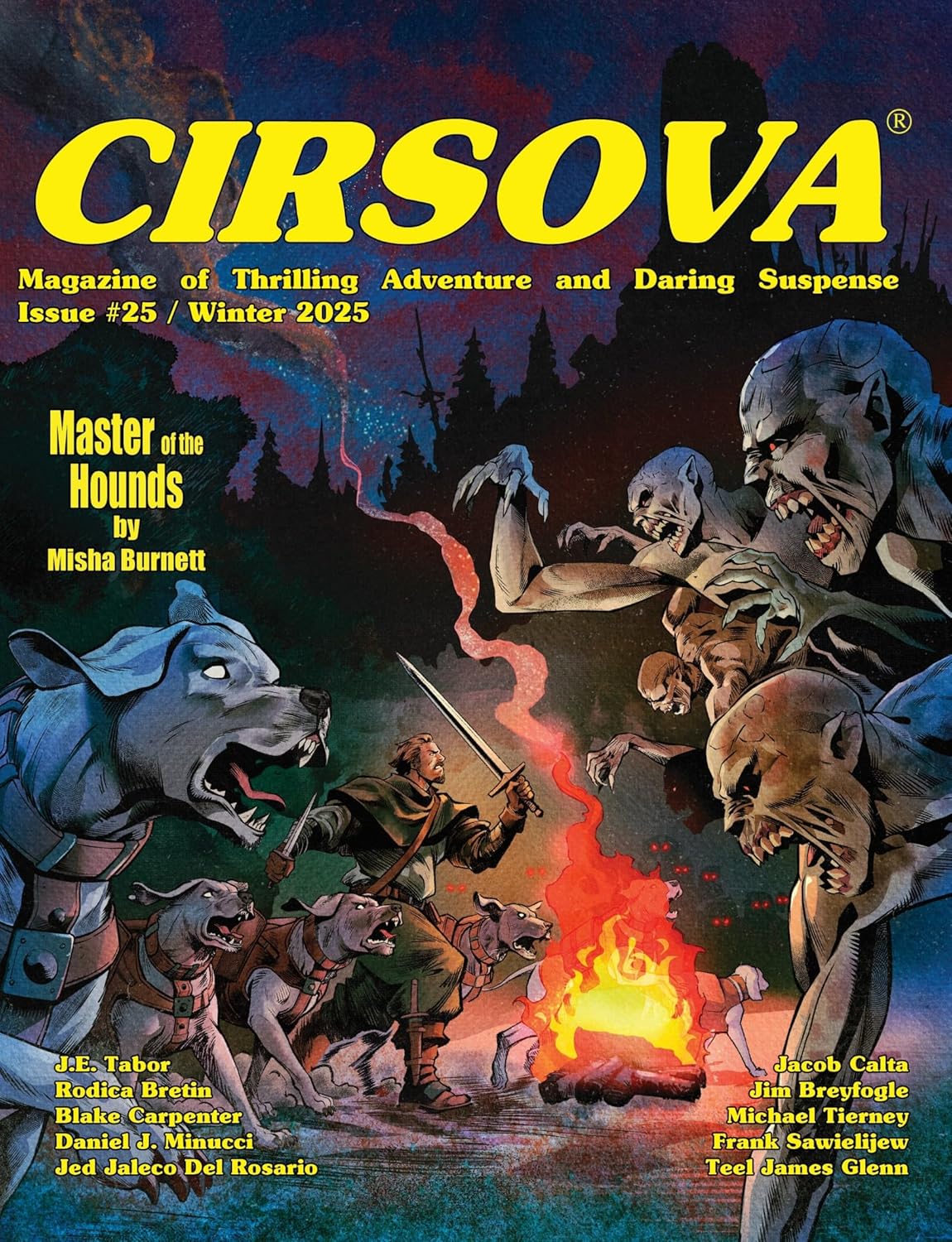
Cirsova and Jim Breyfogle have been a double team of great storytelling for years now. A good reason why I approached Cirsova for Star Wanderers was because of how well the two of them worked together on their projects. Therefore, if you missed out, I can promise you that this is the perfect place to jump on.

The description:


He's a brash young bravo, eager to prove his worth with a blade. She's a mysterious rogue with a head for history and razor cunning. Together, they are the Mongoose and Meerkat!

Whether they're looting haunted dungeons, fighting demons and necromancers, or just settling labor disputes, this swashbuckling duo is ready for anything! Mangos would love nothing more than to earn a name for himself and keep himself comfortably in coin. Kat, however, has more far-reaching plans for her wealth.

The City State of Alness has fallen to a band of mercenaries and brigands who have ravaged the north lands. Amidst the rumors that an Alnessi royal may have survived, the Mongoose and Meerkat must navigate all manner of intrigue and betrayal to win the fame and fortune necessary to restore the once-mighty city.

Originally serialized in 18 installments from 2017 through 2023 in Cirsova Magazine, Jim Breyfogle's Mongoose and Meerkat became one of the iconic Sword & Sorcery teams of the Pulp Revolution. Now, you can have all of their adventures in a single gorgeous volume!

Plus, this collection includes an all-new side-story, Chasing the Cat Sword, featuring the mercenary sisters Daini and Kairi and has world-shaking implications for the Mongoose and Meerkat lore!


Once again, you can find it here!

Next, let us go into weirder territory, as we usually like to around here.


Back it Here!


For those who remember the scandalous Sword & Scandal campaign, comes the follow-up: Jungle Scandals! The previous hit campaign was based on the idea of Sword & Sorcery tales that get a little too close for comfort. This one aims for the lesser-known these days jungle tales. Stories of the deep dark that get a little deeper and darker than might be comfortable.

I've always had a mixed relationship with NSFW stories because of how one-note they tend to be, but J. Manfred Weichsel always manages to make them interesting in a way that has me considering a new angle on a topic. So while such things are not usually easy to recommend, I would always do so here for those who want to try something a little bit off the beaten trail.

The description:


"This time around, we're touring the jungles of the world, taking stops in Africa, Indonesia, and the Amazon, and we'll be taking our inspiration from the likes of Edgar Rice Burroughs, Joseph Conrad, Rudyard Kipling, and H. Rider Haggard.

"But, while those writers all had more or less Victorian sensibilities, we'll be filling the pages of our book with more gratuitous nudity, sex, and gore than you can possibly imagine! Some today find the old writers problematic. We think they're not nearly problematic enough!

"These stories will retain the sense of fun and wonder from the jungle adventures of old. But they will be absolutely insane with all the sex! If you read our last book, then you know we don't hold anything back.

"Just like Sword & Scandal did, Jungle Scandals will have an open call for submissions. The submission guidelines will be posted in various places around the web where authors go looking for open calls. This process makes selecting the stories democratic, and ensures the anthology gets the best writing it possibly can.

"Last time, we received 47 submissions, out of which we selected 11 stories totaling 60,000 words, plus the 5,600-word story author and editor J. Manfred Weichsel wrote with the backer who selected the design-your-own-story tier. Including the editorial material, the book totaled almost 70,000 words.

"Because we are a little more established this time around and have a bit of buzz, we expect Jungle Scandals to receive even more submissions than Sword & Scandal did.

"Unlike other publishers who tend to play it safe with their selections, we will be looking for the wild, strange, and outrageous. We want to publish off-beat and off-the-wall fiction that would never otherwise get to see the light of day.

"Humor is also a big part of what we do. We will actively look for stories that incorporate a similar sense of humor as ours: dry, sardonic, and satirical. We enjoy humor that is character-driven, dark, and surreal. But we also like farce."

You can find the campaign here!

One more to go:


Back it Here!


Lets end it off with something a little different. This is the coming On My Ghost by Ghostmaya. This is comic romance series currently running on Webtoons, and this it the most recent crowdfunding campaign for it.

To explain all the intricacies of the story would take some time, so I'll just cut to the chase with the overall gist of it.

The description:


Oh My Ghost is a wholesome Action Comedy Romance Supernatural Horror Mystery webtoon series that is currently 7 seasons with 1000+ episodes ~

The narrative is about a human guy, (Loi), a poor guy who is desperate to find a place to stay. So, Loi decided to live in a very cheap haunted house where he will meet Maya, the ghost, who is scared Of ghosts and other scary stuffs. and who likes to eat. Yes, you READ IT RIGHT~! This ghost can eat because logic is useless here in this series~


For more information, you can be here!


And that's all for this time. The year's just starting but already you can find a little bit of everything just waiting for you. February has just started but I can promise you many more surprises ahead, including from myself.

Until then, just dig in for yourself and enjoy the wild world of NewPub. There's plenty to go around, and it's not stopping anytime soon.