Showing posts with label Heroes. Show all posts

Saturday, July 12, 2025

Weekend Lounge ~ Are Heroes Dead?


Welcome to the weekend!

Been quite the scorcher around here since July started. I hope you're managing to keep cool. The heat doesn't look to be easing up anytime soon. But enough of that, let us get to today's topic!

Let us talk about heroism.

For a long time, ever since at least the 1990s, there has been a problem in understanding the purpose of heroes and heroism in storytelling. Before that decade that believed subversion was the future (a vision that eventually lead downhill to complete bottoming out completely in the 2010s), writers and authors had a clear vision for what it meant to be a White Hat in a story. That was eventually lost. Now, because of this modern misunderstanding, it has taken an entire industry of people divorced from the mainstream to basically figure out how to get that lost notion back. The 2020s has been a real relearning experience over this and many other subjects. As has been said, a lot of it is like relearning to ride a bicycle.

The above video by The Second Story channel (the same one that exposed "Fantasy" as being a Del Ray formula, not a genre) has decided to weight in on the muted nature of heroism and good in stories these days. What happened to what was once so obvious an idea and why can even a series with such wanton death and subversion like Attack on Titan still manage to understand heroism more than our comparatively simple superhero movies. It is a good video that seeks to answer the question we've all been asking for years now. What even is a hero anymore?

As has been mentioned before, the modern obsession with villains and "anti-heroes" came about because morality was thought of as simplistic and lame. This was brought about because out culture had lost what made a hero so admirable and worthy of imitating. Heroism became a weak frame that holds do-gooders back from "doing what is needed" and keeps them one note "paladins" who have to meekly follow whatever law that binds them. They're all weak and feeble-minded dupes who can't possibly be as cool as the rogues who do whatever they want, morality be damned!

Of course, none of this is what good actually is (nor what real paladins actually do, believe, or act like), but it has been a misunderstanding festering for decades now. In fact, the source might be traced way back to the age of Saturday Morning Cartoons when Peggy Charren told parents that heroes shooting villains is uncouth and it is a moral duty for heroes to spout textbook catchphrases and government approved laws directly back at the viewer so that they don't forget to become a good citizen. School never ends for children, after all.

This generation then grew up, and brought this mutation of morality to full flowering in mainstream storytelling, whether by aping it or by subverting it, but neither side seeming to understand that the entire frame is warped to begin with. That is what has lead the current industry to have such a superficial version of Good and Evil as concepts: it is all filtered through the ACT, and few from back then have realized its influence on every corner of modern life. "You are what you eat" doesn't just refer to food.

It is much how you come across people who speak like sitcom characters or use internet vernacular in real life. It is learned behavior, and it has affected everything.

That's right, much of the modern idea view of heroism, and it being entirely western in creation, comes from the already backwards understanding of morality embedded in the heads of the Saturday Morning Cartoon generation, a medium that was deliberately heavily neutered and watered down to get children to understand the importance of recycling, listening to teachers, and preventing the third (and first) world from breeding by equivocating them to rats (Captain Planet & the Planeteers still airs on TV, by the way), and how all villainy in the end is just one-note buffoonery or evil for evil's sake. To the Saturday Morning Cartoon generation, you either are good by doing what the Good Guys say, or you are an evil scourge to be eradicated. It is this absurd now because we let absurd people talk us into this.

And now you also know why the modern political climate is the way it is, and why a whole generation cannot seem to understand the motives of people they see as cartoon villains needing to be thwarted like the heroes in their cartoon shows always manage to do. Don't you know Sonic the Hedgehog shares my thoughts and beliefs on the constitution! It's this ridiculous now for a good reason. None of this came out of nowhere, and it is not normal or natural to think like this.

Regardless, everyone used to know why The Shadow gunned down villain and why Mack Bolan went on his revenge quest, and they were not called "anti-heroes" at the time, because they weren't, and aren't. They only come across that way when filtered through Saturday Morning Cartoon logic that was picked up by generations under the Baby Boomers who then carried it into other mediums like comic books and video games as they grew older, as well as the ever-popular video essay on YouTube. This misunderstanding of morality has poisoned everything in the west. This is why heroism is so massively misunderstood today. For generations, this was seen as normal and The Way It's Done, which is what lead to the dead end we cornered ourselves into. We had an artificial morality as a frame and we've yet to fully cast it aside into the dustbin of history.

But it is being cast aside. Slowly and deliberately, it is being done.

There is a realization here and that's that we don't live in the Saturday Morning Cartoon era anymore. A generation of kids have come of age never experiencing that mutation of morality and are now working on their own stories without even considering those once expected rules. That leaves the rest of us to make a decision to finally decide whether we want to continue down this path, or finally admit we might have been wrong all along. Heroes are not what we thought they were: they really are so much more.

Heroes were never boring, we just became boring and forgot what heroes were supposed to be in the first place. Once we rediscover that lost art, we'll be on the right track again. It's going to take some time, and a lot of arguments and butting heads, but it will eventually happen. You can see the change everywhere outside the mainstream.

The future is as inevitable as the Truth prevailing in the end. Good always wins, just not always in the way we might expect it to.

In other news, there's only a few days left to get two of my books for a buck! You can get both The Last Fanatics and Y Signal on Amazon for some quality summer reads. I particularly recommend The Last Fanatics if you only read the blog version. It has been edited quite a bit to fit into book form, and those are my preferred version of the texts. Either way, enjoy yourself! Summer should be a good time.

That's all for this week, and I will see you next time!


Friday, September 16, 2016

The Anti-Hero Question

Since the 80s, there has been a certain type of protagonist that has taken the spotlight from the traditional role of heroes and villains. It's not the reluctant hero, or the reformed villain, but the hero that isn't really a hero at all. He still reigns supreme today.

I'm not sure what brought about this change, except for certain audiences love of moral ambiguity, though these characters soon ended up choking out a lot of the fun of comic books. Reading lighthearted fare like Whizz Comics now is next to impossible without an intolerable dose of "irreverence" and winking humor. It's pretty much grimdark, or obnoxious comedy, with no in between.

But that's not what I'll be talking about here.

I want to talk about the most popular examples of this type of character, and what makes them so well-liked. What makes them work, and if they are really heroes at all.

The first is one of the most popular examples of an anti-hero.

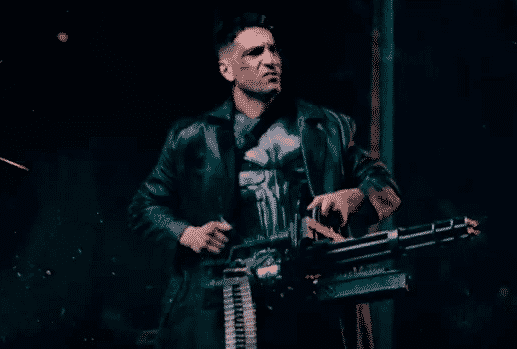
Jon Bernthal as "The Punisher"

The Punisher is the most popular example on an anti-hero. The Netflix Daredevil series had possibly the best portrayal of this sort of character that I've seen. Well, next to Paul Kersey in Death Wish, where he was not touted as anything but a vigilante. The Punisher is usually treated as invincible and unstoppable. He was clearly certain writer's and audiences favorites as he won battles he never really should have. The Netflix version was different. The Punisher there was portrayed as broken, and very fallible.

Now, he wasn't portrayed as a broken, weepy ball of wussy who won't do anything. That's a different sort of anti-hero. He was portrayed as a desperate man, hitting back at the injustice of the world in the only way he knew how. He became a different sort of soldier, to fight a war that he had every intention of dying in. It was a suicide mission.

He isn't a hero. In the Netflix series, he actually comes very close to being a villain at many points. There's no ambiguity about it. He almost kills innocents, he has no value for life, and he teeters on the edge of self-destruction. The Punisher is just a murderer with a vendetta.

The difference is that as the series goes on we learn more about Frank Castle the person. We know that he isn't as dead inside as he thinks. He is still a human being. There are still flashes of the good man he once was. But he buries it deeper and deeper into blood with bad decisions. It becomes a question if he can ever truly find his way out again.

That makes him interesting as a protagonist, but not as a hero. And it's not because he kills people. Not totally, anyway. Sometimes, it is the right decision to make to kill a threat that cannot be stopped by other means. Would the Punisher kill the Joker, for instance, I don't think many would argue it the wrong decision. It depends on the context. But going out and murdering every two-bit thug in the city is not heroic. Shooting a purse snatcher is hardly the paragon of retributive justice.

I like this version of the character better because he is not treated as someone to look up to. He's not treated as invincible. There's a very well done courtroom scene where several people try to paint Frank Castle as a hero with pretty speeches, and it clearly bothers him a lot. This eventually boils over at a particularly heated moment. His reaction to what they say shows a very clear 180 degree turn from where he was at the start of the series. He knows what he is, and it's not something anyone should aspire to.

But the Punisher is merely the most popular example of an anti-hero. Are there other types of anti-heroes beyond this? I can only really think of one, and I'm not sure if I can call him an anti-hero. You'll see what I mean.

The Shadow

The Shadow is a vigilante. But he's a different sort from the Punisher. He is a being who steps out of the corners of criminals' minds. He faces them down with the reality of their deeds and though he might murder them, it is something he must do for justice itself. He punishes the unrepentant so that the innocent may remain so. Is he an anti-hero?

This is where an argument can be made. Nobody knows what the Shadow actually is. Is he a person who made it his job to take on crime? Is he some being that has been tasked with judging the guilty and sending them to Hell? There is no canonical answer to these questions. To me, that's what makes him a fascinating character, and more than he first appears.

Is he the physical manifestation of Justice? It's never explicitly stated what he is, but that is a possibility. If he is, then is he really an anti-hero? It's hard to argue that he is, if his Justice actually does transcend man's law.

But it can still be argued. That's what makes his case an interesting one.

This was actually one of the problems with the Alec Baldwin movie from the '90s. Along with some sex jokes that didn't fit the tone, The Shadow's abilities were given a sort of origin (as opposed to the men of Kent Allard and Lamont Cranston, who are separate from those issues) robbing him of mystique and power in the process. He still has much mystery, but the Shadow was humanized, and it hurt the character. It remains the weakest point of the film.

The Shadow has agents who work for him, all in special roles, to destroy the evil gripping the city. They are saved by him, and in turn work for Justice itself. They do not question what they are fighting. They know it is evil of the worst sort.

When he confronts villains, he tells them straight out what they are, everything about them, and they are always the unrepentantly evil type. He confronts evil to crush it, not to let it slither away. They are like if Batman lets the Joker walk away. How many lives would be saved if they were stopped from their deeds to poison the lives of men?

This makes the Shadow a far more interesting character than the Punisher, at least as far as heroics are concerned. The Shadow faces evil itself, and extinguishes it, so the light can shine. He has a very specific purpose. He reminds villains of the eternity that awaits them, before he delivers them to it. There aren't really any other heroes like the Shadow.

But all this avoids my question. Is the Shadow a hero, or an anti-hero?

I think this would depend on what your view on a hero is at his core.

A hero is a champion of the people, someone that can be looked up to as an inspiration, or a symbol of justice. But what is the right way to be that hero? What is the right way to administer justice, keep mercy alive, and fight the darkness without succumbing to it? That makes for some good speculation.

The Shadow is a force beyond us. We can't be the Shadow like we can be the Punisher. He is a pure being of Justice, who administers mercy to the truly lost and empty (see the first novel), and is looked up to as a symbol of hope that this world can reach daybreak and escape the night. He may not be what heroes are known for being today, but he has many of the best qualities of the best heroes.

But then we get to the murder issue. This is not something that used to be a problem, even Batman used to kill, but as comics have gotten older, so has the debate on this issue grown. Suffice to say, we have ask if killing is ever permissible.

The argument would be that because the Shadow kills, that makes him an anti-hero. Does it? As alluded to earlier, and pointed out in Frank Miller's The Dark Knight Returns, this is not a black and white issue. Not when you are fighting on the side of justice against evil. How many would have been saved had Batman (or the justice system) killed the Joker instead of bringing him to the police over and over? Is that really justice to let unfettered evil walk away with a slap on the wrist, and free to continue their ways? We know the Joker will never repent. So why should he live to murder hundreds of others? That is not justice.

It must be noted, again, that the Shadow is not Batman. He's not the Punisher. The Shadow does not hurt or kill innocents, he does not hunt the truly repentant, and he knows more about the villain than most heroes know about their villains. He knows exactly who he is pursuing. Would he kill someone who truly would throw away the sword and reform? I'm not so certain he would. Of course, I haven't read every Shadow story, but as an administer of Justice, he would have bigger fish to fry than chasing down such a person. This is a man who went after Nazis, for crying out loud. He knows what evil is.

That's a long way to say that you could make a case either way. He could be read as a hero, or an anti-hero. And it's what makes the Shadow such a fascinating character to speculate about. I personally consider him a hero, a being of Justice, the Reaper himself, coming to extinguish the night so the dawn may rise. He is a being quite separate from us.

But you could argue it the other way just as easily. The Punisher is really only one thing, and there is little debate about that.

The difference between these two characters is purely in execution. Quite literally. They both make the reader ask questions of the concept of heroes and villains. What really is a hero? Is he someone who fights evil without succumbing to it? Or is he someone who destroys evil without destroying himself? Is he an upholder of Politically Correct values, or does he fight for something more noble, and far older than himself? This is the question the reader must ask himself.

The only conclusion I can come to it that evil exists, and it must be fought. How we fight it can always be argued, but it should never be argued that it exists. Should we fail to recognize it, we will lose ourselves to it. It will never truly disappear as long as existence stumbles onward, so we must remember to be vigilant. There is a line, and no mater how blurred we might try to make it, it is always there, and waiting for us to cross it.

Live in the hope that one day the weed of crime will finally be uprooted. Until then, keep digging.

Monday, May 9, 2016

The Man Still Standing ~ A review of Captain America: Civil War

I recently saw Captain America: Civil War and thought a post on the movie would be apt considering everyone else is making one. But I'm going to go a little different and speak of the Captain America trilogy as a whole.


Before we begin, I thought I would mention a little background of the Captain America film series. I will be skipping the Avengers films and any others starring other superheroes for this post. This review is going to be focused on Civil War being the third, and probably final, installment of the Captain America film series.

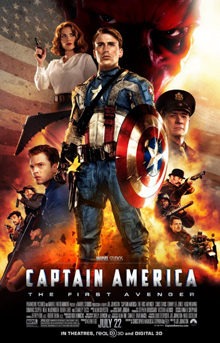
Back in 2011, Marvel had only recently launched its new Marvel Cinematic Universe with the remarkable Iron Man, it's not-so-great sequel, and the fish out of story Thor. They were good, for the most part, with the original Iron Man being by far the best. The third new property was known as Captain America: The First Avenger, ostensibly a war movie directed by the man behind cult favorite, The Rocketeer, but really an old style superhero movie in the package of the Golden Age of comics. It's a film that isn't highly appreciated these days, or mentioned much, what with its very old school approach and morals is still unheard of in the realm of superhero movies. Yet it set the tone for much of the best parts of the Marvel Cinematic Universe.

The First Avenger centered on Steve Rogers, a scrawny kid from Brooklyn, who is so puny he can't even join the war effort against the Nazis. But after an experiment for which he is chosen because of his heart and nothing else, he begins his career as a Super Soldier: a man capable of super strength and agility. He fights against the Nazi war machine before they are overtaken by the Hydra organization, run by the tyrannical Red Skull. He fought with a squad by his side, a classy dame named Peggy Carter, his best friend, Bucky, and a shield made of vibranium made by super-genius, Howard Stark.

The film opened well and formed a great foundation for Steve Rogers as a character leading into the even more popular Avengers. That said, it is a great start for the series, one that has aged excellently, and only gets better on multiple re-watches. If you haven't seen it in a while, you might be pleasantly surprised with how good it really is.


But as good as Captain America: The First Avenger was, it only got better from there.

At the end of the first movie, Steve Rogers sacrifices his life and crashes a plane in the arctic to prevent countless people from dying. In the process he is frozen under the ice and not discovered for decades. Years pass and it turns out, even if he didn't die, that he did lose his old life. Everyone he left behind had lived their lives without him and had passed on, leaving him as a man out of time in the modern world.

The second film in the series, Captain America: The Winter Soldier, is about how Steve Rogers, as a man the world had forgotten, finds his way in a world much different (and not so different) from the world he had left behind. More than that, it is about how far the world has come since the "Greatest Generation" and where it's going next in the morally vapid modern age. It turns out that the forgotten values of Captain America might just be what the modern world needs after all despite how antiquated he is. While the first movie was a war film, the second is a full-on '70s spy thriller and totally changed the tone of the series.

Cap works for the people who unfroze him from the arctic, a secret government agency called S.H.I.E.L.D., to stop terrorists with his special strike team. The boss of the organization, Nick Fury, is a modern man who has his eyes on all the players and his fingers in all the pies and thinks the key to saving the world is to keep it under the right man's thumb. What ends up happening in Winter Soldier is how very relevant the past can be, in more ways than one, and how despite how advanced and far along we have gotten since the second World War, things are still fundamentally the same as they ever were no matter how much we might deny it.

This film tests Steve Rogers in a way that the physical challenges of the first didn't. It tests his traditional values and beliefs, leaving in a climax that's both jaw dropping and reaffirming Captain America as the hero the world desperately needs just as much as it did back in the war.


The most impressive aspect of Captain America: The Winter Soldier was how it took all of the ideas and themes from the first Cap movie and pushed them even further. The decision to change the war setting to a spy one and the contrast of the films between the idealistic past and pessimistic present not only strengthens both films, but leads Captain America on a path none of the other Marvel series have been able to replicate, even now.

But it doesn't stop with those two films.

Now we get to the newly released Captain America: Civil War. After the events of the second film, Cap is still around in the present, but he now leads a new strike team with those who have special abilities, just like he does. An inciting event occurs and a disaster on one of their missions leads to innocent people dying and the UN demanding that people like Cap have to be held responsible for their actions and kept in check.

Howard Stark's son, Tony Stark, is also a hero like Steve called Iron Man and has been working with him for years now. The two both have complicated pasts, which is what leads to their opposite solutions on how to deal with the situation as it comes up. What enfolds is a conflict that starts explosive and public, but eventually, and slowly, winds back down to personal stakes. That's strange for a superhero movie, but for a Captain America movie, it can really end no other way after the explosive finales of the first two films.

As a conclusion to Steve Rogers arc from the first two movies, it is quite potent. It flips an early scene from The First Avenger on its head to show not only has Cap come far, but he's the same scrawny kid he's always been, refusing to back down from what's right. It also pushes on the themes from Winter Soldier about how the darkness of fear and revenge will not win out over truth and goodness. At the end of the film, things are not the same and probably never will be again, but Captain America and Iron Man are still standing despite the doubt and evil that has befallen them. They will keep fighting for what is right.

Despite everything Steve Rogers has been through, he was and forever shall be a hero. Nothing will break him down from doing the right thing--even if the whole world is against him.

And that's where the trilogy finishes. Starting with a scrawny kid that can't even protect himself, he ends up a hero standing up for the whole world who will never be broken again. It is a fantastic end to a fantastic trilogy.

But there is one more thing I wanted to point out.

One aspect of the Captain America films that no other Marvel series (or any other comic book based hero movie has done) is how each film represents a different era of comics.

Captain America: The First Avenger is clearly the Golden Age of comics. Larger than life heroes and villains clash on an epic scale. The good guys are true, the bad guys are unrepentant, and everything is unambiguously clear. It also forms the bedrock of everything to come.

Captain America: The Winter Soldier is Silver Age, matching the '70s spy fiction feel it gives off. Good and evil are still there, buried a bit under the surface, and things might get muddy or more serious, but still heroes are heroes and will do what they must at the end of the day. Things can still get outlandish just like in the Golden Age, but everything is brought down to a more slightly grounded level allowing for character development not possible before.

Captain America: Civil War is Bronze Age, through and through. Heroes fighting heroes, villains scheming out of the spotlight, and things not always being what they seem at first. Civil War, however avoids the Bronze Age trap of moral relativism by never having the heroes or villains forget that they know who the real good or bad guys are even when it gets dark. Still, despite all the awful things that may occur, a hero is the one still standing for the right thing at the end.

That this series of films manage to touch so well on each of these areas speak very well for it a unique superhero series. Despite being part of the overarching universe of Marvel movies, they tell their own story and arc that stand well on their own.

And with Civil War being an excellent film in its own right, the Captain America series now stands as the best superhero trilogy ever made. Nothing else comes close.

If you have never seen the Captain America films, or Civil War, then you owe it to yourself to see them. You will not be disappointed.

Thursday, February 25, 2016

Daredevil Season 2 is almost here!


I've posted before about what a huge fan I was of Daredevil season 1. It really felt like the right way to make an adult and mature superhero show. And season 2 looks to be even more in that same vein.

First we have out hero dealing with the rise of an anti-hero known as the Punisher, Frank Castle, who had his family murdered by criminals and took to making them pay in return. This is a moral battle our hero, Matt Murdock will have to wage as Frank Castle kills every criminal he comes across as ruthlessly as possible. He is a broken man, and Matt is two steps away from being like him.

The first season had him up against the Kingpin, Wilson Fisk, who was Matt's opposite in every way, both in ferocity and in end goals. This time Frank Castle is a mirror image of who Matt could be should he make the wrong decision.

But that's not all.


An old flame of Matt's is back in town and informing him that he didn't actually beat the criminal element down. More merely arrived to try and take their place.

Now Matt might be fighting an endless war and there's no guarantee that he can win.

To be perfectly honest, this is exactly what I was hoping for from a second season of Daredevil. Continuing on from the themes that made the first season so great, this looks like it might actually outdo the first season. And that's a tall order.

March 18th can't come quick enough!

Tuesday, September 1, 2015

Heroes: A Look Back [Season 1, Final Part]


Finishing up the first season of Heroes left me with mixed emotions. Certainly it was nice to see everyone involved in the finale, it certainly did not come together all too well. There were some good characters and reveals, but there were also things left unused and undone and the stinger at the end of the season was not anything I wanted to see from this show.

Claire did not have her memory erased, but everyone else in her life was essentially written out of the show (including her newly revealed mother) because the writers decided to make her father a character that just so happens to be a main character. This is a disappointment, but it does give her some development as she learns about her family. At the same time, her father ends up being one of the more interesting characters on the show when he stops inadvertently turning his wife's brain to mush.

Hiro's plot-line got momentarily derailed by family squabbles, but eventually lead to one of the best episodes in the season which is basically this show's version of Days of Future Past. His friend, Ando, also becomes much more or a hero in his own right despite not having any powers of his own. His story is almost ruined when, at the end, he fulfills his destiny and teleports to, uh . . . Ugh, I don't even wanna take about it. Let's just say that I would have preferred if the show kept its original idea of keeping each story limited to the season it was in. Hiro's story was complete, what happened was just superfluous.

Matt Parkman's story finally becomes worth paying attention to when he is approached by two characters (one of which is jarringly never seen or mentioned again) and is brought directly into the main story. He finally manages to be a real cop and put his power to good use. No more relationship drama or everyone calling him a jerk (for no reason, most of the time), just finally dealing with the main plot.

The low point of this season, however, has been the whole Nikki/Jessica storyline. It was an eternal cycle of Jessica being horrible and killing people, D.L. threatening to take their son away, and Nikki crying about it. Over and over. Their story ends with a confusing death of a villain that doesn't make a lot of sense if you think about how it was achieved, but leads to Peter getting a power that helps him tremendously in the final battle.

Speaking of, Peter's storyline was probably the best storyline in the season. It was the one I wish the rest of the show was more like. From the Invisible Man, to the Exploding Man, he is given a lot to do and a lot to parse through, leading to a final battle with a man who has similar powers to him, but is in a very different place.

All in all, it was a pretty good season with some warts to it. I can sort of see why it was seen as a "LOST-killer" when it started since people were getting sick of LOST spinning its wheels at the time, but it certainly wasn't amazing the whole way through. And from what I hear about how it degrades later, I doubt it will ever retroactively reach that level when looking back.

I'm leaving the province for the next few days, so my friend and I will not be able to watch any more Heroes for a while, but I don't think I'll be too eager to see more. Superheroes on TV (and in film) have come a long way since Heroes, but there is a lot of good here to admire. As it is, I'm glad I watched the first season.

I can't say much for the latter seasons, but season one of Heroes is solid television. If you're a fan of superheroes, you could do much worse than sit through this season of the show. At the very least, it should get you prepared for the new mini-series starting this Fall. I can only hope it manages to top season one and washes out the bad taste a lot of people have for this show. It certainly would be nice.

Tuesday, August 25, 2015

Heroes: A Look Back [Season 1, Part 2]


I was able to watch a few more episodes of Heroes, bring me about two thirds of the way through the first season of the series. My overall impression is that the series is currently not as strong as it was in the first part of the season with the Save the Cheerleader, Save the World story-line and that the new How to Stop an Exploding Man is suffering from some pacing issues.

For one, we haven't seen the exploding man for more than a minute or two so far. For another, there's only been one new character worth talking about and one character death that was fairly stupid, But the biggest problem is that not much has actually happened compared to the first half.

Peter Petrelli is learning about control of his powers from, literally, the Invisible Man, and . . . actually that's the only story that's really advanced.

His brother is still a jerk, Nikki's story-line is circling the drain, Mohinder has had about 5 minutes of screen-time, Hiro's quest has been derailed by unneeded family squabbles, Sylar is still killing people, Claire and her friends and family had their memory wiped bringing them back to point one again though at least she found her birth mother. And no that I think about it, why didn't Claire's father order the Haitian to wipe Sylar's mind so he would forget his daughter? He certainly has no problem destroying his son's mind with his employee's power, why not an actual, you know, threat? But I digress.

This is the problem a lot of series that have a 20+ episode season have. In about the third quarter of the show, everyone stays in a holding pattern until the end because they have to save their big reveals until the final few episodes. This means a lot of stalling.

Unfortunately there isn't much for me to talk about this time except that the usage of the Invisible Man has been on of the series best decisions so far. It adds a sort of world-weary figure and guide to Peter who had otherwise been flailing around without any direction and explaining his power as something truly interesting. Where this leads I can't be too sure, but for now this has been the best development of the show in recent episodes.

Claire's mother story-line impact would have been better if her father hadn't literally reset everything to zero and have her not remember anything that happened to save her from Sylar at the halfway point of the season. I'm curious to learn more about her and her relationship to her daughter, but for now we instead involve Nathan Petrelli in another story he doesn't need to be a part of. I obviously don't find the family anywhere near as interesting as the writers do, but I'll just have to deal with this revelation and hope it actually leads to something and makes Nathan actually do anything other than be smarmy for awhile.

I guess I'll just have to see what happens next before I can say more. I do hope the season finale lives up to what they are building up to and this holding pattern is broken soon.

Wednesday, August 12, 2015

Heroes: A Look Back [Season 1, Part 1]


This might be strange to anyone reads this blog, but I never watched the mega-hit TV show Heroes when it originally aired. At the time I was so burnt out and tired of television that even hearing about a "LOST-killer" didn't really satiate my interest. So I never watched beyond the premiere episode.

To take you back to 2006, you'd have to remember that I like my shows more bright and hopeful-- sitcoms were dying due to aping Friends endlessly and dramas were all about grim and gritty. Neither of those has changed much, not to mention the reality show glut remains and single camera sitcoms are still basically all the same show of neurotic characters giving interviews for some inexplicable reason for easy punchlines, but there has been more of variety out there than there was in 2006 when Heroes premiered.

Since the superhero boom has been such a success for those of us who missed stories about people trying to be heroic and not moping around in pointless despair, I decided to go back to the show that first tried to make a drama about them. Now, I know a little bit about the show and how it slid far downhill, but I still wanted to give it a chance. Since it is having a revival mini-series this year, I thought that now would be the perfect chance to do so.

With a friend of mine, we watched the first half of season 1, which I had never seen before and which he had not seen since it first aired.

Early impressions? Pretty good, actually.

The characters all have good starting points and motivations. Claire Bennett is a cheerleader that is indestructible, Peter Petrelli and his brother, Nathan, have a combative relationship despite discovering they have unique powers that could change it. Hiro Nakamura believes he can save the world and be somebody special. Matt Parkman is able to read people's minds. Niki Sanders is a mystery even to herself. Mohinder Suresh is determined to find these people and learn more about his deceased father. Then there's the mysterious Mr. Bennett and the Haitian searching for those with powers for some strange reason and the villainous Sylar, who enjoys killing and taking powers for his own. All of this happens in the first half of the season, and there is quite a lot of build up in it that makes it easy to see why it was a hit.

The special effects are nothing much to write home about, being as the budget wasn't that great for the time. Some of the show can get way too graphic with the violence regardless, and some of the plotlines can get a bit soap opera at times. It's also hard to empathize or really wrap your head around some characters at this point like Niki Sanders who is more confusing than anything or Matt Parkman whose life is really unnecessarily overbearing for a normal police officer.

Where Heroes succeeds at this point is in the mystery, We don't know where any of this is going, or where the power came from, or what it's all for, and that makes it an interesting watch. The pacing, reveals, and character turns are all so carefully plotted that you just know someone had this planned out far in advance. There's a lot of good craft at play here.

Still, this is only the first half of the first season. There are still more seasons to go and still half a season left in this one. It could turn at any moment.

But at this point I can safely say I understand the hype and success it had. Now to see if the rest of it's reputation is just as well deserved.

More next time!