Showing posts with label review. Show all posts

Saturday, October 28, 2023

Weekend Lounge ~ The Fourth Wall Crumbles

(Video is very NSFW)


In addition to the recent post on Gen Y's detonation over the previous decade, I wanted to share this video which centers on an old era of the internet, the one before Gen Y really imploded into itself. Nonetheless, it ended up being a warning of things to come.

Few really remember the angry internet reviewer trend of the mid-00s, the time when YouTube took off and its early creators mostly got by on deconstructing and burying their youth and traditions (while also profiting clout off of them), aside from the more extreme examples. This is mostly because the trend ended up influencing the following generation of video creators which either went all in on the snark and bitterness (much of which then spilled over into the Skeptic sphere and then into modern identity politics) or pushed beyond it and mastered the form of video review and analysis with a more genuine take and better executed humor. Either way, it's a very quaint era looking back on now. It's very much a foreign country today.

The one group that really epitomized this brief era of the late '00s to early '10s was Channel Awesome, home of That Guy With the Glasses AKA the Nostalgia Critic and his not-so-merry band of followers. Spinning off the success of the Angry Video Game Nerd, the man who started as the Angry Nintendo Nerd and kicked off the trend near YouTube's beginning, this wave of similar creators were blowing up the then-burgeoning platform and suffering copyright strikes wiping out their channels in the process. I'm not sure how to explain this to younger audiences except that if someone like Red Letter Media put up even one of their videos back then, it would have been deleted and their channel terminated within the day. That is how harsh YouTube's early system was. Even the AVGN barely squeaked by, his channel barely slipping through the cracks because the video game industry, at the time, was not as malicious as Hollywood.

So this period saw a struggling band of video makers desperate for a platform to continue their schtick on. The only problem is that no such site existed at the time. The obvious thing to do was create a website people could go to find them, safe from the horrors of early YouTube's moronic copyright system. That is what the original That Guy With the Glasses website was, and there really wasn't anything like it at the time.

One could say a lot about what happened to that site after it took off, but there were many reviewers on Channel Awesome that achieved different levels of success and infamy. In some circles this stuff was huge, especially among both Gen Y nostalgics and irreverent snark machines. As said, it led to an explosion in this sort of content, much of which flooded every single one of the limited amount of video sites. It looked as if they were going to be the kings and queens of the internet.

And then it all blew up.

The video above talks about this snarky movie reviewer trend and how absolutely strange this whole era was, detached from its time and place, and showing just how that generation saw itself, its peers, and the entertainment it grew up with and shaped them. It's a very odd video talking about a very odd time, but I do recommend watching it. I can't even imagine what the whole thing looks like if you weren't around at the time. The video topic is centered on one of the awful movie projects from back then (spoiler: they were all awful) which really shows you just how strange the scene got by the time it all died off in the mid-'10s.

If you want more on this odd topic, the same video creator as the above video talked about many of Channel Awesome's stumbles and ambitions through a massive review of all three of their movies, highlighting the group's formation, rise, and implosion. This one is twice as long as the above video, but still shorter than the movies themselves, so be warned. Nonetheless, it is a good piece of internet history that will fade away in the years to come, especially as Gen Y continually chooses to turn into themselves and away from the world, so it is worth watching for that.

When you have the time, you can watch that one here:


(This video is also very NSFW)


As someone who lived through that time, I have to say that I remember getting sick of this stuff before the first Channel Awesome movie even fully released in 2010. This whole snarky scene gave me the same feeling as Scott Pilgrim: a Frankenstein monster of stolen parts to build a sub-optimal engine that just doesn't run as well as the original. Nothing new was actually being made. In fact, it was merely a collection of half-tropes glued together by cynicism and a lack of identity. There is a reason few of these creators survived past the trend. There was really nothing else to it.

You can see this for yourself in the above videos. There just isn't really anything there under the surface, and it is hard to understand really why such a thing was ever that big to begin with. But it was, and it is pure uncut Gen Y in a time before that bitter irony warped into despair. I don't know if I'd call it a hard watch, but it's difficult to keep that out of mind while watching.

The scene on YouTube a little better now, for the most part. There's much more of a sense of self-awareness and less ego to what is being created, but it's still a bit strange to look back on what it used to be. You can't even help but wonder: what would these people be like now if the internet had not been around to prop up their negative traits? Where would they have gone without an outlet for this specific niche and interests to tarnish? How different would they be today? Would they even be the same people? We'll never really know, but it is interesting to think about and consider. You never really know what curveball life will throw you next.

Regardless, that era is over and not coming back. We've lived through it and made our choices that have set us on the road we are now on. There is no turning the ship around and doing it over again. We can only learn from our mistakes and apply the lessons learned moving on.

There's nothing else to be done. The fourth wall is long gone, and we can only see the mirror staring us back from where it used to stand. Time to act accordingly.

Anyway, have a good weekend. I will see you again soon enough.


Tuesday, December 13, 2022

So Much for the Afterglow

Find it Here!


The '20s have not started out quite as quiet as the 2010s did. Despite that, it has shown itself a decade of change more than the previous decade has. The only question, it if it will end up being for the better or not. We are about due for a cultural shift. Here is hoping it will be an improvement on the last one we are still suffering from.

Even though we talk a lot about its affects here at Wasteland & Sky, the Current Year of 2022 is the 25th year of Cultural Ground Zero. For those unaware, 1997 was the year western culture flatlined after a slow decline since at least the 1960s, before becoming the zombie monstrosity of a punchline it has been ever since. One only has to look at the events that occurred back then to see how little has actually changed in the ensuing quarter century, which is what the above piece was meant to do. We're still living in the rusted ruins of a world long since executed and left dead, waiting for it to finally fall decay into the dirt.

That said, some of us are still trapped there, and not entirely without reason. That was a time where there was a lot more hope, and people need to live with hope, even when the current times are telling you to not have any. We simply cannot go without it.

So what about that Generation that grew up in that eye of the cultural storm that was the 1980s through the early 1990s? What about those who came of age in a world with more promise and hope than the one that exists today? The kids who grew up in that time period where technology was always Progressing and humanity was readying to reach its zenith, soon learned, in record time, about the truth of this materialist utopia they had been sold. It was never coming.

But that wasn't how it was supposed to go! World peace was a stone throw away. All we had to do was listen to the newsman, our teachers, and our government officials, and sacrifice all that had come before us to the Cult of the New, and we would reach the Eternal Summer we dreamt about as kids. Everything was laid out for us. What was known and advertised as Generation Y back during this time, kids more or less born between 1979 and 1989, the younger siblings of Gen X, were a generation that was sold false hope by the people in charge and were too young and naïve to realize their trust had been misplaced until it was too late. And then they were abandoned for a new cohort made up by the people who wanted you to forget those previous promises.

I wrote about that time period itself in my Y Signal book. For a long time, as someone who was plugged into the decay of Cultural Ground Zero at the time it was happening, I had been trying to understand just what it was Generation Y thought was coming and where they might have gone wrong along the way. The answer turned out to be far more complicated than I could have known at the time. Y Signal was an attempt to see what would happen if Gen Y had an inkling of what was coming ahead of them. How would they react? Would anything change? Could it be changed? How can one approach the world when they were lied about so much of it, even worse when the lies weren't always intentional? How does one deal with that? You can see the final result for yourself, but the book itself is primarily aimed at the time period it occurred in.

However, I'm not the only one who was focused on understanding the lost Generation Y. There are others, thankfully, dedicated to understanding this period as well.

I reviewed author and musician David V. Stewart's Eyes in the Walls a while back. This was a story, not unlike my own, focused on the time period of the '90s and those who lived in it. I highly recommend reading that story to anyone interested in the subject. It really does evoke that time and place to tell its tale. I'm not going to spoil the ending here, but there really isn't any other way it could conclude. That was simply how the 1990s were.

I also partnered with David, as well as author and editor Brian Niemeier, to release Generation Y: The New Lost Generation earlier this year, as a way to celebrate both a quarter of a century since 1997, and to help those unsure of what Gen Y is, to learn what exactly we were writing about. This subject is still oddly contentious, so the book was a necessary release to hammer the research down for newcomers. It was free then, and it still is now!

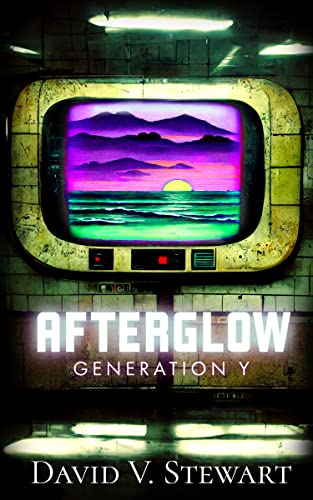
All of this preamble is to get to the point of the matter, which is today's subject. While the above works focus on the era itself and the people who were around back then, I wanted to talk about a different book today. David V. Stewart recently put out another book on Generation Y, but this one instead takes place in the here and now in the modern day. Afterglow: Generation Y is his newest released work, and focuses on our subject, the new lost generation, as they deal with today, decades after their heyday and vanishing into the background like they were told to by the wider culture.

While the other works mentioned above discuss the time period and how it affected those growing up in a world dismantled overnight, this book talks about how that experience led them to where they are today. Think of it as Generation Y: 25 years later, and you might get the gist of it. Where did the New Lost Generation end up?

Afterglow contains original short stories written by Stewart and mostly posted on his blog between his musings on culture and the rapid technological change over the past few years. I admit I had read a lot of these when they were originally published, but still read them over again in the full release here. They hold up very well, especially for those interested in the subject.

He has been writing on the subject for years now, just as a lot of us have been, and the book starts with his original Gen Y story that got him started. The titular Gen Y describes a typical afternoon of a kid getting home after a long day of school to an empty house. This simple tale is short and to the point, but it accurately describes a world that no longer exists, and is long extinguished, and yet perfectly frames the tone going forward. This is a place Generation Y is very familiar with, and it is a place many of them still live in today.

The next piece, Generation Why, serves as a more descriptive introduction for those who might not be able to quite understand the previous fragment of where it comes from. For those who still, for whatever reason, don't believe Generation Y exists (despite the subject having been written about extensively and solidly defined by its proponents for years, at this point) this piece serves to nail down the terms and definitions for the rest of the work to follow. It makes a good case as to why this Lost Generation has been such a hot topic these last few years, even among people who don't quite understand why it is a subject at all.


A different Gen Y tale from the same author!


In total, the book contains 16 pieces of varying lengths. David was kind enough to allow me to include three of them in the above Generation Y: New Lost Generation, but they have a different context here in their original place among the author's other stories. Instead of being used to define the Gen Y experience as a whole, here they are used to paint a picture of people struggling to find their way in a world that has forgotten them and really has no room for the people they were always told to be. The more you argue this cohort doesn't exist, the more you prove just how true these stories and experiences are. Erasure defines their entire lives. They are lost, and have long since abandoned hopes of being found.

Stewart describes this static state as Middlebury, a term he uses many times throughout this book (and which is also the name of the last story) to describe being caught in the middle. He also dedicates the work to those still trapped here. The name reoccurs for good reason.

There was once this term known as "failure to launch" that died out a while back because, well, that would describe everyone in the modern world at this point. The phrase referred to young adults who were unable to start their life and were stuck in a period of adolescence stemming from this inability to begin a career in the rat race. But in a time where careers can be ended with one wrong word (and a definition of "wrong" that changes with the wind), community itself being dead, the media and politicians continually calling for Armageddon against those they are supposed to be serving, and the future looking bleak among those with even a the minuscule amount of IQ, you would be harder pressed to find anyone able to start a "proper" life in a world of alienation where nobody knows your name and has no desire to learn it.

This decay had been around for awhile. The sadly forgotten Bowling Alone by Robert Putnam described the slow death of community over the course of the 20th century and his hopes for a revival based on trust and goodwill. However, said book also was released in 2000, post-Cultural Ground Zero and pre- 9/11, making it the last gasp of a sort of 20th century humanism and trust in Progress that simply cannot return. The book needs to be revisited today, because it (unwittingly) understood a lot of the problems that were to come.

Over time, this festering wound of alienation and atomization became infected, worsening as the years went on due to lack of treatment. Now, all the societal ills and jaded cynicism of today is a result of it never being treated. Even now, as suicide rates continue to rise, we have one western country asking if they can help dispose of the body instead of understanding any sort of cause. This is the exact opposite of what a healthy society would do. No one cares, and they haven't for a long time now. For those who remember otherwise, it is still hard to accept. 

This is very different from the world Gen Y grew up in, where everyone had a shared culture, things were always looking up, and you could always count on at least having something in common with the guy next to you in traffic. You were, at the very least, in this together. Now, you are on your own in every aspect of existence, and all the people who sold you that vision of the future that you just had to pull up your bootstraps for, the one you were lied about, are now told you were never promised anything of the sort. Get in line, shut up, and die alone in a cube. It is a mystery as to why depression and suicide as at an all-time high and rising, though. A real puzzler!

Those suicide rates are the highest they've ever been, and they're only getting worse. Pills and drug usage are more common than they've ever been. Heavy drinking and getting high is considered normal among everyone alive today in a way that was never socially accepted before, and depression is at an all-time high. It hasn't always been this way, and neither had it ever been quite this hopeless for those growing up now without a higher purpose or reason to get up in the morning. What is the point of living to be a cog that will eventually break apart in the grind, only to be replaced when your usefulness has worn out? Is this all there is?

The only way this purgatory can be fixed, you are told, is by voting, and if it wasn't for that gosh darn bad guy team voting against you, the materialist paradise you were offered as a kid could finally be brought into existence. Then you could sit around consuming all day, because there is no other purpose to your life other than dopamine addiction for you and your neighbors. What a horribly vapid existence!

Naturally, this isn't how it really is, but it sure contributes to the radioactive atmosphere around basic discourse these days. As if people need more reason to hate and mistrust their neighbor, to add to the radical individualism of being Special they were fed by Hollywood currently cutting them off from understanding others. Regardless, it's still happening, and it's still only getting worse the more we ignore it.


But you do.


Despite this reality, Stewart's book is not particularly pessimistic about Generation Y's relation to modernity, the antithesis of the world they were raised to survive in. He describes many scenarios and lost people making their way through this defeated era with little in the way of hope, but also find ways to dig themselves free of the traps they had fallen into. Regardless of how bad things can get, there is always purpose, even in the worst moments. Suffering can lead to clarity, to knowledge, and builds resilience. By the end of Afterglow: Generation Y, you will see traces of the world Gen Y were promised springing from their dreams, their struggles, and their newfound hopes, in what they can build in the destruction around them. 

That old hope we had is still there--we just have to dig for it. This might take some time, but it will all be worth it, in the end.

Despite the subject matter, Afterglow is an easy read. Stewart has a comfortable style of settling the audience in and guiding them through his characters' ordeals and has a real knack for finding the core issue they suffer through and what eats at them. At times, it comes across as almost autobiographical, despite that obviously not being possible when one considers what happens to each character in the book. The author gives the impression that he loves these people, and considers them more than just characters in a story, which adds to the impression of this work feeling like he went out and interviewed members of Gen Y for their life stories. If anything, this is the book's strongest aspect and gives it a stamp of authenticity. Should you not understand what this cohort is by the time you are finished with this, you may by beyond help. Stewart adeptly and accurately explains all here, leaving little room for skepticism about the subject and who these people really are.

As mentioned earlier, 2022 was a bit of a banner year for the subject of Generation Y. After years of discussion, the gathered information, the plentiful theories, and the general discourse, has finally begun to hit on a wider scale, defining what so many have been spending their time trying to define. Truth be told, this book is one of the best on the topic.

Afterglow: Generation Y contains 16 pieces of wonder and speculation about a generation that had long since been forgotten and abandoned by the society that spawned it. These are stories about alienated adults trying to find their place in a world that long ago informed them they have no place here. Such a work could easily be nihilistic and hopeless if handled incorrectly. Nonetheless, Stewart's respect and love for a cohort lost in the rusted maze of modernity makes it stand tall. There is no other book quite like this one out there, and you would be doing yourself a disservice by passing it up. One can't know where discourse on Gen Y will go in the future, but Afterglow has cemented itself as an essential part of that discussion. It should not be ignored.

There are certain subjects we in the west need to address if we wish to dig ourselves from the pit Cultural Ground Zero left us in ages ago. Until we do, we will only live in the ruins of a heyday that came and went like a leaf in an updraft. 1997 was 25 years ago--it isn't coming back, and nothing we can ever do will give us the events and miracles that existed to get us to that point, or any other point in history. It is gone. You cannot roll back the clock, but you also cannot charge blindly away from the past and hope it somehow works out for you. We have a quarter of a century of rot to prove blind Progress does not work.

Until we learn to bridge what we lost with a future we can see on the horizon, one we can build towards, we will be trapped in the the dead dreams of a materialistic century that has no relation to reality, and perhaps never did to begin with. That will not lead to any sort of future not still dealing with the sins of the past.

So let the afterglow fade into history like it should. That doesn't mean we can't carry the best of it forward as we face the storm clouds looming ahead. Rough roads await us. There is always a path past them, as long as we find the right trail.

[You can find Afterglow: Generation Y here!]


Thursday, June 30, 2022

The Warring Nineties

Find it Here!


What a mess the 20th century was. Defined by its eternal quest for progress through materialism and unfiltered government control, it took its time ricocheting between shinier lightbulbs and more powerful computers, and killing a hell of a lot of people. The Utopianists at the start of the century soon found themselves stained in a nihilism that wouldn't wash clean, even as they put on a smile and pretended tomorrow would be better as long as we don't talk about the horrible truth behind what is actually being done. It was a time that could only have happened when it did, and will never happen ever again.

At least it's over now.

However, by the end of the century, the children coming up out of this secular haze were more more or less thrown out into an unreality that no one quite understood, even as they insisted they did. There is much hatred aimed at the Baby Boomer generation for not preparing their children for the world, but the truth is that they weren't prepared for it either. There was a script moderns had been programmed with since the industrial revolution that as long as you played your part as a cog well enough that things would just Get Better. Utopia would come, as long as we worked for it. Just keep your head down and pull up those bootstraps. This is all it would take.

Eventually, however, it was learned that it was never going to happen. It was never going to happen because this mentality was the equivalent of building sandcastles by the water. Now that the tide has come in, the castle is gone, and it's not coming back.

The issue is that after the sexual revolution and the general misery of the 1960s, the generations coming up were raised in a patchwork of New Age quackery, unrelenting materialism, and a Utopian mindset that is a combination of both, with a dollop of skepticism because of their spiritually hollow parents not having much of anything in the way of spiritual formation or thought behind why they do or think the things they do. 

Why are we alive? 

What is the point?

Why are we here?

Why even try? 

What are we supposed to do, and what do we do it for? 

The modern script won't answer these questions, and by the time of 9/11 and the start of the 21st century, it had already shown itself as incomplete and incorrect. But without any tradition to look back on, how could you escape it? What other avenues even existed out of this existential nightmare? The rising suicide rates might give you a clue as to if they have figured it out yet.

To sum it all up, a broken framework that only half-worked finally stopped working and has left many without a clue of what to do about it.

This is the perfect recipe for a lost generation.


Cue Generation Y, the gaslit generation; the generation told that following a script would lead to happiness because the perfectly programmed adults had it all figured out. We know where this ended up, but that doesn't change the fact that it has left them, and future generations, without roadmap on where to go next.

But while you see plenty these days from people who hate the Baby Boomers, or have striven to fix their life from where it fell apart, or even those who gave up entirely, you hear little about what it was actually like at the time. What was it like coming of age in an era that was false and plastic while being gaslit into believing it was real?

What happens, then, when you find out it was all fake?

You won't find such a thing from Hollywood. Their attempts at detailing the 1990s involve revisionism or outright lying for propagandist reasons. The movie Camp Nowhere from 1994 is the closest you will ever see what it was like being a Gen Y kid, because it was made when Gen Y were kids, and before Cultural Ground Zero when everything became a formless, grey Mass Media Blob. No, you won't see any true portrayal of the time period because that would give the game away as to just how false it all was.

The only place you will see a proper, unbiased view of the time period is to read stories from members of Gen Y who will reminisce over their past. The older generations were still following the modernist utopian script at that point, and the rug rats were far too young. Only those in Gen Y can truly explain that odd period where everything seemed perfect, until one day it wasn't anymore. Only they can try to put their finger on the problems.

A good example of this lost mindset is in the book Eyes in the Walls by author and musician David V Stewart. This is a unique little book worth talking about, and I will do so here.

The Eyes in the Walls takes place in the 1990s and is about a boy named Billy. He has divorced parents and he also wants to fit in with the cool kids at school, which makes him fairly typical for a Gen Y kid. His mom works in a funeral home, where he likes to hang out after school, and that eventually gets him doing something dumb. He breaks into the funeral home at night with the cool kids and thinks he sees something off about it. This sends him on a crash course collision with the then-modern practices of doping up problem kids for everything, and the threat of death that seemingly hangs over his head. Is this all real, or is he really crazy? Whichever it is, how can he navigate a world that is destroying him inside and out?

The story itself is horror tale of a young teenager trying to both fit in at school and his dual home lives while also an otherworldly thing biting at the back of his thoughts. What the villain actually ends up being, and the nature of the world Billy lives in, both end up tying in together as a surprising sum up of the decade it takes place in.

Without going heavily into spoilers, Mr. Stewart manages to quite adeptly explain through action and character just what it was like back then. The well-meaning adults that felt surprisingly unprepared without answers to simple questions, the materialist attitude that always manages to come up short in the end, and the blind trust in keeping your head down and plowing forward that would surely solve all problems. It's all here, and it all makes for a compelling read.


Generation Y tends to look back on the 1990s with rose-colored glasses, and it isn't always for good or bad reasons. There was plenty to like: the music, the animation, the video games, and the relatively safe neighborhoods and communities. This is one of those times where I can say that how they were portrayed in TV series of the time isn't actually that inaccurate to what it was like. Even in The Eyes in the Walls, much is mentioned of the comfort Billy appreciates and indulges in during the few short moments he can escape his problems. These things were real.

What we don't tend to think of, and which Billy discovers in the story, is that there was not much there underneath the surface. The "systems" we trusted were not made so much to help, but to lazily and easily funnel the next generation into the positions their parents would eventually age out of. The Utopia treadmill didn't leave much time for self-reflection. 

Why? Why are we alive? What is the point? That was simply not something we asked much back then. In fact, it wasn't much different from now in that respect. Consume corporate product as it tells you all the stupid, empty, buzzwords you want to hear from them.

What is particularly interesting about the story is how much worse it would be were Billy going through it today. Once again, I do not wish to ruin the happenings of the story, but everything he went through would most certainly have worked twice as hard to crush him if it took place a quarter of a century later than it did. We have not improved much since then, in fact, things have gotten much worse.

The 1990s were not great, the jury is out on if they were any good at all, but in many ways it does represent the eye of a storm, the calm that comes in the middle of a Ragnarok that many of us were not even aware was happening. It is only when you can appreciate those quiet moments with those you love and when times are good that you understand what this is all for. Billy managed to figure it out, and perhaps we can as well.

It's never too late.


All in all, I highly recommend The Eyes in the Walls. It is a fantastic horror story and a time capsule all in one, and it is a quick read. Just like the best of the pulp stories, one can get in and out quick, and have a lot of fun along the way. Once again, you can find it here.

We don't have a lot of time on this planet. We waste a lot of it arguing, slacking off, going down the wrong road, antagonizing each other, and just generally making dumb decisions. It is a human thing, and it is expected.

But we can change. We can learn. We can become who we were always meant to be. It is never too late to turn it around, as long as we try.

At the end of the day, those warring years between boredom and the grind known as the 1990s are over. That might not always be considered a good thing, but it is a true thing. We are as far from those days as they were from Altamont. Whether we can improve on those days or not is really up to us, but the one thing we can't do is pretend we can still live like that. The 20th century suppositions about existence, the blind trust in material Utopia, and living while running through a script, none of that is doable anymore. That time is over.

Whatever comes next is up to us, but as long as we remember the past and grow from it, I think it'll work out just fine. After all, it's worked out for humanity so far. That has always been one of our strengths. No matter how many times we get beat up, we try again.

We'll get up again. We always do. Next time, we'll learn to avoid the haymaker before it knocks us out.


Thursday, November 18, 2021

Savage Planet


This is one weird world, but I think you already knew that. It would be very difficult to live in these times and not see how strange things can get, especially in regards to how our perception of things has changed so tremendously over the years.

Ostensibly, we don't live in the same world we did even a few years ago, and it doesn't look like we're going to stop changing any time soon. In this sort of climate, can we even agree on much anymore? It seems like everyone is going their own way.

But I do believe there are things we can still come together over. Most notably, we can agree on where reality ends and where fiction begins.

Or can we?

I often wonder about the line between reality and fiction and where it really exists in the stories we tell. Of course one understands that the events we see in the stories we read or watch aren't physically occurring around us at that moment in a way that we can participate in, but there are parts of them that stick with you no matter what happens.

By the same token, advertising and word of mouth reputation can also alter your perception of stories before or even after you've already seen them. This is, after all, why advertising, propaganda, and word of mouth, are so important to sell stories to others. It's difficult to get someone interested via blurbs or elevator pitches, regardless of what experts may tell you. You need to sell "experiences" and "feelings" and such immaterial things, not the stories themselves.

What matters is selling you, not so much reaching you. As someone who has watched a lot of b-movies over at Cannon Cruisers for the last few years, I've slowly realized the difference between what a story offers versus what you are told a story should offer is often immense. Throughout the 20th century, it took a lot of trial and error to get it right.

For an example of this, take 1980s action movies, supposedly stupid films filled with poorly written dialogue that you are supposed to laugh at for being bad. But if you actually watch them you will find this is revisionism crafted by irony-poisoned hipsters. 

Action movies tend to be stories where heroism is rewarded, and the heroism is depicted as being larger than life, which requires larger than life action to match. You'll also find the "dumb" one-liners you laugh at actually are funny and clever, meant to make you laugh to begin with. At some point what you were being sold by those you trusted ends up being very different than what you are getting. Take a look at many internet critics from the '00s mocking Schwarzenegger's Commando over things that are meant to be funny to begin with. It is bizarre.

One would then have to question how many other things we have partaken in have been sold to us wrong. Perhaps we have also engaged with stories that were not presented as what they truly are and ends up successfully driving us off in the process?

I say this because of the obvious dumbing down of popular entertainment into fabricated genres that has been occurring over the past century. You need to check certain boxes to be placed into certain shelves in the correct stores. We've actually gone over this subject before. This obsession with classification overrides actual storytelling intent and leads many creators distracting themselves from what is more important in the creation process.

There is no medium or genre that has escaped this problem, just individual creators that know how to work around these unnecessary expectations.

So let us go into a story that falls into this exact crevice.


One such story I wish to talk about is 1984's b-movie favorite, Savage Streets. This film stars Linda Blair in her second most famous role, and for good reason, though I would argue she only really becomes the central character by the end. However, this is a movie that, in this writer's opinion, has negatively suffered over the years due to what it was sold as being and what others still praise it for. Truth be told, if you've seen it then you probably know what I mean. Savage Streets is not really what you would expect it is based on its reputation among exploitation film fans and those who love so-called trash cinema.

First, let us describe what the movie is actually about before we touch on things like reception or general advertisement required to sell it. The story is actually not that straightforward, despite what the poster at the top of the post or the taglines will have you believe.

Savage Streets is about a group of young urbanites in early '80s New York, all of which have no future or respect for the hopeless world they live in. We follow a group of men and a group of women as they collide and their worlds melt down into nothing.

The story starts as we center on the lone father figure in the movie, an inept middle-aged boomer who impotently wags his finger at his emasculated son not to go out on a school night. The son rolls his eyes, sneaks off and changes into his leather jacket, joining his cool friends for a night on the town. From there we see what the world he is truly living in feels like.

And this clueless kid's experience is pretty much our position going into this movie. We are watching a lost, amoral generation navigate a cruel and uncaring world, flailing in their attempts to interact with and understand the madness around them.

This setup tells us everything we need to know going forward, about the city, about the characters, and about what kind of story this actually is.

Our group of male punks soon comes across the equivalent fiery group of modern women and the two exchange heated words after the former almost accidently runs over the deaf-mute sister of Linda Blair's character. At this point it is established these guys aren't all there, but also that the women are kind of lost themselves, drifting about life without any aim. They hate and disrespect each other, though not for any reason in particular.

Eventually, however, they will push each other to the point that one of them will go too far. And then it all goes to hell.

But despite what the poster at the top of the page says, this isn't really a revenge story. It actually shows us both groups like they're gangs ready to clash with each other repeatedly, only instead we see them disintegrating in real time as things continually go bad for them. 

Without any glamor was see an uncaring world step aside as one group moves to more vicious acts such as rape and murder, doing them as naturally as they breathe without anyone stopping them. It just so happens that each victim in this spree is someone Linda Blair knows intimately, but she doesn't learn this until near the end of the movie. Until then, the movie is focused on the disintegration brought about by a lack of love or Justice from or towards anyone involved. Things are constantly happening, and getting worse, until a boiling point is eventually hit.

By the last half hour, she has hit her limit, learning from one of the turncoats what truly happened to those she loves (who is then unceremoniously murdered by his own supposed friends) and fresh in the knowledge that the law and all authority figures will not help her, she sets out to take the perpetrators down herself.

This happens around an hour into the movie and what follows is the entire climax. As I said, revenge only really comes into play late.


Now compare this with a Death Wish-style revenge movie. They don't work like this one does, because they aren't the same type of story.  The inciting act happens within the first half hour, and the rest of the film is spent seeking Justice for wrongs until the final showdown at the end. It is a very different set of events.

But Savage Streets doesn't do this. It is more interested in the disintegration that leads one to become that type of person that would murder Paul Kersey's family in Death Wish. What kind of a world fosters this sort of behavior? This is a generation with nothing and nobody--no hopes and no dreams and nothing to aspire to besides another dopamine hit before the inevitable overdose. Our main character has nothing she wants to do except live with her friends and family in peace, but she can't have even something simple like that. The world will not allow it.

By the time she goes out for her revenge in the last half hour it isn't quite like Paul Kersey snapping, but more like a long series of events resulting in a downhill slide into a bog of poison. This is what causes her to throw off all care and concern for herself and the law to do what needs to be done. This actually makes the last leg of the film more cathartic than it would be in a proper revenge movie, because it isn't about the revenge itself at this point. It is about doing what no one throughout the movie would do--set things the way they need to be and fix the damage. No one stepped up, leaving this fatherless hopeless case to put aside her ego and embracing her anger with the world into the right channel needed. You aren't necessarily cheering for revenge--you're cheering for this madness to be put right. And by the end, it is.

So while it does have revenge as a plot element and is a movie about Justice, I would be hard-pressed to advertise it the way the movie studios did when it came out. I wouldn't even sell it the way the film's fans do now. This isn't Death Wish and neither is it a "femme fatale" movie with a sexy lead in revealing clothing showing bad men how good women are. Sure, this was directed by the man behind Friday the 13th Part V, but it has little in common with that sort of sleaze. There isn't any sort of triumph at any point in the story.

Linda Blair essentially traps the three (that's right, there are only three) villains using her wits, twisting their vices against them, and surviving by the skin of her teeth. The entire climax is portrayed as, and is, an incredibly stupid thing for her to do on her own, almost ending in her gruesome death. She doesn't celebrate her narrow victory.

But if she didn't act to begin with then who would have?

We all know that it would have been no one. The entire movie proved that to us over and over. They would have continued to escalate in their insanity, hurting more innocents along the way to get their braindead pleasures of vice. Justice needed to be dealt out swiftly and unmercifully to those involved, and it was.

Even the finale of the movie ends with the above graveyard sequence to honor those who died due to this carelessness of modernity. There is no real victory here because none of this should have happened to begin with. Unlike Death Wish, however, Linda Blair at least as her remaining friends and family to help her through this trying time and they can hopefully move on from this. Though, of course, left unsaid is that little prevents this insanity from occurring again in the future.

Because this is the modern world.


I should also go into how one of the taglines is about "the battle of the sexes" or something silly like that. It truly isn't. This would imply each side consisted of one sex purposefully doing battle with the other, when the truth is that there is nothing of the sort happening. Weak people are responsible for letting this craziness happen to begin with.

There are male characters on the good side, some of which even fist fight against the villains at one point. The villains openly assault and violently threaten males all the time just as they do women. It just so happened that it was a female at the end of her rope that they (inadvertently, I might add) antagonize in their spree of terror. Their uncontrolled chaos of malice, lust, and greed, is what eventually led to their downfall. And they were rewarded by the world for being this way, until someone finally acted with Justice against them.

That there were no strong or competent adults to stand up against any of this is the actual tragedy of the picture. Everything would have been prevented with something substantial beyond finger-wagging at those darn youths to just be normal, dang it. The entire movie is about decay, so fat chance of that happening.

But none of this sells movie tickets, does it. You can't exactly fit all of this into an elevator pitch or a catchy tagline.

I would wager if you watched Savage Streets it was either like I did when it was on a late night station back in the day and got absorbed in the lunacy, or because you bought it based on the advertising and were either pleasantly surprised or horribly disappointed with the final result. This is because it isn't quite what it is sold as.

To get straight to it: Savage Streets isn't a gritty action movie. It isn't a "feminist" statement, or whatever that means among modern film snobs. It's not really exploitative: the rape scene is definitely not for the squeamish. It's not really a revenge movie or a thriller either. It's just a story about the youth generation struggling for air and failing in an amoral world of material pleasure-seeking. There is no glamor here.

So how would you even sell something like that? Not only that, but how do you explain it to someone else who might want to know if it's for them? Going on past experience this isn't really the type of thing that comes across easy.

There are times when a short and simple sales pitch is a good thing, but sometimes you need a bit more than that. Sometimes you just can't sell something others might want to buy. That's just the way it is, I suppose.

And we really should be doing more than just selling stories, anyway.


I'm not going to say Savage Streets is one of the best movies ever made, but I do have to say that recently re-watching it for the first time in a dog's age made me appreciate it much more than I did when I was younger. It isn't the sort of film it was being sold as and I couldn't quite understand that at the time.

But now I'm older and am far more used to the tricks and strategies behind basic storytelling and can see the intent for what it really is, I can say it deserves the cult status it has attained. Even if I think it still sold incorrectly most of the time. However, it could never be anything more than a cult favorite, purely because it can't be elevator pitched. This is why they resorted to selling the last half hour as the whole movie.

What else could they do?

It's also a movie that could only have been made at the time it was made. The 1970s were too nihilistic to allow movies where Justice wins gets made, and when they actually did were called "fascist" and any number of juvenile names by elitist snobs who tried to bury them. The 1990s were the age of edited down films which meant it would have been gutted entirely of what it was. Post-Cultural Ground Zero? Forget it. Not in a million years would this ever get made. They would have put everyone in this movie on a list.

Through the packaging of 1980s grit, everyone involved in this piece made a flick that couldn't have existed at any other time without diluting the impact of the story they wanted to tell, of a modern world of madness where Justice is needed more than ever. And it isn't quite like anything else you'll see, even from its time period. 

Whether the story it tells is up your alley or not is tough to decide. It is a cult classic for a reason and requires a certain taste for a certain type of move. Though I can say that I like it I don't know how I could possibly recommend it. The movie is a tough watch.

Nonetheless, it is one where the reputation of the piece does not really do justice to what the product actually is, which is the larger point of today's subject.

Not everything can be "sold" or even really marketed as what they really are.


The question arises then about how much out there might we have missed out on because we were sold a false, or misleading, bill of goods? How much of this is also more about perception than it is simply selling things to the wrong audience? Not everything can be sold in today's world, and yet everything has to be sold in order to be successful.

How much of life have we missed out on because we were given the wrong directions to the wrong location? There isn't any way to know how much we could have lost, of course, but it is definitely more than nothing. There is no way we would have seen it all. We can't.

Sort of like last week's New York Ninja, the truth is that we haven't seen it all. There is a lot out there we haven't seen, and will never see.

But I'm not so certain this is an entirely bad thing.

The fact that there is so much out there we will never see or experience, things that might have been great in life, speaks to just how much there really is in this world we will never truly get to do, even if we spend the rest of our mortal lives living to the fullest and doing everything we can. No matter what you do, there will also be an incalculable number of things you will never get to do. There is always more out there waiting to be discovered.

I suppose this post just exists to muse on the sort of thing one might miss by looking at, or being sold things from the wrong, or a different, angle. Perhaps it would do us good to always keep an eye and ear out for that which we might not otherwise consider, one foot in the hope of the unknown and the other in the knowledge that we will never see the full picture. You never know what you will find and where you will find it. Sometimes going outside of yourself can be exceptionally rewarding, sometimes not. I suppose this is a case where it was the former for me.

When I was a kid I thought horror was just slasher movies because of everything shoveled onto my plate when I was younger. I avoided the genre until I went out of my comfort zone and found not only horror that was out of that sector, but also some films in that category that are very much worth watching beyond the drek I had been continuously exposed to. I even covered some of them on Cannon Cruisers.

The point is that you never know what you're going to find out there. As long as you keep looking, who knows what you can come across?

To take a scene from a different, though similar in a lot of ways, movie:


"Integrity" is more than closing yourself off to the world around you


In the world today it is considered being "inclusive" and "welcoming" to create communities around the most trivial things and invite everyone in, but that isn't necessarily a good thing. Sometimes you need to find inaccessible spaces to challenge yourself and expand the scope of your world, to keep it growing. It won't always work, or be successful, but it is always worth trying. You won't always be the person you are today.

The world is an unpredictable, bizarre, and savage, place where anything can happen at any moment. You can hide from it, or embrace the weird and learn from it. Who really knows what will happen next? Definitely not you or me.

The boxes and categories made up during the last century are already falling by the wayside, having long since worn out their usefulness. Soon enough they will be far away in the rearview window before they are forgotten. When that happens will we still be clinging to these failed attempts at filing reality away, or will reconsider the way we see everything? Eventually, we are going to have to make that choice.

One day this will all be over and done. When that happens, where will we be, and how badly will we find ourselves lost at sea? And what will we use to guide the way forward as the current ways die around us?

I don't know, but here's hoping it's something better than the world we're leaving behind. There is so much ahead that it is hard to take in where we are right now. It's a savage planet, but that doesn't mean we have to be at the mercy of it.

We can go far. So let's go there. What's the worst that could happen? All we have to do is keep our perception sharp and our expectations open. That's enough for me. 

I'm ready and waiting to see what this new world has waiting for us ahead. Aren't you?


Thursday, May 6, 2021

Holding On For Tomorrow

Peeping Thomas has a very nice view
Across the street at the exhibitionist
These townies, they never speak to you
Just stick together so they never get lonely
Feeling lead, feeling quite light-headed
Had to sit down and have some sugary tea
In a chemical world, in a chemical world
It's very, very, very cheap


The 1980s are regularly seen as either a time of optimism or unbridled materialism in the west, while the '90s are looked back on in a multitude of confusing and contradictory ways. It's hard to understand unless you lived through it, but even before Cultural Ground Zero turned everything into a flavorless soup, the decade was a very confused time.

For those of us in Gen Y, we saw our quality video games, movies, TV, and books, as beacons of the oncoming hope of a brighter future. Things were always getting better, and they naturally always would. Boomers were seizing control of the world from their retiring parents and knew exactly how they were going to fix it all. Gen Jones had finally allowed a piece of the pie due to their older brothers finally moving up, albeit a very slim one. Greats were enjoying the fruits of retirement. Millennials were toddlers. So with all this you would be forgiven for thinking everything was hunky dory. The world was about to become an even better place!

However, much like the modern media, you'll notice I'm forgetting someone. They're sort of the key to this.

To truly understand this era you need to approach the elephant in the room, which is Generation X. Looking back at the 1990s out of context, you will see an entire generation of people whose art and entertainment directly contrasted with everything else actually happening at the time. It's a bit much to take in or process unless you were there. Oh, if you were around at the time, you might have remembered how many odd potshots the media took at Gen X.

People like to point to grunge as some sort of definitive statement on Gen X, but that was a cynical cash grab intended to replace hair metal acts from getting too pricey on their record contracts. Nirvana had nothing to say and their sound had nothing original to it. You take the Meat Puppets and Replacements and mash them together; taking away Curt Kirkwood's country twang and hardcore punk leanings, and Paul Westerberg's testosterone and poignant lyrics, gives you the flavorless commercial mush of Nirvana. They had nothing to say aside from mindless nihilism, which made them very easy to sell in the mainstream. It's no wonder Cobain felt imposter syndrome as hard as he did: those that afford him legacy status today are playing right into the hands of the recording industry, and not affording him the solitude he wished for.

But amidst the Gen X dourness that was floating to the top in the 1990s, there were a few albums that were flatly ignored for making the wrong people uncomfortable. Nihilism and hedonism were cool, and no one wanted the public to be reminded of what they truly led to. They still don't. I talked about Urge Overkill's Exit the Dragon a while back, which is one such record. It is an album about bottoming out after indulging in decadence, and slowly finding the way out. The hints as to what those answers might be are uncomfortable to many in a secular setting, so the album was written off and buried.

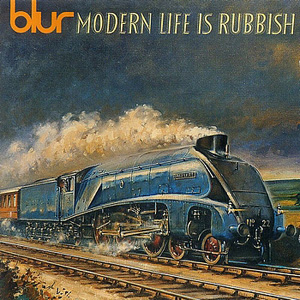
However, there is one album in this mold that did have (limited) success. That would be Modern Life is Rubbish by the alternative rock band Blur, released in 1993. This was the album that came out right before their follow-up, Parklife, became a mega-hit in their home country and brought them incredible fame, an album that is actually the flipside of this one. Many in the industry used that one as a shield to avoid talking about this record.

Modern Life is Rubbish released just as the tidal wave that was Britpop was unleashed on the world, and ended up predicting a few things that would come of it, but to this day is an album resoundingly ignored by everyone except those who listen to the band. There is a reason for that, and it isn't the quality of the album, which is phenomenal.

In fact, I would be so bold as to call it one of the best records of the 1990s. It is certainly on my list of all-time favorite albums. To explain just why, we have to do a bit of a dive into it. Clean out your ears and listen to one of the great overlooked records.

We start with For Tomorrow, the first single and first track, which states the album's uncomfortable thesis up front:


He's a twentieth century boy
With his hands on the rails
Trying not to be sick again
And holding on for tomorrow
London ice cracks on a seamless line
He's hanging on for dear life
And so we hold each other tightly
And hold on for tomorrow, singing

La, la, la-la-la
La-la-la-la-la-la, la-la-la
Holding on for tomorrow

She's a twentieth century girl
With her hands on the wheel
Trying not to make him sick again
Seeing what she can borrow
London's so nice back in your seamless rhymes
But we're lost on the Westway
And so we hold each other tightly
And we can wait until tomorrow, singing

La, la, la-la-la
La-la-la-la-la-la, la-la-la
Holding on for tomorrow

We're trying not to be sick again
And holding on for tomorrow
She's a twentieth century girl
Holding on for dear life
And so we hold each other tightly
And hold on for tomorrow, singing

La, la, la-la-la
La-la-la-la-la-la, la-la-la
Holding on for tomorrow

Jim stops and gets out the car
Goes to a house in Emperor's Gate
Through the door and to his room
Then he puts the TV on
Turns it off and makes some tea
Says, "Modern life, well, it's rubbish"
I'm holding on for tomorrow
Then Susan comes into the room
She's a naughty girl with a lovely smile
Says, "Let's take a drive to Primrose Hill"
It's windy there and the view's so nice
London ice can freeze your toes
Like anyone, I suppose you're
Holding on for tomorrow


The song is about the pursuit of progress amidst the drudgery that is modernism. How can there be hope for a future when the present is so vapid? We still have people today espousing this mindless Star Trek utopianism that isn't based on any human behavior or reality. Blur shows without having to outright say it: there is no future here.

But that is where the twentieth century ended up. And it is where we are right now.

You might have noticed that the lead singer sounds a lot like 2D from the Gorillaz. that's because that is who it is. This is where Damon Albarn got his start, in Blur, and this is the first album where he really showed his talent as a songwriter. If you do like the Gorillaz, you will see a lot of the appeal in Blur, albeit in a more traditional rock setting. Therefore, you can see why they got popular.

But it wasn't easy for the band to get their success.

The English music press were rather hostile and harsh on bands back in the day (not so much now, ironically, when the music is pure shite) and Blur was one to feel their ire early. The band's first album, Leisure, which released in 1991, was not too great, admittedly. It was a fairly generic, by-the-numbers "baggy" album from the Madchester scene, a sort of psychedelic-inspired hard rock dance sound that didn't last too long into the early '90s. They had a hit single in There's No Other Way, but already their fortunes were not looking too hot by 1992.

Blur was looked at as poseurs glomming onto a fad, and it affected their fortunes. They just had an unsuccessful US tour, the music press hated them, and they were looking to be dropped by their label. At the same time as all this, their management ripped them off and left them in debt. Things were looking dire.

To explain the genesis behind Modern Life is Rubbish, and the shift that saved Blur and made their career, one has to look into their experience at the time. 

From wiki:


"The 44-date tour of the United States left Blur in "complete disarray", according to writer David Cavanagh. Dismayed by American audiences' infatuation with grunge and the lacklustre response to their music, the group frequently drank, and members often broke into fist-fights with one another. Homesick, the tour "instilled in the band a contempt for everything American", Cavanagh later wrote; frontman Damon Albarn, who "started to miss really simple things [about England]" listened to a tape of the English pop group the Kinks throughout the tour."


In other words, what Blur was seeing was a loss of all the things they thought made the world, and their home, great. Gen X was infamous for destruction, but they were even more infamous for their hatred of tradition, priding themselves on mindless hate of things they didn't understand. That Blur went in the opposite direction is probably what helped them stand out, giving them a drive that few others of the time period actually had: a hatred of the modern world.

the thing is, while it was their terrible experience in the US that set this off, the resulting album is not really about the US at all, at least not solely. They use their own experiences in their home country to show just how fall we've fallen.

But I'm getting ahead of myself.

When they got back to England, they still had a lot of work to do. Early studio sessions were disastrous, including one featuring Andy Partridge of XTC as producer. Finding their groove took a lot of time and effort. Their label fought them the entire way, too. They wanted them to stick with the old sound that was on the verge of killing their career (and ironically that almost led to their label dropping them) which left them adrift.

Basically, it appeared that it was Blur against the world to get their new vision out there. Nothing went their way, and everyone fought them.

"Work resumed on the album due to a chance meeting with producer Stephen Street, who had previously worked with the band on their 1991 single "There's No Other Way". With Street now producing the album, Blur recorded a mix of material spanning both the period immediately after the release of Leisure and their 1992 tour. While the band members were pleased with the recording session results, Balfe, after hearing the songs, told the band they were committing artistic suicide. Although dejected by his response, Blur gave Food the completed album in December 1992. The label rejected the album and instructed the band to record more potential singles. Albarn complied, and on Christmas Day wrote the song "For Tomorrow". Although "For Tomorrow" sated Food's concerns, Blur's American label SBK voiced discontent upon hearing the finished tapes of the album. To appease SBK the band recorded "Chemical World", which Blur thought would increase Rubbish's American appeal. However, Blur refused SBK's demand of re-recording the album with American producer Butch Vig, who was popular at the time for his work with Nirvana."

As you can see, the 1990s was no less better for artistic freedom than any other era. Everything listed in the above quote, aside from asking for singles, was a pretty terrible idea, and would have sunk the band. Including trying to make them sand off their edges with Nirvana's producer.

When Modern Life is Rubbish came out, no one was quite ready for the cultural shock of a band who staunchly rejected the readily-accepted modernity of the time for a pride and hope in a tradition that had been slowly disappearing. They correctly saw the dead end of the music industry ahead, and worked to make something that harkened back to other times. It was completely out of joint with the times. By the late '90s, tradition would be ejected entirely from the industry.

But what "tradition" meant to Gen Xers like Blur in the early '90s is not quite what one would expect at the time. When they meant tradition, they meant ALL of it, including musically. The album is very thorough.

In fact, after hearing the original pop single above, this was the second track on the album:


"Food processors are great!"

It's six o'clock on the dot and I'm halfway home
I feel foul-mouthed as I stand and wait for the underground
And a nervous disposition doesn't agree with this
I need something to remind me that there is something else

You need a holiday somewhere in the sun
With all the people who are waiting
There never seems to be one

Say something
Say something else

Advertisements are here for rapid persuasion
If you stare too long, you lose your appetite
And a nervous disposition doesn't agree with this
You need fast relief from aches and stomach pains

I need a holiday somewhere in the sun
With all the people who are waiting
There never seems to be one

Say something
Say something else

One, two, three, four
Five, six, seven, eight
Nine, ten, eleven, twelve
Thirteen, fourteen, fifteen, sixteen

"You can have a holiday in the sun, yes
Ladies and gentlemen, one week only, on special offer!"

You need a holiday somewhere in the sun
With all the people who are waiting
There never seems to be one

Say something, 
Say something else.


That's right, it's a punk song. Surprise! It isn't even the same genre as the first track. This is actually one of those dreaded genre-hopping albums. That's not acceptable! It certainly wasn't acceptable in the early '90s.

You see, the genre trap was already a problem in the music industry just as it is in other ones. People are supposed to make punk albums, metal albums, folk albums, pop albums . . . but never are the streams allowed to cross. Why? Because it's easier to sell a concocted image based on one genre than it is to admit that all the genres are just branches of the same one: that being rock music, in this case. Everyone should instead go to their own corners and never come together.

The band had a field day taking rock tradition and filtering it through their early '90s dislike of modernity. As a result, the eclecticism merges into one strong piece.

Lyrically, however, this is when Damon Albarn came into his own. Before this he was a bit too simplistic and straightforward with his writing, but with Modern Life is Rubbish, he pulls out all the stops. Normally known for detachment and being unemotional, Modern Life is rubbish is the only Blur album where the opposite is true: he sounds very invested and passionate about the subjects. Even in the follow-up albums he uses satire and jokes to carry a lot of the weight of what he was saying. That's not that case here, at all. Modern Life is Rubbish is a very involved album. That helps make it quite unlike any other Blur album.

Below I will list a few of my favorite lyrical turns he uses.

From Colin Zeal:
While sitting in traffic, Colin thinks in automatic
He's an immaculate dresser, he's your common aggressor
Colin's the modern retard with a love of bombast
Keeps his eye on the news, doesn't dwell on the past

The final line of the song:
'Cause Colin Zeal's ill
He's Colin Zeal, and he knows

From Villa Rosie:
Across the common every day, you come across the fine line
But wearing boots can prevent the leeches in the long grass
Eating between meals stifles the appetite, is it healthy?
Coming home, that nagging doubt there in your belly

From Pressure on Julian:
Swimming in yellow, pissy water
Sand getting in between the ears
No blood in head in this bloody weather
Irate people with yellow tongues
Only the magical transit children
Sing-sing a lullaby, bah-bah-bah
Falling into walls, well, what is it with you?
You'd never know, never know, never know

From Resigned:
I think too much on things I want too much
It makes me hateful and I say stupid things
Only you can fill my blank heart
And I'm resigned to that

I wish the sun could just keep me warm
And I'm resigned to that
I'll forget to breathe someday
I've never stopped to think why

Those are just lyrical samples, but the entire album goes through the gamut of what living in modernity is like. From tracks about using drugs for escapism (Chemical World), prostitution and pleasure obsession (Villa Rosie), crass commercialism disguised as human connection (Advert), unexplainable despair in the quiet moments (Oily Water), coping with the unnaturalness of the fast paced world (Coping), and the lone bright spot on the album (Sunday, Sunday) about the last vestiges of family and tradition during this modern swirl of emptiness, which comes dead center in the album. They shine a light in the darkest corners.

Despite how scattershot it might seem when describing it, the record has a very cohesive feel of one vision. It spans rock genres from punk to classic pop to acoustic to alternative rock to even a bit of weirdness (something Albarn would be known for later), but despite that it remains locked together as a single work with a driving force behind it. The lyrics and general mood and production present a vision of the present as it actually is, without the posing of grunge or the pretension of where alternative would soon go with OK Computer. What you are left with is an honest album of what reality was for people of Gen X in the early '90s, and what it would eventually become for everyone else.

It feels like this album might be nihilistic, and it might be considered that, but Albarn's lyrics contain enough humor and just enough detachment to get it all across as plain honesty. He doesn't set off saying that the world is doomed and that there is no hope: only that this is where the world is right now. It's just the truth. There are no predictions of the future or where it might go, no solutions or messages informing you on how to "be butter", only that the world of the early '90s operates like this. You can infer that it isn't good just by what he gets across.

The real issue with Modern Life is Rubbish is that its follow-up album, Parklife, is the album with positivity, even if it contains plenty of satire, it's still a happier record overall. That is an album about the brighter side of life, even among the silliness of the modern day, centered on normal working class people, much like the ones in this album. It also contains more genre exploring, which gives it a brighter color. As a result, it was far better received, and I would say that if you like Modern Life is Rubbish then you would certainly like it, too. You might even like it more. The press and audiences did. I would even highly recommend it. Parklife is 5 star album.

However, the elephant in the room is the passage of time. Even through the satire, the world of Parklife doesn't exist anymore. Both the good and bad parts of that album's subjects were left behind in the '90s. But the world of Modern Life is Rubbish, in contrast?

Let's use an example:


Wash with new soap behind the collar
Keeps a clean mental state
Don't usually bother in cold weather
But still I'm getting into work late
And I don't need the practice

I've been making plans (For the future)
Become an unconscious man (All for the good)
I feel so unnecessary (We don't think so, you seem star-shaped!)

I have a couple at the weekend
Keeps up camaraderie
And my mind boggles in the muddle
At the possibilities
And I don't need the practice

I've been making plans (For the future)
Become an unconscious man (All for the good)
I feel so unnecessary (We don't think so, you seem star-shaped!)

I wash with new soap behind the collar
Helps keep down the laundry
And now I bother in cold weather
Because it cleans me mentally
And I really don't need the practice

I've been making plans (For the future)
Become an unconscious man (All for the good)
I feel so unnecessary (We don't think so, you seem star-shaped!)


This is still reality today. The drudgery of modern life and living from paycheck to paycheck with nothing to look forward to except being told that it is all for something. But what is that something? You are never told.

We're all special and unique, and have plenty to offer. Now become a cog with everyone else. Remember, you're replaceable! No, you're unique--Star Shaped!

How does that add up? But that's the modern world. A bunch of contradictions held together by those who just don't want to think about what they're actually doing.

Contrast this with Parklife's portrayal of vacationing to Greece that the English no longer do, or the scene from the suburban life of the title track that no longer exists, or snapshots of people that can't even be born in the current world that is England. It might be the more hopeful and positive album, even amidst the laughs, but it's also dated far more than this one has.

Even the "love" songs have a doomed feel to them:


Air-cushioned soles
I bought them on the Portobello Road on a Saturday
I stop and stare a while
A common pastime when conversation goes astray

And don't think I'm walking out of this

She don't mind
Whatever I say, whatever I say
I don't really wanna change a thing
I wanna stay this way forever

Blue, blue jeans, I wear them every day
There's no particular reason to change
My thoughts are getting banal, I can't help it
But I won't pull out hair another day

And don't think I'm walking out of this

She don't mind
Whatever I say, whatever I say
I don't really wanna change a thing
I wanna stay this way forever
If you don't mind
Whatever I say, whatever I say
I don't really wanna change a thing
I wanna stay this way forever

You know it would be with you
And don't give up on me yet
Don't think I'm walking out of this

And she don't mind
Whatever I say, whatever I say
I don't really wanna change a thing
I wanna stay this way forever
If you don't mind
Whatever I say, whatever I say
I don't really wanna change a thing
I wanna stay this way forever

You know it's to be with you.


This is a song carried by the drumming. It's a ballad, yes, but the drums are deliberately set down first to set the tone going forward. It's a heavy, claustrophobic beat, which gives an oppressive air to the song that locks it in place despite the pretty piano and acoustic guitars. This appears to be a love song but has another edge to it if you pay attention the lyrics contrasted with the light sound of the strings and keys and Albarn's delivery and what he emphasizes. It's not about love at all.

The title, Blue Jeans, should be the first clue. Look at how the title is used in the song:

Blue, blue jeans, I wear them every day
There's no particular reason to change
My thoughts are getting banal, I can't help it
But I won't pull out hair another day

It's about the realization of the numbing waking dream that modern life is, how it rewards you for killing your thoughts and molding yourself to be the above cog in the machine from Star Shaped. "Whatever I say, I don't want to change a thing" is about the fear of what it will be like if you stand out, if you are ostracized for sharing your thoughts. In the end, we will do anything to avoid being alone. This is a point that is hammered in with the final line "You know it's to be with you" which closes out the song. He is only doing this so he won't be alone, not because of love.

In essence, it's a song about someone killing himself spiritually and mentally to fit in with a society that has no use for who he really is. What sounds like the final line of a pretty love ballad is smothered, because as the softer side of the music cuts out the only thing that remains is that stifling drum beat that began the song originally. It fades out, continuing forever as the prettiness vanishes. The protagonist cannot escape this realization that he is trapped.

The narrator just doesn't want to be alone, but the track is fairly obvious that there is no way to avoid that reality unless he changes himself to be acceptable to those around him. If not, he has no place in society. He will be destroyed for not having the right thoughts.

That feels pretty close to 2021, to me.

But that's the entire album. Modern Life is Rubbish, while a snapshot of the early '90s, actually manages to be more relevant to today. It is certainly Blur's strongest album thematically, and one that still connects to where we are today. Every subject written about is far more of a problem today than when the album was written, and even the genres the album was written in were completely destroyed. Close your eyes and you'd think it was a future vision like Rush's 2112, except this one came true. We live in Modern Life is Rubbish right now.

As it goes, I think it is one of the best albums ever made. It perfectly snapshots the decay that was the 20th century and offers a perfect kaleidoscope of rock genres to emphasize just how powerful music can be. I believe it should be more listened to than it is today, especially for those who love their concept albums. There are few albums that are both as honest and as good as this one is, nor one that I actually wish was dated, but just isn't.

Here is the tracklist. Yes I am using the US version because it is the one I prefer. The rougher demo feel of this version of Chemical World fits the mood better, and Pop Scene is a brilliant single about the musical climate that fits thematically, as well. Your mileage may vary, especially if you're a purist, but this is the version I prefer.


1. For Tomorrow (4:19)
2. Advert (3:45)
3. Colin Zeal (3:16)
4. Pressure on Julian (3:31)
5. Star Shaped (3:26)
6. Blue Jeans (3:54)
7. Chemical World (3:45)
8. Intermission (2:29)
9. Sunday Sunday (2:38)
10. Oily Water (5:01)
11. Miss America (5:35)
12. Villa Rosie (3:54)
13. Coping (3:24)
14. Turn It Up (3:22)
15. Pop Scene (3:14)
16. Resigned (5:14)
17. Commercial Break (0:55)


It is fairly long, but every track has a place to form the picture that is Modern Life is Rubbish. There is no filler. This is an album about modernity, and what it does to the soul. Does it offer hope to the listener? Perhaps a bit, if you listen closely. There is a reason that Sunday Sunday is the centerpiece of the album and the only real outright positive track on it, even amidst the wrapping of modernity. That said, I don't think I'd call the album Superversive, but it isn't meant to be. It is meant to be a snapshot of what modern life actually is, and there is nothing uplifting about the state of society at the time, or now. It's just a perfectly drawn picture of reality.

Also, the album title can be taken two different ways. The first is obvious, that modern life is terrible; the second is that Modern Life is actually about ridiculous Rubbish and physical objects, because there is nothing else to hope for. Either way the album makes it clear: Modern Life is not exactly something to strive for. And that is something that has only gotten more and more obvious as time has passed. This isn't working.

Blur would eventually go on to have many more albums and hits (You've certainly heard Song 2 before, and Coffee & TV was a big underground hit with that music video featuring the weird traveling milk carton) most of which are looked at more fondly than this album is. Damon Albarn would even go on to form the Gorillaz and achieve international stardom with it, reaching more people than Blur ever did. Basically, for many involved, this album was just a stepping stone to bigger things. As a result, its quality has been overlooked by most.

But still Modern Life is Rubbish stands as one of the definitive rock albums of the '90s, and all time, managing to sum up an entire era and a strong feeling of emotion in one work. It's a work of catchy songs, spanning the gauntlet of rock styles, that manages to have ambition without pretension, and an honesty without succumbing to a nihilism that many others in this genre would. There isn't really anything else like it, even from the band.

Should you be a listener of rock music, I highly recommend Modern Life is Rubbish as one of the best and most overlooked albums of the '90s. Yes, it is up there with the likes of Exit the Dragon, Bandwagonesque, and 1977, as underrated genre classics that should be far more well known among rockers than they are. This is weird to say for an album that defined a popular band and artist that would have successful careers, but it still has to be said. It is a perfect album.

Modern Life certainly is Rubbish, but this album isn't. and eventually things will get better. We can't continue in this path forever. You'll know times have changed when this album finally feels dated. Until then, it stands as good document of its era, and one that is as cautionary is it is aural ear candy. It's got the blues, but it also knows how to rock.

And that's where I'll leave you. The times won't always be rubbish, and that's something we can hope for. For now, let us appreciate what we have.

We just need to look back, and remember what's really important.