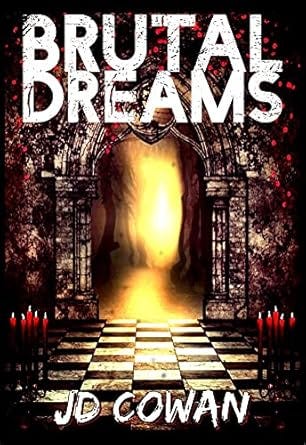
July might be ending, but that doesn't mean there are no surprises to be had! For instance, here is a new book sale created for male readers. Looking for a good read for a guy in your life? Here is the chance to join in on something really fun!
Running from Wednesday, July 30th (today!) to Tuesday, August 5th, you will have your pick of exciting books made for a male audience. Find the sale over here!
Books on the sale page will be rotated among the selections every day, so new books will be at the top of the page as it goes. Therefore, if you missed something there's always a chance it will be more visible on another day. So be sure to keep checking. We're going to need more male readers going forward if we want to create a better industry, after all.
After awakening in the woods, Christopher Archer finds himself trapped in a world outside of time. Fog monsters, armed gangsters, and a legendary spear, all await his arrival. But what about the fiancé who disappeared months ago?
As Archer explores this eternal midnight, he can only wonder—is this all just a dream, or is there something more hidden in the dark, watching his every move?
There is one choice. He must traverse the nightmare and learn the truth.
In other news, as mentioned earlier I am currently serializing my next non-fiction work, Fantasy Isn't Real, on the Patreon, as I work out the details on a few other projects. If you enjoyed my previous works in this style, you're going to want to read this one. It's going to be very much in the style of those controversial ones.
There's more to come but since this summer has been way too hectic and unpredictable it'll be some time before I can shake out exactly what is coming next. Regardless, if you want a preview, the Patreon is the place to be. I also have nearly 30 podcast episodes and two exclusive complete serials up on it with more to come. Joining definitely helps with production in these crazy times. You are also free to join in on the comments and offer feedback yourself. There's quite a lot there.
That's all for this short update post. Thanks for a wild July and I'll see you again in August!
*Note: Today's post was originally posted on the Patreon! Join to get early posts on top of podcast episodes and new book serializations!*
Today's going to be a little bit of a reflection. Take it with a grain of salt, but I usually talk like this when trying to figure things out internally.
A long time ago it used to be well understood that what you did is what mattered. No matter what bluster you had behind your words, no matter how many wheels you greased, and no matter how many popular buzzwords you spoke to get your foot in the door, in the end it came down to what you did. You couldn't rest on puffing yourself up forever to gather audience attention. If you didn't act, it didn't matter. And we would ourselves back up our beliefs by holding such people's feet to the fire to ensure that they acted.
In other words, we valued the truth, and we valued those who fought for it. If you were a faker, you would get found out soon enough.
That doesn't happen so much anymore. Instead we let anyone above us do what they want as if they simply need to repeat the right codewords and they can have carte blanche to run roughshod over whatever or whoever they want. Simply look at any legacy industry and see them being run into the ground by these exact people these days. Nothing is growing, it's all shrinking. It ties in to our obsession with surface level aesthetic and appearances over proper depth and meaning. Juvenile and shallow. It's no coincidence such folk communicate mainly with teenage snark and prepubescent name-calling. This is who we let in the door, juvenile and bitter.
Who cares if the Superdude comic (this is a general example, not literal) has him murdering and dehumanizing large swaths of the population through silly speeches--it is a comic produced by DC Comics, therefore you need to swallow and accept it as scripture. Meaningless words. None of it has value. But it does send signals to the right people, and that's all that matters. The connection is gone, now it's all lectures.
Everyone seems to know it, but no one really has answer. After all, how do you compete against an industry that simply isn't interested in you? You can't, really. All you can do is vote with your feet, as the saying goes.
And it seems like exactly that is happening.
But, at the same time, who am I to complain about such things? Am I not doing exactly what I'm complaining about above? As a writer, am I not the purest example of words and not deeds? In a sense, yes, and that is one of the many reasons writers no longer command the same sort of respect they once did. We wasted our opportunity and lost the audience's trust. Too few are unwilling to put their money where their mouth is and it has lead to ruin. All we have to do is say the bare minimum of buzzwords and get all the rewards and kudos, or so we think. There's more to left than momentary profit, and we all realize that on some level.
Any man or woman who creates has a duty to use their creation to try and understand more about themselves and others. They must move outward from inward. The other choice is to either pander to the lowest common denominator or to produce propaganda to drag others down, neither of which is art--it is a grab at respectability with the in-crowd, whatever in-crowd that might be, in order to fit in with some pre-established group. This is the perfect example of words instead of deeds. It is about what you say and not what you do. This is anti-art and therefore should be discouraged. Unfortunately, in the modern age, this is the default way of being and is very much encouraged. Unfortunately, it is to our detriment.
Now we desire those buzzwords and ingroups more than we desire art or Truth, and it has led to a giant mess of an industry no one can believe in anymore.
So how does one change that? How do we reverse course this late in the game? How do we do it when no one in charge wishes to listen?
More so, how does one become someone whose words are meant to explain their own actions to others instead of lecturing or pandering instead? How do you avoid talking at others and forcing yourself down their throats instead of just communicating and presenting your ideas for consideration with insistence of acceptance? How does one avoid tripping over that line and losing their way in a medium that incentives losing your way to begin with? There is no guidebook or manual for this kind of thing, after all. It's all so very confusing.
I say this because it has gotten to the point that I don't think I properly understand how to bridge words with actions anymore. I thought I did, but it's only gotten more complicated as I've gotten older and as the industry has gotten more blunt and surface level. How much of myself is to be put into what I say before it just becomes jabbering nonsense detached from actions? When does it cross the line into being real and not foolish hopes or projections onto others?
When do I lose connection and begin drifting off into the void, never to return? That's something I think about a lot.
Many have wondered why I tend to avoid using larger words in my writings, those the ones intellectuals pepper their own works with to sum up larger thoughts, and the reason is that I want to remain crystal clear in what I say to as many people as possible. I don't want to rely on stopgaps, especially when such stopgaps are so easily weaponized these days.
While words matter, so too does the intent behind what we say with them. I do not want to waste them on filter words and cobbled together codewords for a select few who have the matching code rings to decipher them. I want to reach as many as possible, and I don't think it can be done by purposely obscuring my meaning with unneeded clutter. I could be wrong about that, but at this point I think it's the only path forward for me. I have to find a new way forward somehow.
Does anyone, these days?
I've written before about slogans and the insidious way they can be used to kill communication, but that is because of how powerful words are to begin with. They can persuade and they can inspire and, under the right conditions, can also manipulate and destroy. Sticks and stones may break your bones but words will be the motivator for them to be used against you in the first place. Therefore we should take them seriously and learn what they're for, and how to use them in better ways.
Perhaps this post is a call for responsibility among those who use words, much like they are for any other weapon. I know I need that reminder a lot. You need a license for most weapons, but you don't need anything for words. I suppose the closest thing would be "credibility" which is given by publishers or editors these days, in rapidly decreasing amounts. But aside from that, it's free game. And there isn't any way to control who gets influenced by what, as OldPub is very quickly learning. We're all speaking into the void these days, and that does not seem to be changing.
So what is my role as a writer? How do I shape my words into deeds? Can I live the lives my protagonists do, even from my comparatively less exciting existence? Is my way of acting through art used to inspire or to build up? To do it the right way?
There are always a lot of questions, but asking questions is a lot easier than finding answers. It's especially difficult to find answers when no one is on the same page anymore. These days it's a free-for-all, and I'm not convinced that's entirely a good thing.
I don't want to puff my own chest up too much, merely try to figure out how art crosses the line from posturing into accomplishing. Accomplish what, you may ask? I can't really say. Perhaps the expression it wishes to get across from artist to audience. There is a reason for all art, just like everything else. Figuring that reason out, however, is the problem, especially for someone like myself who is not the quickest or sharpest. If it was so easy our industries wouldn't be falling apart as we speak because of their complete inability to do anything but posture. There has to be an answer out there beyond what we've been doing.
What that is, however, is the question.
The Phantom War serialization and the Cannon Cruisers podcast, for instance, are my way of filtering all the influences I had growing up into a coherent world that makes sense of it all in the present. I hope I'm getting that feeling across, but telling a story, and talking about them, is the only way I can do so. Finding that undefinable thing that strikes, that hits deep in a way that remains with you, and then trying to explain it to others is a hard task to accomplish. It might just be a fun action story of adventure, but it still means everything in the world to me. Why does that connect so much? All I can do is as the question over and over, trying to find the answer.
Perhaps that's the point? Can't say that I know. The whole purpose of this post is to try and understand it, after all. I'm not sure if I'm any closer now than when I started, but at least I gave it a try. I can't do much else but try. That's what most of us are doing in this ever fluctuating scene: simply trying to find out way forward.
Things change as you get older, as we all know very well, but it's what sticks with you as you age that starts to mean more to you as you contemplate your mortality and where it is you're heading towards. If a silly movie like Bloodsport has stuck with me since I was a young runt, there is probably a reason it has lasted so long where something like, say, Care Bears, has not. What is it that sticks, that refuses to go away, that which sticks with you through the wild times rippling around us? That's what I want to find, and that's what I want to show to others.
And if I can do the same with my own work then all the better. All I can do is to try harder and hope it works out better next time.
Maybe that's what action is to a writer: striving to express the truth no matter what gets in the way. Who knows, but I'm going to figure it out, even if it takes ages. It's all I can do.
Hey, it's just going to take a whole lifetime, that's all. No big deal! Not like I have anything better to do with this skill I've been given. Here's hoping we can all connect more as we try to figure it all out. In the end, that's what we're all here together for, right?
Welcome to the weekend, I hope it's been a good week for you. Here is a last minute change of plans! I was not expecting this, but a perusal of my spam folder (if you sent me something and I didn't answer you, this might be the reason!) showed me a message from the creator of today's project. Stick around, because this is a good one!
Today we're covering a brand new fandub of the classic anime Zillion, a series that I covered on Wasteland & Sky ages ago. However, I believe the edition I covered is out of print now that Funimation has been absorbed by Sony. If you haven't seen the series, the first two episodes of the new fandub are up right now and as good a time as any to get into it. You can find the channel currently hosting the project here!
For those who need a refresher, Zillion was one of the original modern multimedia projects back in the day, being a light gun game by Sega on the Master system as well as one of the first anime produced by Production IG (in cooperation with Tatsunoko Productions) and is a great old time. Though a late '80s production, it has a sort of warmth and excitement to it that ran through anime in the '70s into the '90s before dying out in the new millennium. The series also holds up very well today despite not being very modern. That just helps it stand out all the more.
So what's Zillion about? One word: Adventure!
It's the future and humanity is expanding out into the galaxy. An unstoppable alien force has emerged out of nowhere, threatening our very way of lige, and now humanity's hope rests in the skills and quick trigger-fingers of a group of good-natured teenagers with attitude. With their super guns, ATVs that turn into mecha suits, and episodic adventures featuring exciting and inventive action set pieces every week, join our main trio as the get closer and closer to saving humanity and get better and better at doing just that.
They don't make 'em like that anymore, and, to be honest, they were already starting to turn away from making them like that even when Zillion was around and doing well. Regardless, this series is an easy recommend, especially for kids, and has a vibe that anyone can get into. The series is just unbridled joy and fun to watch with a surprisingly high production value and animation quality for a show that only ran slightly longer than a typical anime season of its time. Perhaps its multimedia origins helped it stand out, but it also helped it age very well.
Give the series a chance. It's still a great watch today.
The second episode of the brand new fandub is below. If you sub you can even watch more as they come out in the future! Unfortunately the original series is not available for streaming, and with Funimation gone the physical release is certainly out of print and not being released again anytime soon, so who knows if there will be another way to watch it in the near future. As well all know, streaming is not a good way to preserve anything as it is, so options are dwindling for a lot of things that should be much more easily preserved. Anyway, I digress.
That's all for this week! As a writing update, I just received an acceptable from two different magazines and will talk about those when I can. At the same time, there is one chapter of Phantom Mission left for next week, so get on the Patreon and catch up!
At the same time, I just put the cap on another short story that will release in the future. It's been a productive time. I've got a few more I want to finish off for the end of the year, so send some prayers out that I'll be able to do it. We all know as we get into Autumn that things start to get trickier both weather-wise and in other things.
Lastly, I just put out a new episode of the podcast for backers, as well. This one is on Y Signal and '90s Nostalgia. I talk quite a bit about how they mix in the episode here. If you ever wanted to know more about the behind the scenes on that weird tale, this is the place to hear it!
Thanks again for your support, especially in this tenth anniversary of Wasteland & Sky! I never thought we would be around this long back when I started, so it's very humbling to see that not only are we still around, but still thriving at the same time.
There's also a lot more to come, so stick around, and just wait! You're going to love it. We've only just begun.
Welcome back! I've been doing a lot of running around recently and waiting for the Star Wanderers proofs to arrive in the mail, so I've not had much time to write here. That said, there have been some strange happenings, one of which I want to speak on today.
We've been speaking a lot about independent spaces where creatives are truly flourishing away from the rote and puerile corpo scene for years at this point. Sure we've gone on puffing our chests and talking about this change, but has there been much in the way of results? While the old industries fall away, is there actually something rising to take it's place?
It turns out that the answer, regardless of what industry you might be thinking of, is yes. If there is any form of art and entertainment you enjoy, there is an example of its independent space dwarfing what the mainstream has to offer. Such a thing would be unthinkable a decade ago and not even thought of as possible 20 years before. Of course these means a lot more curation is needed, an obvious downside to the death of failed gatekeepers, but that is just the reality of things.
The fact of the matter is the duty of gatekeeping industries is to shine a spotlight on quality first and foremost, to allow it the chance to shine and connect with wider audiences. However, the position being warped and used as a way to reward political allies who deliver bomb after bomb to the market while ignoring the rest of the world has repelled the mass audience away from every "professional" space. The trust that had accumulated over the years is now gone, and said industries are on their back foot. A good portion of the will probably do little but shrink and circle the drain until they are eventually dead. This is what happens when you fail to adapt.
Once the audience leaves, they don't come back. Deliberately chasing them out is suicide, and now we see it in full bloom today.
So then what of independent spaces? Are they still looked at as "vanity" projects, or for folks that "couldn't make it" in the mainstream, or has that perception changed? If the audience is walking away from failing mainstream industries, where are they going now?
You might have already guessed it, but the answer is that the independent world is no longer considered fringe or lesser to the majority of the audience that has moved on. It is now seen as a direct competitor, and anyone paying attention not only considers that fact, they also vastly prefer the new space that is currently growing at rapid speed.
Which industry does this refer to? That's the bizarre part--it's all of them. There isn't one creative space where the folks independent from the old system isn't outdoing said old system on just about every account besides budget, and budget has quickly become a dirty word in most artistic endeavors in modern day. The old industries threw too much money, overblew budgets, and polished everything until nothing remained but sheen blinding the audience to anything original that might have once existed. Every old industry is like this now, and they are all dying.
Despite that, of course it isn't all sunshine and roses. Most of the newer alternatives are still scraping by and still gaining steam and support. Again, without a marketing budget or an entire system behind them (as gutted as it has been from misuse in Current Year), these new spaces are still growing about as slowly as the old industries are falling in on themselves. The way the wind is blowing is obvious, and most have either accepted it and made the change accordingly or refuse to face reality.
It might be slow going, but we all know where this is eventually going. The only question is how long it will take to finally get there.
However, one example of an independent space growing so big it has actually pierced the mainstream and seized the wheel, is video games. While every other industry might still be slowly making strides to change itself, games have already done it. In fact, they did it so well that most people have yet to really notice it already has.
As the AAA industry burns to ash in the mainstream, video games have had a resurgence. There has not only been an increase in new ideas and approaches, but also in formerly abandoned genres that were once industry standards but were thrown aside for the AAA slop. Now that is actually acceptable to say how bad the industry is, especially after an entire console gen of literally nothing, audience are now realizing where they are getting their entertainment from, and it's not the big dogs.
Nowhere is this shift more obvious than in the FPS genre. What was once a genre of kings back in the '90s before being overtaken by AAA throughout the '00s, eventually, like everything else, had its core removed, its edges sanded off, and turned into safe corporate AAA product. The days of Duke Nukem and even Half Life were long over. This all changed throughout the '10s, eventually building into a new scene that has just recently finally managed to burst out and take over the landscape.
We've gone over this before, but the scene has only gotten better with the passage of years. If that old piece is hopeful, the reality turned out even better.
Let us go into an example of how things have improved.
The above video at the top of the post is a review of a DOOM II "mod" (and I use the term "mod" extremely loosely) called Ashes: 2063, a completely free download of a post-apocalyptic adventure that has more depth, replayability, and ambition than anything the mainstream is putting out. There are multiple episodes, each offering different approaches and refinements of the original concept, making it a wholly original game that using the term "mod" is almost insulting. They fashioned an entirely new game out of John Carmack's masterpiece of an engine, showing just how ahead of time DOOM really was for its time. Even now it impresses.
For a full breakdown on what the game is and why it's so impressive, I highly recommend watching the above video. Simply putting it into words won't work when a visual comparison or a visual medium will do that much better. Needless to say, there is much more to the project than you might think and it is very representative of how the scene operates today.
However, that is not all. Ashes is just one example in a wave of new creators taking over from the failing old industry.
On top of the above was a recent stream for an FPS game showcase. It might not seem like a big deal unless you understand hoe much things have changed in a mere few years. This one stream put the last decade and a half of E3 shows to shame on its own. Not only was there 70(!) games presented, all recent and new releases, it's almost all entirely pure gameplay and with minimal filler to be found in its massive length.
You can see this stream below. If you have any interest in video games or the genre you will be blown away by the sheer amount on offer, most of it looking top notch. While the AAA industry struggles to even release games at all anymore, the indie space is putting this out:
For those who don't want to watch or skim the stream, it is several hours long and contains nothing but wall to wall game footage with minimal channel ads for the host. It's almost like a throwback to another age of the industry that no longer exists.
One of the projects shown off is even the newest instalment in the Ashes saga, Ashes: Hard Reset. As someone who was watching when it was shown off, the chat exploded with excitement at the gameplay reveal. It was almost like watching those old E3 shows again. That thrill is still there--it's just no longer in the mainstream.
That's a common theme today. The old spirit still exists, it just no longer resides in the old industry. It doesn't matter what medium this refers to--that is simply the reality of it.
The book industry, while not at the level of video games (we have a lot more work to do to make up for decades of failure, after all) is one such industry that has long since lapped the old one. The visibility problem might be bigger, but that just comes with the territory of operating in a weaker industry. It has to be built up again from almost the ground level.
I highlighted a few crowdfunds at the beginning of the month, and since then there have been a few that have popped up in just the short time. For instance, Cirsova has put out a limited campaign to sell 100 copies of the Illustrated Stark omnibus by Leigh Brackett. Over half have already been sold, so you might want to jump on that while you still can. That aside, there is something new showing up almost every day. No one can really keep up with it all, though that is a better option than the alternative. No one wants to go back to that dead end state.
So if you're feeling discouraged by the state of things, you might want to reconsider exactly where we are and what is going on outside your window. There is a vibe shift happening and we have evidence of it everywhere. Even those who have stuck by the ever-declining mainstream can no longer avoid the obvious and are now changing their tune after years, even decades, of ignoring what can no longer be ignored. The winds of change are blowing harder everyday.
You might want to pay attention to it now, because who knows where it will go next.
Welcome to 2024! I hope the first few days have the month have treated you well!
Let us bring in the new year with a bit of a curveball. Instead of talking about the previous year again, we will instead discuss something entirely different.
I'm sure if you're reading this at all, you are very aware of Harlequin Books. Formed in the frozen wastes of Winnipeg way back in 1948 (That's a quarter of a century ago, folks) as a paperback reprinting company, they didn't stop there. Harlequin eventually grew into a titan of paperback books in the women's romance arena, where they still remain to this day. If you are a female, or know any who read, then you have certainly encountered this company before. They more or less own the entire market.
But that isn't what I want to talk about today.
Back in 1971, the Gold Eagle line was born. Harlequin created it after the huge success of The Executioner books by Don Pendleton and wanted more of it. Ostensibly a men's adventure line of books, Gold Eagle existed to cultivate males in the same way Harlequin had so clearly captured females with their own books. Such a move made sense, who wouldn't want both halves of a demographic, after all. And it ended up being a great success.
Now, I would like to tell you more about Gold Eagle itself, but finding any information about the line online is tough. Considering the nature of the internet, that should say something. There is no wiki entry, no oral history, and no traces left of it online except lists of published books. When it was closed down it feels like there was an attempt to go scorched earth of its existence entirely. So much of this you are reading today might well be based on generalization or speculation. I apologize for that, but there is little I can do on the matter.
For whatever reason, it is as if the Gold Eagle imprint, and everything about it, were deliberately erased from the timeline we live in. So we will just have to go off assumptions today. All I can tell you for sure is that The Executioner lasted from 1969-2020, outliving Gold Eagle itself, before the industry stomped out even that.
Regardless of all of the above, I have decided on this topic because this year is the tenth anniversary of the closure of Gold Eagle. Back in 2014 was when it was announced that the line is dying, being shut down nearly the second Harlequin itself was bought out by HarperCollins. Because, as you remember, that is how Cultural Ground Zero works and how OldPub operated back then.
Here is the original announcement on the James Axler (the co-creator for Deathlands) forums a decade ago:
For those unaware, Gold Eagle was the premiere men's adventure line of books since it was first properly established in 1971 up to the announcement of the closure in 2014. For over 40 years, nearly half a century, it was the premiere place to find men's adventure books, even when the genre was abandoned by the mainstream back in the '90s. Gold Eagle clung on long past the death of its own niche.
One might figure this would be a bigger deal, attracting some sort of in depth lamentation or funeral service online, but the most that exists are posts after the fact speculating on why it died. Aside from the above short thread, there is little commentary to be found. As said before, it is as if they were just wiped clean from the industry.
But what exactly was the sort of men's adventure Gold Eagle published? Well, they most invested themselves in series. Much like The Executioner series (the most popular men's adventure book series ever created), Gold Eagle focused on a franchise crafted around a character, or small cast, that dealt with episodic adventures of daring and doom. They had ghost writers writing under one pseudonym (think the Hardy Boys or Nancy Drew), who frequently rotated which books would be written and when they would be released in what order. This, as you might imagine, led to series with as many as several hundred books in them each.
No one can ever say these fellas didn't produce!
There were no consistent "genres" here, either. The Mack Bolan books were action movies before the film genre fully formed (and the series itself lived decades after it died), the Deathlands books were post-apocalyptic adventure tales of survivors after the end, and there were also a whole slew of series that didn't make it beyond their initial three book launching stage, some of which are better than you might think. These books all had varied ideas and premises from time travel, war stories, spies, mysteries, and even Tomb Raider style of adventure tales. If you want to know more about some of what Gold Eagle, and other publishers of the time, put out then be sure to check out the Paperback Warrior site. They go heavy on men's adventure book coverage.
Regardless, the point is that adventure mattered first. You bought a Gold Eagle title to be thrilled, not to check boxes to be allowed into special literary clubs.
Entertainment came first.
It should also be noted that Gold Eagle were not alone. You can fine all sorts of such series from the time period (some of which are out of print now) such as the cult favorite Casca series. The point is that there was an entire industry of men's adventure once upon a time. Gold Eagle were simply at the top of the heap.
An example of some of their output
So what happened for HarperCollins to shut the line down, ending around a century of work overnight? No one really knows the reason, but there has been plenty of speculation, from competing mediums (video games and movies are always the scapegoats, despite any conclusive proof or data), to shifting tastes of the times, to publishing's abandonment of particular reader demographics, to the very real problem of falling male literacy rates thanks to poor education. Though one could agree they all have their contributions to make, the real problem is that the 1990s were where a lot of things died. We've covered this before.
It merely took one of the titans of OldPub getting around to buying up the last of the little guys and finally putting a stop to them before the final domino fell. Since 2014, men's adventure in OldPub no longer exists. It's dead.
If I could offer my own theories as to why this happened, I think it is because the publishers have always been a bit misguided in why they were being read in the first place. They also never thought to course correct, either stubbornly clinging to antiquated ways or chasing trends to keep up with other mediums. In other words, they fell into formula head first.
I don't believe either movies or video games were a major factor in this. These mediums always get brought up, despite the fact that, as stated earlier, The Executioner was a high selling blockbuster before, during, and after, the action movie boom. It outlived that entire peak. Movies had no bearing on the success of men's adventure, if anything it attracted more readers to the books.
As for video games, Goosebumps was the biggest thing in the world when kids were running around 3D space for the first time in Super Mario 64 and when Quake was blowing people's minds. Let us not forget that video game franchises such as Resident Evil and Halo had very successful book tie-ins years after this. Not to mention there is the very successful Warhammer 40K universe which has tie-in video games all the time as well as many books on top of it. More than likely, video games also had little effect on the literacy issue. Once again, it just simply doesn't look to be the case.
So what was the cause? It would obviously have to be the industry itself.
It's more likely kids stopped buying books because OldPub deliberately stopped making any books for boys. By the time they hit the age to read there was little left for them being made, and their tastes had already been soured by schools pushing emasculating slop on them for so long. It's no wonder younger generations never moved on to what little men's adventure was even left by the 21st century (almost none) and never got into reading as a hobby at all. (Speaking of Goosebumps, that was also sabotaged not long after its commercial peak. OldPub really didn't want males to read anything.) How are males supposed to get into a hobby that doesn't want to appeal to them?
At the same time as all this, men's adventure fell prey to the same problem comic books did. Ongoing overly-corporate stories without ending points kills any sense of drama or excitement out of a story when you know nothing really matters in the end. While this doesn't effect characters like Mack Bolan or James Bond, characters that are made for standalone, pick up and read fare, it does effect ongoing stories meant to carry on into epic book lines. And most of what men's adventure was putting out at the time were ongoing stories in the mold. Imagine how it must feel like to read all 125 books of Deathlands to find there is no ending and that the survivors will most likely be doomed anyway. That was part of the dwindling interest, I'm sure. Stories need endings, and they have to matter. At a certain point, it's almost like collecting brand merch for the funko pop wall instead of reading stories. And that's a problem.
Now those old men's adventure stories are all gone, relegated to the corners of used book stores and marked up in online stores. Or they can be found on Amazon with new eBook versions that contain, of course, far inferior cover art to what came before. It's a bit of a sad end to the men's adventure era in OldPub, but that's where it is at today. Considering the entire field is now run by old urbanite women, it is no surprised they didn't see the appeal to selling to half the population that isn't them. OldPub has had an ego problem for decades.
In case you forgot:
In other words, men's adventure is dead as far as OldPub is concerned, and it isn't coming back. That era is over.
But it's not dead in NewPub.
All over this very blog are examples of signal boosts from authors concentrated on putting the story first. Men's adventure is very much alive. Here you can also find ideas that no one would have tried back when OldPub was the only game in town. You can find series, trilogies, short story collections, and evens standalone novels, all of which were thought taboo in the old industry. You will no longer find this level of excitement and fresh creativity on the racks of the dying chain book stores. And that is why they are dying in the first place. Readers simply have too much choice now to settle on what the people in charge tell them they can have.
We don't live in the 20th century anymore. New ways are here.
It's been a decade since the last vestiges of male-oriented storytelling was wiped out of OldPub. Ae they doing better now? Have sales increased? Are more kids reading than ever before? Are new chain book stores opening up? Are people on the street excitedly talking about the new big bestselling book? You know the answers to all those questions. OldPub is over.
Even as just one simple example, StoryHack has turned to putting out Sidearm & Sorcery anthologies (with a third one currently in production), focusing on hot blooded adventure masking up urban legends with sword and sorcery of the old sort. That is just one project. There is no more tired formula to be found in NewPub, it's all uncharted territory.
Cirsova is one of the more infamous examples of putting Thrilling Adventure and Daring Suspense first, even beyond its magazine releases. As a publisher they release off-kilter books of the sort OldPub can only dream about. DMR Books is yet another example of this as is the recently launched Anvil Magazine.
These are also only the publishers. I haven't mentioned the cavalcade of authors pumping out new worlds and fresh characters for you to follow.
And that's just the very tip of iceberg.
So ten years after the death of Gold Eagle, the last bastion of men's adventure in OldPub, where are we now? In a better place.
If you need more signs of things turning around, you can find them. It's just not always in the places you expect. Things do not always stay the same forever.
Before we leave I wanted to share this one last post from a poster on the above James Axler blog ten years ago. You can judge for yourself if things have improved after reading this ancient post. Trust me, it's a good one.
Not much to report on this week, unfortunately. I'm still in the word mines and dealing with real life stuff, so here is a short update to something fun.
The overlooked FPS classic Rise of the Triad has finally been re-released, and not only re-released but given a full head to toe remaster adding a bunch of new features and content that make the package extra enticing. Check the above video for the full report. This new edition is absolutely stacked with content and improvements.
The game is not for everyone, but it does scratch that itch of classic gameplay, somewhere between Doom and Wolfenstein 3D just before the genre made the full jump into 3D. Either way, it's quite a unique shooter.
In recent years, however, I've been finding myself more and more attracted to things like this. The new just doesn't thrill anymore. And I don't think I'm alone in that thought process. Products like this tend to sell very well for a very good reason.
There is a very good reason why in recent years more and more people have either been deliberately making new games built on old ones, or simply going back and discovering classics for the first time. As you can see from this video, good gameplay ages like fine wine. This is what makes video game an art form--the gameplay mixed with the audio and visuals to create a unique experience unlike what one would find in other mediums. And we are very quickly discovering what it is we've lost along the way to make the form "adult" or "mature" or whatever nonsense hack D-movie writers want to tell themselves.
Perhaps more mediums should realize that trying to cannibalize itself by slapping on other art forms to try and stick out is only devaluing the original medium to begin with. What we should all focus on is what makes each area unique in the first place. If our subcultures could regain that center again perhaps everything wouldn't have to be the same watered down mudgenre that becomes a subpar jack of all trades and not even competent at one.
Regardless, have a good weekend! Summer is almost over, and the fall chill is nearly here. There is still so much to do in the meantime.
2023 seems to be a year of climaxes, because this is the second crowdfund I'm talking about this year, and it is yet another conclusion of yet another series!
It is time to talk about the final volume of Flying Sparks!
This is an independent comic series from pulp maestro and the always controversial Jon Del Arroz, someone who just wants to have fun. And Flying Sparks is fun. A superhero series of the sort not made much anymore, it is the sort of thing the mainstream gave up for grimdark decades ago. This is the sort of thing that has given the independent scene a shot in the arm to push it far ahead of what remains of the larger western industry.
You aren't going to find anything this wholesome and fun in the majors. And, as I mentioned, it is also the final volume! You can back for them all in this campaign, though.
The description:
FLYING SPARKS VOLUME 5: Ultra Light Beams is the fifth 72-page volume to the mega-hit crowdfunded graphic novel series, which has sold more than 3,000 copies! (All five volumes are available as rewards and add ons)
Meta-Girl and Johnny are having the worst rough patch yet in their relationship after Meta-Girl finds out Johnny's been delving into deep crime. They don't have time to think about their love lives because strange lizard creatures are pouring through an interdimensional portal, threatening to destroy our entire existence. If that weren't bad enough, a major villain has given himself supreme powers to become the strongest enemy our protagonists have ever faced!
Who will make it to the end alive?
#1 Bestselling Author Jon Del Arroz (For Steam And Country, Justified, Flying Sparks 1-4, OVERMIND) and artists Jethro Morales (Green Hornet, Hack/Slash, Dejah Thoris, Flying Sparks 1-4) and Elias Martin have another hit on their hands with Flying Sparks Volume 5!
"Flying Sparks is the kind of stuff that made me fall in love with early Marvel Comics"- ComicBookResources.com
Back Volume 5 today!
It has been something else watching the indie comic scene expand over the last few years, even as mainstream comic books are seemingly petering out as manga and wargaming overtake the shelves of book stores, and what remains of comic shops. What this means is that you have far more variety and choice than existed even a few years ago, and we should be very thankful that this is the case. The medium deserves to thrive.
I do not know what Jon Del Arroz has planned after wrapping up the series that got him started, but I'm sure it'll still contain that fun and sense of wonder his other works contain. There is no reason for him to stop now. There's no reason for any of us to stop!
Once again, you can back the final volume of Flying Sparks, Ultra Light Beams, on the campaign page here!
It's been quite some time since we talked vidya, so let's get to it. Today I'm going to talk about a more recent favorite of mine.
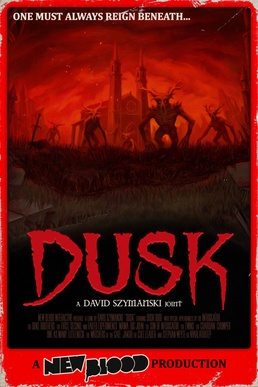
I've written many pieces on video games that stand the test of time, and now it is the moment to speak on a modern classic that sheds the mistakes of the present industry to build a new way forward. Today, we're going to dive into 2018's Dusk, made by developer David Szymanski, composed by Andrew Hulshult, and produced by New Blood Interactive. Yes, it's recent, which should tell you how good it is if I'm talking about it like this.
That's right, instead of a game over 20 years old, we are going to discuss one made not even released half a decade ago, though it did take some time to get off the ground. You might be asking why exactly I chose to speak on a video game released in 2018. This is because after a recent playthrough I feel it has reached that elusive classic status and deserves to be spoken about. Though you might not quite understand why that is if you only look on the surface and see just a horror game of shooter.
In order to talk about Dusk, we're going to have to talk about the one man behind its original origins and design, David Szymanski. Back in the 2000s, Mr. Szymanski had lower end hardware (like a lot of us did at the time) which led him to mainly playing older games on his PC, like DOOM instead of the growing AAA trend of the time period. By the time he started work on Dusk in 2015, the sorts of games he played then were not in vogue anymore. The FPS genre at this point had fallen far from the glory days of the '90s and had been long replaced by movie games of the sort mentioned in the post I wrote specifically on the genre. Read that one if you want more back story on the time period. It is paramount to understanding why this game is the way it is, and why it was necessary to be made.
By the 2010s, the FPS had basically been gutted of anything that made it what it once was and became little more than cookie-cutter 5 hour movie cutscenes and ADD-addled multiplayer sessions and DLC. It looked like the Golden Age was long gone and never coming back. AAA had long since hollowed the genre out.
This list only contains 50 classics. There are many more.
Around the time the first HD generation came around in 2005, the genre had basically become cinematic and narrative focused, less on adventure and wonder or centering on the player's gameplay experience above all else. You can even see the shift happen very slowly in the above chart towards narratives coming before design. By 2005, nothing above the above chart remained any longer. Much like every other medium and genre, the FPS had been absolutely subverted from its original intent. And it didn't look like it would be ever be coming back.
This was the era when retro gaming first really began coming into vogue. It had always existed before, but it was a lot more prevalent, game stores even beginning to raise prices for classics that could have been bought for less than a Happy Meal now costing as much as a lavish steak dinner. With hindsight, we can now see why that was.
So around 2015 when Dusk began development, no one had any idea what it would actually be. I'm sure many believed it would be another gimmicky one hour walking sim or something like throwaway experience. Those sorts of products were very popular for a time in the '10s, and they gave indie games a label for a long time as being little more than jokes. I have no idea what Mr. Szymanski thought would be the reception of his project when he began, but I doubt he thought there was much of a scene for it at the time when the genre was heading in the opposite direction.
It wasn't until DOOM (2016) came out the year after he began development that it proved that there was an audience for more than the movie-like "experience" the genre was being dumbed down into. The success of this one game (itself scrapped from a hokey project that was little more than a generic Call of Duty with demons) sparked a resurgence and interest in the genre of the kind AAA has still ignored to this day, but smaller middle market and indie developers have jumped on to their benefit. The scene sort of sprang up overnight as gamers realized they were finally getting what they wanted again. The long winter was over.
In essence, games like Dusk coming around in the wake of DOOM (2016) resurrected the genre. However, Dusk is the game that topped all of them. Yes, it even topped id Software's franchise revival itself. How did this one game do that? Well, we will get into it right now. This is how Dusk became a modern classic.
First, we shall began with the launch trailer at its release in 2018. A project mainly be one man (with a composer and producer helping out), Dusk was quite an impressive release, even for the time it came out. You didn't get games like this in 2018:
For those who can't tell, what makes Dusk so good is that is unapologetically old school in every single facet of its design and the intent behind it. While the popularity boom DOOM (2016) gave to the genre definitely help stoke a desire for different sorts of FPS beyond cinematic, it was Dusk that brought it in for a touchdown. One can now find scores of new classic FPS designed games to the point that the AAA string has not only been dwarfed, but is more or less dead now. The genre is back in the hands of those who love it.
Dusk succeeds for three main reasons. These three include the rule of cool, atmosphere and wonder, and pure craft. The aspects make the classics hold up to this day, and it is what Dusk traffics in heavily to its own benefit.
The first thing to mention is the rule of cool. Everything in this game is "cool" before being "realistic" which is how all video games were meant to be and where they started from. Part of the appeal of playing a game is that you can experience things you can't easily do in real life and the interactivity gives you a level of immersion in it. This is the main appeal of playing one. Dusk is very focused on making the player feel cool at every opportunity.
The guns not only offer good feel when being shot, but they all offer varied functions for different situations. Everyone will have a favorite, but not one will you be unhappy to go without (aside from the default sickles, which can be upgraded to a very powerful sword if you look hard enough) and even feature a spin button instead of a reload, because reloading would slow the action down and spinning weapons looks cool.
The Y axis also isn't limited, and bunny hopping exists, which means you basically fly around and flip across the screen with enough speed, and do almost anything you want. If you search hard enough you can even find a hidden bar of soap in every level that can one-hit kill everything, including bosses. Not to mention you can eat food (or cook meat on fire), or drink beer to gain some morale. Go easy on the booze, though. You don't want to get inebriated! Whatever is cool comes first, and it makes the experience that much more involved.
You are supposed to feel powerful while also feeling like one slip up will lead you to a messy, violent death. Be cool, or be dead! This has always been the staple of the classic First Person Shooter. Eventually you become the cool main character on the box by playing well. In essence, this is the secret of its immersion and why it has endured over time.
What also helps is the fact that the lower-poly environment and horror atmosphere lends itself to the player filling in the gaps in the visual design themselves. The more detailed game graphics have gotten, the less they manage to give off the weird uncanny valley effect old horror games could give and the more the need to rely on jump scares to keep you on your toes. In a game like Dusk, every location feels like a real place you might meet in life, but slightly off. You want to know more about this place. It encourages exploration for secrets and not only for that but just to see what weirdness lies behind every corner.
You see, there is a story in Dusk, but it works because it is entirely in the background of your goal from getting from point A to B. You are a treasure hunter just known as the "Dusk Dude" (a wink to "Doomguy" from DOOM) searching through the cult-ridden town of Dusk and into its depths where things are a lot worse than you initially thought they were on the surface. By the end of the game, up is down, down is up, and where you'll end up is far worse than what you might have thought. This slow descent into insanity is perfectly maintained throughout.
The mystique is maintained mainly by the fact that the only voiceover is from some mysterious entity taunting you the closer you get to it. The common human enemies only repeat odd mantras and insults when they spot you, if they are even human to begin with that is. The jury is still out on that one. The music maintains creepy ambience with spikes of hard rock of the sort we haven't seen since the original Quake back in the mid-90s. You are always on edge, leaning around that next corner and hoping that thing you heard isn't more than a crazed leatherneck with a chainsaw.
In essence, walking into Dusk is walking into horror, and you need to be tough enough to get through it and reach the literal light at the end of the tunnel. All you have are your guns, treasures (which give morale, this game's version of armor), and health packs, along with Hallowed Health in the form of shining holy crosses that give you a huge boost in vitality. All of that sets a tone that carries through the 33 levels ahead of you.
Other than that, you're on your own.
A good review of the final product
What also helps with Dusk is how balanced the entire experience is. Since they released it old school, the game was put out like the ancient shareware episodes once were. You first get one episode which is ten levels (and a secret one!) which on its own gives a complete and satisfying experience.
This also allowed the developer to focus on polishing and balancing pieces of the game and allowing it to ramp up in complexity and difficulty as it goes along without having to focus on one giant 33 level project at once. Each episode, as a result, is its own little project that ramps up and adds to the whole at the same time. The episodic format was where this genre started, and what gave it so much of its character, and it is nice to see that it has returned to the genre again. Dusk, it should be mentioned, is one of many newer FPSes that get this right.
This is a surprisingly tight game, design-wise. Every piece works to bolster the whole experience and make it sing.
The entire design is the crown jewel here because it gives plenty of elbow room (and priority) to the rule of cool (immersion) and the atmosphere (wonder) before anything else, and then puts full use of the craft to buoy those things above everything else. The craft is as good as it is because it knows what matters the most, but doesn't skimp on lesser things either.
The level design in Dusk is great, but it is always done in a way to emphasize the player's involvement in the environment first. You want to be here, and not only do you want to be here, you want to conquer these evil horrors and stomp them into the dirt. The game knows this and will give you every reason to stick around doing what you want to do.
Every one of these 33 levels are all immaculately designed, and they do get more complex as they go, but they are never boring. I can't think of a single level that annoys more than challenges or one that stands out from the pack as inferior at the same time. Never do you feel like you've been put in an unfair spot and want to give up because of annoying design choices. Despite the intense speed, the threat of horrors around every bend, and the daunting path ahead, you always want another go at conquering this madness. This is the mark of a well designed game. The other more recent game I remember nailing this was Cuphead. Different genre, same idea.
Lastly, I should mention the real reason I'm talking about Dusk here instead of any other old school classic FPS like those in the above list from the Golden Age. That is because this was a deliberate and conscious decision not to follow a trend, but to make a piece of art based on what worked before. I am using the proper definition of art as a craft made to a standard, and this is exactly what Dusk is. It realizes why the FPS genre became big in the first place, and decided to make a stamp on the entire scene. Everything I'm talking about here also applies to what makes those classics stand the test of time. Dusk merely reminds you that it's not a fluke.
It can still be done today!
A more in-depth look at what makes Dusk good, through gameplay!
But I'm not going through this game piecemeal. That would be selling it short. Art succeeds because of the whole the pieces strive to reach.
One can pick apart and deconstruct pieces of why something works, but explaining the whole is another thing entirely. There are certain things you can never quite adequately explain why they work so well even though you know deep in your bones that they do. I could explain why I like a song, but I could never tell you why I think this song specifically does what it does better than other songs with the same instrumentation or a similar composition style or genre. This is because the most important part of any piece of art is the whole that reaches for something higher than the base, more than formulaic hackwork or expectations.
As an example, there are plenty of songs that share similar elements to the song "Unsatisfied" by the Replacements, but none of them hit as well as it does. I couldn't explain why when the elements to it are not original, but they come together to make a final product that transcends the bits and bobs that make it work. This is the same with Dusk and its place in its own medium and genre. Despite its roots as a "throwback" or whatever gimmicky moniker you want to give it to explain away why it works, the game becomes its own thing. It is simply Dusk, and nothing else is quite like it. This is why you are reading about it right here, right now.
There have been other really great shooters coming out of the middle market and indie space that I could talk about (Ion Fury and Amid Evil are particularly strong and well worth your time), but I think it was Dusk that really hit that perfect storm of everything the genre once was and needed to be again for it to thrive again. It is the best of the past and the present, pointing towards a better tomorrow. This is what makes it one of the best video games ever made.
I've never let it be a secret that the FPS is one of my favorites genres (it's part of the trinity with platformers and beat 'em ups), but to me it takes a special dose of imagination and wonder to really nail what made a genre's Golden Age work while also building on it and showing new ways forward from the dead ends it was left in by poor caretakers. But Dusk does this, and does it perfectly. Still does, because I still get cravings to replay it every now and then for the entire experience. That is the mark of a classic and one that justifies the medium itself.
That might sound hyperbolic, but we are talking about art and entertainment. This is what it is supposed to do. This is why we're all here in the first place, isn't it?
So give Dusk ago, if you still haven't. Since Steam will almost certainly have it on sale soon enough, you can go get it there, or find a DRM-free version on GOG. Either way (or even on your Switch, if you want, because it's also there!) it's quite an experience. This is probably, as the above video says, the Game of the Year for 2018, but I'm willing to say it's Game of the Decade for the entirety of the 2010s. It is the perfect example of why we love this medium to begin with.
And that is all the reason you need to play one of the best video games ever made. They rarely get better than Dusk.
This is going up a bit early this week, mostly because this feels like a Friday post, if that makes sense. This is one designed to get you primed for what is to come. These isn't much to mention this time, but there is a subject I want to discuss.
I have recently been delving into the second volume of the Cannon Film Guide (which is over 1000 pages!) and have found even more appreciation for the short-lived Cannon Films studio. If you have any interest in the history of 1980s filmmaking, action movies, or how one can make something for pure escapism, it is quite a good read. Just like the first volume, author Austin Trunick covers a period of Cannon history (the first one went over 1980-1984 and the second covers 1985-1987 while the third will presumably cover up to their end in the 1990s) and shows in detail just how a madhouse of off the wall creativity (and trend chasing) ended up with one of the most memorable film studios in the 20th century.
In this book you will understand the true mad joy that comes from creating, at all levels of production, both in failure and success in the pursuit of entertaining the audience. Cannon Films is still beloved to this day because their films just don't age. There is a reason I have have a podcast going with a friend of mine for about five years on them. There is plenty to talk about on the subject!
Even outside of Cannon, there has been a huge resurgence and interest in pulp-style action and adventure stories of the like that more or less died off in the 1990s. You can find all kinds of books talking about everything from movies to even video games, focusing on the pure entertainment they strove to deliver. It is an era even focused on by those who weren't alive to experience it. This shows there is much to the time period.
One can also now understand how important it was for a madhouse like Cannon to be able to exist in the eye of the storm that was the 1980s. A studio that existed purely for the love of moviemaking and any wild idea that can into their heads. That things like Cannon cannot thrive in today's climate is an indictment of the industry and how we are missing something crucial that we once used to cherish.
This brings us to the above video. You might be wondering how this relates to an interview that modern action star Scott Adkins recently had with director Isaac Florentine about his long filmography. Turns out that it actually has a lot to do with it!
Isaac Florentine started his career under Boaz Davidson at Cannon Films. He wasn't at the top or anything, but he did get in on projects like American Cyborg: Steel Warrior (a Terminator inspired post-apocalyptic actioner) and soon learned his craft. After that, well, there is quite a lot. You can check the above video to see his career trajectory and how he ended up being a key figure managing to keep the action movie still alive, including discovering Scott Adkins himself. He also had some involvement in Power Rangers, as strange as that might be.
In other words, the Cannon spirit never really died even when Cannon did. It went underground, but it's still there. If you watch Isaac Florentine's two Ninja movies (which I highly recommend) starring Scott Adkins you will see just how a modern Cannon could work in the modern day. Turns out it works better than you might think.
Definitely watch the above interview to see just how the genre has somehow managed to survive even with the industry itself so dead set against it. This is quite inspiring stuff.
Scott Adkins' interviews as a whole are also very informative and a lot of fun to watch as he discusses the genre that he loves so much (and is part of!) over the decades with people who were there for different eras of it. He's done 40 so far, and hopefully there will be many more to come. They are great watches.
Here is a clip of him talking about Brandon Lee, someone who was taken far too soon, to show just how much goes into making these sorts of films:
As long as there is someone still dedicated to giving the audience what they want, art and entertainment like this will never truly go away. Hopefully we never forget that most important aspect of the human connection. It's what makes this all work.
And we're going to keep at, as long as it takes, to keep the flame burning. Keep looking forward to what's coming down the pipeline. You'll never see it coming.