Showing posts with label anime. Show all posts

Saturday, October 4, 2025

Weekend Lounge ~ Fanime!


Welcome to the weekend!

We're finally in the autumn season, the season of change, so let's look back at a past that has long since been left behind.

I apologize for the lack of a post last week. Things merely got out of hand. Hopefully it'll happen less and less as we get out of the warmer season. I can only hope.

Today's subject is particularly niche, so I don't blame you if you find it hard to understand. That said, it is quite an interesting topic to look over, especially with the passage of time.

Anime's explosion in the West was a strange one. First slipping into the fringe underground in the '80s before becoming a part of alternative culture in the '90s, and then finally achieving mainstream recognition in the '00s, it was a bizarre series of events to get it to its current worldwide dominance that would arrive in the decades to come. No one would have imagined its gigantic size way back when passing around old badly subtitled episodes of Dragon Ball Z in class and school clubs. It was a much different world.

Speaking of a much different world, I wanted to highlight exactly one that sprang out of this subculture. During that odd transition between underground alternative culture to mainstream in the '90s and '00s came this odd era of the '00s when young audiences tried their own hand at actually making anime. Yes, we are talking about the strange world of Fanime that you have missed entirely. It was a niche of a niche, so it's very possible you never encountered it.

This short era, in retrospect, is an interesting glimpse into how a niche subculture affects a generation growing up entirely on the internet increasingly separated from the mainstream. At the same time, one can see which tropes, styles, and ideas resonated with younger audiences of the time period. Interestingly enough, most of these projects were made by girls, not guys, giving a very different idea of one might expect from such a thing. Few of them were also ever completed, which, again, in retrospect is not all that surprising for the generation in question.

The kids who grew up in this time related more to this foreign art form than they did anything in their own, and it's obvious why they connected to it more at the same time the artificial Geek Culture was at its cultural high. This stuff was simply more honest. It's also why anime would eventually overtake culture entirely. Everything else at the time was dying.

Looking back on it, where we are today was the obvious endpoint of that time, and those raging against it simply aren't trying to understand how it came about. We can't wish away reality, it simply is what it is. And this is how we got to where we are today.

The above video goes much more in depth showing many of these projects, what happened to them and their creators, and the sorts of things that would come out of it later on. Fanime still exists and still gets made, but the priority of the creators is much different in the scene than it once was. In fact, it wasn't long after the initial growth period that it would change entirely. It is funny however to see this scene contrasted with the fanfiction one from the same era. The Fanime one clearly contained those with more creative drive and potential, yet its the fanfiction one that spilled into the professional writing industry and helped drive it into the current ditch its in.

That aside, the entire subculture is much smaller than it was back in the day, splintering like every subculture has over the last two decades into a niche of a niche, but it's still an interesting subject to look over. It's something that could only have happened at one point in time in one age demographic, and it did. We will never see something similar arise again.

In a sense, Fanime still exists beyond its niche, it has just moved into other spaces. The amount of independent creators who work in other mediums from comics to animation inspired by anime only grows by the day and does not seem to be stopping anytime soon. You can see it everywhere, especially considering how anemic the mainstream western industry became pandering to fangirl shipping and trends from angry urbanites who hate their audiences, the alternative would always be much more appealing.

So take a look for yourself and see just what it was all about, and what this time period was like. Maybe you'll even be a little inspired yourself. Who knows? Things aren't always as simple as we might think they are, and this subject is one such topic.

Inspiration can strike anywhere at anytime, and it ways you might never expect. Let's just hope the next bout lasts a little longer and finally shifts this culture into better directions, and hopefully finally brings us back together again.

The last thing we need is to keep drifting.


Saturday, January 11, 2025

Weekend Lounge ~ Animated Past


Welcome back! I hope the new year is working out well for you!

For 2025's first proper post, lets take a look at the above video. It shows a bit of the evolution and changes of the animation industry in both the US and Japanese animation industries. Why certain things happened and why others did not. It's more of a general summary and history, so you won't get specific details on certain things, but the general gist of why things happened the way they did. Worth the watch just for the comparison.

That said, the main thrust of it can be gathered pretty clearly. Japan thought of animation as a medium to explore with stories and new techniques while the US never really considered animation as anything but kid stuff. This didn't change as the years went on. Even the "adult" animation we talk about these days was simply "adult" because it was subversive and winking at you that it was doing what it was because it was playing in a "kid" medium. As a consequence, exceptions aside, it never really grew up. It neve really wanted to.

I'll go a bit further than the video and name at least one of the culprits. If you've read here for a while than you probably know who I'm going to blame.

The US industry was also run by secular prudes like Peggy Charren since near the beginning, and this is an unavoidable subject. People that fought for complete censorship (No shooting villains, showing blood or death) for children while simultaneously fighting for complete freedom for adults to watch everything short of (and it would eventually include) pornography after a certain timeslot for adults. Where such people got the idea that poison stopped negatively affected you just because you turned a certain age is a mystery, but also completely nonsensical for moral crusaders to believe in. This is what happens when your morality is empty on the base of it. This helped contribute to the oddly stunted maturity of the industry that never really, and still hasn't, ever tried to grow up. This is what has led it into the wall it crashed into some time ago.

Of course, Japan has its own issues with over-corporatization and an increasingly rigid reliance on tired formulas, but it doesn't change that their base is still a lot stronger under them. They can still make things like Pluto or Frieren. This side of the pond can't make anything but "Billion dollar corpo/ nostalgia franchise slathered in late 20th century grey morality" which runs out of steam incredibly fast every time. The only new thing it has is cramming ever-changing modern sexual morality into whatever they do to make it more predictable. It cannot compete with the East, and we all know it. It can't even compete with its own past, at this juncture.

The most exciting US animation is entirely underground at this point and done by people who are passionate about the medium in a way the mainstream simply isn't (some examples here), despite how the individual workers might feel. The US isn't hopeless or finished in regards to the medium, but they are behind, and thankfully the newer generation, the one least enthralled with nostalgic throwbacks to dead days and constant subversion, are looking ahead. They are the ones who will steer the ship in the right direction.

Despite what the tone of this post might indicate, I am vey optimistic for the future of the medium, but I do think all the more interesting projects at this point (particularly in regards to the US) are coming from the younger generation in the indie sphere. Such seems to be the case for a lot of things these days, but it's particularly true here.

What we need going forward is our entertainment industries run by people who not only want to push things to the next level, but also hold no bitterness towards the past; people who think art has a meaning or purpose being consuming or giving the finger to someone they are bitter towards. Create something new, something fresh, and want to show it to both the young and old. Art can bring us together, it does not always have to divide or tear down.

Until we figure that out, I'm afraid a lot of industries are just going to remain stuck. So here's hoping 2025 is the year we make strides to turn that around.

Thanks for joining me in this fresh new year! It's going to be a good one.


Saturday, November 16, 2024

Weekend Lounge ~ Delinquent!


Welcome t the weekend. Short one today!

The following is a three hour video that covers the delinquent genre of manga. It starts from the beginning and purports to be definitive as it is meant to go through the the past to the present. In a sense it does because the creator covers a lot of material to the point where it's actually a bit overwhelming to watch the full thing.

That said, I don't actually recommend watching the entire thing. The first third of the video about the beginnings of the genre and what is considered a "delinquent" manga is the best material. After that the creator gets far too opinionated and misunderstands the appeal of many genre staples (and misses many crossover hits that expands said definition) because he has a very narrow view and specific set of expectations he wants out of it. So if you are interested in learning about what the delinquent genre is and its appeal, you're not going to get much out of watching the whole. Particularly if you've read some of the series covers and find his opinions on them off or bizarre.

But the first hour or so is very informative and a good sum up on where it came from and what the general appeal is. It also show the difference from other forms of delinquent culture across the world.

You see much of the appeal of delinquent stories isn't from bad kids doing bad things but from teenagers learning what it means to live in a world that doesn't have much use for masculine behavior, leaving the young stranded and alienated on how they are supposed to fit in. This atomized feeling is that heart of the genre which then can lead in any direction: from the split between good and bad kids, to traveling down the wrong path, or even learning to channel that energy in a direction that benefits everyone.

You can go in many directions, and the genre definitely has over the years. It's how you get entries as varied as Ashita no Joe, Akira, Yu Yu Hakusho, Tora Dora, and Slam Dunk, and characters from other related and bordering genres like One Punch Man, School Rumble, Fruits Basket, and Saiki K. Its themes are universal enough to be folded into even series that don't focus on delinquents. They remain an important staple in their stories.

The closest equivalent I can imagine in the West would be the works of S. E. Hinton. Most other stories over here tend to miss the appeal of these sorts of stories or characters, opting instead to make them heartless monsters or generic villains. Probably because we tend to see such characters as "bullies" and bullies are treated as very one dimensional. But while there can be overlap, they are usually not the same archetype. Regardless, that is usually how they are used and they always strike me as being very boring characters with not much to say.

That is a shame, because in my opinion, these kinds of characters always end up being my favorites, and I assume they do for many others as well. Feels like a missed opportunity.

Not to say Japan always does them well either. A large chunk of them simply stop at making said character a loud idiot with no redeeming features, and that's as far as it goes. But dig a little deeper and you usually find, in my eyes, the character who always ends up being the best one. I would be ecstatic if we would write more characters like these over here. In case you are wondering, yes, I actually do have many characters like this. And I probably always will. They highlight a specific failing of modernity that more writers need to touch on.

Plus they are always the coolest and funniest characters. There has to be a reason for that! Why else would they be such an important staple in so many stories?

Anyway, that's all for this week. In case you missed it, check out the new post from earlier in the week! It's a good one.

Have yourself a good weekend and I will see you next time!


Saturday, September 14, 2024

Weekend Lounge ~ Zillion, Revisited!


Welcome to the weekend, I hope it's been a good week for you. Here is a last minute change of plans! I was not expecting this, but a perusal of my spam folder (if you sent me something and I didn't answer you, this might be the reason!) showed me a message from the creator of today's project. Stick around, because this is a good one!

Today we're covering a brand new fandub of the classic anime Zillion, a series that I covered on Wasteland & Sky ages ago. However, I believe the edition I covered is out of print now that Funimation has been absorbed by Sony. If you haven't seen the series, the first two episodes of the new fandub are up right now and as good a time as any to get into it. You can find the channel currently hosting the project here!

For those who need a refresher, Zillion was one of the original modern multimedia projects back in the day, being a light gun game by Sega on the Master system as well as one of the first anime produced by Production IG (in cooperation with Tatsunoko Productions) and is a great old time. Though a late '80s production, it has a sort of warmth and excitement to it that ran through anime in the '70s into the '90s before dying out in the new millennium. The series also holds up very well today despite not being very modern. That just helps it stand out all the more.

So what's Zillion about? One word: Adventure!

It's the future and humanity is expanding out into the galaxy. An unstoppable alien force has emerged out of nowhere, threatening our very way of lige, and now humanity's hope rests in the skills and quick trigger-fingers of a group of good-natured teenagers with attitude. With their super guns, ATVs that turn into mecha suits, and episodic adventures featuring exciting and inventive action set pieces every week, join our main trio as the get closer and closer to saving humanity and get better and better at doing just that.

They don't make 'em like that anymore, and, to be honest, they were already starting to turn away from making them like that even when Zillion was around and doing well. Regardless, this series is an easy recommend, especially for kids, and has a vibe that anyone can get into. The series is just unbridled joy and fun to watch with a surprisingly high production value and animation quality for a show that only ran slightly longer than a typical anime season of its time. Perhaps its multimedia origins helped it stand out, but it also helped it age very well.

Give the series a chance. It's still a great watch today.

The second episode of the brand new fandub is below. If you sub you can even watch more as they come out in the future! Unfortunately the original series is not available for streaming, and with Funimation gone the physical release is certainly out of print and not being released again anytime soon, so who knows if there will be another way to watch it in the near future. As well all know, streaming is not a good way to preserve anything as it is, so options are dwindling for a lot of things that should be much more easily preserved. Anyway, I digress.

Here is episode two:


Once again, the channel is available here.

That's all for this week! As a writing update, I just received an acceptable from two different magazines and will talk about those when I can. At the same time, there is one chapter of Phantom Mission left for next week, so get on the Patreon and catch up! 

At the same time, I just put the cap on another short story that will release in the future. It's been a productive time. I've got a few more I want to finish off for the end of the year, so send some prayers out that I'll be able to do it. We all know as we get into Autumn that things start to get trickier both weather-wise and in other things.

Lastly, I just put out a new episode of the podcast for backers, as well. This one is on Y Signal and '90s Nostalgia. I talk quite a bit about how they mix in the episode here. If you ever wanted to know more about the behind the scenes on that weird tale, this is the place to hear it!

Thanks again for your support, especially in this tenth anniversary of Wasteland & Sky! I never thought we would be around this long back when I started, so it's very humbling to see that not only are we still around, but still thriving at the same time.

There's also a lot more to come, so stick around, and just wait! You're going to love it. We've only just begun.


The underground city reveals its true form! Can our heroes stop the madness and reach the surface again? It's time for the final encounter! One Chapter left until the finale!

Saturday, March 23, 2024

Weekend Lounge ~ Early Anime Releases


Welcome to the weekend! Let us get to today's subject.

An sort of addendum to the recent post on Rooster Teeth and Akira Toriyama, I wanted to discuss the early days of DVD. The reason for this is because it is the first period of home releases where preservation itself was considered a selling point for the form. VHS and Beta were never sold to people as something you would own once and then never need again for the rest of your life. DVD, however, actually was.

For those who don't remember, or just aren't old enough, DVD, much like CD, was sold as one time one buy and it would last Forever as you would never need to do anything else. The late '90s and early '00s were very big on preservation as a selling point. And for the most part, it held true. If you were lucky enough to buy something back then, or buy it used now, there is a good chance your disc actually does function.

However, certain distributors and production companies did cheap out back then, which means there is a specific chunk of old media that actually hasn't been preserved at all. I wrote about that topic here. Today, I want to go in the other direction. What hasn't been preserved, not because of the quality of the actual discs, but due to the companies themselves simply not releasing the series properly to begin with. Believe it or not, there are still plenty of movies and TV series that have not had proper re-releases since their early days on standard definition TV or a cropped VHS release.

One perfect example of this is the anime that helped break the form overseas--Dragon Ball Z. Though it has had multiple releases over the decades ever since Funimation first released the clamshell Arrival VHS back in the '90s, there have been countless releases of the series. However, did you know that there has never been a complete version of Dragon Ball Z that wasn't a terrible mess that is close to unwatchable or incomplete in some way. Aside from one release in Japan (the now-rare Dragon Box releases), the entire series has never even had a presentable release before.

And it is just DBZ. The original Dragon Ball anime, GT, Super, and the movies, all have at least some form of watchable release that holds up. I can confirm my season releases of the original Dragon Ball anime on DVD have good presentation, multiple audio tracks, and still work after all these years. And it is also the only complete release of said series. The sequel series, Dragon Ball Z, however, has had multiple releases over the decades and ever single one has tremendous issues. Check out the above video to see what I mean.

All of this is to show that preservation isn't always a problem of faulty discs and shoddy production companies. Sometimes the source itself, or the one in charge of the license, simply refuses to release the product in question in a state that can be preserved in the first place. And what better way to show that than with what is possibly the most popular anime series ever released. Especially since due to the current state of streaming above all else, the likelihood of Dragon Ball Z now getting a proper home release at all is extremely low.

It's weird to think about for those of us who grew up with the Greatest Toys Ever. Preservation became a goal of a generation that released good things should be carried on, and demanded such from the companies that never thought twice about it. But now in the digital world, and over the last decade, we've started to fail in our original goal. Of course, not everything needs to be preserved, or will be, but one advantage Gen Y has is an eye for knowing what effected them and what has a chance of striking a chord with future generation. I'd like to think one of the most popular anime series of all time would be one of those, but who really knows at this point.

If we're failing at the one thing we're good at, then maybe Gen Y really does deserve its reputation as quitters. Personally, I'd prefer not proving the clichés right, but that's me.

That's it for this week, and I'll see you next time. Our subject next time will be quite a bit different than mere preservation problems.


Wednesday, March 20, 2024

A Tale of Two Deaths


Sometimes when I see the current state of things and our reaction to how it's going I ask myself a question. How used to change are we, really?

When you are so used to stagnation, especially decades of it, it is hard to notice real change, especially when it's happening right under your nose. I've highlighted a bit of the change around here in recent times, but I think today's topic should really make it clear how things have shifted recently more than the latest events might lead you to think they have. Old institutions are failing like they are more than overdue to, but the new ones taking their places aren't from where you might expect them to come from. We're heading into uncharted waters and no one really seems to notice.

I think I can safely declare that Cultural Ground Zero is over, even if it hasn't been supplanted yet. There is just no room or momentum left from that old era. Whatever remained from that period of pure stagnation is currently on the way out, if not already gone.

Here is my declaration. By the end of the '20s, I posit everything that finally should have died off with Cultural Ground Zero decades ago will finally do so, and leave us with a more clear path forward into the uncertain future that is the 2030s. It's daunting to think about such a thing, but it's becoming more and more obvious everyday that this is what is awaiting us on the road ahead.

I know I said I wouldn't be able to write much this month due to many ongoing projects, one of which is very close to being revealed, and I'm standing by that. However, recent events have caused me to ruminate on a specific topic that has come up every now and then in recent times--the importance of artists themselves in the grand scheme of things. Much has gotten warped over the years since Cultural Ground Zero closed off the past and future to current modernist insanity, but few things have been as deliberately as the purpose for creation itself.

It's no secret that I am very much not in line with the current zeitgeist's obsession with brand over all else, and yet two recent passings in the wider culture have made me take pause and reconsider a bit about where we currently are. These deaths both mark the opposite ends of the modern spectrum of entertainment appreciation, and yet both are responsible for much influence that stems from the early days of Cultural Ground Zero entertainment that would follow their success. One of these, however, was a much bigger news story than the other. If you've kept up with recent trends then you probably know which one I am referring to.

The first of the two deaths to bring up is the unfortunate early passing of manga legend Akira Toriyama. For those unaware, and I would be very surprised if anyone younger than a Baby Boomer didn't know, Akira Toriyama was the creator of Dragon Ball, one of the most influential IPs of the past forty years. In many ways, it invented battle shonen, one of the keystones of the industry's success in the decades to come, inspiring future megahits like One Piece, Naruto, and My Hero Academia, among many others. DB is also heavily responsible for helping to crack the international market. Without Toriyama, none of this is possible.

It wasn't just Dragon Ball, his other megahit series, Dr. Slump was also hugely influential, including inspiring people such as Shigeru Miyamoto on the art motif and run animation in Super Mario Bros. 3, which is one of the highest selling and most influential video games of all time. The short works he made after finally penning the conclusion to Dragon Ball in the mid-1990s were also very popular, one of which, Sand Land, has both a video game and an animated adaption on the way shortly. Even if that was all he put out it would be enough to cement his fame.

However, on top of all that, Toriyama was involved in the video game world, being instrumental in the success of many projects over the decades, but particularly two incredibly influential franchises in Dragon Quest and Chrono Trigger, video games whose influence spread even outside of the medium to creators all over the world. If you're of a certain age, you've taken in at least some entertainment that has the influence of these two in it.

And if even all that was not enough, Toriyama's Dragon Ball anime franchise, though he was not involved in the actual production itself, was instrumental in allowing the medium of anime to explode internationally as well as develop many new animation tricks and techniques still used in the industry today. So he was actually highly important in influencing three different mediums throughout his entire career, and his influence definitely goes far beyond even that to the point that we will probably never really know where it ends. The writer of this very post you are currently reading was heavily influenced by Dragon Ball, as well.

If there is a Mount Rushmore specifically for manga creators, Akira Toriyama is definitely on it. One would have a very easy case for his inclusion.

It was only at the moment of his death that so many realized just how big of a mark this one man made on so many lives, and the tributes and celebrations of his life were just about inescapable online. If you're reading this and didn't know about the news I would be very surprised. It was everywhere, and just about everyone had something to say about it.

It was also nice to see the creator, not the production company or the IP, get the credit for his own incredible accomplishments. For once, finally, it felt like the Brand didn't take precedence over the creator. Which is, of course, the way it used to be.


The original manga ran in Shonen Jump from 1984-1995.


Just before this news broke, however, there was a different sort of news being spoken about in its place. A different sort of death, this time it was about a company that had been around for two decades--one of the most influential in the early days of the internet media explosion. For those who haven't yet heard, I'm referring to Rooster Teeth.

Running since about 2003 after being formed by a small group of friends, Rooster Teeth was emblematic of the old internet. It was one of the first "geek culture" groups focused on popular things of the time like video games, machinima, podcasts, and all that went around the "pop culture landscape" during that period. This was the era when we were beginning to make the concept of "Pop Culture" a shrine to ourselves. It was a different era, one that is very quickly wrapping up.

For some perspective on age, Rooster Teeth started in the early days of webcomics with the likes of Penny Arcade, 8-Bit Theater, CTRL+Alt+Delete, Bob & George, VG Cats, Captain SNES, and Megatokyo, and even predated G4's Attack of the Show rebranding era. That is how ancient RT was in the lifespan of the internet and the mutation of Geek Culture that came out of the post 9/11 landscape. You might even remember some of the creations spun out of the company, like Red Vs. Blue, RWBY, or Achievement Hunter, which is what they were most known for. It's been around a long, long time.

In fact, Rooster Teeth represents that bizarre moment of the Angry Video Game Nerd/Retro Junk era of pop cult between when entertainment was appreciated for being as good as it was at the time into being a lifestyle brand of its own to base your identity off of. That transformation would come very shortly, though. Rooster Teeth was there at the beginning of that change, and was instrumental in helping create it.

For younger people, you might not have any idea about this, but things were truly different in the pre-9/11 era. Entertainment was not treated the same way it has been ever since Geek Culture was tortured into existence in order to represent the good guys/consumers against the bad guys/normies who oppressed them via movie clichés invented by the likes of Revenge of the Nerds. The '00s was a whole different beast than what came before, and it is what led to the rampant consumerism as identity problem in the '10s that would make the 1980s blush with envy.

The '00s was the era where quips and references, tropes over art, and snark over sincerity solidified and consumed everything from commentary to the creation of entertainment itself. Essentially, it's the era where Geek Culture began in earnest, as referenced here. The '00s was where we appreciated the paint on the hood more than the engine underneath it, mistaking that sheen for the reason the car even runs at all. Rooster Teeth was one of the forerunners to this cultural shift, and stayed that way for decades, mutating with the times and the zeitgeist, showing both its highs and its lows. There are few companies that represent that entire time period better than they do.

So one might think that because of its longevity and obvious importance to the cultural landscape of how things are that it, much like Toriyama, would at least engender some sadness and reflection upon its passing, right? As stated above, Rooster Teeth was unarguably influential, they were popular, and it even created a few IPs people enjoyed a good deal. So surely the company would be celebrated with the news of its demise. If not on the same level as then maybe at least a fraction of what Toriyama received. Surely it would have something.

Well, no. That isn't what happened at all. In fact, just the opposite happened, a complete contrast to Akira Toriyama's unfortunate passing.

Most people were celebrating Rooster Teeth's overdue end, lamentations over lost jobs aside. The ones that weren't celebrating were more upset at what the company had become and were sad that it died instead of fixing course long ago. The news of Rooster Teeth's death was practically the opposite of Toriyama's with most people shrugging their shoulders or spitting on their grave, hoping they never rise from the ashes like so many dead relics like G4 had attempted to do in recent years. People, oddly enough, have no reverence to these "Geek Culture" institutions that were so influential on them, preferring them to stay dead and never to rise again.

This then leads to the main question of today: what in the world could account for this difference in attitudes between the two deaths? Again, besides the fact that one is a human being and the other is a company. We well know that the wider culture does not seem to distinguish a difference between the two anymore. The confused worship of the Space Battle brand shows that much in how whoever buys something owns its soul for eternity and can pump any product out it wants.

So, then, what is the real difference here?


The original Red Vs. Blue ran 100 shorts from 2003-2007.


There are many factors in why Rooster Teeth's and Toriyama's death are not treated the same (the life of a man and the life of a company being different notwithstanding), but the main reason for that would be the most obvious thing: Toriyama was in control of every single one of his creations until the day he died. He ran them all, made every decision, good or bad, with them, and was the one to decide if a project should even exist at all in the first place. He treated his own creations with care and respect to the people who enjoyed them.

In other words, he was from the generation where the creator mattered more than the creation. This was the time where the IP was just one tool and, once a series ended, that was it unless both the creator and audience both demanded otherwise. It is hard to say how, but Toriyama was very good about knowing when enough of something was enough, ending the original manga at what ended up being the perfect point in the long run. That isn't so common anymore.

In contrast, not a single one of Rooster Teeth's creations were ever continued on by the original creative team from beginning to end. Not a single one. On top of that, every single one decayed and fell apart as they went on, inevitably chasing the audience away. This is because the creator did not matter to them as much as the creation did. This example is one of the most common in the Cultural Ground Zero era of Brand Worship. You would buy product because of the packaging, not for what is contained in said packaging.

Over the years, as the company grew, the group changed from a bunch of frat boy late Gen Xers and early Ys making edgy internet content of the time, into a full-on company staffed by safe peddlers of corporate pap. That mean as they grew and got more corporate, friendships were broken and strained, relationships were thrown under the bus, and people were allegedly ripped off right, left, and center. The Rooster Teeth left over two decades from its beginning was a shell of what it started as, and the people there from the beginning were no longer those same passionate young guys hungry for success. It was just another corporate job. Everything was done to keep the gravy train going, not to create or sustain anything.

Of course, we all grow and change as we get older, but when your very lifeblood is staked on building upon the audience you have cultivated and the creations you all built together, it is paramount that you never forget who you were and build on that person. And, unfortunately, they didn't. It doesn't matter what property of theirs you liked, you were almost certainly chased away by how they conducted themselves as they got older and decided what really mattered to them. Their fall is like a crash course study on how not to grow.

And I haven't even talked about Gen:Lock! (And I won't because you can learn all about that disaster in the link.)

One should also mention that all of this also goes for easily their most popular IP, RWBY, created by the late Monty Oum. For those unaware, Monty Oum was a Gen Y kid, first coming to prominence with early online video game fight videos in the early '00s like Haloid, a mashup of Halo and Metroid, as well as Dead Fantasy, a combination of Dead or Alive and Final Fantasy. Though such a thing is common today, it certainly was not back when he was first doing it. He was hired to work on Red Vs. Blue for Rooster Teeth before getting the chance to make an original series of his own, which ended up being the surprisingly popular RWBY.

Contrary to what some might tell you now, RWBY was never meant to be anything mind-blowing or original. Much like RvB existed for goofy Looney tunes-like comedy shorts, RWBY was supposed to be a showcase for cool fight scenes, much like Oum's earlier work was, and that's what it was for the first couple of seasons. That is until he died via extreme allergic reaction in 2015. A sad early end to a creator that had a style all of his own.

And this is where the series went off the rails.

No, it didn't end. It was too popular to do that. Corporate decided to push on without him. And it was a disaster.

To be clear, Rooster Teeth did help Oum make RWBY, but the series was really his creation. It was a creator-driven project, not a corporate one. Once he died, so did it. There was nothing more to be said. The series was his idea, it was his creation, and it was his passion put behind it to make it stand out from what was being made online at the time. The company in the one who turned it into the punchline it has been for ages now.

So what happened? Well, instead of respecting the creator and wrapping up his creation with his death, Rooster Teeth decided the IP could still make money. What they then did was grab a bunch of random writers and threw things at the wall, none of which stuck, in order to keep the gravy train going, because that is the sort of company they now were. The result? Well, if you know RWBY for anything beyond Oum's early work it is almost certainly for the memes insulting how bad it has gotten. That should tell you everything about how well his property was respected after his death.

Instead of a Toriyama-like appreciation for Oum and what he did for them, his creation was warped beyond recognition by the company looking to pander and milk anything to get a few extra bucks out of the popular property and the consumers attached to the Brand image. And, of course, because this was the era of Cultural Ground Zero, a hyper-specific and quickly dwindling slice of the viewers didn't care. The chipping paint was enough to keep them on the company's side. The creators no longer mattered to fanatics, it was the IP that mattered to the Geek Culture generation weened on corporate creations first and foremost. Nothing can ever end, it must always be pumped for more money to be consumed forever--no one person matters or should get in the way of that.

And, it should be restated here, every other property Rooster Teeth had control of over the years more or less went through this very thing, even if the creator didn't die like Oum unfortunately had. Most of them were chased out regardless, and a large chunk of the consoomers the company courted didn't care. They just wanted the product, not the creation.

This is the sort of comment that can only be made when a faceless corporate entity matters more than people:


No, the above statement is wrong. A company is not bigger than any person's life or their creations that allow it to live in the first place. Every person who works there is more important than the company. The company exists to serve the person's life so that they can create and put said creation out there to as many people as possible. It does not exist to wipe the creator from the process. People are bigger than a company can ever be, because they make it what it is.

This is the legacy of early 2000s Geek Culture and why we are where we are today. So it seems a bit strange to me that despite all this madness and backwards thinking that when both a person and an entity dies that we suddenly remember which one is more important than the other. It is Toriyama that got all the tributes. Rooster Teeth only got memes thrown their way.

Perhaps this all exists as a reminder to appreciate the time you have left and the people you have with you along the way, because you never quite know what'll happen or where you will end up. We have other people in our lives to both be helped and to help us. Just remember to never forget that which made you what you are. Otherwise, not only will you will lose it all--but so too will everyone lose you. At least leave behind the best of you, not the worst.

What else can we hope to leave behind than that?

As I said, this post was just meant to be a shorter one ruminating on recent events. It grew quite a bit from that because it looks like there is more going on here than I originally thought. The 2020s have been a decade of change so far, with many holdover elements from Cultural Ground Zero finally falling to the wayside and ending. I'm not sure you could have predicted any of this happening even a few years ago, and yet here we are.

The 2000s were the nadir of culture, a time of moral vapidity and self-destruction, and the 2010s were a holding pattern of that very time period, with interior change sprinkled about in the few final years. It's only now after a worldwide pandemic has simultaneously shaken so many people's trust, had them face their own mortality, and allowed them to push forward into new arenas that you are starting to see real replacements for those old dinosaur institutions and modern failings we've had to deal with for far too long. As has been said, things do not stay the same forever. By the time we get there, the 2030s will be something to behold.

You're here to pass the baton on to whoever comes after you. Make sure that baton is something you can really be proud to hand off.

Hopefully, this time we won't fumble the toss.


Saturday, February 3, 2024

Big


Welcome to the weekend!

It's finally February and, as the most recent post has shown, the year is already starting to roll along. 2024 is off to a strong start.

However, today I wanted to talk about scale and ambition a little bit. Let us think Big!

There is something about the Epic in storytelling that attracts us all, isn't there? We all want to be wowed and awed, even if we say we couldn't care less about such a thing. Though it's a feeling the mainstream entertainment industry and art world lost through the paint worship of the 20th century, preferring obsessing over aesthetics, disjointed parts, subversion, vague moralizing, and weird nihilism, we still appreciate the large than life more than ever before. There is something to the scale of even the most simple thing that inspires wonder and joy in all but the most cynical of all of us.

We all want to see the greater things in life reflected in even the smallest objects, but along the way we've lost the ability to not only imagine it--we've also lost the ability to even look up in the first place. Instead we've been trained to look at the mud and think ourselves superior to both our neighbor and the rest of the world that we can't even imagine higher things anymore.

When did this hope for greater things start to fall away? I would say it most likely began around the 1960s and rotted away in the 1970s to be replaced with crass commercialism in the 1980s and bottoming out into irony poisoning before the 1990s ended. By the 2000s, all that remained of wonder was perversion, emptiness, and a hatred for life. In half a century, art became the exact flipside of what it was meant to be.

I think this destructive bottoming out can be summed up in the subgenre created by the fallout of this vapid culture, dubbed "Reddit Carnage" by Mystery Grove Publishing, the former book publisher and now full-time newsletter writer.

It's a relatively new term, but I'm sure you have an idea of what it means. "Reddit" of course refers to the social media site, infamous for its trumpeting of group think, reinforcing of anything popular culture pumps out, and general misery of the sort that could only foster in such an echo chamber. "Carnage" is hyper violence. Put the two together and you get Reddit Carnage. Murder porn made for the terminally online, emptied of humanity.

If you've never heard the term before, here are some uses of it:


The long and short of the term is that is empty hyperviolence meant to desensitize you to the purpose of violence, the sanctity of life, and to demoralize you in general. There is no purpose to any of it accept to condition you to accept meaninglessness and think of other people as little more than meat sacks who explode real good. In essence, it's anti-human.

I should explain this further. It's not an easy idea to get across.

This is a sort of "genre" that did not exist before Millennials, because it couldn't have. Reddit Carnage is a story where everyone is a cartoon character who treats the lives of other people as disposable, especially if they are the generic bad guy (whose motivations themselves are usually vague beyond "the government/good guy/girl boss says so"). And you know it's all silly and meaningless because the title is silly and meaningless, the action sequences are silly and meaningless, the characters are 2D flat stereotypes that are silly and meaningless, and the costuming and accents are silly and meaningless. All that matters is the carnage of seeing Bad People ripped to shreds and the World Order run by the Good Guys preserved. There is something intentionally inhuman about this subgenre, and that is because it is an inversion of a style of film that used to be more prevalent before the 21st century. It's a warped misunderstanding and interpretation of what an action story is.

It is the 1980s action movie stripped of any pathos or sense of justice beyond vague shadows of what once used to be there. It is the anti-wonder approach to action storytelling, replacing the eternal with the temporal.

"Reddit Carnage" is a way to reinforce vapid bugmen consumerist morality through carefully prescribed dopamine releases not-so-secretly aimed by the producers of the film on groups of human beings they do not like and portray as "correct" targets to brutalize and dehumanize. This is different from casting villains as terrorist groups based on real life like action movies used to do, because they are frequently not based on real terrorist groups at all. These films are not even subtle about this, but for whatever reason modern movie-goers (however many of these that still exist at this point) cannot seem to see it beyond grinning at Bad People being diced up.

If you want to know why these projects are "still allowed" to be made by Hollywood when other types of action stories aren't, it is because they aren't true action movies. They are murder porn simulators where audiences can see Hollywood approved bad guys get their heads blown up by walking automatons that vaguely resemble what a person they think should be. It is every old parody of action movies on late night TV, but made real.

Reddit Carnage is the parody version of what people who hate action movies used to say they were, made by people who think those critics were right and aim to rub their noses in it. "Yeah, it's blatant murder porn! Who cares! Listen to that one-liner. It's so bad it's good, am I right?"

But that's not what action movie ever were. That's a fantasy concocted by people who hate you telling you what you should think about something you like, and you've let them infect the way you see not only your entertainment, but the world.


Over the years, Cannon has gone from being a joke to being beloved.


Take Cannon Films, the B-movie masters who were considered the makers of pure shlock back in the 1980s. They were considered bottom of the barrel and were hated by Hollywood despite (but actually probably because of) the fact that they only ever wanted to make movies that entertained, not lecture the audience. Finding an anti-human message in a typical Cannon movie is actually very difficult, despite the fact that they were hated so much by the establishment.

Watch a movie like Death Wish II. Yes, it's sleazy. Yes, it's grimy. Yes, it's violent and dark. Yes, there are horrible happening things in it. However, the film still has a point. Life is difficult, justice is not only real but is necessary for a safe society to function, and evil must be pulled out at the root. It's a heavier version of the original Death Wish meant to show the decay that occurs after nothing changed (and nothing did change) after the events of the first film. This goes even further into apocalyptic insanity with Death Wish 3, but I'm not getting into that one here. Regardless, I think the series deserves more credit than it gets.

The last theatrical movie Charles Bronson made with Cannon (he would retire not long after this) was called Kinjite: Forbidden Subjects which is about human trafficking and the dehumanization aspect of it on everyone involved. The movie isn't one of the strongest Bronson ever made (not even with Cannon) but its ending is still surprisingly powerful, asking what justice would have been in this situation. For a final theatrical release, Bronson still tried his best to create something. Meanwhile, Harrison Ford and Baby Boomer stars of the '80s and '90s have been spending their retirement years destroying everything they built up back then.

But that is a whole other subject. The point is that there were more going on in these simple old movies than you think.

Even Chuck Norris movies, the nexus of lazy punchlines for years, all have moral cores. Yes, even the Cannon ones. Missing in Action is about a man who will do anything to undo a near-fatal mistake and put things right again. Invasion USA is about how even in the face of tremendous odds, good remains stronger and will still prevail against encroaching evil. Even The Hitman is about how good repaid with evil eventually leads to self-destruction, ending with good standing on top again. There is nothing empty about any of that because it's all based on truth.

The best example is probably Sidekicks, not made by Cannon. Sidekicks is the story of a physically sick kid who uses his dreams and fantasies and his hopes to improve his life condition to become a stronger human being. Despite being a silly movie meant for younger audiences, there is a very good moral core at the center of it all. Our hero's plight cements both imagination and effort as two of the most important aspects of personal growth.

There is nothing negative about any of this. In fact, this is all healthy messaging. But it was twisted by those in charge into being considered "wrong" and backwards from reality. This is why they were turned into punchlines by those in charge. The last thing they want you to imagine is any greater purpose to anything in life. Just consume, give them your paycheck, and keep your head down. There is nothing else to life.

Reddit Carnage, therefore, is the opposite of what wonder stories are intended to be. It has no relation to how action stories are meant to be.


Find Combat Frame XSeed Here!


So what is a good example of something on the opposite end of the spectrum from Reddit Carnage? What is the sort of story where large ideas and concepts are portrayed as such, where looking up is considered important, and the good is always shown as just that?

The above image should give you a clue. I am talking about Giant Robots. There is a good reason for that--it is action storytelling meant to make you consider Big things through portraying Big things in clear visual language. It is the exact mirror of Reddit Carnage, to the point that the two have never met in the same project. I am not convinced they ever properly can without turning said resulting idea into a mess.

But I digress.

Now, were I to bring up something like Giant Robots in casual conversation, I am liable to get one of two general reactions. The first is of excitement and child-like joy at the very idea of large objects engaged in epic actions, and the other are eyerolls from mature adults who prefer to spend their time golfing on the weekend away from such juvenile things. In other words, your appreciation for the idea of Giant Robots probably aligns with how much you appreciate wonder and the potential for life itself. It's a litmus test: much like how much your appreciation for space opera goes beyond multi-billion dollar brands shows how much you appreciate the general idea of the genre in the first place, or just how much other people are talking about it.

But even in the giant robot space (if one can call it so) there is a bit of misunderstanding as to what they are, what their intent is, or even what makes it a "real" robot story.

The above video highlighted at the very top of this long post delves into the history of the giant robot genre through where it really flourished--Japan. the history goes back far. Particularly important is how it was an invention of post-WWII Japan for a country that wanted to dream big (and did) while finding their footing in a world unlike anything they knew before. In the process they stumbled into something that morphed into a worldwide phenomenon for those lovers of the overblown and the epic. Because it is an idea anyone can understand.

Of course I'm not going to say Japan created them all on their own or are the sole creators of the style, but they ultimately put their own stamp on the idea, just as they did with superheroes with their own tokusatsu. Therefore what influenced them became reflected back out into the world and influenced everyone else. This key aspect of communication and back and forth is what makes art and entertainment so very interesting.

The most fascinating part of the whole thing is that they can't really be subverted. Don't get me wrong--you can try. You can try to inject modern values into the genre, you can try to make the good guys lose, and you can even make it so there are no good guys at all--but it never seems to matter. What remains at the end of it is still the idea of Big, or scale, or romance beyond the mundane. It can never quite be gutted out because by default that is what is.


The Big is embedded in the genre.


And perhaps all of this is why, despite the crumbling of mainstream culture in the West, there still remains plenty of joy and life in those who create and those who want to enjoy the creations of others. Those who still appreciate the Big, the truly weird, and the epic, refuse to be shaken off by the dead trends of those who are supposed to be in charge of them.

You've certainly noticed it yourself, the tide changing. The air is no longer quite what it used to be even a few years ago. We're in the mid-2020s now, and the decade is finally taking shape into what it is meant to be. The shackles of Cultural Ground Zero are breaking apart. As long as we stay the course we can finally break the downwards spiral and aim up once again. All we have to do is keep thinking Big.

There isn't anymore room for Reddit Carnage and its empty promises. It is time for better ways: ways that we are finally rediscovering for ourselves.

Let us keep going back at it and we can then look back on the '20s as the decade where everything finally changed for the better.

Just remember to never stop looking up. There is always something bigger than you can imagine, just waiting to be discovered.


Saturday, January 6, 2024

Weekend Lounge ~ Mechs, Blood, and Rock n' Roll


January might be the coldest and most boring month of the year, but it doesn't have to be. Typically it's the time to form new habits because there isn't much to distract you yet before the year starts rolling on. At the same time, it is also the time to revisit old forgotten things and learn from them before they get lost in the flood of everyday life.

For the first lounge post of the year I wanted to focus on one of the strangest, yet perfectly understandable at the time, phenomenon of the late 1980s and early 1990s. No, not the Japanimation boom you might or might not remember, but s specific popular creation from it. I wanted to share with you the story behind the very unique and of its times anime OVA, Bubblegum Crisis.

This is the story of four women working as mercenaries wearing specialized mecha/power armor called "hardsuits" to battle evil threats in a cyberpunk future world. There is also a lot of killer music, action, and heartfelt emotions along the way. It only lasted for 8 episodes before production troubles split the team of this once in a lifetime project up, but it has still remained a classic of the genre for anyone who remembers it. The series was also highly influential in ways that are still felt in the industry today.

How do you appeal to guys? Pretty simple. Incredible action directed by some of the best animation of the time, attractive women that still blow away the ones in the mainstream industry today, and some of the most exciting music of the time period (in ways you might not expect), all team up to form a complete package of cool.


Motorbikes, power armor, and beautiful women!


Appealing to the male audience can sometimes lead to things you might not expect. Bubblegum Crisis is one of those seminal works of Japanese anime that will probably never fully disappear. It's simply too unique and too well done to over be forgotten.

Now, saying Bubblegum Crisis is of its time seems redundant. It looks 80s, feels 80s, and oozes 80s from every orifice. That said, its roots go back further than that, and its impact lived on beyond that cultural high decade for Japan.

This is why I am sharing the above video with you detailing its entire wild production history. It's a crazy story, unlike any other, and in it you will see not only the importance of cultural osmosis, but the importance of imagination and wonder to really affect people in ways that truly count. This is why younger guys can watch it today and still find a lot to take from it while being blown away by what it does.

Nonetheless, if you are either a creator yourself, looking into a very specific time in culture like the 1980s, or just generally enjoy wild real life stories, I highly recommend the above history of Bubblegum Crisis. There was nothing quite like it and will never be again.

Of course that doesn't mean there is no anime worth your time today. Last year's Pluto was excellent and one of the best anime releases in recent years, and this year seems to have than a few interesting projects on the way.

It's just not quite the same as this era, and will never quite hit the same way. Not that it can, but that makes this time all the more valuable to remember. The past might be a different country but it should still be the same world. We are meant to carry on from it, and help build in new directions for generations to come.

Regardless, Bubblegum Crisis is still very cool today and you should still watch it. And really, that's all that matters.

That's all for this weekend! See you next time!


Saturday, December 2, 2023

Weekend Lounge ~ Believe in Getter!


Welcome to December! Not long left to go in the year. Not only that, it's Advent season and then we go into Christmas, and that's it for 2023! We're in for some good times ahead.

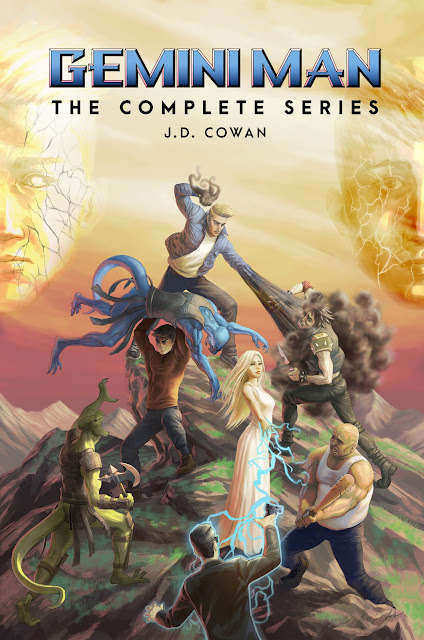
For some updates from my last update post, as I informed Kickstarter backers, the final books have been shipped out and the campaign has now been fulfilled. If you are a backer you can see the details for yourself in the most recent update. For everyone else, the reason I state this is because the paperback omnibus version of the Gemini Man series is now available on Amazon via KDP here! I know some of you were waiting for it, here's your chance.

Today's subject is a bit of a wild one. Recently, mecha series have had a bit of resurgence, especially in the prose arena, with projects like Combat Frame XSeed and Collateral Damage, among many others, have shown there is still much life left here.

What you might not know is one of the most unique, and influential, franchises that have been here since Japan themselves embraced the concept back in the 1970s. I am of course, speaking of the great, yet massively underrated in the West, Getter Robo.

One of the most common ways to describe Getter Robo is Lovecraft with mecha, but that description might be lost on people today because "Lovecraft" has been turned into a synonym for undercooked political thought and rehashed tentacle monsters. That isn't what Getter Robo is. What Getter Robo does is take the cosmic horror aspect and turn it on its head, keeping both the mystery and the horror while also managing to turn the madness into a weapon for the heroic.

Though its origins came from a simple place (legendary creator Go Nagai needed a concept for a new series with three transforming robots and Ken Ishikawa created the franchise under him), it soon transformed into what is one of Japan's best entries in the form, up there with Tetsujin-28/Gigantor, Giant Robo, Mazinger Z, Patlabor, Gundam, and VOTOMs, and it also maintained a surprisingly high level of quality throughout the decades and up to Ken Ishikawa's unfortunate early death.

If you are unaware of Getter Robo, I highly recommend the above video as an introductory crash course, especially if you enjoy giant robots. It is long, but you can put it on 1.5-2 times speed of you want. You will not miss out on much. Regardless, the first three parts alone are invaluable to see above all else. I can definitely say it has influenced a lot of what I do, and many others over the years. Learn exactly why it retains its popularity and influence even to this day. There is nothing quite like Getter Robo.

That's all for this week! Have a happy beginning of December and I will see you next time!


Saturday, November 4, 2023

Weekend Lounge ~ Scrap Metal


"But it did get worse."

What if you learned an entertainment company you enjoyed fondly as a young one fell apart? Even worse than that: what if you saw the entire thing coming from a mile away, but not only could you do nothing to stop it, the people in charge thought they were succeeding instead? How exactly what something like that come about?

Well, it turns out that we have no shortage of such examples in the modern world, many I've even highlighted before on this blog. However, today I wanted to highlight one project in particular that was such a specific sort of failure that it can only have happened to one company on one project in particular. That's right, this is about RoosterTeeth and Gen:Lock.

For those who don't know what either of those are, and there are plenty these days, RoosterTeeth started out back in the 2000s as one of those user-created content mills based on the properties of others, much like Machinima was (remember them?), who started with the comedy series Red Vs. Blue. RvB was a Halo parody using in game assets to make comedy skits and observations about the video game and pop pop culture itself. It was very much a 2000s era product, as its very name shows, and could not have been made at any other time.

Red Vs. Blue did well, eventually leading RoosterTeeth into trying something more ambitious. Using their talents, they endeavored to make an original universe spearheaded by a man named Monty Oum. He worked on the last few seasons of RvB and was responsible for such viral videos as Haloid (a Metroid/Halo crossover) and Dead Fantasy, (a Dead or Alive/Final Fantasy crossover) which is a 2000s era project if there ever was one. This new project, of course, would be RWBY.

I'm not going to bother to go into RWBY, that whole thing is a story in itself, but suffice to say it was popular. It was so popular that RoosterTeeth attracted a lot of attention from outside parties, many eager to see if they could cash in on this burgeoning "new" form of entertainment. Naturally, this meant more projects would come about.

One such product is the now infamous Gen:Lock, their attempt at a "modern" mecha series. It is now more well known for its failure than anything it did while it was around. There is a lot to go over, so I recommend watching the video above to get the entire experience. Suffice to say, it was an unbridled disaster, spurring from both the worst aspects of independent creators AND the worse aspects of corporate interference. Gen:Lock runs the full gamut of mistakes, bad luck, ineptitude, and does it in such a way that is almost impressive.

As you watch it keep the events in mind for whatever it is you are passionate about, and remember them. Things can always get worse--don't choose to make them worse yourself. Remember what the purpose of art and entertainment is and try your best to not fall into this hole yourself. A lot of the problems described, especially those that happened near the end, are very much turning into common mistakes today in the here and now. This whole event is becoming far too common, and we should not fool ourselves into thinking it should be acceptable.

That's all for today! November is here, and the weather is turning chilly. Be sure to keep warm and have yourself a rest.

Have a good weekend, and I'll see you next time.


Thursday, June 22, 2023

Safe as Bunkers


Is there more to life than just getting by and hiding in the margins? Our classical stories and our art tell us there is, and yet you would be hard pressed to find such a belief in the modern works of today. Especially in the mainstream. Instead we are told the only meaning in life is to hang on tightly to whatever you can grab hold of and squeeze it for all its worth since it can disappear at any moment. There is nothing beyond that worth striving for, little worth building, and only a fool would tell you different.

We only live to be safe, but is that so bad? Who wants to live in constant fear of the unknown, after all? We are more Progressive than that. In Current Year, we know everything.

I can't be too facetious here. Safety is something everyone wants. We want our family to be safe, we want knowledge that our homes will not vandalized when we look away for but a second, and we desire to have a stable income to keep ourselves afloat and out of poverty. There is not one who would disagree with any of that.

However, this is where it gets funny.

The safer a society is, the more its art tends to go wild in response. We still want excitement, unpredictability, and new thrills, even while we desire a life as free of said danger as possible. Humans are strange that way. Our art typically reflects the part of life we see but don't quite experience fully ourselves in the moment. This is why the best creations usually come up in times of peace, when reflection is possible and safety is around us.

Oddly enough there has been a shift in that mentality in recent years. As our society has grown more socially unstable, basic utilities begin to fail in nonsensical and embarrassing ways, and public trust among the populace has dropped in regards to each other and those in charge, art has instead become safer, more nostalgic, and frightened of things in life as common as aging or the basic family unit. The danger and wonder is all but gone in mainstream spaces, replaced with mechanized comfort food instead.

Safetyism, the desire for emotional safety above anything else, is now the rule of the land, even over human ambition and personal connection. It rules everything in the mainstream art and entertainment world. The highest goal is to be safe and accepted in a world you cannot trust or love. You cannot escape this mentality today.

And, to be honest, I don't think a lot of folks have even realized the shift has happened. It is as if this change occurred overnight. For many of us, especially those who don't value safety as much as other things, it basically did. Now everyone is supposed to treat it as the highest ambition to achieve.


There is more at play than just that, but we should just get to the meat of the topic.

For anyone who has been paying attention to mainstream art for awhile, you know those in charge of it have not been firing on all cylinders for ages now. The people in charge of the industries in the West really do dislike tradition, their audience, and anyone who dares criticize them even a little. This antagonistic relationship has ruined the modern landscape to everything from music to short stories.

But we've talked about this before. Many times, in fact. What we haven't much talked about is a place where the opposite has happened: a place where the people in charge are so absolutely scared of contradiction or challenge that they vomit out bottom of the barrel art without any personality or character to pander to the lowest common denominator for a status quo that is rapidly changing from underneath them. What this leads to is a field exactly as stagnant as the one we have in the West, and one just as likely to avoid taking risks.

In case you aren't aware, I am referring to Japan.

Now, I can hear you now, coming at me with counter examples and refutations, all in the name of hoisting them up over our broken system, but I'm not specifically talking about individual pieces here. This is about a growing attitude in Japan's mainstream that is completely ill-equipped to deal with the "Global Standards" currently watering down art and entertainment everywhere else.

Far be it from me to criticize another country I don't live in, and have never visited, for their practices, but this is an attitude that is indicative of an older problem from decades ago that was never really addressed by those in charge. What I'm saying is that the industry itself is in danger of surrendering its identity despite its current massive worldwide success today.

This will be a controversial opinion, but it can't be avoided given the current topic, so I will just go into it. There is no sense beating around the bush on this issue.

Japan has had a serious issue with Safetyism for a while now, and they have been letting it take over more and more of their industry. This has been a problem foreseen for a long time, as said by animator, director, and mangaka, Yoshikazu Yasuhiko as to why he originally left the industry way back in 1990 after his movie Venus Wars released.

This is why he originally left the industry:


I don't care what your opinion on the quality of anime is today, but one would be a liar at this point if they do not see this attitude dominant everywhere in the industry. It has turned adventurous and ambitious storytelling into a Pleasure Dome of unreality where tropes are celebrated as the ideal and hedonism and empty platitudes are about all you'll find inside the shell.

What Mr. Yasuhiko is predicting here is the growth of Safetyism: the desire to escape reality, not through escapism, but by turning reality itself into a bland mush of a playpen. It is about turning imagination itself towards unimaginative things. There is no ambition or hope of greater meaning here. It is just everyday things, stripped of their greater meaning in the web of society, presented in a fetishistic way. The championing of alienation and the atomized self, and pandering toward others to keep such a thought process alive.

He predicted the modern landscape quite well.

For an example of the full flowering of Yasuhiko's predictions, I wish to present to you this twitter thread commenting on an interview with a more recent Safetyism obsessed mangaka and his willingness to bend the knee to censor his work overseas to avoid stirring the pot. There is no great aspirations here: just a desire to be left alone to pump out product.

Be warned, this is quite bleak for anyone who loves the possibilities of art and entertainment. You can find the thread here. Read it in full before we continue here. It is important to understanding where we go from here.

The part of the interview worth pointing out:


There are no beliefs here: just mindless capitulation to whoever complains about whatever. In other words, the artist in question has nothing to say at the base level. This is why they are so easily steamrolled into doing whatever those in charge wants them to do. For those who think Japan is immune to the same issues as the West, you might want to think again.

They are extremely vulnerable to this, especially within certain ranks of more modern creators. They have no desire to learn what their audience wants when localizers will make those decisions for them, and they will not fight back. They will not fight back because they have reason to: they lack any sort of ideals to fight for.

The part of the thread that got me to make this connection is the quote where the poster says:

"guys like this spent most of their lives in the anime dollhouse in their heads so they have no real worldviews and belie[f]s of their own to fall back on when attacked. you can tell just based on how they draw"

He proceeds to give very well drawn, but artistically bland examples of the artist in question to show. The obvious takeaway is that this creator just pumps out fetish content that he doesn't really ever think about because of his appetites, therefore if another country's puritans tell him to censor it he has no problems doing it. The mangaka has no problems doing it because none of this essentially means anything to him. He doesn't care about his own works in the first place, so why would he care if his bosses wanted him to change them however they want to?

Such a creator is ideal for corporations that wish to pump out factory beltline product. And wouldn't you know it, there is a large segment of otaku who want this sort of thing. It all ends up coming together.

Of course I am in no way saying this weak-willed attitude is the way the majority of creators think or operate. It is very clear that, for instance, in Shonen Jump the stories that succeed are the ones that go beyond delivering only expected tropes and have something the creator wants to impart on the reader, even if it is straightforward. There is an attempt at communication being made between artist and audience. This is why their industry is a powerhouse both at home and especially overseas where we have long since forgotten what this is all supposed to be for.

However, that does not change the fact that Safetyism is a growing issue overseas and one that can threaten even what they produce. Japan is not infallible to this modern poison, as no one is, but they also have a tendency to misread just what those of us overseas even like because the localization industry runs interference with them for their own selfish needs over the actual customer.

This is the exact problem Yasuhiko was foreseeing coming down the road, how it would lead to art and entertainment less concerned with wonder and excitement, and more focused and banal trivialities and the mundane. Such a landscape is not sustainable.

This is where an industry led by such base thinking will eventually lead. It is destined to be steamrolled over and ruled by one with a stronger hand. Our own desire for safety is giving ammo for those who dislike us.

There is a reason trash like Sword Art Online is so vapid and nothing but a collection of tropes. Allowing this artless pandering to be the standard of your industry is going to be a problem in the future. You are giving influence to people who are, in the end, corporate drones that will do whatever they are told by those in charge. Even if those in charge are people who hate you. This is the danger of declining standards.


This soulless attitude is what kills art dead.

You need to believe in something to have principles and stances. The problem is that many modern creators don't even really think about what they believe because as long as they pump out content they will get paid and be allowed to live in peace. There isn't anything more to it than that for some of these types. They allow clichés and slogans do the heavy lifting for them in life. They merely function to get by and have no higher aspirations.

At the same time as this, there is a whole other problem developing from those same crowds who are having their soul filled in by those who hate them. You can teach anti-reality very easily this way, and you can make it seem normal. Once again, you can't not have principles. Eventually someone will get to you and change who you are and make you have them.

For those who know how awful and twisted mainstream western art and entertainment has gotten over the years, they know a lot of it is driven by ideologues who believe those who think differently than them as inhuman and worthy of destruction. Would you be pleased to know that such a mentality is actually more prevalent in the glorious land of Japan than you previously thought it was?

Not only that, it was recently paraded in one of its most storied franchises they have: Kamen Rider.

For a summation, Kamen Rider is a tokusatsu franchise created by Shotaro Ishinomori. Ishinomori's true beliefs could probably be best summed up by his influential Cyborg 009 manga (also reflected in many anime adaptations) where divisiveness will always exist but can always by conquered by those willing to look for a way to unite. It is a view very much of its time, and one that tends to carry over in adaptions of his work to this day. But it is undoubtedly his.

So then it might be interesting to note that the recent Black Sun series ultimate message is that killing your political enemies is a good thing, and we should train our children to do so. Who are these political enemies? I'm sure if you've consumed any mainstream western entertainment you can hazard a guess as to who the strawmen worth dehumanizing are. There is even a scene where they gleefully murder an obvious stand-in for a real life politician who was famously murdered.

But there is more than that. It manages to get even stupider, as hard as that might be to imagine.

Here is a random scene from the series in question:


I don't think I need to add any more context than that. It is a scene Marvel Comics would blush at as subtle high art. There is a twitter thread where the topic is broached upon here. The series itself was controversial, and not very well liked, for good reason.

This is "political" as far as that meaningless jargon word goes, but has little to nothing in common with the purpose of the original idea or creator. It is insipid, loud nonsense from people who have no beliefs or thoughts original to themselves.

In contrast, here is what the original Kamen Rider actor has to say about the franchise and his involvement in it:


How do you go from this to what is pictured above? What sort of lesson is being imparted on viewers now? In what universe is this similar to Ishinomori's original vision?

In this newer series you can see the slight of hand faux-centrism that exists to slip in propaganda and dehumanize those one disagrees with politically over views they were taught by others. It is absolutely the sort of garbage that the West produces now, and there is a very good reason its reception was not exactly glowing even in Japan. But once that hatred of the audience sets in, the rot only grows from there. Art reflects the artist and the society they live in. This is not a good sign for their future if this sort of attitude is their highest ambition.

Do you think it possible to live in a society where your neighbor doesn't know anything about you, doesn't want to know anything about you, yet considers you expendable for voting wrong, believing the wrong thing, or wearing the wrong colored hat? The desire for safety and ideological conformity overrides common sense and turns what was once a typical neighborhood into a potential warzone over trivialities. At a certain point this stops being a community and starts being spaces between enemy lines.

Perhaps this is why the term "conformist" is no longer used as a pejorative among these types. They always wanted conformity: they just wanted to be the ones enforcing it. And that is exactly what they are doing.

This insanity will only continue to bubble before it spills over in the worst kind of ways. Demonization, dehumanization, and selfishness, will not build anything. It will not make anyone safer or more creative, but it will make them spiteful, and lead to the sort of hateful trash the exists purely to spite those their masters told them to spite.

This is a societal dead end.


Don't think this is just a problem in the West. The evil of Safetyism has only spread worldwide over the years, despite the public's protestations, but for certain creators their ingroup fashioned around their designated political leaders matters more than having a functional society to grow in or industry worth supporting. Their desire to be safe from interacting with their inferiors outweighs the desire to want to communicate or understand them. The unknown must be avoided, at all costs. Until this problem is finally dealt with, the weeds will never stop growing.

At the end of the day, you have to ask yourself these hard questions. Can you live with people you don't see as people? Can you exist around ideas you think are not only incorrect but evil? Can you operate and build in a society that wishes to destroy society? Because, at the moment, we are giving the exact wrong answers to these questions and wondering why it is killing us and making everything more miserable.

Life is more than safety, and it is more than what we see on the surface. We have to have desires and ambitions or else we have nothing to live for in the first place. The wonder of the Unknown is worth striving for.

How much longer can this clown show of modernity and deliberate worshiping of anti-reality go on? Will you be the one to steer the ship to safe waters, or the one to steer it into the rocks? It will not go on this way forever.

Time is running out, and I don't want to find out what will ultimately happen if we continue to steer in the wrong direction.

All we need to do is remember that there is more to life than just getting by. Once we seek out where our destination is, we can set the right coordinates towards it again. We just have to remember there is more to existing than just existing.

Here's hoping we figure it out before it is too late.