Are you in the mood for some space opera? Of course you are. Who isn't? Well, today I have for you a series to dive into. It is the Dark Seas series by Damon Alan!
Going since 2015, there are currently 7 books in this long-running series. Should you be in the mood for space opera (and, again, why wouldn't you be?) then this is the sort of series you've been waiting for.
The description:
In the future, the human race is slowly dying. After millennia of expansion, an enemy has arisen that is slowly pushing the human frontier back toward oblivion. The Hive. Soulless and emotionless, they are colonizing star system after star system. The victims of the Hive suffer a fate worse than death...
Against an enemy that is seemingly unstoppable, one woman fights and leads the crews of her fleet in order to save humanity. History has proven again and again that in the darkest hours, heroes arise. Heroes fight. And heroes find a way. Sarah Dayson is that hero in a dark and violent future where entire planets are swallowed into oblivion.
Follow the rise of Sarah Dayson from fresh cadet fighting for her life in a four man ship to Fleet Captain, where she's commanding a squadron of ships designed for one purpose. War. The Hive may have the advantage in numbers, but they lack one thing that will always push humanity over the top. The will to live.
Ships will die. Planets will burn. But humanity will survive if Sarah Dayson has her way, no matter what the cost.
We've got more signal boosts coming up in May, so look forward to them! There is plenty more out there to highlight, and NewPub is not stopping anytime soon.
It's going to be a wild summer.
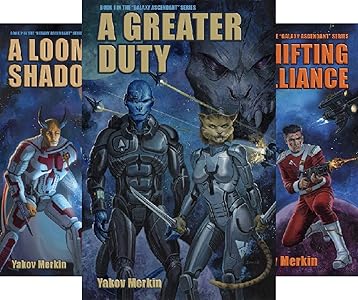
For more space opera you can also check out the Galaxy Ascendant series by Yakov Merkin! This one is also 7 volumes with a conclusion you're not going to want to miss!
You might have noticed a sharp output in NewPub material recently. This is because as the old system is dying, the rest of us are fighting hard to give you the sort of content that you crave. Today is no different.
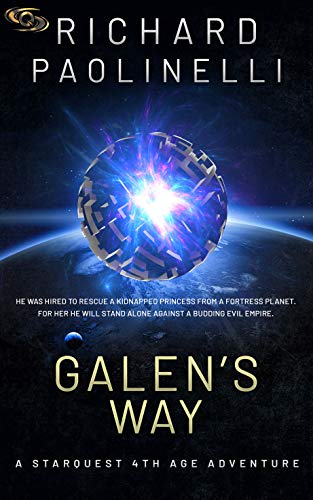
Just released is author, publisher, and writer extraordinaire, Richard Paolinelli's new book, Galen's Way. This is an entry in John C. Wright's new Starquest series, and has for you all the space adventure you could ever desire!
The description:
A KIDNAPPED PRINCESS.
A FEARED MERCENARY.
AN EVIL EMPIRE ABOUT TO BE BORN.
The Princess Rhiannon of Salacia has been kidnapped and is being held for ransom on the fortress planet of Nammu. Galen Dwyn, the most feared mercenary in the Andromeda Galaxy has been hired to rescue her and bring her home.
He will soon find himself on the run with the Princess and right in the middle of a web of political intrigue even as he begins to fall for the Princess. For her love, he will stand alone against the forces looking to establish a new, and very evil, empire.
Galen will look to keep her safe and bring the budding empire to a halt before it can gain a foothold in the galaxy. He will choose to do so the only way he knows how.
Galen’s Way.
Dragon Award finalist Richard Paolinelli takes us on a grand adventure in this space opera offering set in the 4th age of Dragon Award winner John C. Wright’s Starquest universe.
March is just around the bend, and so too is winter nearly on the way out. I can tell you personally that there is a lot on the horizon not yet announced coming from all sorts of creators and writers, including yours truly. And the year has just started.
2021 is going to be one to remember. Just wait and see!
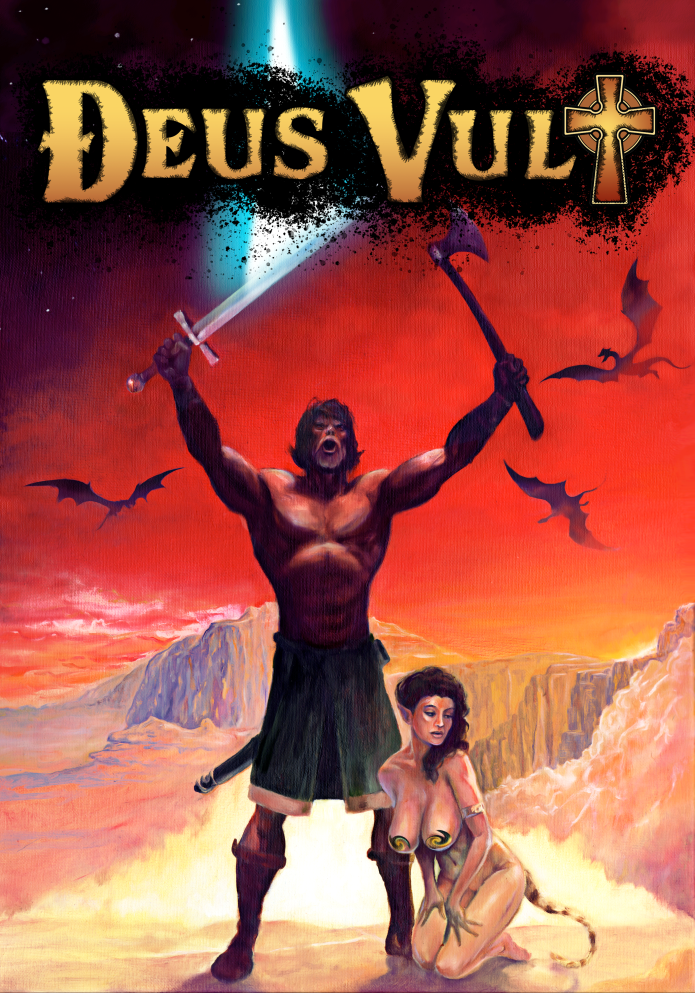
Also, do not forget that Jon Del Arroz's Deus Vult crowdfunding campaign is still on! It's currently smashing records, so be sure to check it out. Adventure has returned!
Do you remember when I said authors were busy this month? I meant it. Today, the Leading Hispanic Voice in Science Fiction, Jon Del Arroz, has just released his first comic of the year. If you know anything about JDA, this is merely the first of many, but is worth talking about for its relatively early release this year.
He doesn't typically stay in one comic genre too long, and today is no different. That said, amazon is doing its usual tricks and taking forever to link multiple editions, so if you're looking for the paperback version, it is here.
The description:
A.I. Overlords enslave humanity...
...but a brave few fight for survival.
Tom Palmer never wanted to be a hero, he just wanted to take his happy medication like everyone else in the A.I.-controlled factory, but when an accident causes him to miss taking his injection, he gets pinned with a terrorist act caused by humanity's resistance.
On the run, Tom Palmer must join the revolutionaries for his own survival. The hopes of future generations of humanity rest on his shoulders!
Fans of Saga, The Fifth Element, and The Expanse will love AI Wars! Read the comic today!
January isn't even over yet, and NewPub writers are still putting them out! Check it out today. Once again, AI Wars can be found here.
See you soon.
If you are looking for a way to make time for creativity of your own, then check out this book from author David V. Stewart. It's going to be a crazy year!
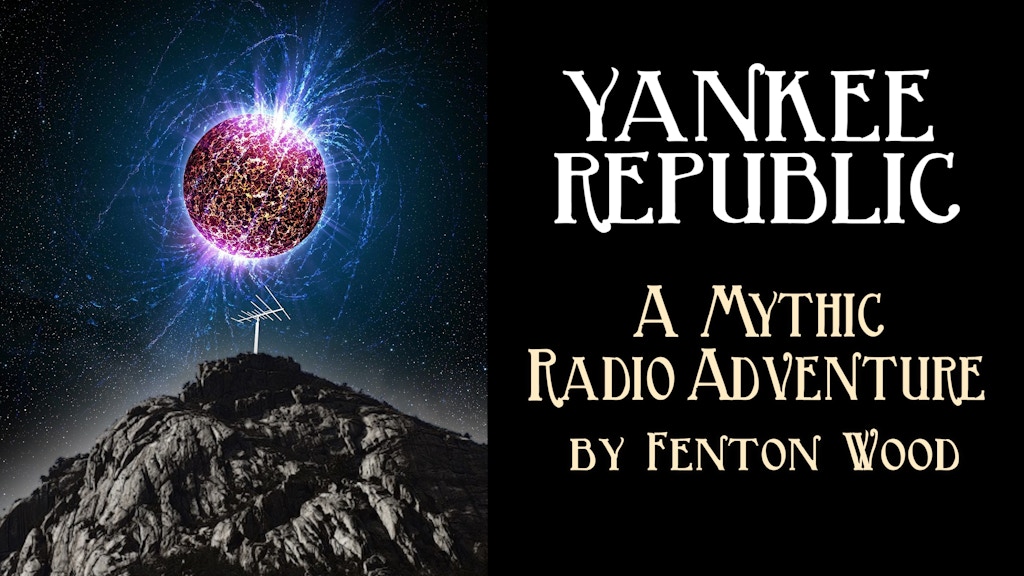
Today I wanted to highlight a recent and interesting kickstarter by author Fenton Wood. He is offering an omnibus version of his Yankee Republic series for readers that have been asking so long for it. If you are unfamiliar with it, this would be the perfect time to jump on.
A summary of the project:
"The Yankee Republic series was originally published as five separate ebooks. This Kickstarter is for a paperback omnibus edition, 650 pages, offset printed, with new cover art and the complete text of all five books."
Now that is quite a bit of content, especially considering the tiers inside. Check for yourself which one works for you. You're guaranteed to find something. There is also a digital option should you still prefer it.
So what is the series actually about? Mr. Wood explains:
"A young radio engineer travels across an alt-history America, encountering primeval gods, mythical beasts, and tall tales come to life, in a quest to build a radio transmitter that can reach the stars.
"YANKEE REPUBLIC is an old-school adventure series with traditional values and down-to-earth heroes. Escape from the pessimism and propaganda of modern fiction, and take a journey through a mythic America that might have been."
Are you ready for an adventure? Check out the project here!
It's a good time to be in NewPub. Things are changing every day, and you just never know what's coming next.
Welcome to November! It's been quite the 2020, and there isn't quite much longer to go. Until then, here is some great escapism to help keep your mind on the prize.
Today I'm going to introduce you to an oddball alternate history adventure from the mind of author Hans Schantz!
The description:
Change the past. Control the present. Rule the Future. They'll do anything to hide the truth. When high school student Peter Burdell uncovers a subtle clue in a dusty book buried deep in a forgotten Appalachian library, he realizes someone altered history. Who's been lying, and why? His discovery lands Peter in the cross hairs of the deadly Cabal whose Deep State agents changed the past to control the present, so they can rule the future. Aided by family and friends, Peter races against the odds to expose the conspiracy and uncover the answer to the most important question of his life: What is The Hidden Truth?
For more on The Hidden Truth, here is an in depth review by SFF grandmaster John C. Wright! He has quite good taste, so you know you'll be getting your money out of this one.
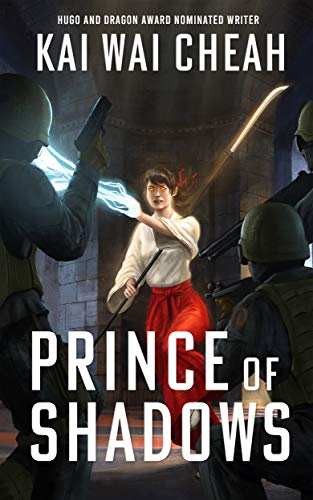
The long-awaited third book in pulp auteur Kai Wai (Benjamin) Cheah's Covenant Chronicles is out today! If you've been waiting for this then you don't need me to tell you what it's about, but for those who are new you are in for a treat.
Mr. Cheah is one of the hardest working authors out there today, and you would be hard-pressed to find anyone with the amount of spirit and energy he has. This third book has been a long time coming, so be sure to check out the series for some good old fashioned military sf.
The description is here:
THE OLD GODS ARE COMING BACK!
When a black op goes awry, the Nemesis Project pulls deniable operator Luke Landon off the line. But while mortal authorities want him to stand down, the gods aren't done with him yet.
Pressed into a secret war between infernal and divine powers, Landon is thrust into a new campaign. The elder gods are returning to do battle with the Unmaker—and they are choosing agents to carry out their will.
In Japan, a goddess has chosen a shrine maiden as her soldier. The shadowy Organization, the secret rulers of the world, have her in their sights. Without official sanction or backup, Landon and his allies must go rogue to save her.
Landon has always been prepared to lay down his life. But this time, he may just have to give up his immortal soul.
PRINCE OF SHADOWS is the third volume of The Covenant Chronicles, the supernatural Mil-SF series by Kai Wai Cheah, Hugo-nominated author of Flashpoint: Titan.
You can find Prince of Shadows to purchase here. Check out the third book today!
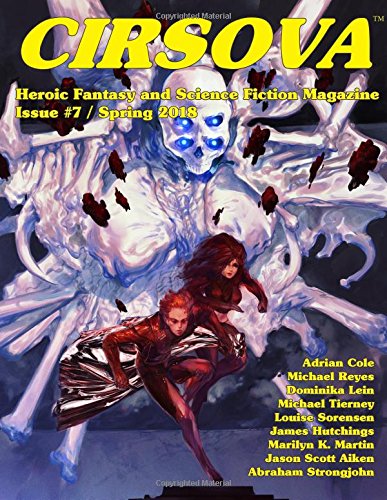
I've been reviewing Cirsova magazine on this blog longer than any other pulp product so far. There's a reason for that. Since starting in 2016, Cirsova has been known for quality and helping the growing legion of pulp writers have a sandbox to play in. Six issues in and, a whiffed story here and there aside, it has yet to make a mistake. Whereas most magazines these days don't last a year, Cirsova has gone beyond to make itself the best pulp magazine currently running. I don't say that lightly or as an exaggeration. Picking up an issue of Cirsova is like opening Pandora's Box--whatever awaits inside is guaranteed to rock your world.
So how about issue #7? I've reviewed the first six so far, and while the last one was one of my favorites I had heard issue #7 was a step down. I do find that hard to believe since the weakest, in my opinion, was the double issue #4 which merely suffered from stuffing in some lesser stales to pad the length. Had it been a normal sized issue it would have been as good as the others. But enough of that. Let's take a look and see just what the problem might be.
Dominika Lein's Galactic Gamble starts off the issue with a good dose of the strange. A spacer finds himself stranded on a gambling planet, his friend captive, and his ship taken. Now he must use his (bad) luck to get it all back. I quite enjoyed this story. Lein has a way of making the odd and bizarre seem as normal as cheese on toast, and this one is no different. It isn't the most action packed tale, but it is a whole lot of fun, and that's what I read Cirsova to get. Excellent start.
Michael Reyes then returns to Cirsova's pages with The Iynx. This is one of his Clock stories about a Chaos Magician who solves obscure paranormal problems. In this one Clock deals with an ancient relic called The Iynx, and a man who is planning to use it to resurrect his dead fiance. Chaos ensues. Of all the stories I have read by Reyes, I believe this is the strongest one yet. Sharp prose, clear stakes, and a blistering pace make this a top notch read.
The third story is The Legend of Blade by Jason Scott Aiken. This is a post-apocalyptic fantasy action story of a group of kids raised to survive in fight in the harsh land. It is quite tight and the pacing is rapid fire. The ending might not have been needed on a narrative level, but it does add a sufficient sense of wonder to the proceedings and the worldbuilding. And that is always a good thing in a pulp tale.
Unfortunately, I can't say I was a fan of The Great Culling Emporium by Marilyn K. Martin. A bounty hunter arrives at an emporium to find his prey and talks to an old flame. The problem is that there isn't any tension or much in the way of stakes. Jobard enters the emporium and there is a long and well detailed description of the place. He then talks to his lost love. He then easily finds and captures his bounty without much struggle. The old girlfriend shows up and picks him up in his craft. Then it ends. I was not much engaged by this one.
Louise Sorensen's The Toads of Machu Hampacchu is the shortest normal story in the issue, and it shows it with how little actually occurs. This is about a guide that leads a bunch of people into what appears to be an ambush of lovecraftian creatures. It's a solid story, but doesn't stand out.
But then we come to the centerpiece of the issue, a new Dream Lords story by Adrian Cole, In the Land of Hungry Shadows. Witchfinder Voruum and his apprentice, Kaspel, go on a quest into the titular dark land where monsters roam and a city that lies which holds a deadly surprise. This is the longest story in the issue, and definitely one of the best in it. Mr. Cole hits it out of the park again. Honestly, this should have been the final story in the issue as its impact is kind of diluted by the two lighter pieces that followed.
Criteria for Joining the Galactic Community by Michael Tierney and Anna and the Thing by Abraham Strongjohn are short nuggets of stories that barely fill two pages apiece. The first is about a president who gets a visit from aliens and the second is about a kidnapping gone wrong. I quite enjoy these two writers, and these stories made for good filler, but they're not to their usual level. If I had to choose a favorite of the two it would be the one by Tierney.
We are then treated with another fantastic installment of the John Carter poem by James Hutchings which leads into an actual letter from a reader. He is not much of a fan of issue 6 (unlike me) and uses the space to complain about the quality of several stories (including one I liked a good deal) which is not really gone into in much detail other than vague complaints. It's a nice break to see an actual letter, but it's a bit of a sour note to end the issue on.
So, yes, I do see why some see this as the weakest issue of Cirsova so far. I don't think this one was particularly well paced by putting two of the strongest stories at the front and then two of the shortest at the back, and the letter might have been better at the front since it does bring the mood down. But all in all, it's still solid. Not the strongest issue, but considering Cirsova's quality level that's not much in the way of a complaint. This is still strong pulp material.
Recommended.
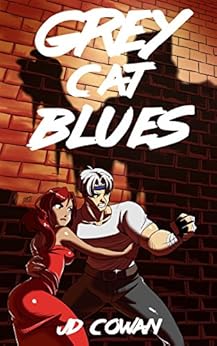
I'm also creating entertainment of my own! Check out my novel, Grey Cat Blues, if you haven't. Action, adventure, and romance, on a distant planet at the edge of the universe. What more could you ask for?
My second violent post in a row. I apologize, but there is something to this, I swear.
From a chart passed around by author Jon Del Arroz comes this list showing the sales of different SF subgenres. To no one's surprise, the ones focused on action and adventure are at the top of the chart. In addition to some weird listings ("Alternate History" and "Alternative History" are two different categories) this isn't all that surprising to anyone who pays attention to what mainstream people like. I'm sure if you've read this blog or similar ones you know all of this.
The worst part of this chart is how low short stories are. Despite being cut up into three categories (again, for some reason) short stories are at the rock bottom of the list and have been for a very long time. Think about it. When was the last time a big anthology came out or when have you heard of a short story that was just so amazing that you just had to run out and buy it? When was the last time you saw a big advertising campaign for an anthology? When was the last time any of the traditional publishing houses put out an anthology that set the world on fire? Unless you're the age of a Baby Boomer, you've never lived in this world. Short stories are irrelevant and dead.
But they weren't always so.
The pulp magazines, and even older sources, ran novels as serials alongside smaller pieces from short stories to novellas to novelettes. These short stories were the main form of entertainment and lasted just as long as the pulps did, up until the mid-50s before the industry imploded. Then they vanished, reserved for transgressive anthologies the public ignored and college classes focused on "subverting audience expectations" with unimaginative "clever" stories like The Lottery. Almost overnight short stories went from small slices of wonder and imagination to having to be based on twists and subversion on audience expectation to be worth reading. And they never recovered from that.
Just take a look at the recent Hugo awards for best short story. They are uniformly embarrassing when compared to anything from Weird Tales, The Argosy, or Planet Stories, and no one in the industry can puzzle out why the mainstream audience just doesn't want to read them. What do you expect when Space Raptor Butt Invasion was a nominee? That is how little anyone cared for the short fiction categories to even bother voting in them. Heck, the Dragon Award doesn't even have a short fiction category, which shows how little larger audiences know or care about the form.
The short story is dead.
But not everyone got the memo. I have reviewed on this very blog several magazines specializing in short fiction that are attempting to bring it back in a big way. Off the top of my head there's Cirsova, Red Sun Magazine, and StoryHack, as well as Superversive Press with their Astounding Frontiers and Planetary Anthology series. There is also a magazine called Broadswords and Blasters which attempt to standout by offering a modern bent to their pulp stories in contrast to the classic ideals of the former magazines. New sources of short fiction are here and they are asking attention.
Speaking of the latter magazine, they recently put up a post detailing what they wanted from their submissions, and what they ended up getting instead. This would go a long way to describing where the field is right now and why it isn't make the splash it should be. The majority of writers simply don't know what the majority of the audience wants, and they were misled about it from their writing teachers and industry professionals.
The relevant part is quoted here:
We have guidelines on our website. They detail, in what we hope is clear and concise language, what we are looking for. They can be broken down in two parts. The first is the genres we are looking for:
sword and sorcery;
westerns (Weird or otherwise);
horror (Cosmic, Southern Gothic, visceral, and psychological);
detective tales;
two-fisted action;
retro science fiction
If you can squint real hard and fit your story into one of those buckets, yeah, we’ll read it and give it due consideration. Mash-ups of the above are also great[2].
So far so good. These styles were the most popular in the pulps back in the day when short stories were king. Of course any magazine seeking to revive the form would use these as a base. This all makes perfect sense.
But the post goes on to detail what submissions they are actually receiving:
Here’s what we see too much of:
Epic or high fantasy.
Fantasy that is a reskin of a Dungeons and Dragons game.
Engineering science-fiction where the hero can solve the problem with a calculator and wrench[3].
Stories where talking about the problem somehow solves the problem.
Slice of life stories that would fit better in a literary magazine. No speculative gloss at all which made both editors scratch their heads and ask “Why did they send this to us?”
Urban fantasy.
Allegories (religious or otherwise) where a solid chunk of the story relies on telling some sort of moral.
And this is where we are. The first six categories were the bread and butter of pulps, and the most popular type of short story when the form was at its popularity peak. These were the most common type of tales at the time, and what went on to influence just about every form of pop culture. This should be common sense.
So why were the majority of the submissions they received in the exact opposite camp? Why were they focused on styles that either don't work in short form or were never all that popular types of fiction in the first place? Should it not have been the other way around?
Well, no. As already established, the short story form has been utterly gutted of its original purpose and tone by our betters. Let us go through each of the seven incorrect story types they were sent in.
1. Epic or High Fantasy
This form is almost exclusively a form of Tolkien worship, which is antithetical to the short story form. Tolkien was an excellent author, but he didn't write for pulp magazines nor was brevity his strong point. His most famous work is a three-volume tome, for crying out loud. High Fantasy is heavy on the details and short fiction is reliant on smaller detail and sharper action. It does not fit the short story form, and you would be hard pressed to find an Epic Fantasy short story regarded as a classic. But because this is the only form of acceptable Modern Fantasy (aside from Urban, or whatever Magical Realism is supposed to be) most writers will use this as a template. Read some Lord Dunsany or Robert E. Howard. Short Fantasy fiction is not what you think it is.
2. D&D Fantasy
This is a whole other problem in the Fantasy genre that really needs solving. There are those who think Fantasy is whatever can be done in Dungeons & Dragons and nothing else. A lot of this comes from their only real Fantasy exposure being Tolkien, his followers, or writers of Dragonlance and other such books. While there is nothing technically wrong with any of that, it does limit the scope of inspiration when nothing older than that has even remained in print and so many of our betters have lied about the quality of the stories. This is why the rediscovery of Appendix N was so important. Instead of transcribing your D&D game to a story, why not look at the inspiration of D&D and start there instead? You're guaranteed to find something better and more original.
3. Big Men with Screwdrivers
And this is where I get blacklisted. Mainstream audiences don't want Campbell's Science Fiction and there's a good argument to be made that they never did in the first place. Even if they did, there are markets for this sort of thing. Castalia House is looking for this and Superversive even welcome it, and I recommend them all the time for writers despite not caring for this style of story. Pulp magazines, however, were not built off the back of Campbell's social experiment. They go back further than that to a form of hot blooded action and romance that are designed to grip any reader with a pulse. Which is why it's important to regress further to see what exactly you're missing here that this is the only style of short fiction you can imagine. Here's a hint: Astounding Stories had an editor before Campbell. Start there.
4. Low-T Fiction
Short fiction is an adrenaline rush. It's made for people to jump in and out between other tasks they might be performing. This means they want action and problems getting solved quickly--they want to feel like something is being accomplished. If you have a story where the problem is simply talked away then the problem could not have been very serious to start with. Talking problems away is for misunderstandings, not life-ending threats. These stakes are not high enough to engage a reader. Nobody wants to read about a trip to the HR department or your son's guidance counselor. Pump up the tension and realize why people read short fiction to begin with.
5. Comfort Food Fiction
There must be some correlation between the more hedonistic and nihilistic a culture is the more it enjoys stories about people doing nothing at all and where nothing happens. Whether in anime or the written word there are writers that think audiences want to read about characters who do nothing, accomplish nothing, and at the end of the day mean nothing. But there aren't, at least not in any real large number. This audience is a small sliver. So stop foisting this style on the greater population. They want a salad, a steak, or a beer, and maybe a combination of all the above. They don't want a saltine. They don't want the same thing they can get by recounting their own daily activities. This is fantasy! Think bigger.
6. Urban Fantasy
The problem with Urban Fantasy is its kitchen sink approach to everything. You have to have werewolves and vampires and fairies and magic and you have to explain why they're all there and how they interact in a world where all of them being real makes no sense to the common man. This cannot be condensed into a small word count without resorting to inside baseball or confusing the audience. And even if it can be, they are mostly detective stories with fairy creatures. They're not that exciting a setting for a shorter piece. But this one is speculation and taste on my part. Urban Fantasy is popular in long form, but I have never seen a shorter piece that has been trotted out by fans to show how well the genre works in said arena. The world also doesn't need two Harry Dresdens. Chicago deserves some mercy.
7. Message Fiction
And this is the big one. How many children have had it beaten into their heads that short stories are for delivering important messages that mean things. Almost all of this comes from what is taught in schools and how they beat any love of reading out of their students. It's no wonder the majority of the population never touches a book after graduation when they are given propaganda as the baseline and told this is what constitutes proper reading. There's nothing saying Le Morte D'Arthur or an old Ray Cummings story can't be used to teach form other than a badly made program that is not interested in instilling a love of wonder or imagination, but on preaching messages. That was a tangent, but it's also what you get from a worthless school system whose idea of genre fiction is The Giver and then wonders why kids don't want to pick up books in their spare time. Then there is assigned material like The Lottery which is based on a twist to make you "think" and wish you never had to read anything ever again. So many people think this is what a short story is supposed to be.
And that is mainly the problem in this whole saga. Short stories were once the ideal form of quick entertainment and should be more popular than ever in this age of instant gratification. But they're not, and that's because of the bad ideas that have been planted in our heads as to what they're supposed to be. The field has been utterly wrecked and, short of a revolution, it doesn't look as if there's any way out.
But there is. As already stated, there are many magazines and individuals dedicating themselves to fixing this problem, and working overtime to accomplish this task. Maybe in a few years Short Stories and Anthologies will be up there with novels where it belongs, but at least that doesn't mean the rest of us will sit by and let it continue to fall so far.
So keep an eye out on those of us putting our work out there whether on blogs, services like Steemit, amazon, or newer magazines. I can't promise every piece will be a home-run, but it can at least get us to first base. And that's a good place to start when we've only been striking out.
Let's bring the form from its grave and allow it the life it deserves.
If you want a sample of my short story work you can find one for free by signing up to my newsletter (or buy the same story for a dollar here), or find others in anthologies at amazon here and here. I should have more info on future stories soon enough, I promise!
As for longer pieces, I have my action adventure novel that you might have missed out on. Hungry for the days where writing was shorter and to the point and there was plenty of red blooded thrills to go around? This is what you've been waiting for.
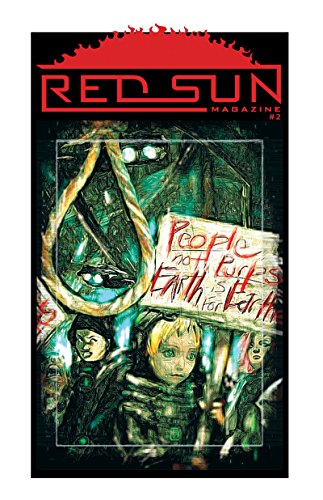
This is a magazine I've been trying to get to for a while now. Unlike previous reviews of Cirsova and Astounding Frontiers, this one is a bit different. Red Sun Magazine is a unique case where every one of the three available issues have a distinctly different focus. But they all share one aspect that peaked my interest in that they are not obsessed with genre segregation and are interested in exciting stories.
I chose Issue 2 specifically for being focused on Fantasy, which is a genre that needs a real pulp shot in the arm harder than SF and Horror do, in my opinion. I was not disappointed. Well, mostly. There is one story I did not enjoy, but I will get into that when we get there.
One thing Red Sun does differently than Cirsova or Astounding Frontiers is that they have interviews and articles sandwiched between stories. These are all centered on the same genre the issue focuses on as well as authors and creators in the same vein. This issue starts with an interview of the men behind from the Cromcast which is, as you can guess, a podcast focused on the late and great Robert E. Howard, as well as other Weird Fiction tales. It was a delightful read which made it a great piece to start off the magazine.
Next was an article titled "Why Write Fantasy?" by Judith Field which further put the lean on the Fantasy side of the magazine. This is just what the doctor ordered. The piece tackles an aggravating trend from literary types to classify Fantasy as lesser entertainment reserved for the ignorant and lesser folk from their "real" stories. It was pleasant reading a rebuttal of these claims that feel like they could have come from Chesterton himself.
"Fairy tales do not tell children the dragons exist. Children already know that dragons exist. Fairy tales tell children the dragons can be killed."
Fantasy is a way of connecting with a higher place than the one you're already in. A wider and bigger world is presented to entertain and thrill the reader. It hopes to pull you in and show you grand visions you might never have believed possible. This should be the aim of fiction--to give the reader a dose of imaginative excitement. After all, what is wrong about wanting to find something more than modern life?
The third piece in the magazine is another article, this one titled "Is Fantasy Hocus Without Pocus?" by Karen M. Smith. This one is about magic in fantastical stories and if it is necessary for the genre. I was a big fan of this article. The discussion of magic leads to a lot of blurring of the lines into what distinguishes Fantasy from Science Fiction or even Horror. Sub-genres and certain quotes are bandied about but no actual definition of Fantasy that sets it apart from other genres can really be found. She comes to the (in my opinion, correct) conclusion that these categories don't ultimately matter.
Of course this leads to all kinds of (really silly) arguments, but the truth remains the same. Genres blend because they are interchangeable.
In this reader's opinion, that is because all genre fiction is the same genre. The only distinguishing aspect is in the tone, trappings, and language used. Yet they all contain fantastical worlds and journeys with imaginative concepts not available to those trapped in "reality" or the plainness of (post)modern fiction. The only ones splitting the difference appear to be those who like one trapping above the others and want to elevate it in response. But this is a pointless task. They are all one and the same, and the sooner we can put that behind us, the sooner we can get back to focusing on ignoring artificial boundaries and getting sales back up again.
But I digress.
It is after this that we finally get to the stories. Thankfully, the issue only kept the quality up.
Up first is The Phonebooth by Michael Reyes. I recognize the author from Cirsova, and his tale did not disappoint. This is about an ex-convict answering phone calls from very mysterious parties as the world undergoes very strange changes. I was reminded of The Mothman Prophecies with how a creature far beyond the world of man attempts to communicate and influence events in our world in ways we couldn't possibly understand. There's a very good reason for that similarity, but I don't want to give the game away. Very nice horror bent in this one and a great first story to start with.
After that is Earth is for Earthers by Alexis Lantgen. Genetically modified humans return to Earth and things change... or do they? As for the positives... it was well written. I do think I would enjoy other stories from this author. That is all I can say.
As you can tell, I did not like this one. I began to predict every plot turn before it came until it lead to an ending that was rather flat and pointless. This is a story where you could remove all fantastical elements and the story would more or less be exactly the same. That's one of the core problems, but it was also too predictable.
You can get a story like this--a real world analogy to racism and immigration only transplanted to aliens--just about anywhere. You can get a story of forbidden love that ends with suicide of both parties just about about anywhere. You can get a story where every "bad" person is treated as stupid and every "good" person is a noble victim just about anywhere. You can get a story about a mopey protagonist that does nothing while a plot happens around them just about anywhere. And that's not a good thing. You can read another story like this just about anywhere.
This was a waste of the author's talent and Red Sun Magazine. I hate to be harsh, but stories like this are my least favorite kind, especially when I can tell where they are going before the author even gets there. Of the four tales, this was the weakest.
The third story is Body of Evidence by Ben Howels. In this one a magistrate is murdered and a trial has been enacted to sentence the perpetrator. But is he really the killer? This one is written in a Fantasy setting, in keeping with the theme of the issue, and it is a banger. The tension increases as the mystery unfolds and the characters are given a lot of personality through their natural discourse. There is a good quick ending that is very satisfying making this a good pulp tale.
Last is Sanguinary by Kevin Weir. Here we have a blood mage mercenary in an urban fantasy setting that is two steps away from being cyberpunk slaughtering gangsters to save a young girl. I don't think I need to add anything else to state that it spoke to me. This story was good fun and ended the issue off right. Personally, I feel this should have been the cover story. It has good atmosphere and an engaging magic system that really sets the imagination off. I definitely hope to read more stories about this character in the future.
Speaking of which, the magazine ends with an interview of the author of the very story in question. It gives quite a bit of context as to where the idea came from.
I was impressed with this issue of Red Sun Magazine. I had not heard much about them before, and I noticed they have relaunched their website, but they do have a lot of promise as a short story fiction magazine and a lot to set them apart from others.
It's been a while since I reviewed the premiere issue of Astounding Frontiers. My assessment was that if you are looking for a magazine of fun Silver Age era Science Fiction then you will be right at home. If you are looking for either Golden Age pulp or modern fiction, however, you would be out of luck.
That said, it's been some time since that first issue. Let's take a look and see how much later issues have improved from the initial release.
Heck, the covers alone have improved tenfold since the first one.
I will be looking through Issues 2, 3, 4, and 5, in this review in order to properly judge more of the multi-part series. I will, however, still be skipping the full on larger serializations. I simply do not have the interest in them as of now, as stated in the previous review, but if that is to your taste then you should have full confidence in the authors involved that they will cater to your taste just as well as the shorter pieces do.
Please apologize this sloppy review. It was difficult to compile properly. Astounding Frontiers is difficult to review.
Three of the four stories in issue 2 are continued in issue 3 (and one in issue 4), so there's much carryover. Every issue bleeds into the next which makes it hard to recommend a specific issue in general. As an aside, I have skipped Julie Frost's story for this post as it is not completed as of issue 5 and I did not want to jump into issue 6 and have more cliffhangers to work around.
Confused? Yes, so was I. This is one of my main complaints with Astounding Frontiers. It is hard to jump into or keep track of with so many stories starting and ending in different issues.
But let us get into it and begin with issue #2.
Up first is Dead Man Walking by Scot Washam, a zombie survival horror tale about a lone protagonist gathering supplies. It's a fine starter to issue 2, but it's not one of my favorites. That said, it's fun and action packed. It also benefits in being the quickest and most exciting read in issue 2.
The Long Freeze (Parts 1 and 2) by Karl Gallagher ran in issue 2 and 3. A young man named Luke awakens from a cryogenic freeze where he learns that the world is a much different place than the one he left. With a fellow traveler named Marv he finds giant Siamese cats and a village of chicken men in Part 1. In Part 2 the pair rescue two beautiful women from the village. They then reach a village of . . . "men" for lack of a better term. Weird is a great descriptor for this one. This was a great read from start to finish, but the ending petered out. A new character is introduced and the story just stops. This could have used a third part to wrap it up.
Then up next we have The Robber Council (Parts 1, 2 and 3) by Brian Niemeier which carries over three issues. I always struggle to explain his stories because they are always so very thick. This is a story of a prisoner named Merentus being given a second chance by the Philosopher King. In the first part there is a debate regarding letting Merentus leave his dark prison to escape into the light. I don't want to say more than that because I might mention something that will ruin the mystique of this piece. In the second part he is bought as a slave by a woman who uses him as an escort on a perilous journey which is the focus of the last part. Of the three parts, I must admit I liked the first part the best for having such a strong conflict in such a small amount of space.
The Last Lesson (Parts 1 and 2) by Russel May follows.a time traveler attempting to improve his life at the expense of his partner, the world, and time itself. The first part deals with him telling his tale from a prison cell as he attempts to figure out his way back through. The second part deals with the repercussions of his selfishness. I have said I don't care for time travel stories and this story exemplifies why--in a good way. It's confusing in how the rules work and yet the plot progression is easily understandable and straightforward. This made the story enjoyable on a level I wasn't expecting. What it does is solidify my feelings that time travel as a story concept is too troublesome to encumber yourself with. That said, Mr. May made it work for him and the result is an enjoyable tale.
Issue #2 also contains two vintage pieces which are The Stolen Mind by M.L. Stayley and Into Space by Sterner St. Paul. The former is about a man by the mighty name of Owen Quest who applies for a job at a research facility and ends up going through a trippy spiritualist journey. The second is a tale about contact with extraterrestrials and a missing scientist which ends in a very odd predicament for a certain character. These put a good frame on the type of stories that the magazine is hoping to capture.
If I have one complaint it is that there was only one standalone single part story in these issues. If you are trying to get new readers to jump aboard it is difficult when they only see a bunch of serials in mid-progress and two short stories, one on its second part and another on its third. It's not approachable for new readers. A few shorter one part tales would have been nice to break up the longer works.
I understand it's a way to keep readers coming back, but it keeps some at arm's length from picking up a new issue when they are not certain they can get a full experience, or get dropped in the middle of a bunch of stories that they do not know the full length of. It's not newcomer friendly.
Thankfully, Issue #5 is filled with standalone stories which makes it far easier to talk about. As said before I will be skipping Julie Frost's story only because it is not finished as of my review and wouldn't make sense to review it here.
The first tale in this issue is Spacebook by Arlan Andrews Sr. is a short comedic piece about all knowledge of the universe being known. It's a solid piece that does have a funny ending but leaves you wondering if everything really ever can be known. I quite liked it. This was a breath of fresh air.
Redcoats Versus Monsters by Patrick S. Baker follows and is, like the title implies, an alternate history tale. Coming off of Spacebook made this a bit more humorous than intended, but that's no bad thing. This tale contains action, reanimated corpses, honorable soldiers, mysterious snake men, horror, and fantastic sights. This is the best story of the whole lot, the most pulp, and by far worth the price for issue #5 alone. I cannot express how much I enjoyed this one.
Last there is For Science! by Ben Zwycky. This is a poem and is another break from what Astounding Frontiers has offered so far. It is weird, creepy, and out there, with just enough to make it truly fit in with a pulp magazine. This adds much to the magazine's tone.
There's also an article by Jeffro Johnson on Planet Stories that, once again, makes me wish I had a copy of the very magazine he is talking about. The pulps really were something else, and it is good to see so many modern publications attempt to reclaim what was deliberately abandoned. Much like Astounding Frontiers is attempting itself.
As it is, this is the best issue to jump on board with outside of the first one. The original stories as a whole are stronger than those contained in the initial issue, however, and there is much more variety. This is by far my favorite of the 5 issues I have read.
And that is all I have read through.
My main problem with these issues was in length of the tales themselves. Short stories are meant to be brief, sharp, and to the point. They are meant to lift the reader out of their normalcy and doldrums far quicker than a novel does by offering a complete story with as little economy of word space as possible. Few of these stories achieve this due to spreading over multiple issues and some issues not even containing any complete tales at all in their individual pages. It dulls a lot of the satisfaction.
Of course, I am not complaining serializations exist at all, only that a selling point for a magazine should also be that it contains complete content in its pages to contrast with longer pieces. This is something Cirsova offers in every issue. Even if they began running serializations, I can still trust them to have standalone short stories that I can consume in addition to their new approach.
Now this might only be a personal issue, but I didn't see any reason to avoid bringing it up. I am the one reviewing this, after all.
Another problem is that it still has a bit of genre segregation. These are not the fault of the tales themselves, but in the magazine's approach. There were no Fantasy tales included in any of these issues nor any Horror beyond Mr. Washam's in issue 2. All that is except for Mr. Baker's excellent tale in issue 5 which has no fear of genre limitations. Contrasting this with the Cirsova issues I recently reviewed and I cannot help but be disappointed on that aspect. Part of the fun of pulp reads is not knowing what any given story will contain within its pages. It is a feeling of opening a mystery box unsure of what will spring from it and always getting surprised.
All that said, the content itself is worth your time. These stories are well chosen and enjoyable, all for a very affordable price. If you are looking for a good magazine for Science Fiction stories then this is a fantastic buy. You are in for a lot of fun.
You can find all the issues of Astounding Frontiershere.
I'm also creating stories of my own. If you enjoy pulp you are sure to dig this. You can read my new novel today!
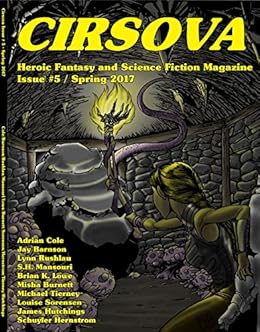
It's been a while since I covered Cirsova. This is mostly down to having such a packed 2017 but also because I had so much to read. After that giant double issue review it just took me a while to work my way back to it. But I managed. That out of the way, I'm going to start this review with issue #5!
Issue #5 was different for Cirsova as it was the special Eldritch Earth volume. Here the main theme was, you guessed it, Lovecraftian abominations in the distant past where the world is a much different place. This initiative was started by Misha Burnett, author extraordinaire as well as writer for one of the stories here. What all this does is give issue 5 a much different feel from the others as it has a strong horror tone throughout where almost every tale is just dripping with ephemeral terror and eerie monsters out of Lovecraft's warped imagination.
These are hard stories to review individually because they all blend together in style. It is not an insult to the authors, as this is a theme they are following, but most had the same atmosphere and dour ending that it made it hard for me to distinguish which ones stood out more overall. Brian K. Lowe contributed two stories (War of the Ruby and Shapes in the Fog) which respectively set the tone and wrap up the theme, so I will point to him for the highlights and for catching the general mood.
If I do not come across as enthused, it is only because my interest in Lovecraft is not as strong as it probably should be. This is not a slight against the stories in this style. I enjoyed them all, and found myself on the edge of my seat wondering how they would end. If you are a Lovecraft fan, you will certainly enjoy the lot. Eerie settings, doomed protagonists, and more intangible monstrosities than you can shake a dead albino supergenius at. This is a definite step up from #4 making #5 is a return to form issue.
There's also a novella by Schuyler Hernstrom. If you've ever read anything by him, then you already know what you're in for, but if not, then let me set the stage for you. A warrior has lost his love and must travel a dangerous land and consult a "sorcerer" to help get her back. But will his journey be worth the risk of a price higher than death? Suffice to say, the journey for the reader is definitely worth it.
It goes without saying that Mr. Hernstrom's story was easily my favorite in the issue. It's a good old fashioned adventure tale with excellent action and intriguing world-building. His stories are always my favorite in Cirsova, and this was no different. It's also a long one!
Unlike issue #4 where there were a handful of stories that did nothing for me (including one I outright disliked) there was nothing here that turned me away. As a full issue, this is the strongest since #3, and probably the third best overall.
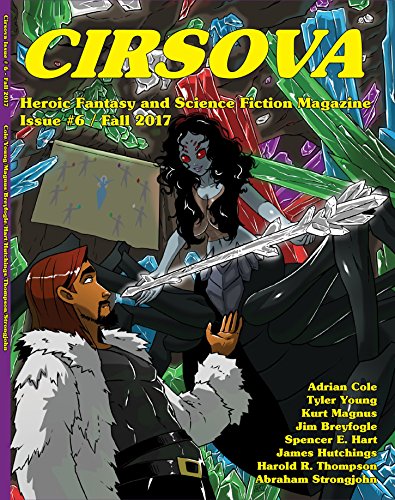
Issue #6 closes off Cirsova's 2017 output with another strong entry. The first three stories in particular had me reeling. The Last Job on Harz and Death on the Moon are detective stories in space and The Battlefield of Keres is a fantasy adventure with a horror bent. The issue is worth the price for these three stories alone. They had me hooked from start to to finish and were exactly the type of tales I come to Cirsova for.
But that isn't to sell the remaining stories short. Every one of these is strong. Kurt Magus returns with another exciting Othan story and Harold. R. Thompson gives up Temple of the Beast, an adventure story with a deadly creature and a heartbreaking betrayal. And this issue even includes another Adrian Cole "Dream Lords" tale which, as you can imagine, is incredible on its own. This issue is a bounty of riches.
#6 concludes with another delicious entry in James Hutchings' My Name is John Carter epic poetry piece and a second novelette. The novelette is another delight from Abraham Strongjohn, the long awaited sequel to his story At the Feet of Neptune's Queen from issue one. This is a perfect piece to end on, coming full circle from where it started in the first release. This one was thrilling from start to finish.
Actually, the whole issue was.
Issue #6 was a pure delight from page 1 with various different styles of action tales that kept me entertained. As a whole, this is the best issue of Cirsova so far. Every story was as good as the last and is as great the magazine gets. Were you to pick up one issue of the lot, I would suggest this one.
And there you have it. Two great issues from a year that contained much fiction well worth your time. 2017 was a good year for stories, and Cirsova was a big part of it. Wonder, action, mystery, dread, and romance fill every page of these issues. The pulps are back.
I've been following the Superversive movement for a while now. It has paired with the Pulp Revolution as the two main influences of where I'm taking my writing, and both have a lot of crossover with each other. Superversive is focused on stories that show the reader that world can be larger and more mysterious than at first glance, and Pulp Rev focuses on stories with a moral clarity where anything can happen at any time. At some point the two streams will cross and the fabric of the universe will tear. It only stands to reason. They have much in common.
So when I heard members of the Superversive movement were planning on making their own Pulp magazine, I was excited. What more could I ask for? There's so much clear overlap that I could hardly wait to give it a read.
And read it I did.
I'll start with the positives. Declan Finn's According to Culture is just about what I'd expect from him and it gave the magazine the shot in the arm it needed. It was fast paced, action packed, and takes place in a universe that leaves the audience with wonder. It's also quite funny. It's exactly what I was hoping for.
The magazine itself is also very well edited, and the writers all contributed very good speculative stories that wouldn't feel out of place in a Science Fiction magazine from the 1970s. I did not read the serials simply because I do not like serials as a rule, but know that all the authors involved are very capable at writing great stories and from what I've seen these serials continue the trend. If you buy this issue you will get your money's worth. It is a 5 star magazine with very worthy stories.
It has a fantastic title and tagline, too. Very well put together. All in all, it's a great buy.
Now the negatives.
As I said, I didn't read the serials. This is nothing against either the magazine or the writers, but just that I don't read serials. My memory is bad enough that waiting even a week to read the next block of a story will cause me to lose my excitement and the story thread. So anything I say next will exclude them from criticism.
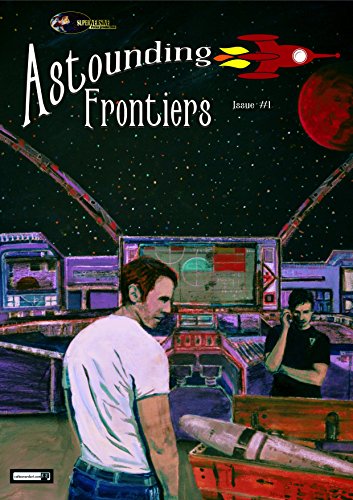
The cover is boring. I don't have any idea why those guys are standing around amidst computer screens and blandly looking around. There isn't any wonder or mystery to be found on the cover and it dulls enthusiasm for opening the issue. Luckily, issue 2 is a step in the right direction here.
This leads into the biggest problem I had with the magazine: it's not traditional Pulp.
Keep in mind that there are no bad stories here. They're all well written and do what they do well, but they are not Pulp stories aside from According to Culture. The reason they're not Pulp is not just because of lax pacing (the first story in particular is rather quick and it is not very Pulp either) but that there isn't much mystery or wonder at the world outside of the characters. There's no genre bending (though again Finn's comes close), and there are no moral conflicts that tie in to the exterior battles-- if there are exterior battles at all.
In other words, it's Science Fiction done in Heinlein's Silver Age style. Not Golden Age Pulp in the vein of Robert E. Howard, C.L. Moore, Clark Ashton Smith, or Leigh Brackett.
The lack of romance (in the older sense) is a big deal for this reader. I read Golden Age Pulp for the excitement, the off-kilter ideas, the wonder, the action, the mystery, the smashing of genre walls, and the morality and spiritual battles. I don't tend to read Silver Age SF because it barely ever has half of those and I personally don't care about complex math equations to tell me how faster than light travel works. Pulp naturally focuses on everything from the bottomless well of the soul to the near inscrutable atoms of the universe and everything in between, while Silver Age focuses on How Things Work and how Making Things Work will solve every problem. They have very different aims.
There's nothing necessarily wrong with the latter, and it wouldn't be an apt criticism normally. But this magazine was advertised as being a Pulp magazine, and my expectations were adjusted accordingly. In that aspect it doesn't hit the mark.
Part of the problem is that all the stories are locked to Science Fiction. Pulp is not just Science Fiction. Pulp is Fantasy, Horror, Science Fiction, Historical Fiction, Thrillers, Alternate History, Weird Tales, Westerns, Detective Fiction, and Romance. It can be any of these at any time, and all at once. There are no genre boundaries in Pulp, and it is one of the unique characteristics that only it contains. Limiting that scope limits the potential stories for the audience.
That's not to say I disliked the stories actually in the magazine. I enjoyed them all. But they did not offer what I was expecting, and I can't help but feel a tinge of disappointment.
To put it in contrast, let me use this space to review two other short stories I have read recently. These are the types of stories I went in expecting from Astounding Frontiers.
The first is I, The One by Dominika Lein. The second is Spider Silk from J.D. Brink (fantastic name, sir) and both of which I had to purchase in the cluttered asteroid field that is amazon's site just to read. I've been looking for a way to properly review them, so it'll work here. These are the sorts of stories that should be in a Pulp magazine.
I, The One is very hard to pin down. Reading the first paragraph one cannot discern if it is Science Fiction, Fantasy, Horror, or something else. It's quick and snappy: events continually unfold and unravel the world within. The prose is light and yet ropes you in to hold you to the page. Imagine Clark Ashton Smith with an eye on the more mystical parts of the Dresden Files and you might get close to what this story is. It was a delight to read.
On the other side is Spider Silk: Behind the Eightball by J.D Brink. This is a fast paced action story about a superhero hunting wannabe supervillains. It's got a good sense of humor, a swift flow, and is a quick read. It's not anything like I, The One, and yet it is very clearly pulp inspired. About the only personal gripe I have is the excessive swearing, but that is relatively minor compared to the rest. This was fun on every level.
But the best thing to get out of what I said is that these stories are entirely different from each other in just about every way. And they're both still Pulp. That is how wide the net casts. Pulp has an incredible scope.
This is why I expect a lot from a Pulp magazine, and will be expecting more in the future. Astounding Frontiers is a good magazine, with a good foundation for the future, but it is not a Pulp magazine. Not yet.
If you are looking for a Science Fiction magazine: Recommended.
A friendly reminder that Cirsova is still taking submissions for off-kilter science fiction and fantasy stories. And with that done, we now return to our regularly scheduled post continuing from last week.
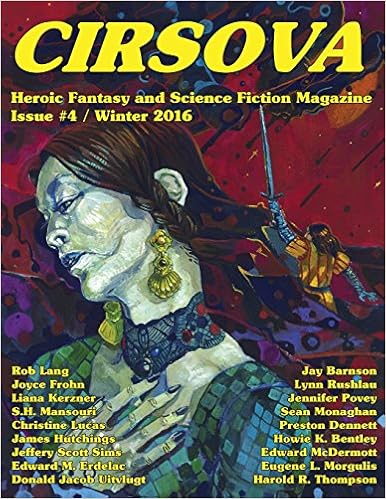
For those who missed it, I reviewed the first half of the issue here. This post will cover the remainder of issue four.
. . . Where There Is No Sanctuary by Howie K. Bentley is next and it is a real punch in the face. This might be my favorite story in the issue. A werewolf warrior cuts his way through a demonic tower that has fallen out of time. Lots of action, horror, and imagination. This is the type of material that I read Cirsova for.
But then we have another turn. Dust of Truth by Joyce Frohn is about a group of barbarian women looting and pillaging before a wedding to her subservient man. And that’s the whole story. There aren’t any twists or turns or real sense of danger. Events transpire around the main character, and then it ends. There is also no reason given for the sex-flipped roles, and it is distracting. This is easily my least favorite story I've read in any issue of Cirsova.
Thankfully, it was a one-off. The Priests of Shalaz by Jay Barnson is another great tale. This one is about a border between worlds and involves the British Empire, magic, and giants. It’s very much in the vein of Burroughs and sets the pace again after the last story's bump in the road.
It’s followed up by The Last Dues Owed by Christine Lucas, a story about an assassin that finds himself trapped in a plot that involves Egyptian magic, a battle between assassins, and his possible family(?) on top of it. This was another solid read.
Then we have the second and final novelette of the issue, Shadow Vision by Preston Dennett. This was right up my alley. A boy with a strange gift travels through a shadow fog with his companions and meets some . . . interesting obstacles along the way. This is pure Fantasy Adventure.
As we near the end we reach The Ride by Edward McDermott. This is about a man escaping pursuers into a mountain cave system and facing what lies in the dark. It's creepy, unsettling, and action packed. The issue has really turned around since Dust of Truth. This story is very much what I enjoyed about Cirsova the most.
The last story in this double-stuffed issue is The Phantom Sands of Calavass by S.H. Mansouri. This was about an investigator landing on a desert planet and looking into some strange murders. Naturally, because this is Cirsova, things go south very quickly. This was a good story to end the issue though it took a while to get moving and the ending was not quite satisfying enough for me. This was another solid tale.
At the end we have an essay by Liana Kerzner called The Feminine Force Awakens about that recent Disney fanfiction Star Wars movie with a similar title, though it is really about women roles in science fiction and fantasy and how said movie gets credit for doing something it should not be getting credit for. If you want to know the real history of women and their place in the history of the genre you could do a lot worse than this. As an example, you could be reading mainstream blogs that vilify everything written before 1980 in another pathetic attempt at revisionism.
To sum it up, this was not one of the best issues of Cirsova. Issues #2 and #3 are still the ones to beat. However, it still offers a good amount of bang for your buck, and a few of the stories (as well as the poem and essay) are some of the best they've yet put out. If you're new to Cirsova, I recommend any of the earlier issues, but if you're a fan then dig in.
We need more magazines like Cirsova, reminding us jut how inspiring and jaw-dropping speculative fiction can be. In an age of grey fog, it is the lighthouse shining the way back home. You are doing yourself a disservice if you are not reading this magazine.
Before I continue on, there is something readers should know. For those interested, Cirsova is open for story submissions. Have a Heroic Fantasy and Science Fiction tale? Then send it in to them. More information on submissions can be found on their site.
In the meantime, here's a review I've been meaning to get out for awhile.
This review took a while to get off the ground. Not only was
I away from blogging for a while where this fell on the back-burner, but this issue of Cirsova is twice as big as
a normal issue. There is a lot to cover.
With 18 pieces to go through, I decided to split this up into two posts. I hope you will indulge me in this since one long post would clutter everything up.
First up we have Wall Wardens by Lynn Rushlau. This is a fantastical
story set in a dystopic world where a warden is framed with one of the worst
crimes imaginable. This was a great start to the volume since it slides the reader into a world that clearly screams that this is a pulp
magazine. Quite enjoyed this one.
The Lady of the Amorous City by Edward M. Erdelac is next.
Two boys are tasked with slaying a monster in absence of a proper knight to take the quest. But
things might not be quite what they seem. I have a bit of a weak point when it
comes to stories of honorable knights so I already have a bias for this. Great
characters and a simple, but engaging, plot. The ending was also my favorite in
the issue.
In the third story, The Unfolding of the World by Harold R.
Thompson, Captain Anchor Brown is tasked with mapping a
river and is enveloped in an adventure when he ends up over his head. This tale
features some exciting duels and plenty of adventure to go around. The ending
is a bit quiet for my taste.
Then there’s The Sands of Rubal-Khali by Donald Jacob Uitvlugt.
This one is about a slave girl on a distant planet desperately trying to win
her freedom and find her sister. I wasn’t much of a fan of the ending as it stopped short without resolution; it just
missed feeling satisfying.
Next is The Witch of Elrica by Jennifer Povey. This one was
about a teenager and a witch getting together during an arranged marriage
party. This wasn’t really my type of story, and the ending didn’t do much for
me, but it was well told.
The Vault of Phalos by Jeffrey Scott Sims is the first of
two novelettes in the magazine. The start was really slow as it was used to set the
world up. It took far too much time before we even got a main character’s name. However, it eventually all comes together to a phenomenal final encounter making the wait worth it. It just could have stood a bit
more trimming overall.
Ever wonder what a more fantastical Jason Bourne story might
be like? The Bubbcat by Sean Monaghan might be what you’re looking for. There
are a lot of quick cuts to other locations and times which can make the story disorienting at times, but it works well in the frame of the story.
There seems to be a bit of unresolved story revolving around the brother unless I missed something.
Nonetheless, it’s one of the best stories in the issue.
After that we come to A Suit of Haidrah Skin by Rob Lang.
This was a really imaginative story that was so bleak I thought the pages were
turning a shade darker as I read along. This was a fascinating read, but not really my sort of story.
The ninth story is Lost Men by Eugene L. Morgulis. It was a
meta take on Peter Pan and I really didn’t like it. I saw the ending coming far too soon in the story. If you like these sorts of stories you will most certainly like it more than I did. The prose was splendid.
The third part of My Name is John Carter by James Hutchings
followed, and it was a pleasant breather from the last two stories. I’m no
expert on poetry but I do appreciate this series as they attempt
to retell the John Carter story. If there is a reason to collect Cirsova issues
beyond the excellent stories, it’s for material like this.
There's still more to go, but for now I'll end it here. Tune in next time when we finish off the issue with some great (and not so great) stories to go over.
Oh, and if you have a story you're looking to sell, be sure to check out Cirsova. They'll be open for submissions from June 1st to July 15th.
With the recent hoopla concerning Jeffro Johnson's Appendix N book, I decided to dedicate a post to that intentionally buried source. If you want some background on what Appendix N is, and why it matters, I suggest watching the below video from Geek Gab which goes into a bit more depth.
The reason I wanted to make this post is because I've never actually expressed my full opinions on Appendix N as a whole. I've mentioned it in passing but have never actually expressed any concrete thoughts. I guess it's because it isn't anything new to me.
No, I don't mean Appendix N itself-- I mean I've been in this situation before. Let me give you a bit of background to illustrate what I'm talking about. Please be patient: I swear this is going somewhere.
When I was growing up, one of the few things that endured throughout the strangeness of my teenage years was my love of stories. But not my love of books. I was up for any good story you could give me, but you would have to fight me to get me to read a book. I was a very suspicious teenage boy.
So why didn't my love of books endure while my love of stories flourished? Easy. Because every book I picked up was a nihilistic slog filled with sex, drugs, celebrating the pointlessness of life, and how special it was to be an artist and be above the stupid common man. I'm not just talking about modern literature that no one reads either. I'm talking about everything on the bookshelf that was published while I was growing up. Not to mention that the "classic" books foisted on me as a teenager were the most boring and flavorless things you could imagine.
Maybe you had to be there, but can't you just imagine? Should I read a book about a sainted alien who teaches the world the truth about orgies, or read a manga about a mysterious gunslinger on a distant planet who has to stop his nihilistic brother from purging humanity from their new world? How is that a choice? I still have trouble imagining anyone preferring the first as genre defining art, while telling me that latter is juvenile trash. But that's how it was.
Then I got to college and read a pile of the most hateful stories you could ever thumb through. Two in particular made me give up entirely. They were called Generals Die in Bed and Catcher in the Rye, and they were considered classics. If you've ever read them you have my condolences.
Suffice to say, I was done. This was the best of the best? This was all the literary world had to offer? I went back to my comics and manga, and largely left reading books behind. I didn't know any readers. I didn't know any writers. I didn't know anybody who really cared about stories at all. So as far as I could tell, this was how it always was and always would be.
Years later a lot of things happened in my personal life and I everything changed. I was rejuvenated. Made whole. I began reading about this new world that opened up to me. And things got better.
Then I read someone named G.K. Chesterton and his book Orthodoxy. It fundamentally changed how I saw the world. He was the first person I'd ever read that made perfect sense. It was as if he was talking directly to me over a hundred years after writing that book. I'd never experienced anything like that before. Looking into him led me along an odd string of events to find a book called The Prisoner of Zenda by Anthony Hope which honestly might be the best book ever written. It had everything: action, adventure, comedy, romance, and it was fun. It made me realize that I'd missed so much, and I never even knew it.
But what really shifted the way I saw things was Mr. Chesterton as a person. He was friends with H.G. Wells and George Bernard Shaw. He was a well known figure. He wrote scores of books, fiction and non-fiction, and he was highly respected even among those he opposed. He even wrote a pretty good play called "The Surprise" that earns its title.
That lead me to a very important question: Why had I never heard of him?
This was a man who was big (pun intended) in his time, was massively influential, and helped change my life. And I've never met another person in my life who has ever heard of him. He certainly isn't taught in schools. It was as if he was intentionally written out of history.
Keep that in mind for later.
In the midst of all this was my attempt to write. I'd been flailing around trying to learn on my own and not getting anywhere. My conversion helped allow me a focus and purpose for writing, but I couldn't nail down what to write or the best way to do it. There were no writing courses to take where I live, and as I said earlier, there were no writers to talk to. So I learned on my own and tried to ask around online.
Eventually I threw my hands up and decided to write a story I would have read as that disappointed thirteen year old. There had to be a good way to write a fun book, right? I buckled down in NaNoWriMo in 2014 and cranked out a novel. It took me a while to fix it up, but I eventually got it out the door with many people helping me along the way. That story ended up becoming Knights of the End, something I'm very proud of writing. It also helped solidify story construction for me. I successfully captured that feeling I wanted to bottle.
But while editing Knights, I came across a series of posts on the Castalia House blog on a topic called "Appendix N" written by a fellow named Jeffro Johnson. It was fascinating to me.
Now I knew about D&D. Everyone who has ever touched a video game, comic, genre film, anime or manga series, or genre fiction book, in the last half-century knows what it is. The game encapsulates everything that people steal from for their own fantasy stories. But the game didn't appear out of thin air. What I wasn't aware of was that there was a list of books that inspired its creation. But I was more surprised at some of the names on the list.
After Knights was in the can I sat down to read some of these stories. I'd already known Tolkien, and The Hobbit is still one of my favorite books, but I'd never gotten into the many writers who cribbed directly from him. Some of the other names I'd also heard before. Burroughs I'd only known from Tarzan and what I was told about his other works which were not glowing. You know where this is going.
I've already said I didn't read much genre fiction. This will make me unpopular among certain people, but I don't like stories about wizards throwing fireballs around like grenades, or tales about men with screwdrivers. I like stories about adventure, excitement, good and evil, and out-there ideas. That's why I went to places other than books to get them. My impression of genre fiction was that it was just another way to tell Important Stories about Things That Matter in a different setting, and that the stories I wanted to read died with John Buchan, George MacDonald, Anthony Hope, and J.R.R. Tolkien.
So I read a few of the books on the list. Some even older. Poul Anderson, A. Merritt, and Mr. Burroughs himself. The Worm Ouroboros. Manly Wade Wellman. I even finally read The Three Musketeers.
I was flabbergasted. I had found what I had been looking for years for. This is what those trashy stories actually were? Had I been lied to? I picked up Cirsova magazine, I started getting into old radio shows of The Shadow, and I started posting about a lot of this here. Everything changed. Like taking an old jalopy through the car wash and finding out its actually a corvette.
The stories I wrote after Knights began turning out a bit different than I first expected, I began looking at other stories in a different light, and I even found some other writers that felt the same way. Appendix N changed a lot. That's not to say I've taken up writing pure pulp, but it did affect me quite a good deal.
Genres didn't exist. There were no constraints. No lessons. No berating the audience. There was no whining. It was about the story. There was action. There was adventure. There was romance. There was speculation, history, and impossibilities, all mixed together to shape whatever story the author wanted. They weren't held back by anything except their imagination, as cheesy as it sounds. But it's true.
It was as if I finally understood just what made books so great in the first place. Whether I can capture that feeling in my future works is to be seen, but now that I have a clearer path I can at least be thankful to see the forest for the trees.
This even affected how I read more modern books. David Gemmell became a light in a rather dim field of modern fantasy, and even old superheroes like The Shadow and The Question took on a whole new meaning to me. It wasn't just the books. Everything changed.
That lead me to another very important question: What the heck happened?
Why did I have to go to manga, comics, video games, genre films, and anime, to get what I was looking for in the first place? Why was something intentionally hidden from me again?
Mr. Chesterton was a man who aided in saving my life, in more ways than one, but the world wanted him buried. The old pulp works would have sparked my imagination, and others, when I was younger, but they were scrubbed out of existence by the "right people" long before I was born. This was happening over and over.
And it's happening to a whole new generation. In the comic world, Marvel is currently taking a hammer to their brand as DC endlessly reboots themselves into irrelevance. Video games has seen the collapse of the middle market for AAA blandness while "journalists" joyfully insult their audience enjoying what they want. Manga and anime have been smothered in an overabundance of perversity and uniform sterility. Hollywood is dying from their own hubris.
There is ample reason for me to be upset about all of this. And I am. Were I born now, there would be nothing to sustain me in the empty modern age. I would be trapped in a room without windows. The thought of that is disturbing.
This is partially why I started this blog. We all wander the wasteland looking for something more than the barrenness surrounding us. We all look to the sky to find something above it. We are constantly stuck between them. There has to be a way out and beyond the boundaries.
Without imagination, without stories, without hope and wonder, we would have no hope of higher and more important things. And to think there are those deliberately destroying and hobbling those that are lost and searching? That is a game-changer for me.
So yes, Appendix N is important just as G.K. Chesterton is important. They are evidence that those who lived before us have much to offer us now. The past has a lot to offer. So why don't we connect with it once more? How can that possibly hurt?