Showing posts with label giant robot. Show all posts

Saturday, February 3, 2024

Big


Welcome to the weekend!

It's finally February and, as the most recent post has shown, the year is already starting to roll along. 2024 is off to a strong start.

However, today I wanted to talk about scale and ambition a little bit. Let us think Big!

There is something about the Epic in storytelling that attracts us all, isn't there? We all want to be wowed and awed, even if we say we couldn't care less about such a thing. Though it's a feeling the mainstream entertainment industry and art world lost through the paint worship of the 20th century, preferring obsessing over aesthetics, disjointed parts, subversion, vague moralizing, and weird nihilism, we still appreciate the large than life more than ever before. There is something to the scale of even the most simple thing that inspires wonder and joy in all but the most cynical of all of us.

We all want to see the greater things in life reflected in even the smallest objects, but along the way we've lost the ability to not only imagine it--we've also lost the ability to even look up in the first place. Instead we've been trained to look at the mud and think ourselves superior to both our neighbor and the rest of the world that we can't even imagine higher things anymore.

When did this hope for greater things start to fall away? I would say it most likely began around the 1960s and rotted away in the 1970s to be replaced with crass commercialism in the 1980s and bottoming out into irony poisoning before the 1990s ended. By the 2000s, all that remained of wonder was perversion, emptiness, and a hatred for life. In half a century, art became the exact flipside of what it was meant to be.

I think this destructive bottoming out can be summed up in the subgenre created by the fallout of this vapid culture, dubbed "Reddit Carnage" by Mystery Grove Publishing, the former book publisher and now full-time newsletter writer.

It's a relatively new term, but I'm sure you have an idea of what it means. "Reddit" of course refers to the social media site, infamous for its trumpeting of group think, reinforcing of anything popular culture pumps out, and general misery of the sort that could only foster in such an echo chamber. "Carnage" is hyper violence. Put the two together and you get Reddit Carnage. Murder porn made for the terminally online, emptied of humanity.

If you've never heard the term before, here are some uses of it:


The long and short of the term is that is empty hyperviolence meant to desensitize you to the purpose of violence, the sanctity of life, and to demoralize you in general. There is no purpose to any of it accept to condition you to accept meaninglessness and think of other people as little more than meat sacks who explode real good. In essence, it's anti-human.

I should explain this further. It's not an easy idea to get across.

This is a sort of "genre" that did not exist before Millennials, because it couldn't have. Reddit Carnage is a story where everyone is a cartoon character who treats the lives of other people as disposable, especially if they are the generic bad guy (whose motivations themselves are usually vague beyond "the government/good guy/girl boss says so"). And you know it's all silly and meaningless because the title is silly and meaningless, the action sequences are silly and meaningless, the characters are 2D flat stereotypes that are silly and meaningless, and the costuming and accents are silly and meaningless. All that matters is the carnage of seeing Bad People ripped to shreds and the World Order run by the Good Guys preserved. There is something intentionally inhuman about this subgenre, and that is because it is an inversion of a style of film that used to be more prevalent before the 21st century. It's a warped misunderstanding and interpretation of what an action story is.

It is the 1980s action movie stripped of any pathos or sense of justice beyond vague shadows of what once used to be there. It is the anti-wonder approach to action storytelling, replacing the eternal with the temporal.

"Reddit Carnage" is a way to reinforce vapid bugmen consumerist morality through carefully prescribed dopamine releases not-so-secretly aimed by the producers of the film on groups of human beings they do not like and portray as "correct" targets to brutalize and dehumanize. This is different from casting villains as terrorist groups based on real life like action movies used to do, because they are frequently not based on real terrorist groups at all. These films are not even subtle about this, but for whatever reason modern movie-goers (however many of these that still exist at this point) cannot seem to see it beyond grinning at Bad People being diced up.

If you want to know why these projects are "still allowed" to be made by Hollywood when other types of action stories aren't, it is because they aren't true action movies. They are murder porn simulators where audiences can see Hollywood approved bad guys get their heads blown up by walking automatons that vaguely resemble what a person they think should be. It is every old parody of action movies on late night TV, but made real.

Reddit Carnage is the parody version of what people who hate action movies used to say they were, made by people who think those critics were right and aim to rub their noses in it. "Yeah, it's blatant murder porn! Who cares! Listen to that one-liner. It's so bad it's good, am I right?"

But that's not what action movie ever were. That's a fantasy concocted by people who hate you telling you what you should think about something you like, and you've let them infect the way you see not only your entertainment, but the world.


Over the years, Cannon has gone from being a joke to being beloved.


Take Cannon Films, the B-movie masters who were considered the makers of pure shlock back in the 1980s. They were considered bottom of the barrel and were hated by Hollywood despite (but actually probably because of) the fact that they only ever wanted to make movies that entertained, not lecture the audience. Finding an anti-human message in a typical Cannon movie is actually very difficult, despite the fact that they were hated so much by the establishment.

Watch a movie like Death Wish II. Yes, it's sleazy. Yes, it's grimy. Yes, it's violent and dark. Yes, there are horrible happening things in it. However, the film still has a point. Life is difficult, justice is not only real but is necessary for a safe society to function, and evil must be pulled out at the root. It's a heavier version of the original Death Wish meant to show the decay that occurs after nothing changed (and nothing did change) after the events of the first film. This goes even further into apocalyptic insanity with Death Wish 3, but I'm not getting into that one here. Regardless, I think the series deserves more credit than it gets.

The last theatrical movie Charles Bronson made with Cannon (he would retire not long after this) was called Kinjite: Forbidden Subjects which is about human trafficking and the dehumanization aspect of it on everyone involved. The movie isn't one of the strongest Bronson ever made (not even with Cannon) but its ending is still surprisingly powerful, asking what justice would have been in this situation. For a final theatrical release, Bronson still tried his best to create something. Meanwhile, Harrison Ford and Baby Boomer stars of the '80s and '90s have been spending their retirement years destroying everything they built up back then.

But that is a whole other subject. The point is that there were more going on in these simple old movies than you think.

Even Chuck Norris movies, the nexus of lazy punchlines for years, all have moral cores. Yes, even the Cannon ones. Missing in Action is about a man who will do anything to undo a near-fatal mistake and put things right again. Invasion USA is about how even in the face of tremendous odds, good remains stronger and will still prevail against encroaching evil. Even The Hitman is about how good repaid with evil eventually leads to self-destruction, ending with good standing on top again. There is nothing empty about any of that because it's all based on truth.

The best example is probably Sidekicks, not made by Cannon. Sidekicks is the story of a physically sick kid who uses his dreams and fantasies and his hopes to improve his life condition to become a stronger human being. Despite being a silly movie meant for younger audiences, there is a very good moral core at the center of it all. Our hero's plight cements both imagination and effort as two of the most important aspects of personal growth.

There is nothing negative about any of this. In fact, this is all healthy messaging. But it was twisted by those in charge into being considered "wrong" and backwards from reality. This is why they were turned into punchlines by those in charge. The last thing they want you to imagine is any greater purpose to anything in life. Just consume, give them your paycheck, and keep your head down. There is nothing else to life.

Reddit Carnage, therefore, is the opposite of what wonder stories are intended to be. It has no relation to how action stories are meant to be.


Find Combat Frame XSeed Here!


So what is a good example of something on the opposite end of the spectrum from Reddit Carnage? What is the sort of story where large ideas and concepts are portrayed as such, where looking up is considered important, and the good is always shown as just that?

The above image should give you a clue. I am talking about Giant Robots. There is a good reason for that--it is action storytelling meant to make you consider Big things through portraying Big things in clear visual language. It is the exact mirror of Reddit Carnage, to the point that the two have never met in the same project. I am not convinced they ever properly can without turning said resulting idea into a mess.

But I digress.

Now, were I to bring up something like Giant Robots in casual conversation, I am liable to get one of two general reactions. The first is of excitement and child-like joy at the very idea of large objects engaged in epic actions, and the other are eyerolls from mature adults who prefer to spend their time golfing on the weekend away from such juvenile things. In other words, your appreciation for the idea of Giant Robots probably aligns with how much you appreciate wonder and the potential for life itself. It's a litmus test: much like how much your appreciation for space opera goes beyond multi-billion dollar brands shows how much you appreciate the general idea of the genre in the first place, or just how much other people are talking about it.

But even in the giant robot space (if one can call it so) there is a bit of misunderstanding as to what they are, what their intent is, or even what makes it a "real" robot story.

The above video highlighted at the very top of this long post delves into the history of the giant robot genre through where it really flourished--Japan. the history goes back far. Particularly important is how it was an invention of post-WWII Japan for a country that wanted to dream big (and did) while finding their footing in a world unlike anything they knew before. In the process they stumbled into something that morphed into a worldwide phenomenon for those lovers of the overblown and the epic. Because it is an idea anyone can understand.

Of course I'm not going to say Japan created them all on their own or are the sole creators of the style, but they ultimately put their own stamp on the idea, just as they did with superheroes with their own tokusatsu. Therefore what influenced them became reflected back out into the world and influenced everyone else. This key aspect of communication and back and forth is what makes art and entertainment so very interesting.

The most fascinating part of the whole thing is that they can't really be subverted. Don't get me wrong--you can try. You can try to inject modern values into the genre, you can try to make the good guys lose, and you can even make it so there are no good guys at all--but it never seems to matter. What remains at the end of it is still the idea of Big, or scale, or romance beyond the mundane. It can never quite be gutted out because by default that is what is.


The Big is embedded in the genre.


And perhaps all of this is why, despite the crumbling of mainstream culture in the West, there still remains plenty of joy and life in those who create and those who want to enjoy the creations of others. Those who still appreciate the Big, the truly weird, and the epic, refuse to be shaken off by the dead trends of those who are supposed to be in charge of them.

You've certainly noticed it yourself, the tide changing. The air is no longer quite what it used to be even a few years ago. We're in the mid-2020s now, and the decade is finally taking shape into what it is meant to be. The shackles of Cultural Ground Zero are breaking apart. As long as we stay the course we can finally break the downwards spiral and aim up once again. All we have to do is keep thinking Big.

There isn't anymore room for Reddit Carnage and its empty promises. It is time for better ways: ways that we are finally rediscovering for ourselves.

Let us keep going back at it and we can then look back on the '20s as the decade where everything finally changed for the better.

Just remember to never stop looking up. There is always something bigger than you can imagine, just waiting to be discovered.


Saturday, March 6, 2021

Signal Boost ~ "Combat Frame XSeed SS" by Brian Niemeier!

Find it Here!


Today, I would like to talk about a brand new crowdfund campaign! This one has already smashed its funding goal, but it still has some stretch goals to make. It can definitely reach them at the rate it is succeeding, so a push really can't hurt. This project would be Brian Niemeier's second instalment in his XSeed S mecha action series, Combat Frame XSeed SS.

This is the second series in the franchise so far, but you can back for the first one in the campaign if you missed it. However, you do not need to have read it to enjoy the current storyline. I know the author works hard to make sure all of his books make jumping on points. Nonetheless, there is plenty of story to read available, if you are so inclined.

The campaign description:


Space is a graveyard

They came to destroy us ...

... Now they're humanity's only hope


The Guardian Angels race home to confront a traitor. Instead, disaster forces them into a savage battle with an invincible enemy bent on Earth's annihilation.

Can Jehu Red lead his team to victory over a power even greater than their XSeeds? Or will humanity burn on the funeral pyre of history?

If you like Super Dimension Fortress Macross and Mobile Suit Gundam, you’ll love the gripping continuation of #1 best seller Brian Niemeier’s Combat Frame XSeed saga! Back the project now and read the book before anyone else!


Of course, like most of these sorts of campaigns, there are are different tiers and stretch goals to peruse. Definitely be sure to go over them and find what interests you. Apparently people like having themselves killed in books, so scan that tier if you so want yourself annihilated in a particularly gruesome manner. I won't judge.

I never said NewPub wasn't going to be bizarre, but that's what makes it so interesting. Be sure to check out the campaign today! They are all killing it this year.

Once again, you can find Combat Frame XSeed SS here.


For something a bit different, why not check out author Adam Lane Smith's course on how build a $4000 a month business in your spare time? It's a bit different than the usual thing I post about here, but this could be just what you're looking for, especially in this crazy and uncertain age we live in.

Thursday, August 1, 2019

Legendary Beasts, Giant Robots, Psychics, and Cyborgs ~ The Different Sides of Babel II


We've gone over how Japan's pulp history is a lot stronger connected together than those of us in the west. Nowhere does it show better than in Japan's biggest entertainment exports of anime, manga, and video games. Fun rules the roost, romance rules, and the magic of wonder remains the key ingredient. While bad trends might come and go, the cream still floats to the top and there are still products worth checking out from them to this day.

Can't say the same about Hollywood today.

However, if one were to read old Japanese pulp or manga from say, the 70s, you would be surprised to see how much they had in common with the west at the time. This continued into the late '90s before everything stagnated for us, but that's been covered before. What I want to point out is what was big in '70s pulp and how it bridged the gap.

This was the age of James Bond, Paul Kersey, and Dirty Harry, three different pulp archetypes that lived on strong for decades afterwards. The superspy, the hardened vigilante, and the last good cop, were the go-to characters to use in modern action stories. In Japan the same applied. Golgo 13, Cobra, and Mad Bull 34, among many others, were big and well loved. Not much diverted from this wheelhouse. But there were other series that tried things a slightly different way and met with just as big success.

One of my personal favorite franchises is known as Babel II. This is a shonen manga with a bit of a different twist from what was going on at the time. The original series ran from 1971-1973 for twelve volumes and was written by Mitsuteru Yokoyama, one of the major influences of Katsuhiro Otomo and Hirohiko Araki among many others.

If you don't know the name you might recognize his output. Yokoyama created Tetsujin 28 (Gigantor), Giant Robo, Sally the Witch, God Mars, and Akakage, some of the most important and influential manga series ever made. Babel II is up there with them and might be my favorite of his works.


Yokoyama was known for popularizing the hard-boiled style in manga. This means his heroes and villains don't tend to display their emotional struggles or make speeches about it, but stoically suffer whatever misfortune comes their way as they find a way to do what needs to be done. This makes his works have a quick pacing focused on external threats and a clear dividing line between good and evil. Babel II is a perfect example of this style.

Babel II is about a teenage boy named Koichi who learns that he is a descendant of an alien named Babel and is awakened to be his successor. The name should tell all: Babel was the one in charge of building the biblical Tower of Babel which crumbled because . . . it's the Tower of Babel. Everyone knows how that went. But there is a bit more behind the story which is where Yokoyama gets his set up from.

The tower was meant to be a transmitter as Babel crash-landed on Earth and was stranded, but he had no way of contacting home. Instead he becomes stranded here and becomes one of us. Babel, and his descendants, are imbued with psychic powers which grant tremendous strength as well as control over three mystical beasts of land, sea, and air. The first beast is Rodem, a black panther that can transform its inky shape into whatever it wants. Then there is Ropross, a giant pterodactyl-type creature that can fly anywhere. And lastly there is Poseidon, a giant robot that patrols the seas and is tougher than anything. But Babel puts these into hiding until his chosen successor is awakened and able to use them right.

Centuries and many descendants later Koichi emerges with the most potential. He is chosen to use the remains of the hidden Tower of Babel to either rule the world, or help it. This was a trend in '70s shonen where the protagonist can either choose to be good or evil without being pushed into one or the other, and they always end up choosing good as if it is the natural choice. This is summed up best in Mazinger Z's tagline of choosing to be God or the Devil. Because this is an adventure story meant to connect with the average male Koichi chooses to save the world and heads out into it on his journey to see how bad things might be out there. He soon meets up with a psychic named Yomi who offers to help him rule the world, or be destroyed. Babel II turns him down and that is where the story begins.

What follows is 12 volumes of a cat and mouse game between Babel II and Yomi over the fate of the world. Yomi might be a powerful psychic, but he also has secrets of his own, and an army of devious superspies, soldiers, cyborgs, and psychics at his beck and call. This means there is a lot of infiltration into hidden bases, supernatural battles, and strange new phenomena to investigate when Yomi vanishes from the scene.

In other words, it's action packed.


The series isn't perfect. Babel and Yomi's battles escalate three separate times to similar climaxes with similar results leading to bit of repetition in the plot at times. This was mostly because the series was unexpectedly popular and Yokoyama kept giving the audience more of what they asked for. It ran long for a series of its time. But it is easy to get over due to how exciting the series gets and remains throughout.

Unfortunately, it's never been licensed and no one has fully translated the series so it is pretty well unknown in the west. It's a shame, because Babel II is a classic and along with Mazinger Z is a series that should be in print over here. It should have a higher influence than it does in the west, but those are the breaks.

What is more well known over here is the OVA adaption by JC Staff from 1992. This was a four episode series that uses the manga as the basis for set up, but changes just about everything else. It's the most popular version of the story overseas, even though it's not the only one that exists.

There were multiple adaptions of Babel II over the years. Toei did a 39 episode adaption back in the '70s. A condensed 13 episode version was made in 2001, too. But somehow it is the original OVA that made the biggest splash over here when Streamline put it out back in the day. This might be because of how they changed the '70s pulp appeal of the original to an early '90s pulp appeal that anime enjoyed and how big the medium was beginning to get in the beginning of the decade.

This is apparent in the bits they changed from the manga.


First we are introduced to the existence of psychics and Yomi before Koichi even becomes Babel II. Koichi is given a choice to join his organization or die. Here he meets a girl named Juju who becomes his love interest and bridge between the normal world and the world of the psychics that steadily begins to muddy as Babel II learns of his own destiny.

The psychic battles are given more prominence in the OVA over the servants, normal soldiers, and cyborgs. Psychic powers were big in late 80s early 90s Japan because of Akira and the animators really wanted to show that off. This means the superspy stuff from the manga was ejected for more battles instead. But the change in focus works to make the story fit into four episodes.

The climax of the last episode is topped with a kiss before the two leads must go their separate ways for various reasons, but we are left to believe they will meet again. Contrasted with most OVAs from the time period or most western entertainment, this is unusual. Usually the ending is bittersweet at best or nihilistic at worst, but here the heroes win and the deal is sealed with a kiss. He might miss his girl, but he will see her again, and in the meantime it is time to rebuild what has been destroyed. The '90s edge didn't stain this series as much as you might expect. That might be because they respected the sort of thing Yokoyama created.

In fact, Babel II shows the difference between a lot of things that have changed since. The '70s manga was perfectly in line with both western and eastern tastes in storytelling from tropes and pure action. When contrasted with the '90s OVA it shows how much each of us has diverged since. The Japanese still had it. We lost it.

Just think: how many western stories from the '90s do you know that ends with the main character winning and kissing and getting the girl? How many end with the hero better for his victory without some kind of asterisk next to his win? How many '90s stories even have pure white hats as main characters and pure black hats as villains? By decade's end your list of examples will have been whittled away to a handful. By the '00s there would be none.

In the end, however, Babel II is an example of how such a basic premise can lead to such wildly different ideas and interpretations without having to be bland remakes or adaptions. Babel II is one of my favorite manga as well as being one of my favorite OVA series, both showing Yokoyama's ideas in such vastly different ways yet keeping the beating pulp heart alive and pumping at the same time. This happened because that tradition was preserved and still exists to this day.

We can learn from this, and I have learned a lot from Babel II.

Now please excuse me while I wait for Seven Seas to finally announce they have licensed the manga, hopefully with Mazinger Z at the same time. Maybe Discotek will license the original anime and the 2001 adaption at the same time? I can dream. Until then I suppose I'll just watch the OVA yet again.

That's fine with me, Babel II is a great experience no matter how one gets to see it.

Thursday, July 4, 2019

My Appendix N: Odds & Ends


I'm getting ready to go out of town for a few days so I don't have the time to do the book version of this series of posts, so I will instead focus on what I might have missed out along the way. Unfortunately, this means a shorter post than the others, but if you want something else to indulge in you can always check out the podcast I do with one of my friends Cannon Cruisers. There we discuss lesser known movies during the silver age of cinema, the 1980s.

In fact, that is just as good a place to start as any. Those who saw my TV and cinema list and have listened to an episode or two of Cannon Cruisers knows I'm not very infatuated with the way things are right now in the visual arts.

I'm not a fan of how alienating much of cinematography is. Shaky cam seeks to disconnect the audience from the action on screen using a fig leaf explanation of it being "more engrossing" when it is not. The obsession with desaturated colors and grays makes looking at a modern movie or TV show the equivalent of watching a reality drained of life and hope. Even video games have begun to follow this trend, making a dark game like DOOM look like a carnival fun-house in comparison.

1980s to early 90s cinema might not have been the best on a quality perspective, but on a presentation level it is hard to argue it wasn't a peak. Practical effects, big bold colors, inventive ideas though not always with the best execution, and a general respect for the audience, are all things that add to the whole. That became lost as the years went on.

This inspires much of what I write and hope to capture that feeling and mood, even in stories as dark as some of mine can get. I want that connection, and not the frayed one that exists in the modern world. I might not always succeed, but that is what I aim for.

It's not so much a nostalgia thing as I grew up hating the 80s like many of the edgy idiots of the 90s, but as time has passed I know where my bread is buttered. I know what works, and what doesn't.


And speaking of what doesn't work, one topic I didn't cover in this series was comic books, and that is because I have a very complicated relationship with the dying medium.

I have the controversial opinion that the animated TV shows that came out all outdid the comic runs for the simple reason that they had endings. The comic companies milking the same characters and villains for decades, declaring death and therefore consequences a non-issue turned me off of them. As much as I liked the Death & Return of Superman story at the time, it was an ending. There is no way around that realization. There was nowhere to go after that, and the audience agreed.

There is a reason manga has overtaken comics and why bande dessinee still has a lucrative industry in its homeland while the comic industry is flatlining and refusing to make any changes to better itself. They know how to build stories and when they need to end. Every story needs an ending.

As for what comics did inspire me well I quite liked 90s Superboy. It was about a 100 issue run starting with the cocky kid beginning his superhero career and ending as he joins the Teen Titans and decides to grow up. It more or less covers a complete arc. It's not the best series, but I always liked the character and he did get an ending before DC did what the industry always does and went and screwed him up later.

The one comic line that could have changed much if it wasn't for being bought by DC and didn't have internal problems was Cliffhanger.

Cliffhanger was a line of action adventure comics from the late 90s. They wanted to create epic stories with original characters, and complete stories with endings, before making something new afterwards. It was exactly what the industry needed.


It launched with three series. Crimson, a vampire story about potential Armageddon, had a full 24 issue run and an ending. The creative team then went on to do Out There, a Lovecraft-style story that also had an ending. This group did right by the brand.

The second series was Danger Girl, a Bond-inspired spy romp with hot women and plenty of action. This had production issues due to J. Scott Campbell's health, but the story eventually concluded and several more mini-series were made afterwards. It also managed to have a video game.

The last series featuring comic superstar of the time Joe Mad was called Battle Chasers, a fantasy quest that never even got to see double digit issue numbers because the team could not reliably produce product. This was very common at the time, and it ended up hurting many in the industry later. Battle Chasers missing so many deadlines and never really starting the story led to Danger Girl and Crimson carrying most of the weight, and when Danger Girl had production issues itself it was up to Crimson alone, which never suffered a delay, to float the whole line. This caused trust issues with the audience.

By the time Crimson ended the line had been bought by DC with Wildstorm and it got shuffled to the backburner. There were a few other mini-series from creators, including at least one other long series that never got finished, but DC strangled Cliffhanger to death. And that was it. There was never another line like Cliffhanger again. For 20 years the industry suffered a slow death of endless reboots and no new ideas.

Now the industry is on its death bed, and no one can write anything without putting in their divisive identity politics and fracturing what little audience remains.

But the aims of the line was an inspiration to me. I didn't like some of western comics' worst traits and enjoyed someone aspiring to change things for the better to build something. I maintain that had the line went off without a hitch, and had DC stayed away, it would have been a gamechanger for the industry. It is what was needed. As it is now I might be the only person who remembers this line and is inspired by it. You certainly wouldn't see any of those series made today, for various reasons.

But that's enough of that dying industry. I have another thing to mention.

I forgot one movie in a previous post that inspired me quite a bit. When I was younger I watched this all the time, and the soundtrack stuck to me like glue to this day. Despite clearly having a Star Wars inspiration, I enjoyed this far more. It had memorable lines, engaging characters, and top notch action. Of course, I'm referring to the Transformers animated movie.


This movie was called, by one hack internet reviewer, a cheap toy commercial made to cynically kill off old toys so kids would buy new ones. Said hot dog loving critic must have missed the reason the franchise exists in the first place. But what do you expect when you can only look at everything with a cynical eye?

The movie shows that an actual war between robots would end with robots dying, as would be expected. The series avoided such things. Though the Transformers are "More Than Meets the Eye" as they have a life force called a Spark meaning that death is permanent and there are stakes. At least aside from one death that has a specific parallel later in the series, but I digress. Because of groups like ACT as a kid you would never be able to see anyone die as a consequence to violence in cartoons. Here you did. The first fifteen minutes does more to establish tension and stakes than any other kid show from the era.

Now imagine if ACT hadn't been in the way?

I'm not going to say it is perfect, but if you can show me a boy who grew up at the time who watched and didn't like this then I'm going to call you a liar. I would doubt there are few who didn't find this inspiring back in the day. It also paved the way for anime acceptance since its crisp direction and visceral action is the exact sort of thing the medium was known for. This is the sort of thing animation was made for.

It's a shame that outside of Beast Wars the franchise has never managed to reach that height again. Which reminds me to mention that series for those who have never seen it. The CG is dated, but the storytelling is not. Outside the animated movie it is the best thing in the franchise. But I could go on forever. That animated movie remains an inspiration for me and I'm betting anyone who grew up with it.

There are many other things I could list as an inspiration that I missed earlier, but then I would be here forever. The important thing is that what brings us together and appeals to our shared values, hopes, and dreams is what should be highlighted and celebrated. That's what I try to do.

I'm certain that in the future it will return again. We can't remain in this bad spot forever. Hopefully I will be a part of it.

Until then let us celebrate what brings us together, instead of what pulls us apart. Isn't this the time of year for that, after all? I would say so.

Have a good one! You've earned it.

Thursday, April 25, 2019

The Good, the Bad, and the Giant Robot ~ A Review of Xabungle


Giant robots are synonymous with two things these days. It was once more, but the genre has really flat-lined as of late.

The first thing the genre is known for is the military science fiction story where those monstrosities replace tanks and another where they are glorified superheroes or ripped straight from the pages of some pulp magazine and gussied up to look pretty. In Japan they even have terms such as Real Robot to indicate the former and Super Robot to represent the latter. Those in the west, as far as I've seen, are completely incapable of the second form. That said, I'm not going to be talking about it today either. The anime I'm taking a look at today is a very loose entry in the "Real Robot" subgenre to the point that it blurs the lines.

Xabungle is a bit of an anomaly for mecha and giant robot series for many reasons, and I'd like to talk about why.

First, it should be noted that the series was spearheaded by the man who more or less invented the subgenre in Japan, Yoshiyuki Tomino, the creator of Mobile Suit Gundam. He started in the industry like so many others of the time did under Osamu Tezuka's Musha Productions. As a storyboard artist and screenplay writer for Astro Boy in 1963 he then moved to Sunrise where he started his long career of first putting interesting twists on Super Robot series and eventually helping to change the medium. However, unlike say Hideaki Anno (creator of Neon Genesis Evangelion) Tomino never stopped even after creating the series that influenced so much of his genre. In fact he is still creating today.

After creating Mobile Suit Gundam in 1979, he made the existential Space Runaway Ideon (over a decade before Evangelion), science fantasy Aura Battler Dunbine, and the overlooked Heavy Metal L-Gaim. This doesn't go into the plentiful Gundam sequels and unrelated series he made. It is a long career. But nothing he made is as weird as Xabungle from back in 1982.


Xabungle stars a young man named Jiron Amos wandering the desert planet of Zora alone. His parents have been killed and he's trying to find their murderer. However on this planet, Civilians: those who live in the desert, are forgiven their crimes after three days and cannot be prosecuted. So says those who live in domes and rule over Zora known as the Innocent. This means Jiron is the one breaking the law and is in the wrong. He comes across a bandit group named the Sand Rats and through their help ends up a pilot of a mecha called Xabungle and tied up with the trading merchant fleet that owns it. Hijinks soon ensue, but what does it all have to do with the killer Jiron is seeking? Well, more than you might think.

Despite this set up, which is different enough for mecha from the time (and even earlier, honestly) there are a few things that put Xabungle apart from the others. For one, most mecha series are named after the lead giant robot the main character pilots which is unique and adapted especially for the lead. This is true for both the Real Robot and Super Robot subgenres. In Xabungle, the titular mecha is not the only robot Jiron pilots and is only one piece of the Iron Gear's (the giant transforming merchant flagship) fleet. The title more matches the tone of the series ("The Bungle") that of which is an action comedy. That's right, this isn't a serious drama. But it isn't a farce, either.

The art style in reaction is more cartoony and expressive than Gundam or even Super Robot shows. Just as Matt Groening called The Simpsons "rubber-band reality" where the universe bends for a joke before snapping back for serious moments, Xabungle did it nearly a decade before he did. This isn't the typical modern weeb humor of perverted harem shenanigans, either, but full on pratfalls, slapstick, and character humor brought about through action. It's a lighter story for this, but not a goof. On top of this, Xabungle has the lowest death count of any Yoshiyuki Tomino series. For a man known for character death, this is saying a lot.

For why this is so bizarre you would have to understand the tone of mecha at the time. It was then about the horrors of war and how senseless it can be where it was once about heroes fighting villains. Tomino changed a lot of what mecha was known for even before he made Gundam with shows such as Zambot 3. Super Robots were no longer cool.

Xabungle is a throwback, not to Super Robots but to old adventure anime. Jiron is the manly hotblooded wandering gunslinger (there are gun battles in the series) protagonist after the sinister assassin of his parents. The series starts as a revenge story, but unlike a story such as GunXSword which forsakes all character development along the way just to kill the villain, Jiron's goal changes as he does throughout events into a loyal member of the traders who will do anything to correct injustices along the way to his goal. It's an adventure series where the mechs are merely a part of the arsenal and world. Not even like in a real robot show, in Xabungle most of the action might take place on foot. It might be a fistfight or a gun battle. The mecha are not the focus of the series, even though that was undoubtedly what Sunrise would have preferred.

There are good and bad guys in Xabungle, and Tomino is nothing if not skilled at portraying confrontations between rivals. There is one in particular around episode 20 that ramps up through mecha fights and shootouts as a giant base blows up around them. You want hotblooded fights? Well, you get them here.

And while this is a comedy at many times the core story isn't played for laughs. As said earlier the comedy comes from jokes and characters in goofy situations they sometimes get in. There are a handful of fourth wall breaks, but nothing as obnoxious or lazy as you would get today. The main plot, Jiron's quest for revenge, and the overall world are taken seriously. There's no winking in those aspects. Characters still die, despite what some people might tell you about this series, and the violence has consequences. But it is not as hard and gritty as the usual Tomino romp. It is more like the western adventure it models itself after.

The opening even screams old school, and most likely did so even at the time.

The Opening Theme

So why am I reviewing Xabungle? It's not the most well known mecha. It's not Tomino's most famous series, heck it is probably not in the top 5 for most. I'm not even certain modern anime watchers even know it exists.

Probably because this, like Zillion which I previously reviewed, is not a series that could get made now. Jiron is a hero Japan doesn't do so much these days: an unapologetic red-blooded male that uses his fists to seize justice from the closing jaws of villainy, who will not stay down, who is a great bro, who loves women and children, and who isn't afraid of anything that threatens the lives of others. The comedy is not so much "anime" comedy that you would know of today. It's much closer to old black and white slapstick that uses its animation to amplify the effect. The story features a large cast of characters that each play their part and are never forgotten or tossed to the side for convenience's sake. And despite this being partially a comedy they are far less trope-ish than what you would see in a modern anime today.

It is a bit strange that no one tried to bring it over here back in the day, though I suppose the 65 episode syndication rule might have been a factor. There's nothing heavy that the usual censorship job wouldn't do to allow it to air. At the same time I'm not sure how well it would have gone over had it been released here at the time. Xabungle is not Macross, Gundam, or even Voltron. Fans of those properties would have been stupefied by its existence.

There are a few problems with the show one could bring up. This isn't surprising, but the animation on a 50 episode weekly show from 1982 isn't exactly the strongest. At the same time 50 episodes, while it doesn't mean as much padding as you would think, do feature some repetitive plot moments that are tolerable because as a director Tomino knows how to keep it engaging and because he wrings out more comedic moments from the story. Finally, if you like your giant robot series 100% stoic and stone-faced you probably will not appreciate what the series does here.

For anyone else who doesn't mind their anime a few decades old with visible wrinkles you will find a series that is unlike most anything else out there. Even today it is wholly unique.

I watched Xabungle via Maiden Japan's recent SD-Blu Ray release of the series. It is DVD quality so you will see dirt and other artifacts on the picture. Not as if it matters much. Xabungle's animation is not the most fluid as it is and the dirty western feel is not hampered by it. The set includes all 50 episodes on two Blu-Ray discs and the compilation movie (that changes some things for the ending) put on the second thereby giving you everything in one package. For the price and ease of availability this set is undoubtedly worth it. Just don't expect Blu-Ray quality as the series has not been upgraded for it even in Japan.

In the end, Xabungle is one of my favorite mecha series. It is in my top 3 Tomino series. The non-stop action and adventure punctuated with comedy and unexpected character drama is a unique blend one will not find in many other series, even at the time of anime's golden age. If you don't mind a good laugh in between the over the top action then you will enjoy it just as much. Japan might not make them like this anymore, but that doesn't mean we still can't watch them.

If you want a pure old school pulp tale of revenge, loyalty, and justice, you can't go wrong with Xabungle. It is one of the mecha genre's hidden gems. Don't pass it by!

The Ending Theme


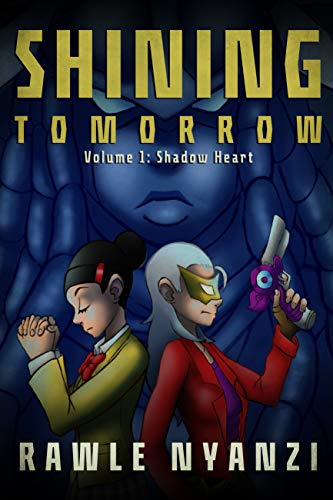
In addition to this review, friend of the blog Rawle Nyanzi has recently written the first volume in a new mecha novel series of his own. I reviewed his earlier novella Sword and Flower awhile back, which is an action packed romp that wouldn't feel out of place from an '80s anime OVA. But now he graces us with his first novel in this storied genre.

The description:
FROM YOUNG ELEGANT LADY...TO MASKED FURY! 
Irma wishes to be the perfect girl: chaste, feminine, and generous. But when a giant monster stomps through her hometown, her plans crumbled right along with the stores and apartments. 
In the chaos of acrid smoke and panicked civilians, the private military company Shadow Heart snatched her friend out of the crowd and took her captive. 
Now Irma must pilot the Grand Valkyur, a mechanical titan of steel more powerful than any weapon made by human hands. With a brilliant sword that could cut any matter and gleaming armor that could withstand any weapon, the Valkyur challenges all who dare to fight it. 
But piloting the Valkyur means using violence -- and to Irma, violence is men's work. How can she rescue her friend without betraying the feminine elegance she prides herself on?
You can find it here.

It goes without saying that I already have my copy. If you enjoy mecha I suggest checking it out for yourself. You certainly won't find another story like this whether in the sterile military sf world or in modern anime. But if Japan won't cut the mustard anymore then the rest of us will have to pull up the slack. That's just how it is. The pulp revolution continues unabated.

Giant robots aren't going anywhere, and thank God for that!