Showing posts with label lyrics. Show all posts

Thursday, May 2, 2024

What's Really Going On

Ever wake up in the morning,
New ideas with no warning,
Now you know what that's like:
It feels like this!
~ Assorted Jelly Beans, "Booshduckdow"


One of the main problems today is that no one is one the same page. Not only that, it feels as if nobody wants to be on the same page, constantly backbiting and sabotaging each other over petty disagreements over even basic word definitions.

How can we live together when we can't even communicate with each other? How can one build anything off of a relationship that cannot ever grow? Why does it also feel sometimes as if this never seems to get better?

Will it always be like this?

Every day it feels like a new piece of our lives is being mashed into one artificial algorithm in order to shuffle this failing modernity into one particular funneled direction. Of course, it's true, but there was a time when they weren't so obvious about these changes. Perhaps that's just the natural state of things when entropy is involved, but there is no longer any subtlety to the decline going on when even the most delusional lovers of destruction need to take pills in order to ignore it.

At the same time as all of this, however, is the plentiful amount of scapegoating and pointless battle lines being drawn over nothing. It is almost as if everyone knows there is a problem, cannot allow themselves to define it, and then therefore look for an easier target they can control and take that down in its stead.

Take the recent spree of AI "invading" modern artforms and supposedly putting creators of all stripes out of work and devaluing the sanctity of Human Art by turning it into a mechanized belt-line of product. This AI monster has striped the sovl out of creation and made Art about producing content to satiate the fickle masses. How could the machines do this? Everything but art was supposed to be mechanized!

You might be nodding your head to this line of reasoning, but before you continue down this road, I want you to look up what internet creators call themselves these days, regardless if they're streamers, video makers, or just general entertainers. You've probably already heard the phrase before: they call themselves Content Creators. Why do they use that term? Because that's their job: pumping out Content to satiate an artificial algorithm for consumers that want a constant drip feed of entertainment pumped into their veins like morphine. This is what these Content Creators treat their vocations as: mere appeasement to satisfy an algorithm that cares nothing for them and can throw them away at any moment.

Now pair the above two paragraphs together into one cogent thought. Do you see how this landscape was created? Who was it that demanded it be this way? The creation of AI did not lead to artificiality; the elevation of artificiality lead to the creation of AI.

For as long as I've been alive, expectations around arts and entertainment have changed constantly, and not for the better. Audiences have repeatedly demanded both the bare minimum (hitting specific fetish checkboxes) at the same time as requesting the maximum (jangled key subversion) which severely limit what any creator can do. This has lead to corporations such as Disney and Sony to create entire advertising campaigns predicated on online bots (it doesn't even matter if they're human anymore, to be honest) to disparage and rile up audiences to get the correct ingroup to consume their product while pointing fingers at the outgroup and assuring you the corporation is on your side. It feels good to be on the good guy's side, after all!

If this sounds completely ridiculous that's because it is. It's also unsustainable because it goes against the original purpose of art: it is the opposite of communication. It is turning creation into a farce with no purpose behind it except some combination of ideological subversion and extra pocket change. Though when Fanatics are involved, it always leans more to the former.

The question we need to start asking is what is going on here. What are we creating for, and what are we taking in these creations for. If it's just to pump out and consume content then we don't need people for that. Objectively, we don't. It is then a disposable job that doesn't need human input at all. We can just build machines to inject that bare minimum into our veins whenever we want. This is more or less what all creation has become, after all. All we have to do is lower (or let others lower) or standards and accept the bare minimum.

Who cares about uplifting themes, creativity, cogent worldbuilding, or consistency, when you can enjoy more things by pretending they don't matter? That way you can consume more! Isn't that clever! (And convenient for those in charge, but I digress.)

As an example, take this song I cobbled together in a the Suno AI program called "Cultural Ground Zero" that I made for fun. In fact, I did it twice to help prove my point. Follow me here, I assure you this will make sense.

All I did was both generate and write some lyrics, decide the music genre being third wave ska, and specified the general song structure and the AI just slapped it together. I just wanted a short goofy little song I could imagine in Tony Hawk Pro Skater or the like back in the day, and that is exactly what I got.

The program created this:


The first one created with the prompt


The second one with the same prompts


Did you listen to them? They sound like 1990s ska tunes, don't they? Surely this means musicians are in danger, right? Well, hold on a moment. You might think that if you don't know much about the genre besides how stale it got in the 2000s. (Honestly think these are somehow more creative than some of the boring stuff I heard in the '00s and '10s though.) But if you legitimately enjoy the genre, you would understand how they fall short.

My personal opinion on these tracks: they're fine. As someone who has repeatedly said third wave ska is one of his favorite genres, this hits all the tropes. It does exactly what I want the algorithm to do and delivers the bare minimum to reach it. To be honest, it's just as good as a lot of the genre is these days. Why? Here is where we get into the weeds.

My issue with the genre today is people want to write to tropes instead of writing songs, and it's been a problem in the genre since the 2000s. That's because people who want to write third wave ska songs today will write "third wave ska songs" and check trope boxes off to slap together an acceptable genre song. They themselves are already doing the same thing the above AI is doing. At that point, why do I need any human input? Humans were not made to check boxes in order to create. They were made to create, period.

In other words, what they do is barely any different to what AI does. The "human touch" or whatever weak qualifier you want to give them is irrelevant: nothing is really being expressed musically other than wanting to fit in a box to get content out. Back in the day you wanted to make sure your CD was put in the right corner of the store, after all. Wouldn't want to stumble into something original you didn't expect.

There isn't any difference to what a lot of creativity arguments boil down to today. The change is that today there is a thankfully shrinking demographic of consumers who desire only check box entertainment, and now they have a toy they can use to give that to them instead of making human beings do that waste of time for them. If these AI programs threaten what you do, then what you do is simply not very good.

To contrast the above example, I want you to listen to keep the above AI songs in mind, then listen to the one just below with your headphones on. Whether it's your genre of choice or not, I want you to hear it for several reasons. The main one being that the below comes from when the genre actually was at its peak in popularity and the song is not even a well known example of the genre or from one of the popular bands of the time. I want to make this contrast because you need to understand just how different a checkbox creation is compared to a piece of art made for specific purpose, even an obscure one that was never even popular in its day.

The song is called "Entry Level Positions" by Assorted Jelly Beans from 1998, a third wave ska punk trio that put out only two albums and are almost unknown today. The album it comes from, What's Really Going On!?!, was a huge step up from their 1996 self-titled debut (here's an example of what that sounded like), and is still one of my favorites from the genre a quarter of a century later. Despite the year it came out, it points out and criticizes the decay of Cultural Ground Zero, and the decay going on.

Listen to this ditty here: [Warning: It's loud!]


[Trivia: their drummer is now in The Aquabats]


Did you hear it? Then maybe you already see the differences. Ska punk existed to make the audience move, whether by dancing or shuffling, it wanted you to move. The band uses every trick up its sleeve, inspired by both 1980s-era punk rock and 1990s-era ska to get you to do that.

The song is messy and overwhelming, yes. That is the point. But a close listen reveals a unique song structure and lyrics interwoven with the composition, sound effects and vocal tricks (where did this go in rock music?), and even a unique usage of a horn section (which sound almost like traffic noises) that the band only ever employed on one other song.

"Entry Level Positions" matches the albums intent to replicate a full collapse with tracks that feel like the band could fall apart at any moment to match the state of the modern world itself. Listen to the song a second time more closely and you can easily tell the difference between this and an AI song. There is simply too much here for an AI to replicate. That is because this song, even made by a nearly unknown band and one of their lesser known tracks, is much more than the bare minimum.

It should also be reminded that this song came out when the genre was at its commercial peak. This was being released the same time No Doubt, Sublime, and the Might Mighty Bosstones were selling millions of records, and this band even played on stage with some of them. This creative track and sound was made with the intent to reach as many people as possible, not to chase away "normies" or something stupid like that.

This was not a purposeful rejection of commercial aspirations usually reserved for when a subculture begins its fall from grace--in fact there's a good chance a lot of people heard this album back then and liked it. Commercial peaks come when something is at its creative peak, not before or after. This means groups like Assorted Jelly Beans were still playing pop music aimed at people who wanted to hear the genre. There is no faux rebellion playing into a rejection of false crowds.

For art to connect, it must be aimed at the largest number of people who want to engage with it. It should not deliberately shun people.

To be fair, the album is about how culture is in freefall and crumbling apart and trying to figure it all out. And because this was before Blue Team Good, Red Team Bad thinking that mentally stunted the genre a mere handful of years later, you end up with a message that resonates just as much today as it did back then and to far more people. Though I bet the band would have preferred if the song were dated instead. Nonetheless, even ska punk bands would devolve into weaponizing their music in mere years after this released, sealing their genre into ghetto status and putting out the bare minimum for people who wanted just that. Creativity did not flower in this down period when normal people left. It never does.

On the other hand, the band's most popular song, "Rebel Yell", which is probably known most for being in a Tony Hawk Pro Skater video game, is more or less about this poisonous artificiality of creating product despite the fact that art itself is actually incredibly dangerous and powerful on its own. It can warp and change who you are. Given what the album is about, these two songs form the picture of an art world very rapidly losing its footing and understanding the purpose of expression and connection. It's a very important message lost in the growing sea of Content, even more so that we're a quarter of a century removed from that old era.

And as a result these songs sound like them. the band. I recommend the album, but it's really for aficionados who already like the genre, as it's not very accessible stuff overall. It could only have come out when the genre was flowering with popularity and attention. Regardless, they get across what they want to get across via their very unique approach and sound. But this is what we engage in art and entertainment to do: connect with the artist and maybe come to a clearer understanding of them, our neighbors, the universe, and ourselves, through it. You are not getting that experience by creating content for robots to shovel out into a perfect package for consumption.

The above music is a nearly unknown song by a nearly unknown band, and not even their most well known piece, and it still blows away the AI examples I used before it. The problem in this scenario, however, is not the AI or that it exists to begin with: it's that the audience has been trained to want checkbox content and artificial filler dressed in the right clothes. They want that more than they desire creativity.

This didn't start with AI, and it's not going to end there.

Artists, for instance, have been going ballistic over the recent strides in image generator AI to give more of less basic pictures for people who put in prompts. For a while, there were those running around screaming that their world was falling in on them. If you even so much as looked at one of these generators, they would destroy you. A bit hyperbolic, but it was over the top, and still is at times. Some people were really scared of these things, you see.

Again, if you wish to only produce the bare minimum, then sure, your job might be in danger from these things. If you have something to say, though? You have nothing to worry about. Just as the above example, so it is here.

First, before we go further, let me give you an example.

I've used AI image generators both for memes and for fun. I've yet to use it officially for any project, and I probably won't at this stage. The reason for that is because, while it works for silly images, or vague setting concepts and stray ideas I want to see before me, it's not really for much beyond that. I guess it might help for animators who use their own style and process, but for static images it has little use right now.

You might have, for instance, seen my cover for Y Signal. I used a free photo from Pixabay and edited the image myself, adding in my own font and filters to make it look like the cover it is today. For the story it is I can't really imagine a different cover. The book is very bizarre, after all. I couldn't even conceive of how an illustrator could get the vibe I wanted from the story. That said, I think it works very well.


Y Signal can be found here!


Most of my books use hired illustrators because they are action stories, but this one has a different focus, which required a different sort of cover. I prefer a design that looks rough and worn, much like my stories are. I can't get that with prompts. I need to batter it in myself to get the exact result I want. If someone else used this image for their own story, it probably would look very different from this. That's how it should be.

As a result, I banged out a cover that I've been told is great. It required a lot of finagling on my part, but it came out great and I'm glad others see it that way. All of the covers I've made, illustrated or not, have a lot of touchups made by me to get them just right for readers. I want them to be aesthetically pleasing, but also to match the quality of the writing inside. Therefore they have to be equal. My covers, in other words, take a long time to craft, just like my stories.

I want to give people a reason to pick up a physical version, after all. There is no sense slacking on one area of the process.

On the other end of the spectrum, I have played around with image generators for fun. I generated some pictures of my main characters from Y Signal as I think they might look back in the year of 1995. Why? Because it was fun. It was a bare minimum prompt made to give me the bare minimum in return. And I don't really think there's anything necessarily wrong with goofing around like that.

At the end of the day, it's just a tool and that means it can be used for anything. And that's just what I did.

Here are the pictures I generated did for Y Signal:


From L to R: Danny, George, Ray, and Andrew


George, Ray, Danny, and Andrew, from the 90s in Y Signal


Pretty nice overall, I think.

I had the idea of putting out a '90s anime design of the characters of my story that takes place in the 90s and wanted to see how that would look. It was a silly and simple idea, so I decided to just go for it and see how it would turn out. Feel free to enjoy it. The image is just meant to be a toss-off. It's simple and I like it.

As a cover to the book, though? No, it doesn't fit. The story is oddly dark and dangerous, and this is just a random slice of life scene with the four friends portrayed in the style of certain media at the time. It's not meant to express anything, just be a goofy lark for myself and anyone who enjoyed the book. And I like it for that.

This is also why the cries of the crowd that demand AI be "turned off" as if it were a spigot falls on deaf ears. These AI generators are not meant to make serious art: they are meant to create content, which is a perfectly fine thing to do--even better because artists no longer have to waste their time doing it. Instead of Content Creation they can now focus on expression and communication through art and entertainment. The bare minimum is now covered and audiences can now fulfil that novelty for themselves. Artists are now called to higher things and don't need to waste their time on what they never needed to in the first place.

We aren't talking about Progress or Retvrning or any such romantic notion. It is simply that we have created technology meant to deal with busywork which should leave artists free to indulge more in creativity and out-there ideas, the kind that cannot be pumped out by algorithm keywords or just general plagiarism. Artists are now free from the shackles of having to stick to the bare minimum in order to survive, and now need to go all out in order to reach people instead. This is a good thing, in the end.

For one last example, let us talk about the current crowdfunding campaign my book is a part of (yes, very coincidental!) in order to really discuss how the sausage is made.

A few years back, I wrote a story called "Cold Heart of Ouranos" and submitted it to what was then the Planetary Anthology series. It came out and was well liked despite production issues the publisher was going through. Slowly, as I wrote it, I got a greater vision as to what the bigger story was. It turned out to be the first chapter in a four part cycle each based on the seasons that I called Star Wanderer. The second tale I wrote was called "Judgement Sun" which was also submitted and accepted to the Planetary Anthology series. It was not long after at this point I had the four parts imagined and sketched out.

Around the same time I began a separate series called Galactic Enforcer starring Ronan Renfield, a space cop that ends up in over his head in the Unknown constantly invading his life. "Golden Echoes" ended up being published by StoryHack and "Dead Planet Drifter" ended up being published by Cirsova, but both series were developed at the same time.

It then became clear to me that these weren't all that separate after all and, much like CL Moore and Henry Kuttner did with "Quest of the Starstone" ages ago, I realized these two characters were actually even more closely intertwined than I first thought. So while Star Wanderers might be thought of as a "fix-up novel" in that old sense, it's not really one. It was more that the bigger story unveiled itself as I went along until I wrote out the last story myself. That's not an experience an AI can replicate, nor could it anticipate where the book goes by the end of it, never mind where I will go in the future. Because I will do more in the future.

If you've read any of the stories I've put out in this series before then you know these are different enough even from the other material I've released that they are difficult to classify. As a result I knew I would need some help putting this book together.

Enter Cirsova.

For those unaware, Cirsova is one of the leading publishers of modern short stories of the weird and the thrilling and has been doing so since 2015. Since they published one of these tales, I knew they would be the best ones to help me get this out to as many readers as possible. Therefore I approached them with the plan for the project.

I also wanted a cover that made the weirdness of space cops and lone knights caught between the world of crime and the Unknown and what lies in that gap. Therefore we requested the services of artist Anton Oxenuk, someone who can get into that vibe unlike few others I've seen. You've seen the result, and that's the cover for the campaign:


Art by Anton Oxenuk!


As one can see, that's not the sort of art one can get out of typing in some prompts. The otherworldly quality as well as the fast-paced action could only be expressed with a cover like the above. It was especially made to hit a specific vibe to give an idea of the stories awaiting you inside. And that's what a cover is meant to do.

At the same time as this I also wanted to add a little bit extra to backers of the campaign. Despite the crazy stories and killer cover, I was thinking about the possibility of a sort of soundtrack companion to the book. How many mediums can we dip into at once?

What I decided to do was commission the crazed creator (what else do you call this man?) named Jacob Calta who knocked out two songs based on the story, each centered around a different main character. I guess I could have gone into the above song generator and did it that way, but it wouldn't really be what I wanted or what the stories deserved. I needed a composer who understood what I wanted to get across and could reach for it. That is exactly what happened, and you can hear the songs by backing the campaign today.

This wouldn't have been possible if I didn't want to make this the best campaign it could be, and if I didn't choose to get the right people involved. And that's what makes all the difference. Thanks to this, within a week of launching, we reached $2000 of our initial $2500 goal. And now we've even got some stretch goals lined up!

None of this would have been possible with both the backers and the people helping me with this campaign.


Check out the soundtrack companion in the campaign!


All that aside, you understand the central point being made. There is more to art than gimmicks and tropes. There is a specific point to creating beyond Pumping Things Out. There are reasons and purpose to everything, even if we always seem to lose it in the weeds.

If we want to make a real change for the future, it will have to in our expectations for what art actually is and what we want from it. No more can we continue to expect and desire the lowest common denominator because we want to mindlessly consume. There is more to art than that, just as there is in life.

Thankfully, this isn't 2014 anymore. Just as it's not 2004, or 1994, or the much desired 1984. We are in 2024, and the tides have shifted. We have decided to no longer let things continue to crumble and instead fight for something more.

We might not all be on the same page, but we'll get there eventually. Times are already no longer what they once were and we are quickly learning what it takes to move in the right direction. It might have taken a bit longer than some of us would have liked, but there is no avoiding it. The '20s are a period of shift and we're living through it now.

Where we'll be in a few years, who knows. For now, lets appreciate what we got and what is coming over the horizon.

If you listen closely, you can almost hear it!


All this time spent running around
And still searching for something that can never be found
Still looking for these answers, still looking for yourself
The answer's not in me, and it's not up on a shelf

But

I know you want it bad, something you've never had
Stardom made you a man, you can't fool all the fans
I wanna hear a song I could stand listening to
Maybe see something that I could believe in

So sing a song, sing it loud
Maybe someone in the crowd will understand
(It's all about running from the gaping mouth!)
So sing a song, sing it loud
Maybe someone in the crowd will understand
(It's all about running from the gaping mouth!)

The spotlight's shining (heard you had something to say)
The hourglass is pouring, your boring crowd fades away
The spotlight's shining (heard you had something to say)
The hourglass is pouring, your boring crowd fades away

So . . .

Soundlessly, you think you're new
Your fifteen minutes was yesterday
The flavor of the minute now tastes like shit
So now just try to deal with it
And now you think you are the one
Why go on? 'Cause all your fun has come and gone
And now you want to hear that song
The one that they just play too long
Too long
Same song
Too long

Alright, listen up
'cause I'm only going to say this once
Everything you've heard by now is a lie pretty much
The TV stimulates your mind, but it makes you feel controlled
This music thing's so powerful, it can fill an empty soul

And you know this

And you know it's gotta go

American Dream, isn't what it seems
Money and Fame, it's only in your dreams

So take a step back, and take a look around
You got the Rebel Yell, but you haven't made a sound

No sound.

Thursday, October 13, 2022

Slogans


Words are stirring, your anger's really burning
You could really use a slogan right now
Eighteen and feeling kinda mean
'Cause you're sick and fuckin' tired of being pushed around and round, up and fucking down
Wanna believe there's an answer?
Well, there's not
And the funny thing about it is
That two hours later, they're just words that you seem to have forgot

Don't think about what's right or wrong
Just leave the thinking to your boss
And do what you're supposed to now

Your heart is pounding, your feet hit the ground
You wanna see some action right now
Feeling strong, gonna right some wrongs
Gonna raise your banner and stand up tall and proud
Don't try to tell me ideology has a thing to do with this
Think you're so much different but you're all on one big fucked up power trip

And I don't really give a shit
What you happen to believe in
Now you can finally begin
To feel like you fit in

Don't ever listen to yourself (listen to yourself)
You'll fuck it up just like you always do (listen to yourself)
Someone will be there to explain your job (listen to yourself)
So do it

Your heart is pounding, your feet hit the ground
You wanna see some action right now
Feeling strong, gonna right some wrongs
Gonna raise your banner and stand up tall and proud
Don't try to tell me ideology has a thing to do with this
Think you're so much different but you're all on one big fucked up power trip

And I don't really give a shit
What you happen to believe in
Manipulated, now you can begin
To feel like you fit in

Good day to the Pepsi Generation, are you getting a Dell, dude? Have it your way. Be an original, just like everyone else.

What can one do in a modern world of pure NPC thinking? No matter where one goes, it is completely inescapable. Now, you might wretch at that overused term, but that is because you know there is some truth to it. We live in screwed up times where everyone has all the answers, so you better pick a team and sign up for the right one lest the bad guys destroy you first. It's all black and white, except when it's grey to assuage doubt on the good guy side. You live in a world of smoke and mirrors operated by clowns stumbling from one disaster to another.

It's enough to lead many to despair and, sure enough, it has done exactly that for an abnormally large amount of people. The western world currently has the highest rates of depression and suicide ever recorded and they get worse every day. This isn't arguable, it's a serious issue. If those in charge were real white hats, this would be the #1 issues on their agenda, but it never is. It always ends up not even mentioned as they come up with new problems to solve. Life is always the last thing they care about. If we weren't inundated with NPC thinking and pointing the finger at each other, perhaps this could be addressed and tackled in the right way, but just like the school shooting epidemic (Of which Columbine was not the first, not that you'd ever know this thanks to the media) we look to scapegoats instead of facing the real problem.

Of course, this is not new, but before the 20th century it seemed at least those in charge had a vested interest in their populace not falling to pieces around them. After all, if your populace isn't happy, who will defend you from your enemies across the border? That notion fell off hard in the century of repetitive genocide and pointing the finger to avoid self-reflection. Now they think of you as machines to be programmed. Get the right script and live the way they tell you? Don't? Well then you probably deserve your life ruined by the mob.

You're either an NPC, of you aren't human anymore. There is no in between on this issue for those who follow the script.

For those unaware, An NPC refers to a non-playable character in a video game, one who goes through programed motions and has nothing to offer anyone outside of what they are guided to do by their programmer. They live of the whims of their betters, which they cannot live or operate without. I should clarify that I don't believe anyone is truly an NPC. Most everyone has NPC behaviors and thoughts, some more than others, and some of them can be healthy and lead to good things (constant routines aren't exactly a bad thing), but for many people they can be a crutch to simply thinking properly. The  danger comes from when those in charge hand down new programming that is destructive to the people it is meant to "help" or "fix" outdated routines.

Not too long ago I was watching a YouTuber discussing the faults in the US police force. They were justified complaints, but eventually as words stumbled, some in the chat started throwing out slogans and the conversation more or less stopped when the juvenile word "Copaganda" showed up. It was at this point that thinking was abandoned, and the dehumanization of NPC thinking and creating enemies reigned over all else. For someone otherwise rather smart, it led to the end of conversation and the ruling of emotion and Us Vs Them over solutions.

Slogans are stopgaps to thinking, they are tools to program NPC thought. The more you use them to "sum up" what you mean, the less you can think things through fully. They work well when advertising products to get phrases to stick in people's minds, but outside of that they exist so that when a specific trigger is hit, the subject abandons thoughts to their programmed terms and follows the routine instead. Slogans are an actual mind killer.


The Brand!


Perhaps the above usage tickled me funny because I had heard that term before in a much dumber context, in real life. Once when discussing underrated films with someone, I brought up the movie Cop Land, which is, in my opinion, one of the best movies of the 1990s. Starring Sylvester Stallone, Ray Liotta, and many others from the time, it is a surprisingly strong crime film on the difference between Justice Vs Law. The reply was that Cop Land was basically "Copaganda" which was all the explanation I received as to why it is not that well known now. There was no in depth thinking on the plot or themes, just a buzz word meant to mean something to those not programmed to accept a completely made up emotional tag. This term killed thought.

For those unware, Cop Land is a crime movie about crooked cops who look out for each other at the expense of the people they are supposed to be protecting until one of their victims, a sheriff who is nearly deaf and ruled by these scumbags leads others to bring justice upon the crooked law before them. The scene where he delivers retribution through a fog of feedback because he can't hear them (or their excuses) is one of the most perfect shootouts ever recorded. Cop Land is a film about how Justice supersedes Law, especially when those infallible human beings who are supposed to protect fail in their endeavors to do so. You tell me how a nothing term like "Copaganda" has anything to do with this movie's story or themes. But it did prevent this individual from thinking about anything the movie was actually about and filing it away as bad to dismiss it.

So why do you think the word was made up in the first place? To kill your mind. To prevent nuance or understanding. It is a buzzword, inherently meaningless to anyone not following the script that this term was programmed into. It is worthless.

And before you think any different, it isn't just newer terms that rely on NPC thinking in order to work their magic on you. Think of the plentiful "ist" and "ism" words you know and were taught since youth that are loaded to the point that just hearing them is enough to either ignore people labeled those things, or instantly file them away into a "bad person" category to prevent you from considering anything they say. It is a mind-killer. I'm not sure there is any time in history that is more inundated with this sort of thing than the 20th, and now the 21st century, is.

Before you think otherwise, think of all the art made in all of recorded history. How mush offers different perspectives and alternate thoughts on the way things were? How many might even enjoy the status quo but offer additional takes on it? How many different ways have artists, writers, and poets, attempted to understand God and the world He made in so many different ways that we can't even count them? Why is it now that we can't even indulge in something that isn't a poor facsimile of old things injected with modern NPC thinking?

How many times have you heard "kids won't watch old things" when you know this isn't true? Why is this lie pushed? Why are we destroying the past and warping the words we say because people who hate us tell us to?

Make no mistake, while this sort of issue existed before, it is a far worse problem today than it ever has been before. The people in charge are trying to hurt you, and for no real benefit to anyone, not even them. This was simply not the case before, regardless of how people paid by the current folks in charge want to tell you it is.

"Because I said so" might work with children, but it is not an explanation a proper thinking adult should ever accept. You are not an NPC, you are a person.

They pretend these are rules, but they're not. Rules exist to keep order, not kill you. Don't let it be said that "rules" are the same as slogans. As an example, a Christian does not need to use the "thou shalt not murder" law when talking about why murder is bad in conversation. They can go into great detail without having to repeat one phrase. This can be done simply by exploring the subject and the value of a person and the harm of the wrath that can lead to such situations. It involves talking--discussion. Understanding why things are the way they are. This is how theology and thought works. You explore a subject, see the angles, and come to conclusions and a greater understanding. You do not invent one word responses to sum it up--your thoughts should grow, not shrink. It is never that "Murder is bad because X" but that "Murder is bad because [explanation]." Anything less is an exercise in NPC thought and not giving the subject the respect it actually deserves.

As another angle, let us use the example of a robber who was shot dead by a vigilante at a grocery store. The job of blind justice is to look at the motives and the factors surrounding the skirmish that lead to this situation so that one can come to a conclusion over who was in the right and who was in the wrong. The second you start asking for secondary factors that lead to this such as whether they were "ists" or "phobes" is the second you begin looking for excuses to stop thinking about the issue and finding easy outs. All you want to do at that point is to file it away with easy NPC thinking. You are not giving the situation the serious thought it deserves.

And if you believe any of the above is "political" then guess what? You have just fallen into that trap yourself. 

Think about it rationally. If, for example, watching and laughing at a movie like Rush Hour was not considered political when it came out and became a massive box office success, and people like it just as much now as they did at the time, then who is really telling them it is political and therefore unacceptable now? Who decided such a thing was now "political" and thereby verboten from public discourse and thought? Why are you meant to suddenly agree with something absurd no one believed in over two decades ago? We have not advanced, there is no argument that we are clearly dumber than we were when this movie came out, so why are we pretending different? The only thing that changed was the script you're being programmed with by those who hate you.

If you didn't think up these words or terms to begin with then why are you using them? What is the end goal meant to be in all this? If you stopped using them, stopped believing in their power over you, who would get mad, and why? Why do you care if people who already dislike you will hate you more? You cannot address these questions if your mind is stuck in a programming loop, if you are unable to question your own artificial responses. You aren't a machine, so why do you so badly want to think like one?

This is the beating heart of sloganeering: it is meant to sell you compact thought so that you can avoid thinking about it. This is one of the reasons many actually do think of advertising as evil. You might disagree, but you can easily see how one might come to that very plausible conclusion. Something that prevents thinking is dangerous.

And looking at today, it clearly very much is dangerous.

You wrap up this sort of thinking in modern Brand worship and you have the modern cult of modernity we live in today. Many hated when I pointed this out in The Last Fanatics, but it has been a problem for a long time. You are being molded into a human-shaped automaton made to follow routines and never think about anything.

Where do you think creating a society of people like this will lead? Do you think continuing down this path will make the despair, depression, and suicides go away randomly? At what point do we realize there are better ways, and how do we get there? Well, that's a whole other subject, and not one we can even begin to tackle before we deal with the mess in front of us.

The '20s are going to be rough.


Ironic, but it does prove the point.


So why is NPC thinking so prevalent today? Many factors. People aren't all easily definable by terms and cliques, much as they wish they were. Simplifying things tends to make them easier to process and understand. Why be John Smith when you can be Anarcho-Communist Freedom Fighter & Ally To Women & Nearly Extinct Blobfish The World Over instead? That's a lot of shiny buzzwords to slap on yourself to fashion a personality around, and it is a lot easier to show off and impress others without having to actually do anything. But ultimately, it's garbage. Nothing.

Being an automaton is easy and therefore preferable to many, but you will never really be one. Your mind and soul will fight you the entire way, hence the miserable state of many today, banging their heads against walls in an attempt to find out what is wrong with them and why they cannot achieve happiness. There is no guaranteed way to be happy, but it certainly will never come from following a script that exists to kill your very thoughts.

It also should be mentioned that thinking you are better than others is a very good enticement to be the best NPC on the block. This should not be ignored as a possible factor for this nonsense continuing. Keeping up with Joneses and the fear of isolation are also good motivators for preferring sloganeering over thinking. Being original, like everyone else. Think, but only in the correct way. You are trained in contradictions.

At the end of the day, it more or less comes down to the fear of alienation and exclusion, one of the biggest problems currently threatening the western world. If we rage and posture hard enough, maybe we will be the last ones to suffer the slings and arrows of the NPC mob programmed to beat you back in line. Essentially, this is a problem we create for ourselves out of fear and uncertainty with the world. No one wants to be alone, not even introverts. If there is a chance we can feel like we belong, we will take it. Not a soul alive is above this, no matter the propaganda telling you that you're a rebel individual who can live as island that is, ironically, just like everyone else. 

This entire trap is quite devious, and it doesn't help that all our supposedly trustful institutions indulge in these contradictions gleefully. Libraries don't teach thought, they carry books that teach the NPC script and refuse to carry those that don't. Big chain bookstores are the same. These do not sell, leading them to ruin, but it doesn't matter. The routine comes before logic. Schools don't teach thought, they teach NPC programming patterns for you to rely on and avoid thinking of the bigger picture. Your job is the same: they value falling in line and doing whatever HR wants of you, even if it is humiliating. There is a reason the modern age has been called Clown World by many.

The people you meet on the street are not a title or cliché, even if they badly want to be one--they are human beings with complex thoughts and emotions, souls made in the image of the One True God, and they have greater worth than any of the trinkets, ideologies, or fads, this world has to offer. You are not a number or a conglomeration of terms. You are a person, and you will only fully feel normal when you think like one. This is what everyone needs to hear.

You are capable of so much more than what you are programmed to be, and this is what makes Clown World particularly frustrating to many. This is an embarrassment. We are capable of greater things than what the 20th century spat out. Unfortunately, it will be a long time before we realize that. Until then, we can only keep speaking the truth, not what we are told is truth.

The lyrics at the top of this post were written back in 1991 or so. It's been over three decades since then and yet they remain true even as their writer went through so many changes himself, including coming to faith in Jesus Christ. He was able to do so because he tried not to let NPC thinking steer his ship and eventually ended up there of his own volition after many years struggling. You never know where life will take you, but it can only take you there if you seek it out to begin with. We don't live in a world that rewards such things, but maybe that is the point. Who can really know?

If there is one thing that might hopefully change as we realize the errors of the previous century it will be our reliance on simplified, condensed thinking to avoid having to operate as a human being. You are not an automaton, you can drive yourself insane trying to be one, but you will never escape your humanity under the layers of scripts and programming. Now is the time to embrace your humanity, and become who you were always meant to become. It's never too late.

Let me leave you with the final and title track from the above album, one of my favorites. While the earlier song was about understanding slogans and NPC-like thought processes, this is one about getting yourself out of them and accepting things for what they really are. Break out of clichés and find the truth obscured by the mud pit of modern life. There is a reason this album is looked at as a genre classic and still holds up well today.

Find yourself something higher, better than what you are being sold. You would be surprised what you can find if you're just willing to look.

Just be careful of what you consume. Who knows what they put in the water these days?


Time gets wasted every day
I watch the minutes tick away
My brain is melting like a chocolate ice cream bar
Like characters on my TV
These people look like maggots to me
And I wonder what the hell is wrong with me

Milk-fed little beauty queen
She's straight out of a magazine
She sits beside me breathing different air than me
The perfect generation sees
That I'm infected with disease
And everything just crumbles and there's nothing left

If I wanna do something right
I gotta do it myself or someone else'll fuck it up
It isn't all black and white
And now it's time to stop and figure out reality
No one knows what they're talking about
If what they're talking don't make any sense to me
I gotta figure it out
'Cause I don't want something to believe in

If I wanna do something right
I gotta do it myself or someone else'll fuck it up
It isn't all black and white
And now it's time to stop and figure out reality
No one knows what they're talking about
If what they're talking don't make any sense to me
I gotta figure it out
'Cause I don't need something to believe in

My brain hurts, my brain hurts
My brain hurts today!


Thursday, May 6, 2021

Holding On For Tomorrow

Peeping Thomas has a very nice view
Across the street at the exhibitionist
These townies, they never speak to you
Just stick together so they never get lonely
Feeling lead, feeling quite light-headed
Had to sit down and have some sugary tea
In a chemical world, in a chemical world
It's very, very, very cheap


The 1980s are regularly seen as either a time of optimism or unbridled materialism in the west, while the '90s are looked back on in a multitude of confusing and contradictory ways. It's hard to understand unless you lived through it, but even before Cultural Ground Zero turned everything into a flavorless soup, the decade was a very confused time.

For those of us in Gen Y, we saw our quality video games, movies, TV, and books, as beacons of the oncoming hope of a brighter future. Things were always getting better, and they naturally always would. Boomers were seizing control of the world from their retiring parents and knew exactly how they were going to fix it all. Gen Jones had finally allowed a piece of the pie due to their older brothers finally moving up, albeit a very slim one. Greats were enjoying the fruits of retirement. Millennials were toddlers. So with all this you would be forgiven for thinking everything was hunky dory. The world was about to become an even better place!

However, much like the modern media, you'll notice I'm forgetting someone. They're sort of the key to this.

To truly understand this era you need to approach the elephant in the room, which is Generation X. Looking back at the 1990s out of context, you will see an entire generation of people whose art and entertainment directly contrasted with everything else actually happening at the time. It's a bit much to take in or process unless you were there. Oh, if you were around at the time, you might have remembered how many odd potshots the media took at Gen X.

People like to point to grunge as some sort of definitive statement on Gen X, but that was a cynical cash grab intended to replace hair metal acts from getting too pricey on their record contracts. Nirvana had nothing to say and their sound had nothing original to it. You take the Meat Puppets and Replacements and mash them together; taking away Curt Kirkwood's country twang and hardcore punk leanings, and Paul Westerberg's testosterone and poignant lyrics, gives you the flavorless commercial mush of Nirvana. They had nothing to say aside from mindless nihilism, which made them very easy to sell in the mainstream. It's no wonder Cobain felt imposter syndrome as hard as he did: those that afford him legacy status today are playing right into the hands of the recording industry, and not affording him the solitude he wished for.

But amidst the Gen X dourness that was floating to the top in the 1990s, there were a few albums that were flatly ignored for making the wrong people uncomfortable. Nihilism and hedonism were cool, and no one wanted the public to be reminded of what they truly led to. They still don't. I talked about Urge Overkill's Exit the Dragon a while back, which is one such record. It is an album about bottoming out after indulging in decadence, and slowly finding the way out. The hints as to what those answers might be are uncomfortable to many in a secular setting, so the album was written off and buried.

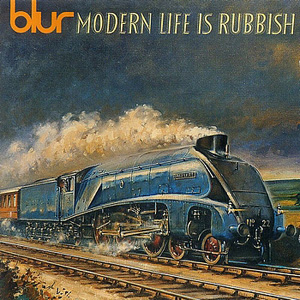
However, there is one album in this mold that did have (limited) success. That would be Modern Life is Rubbish by the alternative rock band Blur, released in 1993. This was the album that came out right before their follow-up, Parklife, became a mega-hit in their home country and brought them incredible fame, an album that is actually the flipside of this one. Many in the industry used that one as a shield to avoid talking about this record.

Modern Life is Rubbish released just as the tidal wave that was Britpop was unleashed on the world, and ended up predicting a few things that would come of it, but to this day is an album resoundingly ignored by everyone except those who listen to the band. There is a reason for that, and it isn't the quality of the album, which is phenomenal.

In fact, I would be so bold as to call it one of the best records of the 1990s. It is certainly on my list of all-time favorite albums. To explain just why, we have to do a bit of a dive into it. Clean out your ears and listen to one of the great overlooked records.

We start with For Tomorrow, the first single and first track, which states the album's uncomfortable thesis up front:


He's a twentieth century boy
With his hands on the rails
Trying not to be sick again
And holding on for tomorrow
London ice cracks on a seamless line
He's hanging on for dear life
And so we hold each other tightly
And hold on for tomorrow, singing

La, la, la-la-la
La-la-la-la-la-la, la-la-la
Holding on for tomorrow

She's a twentieth century girl
With her hands on the wheel
Trying not to make him sick again
Seeing what she can borrow
London's so nice back in your seamless rhymes
But we're lost on the Westway
And so we hold each other tightly
And we can wait until tomorrow, singing

La, la, la-la-la
La-la-la-la-la-la, la-la-la
Holding on for tomorrow

We're trying not to be sick again
And holding on for tomorrow
She's a twentieth century girl
Holding on for dear life
And so we hold each other tightly
And hold on for tomorrow, singing

La, la, la-la-la
La-la-la-la-la-la, la-la-la
Holding on for tomorrow

Jim stops and gets out the car
Goes to a house in Emperor's Gate
Through the door and to his room
Then he puts the TV on
Turns it off and makes some tea
Says, "Modern life, well, it's rubbish"
I'm holding on for tomorrow
Then Susan comes into the room
She's a naughty girl with a lovely smile
Says, "Let's take a drive to Primrose Hill"
It's windy there and the view's so nice
London ice can freeze your toes
Like anyone, I suppose you're
Holding on for tomorrow


The song is about the pursuit of progress amidst the drudgery that is modernism. How can there be hope for a future when the present is so vapid? We still have people today espousing this mindless Star Trek utopianism that isn't based on any human behavior or reality. Blur shows without having to outright say it: there is no future here.

But that is where the twentieth century ended up. And it is where we are right now.

You might have noticed that the lead singer sounds a lot like 2D from the Gorillaz. that's because that is who it is. This is where Damon Albarn got his start, in Blur, and this is the first album where he really showed his talent as a songwriter. If you do like the Gorillaz, you will see a lot of the appeal in Blur, albeit in a more traditional rock setting. Therefore, you can see why they got popular.

But it wasn't easy for the band to get their success.

The English music press were rather hostile and harsh on bands back in the day (not so much now, ironically, when the music is pure shite) and Blur was one to feel their ire early. The band's first album, Leisure, which released in 1991, was not too great, admittedly. It was a fairly generic, by-the-numbers "baggy" album from the Madchester scene, a sort of psychedelic-inspired hard rock dance sound that didn't last too long into the early '90s. They had a hit single in There's No Other Way, but already their fortunes were not looking too hot by 1992.

Blur was looked at as poseurs glomming onto a fad, and it affected their fortunes. They just had an unsuccessful US tour, the music press hated them, and they were looking to be dropped by their label. At the same time as all this, their management ripped them off and left them in debt. Things were looking dire.

To explain the genesis behind Modern Life is Rubbish, and the shift that saved Blur and made their career, one has to look into their experience at the time. 

From wiki:


"The 44-date tour of the United States left Blur in "complete disarray", according to writer David Cavanagh. Dismayed by American audiences' infatuation with grunge and the lacklustre response to their music, the group frequently drank, and members often broke into fist-fights with one another. Homesick, the tour "instilled in the band a contempt for everything American", Cavanagh later wrote; frontman Damon Albarn, who "started to miss really simple things [about England]" listened to a tape of the English pop group the Kinks throughout the tour."


In other words, what Blur was seeing was a loss of all the things they thought made the world, and their home, great. Gen X was infamous for destruction, but they were even more infamous for their hatred of tradition, priding themselves on mindless hate of things they didn't understand. That Blur went in the opposite direction is probably what helped them stand out, giving them a drive that few others of the time period actually had: a hatred of the modern world.

the thing is, while it was their terrible experience in the US that set this off, the resulting album is not really about the US at all, at least not solely. They use their own experiences in their home country to show just how fall we've fallen.

But I'm getting ahead of myself.

When they got back to England, they still had a lot of work to do. Early studio sessions were disastrous, including one featuring Andy Partridge of XTC as producer. Finding their groove took a lot of time and effort. Their label fought them the entire way, too. They wanted them to stick with the old sound that was on the verge of killing their career (and ironically that almost led to their label dropping them) which left them adrift.

Basically, it appeared that it was Blur against the world to get their new vision out there. Nothing went their way, and everyone fought them.

"Work resumed on the album due to a chance meeting with producer Stephen Street, who had previously worked with the band on their 1991 single "There's No Other Way". With Street now producing the album, Blur recorded a mix of material spanning both the period immediately after the release of Leisure and their 1992 tour. While the band members were pleased with the recording session results, Balfe, after hearing the songs, told the band they were committing artistic suicide. Although dejected by his response, Blur gave Food the completed album in December 1992. The label rejected the album and instructed the band to record more potential singles. Albarn complied, and on Christmas Day wrote the song "For Tomorrow". Although "For Tomorrow" sated Food's concerns, Blur's American label SBK voiced discontent upon hearing the finished tapes of the album. To appease SBK the band recorded "Chemical World", which Blur thought would increase Rubbish's American appeal. However, Blur refused SBK's demand of re-recording the album with American producer Butch Vig, who was popular at the time for his work with Nirvana."

As you can see, the 1990s was no less better for artistic freedom than any other era. Everything listed in the above quote, aside from asking for singles, was a pretty terrible idea, and would have sunk the band. Including trying to make them sand off their edges with Nirvana's producer.

When Modern Life is Rubbish came out, no one was quite ready for the cultural shock of a band who staunchly rejected the readily-accepted modernity of the time for a pride and hope in a tradition that had been slowly disappearing. They correctly saw the dead end of the music industry ahead, and worked to make something that harkened back to other times. It was completely out of joint with the times. By the late '90s, tradition would be ejected entirely from the industry.

But what "tradition" meant to Gen Xers like Blur in the early '90s is not quite what one would expect at the time. When they meant tradition, they meant ALL of it, including musically. The album is very thorough.

In fact, after hearing the original pop single above, this was the second track on the album:


"Food processors are great!"

It's six o'clock on the dot and I'm halfway home
I feel foul-mouthed as I stand and wait for the underground
And a nervous disposition doesn't agree with this
I need something to remind me that there is something else

You need a holiday somewhere in the sun
With all the people who are waiting
There never seems to be one

Say something
Say something else

Advertisements are here for rapid persuasion
If you stare too long, you lose your appetite
And a nervous disposition doesn't agree with this
You need fast relief from aches and stomach pains

I need a holiday somewhere in the sun
With all the people who are waiting
There never seems to be one

Say something
Say something else

One, two, three, four
Five, six, seven, eight
Nine, ten, eleven, twelve
Thirteen, fourteen, fifteen, sixteen

"You can have a holiday in the sun, yes
Ladies and gentlemen, one week only, on special offer!"

You need a holiday somewhere in the sun
With all the people who are waiting
There never seems to be one

Say something, 
Say something else.


That's right, it's a punk song. Surprise! It isn't even the same genre as the first track. This is actually one of those dreaded genre-hopping albums. That's not acceptable! It certainly wasn't acceptable in the early '90s.

You see, the genre trap was already a problem in the music industry just as it is in other ones. People are supposed to make punk albums, metal albums, folk albums, pop albums . . . but never are the streams allowed to cross. Why? Because it's easier to sell a concocted image based on one genre than it is to admit that all the genres are just branches of the same one: that being rock music, in this case. Everyone should instead go to their own corners and never come together.

The band had a field day taking rock tradition and filtering it through their early '90s dislike of modernity. As a result, the eclecticism merges into one strong piece.

Lyrically, however, this is when Damon Albarn came into his own. Before this he was a bit too simplistic and straightforward with his writing, but with Modern Life is Rubbish, he pulls out all the stops. Normally known for detachment and being unemotional, Modern Life is rubbish is the only Blur album where the opposite is true: he sounds very invested and passionate about the subjects. Even in the follow-up albums he uses satire and jokes to carry a lot of the weight of what he was saying. That's not that case here, at all. Modern Life is Rubbish is a very involved album. That helps make it quite unlike any other Blur album.

Below I will list a few of my favorite lyrical turns he uses.

From Colin Zeal:
While sitting in traffic, Colin thinks in automatic
He's an immaculate dresser, he's your common aggressor
Colin's the modern retard with a love of bombast
Keeps his eye on the news, doesn't dwell on the past

The final line of the song:
'Cause Colin Zeal's ill
He's Colin Zeal, and he knows

From Villa Rosie:
Across the common every day, you come across the fine line
But wearing boots can prevent the leeches in the long grass
Eating between meals stifles the appetite, is it healthy?
Coming home, that nagging doubt there in your belly

From Pressure on Julian:
Swimming in yellow, pissy water
Sand getting in between the ears
No blood in head in this bloody weather
Irate people with yellow tongues
Only the magical transit children
Sing-sing a lullaby, bah-bah-bah
Falling into walls, well, what is it with you?
You'd never know, never know, never know

From Resigned:
I think too much on things I want too much
It makes me hateful and I say stupid things
Only you can fill my blank heart
And I'm resigned to that

I wish the sun could just keep me warm
And I'm resigned to that
I'll forget to breathe someday
I've never stopped to think why

Those are just lyrical samples, but the entire album goes through the gamut of what living in modernity is like. From tracks about using drugs for escapism (Chemical World), prostitution and pleasure obsession (Villa Rosie), crass commercialism disguised as human connection (Advert), unexplainable despair in the quiet moments (Oily Water), coping with the unnaturalness of the fast paced world (Coping), and the lone bright spot on the album (Sunday, Sunday) about the last vestiges of family and tradition during this modern swirl of emptiness, which comes dead center in the album. They shine a light in the darkest corners.

Despite how scattershot it might seem when describing it, the record has a very cohesive feel of one vision. It spans rock genres from punk to classic pop to acoustic to alternative rock to even a bit of weirdness (something Albarn would be known for later), but despite that it remains locked together as a single work with a driving force behind it. The lyrics and general mood and production present a vision of the present as it actually is, without the posing of grunge or the pretension of where alternative would soon go with OK Computer. What you are left with is an honest album of what reality was for people of Gen X in the early '90s, and what it would eventually become for everyone else.

It feels like this album might be nihilistic, and it might be considered that, but Albarn's lyrics contain enough humor and just enough detachment to get it all across as plain honesty. He doesn't set off saying that the world is doomed and that there is no hope: only that this is where the world is right now. It's just the truth. There are no predictions of the future or where it might go, no solutions or messages informing you on how to "be butter", only that the world of the early '90s operates like this. You can infer that it isn't good just by what he gets across.

The real issue with Modern Life is Rubbish is that its follow-up album, Parklife, is the album with positivity, even if it contains plenty of satire, it's still a happier record overall. That is an album about the brighter side of life, even among the silliness of the modern day, centered on normal working class people, much like the ones in this album. It also contains more genre exploring, which gives it a brighter color. As a result, it was far better received, and I would say that if you like Modern Life is Rubbish then you would certainly like it, too. You might even like it more. The press and audiences did. I would even highly recommend it. Parklife is 5 star album.

However, the elephant in the room is the passage of time. Even through the satire, the world of Parklife doesn't exist anymore. Both the good and bad parts of that album's subjects were left behind in the '90s. But the world of Modern Life is Rubbish, in contrast?

Let's use an example:


Wash with new soap behind the collar
Keeps a clean mental state
Don't usually bother in cold weather
But still I'm getting into work late
And I don't need the practice

I've been making plans (For the future)
Become an unconscious man (All for the good)
I feel so unnecessary (We don't think so, you seem star-shaped!)

I have a couple at the weekend
Keeps up camaraderie
And my mind boggles in the muddle
At the possibilities
And I don't need the practice

I've been making plans (For the future)
Become an unconscious man (All for the good)
I feel so unnecessary (We don't think so, you seem star-shaped!)

I wash with new soap behind the collar
Helps keep down the laundry
And now I bother in cold weather
Because it cleans me mentally
And I really don't need the practice

I've been making plans (For the future)
Become an unconscious man (All for the good)
I feel so unnecessary (We don't think so, you seem star-shaped!)


This is still reality today. The drudgery of modern life and living from paycheck to paycheck with nothing to look forward to except being told that it is all for something. But what is that something? You are never told.

We're all special and unique, and have plenty to offer. Now become a cog with everyone else. Remember, you're replaceable! No, you're unique--Star Shaped!

How does that add up? But that's the modern world. A bunch of contradictions held together by those who just don't want to think about what they're actually doing.

Contrast this with Parklife's portrayal of vacationing to Greece that the English no longer do, or the scene from the suburban life of the title track that no longer exists, or snapshots of people that can't even be born in the current world that is England. It might be the more hopeful and positive album, even amidst the laughs, but it's also dated far more than this one has.

Even the "love" songs have a doomed feel to them:


Air-cushioned soles
I bought them on the Portobello Road on a Saturday
I stop and stare a while
A common pastime when conversation goes astray

And don't think I'm walking out of this

She don't mind
Whatever I say, whatever I say
I don't really wanna change a thing
I wanna stay this way forever

Blue, blue jeans, I wear them every day
There's no particular reason to change
My thoughts are getting banal, I can't help it
But I won't pull out hair another day

And don't think I'm walking out of this

She don't mind
Whatever I say, whatever I say
I don't really wanna change a thing
I wanna stay this way forever
If you don't mind
Whatever I say, whatever I say
I don't really wanna change a thing
I wanna stay this way forever

You know it would be with you
And don't give up on me yet
Don't think I'm walking out of this

And she don't mind
Whatever I say, whatever I say
I don't really wanna change a thing
I wanna stay this way forever
If you don't mind
Whatever I say, whatever I say
I don't really wanna change a thing
I wanna stay this way forever

You know it's to be with you.


This is a song carried by the drumming. It's a ballad, yes, but the drums are deliberately set down first to set the tone going forward. It's a heavy, claustrophobic beat, which gives an oppressive air to the song that locks it in place despite the pretty piano and acoustic guitars. This appears to be a love song but has another edge to it if you pay attention the lyrics contrasted with the light sound of the strings and keys and Albarn's delivery and what he emphasizes. It's not about love at all.

The title, Blue Jeans, should be the first clue. Look at how the title is used in the song:

Blue, blue jeans, I wear them every day
There's no particular reason to change
My thoughts are getting banal, I can't help it
But I won't pull out hair another day

It's about the realization of the numbing waking dream that modern life is, how it rewards you for killing your thoughts and molding yourself to be the above cog in the machine from Star Shaped. "Whatever I say, I don't want to change a thing" is about the fear of what it will be like if you stand out, if you are ostracized for sharing your thoughts. In the end, we will do anything to avoid being alone. This is a point that is hammered in with the final line "You know it's to be with you" which closes out the song. He is only doing this so he won't be alone, not because of love.

In essence, it's a song about someone killing himself spiritually and mentally to fit in with a society that has no use for who he really is. What sounds like the final line of a pretty love ballad is smothered, because as the softer side of the music cuts out the only thing that remains is that stifling drum beat that began the song originally. It fades out, continuing forever as the prettiness vanishes. The protagonist cannot escape this realization that he is trapped.

The narrator just doesn't want to be alone, but the track is fairly obvious that there is no way to avoid that reality unless he changes himself to be acceptable to those around him. If not, he has no place in society. He will be destroyed for not having the right thoughts.

That feels pretty close to 2021, to me.

But that's the entire album. Modern Life is Rubbish, while a snapshot of the early '90s, actually manages to be more relevant to today. It is certainly Blur's strongest album thematically, and one that still connects to where we are today. Every subject written about is far more of a problem today than when the album was written, and even the genres the album was written in were completely destroyed. Close your eyes and you'd think it was a future vision like Rush's 2112, except this one came true. We live in Modern Life is Rubbish right now.

As it goes, I think it is one of the best albums ever made. It perfectly snapshots the decay that was the 20th century and offers a perfect kaleidoscope of rock genres to emphasize just how powerful music can be. I believe it should be more listened to than it is today, especially for those who love their concept albums. There are few albums that are both as honest and as good as this one is, nor one that I actually wish was dated, but just isn't.

Here is the tracklist. Yes I am using the US version because it is the one I prefer. The rougher demo feel of this version of Chemical World fits the mood better, and Pop Scene is a brilliant single about the musical climate that fits thematically, as well. Your mileage may vary, especially if you're a purist, but this is the version I prefer.


1. For Tomorrow (4:19)
2. Advert (3:45)
3. Colin Zeal (3:16)
4. Pressure on Julian (3:31)
5. Star Shaped (3:26)
6. Blue Jeans (3:54)
7. Chemical World (3:45)
8. Intermission (2:29)
9. Sunday Sunday (2:38)
10. Oily Water (5:01)
11. Miss America (5:35)
12. Villa Rosie (3:54)
13. Coping (3:24)
14. Turn It Up (3:22)
15. Pop Scene (3:14)
16. Resigned (5:14)
17. Commercial Break (0:55)


It is fairly long, but every track has a place to form the picture that is Modern Life is Rubbish. There is no filler. This is an album about modernity, and what it does to the soul. Does it offer hope to the listener? Perhaps a bit, if you listen closely. There is a reason that Sunday Sunday is the centerpiece of the album and the only real outright positive track on it, even amidst the wrapping of modernity. That said, I don't think I'd call the album Superversive, but it isn't meant to be. It is meant to be a snapshot of what modern life actually is, and there is nothing uplifting about the state of society at the time, or now. It's just a perfectly drawn picture of reality.

Also, the album title can be taken two different ways. The first is obvious, that modern life is terrible; the second is that Modern Life is actually about ridiculous Rubbish and physical objects, because there is nothing else to hope for. Either way the album makes it clear: Modern Life is not exactly something to strive for. And that is something that has only gotten more and more obvious as time has passed. This isn't working.

Blur would eventually go on to have many more albums and hits (You've certainly heard Song 2 before, and Coffee & TV was a big underground hit with that music video featuring the weird traveling milk carton) most of which are looked at more fondly than this album is. Damon Albarn would even go on to form the Gorillaz and achieve international stardom with it, reaching more people than Blur ever did. Basically, for many involved, this album was just a stepping stone to bigger things. As a result, its quality has been overlooked by most.

But still Modern Life is Rubbish stands as one of the definitive rock albums of the '90s, and all time, managing to sum up an entire era and a strong feeling of emotion in one work. It's a work of catchy songs, spanning the gauntlet of rock styles, that manages to have ambition without pretension, and an honesty without succumbing to a nihilism that many others in this genre would. There isn't really anything else like it, even from the band.

Should you be a listener of rock music, I highly recommend Modern Life is Rubbish as one of the best and most overlooked albums of the '90s. Yes, it is up there with the likes of Exit the Dragon, Bandwagonesque, and 1977, as underrated genre classics that should be far more well known among rockers than they are. This is weird to say for an album that defined a popular band and artist that would have successful careers, but it still has to be said. It is a perfect album.

Modern Life certainly is Rubbish, but this album isn't. and eventually things will get better. We can't continue in this path forever. You'll know times have changed when this album finally feels dated. Until then, it stands as good document of its era, and one that is as cautionary is it is aural ear candy. It's got the blues, but it also knows how to rock.

And that's where I'll leave you. The times won't always be rubbish, and that's something we can hope for. For now, let us appreciate what we have.

We just need to look back, and remember what's really important.