Showing posts with label explanation. Show all posts

Sunday, September 20, 2026

How Pop Became Slop


Welcome to the wasteland!

Been a bit since the last one. There's been a lot going on behind the scenes, so it's been tough to sit down and make one of these. Hopefully today's post has been worth the wait.

For a while I wanted to write a bit about the Telecommunications Act of 1996 and what it did to modern music. It is more than you might think. One could just list it out point by point and talk dryly about the result of the bad decisions that lead to the Act, but as the modern internet has proven, something like that just isn't going to fly. Instead, give a watch to the above video to understand the decisions that lead to it and get a load of some of its fallout in the process. After that we can move on to the rest of this madness.

It's hard to really emphasize what the '90s was like for music unless you were there, and I don't mean that in an old man sort of bragging. It was a different planet. There was a period where you could hear anything at pretty much anytime, and it was always new. Anything from metal to swing music could have been found on the radio or the TV, and obscure bands could be found under even overturned rocks. Much is said about the high quality of mainstream music from the '50s to the '80s, and it was definitely high quality, but where the '90s excelled at, at least, for a time, was the sheer variety one could find. It is a hard experience to describe.

However, it didn't last. Something shifted, and it shifted hard. By the end of the '90s, all of that disappeared, never to be seen again. You would no longer hear an oddball band like Squirrel Nut Zippers or a random blues song out of nowhere. Instead, you would hear the same 20 songs on repeat, on every radio station and every music channel regardless of the "genre" of the station or music in question. 

It actually happened around the same time Napster took off, proving God has a sense of humor. Once the industry decided you couldn't have what you had five minutes ago, the audience started to leave. This is always overlooked when legalistic boomers and music industry sycophants talk about the negative effects of Napster and file sharing: they act like it occurred in a vacuum, and it most certainly did not. This was probably the first indication that the monoculture was over, and no one realized it at the time.

I can give an idea of how this artificial infection spread even outside the US, showing it was a philosophical battle, and not just industry whim in one country. Canada's own YTV once had a show called The Hit List which was a music show that promoted bands and music from all over the spectrum. If you were a kid in the '90s, you watched this to keep your finger on the pulse of the music world. By the late '90s, the host, Tarzan Dan, was replaced with young women who only promoted the same groups you saw on MTV and heard on the radio, seemingly out of nowhere. It all happened at the same time as what happened down south.

Not only did I include the interview discussing what happened at that time in the free Gen Y book from awhile back, I also posted it on Wasteland & Sky itself.

Here are some excerpts:

Tarzan Dan Freeman: "When I did [The Hit List], it was one of those things where you could hear Blur and Smashing Pumpkins, and you could also hear the Spice Girls and the Backstreet Boys, and people still watched the show, and it had massive, massive numbers. The other side of it was, we didn’t have as many cable channels back then, or music-based television shows. We didn’t have social media, and email was just new, so it was where people went to find out about the newest songs or to see an interview and hear about music beyond radio…. 
"For us to be there when the Spice Girls came up and became massive, and Backstreet and ‘N Sync and all those different groups, be it rock and pop and dance or whatever it was…the ’90s were great, because everything that came out was played. It wasn’t just a genre."

That is what it was like growing up in the early '90s. In your mind there was no limit to what you could do or how far you could stretch. It was a much different way of seeing the world than what is currently pushed. That all changed, though.

As he would go on to say:

Tarzan Dan Freeman: "If kids started watching [The Hit List] when they were 12 years old, and when I’m leaving they’re 19 years old, then all of a sudden they’re outside the demographic. What we noticed was, the demographic was aging. When I left, they took the show off the air for a couple of months, and they came with plastic furniture and a couple of female hosts, and it was really about young boy bands or Aaron Carter, that kind of thing—really pop, ear-candy type of music that was more geared towards the kids. [JD: This was 1997, by the way]
"Originally the show was going to be cancelled, because the show had run its course and had gone on for quite a while. What happened was, because I’d been there for seven-ish, eight years, and the demographic had changed, I think when they decided they were going to bring the show back in a different form, I was too old for the show. Because for me to go back and go “Here’s Aaron Carter!” after I’d just been playing Smashing Pumpkins and Blur and Collective Soul and Creed, and then to go, “Aaron Carter’s the best!”…y’know, we could still play Backstreet Boys, but I think what would have happened is, my credibility would have been somewhat crushed."

And that's what the shift was like at the time. If you were a Gen Y kid who grew up with all this stuff, suddenly you were treated as if you no longer existed. There was no longer a place for you. All of a sudden, backs were turned to you. It was as if you no longer existed. It was as if you woke up one day in a new reality where the old never happened, and you were expected to not remember it, because why would you? That's not Progress.

All this to say that the cultural shift was huge. Over night everything you liked was not only gone, you were also not supposed to notice it. You either embrace it and forget everything you grew up with, or you move on. They were telling you to go away. In a monoculture, you can't exactly do that, though. There is either the crowd, or there is nothing. This wasn't the same as "countercultural" movements like punk or goth that had to be chosen willingly: this was a generation of people now told they no longer existed. So what exactly did everyone do?

They did what they were told: they disappeared.

Enter the internet. Napster and general online piracy took off before even 9/11. If the culture not only didn't respect you, but was willing to tell you what you could be, the response for a Gen Y kid was to give them the finger. No one was going to tell you who you were through the thing that was your whole world. We took our media consumption very seriously back then. We delved deeper into Our Media, made online subcultures around it, and sneered at the growing mainstream that was, coincidently, starting to push Geek Culture (which a lot of these same people threw in with, to the same result of their earlier trust in the system), before the mainstream itself tried to cash in on them with new terrible Terminator, Ghostbusters, and Transformers movies. Gen Y, throughout our entire existence, has never quite shaken our dependence on corporate IP.

We consumed, were thrown out, clung to it from the fringes, and when those decisions came to bit them in the rear, we forgave them and allowed them to sell slop with the skin of what we truly worshiped, like an even more pathetic Tashlan. Though, like everything, it came with diminishing returns as many realized what was being done, and finally decoupled from the parasitic relationship. The memberberries are not as strong a draw as they once were.

It did eventually come at high price. Losing trust of the people in charge and forcibly carving your own path into the wilderness divorced from the culture made sense at the time, but no one considered the consequences. Gen Y's choices were as fractious as the mainstream, and in the end helped lead us to where we are.

What did it lead to? Stuck culture.


And that's where we are now.

I'm obviously not defending the mainstream's act or the reaction to it, but that is the consequences of having a culture that is throwaway and purely cynical towards its audience. People deep down want to belong. They want to belong, but they also want things that matter. At a certain point, culture stopped being about anything connected to the human or the community experience. Even the dumber trends in the '90s at least tried to sell kids on it being cool and belonging with your friends. Now it hardly feels like they care if anyone buys anything, which is probably true but outside the scope of this post. Abandon your original audience at your own peril.

But that isn't sustainable. A culture of nothing leads to nothing and creates nothing. We still haven't had '00s nostalgia becoming mainstream despite recently having the 25th anniversary of 9/11. We won't have it ever, but it's important to realize it is because the '00s was when the last bits of shared culture frayed and split. No one is going to have nostalgia for that except kids remembering private experiences. Especially when all those media properties from that time have never gone away. What else is there to pine for? 

What is to be nostalgic for that isn't a personal, which means isolated, memory? I see a lot of nostalgic posts about desk setups and old phones, but what else? Not a whole lot that you can't easily find one click away.

The '90s were also not where this all started. As I've said before, the '90s were only good if you grew up in them. The media for kids was high quality, society was still high trust, and everything was very affordable. It was the period just before the internet, social media, and phones overtook everything. It was the last time a kid didn't have to grow up in a bubble of electric unreality all the time. Everything else about the era, however? Not too good.

The point is to be aware of how things can change out of nowhere, and how you're expected to just accept the shift or be erased with it all. You are not a person, but a consumer, and that is all you will ever be. That isn't the sign of a healthy society, but one already on its way down. And that is why we are where are today.

But I don't intend to go quietly into that night. I'm going to keep doing what I can where I can, and I hope you continue to do the same. Giving up does nothing for no one. Besides, if things could change like they did in the first place, who is to say what tomorrow might hold? Anything is possible, after all. We have living memory of a time where that was true.

That doesn't mean I'm ever going to like late '90s bubblegum pop music, though. It was bad back then and has aged even worse when the music industry never left it behind.

I think I'll go listen to my Collected Eurodance vinyl instead. What is Love and Rhythm of the Night never get old. And neither does the real stuff. Never forget the real stuff.


Sunday, August 9, 2026

Finding a Lost Generation


Welcome back to the wasteland!

I'm a bit sidelined physically this week, so I wanted to have something to chew on a bit. That said, it's also more of a trip down memory lane. It's still summer, after all! This is the time for that. It's also the 20th anniversary of YouTube, which ended up changing the entertainment landscape more than anyone thought possible.

When the internet first started taking off among the general public in the 1990s, the monoculture was not only still intact but was also the default assumption for the populace on how the world, universe, and everything, worked and would progress going forward. Message boards and chat rooms were full of what you might call "trolling" and silly behavior, but it was all on the assumption that it was for relaxing between life itself and that it was just a fun side thing. It wasn't yet life itself, and would not become a new home for millions.

That changed slowly through the 2000s as not only were kids born in the '90s growing up (usually completely unsupervised) on the internet, so too did Gen Y end up turning towards cyberspace more and more as an outlet for dealing with the post-9/11 world to find some stability where it once existed. Then of course there was the rise of social media from Myspace to Facebook to Twitter/X, but that was more of a gamechanger for the older generations. Before that happened, Gen Y was carving out its own ecosystem on message boards and comment sections based on cynicism, sneering contempt of once happy nostalgia while also depending on it at the same time. Pop culture also mutated for this crowd as a way to sustain identity in an era where corporate Geek Culture was concocted by corporations to siphon what little money they would have left by 2008.

I bring this up to show the epitome of what this era was like with a site that was called Channel Awesome. Back before websites became little more than content farms and the internet became flooded with bots, YouTube was just one site that was primarily used for a few things, all of which changed radically over time. The key development in its growth from illy home videos and pranks was the attempt to create a new ecosystem to forge an identity by people who largely didn't have any in a world that didn't want them to discover one.

Channel Awesome was (technically still is) a pop culture review site that focuses on nostalgia. They were not the first or second, but the one that first tried making it into an industry. Whether it succeeded or not is for you to judge.

In the '00s, the popular thing to do was to review the childhood's of Gen Y (and younger Gen X and older Millennials: remember, it's all a spectrum) kids to mock and skewer it and show how ridiculous a lot of what the audience grew up with was. Isn't it all just silly and meaningless? But somehow it's important to us, even though it's quite obviously terrible!

There were a few hallmarks of this upcoming genre of video review: snark, sarcasm, irony, and the obsession with "logic" and accepted opinions from Respected Professionals above all. Honestly, looking back at the era now, it's incredible how lock-step a lot of this was. You would not really find much in the way of dissenting opinions, because everyone was expected to think the same thing about everything. Contrarianism existed, because of course it did, but adherence to the monoculture (in this case, the accepted corporate "Geek" monoculture out of a paid Kevin Butler speech) mattered more than anything else. This was your "community" and you needed to belong there, which meant that you needed to be a Real Geek.


The above video does a very good job at highlighting the majority of the members that existed on the site two decades ago, even talking about where they ended up in the time since they started. It's a fascinating look at a time and place long since gone, and how and also why it would all eventually go away. Of course, the video is long, so be aware of that, but that doesn't make it any less interesting as a historical document on internet history that has faded away.

As for why it all went away, the answer is simple: it wasn't enough. The people involved, the audience, and the wider culture, was fracturing as the monoculture was dying in the 2000s, and as it was doing so, new priorities emerged and new identities formed. Those priorities and identities were manyfold, but they all sum up with the fact that those involved realized, at least, subconsciously, that none of this stuff was an identity. That's when it all shifted.

For myself, I bailed on the scene fairly early on when I realized the majority involved where content stewing in bitterness for the old days while also profiting (socially, at least) on those same old days, which made me question exactly what this was all for. No one wanted to create anything, they wanted to live in this weird bubble of pop cult aesthetics and slang divorced from not only the real world but any meaning that childhood might have actually had. The '00s were the hangover for Culture Ground Zero, where it was told products were all you needed to have an identity, the greatest lie Geek Culture told, and by the end of it, especially with the crash of 2008, that wannabe Gen X aloofness cracked and turned into a desperate bitterness over reality.

That's why you had so much anger in those days few remember to mention when waxing nostalgic over the "Old" Internet. The Nu Atheist/Skeptic movement was the first dividing line, deciding an entire segment of their former cohorts were now intellectually inferior and needed to be scrubbed off the internet with sneers that would make a middle-aged Karen politician in Current Year blush. You might think this unearned arrogance and hatred was a defining trait of that particular crowd, but no, it soon became the default way to operate online.

Through the 2010s, as that lack of identity failed, it also split up itself. Atheism +, progressivism, counterculture discourse, but one of the few things that refused to completely sever was that obsession with Pop Cult media. That obsession would even become a battleground in Culture War issues, because neither side could admit that the culture they grew up on not only no longer existed, but they were so focused on mindlessly clinging to their phony identity centered around it that they never considered passing it down to the generation just under them. A whole generation cut itself off from the wider world, because they had long since abandoned it.

Years later and they're still be arguing over the Hollywood system that hates them even as mainstream audiences have lost all investment in the entire affair long before they have. In other words, that pop cult identity is already gone and irrelevant, but they can't let it go. This is because it's all they have, and they need to still have that connection, because there isn't anything else for them left. Everything else is dead or problematic (which is just a euphemism for dead).

The above video that highlights all these many "content creators" (itself a demeaning term) and shows how just about all of them scattered away through all of the above madness that was the 2010s, is a good example as to lack of identity driving everything. Not to say they are fundamentally broken people or anything, but that what united them all together fractured as reality set in. There really wasn't any glue in the first place aside from those old corporate products.

Some of them did right the ship in their own lives, which is commendable, but the loss of shared monoculture is even more obvious when seeing the change in a whole cohort right before you. At the end of the day, all of the above people on whatever side of the conflicts they were on desired one thing: a community to be a part of, and a place where they could belong, and an identity that defined them. That is the real story here.


We've discussed both the book "Bowling Alone" and the madness that the 2010s set forth on an entire generation that had just dealt with the miasma of despair that was the '00s in earlier pieces, but they both stem from the greater issue, which is the lack of any real shared culture beyond products, transactional relationships, and a recitation of a youth that was the last time that connection existed. We are a culture of isolated islands connected by a bridge that fell into the sea long ago, and all we can do is rage about it. However, that does not change that said bridge is gone and not coming back. That world is over.

I don't want to be too hard on the people that do or like any of this stuff. It clearly has value. The wider point is not that it is bad that "geek" stuff exists, but that it's not an identity or a personality. It doesn't make you who you are. What you like to consume does not define who you are, and most of arguments around the subject of gatekeeping in regards to this always just amount to focusing on the phony identity aspect over the much more pertinent quality one, which shows exactly where the priorities truly lie in such discussions. It's still primarily thought of as a desire for a club away from the plebs, not a thriving art or entertainment landscape to grow in.

Art is an ecosystem meant to present a window into what the culture not only finds important, but how they live and what they believe. Without any of that, it's just product in a sea of other product, with no rhyme or reason or direction except to fill shelves. It's just consuming slop to consume slop and possibly harm the outgroup in the process of doing it so one can still feel they belong to an ingroup that doesn't care about you.

But what are they trying to belong to?

In fact, what are we belonging to right now? Are we any better than the young Geek Culture acolytes of the '00s, angling for an identity, or are we still the same lost sailors at sea? Are we still struggling to draw lines in the sand based on cliches, ingroup insults, and more Us vs Them rhetoric? How much more pared down do we need to get from the current state of things? Will it ever be enough? Will we ever be satisfied?

Right now, it's hard to say, but it won't always be that way. Enjoy the trip to the past and remember both the good and bad so we know what to take with us going forward. Because we're going to need it for what's coming up ahead.

Have a good weekend and I'll see you again soon enough.


Sunday, June 14, 2026

Staying Vs Leaving


Welcome back to the wasteland!

Here I am back with another topic, this one a light subject. We're getting into summer, so let's keep the streak going. I want to talk about nostalgia, but not as a negative or a positive, but in the contrast of something wider. Let's discuss the culture of Staying Vs Leaving.

As you are certainly well aware, the culture of nostalgia has more or less turned into a joke by this point. Hollywood remaking '80s and '90s properties into Modern products has failed and continues to fail to greater degrees. No one can seem to understand what the audience wants anymore, not even the audience. The reason for that confusion is because the audience doesn't actually want old things: they want the ecosystem those old things were allowed to be created in. I'm not just referring to demographics or time periods, but a very specific approach.

Now, of course nostalgia is real and many would argue is a big problem with today, but it's really a symptom of a culture that doesn't really have anything to offer outside of piecemeal experiences thrown out like chum in the water to satiate anyone who will chomp it up. This is a difference between the cultures of Staying Vs Leaving. This battle is best shown in the recent example of Pizza Hut Classic being created and trumpeted all over social media.

The above video talks about what exactly people miss about things of the past, and it is not just the IP or franchises or big bold neon and colorful text and logos, like every cynical executive (who lived through those times, mind you) would say it is. What they are missing is, as mentioned above, the climate that allowed those things of the past to be created and flourish in the first place. Yes, they do miss the franchises and the chains and the big glossy movies and production: but what they miss above all of it is the shared experience everyone had at the same time reacting to or enjoying those things. They want the framework of the culture.

So what is the difference between the Culture of Staying Vs Leaving and what does that mean? Let's get into it.

The key takeaway is the difference in approach in how these things operate today. I'm not talking about ideology or cynical profiteering, but about what they say about the culture. The old way, the way of Big Fancy Cinemas, Pizza Hut Classic, inviting video stores, bright arcades, and shiny malls, was a culture of Staying. They wanted you there, to stay. They wanted you to stick around, and in the process this environment would invite others to do the same. In other words, exactly what third places are meant to do. You can quibble about their effectiveness or the like all you want, but that's what they did. This is a feature of real life communities completely lost today.

This means that all of that old era was linked together under the shared idea that we were all in this together and there were places to go where we can fit in together. As we well know by now, the purpose of art is the same as community: it's to connect. A culture of Staying means a culture of connection, of sociability. It's the purpose of all of this, really.

The opposite is what we have now: a culture of Leaving. As the above video states, this is a climate centered on individuality and alienation, of getting out as fast as possible to be left on your own. Swipe, scroll, pick something up, get in and out, consume, and on to the next thing. It is the antithesis of how it used to be, and it's why no matter how many Ghostbusters, He-Man, Star War, or Marvel, movies or remakes that Hollywood pumps out, they will never hit the same, because they are being fed into a culture of Leaving. No one has the time or means to sit and Stay. We do not reward it, in fact we proudly thump our chests about how special and different we are from each other instead. The idea of Staying is not the cultural era we are in anymore, and we can't pretend otherwise or think things can change as long as we continue to reject the reality that we deliberately chose.


The memories older generations have of that long gone era isn't just of nostalgia, it is about the shared cultural experience of Staying that has been abandoned and subverted. When someone is celebrating a Pizza Hut Classic or the experience of a vinyl record, it is not just because those are old things they remembered and mindlessly prefer over "better" options. That might be the starting point, but the real underlying desire is that forgotten ecosystem, that community feeling of going anywhere and feeling like you belong there and so does everyone else around you. 

Baby Boomers used to thump their chests about driving everywhere being freedom: but that isn't what they had. It was in fact a safer society filled with others that had the same shared experiences. No matter where they went, there they were, because where they were was more or less the same everywhere which made talking and getting to know others simpler. They took this long gone era for granted and aren't even aware it's completely gone for younger generations. They were marinated in the Culture of Staying while they pined for a Culture of Leaving. They didn't realize they were in a veritable sandbox of fellow children: not a wide open road of strangers and possible danger around every corner. They had community, and it was so prominent they didn't even realize it.

In fact, I would argue this is what Zoomers who engage in old mediums are really after. This shared cultural experience is the only piece they can try to understand for themselves. These old products and forgotten mediums are the only windows left into the Culture of Staying they can find. They want what they never were able to have because what they have today is so much weaker. And every single person knows it.

It's not just about physical media or expensive and shiny advertising or old IP, a lot of that sort of nostalgia is missing the forest for the trees. Every one of those things is part of a bigger cultural tapestry that was taken off the wall to be replaced with the digital one-push button world of consuming and moving on: the Culture of Leaving. No one wants to Stay, and that is why they can never feel at home or satiated with how things are and are always on edge and alone. They not only don't understand the purpose of leisure, they have long forgotten how to live.

The Culture of Staying had more weight and felt more Real, which is why people are seeking it out without even knowing what it is. The culture of Leaving has been the standard for a long time now, but it was also the desired endpoint of those who lived decades earlier who lived in the old world. The streamlining and dumbing down of old things was to make them More Accessible and Easier to do, but all that did was degrade those same things and make us take them for granted. Streaming hasn't made music any better. Netflix hasn't made movies or TV any better. Digital eBooks haven't made books any better. Always online consoles to download everything haven't made video games any better. Apps and readers haven't made comic books or manga any better. It just made them more convenient to consume: so we can Leave for the next thing on the list to consume.

You could quibble or fight about who is to blame for today's ecosystem or what the best way to fix the problem is, but I suspect that will already change as more and more people begin to realize what they have lost. The increase in vinyl and Blu-ray/DVD sales, the creation of things like the above Pizza Hut Classic, the desire for more analog experiences, all signal an obvious change in thinking. You have to look at it in the greater scheme of things beyond product purchasing: it's the desire for what those things represent (though yes, them being superior products and experiences is part of it, one can't deny that). You'd have to be blind to not see the climate has changed quite a lot over just the last few years, and is still in the middle of shifting.

We have more Content than ever before, and yet we're more bored and unsatisfied than we've ever been. That is solid proof that what we want isn't something purely tangible or easy to express. It's a specific cultural frame that we want: one that has more to offer than the next dopamine hit. We want what we once had, but better than it ever was before.

It's important to realize the Culture of Leaving did not spring up because of the internet and phones. Technology itself didn't lead us here. What lead us here was our desire to Progress past the Culture of Staying to make things more convenient, and the end result was something that is the complete opposite of what we once had. In essence, it was forgetting what mattered that allowed us to throw it away and replace that ecosystem with something inferior that we can't admit to being so because we've talked ourselves into thinking Convenience is a Good Thing. However, "convenience" is not a synonym for "good": it is just as capable of being bad for you as inconvenience, as we can see from how things are today.

We need something more than the bare minimum of consuming and moving on to the next thing. We've always wanted it, but we lost sight of how to get it back.

So let's try Staying for a little bit. It can't possibly be any worse, right? We won't know until we try.


Saturday, February 28, 2026

Help Out An Author

This is a cross-post. Please read.

From Hans Shantz over on Substack:


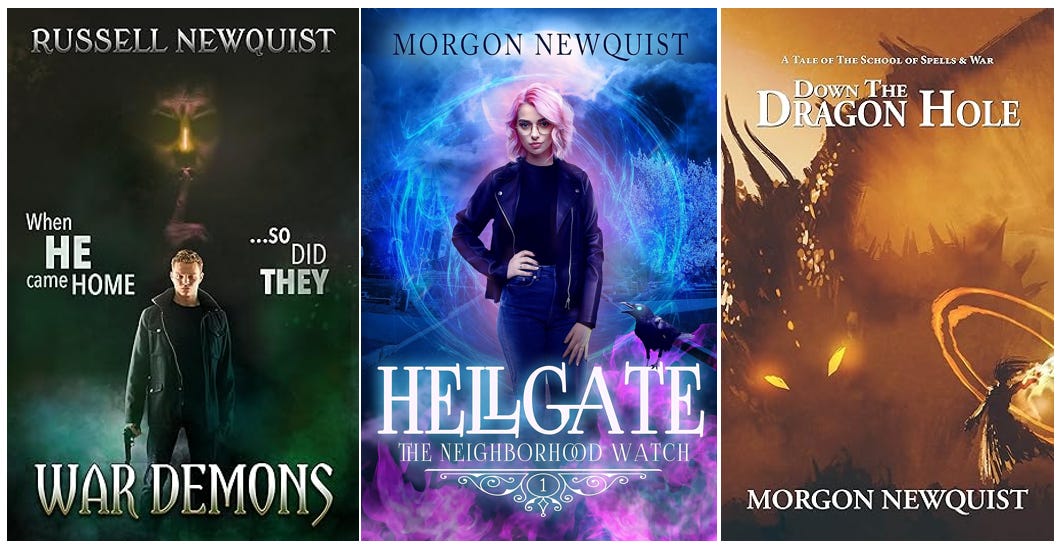
Russell and Morgan Newquist have long been active members in the Based Book community. Through running Silver Empire press, and through their own novels, they set an example for us all how to create and promote Based Books.

Now, their daughter, Sera, is suffering from serious cardiac problems, and Russell and Morgon have had to travel hours away from home to ensure that Sera gets the care she needs.


They will need to be at a downtown hotel within walking distance of the hospital, and that can get pricey. Plus all the other expenses that come with a crisis of this magnitude. Let’s help them out

Russell and Morgon have made it clear that any money not used directly for the expenses of this event will be donated to the Children’s Hospital of Alabama because they treat everyone regardless of ability to pay.

You may donate directly via GoFundMe, and consider also picking up one of their excellent books.


War Demons: A Supernatural Thriller
When he came home, so did they...

Driven by vengeance, Michael Alexander enlisted in the Army the day after 9/11. Five years later, disillusioned and broken by the horrors he witnessed in Afghanistan, Michael returns home to Georgia seeking to begin a new life. But he didn’t come alone. Something evil followed him, and it’s leaving a path of destruction in its wake.

The police are powerless. The Army has written Michael off. Left to face down a malevolent creature first encountered in the mountains of Afghanistan, he’ll rely on his training, a homeless prophet, and estranged family members from a love lost...

But none of them expected the dragon.

Jim Butcher’s Harry Dresden collides with Larry Correia’s Monster Hunter International in this supernatural thriller that goes straight to Hell!

Hellgate (Neighborhood Watch Book 1)

Emilia King has made an art of bad choices. Just ask her mother, she’ll tell you every single thing she’s done wrong for years.

When her latest bad choice changes the locks to their apartment and leaves all her stuff on the doorstep, Emilia can’t bear to hear “I told you so” one more time. So she moves in with her grandfather. Then she can have some space to figure out who…and what she wants to be, without her mother breathing down her neck.

What she finds there is anything but peace. Her grandfather battles invisible creatures in the dark. Neighbors torn apart by wild beasts.

Not to mention the moody, gorgeous man across the street with the motorcycle. The kind of man that’s her kryponite.

But when her grandfather falls ill, his position of head of the Neighborhood Watch falls to her. And in this neighborhood, it’s more than measuring grass height or catching petty thefts.

Down the Dragon Hole:
A Tale of The School of Spells & War


Alis was a quiet librarian at the campus library of the School of Spells & Magic - that is, until the sword wielding buffoon Cahan had the audacity to battle a dragon in her library! Now she's following him off on some foolhardy adventure. As they try to save the university from the mysterious Formless, she fights an equally important battle - to maintain her self respect!

The School of Spells & War is an ongoing collection of old fashioned sword-and-sorcery adventure stories following a wizard and warrior duo as they galavant across the continent of Thillon. Good-humored, powerful warrior Cahan and intelligent, skilled wizard Alis work together to serve their university, the school of spells and war, by battling dragons, investigating plots against the king, hunting witches, and dealing with the ongoing threat of the ancient and mysterious Formless.


Here’s to a speedy and successful recovery for Sera, and thank you all for being part of the Based Book community.

Hans

Saturday, November 29, 2025

Weekend Lounge ~ Epistemic Journalism


Welcome to the weekend!

I don't know about you, but the sudden winter weather has been quite the pain to deal with. Was hoping for things to ease in a little more, however it doesn't seem like it's going to let up. We're just going straight into cold weather, it seems. What a pain.

That aside, let's get to it.

Today's topic is less about the contents of the above video in question (though not entirely) and about the great message included inside of it. Today we will discuss what truth in storytelling is supposed to amount to and how it can be used to dishonestly divert attention or focus by those who engage in it honestly. This is hard to describe so I'll try to e straightforward about it. Essentially, storytelling is truth telling, it is meant to impart reality on the audience... which is why it can be used to lie about reality instead. And there are countless examples of just that out there, especially today.

In essence, stories are powerful and are meant to present truth to both the teller and the audience, and it takes a special kind of deceiver to weaponize that against the people who are meant to be the audience. And deceiving is almost expected these days.

To sum it up: stories might not be obviously true on a surface level but they are always meant to be epistemically true. When your audience sits down to listen to you at the campfire, they are expecting a true story. If they're not it's only because they've been lied to so much they are skeptical by default. This is not how it's meant to be, but storytellers over the past century have deliberately soured the relationship with their audience due to the antisocial crowd in charge of the large industries. And now stories are seen as completely disposable and throwaway.

So what does it mean to be epistemically true and how did the subversive crowd lie about it? That is a bit complicated, but the long and short of it is that they didn't just outright lie to audiences: they told the true . . . to a point. They used the truth to wedge themselves in to present lies as truth. The way this is done is quite interesting. This process means that storytellers can focus on part of the bigger picture that is True while ignoring the whole, thereby lying by omission and manipulating those they see as beneath them. The thumbnail topic in the above video about the "Satanic Panic" is one such issue that is still bandied about today.

Before anyone rolls their eyes and starts smugly typing their expert opinion, it might be wise to ask why this is being brought up at all in today's topic. The reason is that the "Satanic Panic" is a media buzzword used to distract from the epistemic truth in order to frame a different lie as reality instead. Let's get into how that works.

For example, when one tells a story about how crazy it is to think of Dungeons and Dragons or metal records are satanic, they deliberately ignore the real issues of the time period to frame the entire thing as one large canard about the former subjects instead. This why you were taught to hear the phrase "Satanic Panic" and dismiss everything related to the subject. You won't learn who Ralph Underwager, Gary Caradori, or Marc Dutroux are, or why they matter, but still consider yourself an expert on the subject because your silly out of touch grandma took away your Pokémon cards a quarter of a century ago. You don't know what the Franklin Scandal is or why the Finders not being a one-off project is significant, but it doesn't matter because Tom Hanks was in a silly Dungeons and Dragons is Evil movie back in the 1980s. This is how an audience can be manipulated.

And it still carries on today.


This process of lying by omission is an appeal to emotion using massaged facts in order to avoid considering a larger truth. But this is only part of it. This whole mechanism prevents a sort of epistemic investigation of the larger project, a form of propaganda made to stunt thinking. In fact, it's the most effective kind of propaganda there is, because it it isn't straight out lying: it is using a piece of truth to cover the bigger picture. It is the worst kind of manipulation there is.

Let me explain further, using a similar example we still hear plenty about today. This isn't meant to be directly political, but since it involves political decisions that changed an entire industry, it's unavoidable.

Why does no one ask why Bill Clinton's Telecommunication Act of 1996 enabling Clear Channel to rise and Al Gore's wife persecuting an entire industry then lead those same people who had their careers directly harmed and industries gutted led to those same people to vote for them and enabled their destruction. How does one support those who directly harmed them without even a second thought or doubt? Where does that attitude come from? As we've seen, it did not fall out of the sky: it was constructed.

Why do supposed anti-censorship crowds today still obsess over the above "Satanic Panic" half truths while ignoring the existence of entire organizations like the ACT and people like Peggy Charren who broke the back of the animation industry in the west and eventually allowed Japan to eat their lunch? It's because they were told half a story and never investigated further, because it seemed truth enough, even though it wasn't actually so when one looks into it. The woman who gutted the animation industry and children's programming was awarded the presidential medal of freedom for doing so, and once again no anti-censorship soldier ever speaks on it.

Isn't that amazing? It really shows how effective half-truths are to outright lies, and it's why this has been the way it's been for so long. It's a winning tactic for subversives.

This is the larger point being made. These are all half truths meant to obscure a larger and more important Full Truth, and to this day there is a whole generation that consider themselves experts on all the above subjects despite not knowing half the story. This is by design. It's very diabolical when you think about how it's done. In fact, it's the sort of thing people increasingly hate journalists for today, because they only investigate half truths that look at a small piece of the picture due to being taught the larger one doesn't actually exist at all. Only their pet causes matter, not what led to said causes existing or what supporting them might lead to in the future. What are causes and consequences? They don't matter aside from the one narrow subject. After all, it's about Your Truth, not The Truth, and that makes all the difference. The Self comes before all else.

The largest issue with the 20th century was exactly this obsession with fragments at the expense of the whole. Investigation for the cause of half truths, not epistemic ones, and this lack of care for the whole is what lead to the alienated culture we live in today, and the loss of a high trust society and shared language and customs. We are currently living in the late stages of this way of thinking, and still repeating old half truths constantly to keep us locked there.

How do we get out of this? There isn't an easy answer to that. Much of this is simply decay and entropy not being fought against. Much like the so-called "Quiet Revolution" in Quebec, it's just a fancy name for moral laziness and lack of care for the wider picture. Unless decay is actively fought against and reversed, the state of things will not get better, and everyone knows it. Whether they accept this Full Truth or not is another story. However, it will change. Much like how the younger generations now think the status quo from the past quarter century is lame.

Here are some examples of this happening right now:


Whether you agree with the language or specific examples in the above is not quite the point. It's more that the younger generations are not as satisfied with half truths as ours were taught to believe wholeheartedly since the 20th century established its new reality as default. The younger generations know something is wrong on a deeper level and that the answer is to not shut up and do what those in charge say to do. Whether that is due to generations of broken promises and dead end thinking is to be seen, but the status quo will not continue on this way.

They want to keep digging for a better truth than the ones they were told to accept. This is going to lead to something quite different than the 20th century we've left behind.

If anything, this should all be an encouraging sign. Whatever we think is coming is probably not what is actually on the way, but it hardly matters since Truth always eventually wins in the end. Half truths and lies eventually fall away to the mists of time even if we don't care to discover them for ourselves. It just Is.

And after that? Well, that's when the real building begins.

Until then, keep your chin up and eyes forward. December is almost here and so is the cold pushing in. Let's get through it same as we always do, and see what lies ahead.

Have yourself a good week and I'll see you soon!


Saturday, October 18, 2025

Weekend Lounge ~ The Pop Corpse


Welcome to the weekend!

We're halfway through October and close to spooky season. That said, some topics are a bit spooky without even really trying, especially when talking about the entertainment landscape. For anyone who is paying attention, they know how bad things truly are.

For a bit of a change, today we're going to dive back into the pop cult world, but not for criticism or easy shots at it, but more to point out that there isn't really anything left to talk about. Years ago, I mentioned that Pop Culture was dead, a topic that took people by surprise and which I still stand by, and nothing has changed on that front t change my opinion.

In fact, it's considerably worse than it was when I wrote that post eight years ago.

All the crusty corpos can do now is recycle IP, hope for a few minutes in the current fickle meme cycle, and then wait for the audience to inevitably forget everything they had just consumed mere moments earlier. Nothing sticks anymore. 

Consider the original versions of Silent Hill 2 and Resident Evil 4 were huge in the gaming scene for years after their initial release, and in Current Year the remakes were forgotten in mere months for the next IP cash grab. It doesn't even matter if the product well made anymore, the audience no longer cares or has any investment. The normal audience has moved on from caring, and those remaining are doing so hoping for a few minutes of potential watercooler talk (or whatever they call it on social media these days) before moving on to whatever they are told is the next thing to care about. We all know this is how it works now, even if we can't express it.


It's dead.


This isn't even a shot at the consumers, this is just how it objectively is now. A consuming content checklist is all anyone aspires to be a part of, not a scene or part of a wider connected cultural landscape. The above video shows us that this is where the pop cult has lead to, much as we said it would years back, and it will not get better. The only solution is finally putting this entire mindset out to pasture. Pop culture is dead, and we need to stop pretending it's not. Perhaps it was always dead to begin with. Regardless, there's nothing there now.

Those old, ancient IPs are now novelties, they have no greater meaning to the wider audience except as cheap references to long dead days, and jangling keys to distract their attention from reality for a few hours. There is no higher meaning, no daring ideas, and nothing vital in any of them except safe messaging for a sick society currently eating itself. These rickety properties are tired and need of eternal rest. Nothing lasts forever, especially not all this corporate IP.

What we're currently looking at is a near-future of isolated pockets of artists, entertainers, and creators, all working together to find shared ground and connection with each other and audiences they might not have expected. This won't be the permanent state of things, it never is, but it is the way it will have to be before said audiences are able to find those they can trust again who will not decay the way the mainstream has. We're going to be here for a while to come.

In the meantime, take one last look at the pop cult wasteland and remember how mighty it once was, before taking what is necessary to moving on to fertile grounds. There is nothing left here, and we need to start admitting it. The dead is to buried.

Whatever awaits ahead is not this, and there is nothing ahead like what we are leaving behind us. And there is nothing wrong with that.

We just need to be able to finally accept the way things are. The old world is dead, the old corpo IPs are done, and none of it is ever coming back. Clinging to it while not saving anything, or making the cultural landscape grow or become any better, is just lying to yourself about where we are and where we're going. We simply aren't there anymore.

And that's all there is to say about it. There isn't anything left but corpses in that old graveyard, and the only purpose of corpses is to bury them, remembering who they once were, and moving on.

So let's finally do that. We need better ways.


Saturday, April 19, 2025

Weekend Lounge ~ Today the Slop, Tomorrow the World


Welcome to the weekend!

It's been a bit of a weird couple of weeks, and I've spent it in a little bit of shock. This is mostly because I did not realize how much the entertainment industry has deteriorated behind the scenes in such a short time. It's actually amazing to look at, and I wanted to share some of what I've seen today. (Hat tip to Pipkin Pippa and her viewers for some of this knowledge. Their ability to discover cringe kino remains undefeated.)

We've talked a little about what slop is and why it's here, but I don't believe we discussed how it's going to be like living through the era of entertainment its going to bring forth. Long story short, it's going to be around longer than you'd prefer. It's going to change everything, while changing absolutely nothing at the same time. To explain how will take a bit.

For a good summation of how things are now check out the above video. It isn't going to stop there, either. Just as we've accepted deteriorating standards in entertainment over the years, we're eventually going to accept the very things we used to laugh at as parodies on old Mad TV and other sketch shows of the 20th century as normal. It's not just a joke anymore. Now it's real.

We wanted it, and now we've got it.

Again, the era of slop did not fall out of the sky. Audiences did not decide overnight they were fine with automated beltline production fashioned around the shallowest of tropes and clichés to be consumed and then disposed of instantly for the next. They were trained to be that way for decades by an industry that wanted walking wallets instead of patrons. It is a fundamental misunderstanding of art at the heart of it.

Do you want to see what entertainment is going to become? Watch the video below. Do not skip around, do not stop early, and do not turn down the volume: give yourself the true experience of the future and watch the entire thing. This is the exact product the industry has been striving to fashion for decades as it normalizes lowering standards in both creativity and production quality. This is the future of slop.


This isn't a joke. There's no punchline here. It isn't a parody channel or an old sketch from when comedy shows were relevant. This is a real channel with over a quarter of a million subscribers on YouTube, and this is the level of content they produce. This video is only one example of it.

The channel in question isn't alone, either. There are plenty of others, some of which make similar product based on web novels that span hundreds of chapters. Yes, authors are also responsible for the state of things as they are. We can't just excuse it with the desire to "get paid" when we are contributing to things like the above existing and being normalized. Creating is about more than just making money. There isn't any attempt at connection here, just trope lists checked off (or subverted!) to give the audience the bare minimum to swallow before moving on to the next thing on their playlist. It's deliberately designed to be forgotten.

We don't want to admit it, but this is the future of the entertainment industry. We are pushing towards this every day we accept a Borderlands movie or an Avatar sequel. Accepting the bare minimum is not making anything better, and we know this, but we don't seem to want to do anything about it. We've been trained to excuse a downhill slide as an all or nothing proposition, as if the people in charge own us lock, stock, and barrel.

This is the future we chose.

And to be honest, it might be too late to do anything about it now. The genie is fully out of the bottle. It isn't about AI: it's what lead to AI being used in the first place. No one actually cares as long as it gets them their content faster. That's a truth we have to accept, and one we've allowed become reality. It can't be escaped. It has to be faced.

This is what a growing number of audience members want to consume. This is the direction we want to go in, as an audience. It's just slapped together clichés, vague characters and ideas, and the lowest possible quality threshold. What's worse is that they even have member's content.

I'm not kidding. Here is the only comment on the above video:


This is the future of mainstream entertainment.

We all know this, even if we won't say it out loud. It's a completely avoidable future, but it requires the sort of effort we simply do not wish to engage in. That is what makes it inevitable. The slop future is just ahead. 

I wish I had a more positive end result to tell you, but we all know this is the end of this road. It doesn't go in any other direction than this one. All we can do is push for more and support those who wish to do as much. At the end of this road lies normalized slop, and it's getting closer every day. Letting Hollywood take your money is not going to fix it.

In fact, they will make it even worse. They already are.

Unfortunately, that's just the way it is now. Who knows what the future holds from this point forward, but it will only change if we push to change it ourselves. Simply waiting for the old dying industries to wake up is a losing game. We either more forward together, or this continues, and the slide down into the slop only becomes more pronounced.

The future is up to us, so lets build it together. We have to work forward to create something else: a new way forward. I believe we can do it, together.

Have yourself a fruitful Easter and I'll see you again soon!


Saturday, March 8, 2025

Weekend Lounge ~ Why Everything Sucks Now


Welcome to the weekend!

Hope you've had a good week. I've been knee-deep in multiple projects, one of which I can't even hint at yet. That aside, lets talk about the current entertainment landscape, and how it's been changing recently. We are finally seeing the last embers of the 20th century extinguished and what we are being left with has yet to be seen.

Let us explain why that is.

We've gone over a bit about the slipping quality of corpo entertainment and its various reasons for it current terrible state before. In fact, it's been a constant theme. The Cultural Ground Zero effect is real. Of course, we have the usual reasons/excuses for noticing this trend: the "nostalgia" argument, the "changing tastes" argument, and the "catering to the market" argument" are all the most common. And yes, some of those might apply, but are not enough to paint the bigger picture. None of the give the full view of what's going on.

For instance, no Zoomers or younger gens care about mainstream entertainment anymore, just as much as no one except aging "Geek Culture" Cultists desperately holding onto their youth even look twice at it anymore. Some passively consume the slop, but none pay it any real mind anymore. It's like how a Baby Boomer goes to the television to think. It's just expected and passively consumed. No one actually cares about this stuff anymore, and they haven't for a long time now.

You won't find any shortages for the reasons behind this, but I think the video from David V. Stewart above highlights all the potential arguments and explanations as to why things have changed. This is before he gets into the main crux of the issue. I'd suggest watching it for good reason. He has a very good way of getting things across.

That aside, I do see a hard turn coming in the future due to both how fragmented our culture is and how those in charge both dumb down and belittle real creativity at the expense of ambition. It's going to lead to a generation that is just plain going to ignore "fiction" entirely. They will see it as a waste of time, much like we basically already do now.

What will happen is because of how vapid, predictable, and repetitive, mainstream entertainment is, as well as the cratering emphasis on "imagination" (We're a long way from the silly "Reading Is Magic!" punchline of the 1990s), on top of the lack of interest in 20th century IP among younger gens, will all lead to a fracturing in the overall.

You're going to see the mainstream focus more on "reality" entertainment (A growing trend since the end of the '90s) with things like streamers, reality programming, and video essays, taking the air out of the room. At the same time, anything "fiction" related will struggle unless it a flavor of the month supported by one or more of the above things.

The reason for this is the mainstreaming of "tropes" since the Geek Culture '00s have made Following The Formula Right the only thing a corpo needs for you to hand over their wallet. What the formula is depends on how you were trained to consume your entertainment. What you then have are Gen X to Millennials begging for scraps, whether they be rehashed tired formulas, endless subversions of the same handful of ideas, or More Of The Same.

None of these groups desire stories, they desire their youth resold to them forever, like Baby Boomers buying endless Beatles merch and products well into retirement age. The old IP is all they want, quality has nothing to do with it. This is because the "quality" to them is merely in repeated names, aesthetics, and actors/voices saying what they want to hear. The core story, the morals and the deeper meaning, don't matter as much as the surface level. If it did they would engage in other things outside the IP. But like Baby Boomers, it doesn't matter how good something is, because it isn't John, Paul, George, and Ringo. At the end of the day that's all they care about seeing.


Evergreen meme for a reason


How did this come about? For many reasons. We all know it's real, but it's hard to put a finger on what exactly is to blame for it. This is because the explanation is multifold.

Those among these older generations, present company included, are to blame for the current state of things. We cheered for vacuous slop, meaningless pop cult references, and selling our youth back to us forever. We made fun of the Big Bang Theory for being "geek blackface", but Scott Pilgrim was no different in pointlessly catering to "Geek Culture" vapidity. Just because one is better made doesn't make them both slop. Slop is about intent. There is no meaning to either except ego stroking and pandering to a generation that deserves neither.

What we have here is not only the End of Pop Culture, but the end of the 20th century influence on culture as a whole. Those days are gone and they're not coming back.

The elephant in the room is also that Western Culture has been built off negativity, subversion, and bitterness for over half a century now. It has lead to a low trust society, fracturing political and religious outlooks, and mainstreamed misery into common discourse. Politics didn't cause this: it lead to the current sociopolitical situation everyone hates.

I don't tend to address politics here directly, because it's really a dead end discussion point. The second someone sees a buzzword, their brain clicks on to a certain track and you become Friend or Enemy. At that point, you might as well be speaking backwards. But this isn't about Friend or Enemy, it's about understanding where we're headed.

And this is all due to where we've already come from.

I'll be blunt. The Right sees the arts as useless and a dead end. They refuse to support anyone even remotely on their side, ceding the ground to people who hate them. They would much rather support grifters who put out low quality versions of "based" calendars, political talk shows, or vapid entertainment stuck 20 years ago. No one is investing in any real countercultural efforts (and if they are, they are very much the exception to the rule). There is nothing even remotely approaching art here.

The Left is no better. They see the arts as an opportunity to promote whatever new thing they were told to support by their favorite TV/online personalities, and morphing their own works to comply with these updated slogans. They are convinced that something like naming a villain Tonald Drump is high art to be applauded and high brow commentary on par with the best Russian Literature. They also happily subvert their own IP for updated messaging at every opportunity. There is nothing approaching art here.

Surely, that's everything? After all, we've addressed both "sides" of the discussion, right? No, we're not done. 

Centrists pretend to be above it all, saying they want no morals, lessons, or politics, and just want Entertainment. This is impossible. There is no piece or art without meaning, without something to say, and in fact any art worth engaging will have these elements in them deep inside on some level. The actual problem should be that there is little focus on what is being said, how to say it, and how to connect with the audience. Instead, the focus is on returning to the *Insert Decade Here* standard where everyone was Sane and Not Weird, even though they were and we just didn't notice because we were kids back then. There is nothing approaching art here.

This leaves you with the three modern views of how art is seen: to be taken for granted, to weaponize against your neighbor, and to consume mindlessly between sugar binges. That's it. There isn't anything else. What you are left with is an upcoming younger generation whos see all of this and has no reason to engage. Art is clearly meaningless because that's how we see and treat it. Therefore, the younger generations will turn away from it.

It will also lead to the more common usage of AI generators for entertainment, because it gives the bare minimum. This will be good enough for them, and we've given no valid argument against them doing this. What else is consuming art for anyway? We don't have a good answer for this that isn't a cliché from the 20th century since proven incorrect by how things have decayed.

The ignorance of the Right lead to the belittling of art, the arrogance of the Left lead to the pamphletization of art, and the mindless consumption of Centrists lead to seeing art as novelty, trope checklists to follow or subvert. Don't get me wrong, none of these positions are exclusive to any of these groups, but those are the main three views of entertainment that has lead to the irrelevance of art on modern day living. The younger generations have internalized this and are ready to apply it to their own position.

And, again, what reason have we given them to think of anything else when all we focus on are things we should have let go of long ago?

20th Century IP has no meaning to those born outside of it. No, not even if you "update" the morals, and not even if you Go Back To the old morals. It has no relevance for the 21st century man living in uncertain times caused by the previous century, and the more we cling to it the more younger generations will turn away and move on without us. The 20th century is not the center of the universe, and we're quickly learning how irrelevant it's most likely going to be in the long run. We should be preserving what worked now before it all gets disposed of.

We've treated existence and reality as a novelty for so long it has turned our outlook cynical and barren, matching our entertainment. The only way to move forward is to take what we learned and apply it to the present. This requires letting things go, but also looking forward to the generations before us who need a guiding light. We have to be there for them, not ourselves. We're not kids anymore. We need to start acting like it.

Thanks for reading. That's it for this week! 

See you next time, and please be sure to support smaller and independent artists trying to make a difference. It's the only way we'll see any change.


Saturday, February 1, 2025

Weekend Lounge ~ Down but Not Out


Welcome to the weekend!

I'm sorry it's been a bit longer than usual recently. I both got hit with something going around and had to deal with something very annoying in my personal life. It's been tough trying to stay on track with my focus taken like that.

As a consequence, there's not been much to talk about recently. So instead I'll leave you with a quick update and a video on shadow people. You never know just what lies waiting in the dark.

February is here, and winter is nearly at an end. So here's hoping we can make it through to its conclusion. Not much further left to go!


Wednesday, December 25, 2024

Merry Christmas!


Merry Christmas! Not much to say today thanks to the holiday, just a small post to keep things rolling. I hope you're having a good one.

Only two things to share today. The first is the above video on weird Christmas stories, and the second is today's Cannon Cruisers episode, also on a Christmas movie. I'm sure there's much more out there, but this is all I wanted to share directly with you.

The film we covered is 1971's The Christmas Martian, a fairly unknown family film from Canada, that did, however, have much more influence on what came later than you probably know. Highly recommend listening to this one if you enjoy Christmas and/or family movies. It's quite a unique project work looking into.

Anyway, that's all for today. Have a good week and a good rest and I'll see you this weekend. 2024 is almost done, but we've still got plenty to do.

Merry Christmas! Have a blessed day.


Saturday, November 23, 2024

Weekend Lounge ~ The True Hero's Journey


Welcome to the weekend! It's time to talk about writing.

Every since those terrible space opera franchise movies started came out back in 2015 there has been a lot of discussion on the "Hero's Journey" theory and how it is instrumental to making any story with a protagonist in it good. Without following this formula you were doomed to fail. The conversation was understandable given how little those movies understood how to make compelling characters and stories, but it also revealed that somewhere along the way our perception of what a hero was supposed to be became skewed.

No longer did we await new stories from the machine with baited breath--now we started to question how they would fail following the Correct Formula. In many ways, we still do this, but it does seem to have clamed down in recent years. Regardless, it was an enlightening time to be paying attention to what the audience thought about this shifting culture of storytelling.

Was there really only one formula to write a hero story? Had Joseph Campbell set out to write a handbook that all writers had to follow in order to make a story worth anything? Were we all doomed to failure unless we slavishly copied his One True Path to mythmaking? Was he actually infallible unlike every other man Earth?

What is it about men named Campbell that spur on slavish devotion? Seems to be a very odd modern phenomenon. Does this name give you insight to the inner workings of writing stories? These questions are getting weirder and weirder, aren't they?

Regardless, it turns out that all of the above was wrong. In fact, this modern conversation of mythmaking does not even originate from Joseph Campbell at all, but by a Hollywood screenwriter who reshaped his ideas into a completely separate formula. Somewhere along the way we attributed things to Campbell that he never actually said.

Yes, much like the insipid "Save the Cat" formula that posits audiences cannot understand or process protagonists without having their skulls caved in with a subtlety sledgehammer, a Hollywood screenwriter invented a new formula from whole cloth based on an interpretation of his writings and all writers outside the system now rush to defend said very system currently falling apart from slavishly following said broken advice. "Don't Read Anything After 1980" indeed. I don't know how this bait and switch happened, but it happened.

Let's go into it a bit.

What the Hero's Journey was started as Joseph Campbell's attempt to find underlying patterns in all stories that form an overarching myth for all of humanity. What did stories have in common and what could be shared between them in a large overarching monomyth? He did not cobble a one size fits all formula to write stories, in fact not every story has the same mechanism or tropes, but each has at least some aspect that resonates with others. They all, in the end, point to the same Truth overall. What he was doing was seeing that no matter how different a story was they all played into the overarching monomyth of the human race, but in different ways and with different approaches. What he was doing was the opposite of what everyone expects from the Hero's Journey today. There was no one size fits all formula created by Joseph Campbell.

So how did that come about? How did we get the exact opposite intent of what Joseph Campbell wanted from his work into enshrining it as a one note formula meant to be slavishly followed to create Good Stories? This couldn't have happened organically.

Well, it didn't. The warping of the "Heroes' Journey" came from a book by Hollywood screenwriter Christopher Vogler. What he did was take Campbell's work then build his own formula around it by bending and warping the original purpose into a one-size fits all screenwriting guide. He hammered it in awkwardly to get the result he wanted out of it. That's right, this mutation didn't even come from a formula for novel writing, but one for screenwriting--an art that has been in free-fall since the 1980s ended. And this book being published in the 1990s might give you a hint for why that might have been the case.

Not only did Vogler misunderstand Campbell's intent with his work, he also twisted and mangled several aspects of the Hero's Journey idea, and just plain got a large chunk of it wrong. To understand how that happened I would suggest viewing the above video. After watching it, many of the mistakes of modern writing will come into clear focus, including many of our perceptions of it. In essence: we don't know what we think we know.

There are many ways to learn how to write. Some learn by ear and some study intently to become the writer they want to be. There are even some formulas that can help you become the writer you wish to become. Clichés and tropes exist and are unavoidable in writing. All of this is true and no one is denying any of it.

However, there is not one correct way to write a hero or a hero story. This was the whole point of Campbell's original theory to begin with. All stories shade in different aspects of the overarching Monomyth in various ways. But that is not how we look at it today! In fact, we have warped this into formulizing that which was never meant to be formulized. And why not? Everyone's got books to sell and selling to writers is a profitable gig.

To bend and misshape an idea into the formulaic monstrosity it has become by modern writers and, even worse, writers outside the system this mutation has already destroyed, is a sign that we are going down the wrong path. We are dumbing down the monomyth for no real gain. All we're doing is dumbing down what a hero is and what stories are.

It goes without saying that this will not lead to better stories. The proof of this claim is the obvious fact that it hasn't done so. This will not magically change if we keep doing it repeatedly for yet another couple dozen years. It is a dead end.

You might find this controversial to say, but it is what it is. Over the past half century we have made a lot of mistakes that need to be undone, and travel new paths away from failed ones. It will do us no good to continue mockeries like this if we want to build new roads to travel down these abandoned trails. We need to stop giving credibility and attention to a failed system that is currently bottoming out into the abyss. We need other ways. 

I think we can do it, but we're not quite there, and lionizing mistakes like the above failed formula is one of the exact things holding us back from moving on. We need to "Retvrn" harder than emulating years of a decline that had already been set in motion before many of us were even born. It is time to accept hard truths.

Genre expectations, what makes a hero, morality, purpose, and the meaning of good and evil, have all been bungled by the big dogs in charge and were done so long ago. If we want to move past them we're going to have to go even further back while simultaneously pulling even further ahead into uncharted waters. 

We are close to the fringes of a new Golden Age. In fact, we are so close I can just barely see it over the horizon coming ahead. But we aren't going to get there with these old failed roadmaps. It is time to throw them out the window and leave them behind.

Keep awake and we'll get there eventually. I just hope we can stop with all of these detours so we can get there sooner.