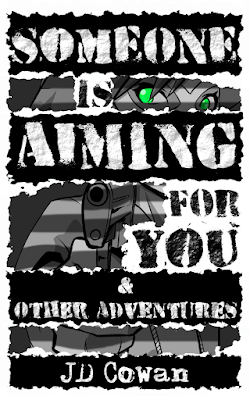
Today I wanted to highlight some books, but they aren't the usual sort, given that two of them are not really new releases and one of them isn't even out yet! However, why not do things a bit different this time? It's fun to shake it up every now and then.
First up is Cirsova's new Kickstarter, which is as out of left field as always. This time it is for Misha Burnett's new collection, An Atlas of Bad Roads. One can say a lot about the consistent quality of the projects that Cirsova releases, but they are always quite a bit different than anything you would get from OldPub. That is not even factoring in superstar weird writer Misha Burnett into it! This project is no different.
The description:
There are many strange places off the beaten paths in this great land of ours. From the abandoned shopping malls where squatters revel in violent nihilism to the new subdivisions built atop ruins where tragedies lay buried, Misha Burnett is your guide to the weird and out of the way places that are haunted by the past and the future.
This all new collection from Misha Burnett includes 16 strange tales of the macabre as well as 16 original poems, exploring the mysterious nature of the seemingly mundane world, where the run-down warehouses, shady night clubs, and even 24-hour gas stations may be home to magical fae creatures or skulking maniacs.
You've been offered a map to these beautiful vistas and disturbing local attractions. Just try not to get lost.
As always, you can jump in with any format your heart desires, including a magazine/atlas style with is apt for the contents. This is going to be a weird one, though I guess that is to be expected. You can find the kickstarter for An Atlas of Bad Roadshere.
It's sure to be a good one.
Next we will cover The Perils of Sasha Reed by Rawle Nyanzi, a compilation of short adventure tales all starring the same main cast.
Wait a minute, wasn't this already released? You would be correct to ask that. It has. However, you might have noticed the new "Volume 1" distinction on this one. Rawle Nyanzi has decided to turn this one into an ongoing series. Not only that, but this release is a brand new pulp-style paperback for your more tangible reading needs. If you haven't checked The Perils of Sash Reed out yet, now is the best time.
The description:
THE KIDNAPPINGS WON'T STOP!
Pit girl Sasha Reed has a problem: every dirtbag on the planet wants to kidnap her! Her new subspace storage technology has attracted the attention of mutants, mad scientists, and the worst scum the Earth Sphere has to offer. Now Sasha and her gun-toting race car driver boyfriend must deal with all sorts of danger in this short story series!
You can find the paperback version of The Perils of Sasha Reed: Volume 1here.
Here's hoping Volume 2 isn't too far away!
Lastly, we have the not-yet-released Gun Magus by N. R. LaPoint. However, it is available for preorder before its release date next week. If you like them weird, it doesn't get weirder!
From the author of Chalk and Lightsinger comes another bizarre tale, though at this point you should probably expect it from him. This one is a mashup of old style action with Isekai in a story full of fast-paced adventure!
The description:
Low on luck, but not ammo
The last thing Kenneth Jericho needed was a gunfight and car chase with human traffickers. What started as a bad morning only got worse.
A flash of light sends Ken to a strange world filled with magic, hideous monsters, beautiful women, and seemingly unlimited ammo.
With pistol in hand, Ken is thrown into a race against time to stop a local ganglord's reign of terror.
But is the thug the brains behind the violence, or is someone - or something - else pulling his strings?
You can find Gun Magushere! This one promises to be a good time. Get it ahead of the line and preorder it now.
That's it for this week, though there is still quite a number of new releases coming all the time so it might not be long before I make another one of these posts. Hard to tell, really. It is not like that is anything worth complaining about, though.
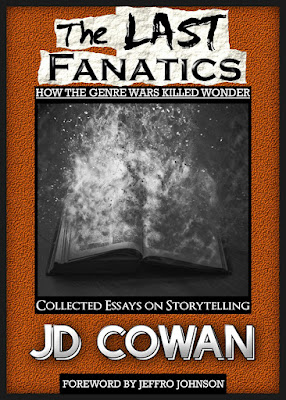
As for myself, do not forget the release of the new collection, The Last Fanatics! This is 400 pages of our journey through Fandom over the past few years compiled in one handy place. The readers wanted this one, so here it is!
There is still more on the way, so please stay tuned for what is coming next. It has been quite a year behind the scenes, let me tell you, but I do not intend to stop anytime soon, and neither do many of the others in NewPub. This wild west is just beginning to get wild.
"JD Cowan has over the years shown himself to be one of the most prominent, and perhaps most important, essayists of the new movement in pulp revival beginning in the mid 2010s. His is must read work." ~ P. Alexander, Cirsova
"JD has been naming names and documenting the decline and fall of genre fiction for a long time. It wasn’t always like this and his work is important to the question of why it’s like this now." ~ Conan, Esq.
"Ever wanted to know why the fun and wonder has been sucked out of sci-fi, fantasy, and adventure? JD has the receipts. Essential reading." ~ Alexander Hellene
This has been a long time coming, and it is thanks to you, dear reader, that it has happened. Today is the official release of my new book, The Last Fanatics: How the Genre Wars Killed Wonder. This is a collection of essays, edited by myself, of my series on Fandom that I have been writing for the last couple of years on Wasteland & Sky. It's been some time editing it, but the final release is here at last! My readers demanded this one, so here it is!
Find yourself a comfortable seat and dive in. We go deep in this one!
Even if you've read the original pieces, they have all been edited a great deal and sharpened tremendously. Get ready for one final dive into modern Fanaticism as we look over just what destroyed the genre landscape before spilling over into other adjacent industries. Here, the entire series of posts of Fandom has been edited into book form to make it less unwieldy for readers. It's 400 pages of one writer swimming backwards through the history of Fandom to its source. We go back nearly a century to see just what is the root of all this.
Here is the official description of The Last Fanatics:
Once upon a time, there was a tradition of storytelling that went back into the Gothic romances all the way through the fairy tales into the classics. It was a world without genre boundaries, checked boxes, and corporate writing workshops. This tradition created all the things you grew up with, the stories and ideas you hold dear, and the beating heart of adventure that has sustained us since the beginning of recorded history.
And then it was destroyed.
Learn how a gaggle of Fanatics poisoned the well of discourse and imagination by turning storytelling into mechanical formulas with rules and boundaries that never existed before. Who gave them this power, and how much of their garbage still taints discourse and the industry today? In The Last Fanatics, all will be laid bare.
It is time for the truth to be shouted out loud!
*Contains the collected and edited series of Fandom essays from Wasteland & Sky
So what is exactly in this tome? I am glad you asked! Let us go through it.
The Last Fanatics is split up into five sections, bookended by a Foreword and an Afterword. The Foreword was given to me by professional firebrand gamemaster Jeffro Johnson. I couldn't think of a better person to start this book off than the person who helped send me on this journey in the first place. There he discusses how he began his Appendix N quest. Aside from that and the Afterword, written by yours truly, the remained of the work is edited from the posts on this very blog. I spent a lot of time sharpening them for your reading enjoyment.
It took some time to go over these with a fine-toothed comb to make the whole thing work outside of blog form, so I hope you have a good time reading it, even if you've already read the blog entries before. I would actually recommend going through both, as they each offer different and varying information between them to add to the whole picture. Regardless, this was quite the journey and I am glad I have taken it.
Here is the full table of contents:
"Foreword" by Jeffro Johnson
Part I: Fandom: An Illustrative History
I: Origins from the Crypt
II: The Machine’s Crossroads
III: Nightmares & Monsters
IV: Mechanical Men
V: Humanity in the Pulp Jungle
Part II: A Revolution of Pulp
VI: The First Adventure
VII: The Heart of Heroism
VIII: Wonder’s End
Part III: Science Fiction Doesn't Exist
IX: Fantastic Nothings
X: Digging a Deeper Hole
XI: The Invisible Enemy
XII: Crude Delusions
XIII: The Final Future
Part IV: The Last Fanatic
XIV: The End is the Beginning
XV: Long Way Down
XVI: The Pied Piper’s Pit
XVII: Mutation & Death
XVIII: Dead Endings
Part V: Odds and the End
XIX: Phantom Humanity
XX: Tomorrow
"Afterword"
Once again, you can find The Last Fanaticshere. The paperback and hardcover versions are also both available, so choose the format you prefer! I am amazed how fast KDP was to work with this time, as this is the first time I've managed to have not only a paperback edition, but a hardcover one, available on release date and not being held up by their incomprehensible systems. So I will give them kudos for that. Regardless, it is nice to have all the formats ready for the readers!
To get to the heart of the matter, my series on Fandom has always been somewhat controversial and I severely doubt the book version will be much different. What started as a simple look into Fandom's revisionism of an entire pocket of literature turned out to be an onslaught of anti-social posturing slathered in a desire for meaning that centered on one's self. Looking back on it now, my attitude is quite different than when I first wrote these chapters. You can probably tell due to how incendiary some of the commentary and analyzation can be at times. Reading through a lot of this the first time was definitely difficult. The obvious hate and resentment was hard to take in.
When I originally wrote much of this series, I was fairly ignorant on Fandom and thought a lot of what happened to the pulps was, as we've been sold since they disappeared, a natural changing of the market brought about by the war. There is some of that in the history, times always change and so do tastes, but the truth is that this shift had always been orchestrated by a bunch of antisocial materialists who simply wanted to turn the world upside down. A good portion of the reason why the world today is turned around backwards and fueled with resentment for the past is because of things and attitudes that caused things like this. We got it into our heads that our era was special and above everything that came before, and that we were heading towards Utopia disconnected from the past, therefore all the deck chairs needed arranging accordingly.
At a certain point when going over the final edit for this book, any anger I might have still had towards this crowd and that old time had long melted away to nothing. There isn't really anything to get upset about in regards to this, since that mess is long over and done. If anything, I feel for all the writers and readers who were denied the stories they always wanted to have and were unaware they could have had them all along. They were denied what they always wanted to have, and no one had the right to deny that to them in the first place.
But now we live in a NewPub world. You can find just about anything you want, as long as you're willing to look for it. We have more options available than ever before, which means you no longer need to put up with those who hate you. You can do anything, and it is about time we act like it. The revolution has come and gone, which means it's time to rebuild. The Last Fanatics is a good blueprint for getting past this and moving on.
The place where this all started . . .
At the end of the day, I wrote The Last Fanatics: How the Genre Wars Killed Wonder for two main reasons. This needed to be put into book form. The first reason I did this was that readers kept asking for this one, and the other is that we needed a final word on this old era that has been holding us back for too long. We no longer live under Fandom's rules, and it is time we realize that. Fandom is gone, and we don't need to live under their rules and frames any longer. There is nothing left at this point to do but build.
My Fandom series more or less concludes with the publication of this book. I don't have anything else to really add on the subject that wouldn't be treading water. I might read a book or two on the topic in the future, and I might even write a post here on it, but that would be separate from the subject at hand and focused purely on the events within said theoretical book. The bigger picture has already been painted. We now know what lead to the downfall of an entire industry and the wider scene. Nothing we could possibly learn in the future would change the core truth of what happened, or what needs to be done about it.
Either way, The Last Fanatics has been a long time coming. I want to thank every reader and commenter on this series since I first found that one stray book in that used bookstore back in 2019. I did not think this would develop into what it has over the last three years, and it is thanks to you and your prodding that I even bothered to look deeper than the surface level. This book very much exists, in a big way, because of you.
So, enjoy!
The last of the Fanatics might finally be on their way out, but we've still got a lot of rebuilding ahead of us. Now, at least, we can look to the future with a knowing hope that things can only improve from here. That dark chapter in the history of Romance and Adventure storytelling is finally finished and it is time for better ways. I, for one, am excited to see where we go from here.
Once again, thank you for reading!
You can find The Last Fanatics in the format of your choice here.
What a mess the 20th century was. Defined by its eternal quest for progress through materialism and unfiltered government control, it took its time ricocheting between shinier lightbulbs and more powerful computers, and killing a hell of a lot of people. The Utopianists at the start of the century soon found themselves stained in a nihilism that wouldn't wash clean, even as they put on a smile and pretended tomorrow would be better as long as we don't talk about the horrible truth behind what is actually being done. It was a time that could only have happened when it did, and will never happen ever again.
At least it's over now.
However, by the end of the century, the children coming up out of this secular haze were more more or less thrown out into an unreality that no one quite understood, even as they insisted they did. There is much hatred aimed at the Baby Boomer generation for not preparing their children for the world, but the truth is that they weren't prepared for it either. There was a script moderns had been programmed with since the industrial revolution that as long as you played your part as a cog well enough that things would just Get Better. Utopia would come, as long as we worked for it. Just keep your head down and pull up those bootstraps. This is all it would take.
Eventually, however, it was learned that it was never going to happen. It was never going to happen because this mentality was the equivalent of building sandcastles by the water. Now that the tide has come in, the castle is gone, and it's not coming back.
The issue is that after the sexual revolution and the general misery of the 1960s, the generations coming up were raised in a patchwork of New Age quackery, unrelenting materialism, and a Utopian mindset that is a combination of both, with a dollop of skepticism because of their spiritually hollow parents not having much of anything in the way of spiritual formation or thought behind why they do or think the things they do.
Why are we alive?
What is the point?
Why are we here?
Why even try?
What are we supposed to do, and what do we do it for?
The modern script won't answer these questions, and by the time of 9/11 and the start of the 21st century, it had already shown itself as incomplete and incorrect. But without any tradition to look back on, how could you escape it? What other avenues even existed out of this existential nightmare? The rising suicide rates might give you a clue as to if they have figured it out yet.
To sum it all up, a broken framework that only half-worked finally stopped working and has left many without a clue of what to do about it.
This is the perfect recipe for a lost generation.
Cue Generation Y, the gaslit generation; the generation told that following a script would lead to happiness because the perfectly programmed adults had it all figured out. We know where this ended up, but that doesn't change the fact that it has left them, and future generations, without roadmap on where to go next.
But while you see plenty these days from people who hate the Baby Boomers, or have striven to fix their life from where it fell apart, or even those who gave up entirely, you hear little about what it was actually like at the time. What was it like coming of age in an era that was false and plastic while being gaslit into believing it was real?
What happens, then, when you find out it was all fake?
You won't find such a thing from Hollywood. Their attempts at detailing the 1990s involve revisionism or outright lying for propagandist reasons. The movie Camp Nowhere from 1994 is the closest you will ever see what it was like being a Gen Y kid, because it was made when Gen Y were kids, and before Cultural Ground Zero when everything became a formless, grey Mass Media Blob. No, you won't see any true portrayal of the time period because that would give the game away as to just how false it all was.
The only place you will see a proper, unbiased view of the time period is to read stories from members of Gen Y who will reminisce over their past. The older generations were still following the modernist utopian script at that point, and the rug rats were far too young. Only those in Gen Y can truly explain that odd period where everything seemed perfect, until one day it wasn't anymore. Only they can try to put their finger on the problems.
A good example of this lost mindset is in the book Eyes in the Walls by author and musician David V Stewart. This is a unique little book worth talking about, and I will do so here.
The Eyes in the Walls takes place in the 1990s and is about a boy named Billy. He has divorced parents and he also wants to fit in with the cool kids at school, which makes him fairly typical for a Gen Y kid. His mom works in a funeral home, where he likes to hang out after school, and that eventually gets him doing something dumb. He breaks into the funeral home at night with the cool kids and thinks he sees something off about it. This sends him on a crash course collision with the then-modern practices of doping up problem kids for everything, and the threat of death that seemingly hangs over his head. Is this all real, or is he really crazy? Whichever it is, how can he navigate a world that is destroying him inside and out?
The story itself is horror tale of a young teenager trying to both fit in at school and his dual home lives while also an otherworldly thing biting at the back of his thoughts. What the villain actually ends up being, and the nature of the world Billy lives in, both end up tying in together as a surprising sum up of the decade it takes place in.
Without going heavily into spoilers, Mr. Stewart manages to quite adeptly explain through action and character just what it was like back then. The well-meaning adults that felt surprisingly unprepared without answers to simple questions, the materialist attitude that always manages to come up short in the end, and the blind trust in keeping your head down and plowing forward that would surely solve all problems. It's all here, and it all makes for a compelling read.
Generation Y tends to look back on the 1990s with rose-colored glasses, and it isn't always for good or bad reasons. There was plenty to like: the music, the animation, the video games, and the relatively safe neighborhoods and communities. This is one of those times where I can say that how they were portrayed in TV series of the time isn't actually that inaccurate to what it was like. Even in The Eyes in the Walls, much is mentioned of the comfort Billy appreciates and indulges in during the few short moments he can escape his problems. These things were real.
What we don't tend to think of, and which Billy discovers in the story, is that there was not much there underneath the surface. The "systems" we trusted were not made so much to help, but to lazily and easily funnel the next generation into the positions their parents would eventually age out of. The Utopia treadmill didn't leave much time for self-reflection.
Why? Why are we alive? What is the point? That was simply not something we asked much back then. In fact, it wasn't much different from now in that respect. Consume corporate product as it tells you all the stupid, empty, buzzwords you want to hear from them.
What is particularly interesting about the story is how much worse it would be were Billy going through it today. Once again, I do not wish to ruin the happenings of the story, but everything he went through would most certainly have worked twice as hard to crush him if it took place a quarter of a century later than it did. We have not improved much since then, in fact, things have gotten much worse.
The 1990s were not great, the jury is out on if they were any good at all, but in many ways it does represent the eye of a storm, the calm that comes in the middle of a Ragnarok that many of us were not even aware was happening. It is only when you can appreciate those quiet moments with those you love and when times are good that you understand what this is all for. Billy managed to figure it out, and perhaps we can as well.
It's never too late.
All in all, I highly recommend The Eyes in the Walls. It is a fantastic horror story and a time capsule all in one, and it is a quick read. Just like the best of the pulp stories, one can get in and out quick, and have a lot of fun along the way. Once again, you can find it here.
We don't have a lot of time on this planet. We waste a lot of it arguing, slacking off, going down the wrong road, antagonizing each other, and just generally making dumb decisions. It is a human thing, and it is expected.
But we can change. We can learn. We can become who we were always meant to be. It is never too late to turn it around, as long as we try.
At the end of the day, those warring years between boredom and the grind known as the 1990s are over. That might not always be considered a good thing, but it is a true thing. We are as far from those days as they were from Altamont. Whether we can improve on those days or not is really up to us, but the one thing we can't do is pretend we can still live like that. The 20th century suppositions about existence, the blind trust in material Utopia, and living while running through a script, none of that is doable anymore. That time is over.
Whatever comes next is up to us, but as long as we remember the past and grow from it, I think it'll work out just fine. After all, it's worked out for humanity so far. That has always been one of our strengths. No matter how many times we get beat up, we try again.
We'll get up again. We always do. Next time, we'll learn to avoid the haymaker before it knocks us out.
Welcome back to a new Story Sheets! It's been awhile, but that's mostly because I've been writing more stories to continue this series on. Believe me, there is a lot coming down the pike.
This edition is a long time coming since I've wanted to talk about Dead Planet Drifter for awhile now. The reason is that this series usually helps me understand myself a little better when I write these entries, and this is one I've really wanted to dig into. It was a fun one to jot down.
For those unaware, today's subject was just printed in the newest issue of Cirsova, my first ever story in said magazine. I am honored to be in its pages with some of the best modern adventure writers that I've admired for some time now. Being in Cirsova was one of my writing goals that I am beyond ecstatic I was able to achieve. Dead Planet Drifter is one of my favorite stories I've written, but I tend to say that a lot, especially when the story involves Ronan Renfield, the Galactic Enforcer. There is a good reason for that.
I wrote about this a bit in the last post about said new issue, but not very much. Truth be told, when I have a story in a new anthology or magazine I don't want to make it about myself, because it's not. These things are a collaborative effort, and they should be spoken about as such. Every author, editor, and cover artist, deserves the spotlight for bringing these projects to fruition. Nonetheless, now it is time to talk about the story itself.
Today's edition of Story Sheets is about the second published Galactic Enforcer story, Dead Planet Drifter. The first is in StoryHack #7.
The Galactic Enforcer idea came about as a reaction to two separate styles of story. One of the most famous style of space opera is that of the space pirate. Another is that of the military force aiming to achieve victory against an opposing space force. Somewhere along the way, these became basically 95% of all space opera stories. I wanted to do something a bit different and, in a way, took a few elements from each to travel down the path I wanted.
The idea of Ronan Renfield was to find someone who slipped into the cracks of a this large and wide open universe. Someone who was a bit of a wanderer, but also fought for what he believed in--a Good above himself. In the distant future, according to a lot of modern space opera, we would all either be lawless brigands looking out for ourselves, or we would be highly organized intuitions looking out for one group or another. It all felt a little closed in to me.
Ronan Renfield is a lawman who operates above the law (which can get him in trouble, depending on the locals), and an individual working for the forces of Good, despite local politics and rules. What is that "Good" you might ask? You'll have to learn more about the Galactic Enforcers in future stories, but I can say is that they are not your typical organization. He dresses like a twentieth century man, though not for nostalgic reasons. You will see why he does that eventually. He is an anomaly in a wild future that is very alien, and yet familiar, to our present state. Nonetheless, he is an Enforcer above all. They are feared for a reason.
I wanted a man as tough as Charles Bronson but also one with Justice always on his mind. At the same time, despite the continued crashing down of material reality around him, he never loses focus of his goals. How this chaos affects his job and his thoughts on the supernatural will come into play later. For now, he puts it all aside to get the job done.
As for his name's origins, I have a few notes. Renfield is a name taken from the character in Bram Stoker's Dracula, a man who hewed too close to the supernatural and it consumed him whole. He is essentially the flipside of the other Renfield in how he deals with it. Ronan is a name with many meanings. In Japanese, it means "wanderer" or "drifter" (where it can also be written as Ronin) and in Old German it can mean "well-advised ruler." The Irish origins five the name as "Little Seal." The originating story is described by Wikipedia:
"The name is derived from a very old Irish legend, which tells the story of a mother seal who is warned never to stray too close to the land. When the seal is swept ashore by a huge wave, she becomes trapped in a human form, known as a "Selkie" or "seal maiden". Although she lives as the wife of a fisherman and bears him children, known as "ronans" or "little seals", she never quite loses her "sea-longing". Eventually she finds the "seal-skin" which the fisherman has hidden and slips back into the ocean. However, she can't forget her husband and children and can be seen swimming close to the shore, keeping a watchful and loving eye on them."
The detective is being watched over, as we all are, his best protection against the madness he finds is not always his antiquated revolver, but his awareness that he is protected by much higher forces. I think this story will let you know exactly what those forces are. In addition to the above, there were also twelve Irish saints named Ronan, which matches up with the twelve apostles of Christ, though that is more of a happy coincidence.
Detective Renfield is a man constantly finding himself next to, or just out of the range, of incredible supernatural experiences in a universe that is technologically advanced, but broken apart by groups and nations that all have different ideas of how to operate. You've read two of these stories by now, so you can guess much about the future portrayed in them and how even we can reject advanced pleasures for the same basic vices of modernity. Even in a wondrous universe as open as the seas and as infinite as the stars, man still finds new ways to try and bend it to his whims. He still wishes to rule that which he does not understand and to get a step ahead of his neighbors.
In Dead Planet Drifter, Renfield arrives on a world that has consumed life in an attempt to thwart death. While he confronts the madmen that have thrown away humanity for power he also faces a shadow of his past that also underestimated the supernatural. But Justice comes first, even in the face of madness. How will he put a world right that desires to devour itself?
Exploring the stars has taught us new ways to create abominations against God and nature. But just how bizarre can it get before it cannot be put right again? You'll definitely see in this story. Sometimes dead is better.
CL Moore's Northwest Smith by Julien Noirel
Of course I would be remiss to admit that the inspiration for Ronan Renfield did come from CL Moore's Northwest Smith adventures, particularly Black Thirst and The Tree of Life. Her story setups for the series were all rather similar, but they all emphasized the horror of the unknown hidden in the known. Despite being a hard edged pulp protagonist he still found himself at the mercy of the awakened supernatural that should have been left alone and now the hard-bitten rogue must put it all right again before he is consumed by it.
The main difference here to a Northwest Smith story is that Renfield deliberately seeks these situations out in order to resolve them. He is prepared and willing to do what must be done to stop the perversion of the natural state of things. He isn't above showing mercy to those who need it, but by the time he gets there those deeply involved are far too gone to be saved. You wouldn't tear the universe apart if you cared about those in it, would you?
In essence, these stories are a lot like westerns starring a no nonsense lawman. The setting is as open as any space opera, but the horrors are also far blacker and needing of dispensing immediately. Does this fall into Sam Lundwall's old line about space opera masquerading as "Science Fiction" in order to gain clout from Fanatics? No, because I have no desire to be seen as respectable by people who hate what I love. These are adventure stories first, and that is the goal: to scratch that wonder itch. Heroism always comes before respectability.
As I said, I like the idea of future adventures in an unknown place far away from home. However, I find much of said story type today is stuck in a post-1940 framework and missing the freedom of an EE Doc Smith or a CL Moore when the universe was a lot more open instead of being locked to the same handful types of stories involving either rogues or military forces. I wanted to see something a bit different than both. Not to say others haven't done so themselves (you can read Cirsova and StoryHack for other examples of it) but this is what I want to see more of.
We need more wonder and more adventure! There can never be too much.
His appearance was inspired by Terry Bogard from Mark of the Wolves (much shorter hair though!)
His gun is inspired by the Colt Python .357 Magnum Revolver
This is all for fun, as it should be. This universe is far greater and more exciting than we know. Why not let it show as best as we can?
When I was reading Sam Lundwall's books, he appeared very fascinated with a future that was completely disconnected from his present. He desired a place where humanity "grew out" of bad habits and essentially evolved to be something new in an alien universe that would be far beyond our own. "Science Fiction" is supposed to prepare us for change, he says. We need to throw away the hated present in order to reach Paradise.
Of course I don't agree with him. I wanted to write stories that show how similar we are to the men we will be in the future. Even if we kiss the stars we will still be sinners in need of salvation, attempting to fill the cracks in our souls with anything to ease the discomfort of not being able to find a comfortable place, much like we do now. It is not pessimistic--we can still build great republics and empires, ways to travel, advanced colonies, and the entire like. But we will still, at the heart of it, be the same people who care about king, country, and family. We will still be humans, even though we still will try to escape that reality in the far future. That will never change.
We will constantly seek new frontiers and eventually we will learn that we cannot conquer them all, because we were never meant to. Instead we will strive on, much as we always have, to make things a little better, to reach the Good. Whether we do it the right way or not, well, that is to be seen. I'm sure Detective Renfield would prefer we do it the right way.
But we wouldn't be humanity if we always did the right thing, would we?
What is waiting out there, not just on the horizon, but in the spaces between?
Wonder implies large, vast spaces, far beyond what we can even imagine. This does not mean everything we find will be welcoming, but that doesn't mean we shouldn't keep exploring. Just know how to put the right thing forward, and keep your eyes on the Good. We will never have Paradise in this life, but it doesn't mean that we can't hope for better days.
They will come eventually.
Here are a few final stray notes on this story before I wrap this up.
The titular "Dead Planet Drifter" is not necessarily referring to Renfield. You'll know what that means if you've read the story.
There are other spaces and ways to travel besides the surface-level material ones. Whether we should use them or other, this is something to ponder. Now that I think about it, I believe every Renfield story has this in it in some aspect. I'm not quite sure why that is.
It should be no mystery at this point that I enjoy writing weird tales, and this is a particularly weird one. But I also like the western, noir, and hero tales, all of which combine in one in what I do. If you're expecting the sort of safe corporate brand space stories that have been commonplace for decades then you might want to look elsewhere. But if you want to have a blast in a slightly alien vein with plenty of excitement, danger, and wonder, then be sure to check out Dead Planet Drifter and future stories of Detective Ronan Renfield. You most definitely won't be seeing anything like this coming out of OldPub.
In addition to the new issue of Cirsova, this weekend is having a big summer sale on NewPub books you might have missed! Included in this is my most recent release, Brutal Dreams. If you have yet to jump in, now is the perfect chance!
The sale is broken into separate sections. The first is called "Fan Favorites" and contains books that have been on sale before. You can find that one here!
Below is a list of the writers included in this section:
Authors include Travis J.I. Corcoran, L. Jagi Lamplighter Wright, Edgar Rice Burroughs, Iris Paustian, Robert Kroese, David Drake, Denton Salle, Yakov Merkin, Alexander Hellene, Carlos Carrasco, Daniel Humphreys, Michael Z. Williamson, James Alderdice, Loretta Malakie, Fenton Wood, Timothy Zahn, David J. West, Declan Finn, Harry Harrison, J.M. Anjewierden, Jon del Arroz, John C. Wright, Tom Kratman, N.R. LaPoint, Neovictorian, Ingersoll Lockwood, Hans G. Schantz, Eric M. Hamilton, Kyle Adams, Daniel Humphreys, Kai Wai Cheah, Hawkings Austin, Christopher Landsdown, Kalkin Trevedi, Russell May, H.G. Wells, John Taloni, Charles E. Gannon, Francis W. Porretto, John Ringo, C. J. Carella, Jonathan P. Brazee, Brian Niemeier, David Weber, Kit Sun Cheah, Leigh Bracket, Frank B. Luke, Ryan Williamson, and Milo James Fowler..
I believe Pulp On Pulp is included in here, so check it out if you've missed it!
The second section is entitled "New Additions" and focuses on just what the title says it does. You can find this one here!
The list can be seen below:
Offerings include titles from Jonathan P. Brazee, Barry Scott Will, Declan Finn, Christopher Nuttall, Noble Red, Hawkings Austin, Todd Fahnestock, J.P. Mac, Mark Wandery, P.A. Piatt, Jon R. Osborne, Karl K. Gallagher, Laura Montgomery, J. M. Anjewierden, Thomas Sewell, James Alderdice, Jonathan Shuerger, Fenton Wood, Kit Sun Cheah, Denton Salle, T.J. Marquis, Neovictorian, Rick Partlow, Brian P. McCoppin, Kia Heavey, Henry Vogel,, John M. Olsen, David Skinner, Moe Lane, Joseph L. Kellogg, Christopher Meyer, Becky R. Jones, Buzz Parcher, David J. West, Stephen West, C.S. Johnson, Thomas Torrington, Paul Hair, J.D. Cowan, and Trevor R. Denning.
Aside from Brutal Dreams, Pulp Rock is also included in the sale! Basically, there is something for everybody in this one. Don't miss out on this weekend blitz!
As I said, NewPub is on fire right now. The summer might just be starting, but it's starting strong, and it's only going to get better from here. We've got some good times ahead. Have a good weekend, and I'll see you next time!
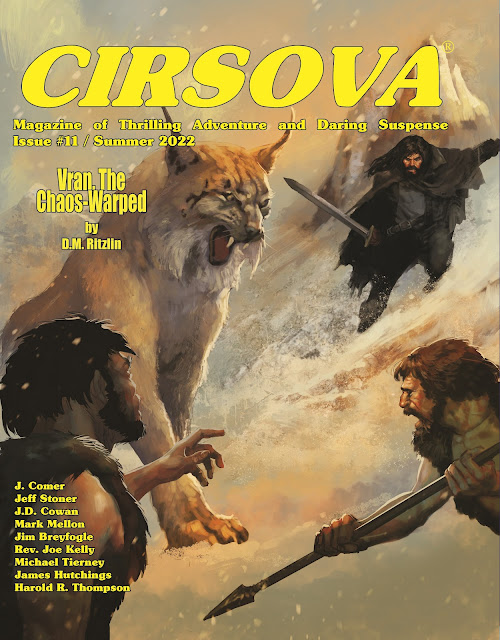
It's been a long time coming, but today it the say Cirsova puts out their new issue. not only that, but for the first time, I have been included in its pages! You won't want to miss out on this action-packed issue. Cirsova hasn't missed yet.
Running since 2016, it has proved itself to be the modern successor to the old pulps, like a mashing together of Planet Stories and Weird Tales, without taking the fun out of either. Each issue is a Pandora's box of adventure, and this one is no different.
As for the full list of stories included, here they are:
Vran, the Chaos-Warped (Book 1)
By D.M. RITZLIN
Vran the Chaos-Warped has sworn that the wizard Foad Misjak must die for his debaucheries! Vran’s strange nature due to a sorcerous accident, however, twists with unpredictable results all magic around him… and strands both on another world!
Orphan of the Shadowy Moons (Part 2)
By MICHAEL TIERNEY
The Black Assassins have slaughtered all the children of the Worldlord except Strazis, the strange golden child he adopted as his heir! Strazis’s escape strands him on a mysterious isle as the Worldlord goes to war to secure the fragile empire!
Death and Renewal
By JIM BREYFOGLE
The Prince of Alomar has won a slave from the Bursa… Kat and Mangos must ensure the slave’s silence at all cost, but on one condition: they cannot kill him!
What Price the Stars
By JEFF STONER
Jørgen Pangloss offers the promise of the unthinkable: faster-than-light travel! To what lengths will potential investors go to win Jørgen monopoly… and its fetters!?
Dead Planet Drifter
By J.D. COWAN
Galactic Enforcer Ronan Renfield finds himself prisoner of a death-worshiping cult! Can the whispers from his past aid him in his battle against the cannibals?!
The Last Khazar
By REV. JOE KELLY
Two men, one a Polish Jew, the other a Prussian Nazi, are bound by dreams and bound by destiny to confront one another, both in the present and in the past!
Melkart and the Crocodile God
By MARK MELLON
An evil and sorcerous monster plagues the land of Kush! Can Melkart stop the crocodile-headed man-beast Sosostris from enslaving the people of Meroë!?
You might have been able to guess from the description of Dead Planet Drifter that it is a follow-up to Golden Echoes from StoryHack #7. The two tales are standalone, obviously, but both feature the same main character, Galactic Enforcer Ronan Renfield, who while investigating what appears like a minor crime spirals out into something much more dangerous.
The genesis to these stories came from both reading and thinking about old space opera stories, especially their criticism. Most who are reading this are probably familiar with my series on Fandom (news on that soon!) and how Fanatics absolutely hated space opera for its focus on scale at the cost of materialism. So I wondered how one can make space opera feel larger and less materialistic. Hence, this series about a space cop who frequently falls between the folds of the known and the unknown. Just because we can travel into space does not mean our baser desires and higher needs won't still exist. Golden Echoes, for instance more or less was allowed to occur because of bureaucracy and a man who lost sight of reality. In Dead Planet Drifter . . . well, it's a bit more involved. Read it today and find out!
You'll be learning a bit more about Detective Renfield with every new story, though probably not as much as you'd like. I don't ascribe to the modern habit of wringing everything out and ruining the mystery and surprise. He does have a boss, he does have dreams and goals, and he does have opinions on what he goes through that will factor in to later stories. For now, just enjoy the ride. He's got many more of those ahead.
As for Cirsova, if you are new to the fold I have a surprise for you. Here is an image I created to help you keep up with every released issue so far:
Hard to believe it's been going for over half a decade! Here's to many more.
In case you missed it, you can get issue #11 here! There is currently a pricing error on the print version that will hopefully be rectified shortly, but the kindles version is the same as always. Check Cirsova out today. You won't regret it.
The NewPub world marches on to victory! Don't miss out.
One of the major reasons nostalgia sticks around is simply because we refuse to build off the past. We either bury it or we rehash it endlessly. Both treat the past as if it were an object, and not a continuing living thing that we have to use to make a better future with. You can't live and learn if there isn't a past to learn from. However, for some reason, we would rather state trapped in the endless nothing of modernity, stuck in this limbo of mindless product consumption based on whether the corporation in question either perfectly Xeroxes everything from our youths, or satisfactorily turns it backwards so we can mock it with our big brains.
None of this seeks to build anything, even though we once were very proud of doing this. today we will talk about one such thing.
One of my favorite genres of video games are fighting games. I should specify that they were. I don't tend to enjoy them much these days. There are a few reasons for that, but first let us begin with what defines a fighter.
Younger brother of the beat 'em up genre, fighters nevertheless managed to achieve wider worldwide fame and longevity in the industry. The reason for this is the ease of introduction with a low barrier to entry that soon proves to be tough to master. They are simply flashier and are more involved in beat 'em ups. Essentially the ultimate genre for one on one play, they have managed to last decades due to these factors.
However, it wasn't always like this. There were periods, particularly with the creeping anti-arcade and anti-2D sentiment during the 32-bit generation that almost killed them off by the time the industry hit HD. It was at this point that publishers began courting the "esports" scene and lost much of the charm that normal people and more casual players loved about them, especially with the all too common obsession with "balance" that has muddied most modern multiplayer games like Overwatch. Corporate meddling crippled them good and sucked a lot of the fun out of it, blunted the edges. Regardless, the classics still remain fun to this day so let us begin there.
The origin for the genre is obviously from the martial arts/kung-fu flick boom of the 1970s that stuck throughout the 1980s, showing up in movies like Bloodsport. These games worked to mimic a one on one fight between two titans, where the one with the better skill level would come out on top. Naturally, they carved their own niche out.
1984's Karate Champ by Technos (yes, the Renegade and Double Dragon guys) and published by Data East was one of the first out the gate. The game is pretty simple, featuring a one on one setup of a karate competition using the joystick for moves. Months later came Konami's Yie Air Kung-Fu to put their stamp on it by making the fighting more fantastical like a wuxia film but with much the same setup as Karate Champ. The one vs. one style had its humble beginnings here.
Despite those two originals, the game that really put the pieces together was the beat 'em up Kung Fu Master which had one on one boss fights after the normal stages. The designer of this classic, Takashi Nishiyama, would take the boss fight idea and expand it into an idea when he went to Capcom. He called this idea Street Fighter. There were other tries at this genre in the late 1980s, but it wasn't until Street Fighter releasing in 1987 that solidified the general mechanics and feel of the genre. This was the template going forward.
You might know the franchise as being world famous, but the first game was rough and not exactly polished. Essentially, special moves were difficult to pull off, the AI was overly cheesy, and general movement was stiff. All things considered, the design itself was better than the final product. But it did the lay the groundwork that everyone built off of. Capcom themselves sort of remade this one as Street Fighter Alpha in the 1990s, fixing most of the above issues.
Nonetheless, Nishiyama left Capcom, and in 1991, came two games that would define the genre permanently. This was the year that the genre exploded, and for good reason. The Golden Age of the genre began with these two titles.
The first is the one you all know, Street Fighter II. This game finally proved what fighters were capable of when pushed to the max. Essentially a worldwide martial arts tournament with a wacky cast of characters, the rock solid and tight controls, and legendary soundtrack, as well as bright and bold artstyle, allowed it to show the potential the genre had. It still remains one of the most re-released and updated games of all-time, for good reason. Without hyperbole, it is one of the best games ever made, and deserves all the kudos and credit it has gotten. This took the frame that the original laid down and perfected it.
However, the second game I wanted to mention also came out this year. It was Nishiyama's new project called Fatal Fury (Garou Densetsu in Japan), which is a bit more interesting to talk about due to it being more than his own version of Street Fighter II. While Street Fighter II perfected the original Street Fighter formula, Fatal Fury strove to build on it. To be honest, I have always thought Fatal Fury was the more interesting of the two series, even if Street Fighter II is clearly the better of these two games on a fundamental level.
What makes Fatal Fury so interesting, however, is how it differs from the Street Fighter strand of the genre that was basically about fighting tournaments (until it hastily put together a background plot involving the evil organization of Shadowloo that doesn't really factor into the game itself) in that it has a story you play through. However, instead of getting in the way, the story enhances both the atmosphere and the tone, even if its mainly restricted to the opening movie and the victory screen, it is very effective.
Basically, in Fatal Fury you play as either Terry Bogard, his brother Andy, or their friend Joe Higashi, as they arrive in the seedy slums of South Town to enter the local King of Fighters tournament (yes, that one) to be the best of the best. At first this seems like a typical tournament story, but there is a bit more to it than that.
However, this is a pretense for taking revenge on the local boss, and tournament organizer, Geese Howard, for killing Terry and Andy's father years ago and turning South Town into the chaos of organized crime that it is.
You spend the game fighting through a gauntlet of opponents across South Town. It feels almost like a beat 'em up except with the focus entirely on the boss fights, sort of like building on that part of Kung Fu Master, in way. You beat the other competitors (and Geese's bodyguards) before getting to Geese himself and knock him out of the building itself (!) seemingly killing him and taking your revenge. It's a simple story, but works great through the gameplay and expressive sprites of the era. The sequels deal with the fallout of Geese's defeat here and even how it spreads worldwide.
This is even expanded upon in the anime OVAs where you get to see more of the characters as well as top notch fighting directed by the legendary Masami Obari. I'm not sure there is anyone who enjoys these games who hasn't seen the anime, because it is that good.
The game is no slouch, either. Being that Fatal Fury was an SNK game, of course the graphics are bright and bold and the soundtrack grooves. The controls are a bit stiff and the AI tough, even by SNK standards, but overall, the game is rock solid and a huge leap over the original Street Fighter. This is a classic in its own right.
The gameplay does build upon that game, too. Fatal Fury features two planes of fighting, a front plain and a back plane, giving the brawls a pseudo-3D feel as you move in and out of the screen, the first of its kind. It doesn't amount to much in the first entry, but it is a good wrinkle later expanded upon in the follow-ups.
Overall, the game was a success, and it deserved it, despite to this day erroneously being thought of as a Street Fighter clone. It's really not.
As the 1990s went on, however, Fatal Fury would prove the more interesting franchise of the two. One of those reasons being that Capcom didn't make a proper sequel for over half a decade while SNK improved Fatal Fury throughout the 1990s.
Whereas Capcom took until 1997 to release and actual follow-up to Street Fighter II, Fatal Fury went on improving and shaking up the gameplay as it continued its story, and eventually brought it to a close. The second game (later updated to the fan favorite Fatal Fury Special) was probably the series popularity peak, offering a classic anime movie and the above mentioned OVAs to go with them, continuing the series penchant for pulp style adventure tales punctuated with cool fighting.
Before the 32-bit generation arrived, it looked as if fighting games were unstoppable. Few realized that the end of the Golden Age was in sight, but for now it was still going strong.
After this was the final game in the main series, Fatal Fury 3: Road to the Final Victory in 1995, which was itself updated three times (Fatal Fury Real Bout, Fatal Fury Real Bout 2, and Fatal Fury Real Bout Special) much like Street Fighter II was. This entry brought the story to a close with the final face-off with Geese Howard amidst a plot involving sacred scrolls and potentially the end of the world. The updated versions all have different content and playstyles (including the addition and removal of ring outs and up to THREE planes of fighting) but this is the end of the main story. And SNK went all out with it.
The last real Fatal Fury game released in 1999 as Garou: Mark of the Wolves, a sequel to the original story. In this, Geese's son, Rock Howard, who was raised by Terry Bogard after his father's death, finds himself in a new South Town, and a new era where he has to face his family's past. What direction will this new generation of fighters go in? This looked like it was meant to be the first in a new series, but SNK's bankruptcy meant this was instead the end of their games. Nonetheless, it was a fantastic final entry that more or less stands on its own as a new thing.
At the same time this fighting boom was going on were story-based fighters like Art of Fighting, Samurai Shodown, The Last Blade, or Mortal Kombat, which added their own touches to the genre. These games tended to accentuate the pulp adventure influence of the genre and less on the basic tournament framework (even if it did feature) which also eventually went on into the 3D fighting genre bursting out at the time. King of Fighters was SNK's attempt at an all-star fighting game featuring characters from all their fighters. Years later this would be their only real fighter they would put out.
By the late '90s, however, 3D had taken over everything, including fighters. The genre made its jump with games like Virtua Fighter and Tekken, taking little time to try and establish new ground with this newfangled dimension.
The big one was a game called Soul Blade (eventually Soul Calibur) that involved a story of cursed demon swords and wandering warriors out to claim, or destroy, it for themselves. The Soul series is a full on adventure story full of interesting characters and fantastic scenery and gameplay that fully takes advantage of its 3D dimension. However, it keep up the promise of pulp-style adventure the genre was known for by that time.
My personal favorite of this time period is a now-little known series called Battle Arena Toshinden. A series obviously taking inspiration from Street Fighter II (rival main characters, worldwide cast, underworld syndicate running a tournament) but went in a much better and exciting direction with it. Toshinden embraced the hotblooded wild side of the genre, starring bounty hunters, disgraced knights, private detectives, treasure hunters, an orphaned gypsy dancer looking for her father, and still more, along with telling a complete story that ends with the third entry.
The gameplay is very basic 3D fighter with dodging, ring-outs, and light and strong attacks, though every entry improves upon the last. The third instalment removes the ring-outs and increases the speed, almost making it a different game at times, but they are otherwise typical mid-90s 3D fighting games. This, however, is a strength.
The first game is probably the most popular, being one of the first console 3D fighters, and it shows its age as a consequence. The game is an early PlayStation title released in 1995, and was actually one of the first games I got with my system. It mirrors the original Street Fighter in how rough and unpolished it is. The original Battle Arena Toshinden is slow and clunky and a bit difficult to look at, but there is a solid framework here. It is a shame Sony ditched promoting the series almost instantly for Tekken instead because Toshinden only improved after the first game.
The follow-up, Battle Arena Toshinden 2 (also made into an anime OVA by the director of the Fatal Fury ones, Masami Obari), continues the story with the Secret Society attempting to finish off the traitors and winners from the previous tournament in a bit of a free-for-all. The gameplay is smoother than before and it looks better with a killer soundtrack. This 1996 instalment tends to be the favorite entry of the series (for those still paying attention to it) and is probably the best one to play first if you're going to get into it today.
But the third game, which came out here in 1997, came out by the time the series was more or less forgotten in the mainstream. This entry shook things up the most by being lightning fast, having walled arenas, and doubling the cast of fighters by having new characters featuring move sets from other characters. In this game, after the Secret Society fell, a rival group lead by a man named Vermillion decided to wipe out the remnants and silence those who knew the truth of what was going on, including the cast from the first two games! Depending on which character you choose, you either do Vermillion's work for him, or you storm the hidden mountain base and eliminate the threat of this secret war once and for all. Did you know this underground group is also trying revive a "god of fighting" into the world? Things get wild by the end.
Battle Arena Toshinden emphasized simple, reliable, and flashy, and it did it great, especially by the end of the series. They did attempt to make a fourth entry, Garou-style, but it never went anywhere (because it was much too late) and the series died with the original PlayStation, forgotten like so many other non-AAA franchises. It is probably for the best because where the genre is now would never allow anything like it to exist today.
You might wonder why I brought all of this up. What do the roots of the genre have to do with what is happening today? The reason is that the genre lost its way as the years went on and is a pale shadow of its glory. Fighting fans might not want to admit it, but its been that way for a long, long time now. It was fairly clear when Street Fighter IV was basically 3D Street Fighter II with a new character pack added onto it. There was no gas left in that tank.
There hasn't been a new fighting franchise in a long time. The genre mostly consists of endless rehashes of King of Fighters, Street Fighter, Mortal Kombat, or Guilty Gear, with nothing much new to show except graphical upgrades and endless balance patches to make the games less fun. there is no more wild madness like in smaller series like Battle Arena Toshinden or Bloody Roar. Part of what makes these games great is learning exploits to beat tough foes or feel invincible while exploiting a character's weakness. Taking that craziness out misses a lot of the appeal. Now everything must be dumbed down into a bland, formless mush.
Another thing missing is the pulp style adventure that games like Fatal Fury kickstarted back in the early 1990s. All that cool stuff I mentioned above? It doesn't really happen anymore--it's all the same formulaic stuff. The lack of story beyond "bad organization forms tournament, again and again" has worn out its welcome, especially when there is no longer story to make something fun out of. This is how you get nonsense like Mortal Kombat fumbling its time travel story so very terribly by killing off all the good characters for corporately bland and safe Current Year ones.
Even Street Fighter has resorted to basically remaking Street Fighter II over and over with the Street Fighter Alpha 3 cast and a handful of new ones every entry. For a franchise that shook the industry up with fresh ideas back in the day, this is beyond sad. Mortal Kombat rebooted the story and screwed it up instantly, burying it into the dirt. SNK has abandoned all of their more interesting fighting franchises for King of Fighters (always their least interesting fighting series), and there isn't much else. Every other older franchise appears to be dead or aimed squarely at the esports crowd. There is nothing exciting happening in the genre anymore.
So when I see a new Street Fighter game announced, I don't get excited anymore. I just see a series that gave up being interesting back in 2008 for rehashing past success and milking nostalgia instead. This is more or less where the genre is today, and it is disappointing.
The series, like the genre, is not building anything anymore, it is not seeking to improve or travel new arenas. It is satisfied copying the same game forever while tweaking it just enough to trick you into buying a new product that isn't new at all.
Fighters might be passed their prime, but I don't think the nadir has ever been worse for them. At least beat 'em ups still occasionally get fresh entries like Streets of Rage 4 or Teenage Mutant Ninja Turtles: Shredder's Revenge that build on past success. Fighters trapped in their AAA or death, esports-centric crowd will never regain the appeal they once had, not until they remember what made them great. Until then, enjoy another 3D version of Street Fighter II with a handful of new characters. It isn't like Street Fighter is the only series like this, they're all going down this path.
Of course, it makes sense when you think about it. The more they use the nostalgia crutch, the less new material they have to create. In the era of AAA where everything costs an arm and a leg to make things, and where the content is less than that of which you'd get in games decades ago, these companies don't have much choice. Charge ahead towards Progress, or get left behind. You don't want to get left behind, do you?
But that isn't how progress works. This is a dead end where nothing new can or will be built. Sure enough, that is where the industry is today.
Hopefully one day the industry will get the shot in the arm it needs, but at least we still have the classics. They're still fun today and they still inspire. Go enjoy, get inspired from them, and spread the joy to other people. There is plenty good out there, just not always in the places you expect to find it from.
Sometimes finding it is a battle, but what isn't these days? That's part of the fun.
This post is a bit off the cuff, but I wanted to strike while the iron was hot on two crowdfunding campaigns that are currently killing it.
The first is the above Overmind by Jon Del Arroz, which is both a comic book as well as a novel! A Futuristic Adventure story in the spirit of Valerian, clearly this is a passion project for the writer who has already written a string of highly successful novels and comics. He has also included all kinds of add-ons and perks for those who desire it.
Here is the description:
OVERMIND!
Ayla Rin, Agent of Terra Prime has uncovered a plot against the Imperium!
On a faraway colony planet, the governor is linking his populace into an ethernet where they are being mind-controlled by a rogue artificial intelligence that seeks galactic domination!
Only Alya Rin can stop this nefarious plot and save humanity as we know it.
Fans of Valerian, The Incal, and Saga will love OVERMIND!
OVERMIND is a 66-Page graphic novel in the tradition of the great science fiction European comics, made for a modern era with the best art and storytelling in comics!
It is accompanied by a full-length sequel novel starring Special Agent Ayla Rin by #1 Bestselling Sci-Fi author, Jon Del Arroz.
We have a number of great rewards and add-ons with amazing collectibles and tons of books for your reading pleasure.
You can find Overmindhere. Follow the link to see more of the gorgeous art.
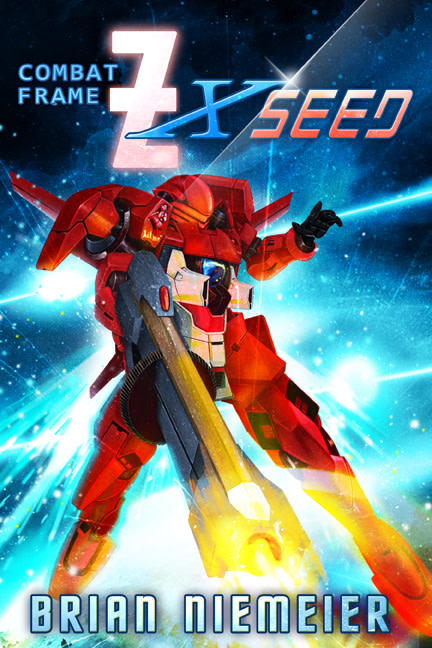
But that is not all, at the same time, author Brian Niemeier has also started a campaign for his final Combat Frame XSeed novel: Combat Frame Ƶ XSeed!
It's been a long road of space opera madness, a mash-up of 1980s-era mecha anime influence and the typical weird bent he gives to his works, but now it's finally reached the end. This is book six in the saga: Combat Frame Ƶ XSeed!
The Hit Mech Saga’s World-Rending Conclusion
Betrayed by their makers …
… their sole hope is vengeance.
Humanity reels from the disastrous Battle of Earth. Blamed for the crushing defeat, the Guardian Angels are branded as traitors.
Jehu, Dex, and Kaiser must make a daring escape to save their families from a resurgent terror.
To clear their names, they must lead the rebel ExSols they once fought.
But against the combined might of the UCP and the Ynzu, do even Angels have a prayer of victory?
If you like Halo and Neon Genesis Evangelion, you’ll love Combat Frame Z Strike XSeed!
Not only that, but the stretch goals promise even more!
The XSeed saga is ending, but the fun's just starting! It's my pleasure to announce our first exciting stretch goal:
Readers loved the original Combat Frame Tech Manual. Having an illustrated guide to all the original series CFs made the pulse-pounding combat even more immersive.
All that was missing were stats on the incredible S-Series combat frames ...
Until now! Fans of the Mance, Imhullu, Einherjar, and other advanced war machines now have the chance to back a full-color guide to their favorite S-Series CFs.
Announcing our first stretch goal: Illustrated CF Tech Guide 2! Available when we reach $4000
Needless to say, it has almost reached the goal! Back it today to ensure it makes it!
Once more, you can find Combat Frame Ƶ XSeed here!
It might seem a bit soon for another signal boost post, but I did not expect these two to not only go up but blow up as fast as they have. It's going to be a hot summer! Get ready.