Showing posts with label Generation Y. Show all posts

Sunday, September 20, 2026

How Pop Became Slop


Welcome to the wasteland!

Been a bit since the last one. There's been a lot going on behind the scenes, so it's been tough to sit down and make one of these. Hopefully today's post has been worth the wait.

For a while I wanted to write a bit about the Telecommunications Act of 1996 and what it did to modern music. It is more than you might think. One could just list it out point by point and talk dryly about the result of the bad decisions that lead to the Act, but as the modern internet has proven, something like that just isn't going to fly. Instead, give a watch to the above video to understand the decisions that lead to it and get a load of some of its fallout in the process. After that we can move on to the rest of this madness.

It's hard to really emphasize what the '90s was like for music unless you were there, and I don't mean that in an old man sort of bragging. It was a different planet. There was a period where you could hear anything at pretty much anytime, and it was always new. Anything from metal to swing music could have been found on the radio or the TV, and obscure bands could be found under even overturned rocks. Much is said about the high quality of mainstream music from the '50s to the '80s, and it was definitely high quality, but where the '90s excelled at, at least, for a time, was the sheer variety one could find. It is a hard experience to describe.

However, it didn't last. Something shifted, and it shifted hard. By the end of the '90s, all of that disappeared, never to be seen again. You would no longer hear an oddball band like Squirrel Nut Zippers or a random blues song out of nowhere. Instead, you would hear the same 20 songs on repeat, on every radio station and every music channel regardless of the "genre" of the station or music in question. 

It actually happened around the same time Napster took off, proving God has a sense of humor. Once the industry decided you couldn't have what you had five minutes ago, the audience started to leave. This is always overlooked when legalistic boomers and music industry sycophants talk about the negative effects of Napster and file sharing: they act like it occurred in a vacuum, and it most certainly did not. This was probably the first indication that the monoculture was over, and no one realized it at the time.

I can give an idea of how this artificial infection spread even outside the US, showing it was a philosophical battle, and not just industry whim in one country. Canada's own YTV once had a show called The Hit List which was a music show that promoted bands and music from all over the spectrum. If you were a kid in the '90s, you watched this to keep your finger on the pulse of the music world. By the late '90s, the host, Tarzan Dan, was replaced with young women who only promoted the same groups you saw on MTV and heard on the radio, seemingly out of nowhere. It all happened at the same time as what happened down south.

Not only did I include the interview discussing what happened at that time in the free Gen Y book from awhile back, I also posted it on Wasteland & Sky itself.

Here are some excerpts:

Tarzan Dan Freeman: "When I did [The Hit List], it was one of those things where you could hear Blur and Smashing Pumpkins, and you could also hear the Spice Girls and the Backstreet Boys, and people still watched the show, and it had massive, massive numbers. The other side of it was, we didn’t have as many cable channels back then, or music-based television shows. We didn’t have social media, and email was just new, so it was where people went to find out about the newest songs or to see an interview and hear about music beyond radio…. 
"For us to be there when the Spice Girls came up and became massive, and Backstreet and ‘N Sync and all those different groups, be it rock and pop and dance or whatever it was…the ’90s were great, because everything that came out was played. It wasn’t just a genre."

That is what it was like growing up in the early '90s. In your mind there was no limit to what you could do or how far you could stretch. It was a much different way of seeing the world than what is currently pushed. That all changed, though.

As he would go on to say:

Tarzan Dan Freeman: "If kids started watching [The Hit List] when they were 12 years old, and when I’m leaving they’re 19 years old, then all of a sudden they’re outside the demographic. What we noticed was, the demographic was aging. When I left, they took the show off the air for a couple of months, and they came with plastic furniture and a couple of female hosts, and it was really about young boy bands or Aaron Carter, that kind of thing—really pop, ear-candy type of music that was more geared towards the kids. [JD: This was 1997, by the way]
"Originally the show was going to be cancelled, because the show had run its course and had gone on for quite a while. What happened was, because I’d been there for seven-ish, eight years, and the demographic had changed, I think when they decided they were going to bring the show back in a different form, I was too old for the show. Because for me to go back and go “Here’s Aaron Carter!” after I’d just been playing Smashing Pumpkins and Blur and Collective Soul and Creed, and then to go, “Aaron Carter’s the best!”…y’know, we could still play Backstreet Boys, but I think what would have happened is, my credibility would have been somewhat crushed."

And that's what the shift was like at the time. If you were a Gen Y kid who grew up with all this stuff, suddenly you were treated as if you no longer existed. There was no longer a place for you. All of a sudden, backs were turned to you. It was as if you no longer existed. It was as if you woke up one day in a new reality where the old never happened, and you were expected to not remember it, because why would you? That's not Progress.

All this to say that the cultural shift was huge. Over night everything you liked was not only gone, you were also not supposed to notice it. You either embrace it and forget everything you grew up with, or you move on. They were telling you to go away. In a monoculture, you can't exactly do that, though. There is either the crowd, or there is nothing. This wasn't the same as "countercultural" movements like punk or goth that had to be chosen willingly: this was a generation of people now told they no longer existed. So what exactly did everyone do?

They did what they were told: they disappeared.

Enter the internet. Napster and general online piracy took off before even 9/11. If the culture not only didn't respect you, but was willing to tell you what you could be, the response for a Gen Y kid was to give them the finger. No one was going to tell you who you were through the thing that was your whole world. We took our media consumption very seriously back then. We delved deeper into Our Media, made online subcultures around it, and sneered at the growing mainstream that was, coincidently, starting to push Geek Culture (which a lot of these same people threw in with, to the same result of their earlier trust in the system), before the mainstream itself tried to cash in on them with new terrible Terminator, Ghostbusters, and Transformers movies. Gen Y, throughout our entire existence, has never quite shaken our dependence on corporate IP.

We consumed, were thrown out, clung to it from the fringes, and when those decisions came to bit them in the rear, we forgave them and allowed them to sell slop with the skin of what we truly worshiped, like an even more pathetic Tashlan. Though, like everything, it came with diminishing returns as many realized what was being done, and finally decoupled from the parasitic relationship. The memberberries are not as strong a draw as they once were.

It did eventually come at high price. Losing trust of the people in charge and forcibly carving your own path into the wilderness divorced from the culture made sense at the time, but no one considered the consequences. Gen Y's choices were as fractious as the mainstream, and in the end helped lead us to where we are.

What did it lead to? Stuck culture.


And that's where we are now.

I'm obviously not defending the mainstream's act or the reaction to it, but that is the consequences of having a culture that is throwaway and purely cynical towards its audience. People deep down want to belong. They want to belong, but they also want things that matter. At a certain point, culture stopped being about anything connected to the human or the community experience. Even the dumber trends in the '90s at least tried to sell kids on it being cool and belonging with your friends. Now it hardly feels like they care if anyone buys anything, which is probably true but outside the scope of this post. Abandon your original audience at your own peril.

But that isn't sustainable. A culture of nothing leads to nothing and creates nothing. We still haven't had '00s nostalgia becoming mainstream despite recently having the 25th anniversary of 9/11. We won't have it ever, but it's important to realize it is because the '00s was when the last bits of shared culture frayed and split. No one is going to have nostalgia for that except kids remembering private experiences. Especially when all those media properties from that time have never gone away. What else is there to pine for? 

What is to be nostalgic for that isn't a personal, which means isolated, memory? I see a lot of nostalgic posts about desk setups and old phones, but what else? Not a whole lot that you can't easily find one click away.

The '90s were also not where this all started. As I've said before, the '90s were only good if you grew up in them. The media for kids was high quality, society was still high trust, and everything was very affordable. It was the period just before the internet, social media, and phones overtook everything. It was the last time a kid didn't have to grow up in a bubble of electric unreality all the time. Everything else about the era, however? Not too good.

The point is to be aware of how things can change out of nowhere, and how you're expected to just accept the shift or be erased with it all. You are not a person, but a consumer, and that is all you will ever be. That isn't the sign of a healthy society, but one already on its way down. And that is why we are where are today.

But I don't intend to go quietly into that night. I'm going to keep doing what I can where I can, and I hope you continue to do the same. Giving up does nothing for no one. Besides, if things could change like they did in the first place, who is to say what tomorrow might hold? Anything is possible, after all. We have living memory of a time where that was true.

That doesn't mean I'm ever going to like late '90s bubblegum pop music, though. It was bad back then and has aged even worse when the music industry never left it behind.

I think I'll go listen to my Collected Eurodance vinyl instead. What is Love and Rhythm of the Night never get old. And neither does the real stuff. Never forget the real stuff.


Sunday, June 14, 2026

Staying Vs Leaving


Welcome back to the wasteland!

Here I am back with another topic, this one a light subject. We're getting into summer, so let's keep the streak going. I want to talk about nostalgia, but not as a negative or a positive, but in the contrast of something wider. Let's discuss the culture of Staying Vs Leaving.

As you are certainly well aware, the culture of nostalgia has more or less turned into a joke by this point. Hollywood remaking '80s and '90s properties into Modern products has failed and continues to fail to greater degrees. No one can seem to understand what the audience wants anymore, not even the audience. The reason for that confusion is because the audience doesn't actually want old things: they want the ecosystem those old things were allowed to be created in. I'm not just referring to demographics or time periods, but a very specific approach.

Now, of course nostalgia is real and many would argue is a big problem with today, but it's really a symptom of a culture that doesn't really have anything to offer outside of piecemeal experiences thrown out like chum in the water to satiate anyone who will chomp it up. This is a difference between the cultures of Staying Vs Leaving. This battle is best shown in the recent example of Pizza Hut Classic being created and trumpeted all over social media.

The above video talks about what exactly people miss about things of the past, and it is not just the IP or franchises or big bold neon and colorful text and logos, like every cynical executive (who lived through those times, mind you) would say it is. What they are missing is, as mentioned above, the climate that allowed those things of the past to be created and flourish in the first place. Yes, they do miss the franchises and the chains and the big glossy movies and production: but what they miss above all of it is the shared experience everyone had at the same time reacting to or enjoying those things. They want the framework of the culture.

So what is the difference between the Culture of Staying Vs Leaving and what does that mean? Let's get into it.

The key takeaway is the difference in approach in how these things operate today. I'm not talking about ideology or cynical profiteering, but about what they say about the culture. The old way, the way of Big Fancy Cinemas, Pizza Hut Classic, inviting video stores, bright arcades, and shiny malls, was a culture of Staying. They wanted you there, to stay. They wanted you to stick around, and in the process this environment would invite others to do the same. In other words, exactly what third places are meant to do. You can quibble about their effectiveness or the like all you want, but that's what they did. This is a feature of real life communities completely lost today.

This means that all of that old era was linked together under the shared idea that we were all in this together and there were places to go where we can fit in together. As we well know by now, the purpose of art is the same as community: it's to connect. A culture of Staying means a culture of connection, of sociability. It's the purpose of all of this, really.

The opposite is what we have now: a culture of Leaving. As the above video states, this is a climate centered on individuality and alienation, of getting out as fast as possible to be left on your own. Swipe, scroll, pick something up, get in and out, consume, and on to the next thing. It is the antithesis of how it used to be, and it's why no matter how many Ghostbusters, He-Man, Star War, or Marvel, movies or remakes that Hollywood pumps out, they will never hit the same, because they are being fed into a culture of Leaving. No one has the time or means to sit and Stay. We do not reward it, in fact we proudly thump our chests about how special and different we are from each other instead. The idea of Staying is not the cultural era we are in anymore, and we can't pretend otherwise or think things can change as long as we continue to reject the reality that we deliberately chose.


The memories older generations have of that long gone era isn't just of nostalgia, it is about the shared cultural experience of Staying that has been abandoned and subverted. When someone is celebrating a Pizza Hut Classic or the experience of a vinyl record, it is not just because those are old things they remembered and mindlessly prefer over "better" options. That might be the starting point, but the real underlying desire is that forgotten ecosystem, that community feeling of going anywhere and feeling like you belong there and so does everyone else around you. 

Baby Boomers used to thump their chests about driving everywhere being freedom: but that isn't what they had. It was in fact a safer society filled with others that had the same shared experiences. No matter where they went, there they were, because where they were was more or less the same everywhere which made talking and getting to know others simpler. They took this long gone era for granted and aren't even aware it's completely gone for younger generations. They were marinated in the Culture of Staying while they pined for a Culture of Leaving. They didn't realize they were in a veritable sandbox of fellow children: not a wide open road of strangers and possible danger around every corner. They had community, and it was so prominent they didn't even realize it.

In fact, I would argue this is what Zoomers who engage in old mediums are really after. This shared cultural experience is the only piece they can try to understand for themselves. These old products and forgotten mediums are the only windows left into the Culture of Staying they can find. They want what they never were able to have because what they have today is so much weaker. And every single person knows it.

It's not just about physical media or expensive and shiny advertising or old IP, a lot of that sort of nostalgia is missing the forest for the trees. Every one of those things is part of a bigger cultural tapestry that was taken off the wall to be replaced with the digital one-push button world of consuming and moving on: the Culture of Leaving. No one wants to Stay, and that is why they can never feel at home or satiated with how things are and are always on edge and alone. They not only don't understand the purpose of leisure, they have long forgotten how to live.

The Culture of Staying had more weight and felt more Real, which is why people are seeking it out without even knowing what it is. The culture of Leaving has been the standard for a long time now, but it was also the desired endpoint of those who lived decades earlier who lived in the old world. The streamlining and dumbing down of old things was to make them More Accessible and Easier to do, but all that did was degrade those same things and make us take them for granted. Streaming hasn't made music any better. Netflix hasn't made movies or TV any better. Digital eBooks haven't made books any better. Always online consoles to download everything haven't made video games any better. Apps and readers haven't made comic books or manga any better. It just made them more convenient to consume: so we can Leave for the next thing on the list to consume.

You could quibble or fight about who is to blame for today's ecosystem or what the best way to fix the problem is, but I suspect that will already change as more and more people begin to realize what they have lost. The increase in vinyl and Blu-ray/DVD sales, the creation of things like the above Pizza Hut Classic, the desire for more analog experiences, all signal an obvious change in thinking. You have to look at it in the greater scheme of things beyond product purchasing: it's the desire for what those things represent (though yes, them being superior products and experiences is part of it, one can't deny that). You'd have to be blind to not see the climate has changed quite a lot over just the last few years, and is still in the middle of shifting.

We have more Content than ever before, and yet we're more bored and unsatisfied than we've ever been. That is solid proof that what we want isn't something purely tangible or easy to express. It's a specific cultural frame that we want: one that has more to offer than the next dopamine hit. We want what we once had, but better than it ever was before.

It's important to realize the Culture of Leaving did not spring up because of the internet and phones. Technology itself didn't lead us here. What lead us here was our desire to Progress past the Culture of Staying to make things more convenient, and the end result was something that is the complete opposite of what we once had. In essence, it was forgetting what mattered that allowed us to throw it away and replace that ecosystem with something inferior that we can't admit to being so because we've talked ourselves into thinking Convenience is a Good Thing. However, "convenience" is not a synonym for "good": it is just as capable of being bad for you as inconvenience, as we can see from how things are today.

We need something more than the bare minimum of consuming and moving on to the next thing. We've always wanted it, but we lost sight of how to get it back.

So let's try Staying for a little bit. It can't possibly be any worse, right? We won't know until we try.


Wednesday, December 31, 2025

Goodbye 2025!


Welcome once again to the Wasteland!

We finally made it to the end of 2025! It's been a long and bumpy ride with a lot of surprising twists and turns (especially if you were me), but now we can finally close this one off for good. It's the end of the year!

For this last post of 2025 I merely wanted to thank everyone who stuck with me through it all. It's been a strange one, and next year promises to be even stranger, so you will definitely have much to look forward to from me. However, it probably won't be as much on the blog.

You probably already noticed less posting this year, with a shift to the weekends, and those posts will still continue, but there will be less of them. I need to refocus my efforts on writing stories, especially after everything that has happened in my personal life. Of course I'm going to keep posting here, but it will just be much less of a focus in the near future. That said, I do thank you for every post you've read this year. I am still surprised that anyone reads these at all, since back when I first started writing posts a decade ago I didn't think anyone would be reading them, never mind a full ten years out. It's been a crazy experience.

In 2025, I put out a story in Cirsova Magazine, a new novel serial on the Patreon, and had tales in two different anthologies outside of that. All of them are some of my best work, so please check them out! It's been a weirdly productive year, though not in the way I am used to. Perhaps that's just a sign of the changing times.

That aside, there is still the Patreon where you will get the most bang for your $5. There you will get over 40 episodes of 2 ongoing podcasts, two serials (with a third in planning stages), exclusive posts and updates, and more to come. In fact, there is an end of year episode of the podcast up today about the future! Check it out here.

There are multiple projects in the works for 2026 still to be revealed. I have a story coming in Cirsova Magazine in 2026 (a new Galactic Enforcer tale!), a full-on book that will be released, and a large project that is not mine to reveal yet but is currently deep in the works. On top of that there was a huge shift in my personal life outside of writing that will definitely change how I operate going forward, though I will have to wait and see just how that will happen. Until then I will do my best to continue as I have been.

Regardless, I am not going anywhere.


2025 was also the 30th anniversary of the events in Y Signal, as I've mentioned before. In fact, right now we're living through the 30th anniversary of "Snow Out", the Christmas story in the book. I actually did an entire podcast episode both reading excerpts and talking about it here. But next year will also be the 30th anniversary of the conclusion of the book, which took place in summer of 1996. All that to say is that it will also symbolically be an important year as well. One of the projects I hope to be able to start on is the follow-up to that very book. No, not a sequel: Y Signal has a pretty definitive ending, but a follow-up to it. You can learn a little bit about the background of all of this on the podcast, if you desire.

These specific stories are meant to be both a reflection of a specific era currently being (perhaps deliberately) forgotten and a document of the people who lived there and what they were like and thought at the time. I've mentioned before, but part of the reason these tales came to fruition was due to how the mainstream and Hollywood have been attempting to dilute that period, if they ever address it at all, and are attempting to rewrite it for their own ends. There has been a concentrated attack on the past, and I will not have it. As a consequence, there is nothing like Y Signal or this upcoming project, and there likely never will be.

But beyond that, what do we have to look forward to in the wider culture? The wild west days of the internet are over, Hollywood is bottoming out, video games are shifting away from AAA, and publishing is still a complete mystery. Nothing is solid, especially publishing.

While OldPub is dying, NewPub is still in growing pains. Amazon is quickly fading out and the crowdfunding model is becoming more common, but then what comes after that? We're still trying to figure that out. There are a lot of question marks ahead and there still has yet to be a clear path forming in the haze. We'll just have to see where 2026 takes us from this point on. I can't even begin to guess where we're heading.

The world is a very different place from when I first published the first post on Wasteland & Sky over a decade ago to now. It certainly doesn't feel like it if you only look at the surface. Most of the buildings and sights in every day life are the same, if not rusting and falling apart from a lack of maintenance, but compared to previous decades the stagnation on the surface is obvious. Underneath, however, much has shifted and will continue to shift until the outside matches the current state of the interior. We've got much to look forward to after that.

Once again, I wanted to thank everyone reading my posts, or anyone who has ever read my posts, my stories, my books, or whatever I've put out there. It means a lot that I was able to reach anyone at all from my obscure position on the fringes of life and this scene. I hope to continue for as long as I am able to.

Thanks again for a wild 2025, and let us all look forward to the 2026 ahead. May it shine bright and show us the way forward.

Thank you for reading!


Saturday, August 10, 2024

Weekend Lounge ~ X Generation

Wow, that's a throwback in many ways


Welcome to the weekend!

It's been quite a week. Here's hoping the weather stabilizes soon because it's been pretty rough in my neck of the woods. I hope it's been better where you are. If only I could pick one temperature and weather pattern and be able to keep it for a week straight that would be great. It's been a real pain to adjust to.

Before we start, I wanted to remind readers that both the next chapter of Phantom Mission is up for patrons and the next podcast episode is also out. Phantom Mission is on Chapter 9 and we're heading towards the climax at breakneck speed. In the podcast episode I talk about The Pulp Mindset for over an hour. It's close to the fourth anniversary of the book (Wow, it's already been that long) so I wanted to go into it a bit. You can find it all at the Patreon here.

For those who are curious about the podcast specifically, there will be another free episode of it in the near future to give you a better idea of what it's about for those who are still debating on joining. Regardless, if you enjoy talking and hearing about the world of art and entertainment it's a fun project to engage in.

That's all for that. Now, let us get into today's topic!


Part 1


We talk a lot about the art and entertainment of the late 80s and early 90s as sort of a transformative period, an era of uncertainty but hopefulness and experimentation before it melted into generic muck by the time the latter decade ended. For those of us who were born before the end, we experienced firsthand as we were growing this period that was almost instantly erased and paved over once the new millennium hit. However, it only stands to reason that as Gen Y, the last group that connected to that era, got older, we would also begin to forget as we aged ourselves.

And that's why blogs like this exist. We need to keep context, we need to remember what it was like, and we need to not be steamrolled by those who wish to throw out all that came before for the next trend. The only way to make good new art is to build on those who came before, and we can't do that if no one properly remembers what actually did come before.

So let us go all the way back to a period simultaneously the most cherished and most hated, the 1980s, as we begin this story. It's about that maverick generation, the one that faded away from the mainstream without a peep as the 2000s came along. Perhaps you remember them; perhaps you are one of them yourself. Today's subject is the lost Gen X.

You probably generally know who they are, but what you might not know, or remember, is their true legacy as artists. That image has been almost lost to time. Much of that disappearance has been a victim of intentional revisionism and self-mythicization from the cohort, but there is more to it all than you might expect.

The truth is that as Gen X kids were coming of age in the 1980s they were entering the art world and putting their stamp on it. They were going to outdo their Baby Boomer parents and take on the world, leaving their mark on it as they did so. However, that aforementioned stamp is not quite what the mainstream narrative sells it as these days. It wouldn't be as profitable to be honest about what Gen X was or what happened to them.

The video series we are discussing covers today's topic in its own story. The series is called "Gen X Hate Revisited" by a YouTube channel called Cartoon Aesthetics. This series is a three part exploration of that transitional time where Gen X kids, the last fully analog generation, came of age, put their stamp on the world of art, and then slowly faded away into the crowd almost overnight. Specifically, this series covers one artist as he rose to fame with his own creation during this very period and shows just how it all sort of fell away as time passed and the market shifted. In fact, his story contains the perfect encapsulation of that generation's story.

As someone born and labeled as a member of Gen Y (someone who falls in the crack between the fully analog Gen X and the fully digital Millennials), and was the first cohort who grew up on this of sort of material back in the day before witnessing it fading as the 1990s wore on to be replaced by bland corpo slop, I've always been fascinated with what exactly that group of young adults were trying to do. It wasn't as if you could ask them--Gen X were mysterious and cool, and prone to be embellish or talk around their own motives. If anything they truly are the unreliable narrator generation. Though unlike the Boomers, it's definitely a voluntary attitude they grew up with and put out of their own accord. They were the older brother generation.

Gen X weren't their parents, but, despite what the memes might say, they didn't full reject them, either. They weren't staunch traditionalists, but they also did not hate the idea of new approaches to old mediums. What they were doing back in the day had a lot of nuance that has been lost over time. What has been traditionally labeled as "cynical" in regards to this generation of so-called "slackers" might not have been anything like that at all.

At least, it didn't start there.

In the first part of this series linked above you can see the shift in comics, music, and, eventually, animation, as a younger generation filled with vigor and spirit to travel new trails took charge of industries that weren't yet subverted and locked up by washed up cliques. Truly, if you engage in Gen X art up until the early '90s you notice a distinct identity, an originality, that sticks out and puts its own unique stamp on the art world.

Then the growing swamp of pop culture noticed their existence.

The video series does a very good job tracing the changes of that transitional period as well as the attitudes of a lot of the people around at the time before self-awareness and ego took the wheel and sent everything down a path that would culminate in the dead-end known as Cultural Ground Zero. Of course, the series being discussed doesn't go into that mess, it's out of the scope of the subject, but it is fascinating to see some of the mentalities that would eventually lead their industries into the ditch before the 21st century hit.

A comic that perfectly encapsulate the uncertain Gen X era in question is the comic called Hate starring underground favorite character Buddy Bradley. This is a series about the young Gen-Xer in question as he moves away from home to Seattle in the early 1990s in the same period it all exploded to mass appeal. You might imagine how that goes. Though the writer was part of the cohort known as "Gen Jones" (a label rarely used today), it made his observations come from a slightly different perspective than you might think as he wrote his younger character living through the time period they all were living through at the time. It's a time capsule of an era few seem to discuss much anymore. Though perhaps there is a reason for that.

The second part of the series covers Hate itself more in-depth here:


Part 2


I recommend watching the videos for yourself, as it is a great look at a time period long gone and currently being sold as something it's not in order to both sell to Zoomers who have no context for it or for crusty Gen-Xers (and Ys) who have bought into the revisionism so they can consume more product and feel more important doing so.

The truth is actually not in the plentiful "Gen X is tough and younger generations are all weak" memes floating around like old Boomer jokes on Facebook, but in how they dealt with how rapidly the world was both changing through technology and, even though no one really noticed at the time, how it was breaking down socially. Things were "weird" and insane because the old ways were being forgotten and tradition and ambition was starting to fall through the cracks. It turns out it wasn't really a new era being born, but the beginning of the end of the old one. This is partially why it's been a subject of scorn and deliberate burial over the years since the '90s ended.

This is the trickiest part a lot of formerly Authentic (capital "A" like they would have wanted) Gen X era artists have when creating art today. They built themselves back in the day on Authenticity as the highest good and key to being Real, but so many have since bought their own hype and locked themselves into preset personality patterns that they forgot who they once were, where they started from, or why they did any of this in the first place, all to keep up with the Joneses of modern trends and attitudes. Their distinct identity is long gone and lost with the passage of time. I could name countless examples but I'm sure you can think of them yourself. There is no shortage of Gen X artists that have lost their edge for Safetyism and modern mainstream acceptability.

What the "Gen X Hate Revisited" video series does is present a good case with Peter Bagge's Hate just what that Authenticity would grow to be without the influence by artificial pop culture hype and untethered to nostalgic expectations of those who want this cohort to be a certain way in Current Year. Bagge remained authentic to his original vision and, as a result, managed to create a piece that works both well as both a time capsule and a series removed from it to stand on its own feet. You get to see that generation in a way you never really get to anymore and he does it by never forgetting where he came from in the first place.

This is mostly because, for all intents and purposes, as I hinted at before, that Gen X cohort doesn't actually exist anymore. Those people are all gone, the party's over, everyone got in line and marched in file out of town, into corpo world as the 1990s drew to a close. They deliberately made themselves irrelevant the very moment they could, almost like a final jest on their old image. Where they went, nobody knows, but the people left who still use that label are hardly who they used to be, and what they tend to be is unrecognizable to what the cohort once was.

So much Gen X art as a whole has simply vanished over the years and has since been absorbed into the safe muck of the ever-creaking corporate mainstream (See: Tim Burton. There, I gave an example) that it's hard to wonder if that Authenticity ever really existed in the first place or maybe it just needed a few bucks to be guided in the Right Direction. The question still remains: where did everyone go since the millennium pulled them all into a vortex of bland? Whatever happened to that distinctive identity? What did it become? Where are they now, and where are they going?

You might get some examples in the third part meant to wrap the Gen X Hate Revisited series up. You can watch it below:


Part 3


I'm not going to comment on the third part and will instead recommend watching it for yourself and coming to your own conclusions. There is little point making judgement on a generation that is still around and still young enough to really do anything or go anywhere. The point is more to see where they are now and where they might go while they still have the chance to do it. Baby Boomers might be locked in to their current path due to their age and inability to change. For Gen X, however, the road is still very much open.

I will say one thing before we wrap it up here, and that it is strange that the Authenticity displayed here, one that was so common with Gen X back at their peak, today feels even more like a relic of a generation that once refused to stay dead. They definitely aren't dead, but sometimes it feels like they were always meant to be, and clinging to the mainstream was the one way to avoid that fate. Does that make sense? I'm rambling at this point, just trying to figure it out. Regardless, they aren't dead, and they aren't done yet. No one really is. There's always a chance to change.

I don't want any of this to sound like I'm throwing stones here. Gen Y has done just about everything I talked about. Our "authenticity" was "objectivity" and leading the charge for materialism acceptance through long-dead trash like New Atheism. In pursuit of relevance and acceptable corporate trends to base our identities around we allowed ourselves to turn to bland inoffensive goo--our legacy is melting down in the 2000s to allow the current state of product worship to be the baseline in appreciating art and entertainment. We basically helped create the current monster of corpo slop worship. Anything negative I can say about Gen X can be applied just as harshly to me and mine. We have not been the preservationists we once saw ourselves as.

The generation that were the excited younger brothers of Gen X back in the '90s turned into wannabe Millennials, hipsters, and consoomers, over the last quarter century, clinging to dead childhood brands that are the last thing around to remember our existence from when we mattered. And all we want is to be left alone to die in the corner with as much cheap plastic crap as we can. What a glorious legacy that will be!

If anything, my generation is worse at all this. Gen X might have faded away, but we threw ourselves off the train before we even got to the stop we were being dropped off at. They still have much to offer, even today, that we could have passed on ourselves if we weren't too busy hoarding corporate products and useless baubles instead.

All that aside, it was an interesting look into generational trends of modernity. Nothing has really changed, it's just gone faster and faster beyond the speed of stability since the back half of the 20th century. Sooner or later (certainly sooner) the wheels will come off and the whole thing is going to derail and fly off a cliff. It's not sustainable, and everyone knows it.

Generations of people can't live separated from each other only to be disposed of when the next trend in line comes around to be cashed in on, rinse and repeat. There is more to us than what we can offer for some corporate monolith that doesn't care either way what happens to us. Whatever the future holds, it won't be in that. It can't be--the 20th century is over and that train is long out of steam. It won't always be this way, whether we want it to be or not.

But that doesn't mean there isn't plenty to learn from the past to help us carry forth to tomorrow. Even if the world ends, we can't stop. Art doesn't stop. We don't, either. We have to keep the torch alive and burning and continue passing it on. That is every generation's duty to the next. It will never change, no matter how different we see ourselves as.

Perhaps that's the question to ask in all of this. Can we keep that torch alive and burning, or are we destined to finally be the ones to fumble it into the ground and leave the future generations in the dark? Is there still time to adjust and recalibrate our aim?

I guess we'll just have to wait and see.


Saturday, March 30, 2024

Generation Y and The Kid Who Reads


It's been a decade so far, and we're not even halfway through it.

I wanted to go a bit more in depth in today's post, especially considering we are entering the Easter season. With this one, we're going to go into a recent phenomenon we've been consistently brushing with on Wasteland & Sky quite a bit this year. While we've talked about the lost decade that was the 2010s, and what happened to the people that started that decade so full of promise before detonating, we haven't talked about the sort of person they grew up as. Who were the kids that turned into the medicine-addled tradition hating mess that now struggle with suicide and consistent feelings of despair in Current Year? Who were they back in the 20th century?

They were once considered "The Kid Who Reads." A stereotype that no longer exists, they are also a relic of a failed period of western education that included anti-bullying legislations, participation trophies, and "self-esteem" egoism. But when all that ended up being built on sand, when it all crumbled down, what became of this cohort?

That would be the subject of today's post.

Again, this topic edges out of the scope of the blog a bit, but I wanted to dwell on this because it goes a long way to describing what exactly has happened since the heyday of Generation Y back in the 1990s, and how they ended up where they are today, lost and broken with no bearings or ambition for the future. We then can posit where they will be heading next in this, the decade of their mid-life. Hopefully, where they are going will not be where their unthinking momentum will take them, and where it lead so many to detonation over the course of the 2010s.

What I wish to figure out is if there is a way to put a finger on the problem and finally attack it head on, because time is running out on the illusions an entire generation has built up for themselves. The '20s is a decade of change, of old things finally falling away, which means it is time to finally accept the changes of the last three decades were destructive and must be reassessed before anything is done. This is the last chance to finally address these deeper issues that have been ignored for far too long by a generation that wants to ignore itself into extinction.

I linked the above podcast episode by The Distributist, Dave Greene, because I honestly think it is a very good summation of a very real problem we're dealing with right now. The first ten minutes or so might be lost in context if you don't keep up with online discourse, but once the proper presentation begins, it is gold from start to finish. Watch, or listen, to the episode to get a good read on the situation that lead to the creation of The Kid Who Reads, what he twisted into as he aged, how he fell apart with time, and the important crossroads he stands at today. I highly recommend setting time aside and watching (or listening) to the above episode, because it is quite enlightening on the state of an entire cohort of people.

For those confused on Generational Theory, because it's all over the place these days, it should be specified that Greene's definition of "Millennial" crosses over with our own Gen Y and the typically obscured term "Younger Gen X/Older Millennial" or "Geriatric Millennial" or "Xennial" all of which awkwardly appears in most discourse of this nature. Essentially, this is what became of the "Nintendo" Generation, the one that came after the "Mall" Generation.


We are mainly dealing with those born in the Gen Y cohort


Generation theory works in a sort of gradient scale where they bleed into each other, starting from one end before slowly making it's way forward. It's not hard science, it can't be, but is a way of understanding where the wider culture is sitting a specific time and place. Generation Y, therefore, are the younger brothers of Gen X, advertised to and treated like, the younger brothers of said older cohort, who grew up before "Millennials" were created as a marketing term, and before they were created as base after Generation Y had already hit their twenties.

They are also the primary demographic of "The Kid Who Reads" that Greene discusses above. So that is where we will begin.

A summation of The Kid Who Reads is of a child who wasn't taught to think so much as told how to parrot back buzzwords and correct terms in order to be affirmed as a Decent Person. Back in the late '80s and into the 1990s, the way to raise your kid was to assume they needed to be programmed right, and once that programming was set in, natural Progress and History would guide them to Eden on Earth eventually. All you had to do was follow the script, and Baby Boomers hammered that in anywhere they could. Education was made to repeat mantras and slogans, repeat them back for grades as if they were dog treats, and do so from birth to death. A generation of show dogs crafted by a generation that had Figured It All Out. Do what your teachers tell you, get any degree (you don't want to flip burgers into adulthood otherwise, do you?), and you will always get what you work for.

Of course, this didn't turn it to be correct, and reality soon collapsed in as early as 9/11. Essentially, an entire generation was raised wrong and learned it at the same moment, and most of the divide from some generation comes in how they reacted to and learned from understanding they were lied to. A large chunk of it, unfortunately, doubled down and fell to their own egos. What you are left with is a broken person, struggling against their brain and body in order to do the will of their masters. It is no wonder pills and therapy are in high demand these days.

Because The Kid Who Reads doesn't actually read because of the love of knowledge or creation, their ability to grow and understand was stunted. They were taught to read the right books and get the correct worldview carved out in them like some dodgy, random form of scripture Baby Boomers decided was True. For fictional examples, you can find them in the above video in the likes of Lisa Simpson and Daria--girls who do what they're told and are given the impression they are smart because they check the right boxes so the right people call them smart, but when it comes down to it are ultimately vapid and empty people with no reason or rationality for anything they do. They want to be seen as smart, actually being smart is a second place to them. and according to their Baby Boomer parentsmasters, as long as you follow their script, you are smart!

You can see examples of this everywhere, especially in the online world and especially in regards to politics, where the virtue signalers will repeat vapid party lines and billion dollar slogans like kindergartners saying what the teacher wants so they get an extra cookie at lunchtime. They aren't seeking Truth, they aren't seeking knowledge, and they aren't seeking understanding. The only thing they want is to prove they are Right, because that is all that matters. And those that aren't Right? Clearly they are defective and of lesser quality. They didn't follow the script that makes them smart. It is really that silly.

A good example of what The Kid Who Reads morphed into as young adults was a very prevalent cliché back in the late '00s. You might even recognize them in some of your friends from that time period. They were Nu Atheists (from here on referred to as "fedoras") and they were insufferable. They acted just like the above stereotype. Follow the script, repeat the right lines, and follow who your masters tell you to, and you are now Smart and one of the Good Guys. It isn't about any sort of truth, it is about being seen as above the riff-raff. And following the script is what gives you personality and purpose. That's what it was like for this crowd back then.

Though fedoras all but gone now, the outdated remnants feeling like hippies at a roller disco, this was the first place they first truly cropped up in the wider culture outside of the education system. This was possibly because this was when they first began leaving school.

If you're too young to know where this cohort came from or where they ended up, I recommend the below video. For a summary, post-9/11 western cultural nihilism lead a bunch of anti-traditionalists to go on a crusade to save humanity with their big fat brains. Embarrassment ensued, because Gen Y is very good at embarrassing themselves.


Now, the point of bringing this up isn't specifically about the atheism fad, it's more about the mentality these people put forth, thinking that repeating things they never bothered looking into on a deeper level or only repeating sources that backed up their narrow view of life, made them smart and therefore superior beings. Because that is what they were told life was about.

The Kid Who Reads was going to change the world. That is, after all, what they were raised to believe.

Until reality reasserted itself.

As we've seen, fedoras are all but gone now. Did The Kid Who Reads truly just give up without a fight, or are they still out there today? As mentioned earlier, they most likely turned into the Culture Warrior in the 2010s, either falling further into their ego or trying to find a way out of the trap they were lead into so long ago. Would they finally stop relating to others by flexing corporate slogans and IPs they put no thought into themselves beyond base level "Of COURSE smart people think A is good and B is bad!", or would they finally break from that mold crushing in on them?

How come doing what they were told wasn't enough to get them to achieve happiness? Why did doing the right thing not prevent them from getting laid off or getting a promotion? Maybe they were failures after all, not Smart in the first place? Or perhaps it was the world that was wrong? Either way, it's a ball of contradictions bouncing around inside their slowly fracturing minds. In other words, despite being called "free-thinkers" or "empaths" or whatever made up term they gave themselves, were slowly being eaten out from the inside.

And record suicide rates from the cohort in the 2010s show just that. It was not a good decade for them, all told. All of that capped off with the following decade sealing them away in exile as the pandemic began. Any ego left was either crushed out of them, or poisoned the cohort further into delusion. There isn't much or a road ahead except to finally abandon the NPC script an entire generation has leaned on for near four decades at this point.


So where does that leave The Kid Who Reads today in the 2020s?

I once opined that the worst thing the Baby Boomers did when their parents' generation died was that they regressed into themselves. They didn't become the elders the younger generations needed, they didn't take over for their parents, and instead escaped into themselves, doubling down on vice, greed, and juvenility. As a result, we've been living in a world run by children for decades now, and it doesn't feel like that will change for a while yet.

However, the younger generations can't afford to let this be the standard. We can't continue to allow infrastructure to die, neighborhoods to crumble, and standards to decay to near apocalyptic levels. And unfortunately, I don't see the younger generations who have no examples on what a room of adults is supposed to look like will have the example to fix it.

What is going to have to occur is the remainder of the older generations (quickly being narrowed down to Gen X and Y as the only ones with any semblance of living memory of better times and with the means to use said knowledge) are going to have to rise to the occasion instead. And that's going to involve making a lot of hard choices, including finally ejecting The Kid Who Reads as a viable path in life as they all already know deep down. It was wrong, and it was always wrong, regardless of how an entire cohort was tricked into believing its was real.

The Kid Who Reads is a dead end archetype that must be retired. It is time to finally grow into The Adult Who Is, and to finally become what the younger generations have been denied due to your former masters' failures. It is time for Gen Y to be who they can be.

The 2020s is the decade of change, we've stated that before, finally letting the remnants of the rot of the 20th century to finally fall away, and ready ourselves to move into something more. We're not going to need failed mutations clinging on since the turn of the century to continue to steer us forward. It is time to finally break that mold.

Again, this whole spiel might be a bit of the scope of the blog, but I do feel it is important to keep in mind in the context of everything on Wasteland & Sky. Times have changed quite a bit in the near decade since I started this blog, and they're not done changing yet.

Here's hoping that when it finally does, The Kid Who Reads will be sitting in the dustbin of history where it belongs. We're better than that, and we always have been. It's simply time to start acting like it.


Tuesday, December 13, 2022

So Much for the Afterglow

Find it Here!


The '20s have not started out quite as quiet as the 2010s did. Despite that, it has shown itself a decade of change more than the previous decade has. The only question, it if it will end up being for the better or not. We are about due for a cultural shift. Here is hoping it will be an improvement on the last one we are still suffering from.

Even though we talk a lot about its affects here at Wasteland & Sky, the Current Year of 2022 is the 25th year of Cultural Ground Zero. For those unaware, 1997 was the year western culture flatlined after a slow decline since at least the 1960s, before becoming the zombie monstrosity of a punchline it has been ever since. One only has to look at the events that occurred back then to see how little has actually changed in the ensuing quarter century, which is what the above piece was meant to do. We're still living in the rusted ruins of a world long since executed and left dead, waiting for it to finally fall decay into the dirt.

That said, some of us are still trapped there, and not entirely without reason. That was a time where there was a lot more hope, and people need to live with hope, even when the current times are telling you to not have any. We simply cannot go without it.

So what about that Generation that grew up in that eye of the cultural storm that was the 1980s through the early 1990s? What about those who came of age in a world with more promise and hope than the one that exists today? The kids who grew up in that time period where technology was always Progressing and humanity was readying to reach its zenith, soon learned, in record time, about the truth of this materialist utopia they had been sold. It was never coming.

But that wasn't how it was supposed to go! World peace was a stone throw away. All we had to do was listen to the newsman, our teachers, and our government officials, and sacrifice all that had come before us to the Cult of the New, and we would reach the Eternal Summer we dreamt about as kids. Everything was laid out for us. What was known and advertised as Generation Y back during this time, kids more or less born between 1979 and 1989, the younger siblings of Gen X, were a generation that was sold false hope by the people in charge and were too young and naïve to realize their trust had been misplaced until it was too late. And then they were abandoned for a new cohort made up by the people who wanted you to forget those previous promises.

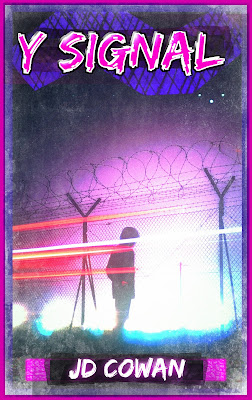
I wrote about that time period itself in my Y Signal book. For a long time, as someone who was plugged into the decay of Cultural Ground Zero at the time it was happening, I had been trying to understand just what it was Generation Y thought was coming and where they might have gone wrong along the way. The answer turned out to be far more complicated than I could have known at the time. Y Signal was an attempt to see what would happen if Gen Y had an inkling of what was coming ahead of them. How would they react? Would anything change? Could it be changed? How can one approach the world when they were lied about so much of it, even worse when the lies weren't always intentional? How does one deal with that? You can see the final result for yourself, but the book itself is primarily aimed at the time period it occurred in.

However, I'm not the only one who was focused on understanding the lost Generation Y. There are others, thankfully, dedicated to understanding this period as well.

I reviewed author and musician David V. Stewart's Eyes in the Walls a while back. This was a story, not unlike my own, focused on the time period of the '90s and those who lived in it. I highly recommend reading that story to anyone interested in the subject. It really does evoke that time and place to tell its tale. I'm not going to spoil the ending here, but there really isn't any other way it could conclude. That was simply how the 1990s were.

I also partnered with David, as well as author and editor Brian Niemeier, to release Generation Y: The New Lost Generation earlier this year, as a way to celebrate both a quarter of a century since 1997, and to help those unsure of what Gen Y is, to learn what exactly we were writing about. This subject is still oddly contentious, so the book was a necessary release to hammer the research down for newcomers. It was free then, and it still is now!

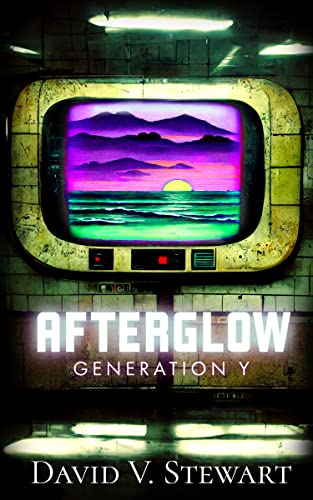
All of this preamble is to get to the point of the matter, which is today's subject. While the above works focus on the era itself and the people who were around back then, I wanted to talk about a different book today. David V. Stewart recently put out another book on Generation Y, but this one instead takes place in the here and now in the modern day. Afterglow: Generation Y is his newest released work, and focuses on our subject, the new lost generation, as they deal with today, decades after their heyday and vanishing into the background like they were told to by the wider culture.

While the other works mentioned above discuss the time period and how it affected those growing up in a world dismantled overnight, this book talks about how that experience led them to where they are today. Think of it as Generation Y: 25 years later, and you might get the gist of it. Where did the New Lost Generation end up?

Afterglow contains original short stories written by Stewart and mostly posted on his blog between his musings on culture and the rapid technological change over the past few years. I admit I had read a lot of these when they were originally published, but still read them over again in the full release here. They hold up very well, especially for those interested in the subject.

He has been writing on the subject for years now, just as a lot of us have been, and the book starts with his original Gen Y story that got him started. The titular Gen Y describes a typical afternoon of a kid getting home after a long day of school to an empty house. This simple tale is short and to the point, but it accurately describes a world that no longer exists, and is long extinguished, and yet perfectly frames the tone going forward. This is a place Generation Y is very familiar with, and it is a place many of them still live in today.

The next piece, Generation Why, serves as a more descriptive introduction for those who might not be able to quite understand the previous fragment of where it comes from. For those who still, for whatever reason, don't believe Generation Y exists (despite the subject having been written about extensively and solidly defined by its proponents for years, at this point) this piece serves to nail down the terms and definitions for the rest of the work to follow. It makes a good case as to why this Lost Generation has been such a hot topic these last few years, even among people who don't quite understand why it is a subject at all.


A different Gen Y tale from the same author!


In total, the book contains 16 pieces of varying lengths. David was kind enough to allow me to include three of them in the above Generation Y: New Lost Generation, but they have a different context here in their original place among the author's other stories. Instead of being used to define the Gen Y experience as a whole, here they are used to paint a picture of people struggling to find their way in a world that has forgotten them and really has no room for the people they were always told to be. The more you argue this cohort doesn't exist, the more you prove just how true these stories and experiences are. Erasure defines their entire lives. They are lost, and have long since abandoned hopes of being found.

Stewart describes this static state as Middlebury, a term he uses many times throughout this book (and which is also the name of the last story) to describe being caught in the middle. He also dedicates the work to those still trapped here. The name reoccurs for good reason.

There was once this term known as "failure to launch" that died out a while back because, well, that would describe everyone in the modern world at this point. The phrase referred to young adults who were unable to start their life and were stuck in a period of adolescence stemming from this inability to begin a career in the rat race. But in a time where careers can be ended with one wrong word (and a definition of "wrong" that changes with the wind), community itself being dead, the media and politicians continually calling for Armageddon against those they are supposed to be serving, and the future looking bleak among those with even a the minuscule amount of IQ, you would be harder pressed to find anyone able to start a "proper" life in a world of alienation where nobody knows your name and has no desire to learn it.

This decay had been around for awhile. The sadly forgotten Bowling Alone by Robert Putnam described the slow death of community over the course of the 20th century and his hopes for a revival based on trust and goodwill. However, said book also was released in 2000, post-Cultural Ground Zero and pre- 9/11, making it the last gasp of a sort of 20th century humanism and trust in Progress that simply cannot return. The book needs to be revisited today, because it (unwittingly) understood a lot of the problems that were to come.

Over time, this festering wound of alienation and atomization became infected, worsening as the years went on due to lack of treatment. Now, all the societal ills and jaded cynicism of today is a result of it never being treated. Even now, as suicide rates continue to rise, we have one western country asking if they can help dispose of the body instead of understanding any sort of cause. This is the exact opposite of what a healthy society would do. No one cares, and they haven't for a long time now. For those who remember otherwise, it is still hard to accept. 

This is very different from the world Gen Y grew up in, where everyone had a shared culture, things were always looking up, and you could always count on at least having something in common with the guy next to you in traffic. You were, at the very least, in this together. Now, you are on your own in every aspect of existence, and all the people who sold you that vision of the future that you just had to pull up your bootstraps for, the one you were lied about, are now told you were never promised anything of the sort. Get in line, shut up, and die alone in a cube. It is a mystery as to why depression and suicide as at an all-time high and rising, though. A real puzzler!

Those suicide rates are the highest they've ever been, and they're only getting worse. Pills and drug usage are more common than they've ever been. Heavy drinking and getting high is considered normal among everyone alive today in a way that was never socially accepted before, and depression is at an all-time high. It hasn't always been this way, and neither had it ever been quite this hopeless for those growing up now without a higher purpose or reason to get up in the morning. What is the point of living to be a cog that will eventually break apart in the grind, only to be replaced when your usefulness has worn out? Is this all there is?

The only way this purgatory can be fixed, you are told, is by voting, and if it wasn't for that gosh darn bad guy team voting against you, the materialist paradise you were offered as a kid could finally be brought into existence. Then you could sit around consuming all day, because there is no other purpose to your life other than dopamine addiction for you and your neighbors. What a horribly vapid existence!

Naturally, this isn't how it really is, but it sure contributes to the radioactive atmosphere around basic discourse these days. As if people need more reason to hate and mistrust their neighbor, to add to the radical individualism of being Special they were fed by Hollywood currently cutting them off from understanding others. Regardless, it's still happening, and it's still only getting worse the more we ignore it.


But you do.


Despite this reality, Stewart's book is not particularly pessimistic about Generation Y's relation to modernity, the antithesis of the world they were raised to survive in. He describes many scenarios and lost people making their way through this defeated era with little in the way of hope, but also find ways to dig themselves free of the traps they had fallen into. Regardless of how bad things can get, there is always purpose, even in the worst moments. Suffering can lead to clarity, to knowledge, and builds resilience. By the end of Afterglow: Generation Y, you will see traces of the world Gen Y were promised springing from their dreams, their struggles, and their newfound hopes, in what they can build in the destruction around them. 

That old hope we had is still there--we just have to dig for it. This might take some time, but it will all be worth it, in the end.

Despite the subject matter, Afterglow is an easy read. Stewart has a comfortable style of settling the audience in and guiding them through his characters' ordeals and has a real knack for finding the core issue they suffer through and what eats at them. At times, it comes across as almost autobiographical, despite that obviously not being possible when one considers what happens to each character in the book. The author gives the impression that he loves these people, and considers them more than just characters in a story, which adds to the impression of this work feeling like he went out and interviewed members of Gen Y for their life stories. If anything, this is the book's strongest aspect and gives it a stamp of authenticity. Should you not understand what this cohort is by the time you are finished with this, you may by beyond help. Stewart adeptly and accurately explains all here, leaving little room for skepticism about the subject and who these people really are.

As mentioned earlier, 2022 was a bit of a banner year for the subject of Generation Y. After years of discussion, the gathered information, the plentiful theories, and the general discourse, has finally begun to hit on a wider scale, defining what so many have been spending their time trying to define. Truth be told, this book is one of the best on the topic.

Afterglow: Generation Y contains 16 pieces of wonder and speculation about a generation that had long since been forgotten and abandoned by the society that spawned it. These are stories about alienated adults trying to find their place in a world that long ago informed them they have no place here. Such a work could easily be nihilistic and hopeless if handled incorrectly. Nonetheless, Stewart's respect and love for a cohort lost in the rusted maze of modernity makes it stand tall. There is no other book quite like this one out there, and you would be doing yourself a disservice by passing it up. One can't know where discourse on Gen Y will go in the future, but Afterglow has cemented itself as an essential part of that discussion. It should not be ignored.

There are certain subjects we in the west need to address if we wish to dig ourselves from the pit Cultural Ground Zero left us in ages ago. Until we do, we will only live in the ruins of a heyday that came and went like a leaf in an updraft. 1997 was 25 years ago--it isn't coming back, and nothing we can ever do will give us the events and miracles that existed to get us to that point, or any other point in history. It is gone. You cannot roll back the clock, but you also cannot charge blindly away from the past and hope it somehow works out for you. We have a quarter of a century of rot to prove blind Progress does not work.

Until we learn to bridge what we lost with a future we can see on the horizon, one we can build towards, we will be trapped in the the dead dreams of a materialistic century that has no relation to reality, and perhaps never did to begin with. That will not lead to any sort of future not still dealing with the sins of the past.

So let the afterglow fade into history like it should. That doesn't mean we can't carry the best of it forward as we face the storm clouds looming ahead. Rough roads await us. There is always a path past them, as long as we find the right trail.

[You can find Afterglow: Generation Y here!]


Thursday, December 1, 2022

Inside Looking Out

Find it Here!


It has been quite a crazy launch week for Y Signal, and I want to thank everyone who shared it all over social media and in real life. It was very much appreciated for such a strange story that would be hard sell otherwise.

It is no exaggeration to say that Y Signal is a difficult story to explain unless one is familiar with the new lost generation of Gen Y or the reality of Cultural Ground Zero. Regardless, there is a universal appeal even then. I have spoken a bit on Y Signal before, but the inspiration for this story goes back far before then. How far? Well, some of the characters and concepts are ones I came up with way back in the 2000s before I had even thought of writing anything at all. It only took until now for me to understand just what this story was. Writing is weird that way.

You see, even back in the day, back before the society-changing events of 9/11 or Columbine, I had a sense that the times were shifting, and that they were getting worse. I know this because at the time I was actually delving deeper into pop culture and the like due to personal events in my young life that made it more agreeable to me than the real life crap I had to deal with. Seeing things decay when I was told they just "got better" because that was how the world was supposed to work was such a bizarre mentality that I couldn't even process then. I still heard that hoary logic from my peers both online and off as far as up to the beginning of the 2010s, even. It isn't as easy to process such thinking today, perhaps because so many in the wider culture have gas-lit themselves into thinking some other party is to blame for certain utopia becoming derailed, but the magical thinking of humanism that said progressing to perfection was a certainty died out. The explanation of things improving because that's "what they do" lasted far beyond its expiration date, and we can see it when looking back at earlier times. It's easy to take for granted now, but it was a very real belief for a long time.

This was one of the reasons so many back then didn't put much thought in the future. If you lived then, you probably remember what the climate was like. There was no sense in truly pushing yourself if no matter what you do the same result will play out regardless. Yes, it was a pseudo-determinist view of existence, which makes sense when you are dealing with a pure materialist view of reality, as most everyone did in the 20th century. Humanity are a bunch of meat robots gradually stepping up a slope where paradise awaits at the apex. Everything will be better in the morning, because that's just how it is. Things will always get better.

People did believe that, until the party stopped.

Eventually, the mechanisms that made modernism worked began to squeak and break under the strain of impossible expectations. The rust had done its damage, especially with no one there to keep maintenance as it began to crumble. Even now, the system is still in the process of imploding. It still hasn't quite reached the extreme, but we all know it's on the way.

Now, you would have to be blind, deaf, and dumb, to still believe in the mystical idea of Unending Progress today. There is no shining paradise waiting ahead for humanity as long as we do what our betters tell us to. That well never happen because Utopia doesn't exist. All that is coming is self-destruction stemming from that vapid mentality that led us off the cliff in the first place. We did this to ourselves, and we continue to do it to this day.

What this means is that looking back on the old days is usually due more to regret than it is to longing. You don't really want to return to a time where you were more ignorant of where things were headed; you are nostalgic for the chance to make a different decision based on what you now know. Perhaps you can still find that reality you were denied. But it was always going to end up here, in the end. Too much would have to change to depart from the road to ruin ahead. In that case, how does one view the past aside from thinking it one huge mistake? What can be gained from it?

We're not on the outside looking in, because we've never really left the past behind. Instead, we are still inside, trying to find the path forward, the way out. But what does that even mean? This is why I wrote this in the first place. How does one find their place in a world that doesn't believe you have one, that you are expendable? Where would such a place even be? It's not an easy idea to think about, even over a quarter of a century after the modern world truly ended.

Where did we think we were going in the first place?


Remember this?


Y Signal started as an idea I had a long time ago, as I mentioned earlier, which was more focused on how Gen X (and, though I didn't know it then, Gen Y) kids found themselves outdated in the social decay the 2000s brought. Oddly enough, that old idea was probably was closer to SLC Punk than Y Signal ended up being. That eventually changed as I began looking into Cultural Ground Zero and questioning just what was it that made Gen Y so nostalgic for a time that, frankly, wasn't actually that great. It also helped that I had started taking influence from the pulps and old adventure fiction, too. That was when the story finally began taking shape.

How do we move on from the last period where it felt like social cohesion existed? What do we move towards, and how do we finally move on from the past?

Now, of course, this does not mean there was nothing about the 1990s worth remembering or taking forward, but it has turned into a sort of Shangri-La for Gen Ys, just as the 1980s have been turned into an aesthetic for those who never even lived in it, and I wanted to look at this from a different angle. What if those who inhabited this sacred time and place actually did see it all coming, or at least had an idea? How would they react, especially if humanity was determined to make things as they are today? Would reality itself break, or was it always destined to turn out like this regardless of what anyone did? Was there really only one possibility?

That was when it all blew up into the story before you. Reading through what happens in Y Signal, as things go more and more sideways, should tell you exactly what might have been, and what might be. There is more than one future, but not in the way you might think.

When I wrote the first part and shared it with you all, I had always expected it to go longer than that piece. However, I first wanted to see what the response would be to an idea like this, in the first place. For those who have read most of my other work, Y Signal wasn't really in my wheelhouse. While there are elements of horror and action in this one, just like just about everything I've done, this is a straight out weird tale before anything else. Thanks to the overwhelming positive reaction that shorter piece received, it allowed me to pursue the full story. And what a story it is. I do not think I will be able to create something like this again.

Talking about Y Signal without utterly spoiling the entire story is a bit difficult, so I'll try to talk about the inspiration.

One of the things people do uniformly miss about earlier decades is how much better mainstream art and entertainment was as a whole. That is because it was better, but also because there was a unified culture uniting everyone together. This doesn't exist anymore, and it won't again for a long time, however, that is what people miss more than just the products or brands themselves. They are nostalgic for a world that wanted them. At least, that's the thought.

Music, especially rock music, was very much a male interest back in the day. Before it died out in the 2000s, and before flatlining utterly in the '10s, you would be hard pressed to find any red-blooded male who didn't listen to it. Rock was energy and testosterone, embodied.

On top of that, music itself is also the most ethereal form of art, making it harder to quantify why it works or explain how it can dig in so deep. Without being fully tangible, explaining music's appeal is difficult. It is more than just sounds arranged correctly, but also a form that scrapes at your insides and stirs your soul in a way no other form can. That is also why describing it through prose adds a different flavor to the mix. It is using one form to try and describe the appeal of another. You might have noticed that a bit in my Night Rhythm stories. One of which is in Pulp Rock right now!

There was much music that got me in the spirit to write Y Signal, but as I was writing it I thought of what exactly the characters might listen to that affected them during the era of the story. It's not quite a soundtrack, but more of a tone that I wanted to set in atmosphere and in characterization. The only way I can really explain it, is by sharing.

These are the songs that helped me craft the feeling and mood of Y Signal. One can arrange these as a double disc compilation of the sort you would be able to buy back then, before Napster existed. Some of these were even directly mentioned and referenced in the story itself, though not always in obvious ways. This is the sound of Y Signal.

  1. Rush - Red Barchetta
  2. Supergrass - Alright
  3. Boston - Peace of Mind
  4. The Ramones - Chasing the Night
  5. The Replacements - Tommy Gets His Tonsils Out
  6. Pavement - In the Mouth a Desert
  7. Sonic Youth - Teenage Riot
  8. Urge Overkill - Positive Bleeding
  9. Fishbone - Question of Life
  10. Suicide - Johnny
  11. Pere Ubu - Navvy
  12. The Lemonheads - My Drug Buddy
  13. The Replacements - Johnny's Gonna Die
  14. The Specials - Blank Expression
  15. Less Than Jake - Blindsided
  16. Screeching Weasel - Going Home
  17. Less Than Jake - Last Train
  18. The Mighty Mighty Bosstones - Dogs and Chaplains
  19. Smashing Pumpkins - Siva
  20. Counting Crows - Mr. Jones
  21. Oasis - Wonderwall
  22. Pavement - Fillmore Jive
  23. The Replacements - One Wink at a Time
  24. Oasis - Champagne Supernova
  25. Goldfinger - King for a Day
  26. Less Than Jake - Sugar in Your Gas Tank
  27. Gin Blossoms - Follow You Down
  28. Smashing Pumpkins - 1979
  29. Swervedriver - Never Lose That Feeling
  30. Deluxtone Rockets - Judgement Day

You can find it all in a custom playlist on YouTube here.

These are the songs that got me into the mindset of the times, the characters, and the general feel of the in-between of the Here and There that makes the story what it is. Remember, these songs aren't meant as literal, at least, not entirely, but a way to grasp a sensation and mood--a lost spark--that both the characters and I, as the writer, were trying to understand. It's the soundtrack of Y Signal in that very specific way.

I realize I might sound more than a little frazzled or unclear when talking about this story, but that is for good reason. This is the era where the fostering alienation and fragmentation the west had been marinating in since at least the 1960s really bubbled up to the present, and it was most noticeable through the change in the music. Not even so much the popular music, as a lot of what became popular before Cultural Ground Zero was underground and college sounds that was scooped up by the big labels to try and wring some dollars out of it. As a consequence, "genre-fication" from so-called experts (the same kind that swallowed adventure storytelling in 1939) drained character and ambition out of an entire artistic medium, not even allowing it to flourish in the indies. Rock music died as a result of this shift. It's still never recovered.

As a result, there is a sense of foreboding one cannot avoid when exploring this era. It's a mood that was there even if we didn't see it at the time. When making a story that seems primed for easy nostalgia bait (and don't think Hollywood hasn't tried), it is easy to fall into the trap and ignore what was going on under the surface. Gen Y's relationship with the 1990s is a lot more complex than we sometimes realize it is, and I wanted to get it across here. The track-list above is not meant to be a walk down memory-lane, but to capture that relationship between the times and the people, both then and now. Art is meant to be unite, after all.

Hopefully, you, the reader, can connect with it. That was always the goal, to begin with. I wanted to find that missing link that gets mistaken for brand worship today. I pray I succeeded in my efforts. That was the whole point of Y Signal--to understand.

The last song in the above track-list is out of the timespan of the story, for a reason you will probably guess when reading it, but so are others that inspired its writing to begin with. Much of initial outlining was done as I listened to the album The Elements of Transition by Edna's Goldfish, a long defunct band that only put out two albums (and this is not the favorite of the two) which came out in 1999. It's an album that is odd for it's time period in that it is focused on one aspect of the transition between adolescence and adulthood that most don't, which is the loss of the little things that gets missed in the rush to move on, including regret.

Sample lyrics:

Summer of 95
I still don't feel like I'm alive
Sometimes I can feel so drained
But my friends are here I can't complain
I've underestimated again
The power of the words of all my friends

Everyone I know and
Everything I see
Everywhere I've been
It means so much you meant so much to me

What comes next I'll keep you guessing
Come to see the life that you've been missing

The Y Signal in the story is discovered by a musician, someone who works with sound and manipulates it to his whims to the point that he soon found a way he could use it for his own means. Though, of course, just stopping there does not give much credit into the ways a soul can bend reality itself and end up falling into the cracks of their own making. As everyone well knows, things fall apart. We are seeing it happen right now. But it always starts from our own choices.

So the story ended up being about finding something that won't fall apart. Do the characters know this? Not entirely. No one who lived at that time would really understand how fragile what they had then was. We don't even really know it now. Should something like what occurs in Y Signal happen today, I guarantee it would not end quite like the way it does here. Would it be better or worse? You'll have to read and find out for yourself and come to your own conclusion.

The entire story ended up being a lot more off-kilter than I originally imagined, with multiple parts including inbetweeners and a prologue and epilogue to tell a story that covers a lot of territory in a shorter pulp-like length with typical quick pacing. It's not something I would have been able to write if I hadn't gone through what I had since learning to write years ago, in many ways. Again, I doubt I'll ever write anything quite like this again, so please give it a read and see for yourself just how crazy it gets. This never would have been possible before NewPub took off, so I definitely must thank the readers for allowing a climate like this to exist so these sorts of stories could even be told and released in the first place. It's been quite the ride these last few years.

Strangely enough, Y Signal managed to release on the 25th anniversary of Cultural Ground Zero. It has been a quarter of a century since this modern world died out. Hopefully it makes for a solid capstone on it. What will we think of 2022 when we look back on it 25 years from now? That should be interesting to see.

Hopefully we will have moved beyond the brands by then and into a deeper love, lamentation, and appreciation for the past. We can only hope.


In the end, Y Signal is an amalgamation of everything I've learned since I started writing, filtered through my curiosity with an age that is long gone and never coming back. The 1990s sure were wild. It was a crazy time, but it's over now. It is time to face the present we live in today. What do we have now to look forward to?

Well, for us now, we are quickly entering 2023 in less than a month. Whatever happens next is in God's hands. For me, I will continue to write for as long as I am able to. Hopefully I will be doing this for a long time, and can share many more stories with you in the future.

But who really knows what tomorrow holds? Anything can happen, right? The possibilities are unending, now and forever.

There are many futures, after all.