Showing posts with label death. Show all posts

Wednesday, April 15, 2026

End of the Old Ways


Welcome back to the wasteland, folks!

Been a bit, but here's a new post I've been musing on for awhile. Part of it got eaten, but it is what it is. Hopefully the newer version is good enough in getting the point across. Today, let us discuss the actual point of doing something.

Do you ever wonder what it is that stories in the mainstream have been missing? No, I don't just mean "quality" or "good writing" but specific things that were once there but have been either subverted or gutted out of them entirely. We can all tell things aren't quite the same beyond preferences, to the point that even younger generations can tell something is wrong. Old industries we once thought were immortal are dying and no one can explain why.

We can go on about what values we wish were or weren't being taught and how they are or aren't, we can even quibble about how well something is done, but that wouldn't be enough to explain the lack of interest in what was supposed to be an industry meant to entertain no longer doing that. All of the above is fine for discussion, but it doesn't get to the root of the issue. What is it, at the heart of all these problems, is the mainstream missing that it once used to have?

The answer, is a point. Entertainment now only exists to be entertainment and nothing more. It is meant to be disposable from the jump.

The above video talks about recent Hollywood products showing a writing class that is devoid of answering questions they have never pondered, but also are incentivized to not even ask any in the first place. In essence, the creative industry is helmed by people who are not (possibly by choice, though it's irrelevant to the point) creative. That this happened does not speak well not only for the future of the industry but also the fact that these systems allow people like this in charge to begin with. The audience has lost their trust, and getting it back is far beyond Herculean.

We can criticize Hollywood for bad writing or improbable and alien characterizations (and they are very valid criticisms to have), but the heart of it is that the writers really don't have anything to say or get across in their creations. They don't have a philosophy or religious impulse, they just have talking points they either want to expound on that will provide the studio with a bomb, or platitudes and plot beats they will hit in order to maybe provide a safe, toothless hit. There is nothing in between these two approaches, and the majority of audiences can sense it. They either hate their audience or are scared of them, neither of which is good for creativity.

Even the video's example of kids movies are one such problem. Did you know that there were such things as family movies a long time ago? They were not made for children, but the entire family. The target audience of The Last Unicorn, Secret of NIMH, and The Great Mouse Detective, is not the same as the movies being made today. This changed because the movies stopped being made for people but for generic demographics, and over time all that has changed is the invention of more demographics and the bitter resignation that the creator will never hit the biggest possible audience this way. As a result you now get directors and stars blaming the general audience when their demographically myopic and incredibly niche movie fails to be a hit.

It was never going to be one, because it was designed to be throwaway. At some point they forgot the point wasn't for the audience to waste time, but to experience something grand. We are a long way away from that era.


Entertainment became disposable over time, and so too did the attitudes of those who engaged these products. In fact, we now use the word "consuming" when talking about entertainment, as if the only value it has is how fast you can swallow and digest it before "consuming" more product, rinse and repeat. This has also coincided with the rise of the generic term "media" as if "consuming media" is the goal instead of "listening" to "music", "reading" a "book", or "watching" a "movie", all of which are different forms of art requiring different modes of engagement. Now it's all the same slop to be shoved down your gullet.

And there is that word again: slop! That is an apt term for modern entertainment and the creators who shovel it out in an attempt to be part of the undistinguished gruel that slides down the random consumer's throat in Current Year. You can't make slop if the intent of your work is to use your medium properly, instead of just making Content for those 5 minutes of possible attention before the next flash in the pan comes around. But that point was lost long ago.

The reason kids are by and large rejecting the old media complex we still mistakenly, and without reason, think is immortal and permanent, is due to the fact that they know it's utterly meaningless. They might not know why that is, but their brain does, and it's because they see how it exists for little more than consumption of slop. Once you taste something better, something that tries even a little to do what it's supposed to do beyond the lowest common denominator, it is impossible to go back again. There is a reason Zoomers are buying vinyl records, Blu-ray/DVDs, and paperbacks, more and more these days, as streaming is stagnating. Even still, getting beaten by 20 second looping videos of silly cats and goofy memes is not an excuse: YouTube is 20 years old and video games are much older. Why is it only now a problem and with the younger audience? Why have they, specifically, given up? As I said, it's because they know what we don't. It's all worthless.

Just look at what older audiences do to "consume media" slop. We rely on intangible websites and electronic devices to supply constant dopamine. Streaming, for instance, is the ultimate Content mill of slop, even worse than cable TV was, and we're all starting to understand that. The kids, however, already know, even if they can't explain why. If it's all meaningless, then what's the difference in watching silly throwaway videos instead? They have as much meaning as the garbage the crusty old industry for old people does. None, only the videos don't pretend to have any. In many ways, it's actually more honest than what we do.

Though part of that is also because the kids have never had any entertainment made for them, therefore this system in turn means nothing to them. As far as their concerned, this is already a dead industry, and they have no problem abandoning an industry that has abandoned them. In other words, they left long ago and have no interest in changing their minds.

And why should they?


This shouldn't be that surprising, except for people who still think the 20th century is the beginning and end of history. The once-popular space battle franchise did not exist in 1976, and it will not exist in 2076. This should all be obvious. It's how it has always worked.

The solution is not to recycle old things endlessly and hope it remains relevant for younger generations. It is to make new things inspired by those old things in order to speak to the younger generations that currently have nothing to call their own. This is how art is meant to work, and it is something we must get back to once again. How do we speak with generations we're choosing to ignore? Perhaps trying would help.

Stories are meant to speak to people, to communicate to them. They don't do that if they're made purely to check boxes or to be easily consumable and tossed out at the first opportunity. "Making content" is not an approach that will improve the situation or better anything that needs bettering, as can be seen by the last decade of lowered engagement and ambition in the arts. The current approach is not working and it will not magically work again someday if we keep mindlessly doing it over and over again with no change.

To paraphrase a statement in the above video: These kids will not turn 25 and then suddenly decide to watch A New Hope. It has nothing to do with them, they have no reason to engage with it, and it is a relic of another age with no relevance to theirs. They're looking for something more than subversion or nostalgia for things they have never had. They want Creation. They want new ways.

When are we going to give it to them?

There's no better time than now, what with the ancient industries in terminal decline and options for alternatives more plentiful than ever before. As younger generations move on from the remains of the past, its time we do the same. It's time to look forward to the future!

We're about due.


Wednesday, March 25, 2026

Nothing Left to Watch


Welcome back to the wasteland!

Been a bit since the last post, but there's also been a lot going on behind the scenes. For instance I was suspended from Twitter/X last week for "Inauthenticity" despite my account being a decade old and have been given no actual explanation for it. I severely doubt a human being has even been involved in the process. That said, there's little I can do about it from my end.

Anyway, let's get to today's topic. We're in 2026 and we're nearing the end of a lot of things we thought would be immortal even a decade ago. In fact, we're closer than we've ever been before and there is no turning back.

Movies are over. I bet you've heard that statement before but never really put much thought into it. Why would you? Everyone has been saying it for years. On top of it, it's very difficult to imagine how the death of an entire industry will come about or look like, especially one older than any of us alive today. Well, now you have a very good view of it happening right now and right before your eyes. You are witnessing Hollywood dies as we speak, and it's no embellishment or lie. Everything is coming to an end, and it won't be much longer.

The above video from Red Letter Media features a look at the recent trend of a sea of flops flowing out of Hollywood. Not even movies people aren't seeing but movies people have never even heard of, movies that barely even exist. Content being pumped out into a flood with no destination is everywhere and nowhere at once. These works might as well be AI generated because for all the effort it is making the same impact on the audience as someone who pumps a random joke video out online. No one is seeing anything anymore, and that isn't going to change.

And the question of why that might be is an interesting one. The younger generations are not watching movies or TV anymore. The only thing that makes money is old IP (which means it is primarily Gen X, Y, and Millennials, watching what is put out) and nothing new is being created or built up. There is no younger audience being cultivated which means the industry is destined for the grave. Much like comic books and the music industry before it, the old ways are not attracting new faces anymore. The only people keeping the old crumbling machinery operating are the nostalgic who still consume the old IP hoping for some of that old forgotten magic to return again. Some even tell themselves that it's just as good as it's ever been. This isn't a formula for growth, creativity, or anything new being done, it's just stagnation.

While this is going on in the foreground of the industry for all to see, behind the scenes hides an even bigger disaster.


At this point, it's all just fighting over scraps. Whatever idea that creativity was ever a part of the formula has long since been lost to cynicism and grifting the next couple of bucks out of the nearest mark. This is the only idea anyone in charge has left. There is nothing being built in these formerly big spaces, it's all in decay.

The older generations only want nostalgia and the younger generations want nothing. Nobody wants a future, so one is not coming. In a few generations these industries will be gone, dead, and buried, with the geriatric Gen Y kids who couldn't let that IP die . . . well now they can then be buried with it. So in the end they get what they want.

Though there are plenty of younger people interested in old artforms, none are actually interested in the current state of any of these industries. No one wants to be a movie star or a director, they want to watch Charles Bronson or see David Lynch's filmography. No one wants to go to the theatre, they'll watch an old movie on streaming or (increasingly) DVD and Blu-ray instead. No one wants to rent from Blockbuster, but they want to know how the rental industry worked. In essence, it's more interesting as a myth than as it currently stands, like walking by the ruins of an old civilization and barely remembering it was there not that long ago.

The above example of the video store is actually the subject of a brand new game released on Steam that appears to be gaining traction recently. Retro Rewind: Video Store Simulator is about running a rental store, specifically, in the early '90s when rental stores were at their peak. There is a good reason for that.

This is because despite appealing to that Gen Y nostalgia, it was also a unique time in modernity not likely to ever be repeated again, and this is really the only way to present it in a way that makes sense to modern sensibilities. There isn't any way to really explain to people who weren't there how these places operated or why they were a big deal.

But now they can have at least an idea.


One might be surprised at how interested younger folks actually are in these old mediums: movies, TV shows, music, video games, and comics. They are just, like everyone else, not interested in the current zombie versions of these things as they exist in in the void of Current Year. One can't blame them for that. They want something made for them, but their generation gets nothing but table scraps and cynical brain rot appealing to keywords and hashtags (the modern version of buzzwords) that exists only to pander and grift a few dollars out of their already slim wallets. No one is aiming for them because they have no idea who they are.

These industries are all fake, and they know it. However, that doesn't mean they don't still hunger for art and entertainment that means something to them. Everyone will always want that. They just know they won't find it in the modern world where everyone is out to get them, not speak to them. It's just a lost cause.

So what actually is the solution? How does one even talk to the younger generations when we don't even speak the same language anymore? Can it be done?

No, probably not.

The only solution is to create a society that values high trust, shared values, and community. It would have to be the opposite of today's hyper individualist (yet, paradoxically, highly conformative) society of backwards language, constant political agitation, and hatred of the past. As long as these divisions exist, there will never be any sort of world like that one that was lost. It will just be more division and less in common until we are little more than several billion little islands floating around detached from each other in the sea of modern society. It's a dead end.

Until then, well, this is what we're left with, and this is all we'll have. Better get used to it, because we'll eventually lose that too. That's just where we are now at this point in time.

I'll leave you with this bizarre (and oddly common) find on YouTube, before that, too, is also eventually swallowed by the void. Travel back to this strange mirror universe of 1991, back when you still had a shared culture and wonder where it all went.

Because it's not coming back again, and the younger generations seem to understand that a lot better than we do.

Thanks for reading! I'll see you all again soon enough.


Saturday, December 6, 2025

Weekend Lounge ~ How to Read!


Welcome to the weekend!

I hope you're doing well. It's getting cold fast around here, and boy am I tired of the weather already. It's only December too! We still got a whole season ahead of us.

Not much of a post this week with the holidays swinging around soon, but I wanted to put this one out regardless. Given that books are ostensibly the main subject of the blog, or at least very adjacent to it, I wanted to take them on in today's post. It's also been a fairly consistent topic in a lot of circles recently, so it's probably time to focus at least a little on them.

What makes reading so important? You've almost certainly heard it was at some stage in your life, and it's almost just as certain that whatever reason you were given chased you away from reading instead of towards it. Why is that? We should consider that.

We have a lot of questions to ask before we can get answers.

Why you should read classics? What even is a classic? Do they exist? Why do they matter? All of these are important queries to ponder, though they are rarely asked even by those in charge. These are valuable questions that don't tend to get answered these days, or if they do they tend to be stock unsatisfying ones that have led to the current widespread literacy problems we've been suffering since the end of the 20th century.

I've made plenty of jokes about how when I grew up the Boomers in charge made reading seem very unappealing or lame, epitomized in the infamous "Chicken Lover" episode of South Park with the bookmobile guy. If you're old enough, you remember that stereotype he embodied. That joke character is the exact stereotype that turned reading from a hobby into being a social issue and punchline, and one that made it lacking in all excitement and masculinity. This is the key reason males of my generation and younger drifted away from the medium.

Of course it didn't start there: Golden Age Siffy Fandom hated masculinity, as you can see reading literally any article on the subject from the time, but it was a logical conclusion to make. The "Chicken Lover" character is no different from the pencil neck degenerate who hated Edgar Rice Burroughs and seethed over Ray Bradbury getting attention for writing the wrong stories. In fat, they are basically the same character. 

The parting with masculinity and males was a long time coming, and even when the industry had a lifeline with books like Goosebumps or Harry Potter that actually did appeal to males, the publishers went out of their way to shake that potential base as soon as they could. In the process, the audience has fled and to this day has no interest in coming back. As a result, OldPub has labeled itself as anti-male, in that males deliberately keep their distance from it. You can argue with the verbiage or their intentions if you want, but it is clear that they did it to themselves by choice.

That aside, reading has been dying for a good while. Something must be done to stop the hemorrhaging. However, that is only half the problem.

The other side of it is the question of how we bring people back to reading? That is what we must ponder. It's not a simple task and it requires a lot of work to answer. One thing that won't work, however, is finger wagging and making mandatory book lists of the sort that chased the wider masses out in the first place. The primary goal should be to make reading exciting and engaging, and that means finding and highlighting exciting and engaging books that do more than check boxes. In NewPub, there is no shortage of work being published that does this. The issue is more in finding it in the typhoon of books out there. In OldPub, the problem is backwards: there is much uninteresting material being pumped out, and it is extremely easy to find. Getting that straightened out should help the confusion and help the space grow.

The above video on learning what a classic book actually is and what it should entail is a good way to understand how to read in a world where reading is frowned upon. Well, unless we are discussing fanfic (and that will be for a future post), and the like. The fact is that there are a lot of reasons to read, and the classics can give you all of them at once. This is why they are classics and why they should be seen as the goal of the medium, something to aspire to beyond the bare minimum.

Unfortunately, the way they've been taught has not only damaged their reputation, but also the process of reading altogether. And what this hatred of reading has lead to a society that simply can't and doesn't want to read or process entire segments of knowledge that were once common not that long ago. This bad way of teaching is responsible for the destruction currently plaguing not only the entirety of the arts and entertainment sectors, but all of society itself.

As can be seen here:


This wider problem is not improving, and it will not until true value is placed on literacy again. This is because it turns out that reading is important, but not for lame and embarrassing Baby Boomer reasons like "magic" or "imagination" (though you don't hear those hoary tropes anymore, as if they meant nothing to those in charge to begin with), but because it is actually important to form us as people and a society. Literacy is a non-negotiable, as we're quickly rediscovering.

Reading is important to process the world around and above us, the universe inside and outside, the long gone past and the upcoming future, and each other. If we cannot do that anymore, then we are destined to implode inside ourselves. The world we inherited will lose everything we were supposed to carry on and leave us barren. If that happens, then all of this we have gained from our ancestors will have been for nothing. We're already losing important parts of ourselves for no good reason, and at this rate the next generations having nothing to start with will only make it more difficult for them to build on anything or succeed.

Current ways are simply not working.

Of course none of it is hopeless, but the amount of time being wasted clinging to dead industries and mechanisms that no longer (and probably never did) work, is holding up any real change in a direction we need. Instead we linger in talks about endless IPs, meaningless trope checklists, and how to wring more money out of dwindling audiences. None of these address the issue, and we all know it, but for whatever reason the conversation keeps circling around to them over and over.

True change starts from the bottom up. The base is what has to be build upon. Why is this hobby, this art, and this medium, important in the first place? What makes it so valuable, and why do we need to treat it more seriously? Why does all of this matter in the first place? We need to figure that out before we lose even more of our reason to create at all.

We're ready now. It's no longer the '90s and cynicism and overbearing sarcasm is finally dying, as is the irony poisoned sincerity that was big in the '00s. We have a path forward out of this pit at the bottom of this endless cycle we have been trapped in for so long.

Now to take it.

Thanks for reading, everyone! I'll see you soon.


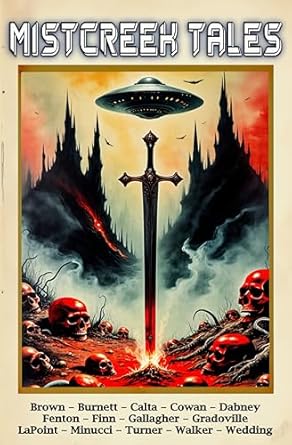
Mysterious radio waves... Alien civilizations... Monsters in the Old West... Dark sorcery... 14 Tales of Wonder!

Saturday, November 15, 2025

Weekend Lounge ~ Tumbling Down


Welcome to the weekend!

Hope you're all doing well. I haven't had a lot of time to do what I usually do recently due to a (rather serious) real life situation currently going on, so I apologize ahead of time. Things will probably be light around here until the end of the year until it is dealt with. Hopefully I can explain the situation all in the future better than this, but it is what it is right now.

So instead lets talk about other things.

Today I just wanted to highlight this video from David V Stewart as a bit of a companion to his recent one about NewPub's Content Flood and discovery problem. This time the subject is about how OldPub is using the aforementioned conveyor belt production techniques to pump out soulless product while charging a premium for it at the same time. In essence, any problem you might have with NewPub remains far worse in the old system. This isn't newly discovered information, but it is rare that you get such a clear example of it thrown in your face.

This event continues the trend of mass-produced product pumped out into the void for easy profit and to be instantly forgotten. The Content Mill era is still alive and strong.

We're still in the grifting stage of collapse where most people involved in it are merely looking for the quickest way to wring the audience dry before the system totally falls apart under the strain. OldPub, being so much worse off than any of us even realize, has been in this stage so long that the project referenced in the above video would have been shocking as little as a decade ago is now considered par for the course and not surprising at all. In fact now you will even get consumers defending this practice because Rules Were Followed (that no one agreed with). Any excuse for OldPub's behavior is just another sign of accepting decline.

The fact of the matter is that someone wanted a quick buck for less effort and they were willing to excuse obvious fraud to the audience in order to continue the grift. It was either that or they were simply unaware and unwilling to look into any of this because they just don't care. Regardless of what it is, the end result is the same. It is contempt for the audience.

While one could say this is good for NewPub and independent creators, in actuality is probably not good for anyone. Those disgusted who walk away will probably just never come back, and those who accept it will just encourage further decline. At this point, it feels more like the two separate systems have nothing to do with each other and what one does with not affect the other in any appreciable way. Whether you consider that bad or good is up to you, but it definitely seems to be the case that they no longer influence the other at all anymore.

This decay of OldPub has gotten to the point where, if you can slough through similar projects to the above cropping up all over, you are more likely to find something worth your time by avoiding the older industries. This is because, as the video shows, these companies don't really care what gets produced in any capacity. They only care if it's cheap and if they make big bank on whatever is tossed out with minimal effort. Such a mindset will not produce anything great. It can't.

This has been an increasing problem for decades and it's not going to stop anytime soon. There is a reason the older industries are fading. All this is to say it's why NewPub should not be looking to repeat the same errors as the dead industry we are watching break down before us. Pumping out product should not be a goal, not even if the product is "good" because art isn't product in the first place. It can be sold as one, but that is not the core of what it is and treating it like that has not made anything better. This is not a highfalutin way of referring just to "good" art either. No, all art is valuable beyond its monetary value and how much is exchanged to access it.

You can disagree with that assessment, but this old way of thinking about entertainment as disposable and replaceable is the exact reason those ancient industries are dying. They did not decide to randomly produce bad material--they realized their job was to pump out maximum product for maximum return and for minimal cost and effort. When this is the core of what you do, it's only natural that the thing itself was eventually going to be the last thing considered.

And lo and behold, that's exactly where we are. Turning NewPub and all the newer alternative spaces cropping up into this same state will eventually lead to the same result. There is no pause feature on Mr. Bones' Wild Ride. We already know all this.

Entropy doesn't take a day off. If you fight for the same failing processes and systems that lead us here, just in an "indie" coating, you will still end up in the same place you started in. And what good does that do anyone? Why would we want this to happen again?

Why wouldn't we want an alternative industry to actually be an alternative?

Fortunately, it looks as if most creators in the NewPub and adjoining spaces are a lot more ambitious than those in OldPub are now, and more creative in how they use their tools and ideas. But that does not mean we shouldn't keep on our toes that we don't fall into the same traps as the above. It's very easy when one loses sight of what this is all for.

That last thing we want is the same disaster to befall us again.

Anyway, that's all for this week. Thank you for all your support this year. It's been a strange one, and it's still about to get stranger (for me, at least). I'll try to get more interesting topics in the future, but for now that is it for now. 

Have yourself a good November and I'll see you soon!


Saturday, October 25, 2025

Weekend Lounge ~ The Big Shift


Welcome to the weekend!

We've talked about the future of the publishing industry and how it's changed so much over even just the last few years. But while we go on and on about death of OldPub (and yes, it's done and finished) we also do not seem to have much of a plan for what NewPub's future will be. Not that one can "plan" a future for a large burgeoning industry like this, but more that there isn't many ideas been discussed about what should happen.

The above video by David V. Stewart is not one of complaining of the market itself, there is little to be done about the state of something you can't change, but more about the realities of how things currently are and the modern mentalities that prevent us from improving our station in any significant way. The truth might be that "indie" owns the publishing world right now, but it is a mess for discoverability and there is no real way to connect with a larger audience due to the sheer amount of Content being produced in lieu of actual stories.

As mentioned many times before, NewPub, as it is right now, is not the savior of reading or writing in the modern age, which is what it needs to be. The industry is currently a pit of rehashing late 20th century cliches and stereotypes into a void and getting as much return as those trying to reach audiences on any level other than those engaging in pure surface pandering. There is no real way for a writer, good or bad, to sift through the noise and reach a wider audience.

And the biggest problem is that the noise is getting louder and drowning out everything else while the base audience remains the same size, or continually shrinks.

One can argue and scream about AI until they are blue in the face but the side of the argument not discussed is its ability to flood the market with Content. This deluge of Content overwhelms and crowds out everything else to pander to the lowest common denominator. It takes away any sense of true selection and turns NewPub itself into a battle of who can advertise their Content better to a narrow audience instead of being about creating art to connect to a wider audience. It more or less turns the industry into a cynical cash grab, and the worst part is that the cash is barely there to begin with. It is not giving the audience more choice, it is telling them there is only limited Product that can be generated and that they would better use their time finding some other space where wringing dollars out of a half-interested customer base isn't so paramount.

This is why NewPub has had the growing pains it has had, and why it hasn't reached its potential. It is not the readers who caused this but a large segment of authors who merely wish to have their names on products and rehash their version on half a century old genre tropes to the void. There is no direction, no goal, and no cooperation, to anything bigger. All any onlooker will see is chaos and vapidity. Neither will grow any sort of scene, and that's why there hasn't been the audience explosion there should have been.

Of course one can't ever build a scene based on quality alone. Quality isn't as subjective as we like to think, but taste very much is, and the truth is that there is no real uniform taste in the wider culture anymore. Yes, this is mostly due to the destruction of the monoculture, but even alternative scenes once used to thrive when they had a unifying element to them. Simply put: there is still a whole alternative ecosystem missing. Everything is just as blown apart and atomized as audiences are from the mainstream industries.

Before the age of mass media it was much easier to have universal themes and connection with each other, but in the age where everyone's fetishes, preferences, and hyper specific niches almost become personality traits in themselves, there is little reason to find anything outside of our narrow worlds, especially less of one when the ultimate goal is Content Consuming. Even more so when you can automatically generate your own personal Content instead. Why would you go looking for any outside yourself at that point? As we can see from how things are, the audience doesn't see any reason to patronize creators when they can have the bare minimum for nothing.

There is a lot of doom and gloom in just about every artistic circle these days due to how much more fractured, unsteady, and broken, everything is. No one can really get a foothold unless they want to pump out algorithm defined Content into the ether, which is how we've been trained to treat entertainment and art our entire lives. But we also all know that this exact mentality is what led to this current state no one enjoys. It can't continue, and in order for it to stop we need to find other ways, and until we do it's only going to get worse and worse.

And it already is doing just that. We have not reached the bottom.


Just because OldPub is worse (as the above video shows), it does not mean it is okay for NewPub to kick back and rest as that implosion happens. It's really not going to do anything but chase even more readers away from the hobby at a time where we've already been hemorrhaging them for decades now. We need to grow, but we don't seem to want to do anything in order to actually do that. OldPub doesn't think its readers matter, but why do so many NewPub also think this same destructive way? Where are the conversations happening about this topic?

This throwaway style of thinking about art has made everything feel disposable and pointless. There is nothing being built on, only a race to the bottom whether it be in production itself or in a drive for artistic merit. What happened to striving for more? Not only just as artists or audiences, but as people? When do we stop living by moldy tropes and jangling keys and start looking for connection and meaning once more? When do we stop treating life as a beltline factory? The 20th century is dead. I keep saying it because we seem to not want that reality to sink in.

There is no individual or wider callout here. I am just as guilty of thinking this way about the world. It is only when witnessing the destruction of things I loved that I could take stock and realize not only how temporary they truly were but also what really mattered beyond the surface level. And yes, even the "trashiest" piece of entertainment can still house a spark of life in it that can affect anyone who comes across it. All the more reason to make it mean something in the greater scheme of things.

The video from the Second Story above shows how even plot structure and general story mechanics, even when Done Well, can be sued to peddle pure trash into the mind and soul. It isn't just a matter of Content, but intent. Why does your story exist? What does it exist to do? What is it for? While leisure and entertainment is a fine enough reason, it still has to give something edifying to the readers beyond checkbox lists, otherwise it's just clutter. Said clutter is what we need less of to truly set NewPub apart from the rotting old system, and that is absolutely not currently happening. In fact, it is the exact opposite that is going on.

NewPub or OldPub, the overall issue is that while everything has changed much on the surface and in the wider world, the biggest thing that hasn't is our mentality towards both creating and taking in entertainment and art really hasn't. We still want to replicate the exact tropes and styles from when we were kids without adding anything to them or giving new context. We just want to rehash into the void while expecting others to lap it all up. Even when replicating dead OldPub trends that were floated by mass media manipulation and friends in high places decades ago is now no longer selling because they were never actually popular to begin with. The entire framework we grew up under was fake and we still have yet to let that sink in, never mind affect what we make. The frame shift is a lot more jarring than we want to accept.

This fractured state of everything makes finding a universal touchstone even more difficult, and that's without even getting into quality at all. Everyone now has their own island and reaching them in the first is an overwhelmingly Herculean ask that no writer has ever had to worry about before. Art needs to connect, but finding common ground to connect today is a problem without even considering art at all. And using crusty formulas and AI models to pump Content out does not address this deep societal problem. In fact, that only makes it worse.

For example, think about what creating entertainment for a general audience entails today versus yesterday. No, I am not talking about vague mass media consumer demographics, I mean such as old family sitcoms or classic cartoons used to be able to reach. They were things meant not for kids or one group, but for everyone in the family to enjoy together. Can such an audience even be imagined today when making something? Even if it does exist, how would one even begin to approach them with their art? Can we even imagine spending time with our real life neighbor, never mind a stranger producing a piece of art for us? Those are the real questions.

If you wanted to make something for a kid audience, for instance, how would you go about it? Decades of bad standards from unelected busybodies like Peggy Charren combined with Christian Inc corporate approved standards have warped expectations of what a child can even take in. While we could agree that swearing or sexual content is off the table, what happens when we disagree what swearing or sexual content even consists of in the first place? Because this is the current state of things and you can find no shortage of arguments over this exact topic. You could always pick your own standards to operate off of, but then that also runs the risk of not reaching much of anyone and stranding yourself on an island. This is a serious problem with how things currently are.

How does this bridge get built? It probably involves going back to basics and finding common ground again. This isn't a negotiable, it's necessary for even beginning to connect again.


As the above video shows, stories and art have a defined purpose and until we even begin to agree on that again, nothing will improve. The people in charge of the dying old industries all look down on their entire audience (no, not just those they politically disagree with, even their fellow travelers) and the ones in new industries are using those failed old advertising methods to reach those disillusioned by those industries in the first place.

This is the true reason all these burgeoning alternative industries aren't growing as they should: they have yet to become true alternatives. They will not be able to do that until the old ways and mentalities are finally thrown away, and, unfortunately, we've made little progress in doing that. Until we do, the hard audience cap will not be removed.

All these moving parts we're building have to come together to form a new system: a mechanism to produce art and entertainment better than the failing ones behind us. The old industries broke down because they were always going to end eventually. The only reason anything is even operating still is because of the men who built these systems long ago being much more skilled than those of us left today. However, no one can patch this leaky ship, and everyone knows it. Time is running out to be build true alternatives, and we aren't doing a great job of that.

The question then becomes a game of chicken wondering who is going to make the first real move to build. It won't be those in charge of the old systems: they're too busy being in the looting stage of the decline. They're going to wring every dollar they can on the way out. This is why even humoring their attempts at milking dead IP is a terrible idea, ironic or not. It will not encourage anything positive except to delay what is inevitable. Everything ends eventually, and we can't stop the tide forever.

However, it isn't just about accepting that reality, it is also about building a proper escape shelter when it does, and we have not done that. Until we do, we deserve to be where we are and, unfortunately, it is the audience that will continue to pay for it. We don't want to connect with them and so they don't want to connect with us, and on and on this goes. At some point we have to do Something Else before we lose these forms and hobbies we purportedly love so much.

The divisiveness also won't last forever. Whatever solves that problem, I can't say, but it will have to happen. When it does we need to have something better built than what came before, something meant to last and not run by those who desire nothing more than bottom of the barrel "Content" to fill narrow gaps in their schedule. We're human beings: we both need and desire something more than that.

And soon enough, we're going to fix that problem. We just have to address it in the first place. Only then can the big shift finally happen. Until then, we remain in this neutral state, waiting. What else can we do?

That's all for this week. Have yourself a good end of October and I'll see you on Halloween!


Saturday, October 18, 2025

Weekend Lounge ~ The Pop Corpse


Welcome to the weekend!

We're halfway through October and close to spooky season. That said, some topics are a bit spooky without even really trying, especially when talking about the entertainment landscape. For anyone who is paying attention, they know how bad things truly are.

For a bit of a change, today we're going to dive back into the pop cult world, but not for criticism or easy shots at it, but more to point out that there isn't really anything left to talk about. Years ago, I mentioned that Pop Culture was dead, a topic that took people by surprise and which I still stand by, and nothing has changed on that front t change my opinion.

In fact, it's considerably worse than it was when I wrote that post eight years ago.

All the crusty corpos can do now is recycle IP, hope for a few minutes in the current fickle meme cycle, and then wait for the audience to inevitably forget everything they had just consumed mere moments earlier. Nothing sticks anymore. 

Consider the original versions of Silent Hill 2 and Resident Evil 4 were huge in the gaming scene for years after their initial release, and in Current Year the remakes were forgotten in mere months for the next IP cash grab. It doesn't even matter if the product well made anymore, the audience no longer cares or has any investment. The normal audience has moved on from caring, and those remaining are doing so hoping for a few minutes of potential watercooler talk (or whatever they call it on social media these days) before moving on to whatever they are told is the next thing to care about. We all know this is how it works now, even if we can't express it.


It's dead.


This isn't even a shot at the consumers, this is just how it objectively is now. A consuming content checklist is all anyone aspires to be a part of, not a scene or part of a wider connected cultural landscape. The above video shows us that this is where the pop cult has lead to, much as we said it would years back, and it will not get better. The only solution is finally putting this entire mindset out to pasture. Pop culture is dead, and we need to stop pretending it's not. Perhaps it was always dead to begin with. Regardless, there's nothing there now.

Those old, ancient IPs are now novelties, they have no greater meaning to the wider audience except as cheap references to long dead days, and jangling keys to distract their attention from reality for a few hours. There is no higher meaning, no daring ideas, and nothing vital in any of them except safe messaging for a sick society currently eating itself. These rickety properties are tired and need of eternal rest. Nothing lasts forever, especially not all this corporate IP.

What we're currently looking at is a near-future of isolated pockets of artists, entertainers, and creators, all working together to find shared ground and connection with each other and audiences they might not have expected. This won't be the permanent state of things, it never is, but it is the way it will have to be before said audiences are able to find those they can trust again who will not decay the way the mainstream has. We're going to be here for a while to come.

In the meantime, take one last look at the pop cult wasteland and remember how mighty it once was, before taking what is necessary to moving on to fertile grounds. There is nothing left here, and we need to start admitting it. The dead is to buried.

Whatever awaits ahead is not this, and there is nothing ahead like what we are leaving behind us. And there is nothing wrong with that.

We just need to be able to finally accept the way things are. The old world is dead, the old corpo IPs are done, and none of it is ever coming back. Clinging to it while not saving anything, or making the cultural landscape grow or become any better, is just lying to yourself about where we are and where we're going. We simply aren't there anymore.

And that's all there is to say about it. There isn't anything left but corpses in that old graveyard, and the only purpose of corpses is to bury them, remembering who they once were, and moving on.

So let's finally do that. We need better ways.


Saturday, August 23, 2025

Weekend Lounge ~ Human Vs Robot


Welcome to the weekend!

We're back with another one of these, this time on a subject I know we're all thinking about. The question is in just how artificial is everything right now?

This week let us tackle some questions based on this well discussed subject. What exactly is artificiality in art? Where does it come from, what is the source of it, and how can we move past it? Lastly, why does it feel like everything around us is artificial even when we know it's made by real people? We can't answer them all today, but we can scratch the surface before we can even think to strike at the heart of all this craziness.

What is really going on?!?

We're all well aware nothing in the arts or entertainment sphere is "natural" anymore, in that the ideas being expressed aren't deeper than surface level and rarely do they go beyond cliche phrases and unambitious characters or plots meant to rehash Current Year dogma. What we also don't address is that we also reshape this in the form of digestible Content meant to satisfy all the bots and algorithms that allow us to see anything anymore.

In other words, not only do we deliberately talk down to others in order to satisfy social demands, we also morph our language and alter our approach to our robot overlords so they can even be seen by anyone in the first place. In effect, we aren't actually working for customers: we're working for robots and filtering our "Content" to get it past them

The idea of "Working for the robot" has already affected video makers on YouTube and heavily filtered what they want to produce. If you wonder why so many channels have videos with wildly different view counts on their videos, this is the reason for it. They simply aren't doing what the algorithm gods demand of them. What these means is that they tailor their videos and thumbnails and advertising to be deemed worthy for acceptance by the algorithm (be it YouTube or any social media site) in order to maybe have an audience to watch their videos.


The robots aren't on your side.


This also is why so many bigger creators now have multiple channels (some focusing on livestreams, for instance) because it will not negatively impact their original one. This is because they have to work around (and for) the robots who are their real employers.

Author David V. Stewart talks about the topic in the video above. Since he is a YouTuber going back many years, he has seen trends come and go, as well as channels and creators. Whatever worked back in the day no longer does, making it more of a hassle for viewers to find channels and for channels to get viewers. Essentially, much like everything else, it's been flipped on its head backwards from its original purpose and intent. Check out the video above to see how that is.

It is difficult to blame so many video makers on YouTube since, well, there isn't much choice, especially for those doing this for a living. However, it does not change the fact that their work is being changed specifically for an entity that does not care about them or their audience, and, in the end, will negatively impact the quality of what they do. It's a Catch 22 situation, and the only way to fight it is to risk angering the very gods you are meant to placate.

Basically, as they are, the customer is not the person engaging in what you do: it's the robot sentinel watching you overhead like a hawk and ready to blow you away like an armed satellite should you fail to meet its demands. Not exactly a healthy position to be in.

The only solution, as always, is to take a risk.

We're diving so deep into artificiality we no longer even remember the purpose of producing for people isn't to pump content out like industrialization taught us. It's not to make tons of money, either (though of course that's nice), but to create something that can reach people and show them something a little higher and leave them in a better position than where they started. We can't do that if we're too busy being distracted, terrorized, and ruled over, by things that simply don't matter.

And artificiality doesn't matter. This sort of "Content" will be forgotten. It will come and go and disappear as quickly as it came into the void with the rest of it. It doesn't matter how much the "Content" mimics the real thing--it has nothing to say that isn't surface level or has been repeated hundreds of times by people who have already said it better before. This artificial product can't aim higher or show anything new.

But we can.

Hopefully sometime in the future we can build a scene that has this focus of connection at the forefront. It sure would be nice. Until then, enjoy "Content" being pumped out into the pipes, because that's all we're going to get as long as we work for the robots.

Personally, I think we've all had enough of it. Audiences want something real, something they can believe in. That said, all we can do is wait for enough pushback on how things currently are in order to find another path out of here. Until that happens, we're simply stuck waiting and in neutral, hoping for a new way.

For a post-Cultural Ground Zero society, I'm pretty sure we're used to that by now. After nearly three decades of stagnation, what's another couple years? Hopefully we won't have to wait much longer.

In other news, I recently introduced a new podcast series on the Patreon called the Drifter Mindset. This one is specifically about my writing and storytelling. I read a story, talk about where it came from, the meanings, and the themes, and what it meant to me as a writer. The usual podcast will continue on as always, but this one will be another bonus for anyone who wants to join. It's going to be as in depth as I can get it to be, so the episodes will be longer than a usual episode of Letters from the Wasteland. I have been publishing for nearly a decade, after all.

All that aside, I hope things are going well for you all out there, and I'll see you next time!

Have yourself a good end of August.


Saturday, May 17, 2025

Weekend Lounge ~ Character Rot & Unchecked Ego


Welcome to the weekend!

It's been a bit since we did one of these, so I wanted to pick something of a bit more obscure subject to cover. This time I wanted to cover the current practice of character rot currently plaguing modern mainstream franchises and revivals. It isn't just an ignorance problem, it's an ignorance problem brought about by stubborn ego.

A lot of talk is spent about why so many properties forcibly change old things to "fix" them while a loyal cadre of people who got into it for what it originally was always complain about it. Contrary to popular belief, it isn't the customers who are wrong in these cases: it is the creators who willing ignore what they don't like or understand about the property and set about to "repair" its perceived problems. All while pop cultists who will consume anything let them uncritically demolish it because they too do not care much about the issue.

For an example of this very problem I suggest the above issue from the Sonic the Hedgehog franchise, and franchise itself that has had one nasty identity crisis its entire existence, but only really became a problem when a certain sect of western obsessives got their foot in the door and started making demands instead of approaching the assignment with pure intentions. What you get is the mess above that completely misses the original intent of the project.

We go on a lot about how ideology is responsible for these trends, but the truth is that it all stems from an ignorant misunderstanding of a subject then, instead of correcting course, doubling down the way the ideology tells you to. In the end, it's ego. While artistic ego is real, when working with others one is meant to reign it in and collaborate to make the best of both worlds. At no point should you consider it carte blanche to run roughshod over everyone else and assume you are the final arbiter of what is right and good.

It's a strange narcissism that runs in this generation of creators that seems to be just about everywhere, even when it's completely undeserved. Whether in comics, TV, video games, and even books, there is a disturbing lack of humility to be found in it, even in something like an old stalwart property from the 1990s. Every 20th century IP is infected with this mentality now, and it appears to be completely inescapable.

However, what's not inescapable is the change in the independent spaces and NewPub. There you don't have to go through any of this decay because it's all owned by the original creators who have no aspiration to sell out to a dead industry for a quick buck. It's about building, not cashing in and going home. We have a duty to create, and we're going to do it.

In other news, there's a new podcast episode on the Patreon. This one is over an hour long and is about tertiary characters and creations and how they matter more than we might think. I also go on a bit where I think the industry is heading beyond this modern rut. It's an exciting one!

We've got quite a lot to look forward to.

Thanks again for all your support, and I'll see you next time!


Saturday, April 26, 2025

Weekend Lounge ~ The Cost of Flops


Welcome to the weekend!

We've gone over slop enough recently, so lets talk a bit about what happens when you rely on it for so long that it destroys the very industry you operate in. The above video from Red Letter Media decides to wade into the obvious reality that Hollywood is dying. Their conclusions might be different than some, but it is still very obvious as to what is happening.

The "success" of the Minecraft movie is a very telling one, and also depressing to think about for those who enjoy the artform. It is essentially a Snakes on a Plane, but successful. In other words, it's a movie that has made money due to the death of the medium.

for those who don't remember, Snakes on a Plane was a bad movie that had no marketing budget except to try to reel in folks with how bad it was. The entire marketing campaign was a meme before memes. You didn't want to see the movie to enjoy a quality product or have a good time at the cinema. They wanted you to watch something bad and give them the privilege of handing them money for it. It was an "intentionally bad" movie before that trend got kicked off. In essence, it was ahead of its time in a lot of ways.

However, it bombed. The mainstream audience still wanted good movies. They still wanted quality and effort put behind it. It was a sign the industry still had life in it because the audience still had expectations for the industry. They no longer do.

At the other end of the spectrum, the Minecraft Movie is only popular because it's a meme that people want to laugh at. They're going to the theater to trash it, to run roughshod over the place, and to cackle ironically at the product made to entertain them. I am not even discussing the quality of the movie itself: as RLM above shows, this is who is seeing the movie and this is the reason they are going to the theater. This is a sign of a dead medium.

As we've also discussed before, there is a lot of issues internally, as well. Sound design is a mess. The masters are retiring and dying off without sharing their secrets. CG is decaying despite requiring more people than ever before (to also work even longer hours). The overreliance on ancient IP is wearing out its welcome, even though nothing new is being made that can seem to connect with audiences. All of this is a sign of an industry that has lost the plot and has no idea how to move forward. That's without going into how those inside the industry appear to have no connection of understanding of their audience at all anymore.

It's all just a giant cluster of confusion.

On top of it, as they also report, the other movies on the highest grossing films of 2025 (so far) list, are all bombs. None made their budget back, and considering how much they spent to be made, breaking even wouldn't even be enough. All of this is the clearest pattern of a dead industry on the way out. It could have been avoided, but we are past that point now.

No one is going to the theaters for "Hollywood Magic" anymore. They are either going to laugh at it, or not at all. They are attending IP farm entries less and less, and walking away at increasing rates. Not even the overseas market is interested like they once were. It is a sign of the times and another market that the 20th century is over. We aren't going back to where we once were ever again. All we have is what lies ahead. And we have no idea what that is.

And for those who keep pointing excitedly to their own TVs in the comfort of their own homes: There's still no money in streaming. No one has yet to figure out what a hit is or how to even measure it. They will continue to strike over this issue, but the bigger problem is that there isn't any feedback on the level of the box office or Nielsen ratings for streaming. Especially not in the online space where bots and paid agents clutter social media space. These are glorified ads more likely to annoy potential audiences than anything else.

All of this is also without going into the loss of shared culture. There is no reason to watch something you aren't sure if you're going to like if there's no one to talk about it with. What's the point? Water cooler talk has changed.

In fact, everything has changed. That is how the passage of time works. While the world we grew in is long gone, so is the world of even a decade ago. Old systems are falling away and will eventually leave the field clear for new ways going forward.

We're going to have to explore it ourselves, it seems. That's fine. There are plenty of excited creatives in indie spaces willing to do what they can to entertain you instead. until we figure out how to rebuild again, this is our best bet going forward.

Personally, I have the Psycho Mission serial currently ongoing at the blog (with a just-released podcast episode about it here!) as well as other projects on the way. But I'm also just one of many working as much as we can in a landscape with no real direction forward. There are plenty of others, including one below I'd like to end today's post on.

I would once again like to thank you for reading. It's been a long ride so far with no clear destination ahead. I appreciate you joining me as we figure out our path through the wasteland. Hopefully one day we'll find the way out.

Until next time!


Saturday, March 22, 2025

Weekend Lounge ~ Where Have the Men Gone?

Find the post in question here!


Welcome to the weekend! 

Today we're going to look into the question as to why males have been not only cast out of the book industry, but are actively ignored and looked down on as readers by those still inside. This is not a new issue. Where did all this hostility come from, and why is a growing problem?

First, I will direct you to author Kristin McTiernan's Substack and her recent interview with Louis L'Amour's son, Beau. It's quite an interesting read. If you do not know who Louis L'Amour is, well, then that is very indicative of the very problem we are facing today. Let us just say he is the top selling and most influential western writer of the 20th century (the only ones who come close are Max Brand and Zane Grey), and that he isn't as well known today is a sign of what we are talking about. There is an ambivalence, at best, to even bothering to approach half of the population as potential customers. That is not a sign of a healthy industry.

This isn't a new problem, but is one that is finally being addressed today after over a quarter of a century being blatantly ignored by the top dogs in charge of the old industry. Why don't mean read and why does an entire industry seem uninterested in learning why?

The above video attacks the most recent blow-up over the "Men's Fiction" problem and what to do about it. She isn't the first one to talk about this, not even recently, but it is a sign that more and more folks are waking up to the issue and wish to do something about it.

I recommend both the video and the interview linked above, but we all well know there is a bias against men in writing, specifically men who don't want to write for women or middle-aged urbanite women's grievance study pet projects. But this is the nature of OldPub and what it has allowed itself to become, which is a gatekeeper for letting in mediocrity at best above all else. They use their trope checklist-adled brains to check the right boxes both for the author their eyes are set upon and for the works they want to pump out to their increasingly microscopic readership.

This is who runs the industry now:


And they'll take their dying husk of an industry with them to the grave. There is no returning from this level of tone-deaf behavior. OldPub is dead and not coming back.

You might lament that it ended up this way, but that's how it was always going to be when the industry didn't select for intent, ambition, or sociability, only on those who faked it until they made it. Once said people got in, the mask dropped, the gates swung shut, and now you've been subverted. The only thing that happens now is terminal decline.

Should have kept vigilant! But they didn't, and now they are paying for it, swirling down the drain to irrelevance. It cannot be stopped now because there is no one in charge with the desire to change course. Like all cultists, the need to go down with the ship far outweighs the desire to turn before barreling into the rocks. This result is what they want.

Of course, this is all only if you're still focused on the old industry. OldPub is dead because old things die. It was always going to happen, we just didn't know how or when, and while lamenting about how it happened is natural, eventually we're going to have to accept it's gone, never to return. And at that point we will have to move onto something new and built on sturdier ground. Most of us already have: it's called NewPub.

So what is a good way forward out of this? Perhaps this response from McTiernan's interview with L'Amour's son should help clear it up:


And this is exactly the sort of thing that is going to carry NewPub forward into the future. There is no other way, if we want to both connect to the past and find a new road to travel down, then to use the last ideas that gave any sort of success as to how to reach abandoned audiences.

We have our path forward, and nothing is going to stop us. Especially, not anyone who still clings to a dead industry while pretending it is still vital.

At the end of the day, this destruction isn't anything new. We all know who is doing it and why, and they have no problem telling you themselves. Now that we know it, we can work to building something much better than what we're leaving behind.

And it's about time!


Saturday, March 8, 2025

Weekend Lounge ~ Why Everything Sucks Now


Welcome to the weekend!

Hope you've had a good week. I've been knee-deep in multiple projects, one of which I can't even hint at yet. That aside, lets talk about the current entertainment landscape, and how it's been changing recently. We are finally seeing the last embers of the 20th century extinguished and what we are being left with has yet to be seen.

Let us explain why that is.

We've gone over a bit about the slipping quality of corpo entertainment and its various reasons for it current terrible state before. In fact, it's been a constant theme. The Cultural Ground Zero effect is real. Of course, we have the usual reasons/excuses for noticing this trend: the "nostalgia" argument, the "changing tastes" argument, and the "catering to the market" argument" are all the most common. And yes, some of those might apply, but are not enough to paint the bigger picture. None of the give the full view of what's going on.

For instance, no Zoomers or younger gens care about mainstream entertainment anymore, just as much as no one except aging "Geek Culture" Cultists desperately holding onto their youth even look twice at it anymore. Some passively consume the slop, but none pay it any real mind anymore. It's like how a Baby Boomer goes to the television to think. It's just expected and passively consumed. No one actually cares about this stuff anymore, and they haven't for a long time now.

You won't find any shortages for the reasons behind this, but I think the video from David V. Stewart above highlights all the potential arguments and explanations as to why things have changed. This is before he gets into the main crux of the issue. I'd suggest watching it for good reason. He has a very good way of getting things across.

That aside, I do see a hard turn coming in the future due to both how fragmented our culture is and how those in charge both dumb down and belittle real creativity at the expense of ambition. It's going to lead to a generation that is just plain going to ignore "fiction" entirely. They will see it as a waste of time, much like we basically already do now.

What will happen is because of how vapid, predictable, and repetitive, mainstream entertainment is, as well as the cratering emphasis on "imagination" (We're a long way from the silly "Reading Is Magic!" punchline of the 1990s), on top of the lack of interest in 20th century IP among younger gens, will all lead to a fracturing in the overall.

You're going to see the mainstream focus more on "reality" entertainment (A growing trend since the end of the '90s) with things like streamers, reality programming, and video essays, taking the air out of the room. At the same time, anything "fiction" related will struggle unless it a flavor of the month supported by one or more of the above things.

The reason for this is the mainstreaming of "tropes" since the Geek Culture '00s have made Following The Formula Right the only thing a corpo needs for you to hand over their wallet. What the formula is depends on how you were trained to consume your entertainment. What you then have are Gen X to Millennials begging for scraps, whether they be rehashed tired formulas, endless subversions of the same handful of ideas, or More Of The Same.

None of these groups desire stories, they desire their youth resold to them forever, like Baby Boomers buying endless Beatles merch and products well into retirement age. The old IP is all they want, quality has nothing to do with it. This is because the "quality" to them is merely in repeated names, aesthetics, and actors/voices saying what they want to hear. The core story, the morals and the deeper meaning, don't matter as much as the surface level. If it did they would engage in other things outside the IP. But like Baby Boomers, it doesn't matter how good something is, because it isn't John, Paul, George, and Ringo. At the end of the day that's all they care about seeing.


Evergreen meme for a reason


How did this come about? For many reasons. We all know it's real, but it's hard to put a finger on what exactly is to blame for it. This is because the explanation is multifold.

Those among these older generations, present company included, are to blame for the current state of things. We cheered for vacuous slop, meaningless pop cult references, and selling our youth back to us forever. We made fun of the Big Bang Theory for being "geek blackface", but Scott Pilgrim was no different in pointlessly catering to "Geek Culture" vapidity. Just because one is better made doesn't make them both slop. Slop is about intent. There is no meaning to either except ego stroking and pandering to a generation that deserves neither.

What we have here is not only the End of Pop Culture, but the end of the 20th century influence on culture as a whole. Those days are gone and they're not coming back.

The elephant in the room is also that Western Culture has been built off negativity, subversion, and bitterness for over half a century now. It has lead to a low trust society, fracturing political and religious outlooks, and mainstreamed misery into common discourse. Politics didn't cause this: it lead to the current sociopolitical situation everyone hates.

I don't tend to address politics here directly, because it's really a dead end discussion point. The second someone sees a buzzword, their brain clicks on to a certain track and you become Friend or Enemy. At that point, you might as well be speaking backwards. But this isn't about Friend or Enemy, it's about understanding where we're headed.

And this is all due to where we've already come from.

I'll be blunt. The Right sees the arts as useless and a dead end. They refuse to support anyone even remotely on their side, ceding the ground to people who hate them. They would much rather support grifters who put out low quality versions of "based" calendars, political talk shows, or vapid entertainment stuck 20 years ago. No one is investing in any real countercultural efforts (and if they are, they are very much the exception to the rule). There is nothing even remotely approaching art here.

The Left is no better. They see the arts as an opportunity to promote whatever new thing they were told to support by their favorite TV/online personalities, and morphing their own works to comply with these updated slogans. They are convinced that something like naming a villain Tonald Drump is high art to be applauded and high brow commentary on par with the best Russian Literature. They also happily subvert their own IP for updated messaging at every opportunity. There is nothing approaching art here.

Surely, that's everything? After all, we've addressed both "sides" of the discussion, right? No, we're not done. 

Centrists pretend to be above it all, saying they want no morals, lessons, or politics, and just want Entertainment. This is impossible. There is no piece or art without meaning, without something to say, and in fact any art worth engaging will have these elements in them deep inside on some level. The actual problem should be that there is little focus on what is being said, how to say it, and how to connect with the audience. Instead, the focus is on returning to the *Insert Decade Here* standard where everyone was Sane and Not Weird, even though they were and we just didn't notice because we were kids back then. There is nothing approaching art here.

This leaves you with the three modern views of how art is seen: to be taken for granted, to weaponize against your neighbor, and to consume mindlessly between sugar binges. That's it. There isn't anything else. What you are left with is an upcoming younger generation whos see all of this and has no reason to engage. Art is clearly meaningless because that's how we see and treat it. Therefore, the younger generations will turn away from it.

It will also lead to the more common usage of AI generators for entertainment, because it gives the bare minimum. This will be good enough for them, and we've given no valid argument against them doing this. What else is consuming art for anyway? We don't have a good answer for this that isn't a cliché from the 20th century since proven incorrect by how things have decayed.

The ignorance of the Right lead to the belittling of art, the arrogance of the Left lead to the pamphletization of art, and the mindless consumption of Centrists lead to seeing art as novelty, trope checklists to follow or subvert. Don't get me wrong, none of these positions are exclusive to any of these groups, but those are the main three views of entertainment that has lead to the irrelevance of art on modern day living. The younger generations have internalized this and are ready to apply it to their own position.

And, again, what reason have we given them to think of anything else when all we focus on are things we should have let go of long ago?

20th Century IP has no meaning to those born outside of it. No, not even if you "update" the morals, and not even if you Go Back To the old morals. It has no relevance for the 21st century man living in uncertain times caused by the previous century, and the more we cling to it the more younger generations will turn away and move on without us. The 20th century is not the center of the universe, and we're quickly learning how irrelevant it's most likely going to be in the long run. We should be preserving what worked now before it all gets disposed of.

We've treated existence and reality as a novelty for so long it has turned our outlook cynical and barren, matching our entertainment. The only way to move forward is to take what we learned and apply it to the present. This requires letting things go, but also looking forward to the generations before us who need a guiding light. We have to be there for them, not ourselves. We're not kids anymore. We need to start acting like it.

Thanks for reading. That's it for this week! 

See you next time, and please be sure to support smaller and independent artists trying to make a difference. It's the only way we'll see any change.