We finally made it to the end of 2025! It's been a long and bumpy ride with a lot of surprising twists and turns (especially if you were me), but now we can finally close this one off for good. It's the end of the year!
For this last post of 2025 I merely wanted to thank everyone who stuck with me through it all. It's been a strange one, and next year promises to be even stranger, so you will definitely have much to look forward to from me. However, it probably won't be as much on the blog.
You probably already noticed less posting this year, with a shift to the weekends, and those posts will still continue, but there will be less of them. I need to refocus my efforts on writing stories, especially after everything that has happened in my personal life. Of course I'm going to keep posting here, but it will just be much less of a focus in the near future. That said, I do thank you for every post you've read this year. I am still surprised that anyone reads these at all, since back when I first started writing posts a decade ago I didn't think anyone would be reading them, never mind a full ten years out. It's been a crazy experience.
In 2025, I put out a story in Cirsova Magazine, a new novel serial on the Patreon, and had tales in twodifferent anthologies outside of that. All of them are some of my best work, so please check them out! It's been a weirdly productive year, though not in the way I am used to. Perhaps that's just a sign of the changing times.
That aside, there is still the Patreon where you will get the most bang for your $5. There you will get over 40 episodes of 2 ongoing podcasts, two serials (with a third in planning stages), exclusive posts and updates, and more to come. In fact, there is an end of year episode of the podcast up today about the future! Check it out here.
There are multiple projects in the works for 2026 still to be revealed. I have a story coming in Cirsova Magazine in 2026 (a new Galactic Enforcer tale!), a full-on book that will be released, and a large project that is not mine to reveal yet but is currently deep in the works. On top of that there was a huge shift in my personal life outside of writing that will definitely change how I operate going forward, though I will have to wait and see just how that will happen. Until then I will do my best to continue as I have been.
Regardless, I am not going anywhere.
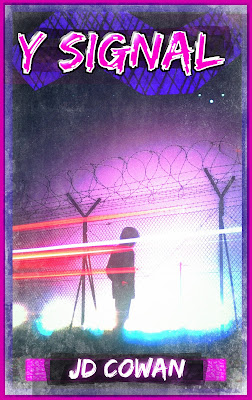
2025 was also the 30th anniversary of the events in Y Signal, as I've mentioned before. In fact, right now we're living through the 30th anniversary of "Snow Out", the Christmas story in the book. I actually did an entire podcast episode both reading excerpts and talking about it here. But next year will also be the 30th anniversary of the conclusion of the book, which took place in summer of 1996. All that to say is that it will also symbolically be an important year as well. One of the projects I hope to be able to start on is the follow-up to that very book. No, not a sequel: Y Signal has a pretty definitive ending, but a follow-up to it. You can learn a little bit about the background of all of this on the podcast, if you desire.
These specific stories are meant to be both a reflection of a specific era currently being (perhaps deliberately) forgotten and a document of the people who lived there and what they were like and thought at the time. I've mentioned before, but part of the reason these tales came to fruition was due to how the mainstream and Hollywood have been attempting to dilute that period, if they ever address it at all, and are attempting to rewrite it for their own ends. There has been a concentrated attack on the past, and I will not have it. As a consequence, there is nothing like Y Signal or this upcoming project, and there likely never will be.
But beyond that, what do we have to look forward to in the wider culture? The wild west days of the internet are over, Hollywood is bottoming out, video games are shifting away from AAA, and publishing is still a complete mystery. Nothing is solid, especially publishing.
While OldPub is dying, NewPub is still in growing pains. Amazon is quickly fading out and the crowdfunding model is becoming more common, but then what comes after that? We're still trying to figure that out. There are a lot of question marks ahead and there still has yet to be a clear path forming in the haze. We'll just have to see where 2026 takes us from this point on. I can't even begin to guess where we're heading.
The world is a very different place from when I first published the first post on Wasteland & Sky over a decade ago to now. It certainly doesn't feel like it if you only look at the surface. Most of the buildings and sights in every day life are the same, if not rusting and falling apart from a lack of maintenance, but compared to previous decades the stagnation on the surface is obvious. Underneath, however, much has shifted and will continue to shift until the outside matches the current state of the interior. We've got much to look forward to after that.
Once again, I wanted to thank everyone reading my posts, or anyone who has ever read my posts, my stories, my books, or whatever I've put out there. It means a lot that I was able to reach anyone at all from my obscure position on the fringes of life and this scene. I hope to continue for as long as I am able to.
Thanks again for a wild 2025, and let us all look forward to the 2026 ahead. May it shine bright and show us the way forward.
One of the things audiences of art and entertainment have been craving for a number of years has been an art scene that doesn't beat its audience over the head with what it's doing. Few seem to understand that this has been a problem that existed much longer than the current woes in every media-adjacent industry has. In fact, we have a blueprint for how such an industry was shaped.
Back in the 1980s and 1990s a "Christian" Industry for different forms of media arose. There was a "Christian" space for music, movies, books, and everything else you could imagine. What that ended up doing was creating a cargo cult mentality around it, creating its own language and code of conduct to separate it from the mainstream. Instead of trying to adapt to or communicate with the mainstream, it divorced from it and left everyone outside the bubble to their own devices.
This ended up being a mistake, as both the "Christian" industry and the mainstream would eventually implode into a pile of tired tropes and expected ideas, never to come to together again.
The reason this doesn't work is that Christianity is meant to face the mainstream head-on, not ignore it or talk around it. It's about the destiny of man in the face of the Perfect Man, after all. And art, as we've discussed many times, is meant to connect us and find meaning together. We're meant to have art poke and prod and point us in the right direction while showing us more we might not have considered. If you truly believe in the Savior of the Universe, then you should not hold that belief to yourself. Unfortunately, that is more or less what the "Christian" media complex evolved into being in record time. It's now just another industry with a particular image slapped on top to make it seem different while it sells pale imitations of what the already poor mainstream offers.
However, there are a lot of believers out there who don't want to be part of such an isolated island. There are plenty that want to connect and reach out to others, and find a Higher Meaning to it all.
The above video shows a list of authors who did just that. While being Christian and believers of the One True God, they never forgot their vision was also to reach people who either might not believe or might not even know what the author is talking about in the first place. They released the point of connecting means going outside yourself and doing more than preaching to the choir, and as a consequence their work is much more enduring than you'd figure it would be.
What happened in the 20th century was the siloing of ideas and interactions, backed up by corporations to give the illusion of community based on perceived tastes, at the same moment local community was falling apart around us. We're currently in the last days of such a system as both the internet works to destroy itself, and the old companies struggle to make a profit without turning something into a formulaic franchise or digging up corpses to put in modern skinsuits to attempt the same thing. The climate is changing, and it's a necessary change, but it's going to hurt when it does. It's happening right now in certain places.
What we need now are people who not only believe in a better possibility for what is to come, but also aren't afraid to reach others with their ideas. The old battle lines are faded now, slipping away with both the passage of time and new generations questioning if they were ever really there to begin with. When can we finally work together again to build a better future? It has to happen at some point. It's inevitable.
I know plenty of creators working out there to make a change, and I know many audience members doing the same. We all know it has to change. Eventually, these efforts will cause a shift and the old paradigm will be just a memory. Until then, we can't stop pushing.
In other news, I just put up a new episode of the podcast on the Patreon (Can you believe it's been a year now?) talking about what from the 1990s is worth salvaging. We usually talk the opposite so it was interesting looking it what actually worked. It's a long episode so I made the preview a bit longer to compensate, so if you want to listen you can find it here.
I'm also starting a new post series that may or may not lead into another book in the vein of The Pulp Mindset and The Last Fanatics. Join now and you'll get to see it as its written and see how it shapes up. I can only do this because of the readers, after all.
There is a lot to look forward to. Don't despair over the future because of the dilapidated state of the mainstream: that is temporary. What is to come in the future will offer a much different world, one where all of this falls away. You always gotta have hope, after all.
As the old saying goes, keep your eyes on the prize. Just don't make the mistake of the 20th century and forgetting what that even is to begin with. There's much more than we can even imagine.
Merry Christmas! Not much to say today thanks to the holiday, just a small post to keep things rolling. I hope you're having a good one.
Only two things to share today. The first is the above video on weird Christmas stories, and the second is today's Cannon Cruisers episode, also on a Christmas movie. I'm sure there's much more out there, but this is all I wanted to share directly with you.
The film we covered is 1971's The Christmas Martian, a fairly unknown family film from Canada, that did, however, have much more influence on what came later than you probably know. Highly recommend listening to this one if you enjoy Christmas and/or family movies. It's quite a unique project work looking into.
Anyway, that's all for today. Have a good week and a good rest and I'll see you this weekend. 2024 is almost done, but we've still got plenty to do.
Did you notice the changed banner above? We've got a lot to celebrate!
In case you haven't noticed the slight renovation to this place, I suppose I should let you in on it. We've reached the tenth anniversary of the Wasteland & Sky blog! Hard to believe it's been so long. We've come a long way since that unassuming initial post a decade ago.
Wasteland & Sky's first post went up on June 13th, 2014, and was originally meant to be a silly little project I wasn't expecting to last very long while I was still learning to write. I'd tried starting blogs before over the years, as anyone older than a Zoomer has at some point, but they'd never gone very far because I simply got bored of them and had little to say in those younger years. But as I was learning to write at the time (and it would take two more years to publish my first proper book, Knights of the End in 2016), I thought it pertinent to try and communicate with any potential readers and putting myself out there.
Over 750 posts and 10 years later and it seems as if I've succeeded in doing that much! Hard to believe it's been a whole decade since I finally made that decision to begin. So much has changed in that short time and yet so much more is still to come.
I wanted to bring this up last month, but there was still preparation to do to get ready for it. For one, I didn't want to do anything right after Star Wanderers had just finished funding and waited specifically until shipping had already begun and was underway. I didn't want to keep to many irons in the fire or confuse readers. I seem to have a bit of a problem doing that, though at least it should be much clearer going forward. But now that Star Wanderers is in the middle of fulfillment I can finally announce the next project.
As of this post, I have published 13 books (14th coming very soon, keep reading on!) and have published over 20 short stories and have no plans to stop anytime soon. All have been written in the years since Wasteland & Sky began. However, despite the amount of material put out, I have just as much more without a proper avenue for release. There just isn't enough places to put what I want to put out.
For instance, short stories only have so many opportunities to be submitted to magazine markets during the year and others have hard word limits for their submission guidelines. At the same time, funds for editing books and commissioning artwork for book covers not only takes much time but also takes funds on a razor tight budget. (I wouldn't have been able to complete Gemini Man without all of you! Thanks for all your assistance!) This leaves a lot of material in a bit of a limbo and a lot of things I just plain can't do without setting it aside for some nebulous future release.
Aside from that, a lot of the mechanisms in the industry for reaching wider audiences are in the process of falling apart. As an example, I've had many writers and behind the scenes personnel tell me that Amazon is burying their books and getting reviews is becoming more and more difficult, despite however many sales they might have. At the same time interaction on the site has been dwindling in number which also hampers the ability to reach new readers. These things that were so straightforward and obvious a decade ago are now very quickly no longer becoming viable. Even OldPub authors are now dipping their toes into NewPub waters. In other words, we need to start thinking outside of the box a little.
So what do we do moving forward?
The above realization is why I've been working on my next project, hinted at in the preview video a while back, called Phantom War. It's a three book series, though it's different than the books I've done to this point--in fact, it's actually a serial in many parts split into three volumes. I'm planning to put it out in chunks to get it out to readers more easily and to help make them the best books they can be. The first book is called Phantom Mission.
This is where I will announce how these books will be brought out: through Patreon! I'm planning on starting with putting out the first chapter of the first book within a week of the Patreon launching. I'm planning on putting out two chapters a week for July then one a week until we hit the end. Then after the first book is done, we will take a break until the second is ready to go and we will commence again until it is done. When the project is ready to go I will go into the story details itself on the blog and talk in greater detail on the Patreon. There will be a lot of writing on the way!
Author Brian Niemeier called this process Neo-Patronage, and I believe it's the best way going forward in the ever-changing market.
But I also want to focus on the fact that my next work isn't the only thing coming to the Patreon. Yes, there's more!
It's also going to be the place where I put out my essays first. I've been spending so much time writing scattershot for awhile that I want to get back on track again, but it's difficult to find the time balance between everything I have to juggle. In order to do focus, I want to make a centralized spot to write towards and an audience who knows exactly what they want from me.
This doesn't mean anything else stops. Posts will still come out here (and the Weekend Lounge posts will continue here as usual), books will still become available on Amazon, and short stories will still show up in magazines and anthologies. This is just a centralized place where the majority of it will be available first far ahead of time.
On top of the above, I am planning on creating a podcast called "Letters from the Wasteland" which will be available exclusively on the Patreon. If you've listened to Cannon Cruisers or my appearances on other podcasts/streams then you probably know what to expect. The difference with this one is that it will feature exclusively myself and be centered around the modern scene of art and entertainment as well as my takes on what works and what doesn't. I will also discuss my own work and advice/opinions on general NewPub activity ala The Pulp Mindset. If patrons desire it we might even answer some viewer questions at the same time. I've been wanting to do something like this for awhile and I think using Patreon to do it is the best way forward.
I also included a free copy of Two Adventures Across Eternity for backers at every level as a welcome gift. So not only are you getting a free book, but a new serialization, a podcast, and posts (though these might slow down during serialization periods--there are only so many writing hours in the day), and you will get the finalized eBooks of anything serialized on the Patreon when the time comes. In my opinion, I think it's a better deal than waiting to pick up one eBook from Amazon every half year or so. Though I suppose I'll have to let the readers decide that.
Of course, this is just the beginning. If anyone has anything they might want to see added to the Patreon itself then please be sure to let me know. Comments are always open. You can find the Patreon page here! *Just keep in mind that the Tip Jar level is only for tips! Aside from a copy of Two Adventures Across Eternity there are no other extras--you want the Maverick tier for that.*
So what does all of this mean going forward? It simply means more. I will still be working with publishers like Cirsova, and submitting to anthologies like Sidearm & Sorcery, as well as magazines like Anvil, and I will still put books on Amazon, so nothing really changes for anyone who doesn't want to join up. That work continues on as usual.
However, I'd much prefer having a centralized place where I can produce as much as I can, so it is most definitely a good option for those who want more everything of what I do. I'm also eager to try a new challenge, something that will give me an opportunity to spread my wings and soar new skies. And anyone who backs will be a part of it--they won't even need to go to Amazon to get the eBooks (at least the ones I publish on my own without any publisher involvement.) Everyone wins. This is why I believe it's the best course of action going forward.
I'd also like to say that none of it would be possible without any of you. Back when I started Wasteland & Sky I had no idea what I was doing. I hoped I might get someone reading eventually but I never expected much to happen, so I just focused on doing whatever I could. The fact that it lasted this long--easily the longest lasting project I've ever indulged in online, never mind the writing world, has been incredible to think about.
And we're going to keep moving forward with plenty of projects on the horizon. Thank you for helping me make a whole decade on the blog. Here's hoping for another decade ahead! God willing, we'll go far.
*For Star Wanderers backers, I have to remind you to fill out your surveys so Cirsova can get your address to send it to you. The eBooks are already out, next comes shipping! You'll be getting your books very soon!*
I don't have much to share this weekend since it is the dead center of one of the most festive times of the year, but there are a few things I wanted to mention. The first is the above image and how it perfectly encapsulates what adventure writers are trying to do. It also shows exactly who we are and what we strive to become.
There is more to life than the hamster wheel. Don't let anyone tell you and different. The only ones who don't want the prisoners dreaming of the outside world are the prison guards, after all. That said, it isn't always escapism to dream of such things. Sometimes it is just longing for the supernatural end of the natural world we were given. It is longing for what we can already know is out there but just have little idea of how to reach with our own power. Human beings both over and underestimate ourselves to strange degrees. It is what the comedy and tragedy genres are both about, after all. Sometimes we get lost in our own ambitions or vices.
Escapism can be a bad word. When being confronted by the harsher elements of reality, one can use it to avoid their problems to a harmful degree. Think drugs, alcohol, or addictions. All of those things that can be used in healthy moderation can in turn be made a vice if put on a pedestal above other things. One can really do this with anything to the point of obscuring what is important. They might even need to outright neglect of important things, in the end.
That said, the above image by Boris Vallejo perfectly encapsulates the importance of both imagination and the core mission of writers such as myself. It is to remind readers that there is more to life than this. there is more than you see on a daily basis. That is not to say there is nothing valuable in everyday life and that it all must be escaped, but to show that you as an individual are a valuable thread in the tapestry of our society and that it all connects together as one whole in ways we can't even imagine. Everything matters, and there is more to it than what you can see. Though you might think your everyday slog is worthless and a waste of time, it is not and neither are you. And just like the above barbarian, you are also secretly a strong warrior capable of much more than you or others think. It's not so much escapism, but a reminder of who you really are.
Wonder stories exist to present this key truth in the mystery of existence in ways the audience might not expect. Though we might not always see it, and those leaders in charge might forget it themselves, you do matter and you have much to offer. The job of writers is to show that there is meaning in everything, even what might seem mundane is secretly much more than that. The land of the faerie exists around every corner, behind every tree, and down every strange alley, just out of sight. Wonder tales are reminders of greater things that await in the smallest things.
Christmas does this, too. In a manger in some lowly country off in the middle of nowhere, covered in dirt and surrounded by animals, there is a Baby most would never even know was there, and that Baby is the Greatest of us all. Where you least expect it is the most valuable discovery you will ever find. This is true wonder.
So this holiday season, please remember that one truth, no matter who you are and no matter where you are in your life. We may think that we're alone or that we're fighting an endless battle, but we're really not. In fact, we've already won the most important one, and we didn't even have to do anything. In comparison, our everyday squabbles and troubles, regardless of how big they might seem to us right now, aren't quite so bad. This will all eventually pass. Besides, we're fierce warriors, aren't we? We're capable of so much more than we believe we are.
Let us, hopefully, never forget that.
Have yourself a Merry Christmas, and I will see you very soon.
Anyone who has read anything I've written for any length of time knows that I am a big fan of Rock n' Roll music. It's no secret, and I make no apologies. The genre itself is wide encompassing, a sped up version of the Blues tied with the heart of Country music makes it, in my clearly expert opinion, the greatest of the "genres" in regards to music. While you might pick and parse after that as to which subgenre of the genre you prefer (hey, it happens with writing all the time!), if you are a male you probably like at least some Rock music. It is, after all, the music meant for guys.
However, much like everything else over the course of the 20th century, it was torn apart by hedonists and subversives until all that remained of it were local covers bands and quietly monitored pages on Bandcamp and YouTube. After half a century in the sun, Rock has more or less died and been left in music purgatory aside Jazz and Classical. That's probably where it will stay for a long time before some distant generation attempts a revival divorced from our modern concerns of trends and empty gimmicks.
All that is to say that part of the reason the genre died is because it detached from its roots. Let's be honest, by the end of the '00s, what was actually left to listen to? No new bands were coming up and the old ones were either quietly quitting or running out of steam. Meanwhile subgenre specific ones basically left to their own scenes and kept to themselves, shrinking their own appeal in the process. No more would Rock dare to darken the door or the mainstream or attempt to reach people. It was time for retirement and then the grave.
But where did it truly all go wrong? That's a loaded question and not really one I can go into here. Suffice to say, it took decades of bad decisions to lead it to this place. But I would posit that it didn't just make a bad turn. It deliberately fractured itself long ago and now we are finally seeing the results of the choice to do just that.
You can argue all you want about where Rock went after the 1950s, it's still a controversial subject all these years later, after all, but one thing that can't be denied is as soon as the 1960s hit there was a division set down that split the genre. Much of this was caused by advertising campaigns that stretched all the way until the 1990s, determined to divide the genre up and create fanatics that would forever buy the Good Genre's products. This ridiculous red vs blue team war went on as far as the '00s internet on old message boards. Your band sucks, your genre sucks, buy Geffen's new Nirvana best of and rub it in the face of those hair metal losers!
All of that first began in the 1960s. The record companies learned much from Elvis and all wanted their own cash cow artist. What better way to do that then create entire ecosystems around them? You can even name a movement after these groups and label anything outside of it uncool and unworthy to be listened to. And you want to be cool don't you? Being rebellious is cool, just ask our spokesman before he tells you to give us your money. Just ask the Beach Boys how tough such a climate was to navigate in back then. Many garage bands that would have hit in the 1950s, as a result, never had a chance. Many never left the garage.
Regardless, that is where much of the division in the industry originated.
Not long after that era, all these manmade subgenre icebergs would slowly drift away from each other on their own paths, never to reunite again. What this meant was that these newly formed subgenres could only iterate on themselves to diminishing returns until . . . well, until we have the dead genre we have today. There isn't much else to see if you only want to look at yourself in the mirror. And that's what Rock became. That's what just about all the genres became.
I maintain that the only way Rock will ever return is when the subgenres are finally destroyed and bands are free to meld their sound with whatever they want and bring back the freedom that defined the sound to begin with. These small exclusive clubs of hipsters with outdated dress are not what music was made for. This won't happen as long as stodgy scene kids (adults now) sneer at the wrong song structures and fashion choices. It really shows how weird and outdated this is when modern kids will listen to anything regardless of lame scene kid crap from the past, but I digress. Nothing will change until they are in charge of this and impose their own rules.
All that is to say that Rock music started as party music, first and foremost. You might think that odd if you look at the likes of Chuck Berry and Buddy Holly at the start versus Kurt Cobain and Jack White and where the genre ended, but it's not as odd as you think. This is still the same genre, and that is because all four of them are writing about the same things from different perspectives in different ways. This is how wide and versatile the genre once was. In order to explain what that means, we have to define just what Rock is and isn't.
Despite the record company astroturfing, Rock n' Roll is not about rebellion, trends, saving the world, Satan, nihilism, politics, or hedonism. As I've said before, if your lyrics can be changed to being about bananas and the song remains the same otherwise then the lyrical content is meaningless. A lyric as a weapon is bad art, because Rock music is not about demonizing enemies--deliberately making enemies implies the opposite of connection and, therefore, art. It is about the opposite of what advertising conglomerates of have sold you for decades. Rock n' Roll is about suffering, and suffering starts with the self and moves outward both for release and connection.
So what does all this nonsense have to do with party music? I am glad you asked that, because this is the key to understanding Rock n' Roll that many missed back in the day when trying to ban it. The entire purpose of Rock music as a man's genre is to mock your problems as nothing and dance the night away like they don't matter, because you will get beyond them. Not only can you get beyond them, but so can your listeners.
It is an extension on both Country and Blues, genres focusing on expelling the inner turmoil and pain by transforming it into a passionate piece of art, showing just how strong the human spirit can be even under the crushing inner pain of suffering. Rock music instead translates that into active energy, like going for a run at the end of a long and stressful day. Dancing is meant to be the social release, and how better to do that then among a community? There is nothing evil here.
This is where the genre begins, and what defines it from all the others:
All of this is to put into context the subject I wish to talk about today. In the mid-70s, there was a group of high school kids in Hamilton, Ontario, who loved music. One day they formed a band, not just any band, but one that wanted to go back to that energy and spirit of those early days of Rock before it became the mess it was by the early 1970s. So they decided to follow after their heroes the New York Dolls and formed a Rock n' Roll band, They called themselves Teenage Head, after the classic Flamin' Groovies song and album, and the rest is history.
Of course, "history" is relative. The chances you have heard of this obscure Canadian bands, never even mind heard their music, is probably thin. They never became world famous, and I'm fairly certain they never even toured overseas. Nonetheless, they were a very influential band for a lot of people despite the fact they never broke out big, even in their home country. They were just another garage band played by the record companies trying to set trends.
That said, the exemplify today's topic.
The above video at the top of this post, Picture My Face, is a documentary about the band, how they started, how they almost broke out, how misfortune knocked them aside, and how they struggled on for over forty years afterwards despite little more than their local community and nearby areas keeping them afloat. Despite it all, they survived.
As strange as it is to say, this is probably where most bands should stay to get themselves grounded and focused on the entertainer aspect of their job. On the other hand, the 1970s and 1980s were Rock music's commercial peak, so it was probably not on their minds at the time. Just think of how many bands you never heard because a stodgy record exec decided you shouldn't. I'm sure there are countless numbers of them.
I'm a monster
Got a revved-up teenage head
Teenage monster
California born and bred
Half a boy and half a man
I'm half at sea and half on land, oh my
Bye-bye
~ "Teenage Head", the Flamin' Groovies
The classic lineup from L to R: Nick, Gord, Stephen, and Frankie
A large part of the documentary centers on guitarist Gord Lewis' long-lasting depression over the death of his best friend and their singer, Frankie "Venom" Kerr, back in 2008. This was filmed almost a decade after that, and the feeling of loss punctuates the entire affair. It is difficult to play party music when there is nothing to celebrate, isn't it? Well, that is the thesis statement of the documentary. What exactly do Rock bands exist to do?
Rock bands, believe it or not, rely on brotherhood bonds to get by. It is that undefinable chemistry between them that creates the art they make and it defines their relationship with the audience. There is a reason when I focus on bands that I focus on lineups first and foremost, because each member of the band is indispensable for it sounding as it does. It is that combination of personalities that come together as a whole that transcends themselves.
Perhaps this is how Rock music mistakenly became a religion for so many throughout the 1960s into the '80s before bottoming out in nihilism in the 1990s and irony in the '00s. So much of this chemistry and mastery over the form gave the wrong impression about how these were golden gods not to be trifled with ("Clapton is god" being a very famous example) instead of a group of normal guys making art because it is how they can connect with their audience to reach higher things. At some point, the genre became a false idol instead of what it was.
And that sort of mentality never ends well. In fact, it is what eventually ended up killing the genre, in the end. They all bought into the record company hype instead of the reality.
Regardless, fraternity and brotherhood is the main appeal of a band, not superstardom, drugs, or women. Teenage Head seems to have had to learn that themselves through experience, hardship, and, yes, suffering.
There is a very striking scene where Gord Lewis' brother is interviewed, him a Roman Catholic priest, and his insight is very keen on both the genre and his brother. Though they chose different paths, in many ways they are two sides of the same coin. Rock n' Roll is suffering, embracing it, overcoming it, and looking forward to what comes next. We're going to make it, bros. Always remember that you can get up again.
Rock is about showing how deep your darkness is and how trivial it still is in the end because there is always a way out. You might be infected, but there is a cure. You just have to keep striving for it.
It is no coincidence that the genre came out of Christianity, just like its parents Blues and Country did, because at the end of the day Rock is a celebration of life and joy over the inevitable defeat of darkness. We need levity and introspection to get by, but we need them both. This is what critics on each side of the old debate over the genre miss entirely. It's not about cliques or fashions, and it never really was. To quote a hoary old line, it actually is about the music, man.
Unfortunately, the story of Teenage Head contains more tragedy. Since the documentary was filmed, Gord Lewis was murdered in his home, leaving only one member of the original band left standing. They fought long and hard, and the band is still going on with friends that have been there for ages, which is a credit to their resilience even to this day. I would hope the name lives on as a message of triumph--the core point of the entire genre in the first place.
On the flip side, thanks to the internet and much easier visibility for music away from the payola practices of radio, the band has been slowly rediscovered over the years. Now that people can hear what they're missing, a lot of older groups have had a bit of second wind in this new climate. Rediscovery of the band's first two albums in particular show a group destined for great things and, though they never got there in this life, there is hope that they will in the one to come. It's hard to listen to them and not crack a smile that they can see something we hope to see ourselves. Regardless, their sound is timeless in a way it wasn't at the time because they strove to connect to a tradition older than they were before anything else. And they succeeded.
While I can recommend the band to any fans of the genre, the documentary too, the wider point today was to discuss just what the genre itself is capable of and why it exists in the first place. Without that levity, without that joy, without that reminder of lightheartedness, we would be left stranded in the dark with no bearings to even begin to look for a way out. There is more to strive for than just the next paycheck or a bit more fame. At the end of the day, that doesn't really matter much at all.
There is a lot more beyond all of this, and what makes humans great is that we implicitly know that there is. That is what keeps us going.
I think if we asked most people what they thought the worst month of the year is, assuming they didn't just pick the ones containing holidays they don't like, the obvious winner would certainly have to be January. Despite it being the first month of a new year, it frequently feels as if it is not quite the fresh start we hope it to be. Most people, in my view, see it as confirmation that the worst will continue unabated. This is mostly due to the weather hangover sticking around over the New Year's celebration, and into February. It doesn't help that the month is so long, either.
Whether you are one who loves the New Year celebration or not, you would have to admit that January most definitely does not sustain that feeling you get from entering a new year with all that hope in your heart. Usually, the punishing cold and snow, which most of us tire of long before January, lasts far too long into the fresh year, making most steer into a depressing mood before anything has even really started. It quickly switches people from hopeful moods into despairing ones. And all of this happens in less than a month!
I can only speak of personal experience, but it is one thing I've noticed being on this earth for as long (and as little) as I have been. January is the month of nothing where no one wants to do anything, typically have no motivation to do anything, and let themselves be beaten down by all the worst parts of life that they think will always follow them down. Even on my social media timeline is it more gloom and doom than it normally is, especially compared to what is was at Christmas in December. It feels like a backslide more than a new start.
There are medical reasons that lead to this feeling, too. Shorter daylight hours and lack of sunlight and serotonin can effect the brain in a very negative way. Even worse when one's exercise routine is cut into due to the terrible weather some places receive which make it more of a hassle and challenge. And because of this down state, we tend to keep to ourselves, draw in, and refuse to connect with others. In other words, this is a good reason why so many resolutions at New Years can't even make it through the first month.
The easiest thing to say is to just "get over it" and exercise or communicate with people regardless of how you feel, but what may be better to do is to use the opportunity to understand why we fall into this rut in the first place. It might truly be seasonal, it might be health related, it might involve personal issues, or it might just be bad timing, but all contribute to letting the isolation and cold get to us in a way we simply don't at any other time of the year. To be honest, this is probably one of the biggest advantages to living in the south: not having to deal with the winter blues, or at least not having to deal with all the factors that lead to it.
Let's face it, by January, we're already waiting for spring. To be fair, the promise of a new year and a fresh start is more suited to that season anyway!
On the other hand, the current state of the world probably doesn't help with the mood, especially after years of a pandemic that broke societal cohesion and trust in a way we've never seen in our lives before. It is far more likely that this feeling is the result of more than just a medical or season issue: it just becomes more visible in the darker months of the year. Unfortunately, the darkest months just so happen to come at the beginning.
You might be wondering about the tone shift of the blog this year. That is because I've noticed things have been getting rather bleak out there. Not just in the online space, but everywhere I look there seems to be a dark cloud hanging over something. Regardless of your religious or political beliefs, everyone can see something bad is coming on the horizon, like the end of an era. We don't really know what that will consist of or when it will happen, but we all realize how things are simply can't go on as they have been. It is not sustainable.
But this blog is called Wasteland & Sky, there are two words for a reason. You can always have hope in what comes ahead. There is plenty of good out there, much to still strive for. If we give up now, we give up on ourselves and everyone else as well as the world we were given by God. However long we might have until whatever is bound to happen actually happens, we still have work we can do. There is no point harboring anxiety about a future that will come for us eventually. We can only control what we choose to do after it arrives.
What we need right now more than ever is to remember that life is worth living in a time where it does not always feel so, where being alone is looked at as the highest good while alienation and atomization kills. Whether it's the little things or the bigger things, there's always a reason you were given the gift to rise in the morning. You aren't alone out there.
I realize this post is a bit out of the realm of this blog, but I feel it's something worth mentioning regardless, because it isn't a topic we talk about all too much or ever really comes up. January always seems to sneak up on us, then we limp slowly from it, never bothering to bring attention to the odd tonal shift it causes every single time it blindsides a new year. We don't have to let it do that. We can still keep steady on course.
So I'll put this out as a reminder, not just to you, but myself as well. We made it to a new year! Not everyone got to experience it. Not only that, but there are countless numbers of people who lived before and will live in the future that will never live in the time period you are in right now. There are things only you can do, things only you can accomplish at this very moment! It might not even be a big thing, but everything ends up snowballing regardless. Eventually it all comes together in ways you will never expect. It's all connected, in the end.
To be clear, I don't know how much longer we will have to walk in the wilderness. No one really does. But it will end eventually. All things do. And when it ends, we will be there to see in what comes next--what we have helped build up for the oncoming future.
Don't let the cold and the dark beat you down. It's just temporary. Just consider it a break from the more hectic times of the year, a moment of rest to recharge your batteries. We can't be moving at high speed all the time, after all. Take it easy, if you need to, but don't let it hold you down. Just keep moving forward.
Once again, welcome to 2023! We've got a brand new year waiting ahead of us. Let's be sure to make it count!
Welcome to the New Year! I hope you are ready to start this one off strong. For some reason, I am much more inspired at the beginning of this year than I have in previous years. I couldn't quite tell you why, but we have a good opportunity to make this year count, especially as it feels like lockdown world (God willing) is finally becoming a thing of the past. New avenues are opening up.
I already told you my main plan this year in regards to writing, but that is just what I'm planning on putting out. Behind the scenes, there's other stuff happening. I'm not even certain if there won't be more, or unexpected diversions, but that's life.
Aside from that, I also feel as if we'll be wrapping up Cannon Cruisers this year, since we're quickly nearing the end of the list in regards to movies we can cover. After that, I have ideas for what we might do next, but I'll still have to talk to my compadre about it. Nonetheless, it will be nice after over half a decade to close a long-running project off. It's been a good time, and things have changed a lot since we started. I wrote about it at the end of last year here. Hopefully, you will continue to join us until the end. It's been fun.
The blog will also keep trucking along through 2023. I don't have three entire books to write, edit, design, and release, this year, so I won't be as distracted from it, though I can't say things still won't come up. You really can't plan around life, after all. But I will continue to do what I can when I can do it.
Aside from that, I'm still considering new avenues to expand into with writing. I've done novels, short stories, novellas, novelettes, and standalones (as well as a previously written series I'm getting out this year), on top of the previous year allowing me to reach new ground with releases like our free Generation Y book, The Last Fanatics, and Y Signal, all of which are much different from what I did before. While I'm putting out work, I'm also working on other things behind the scenes that will take even longer to come out. for instance, I've had a series I've been working on for years in the background, but I've never been able to give it proper focus. This year, however, I want to really shake things up.
One thing I am hoping is that this is the year our general defeatism at the way things are finally fades and we begin excitedly aiming for higher things once again. We're about due for a proper mindset shift. Not just in our art and entertainment, but in attitude. It feels as if we are finally escaping the grip of the 2010s, on the cusp of something new, something better, and we really need to fight for it. Staying stuck in this stagnant repetitive thought trap just isn't going to cut it anymore, regardless of what those in charge think.
The mainstream's obsession with reboots and subversive relaunches has more or less run out of gas. Trying to pretend the newest Ferngully remake is going to have any sort of cultural impact today when it didn't over a decade ago is a cope to the fact that the old era is already over. The wider culture has moved past that era, even if those in charge want to continue to pretend it hasn't. We are in the position to build something new, and a lot of us are doing just that, but the overall energy is shifting. I can't say if it'll be this year, if 2023 is finally going to be the year it starts, but I feel like we are on the cusp of something really breaking out big to shake up the status quo. A lot of things were put to bed in 2022, the 25th anniversary of Cultural Ground Zero, and new avenues are opening up ahead of us. There is an excitement building, pointing us in new directions.
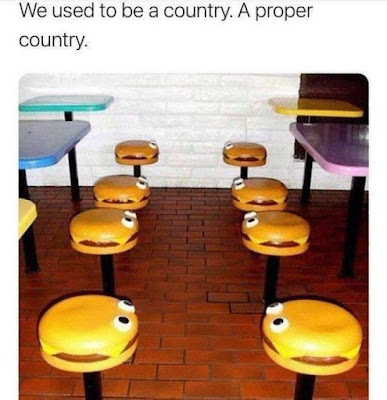
For too long we've put up with and excused blandness and emptiness because wanting more is considered novelty or childish, but that has never been true no matter how much it has been asserted or pushed in the media that has long since turned against us. It isn't silly to want a chain restaurant to look good because it's a corporate product, everything should look its best, especially when customers are involved. Why should you put up with less just because a corporation made it? That is silly. We should want to live in a society where trying to be good needs several qualifiers and asterisks beside them, not one that excuses decay.
I suppose I should expand on the above example. You've probably seen more than a few jokes centered around how anyone thinking that chain restaurants like Pizza Hut or McDonalds should look good are silly or something, but that misses the point of the complaint. Why shouldn't they look their best? Why shouldn't everything? The fact is that if things can be better than they are, then they should be better. Why should you, why should anyone, be trained into wanting less? Why should you be made to expect less because it is easier for a corporation to not bother? It isn't about the things themselves, but about the lack of any ambition at all.
You've certainly seen some variation of the below meme before, whether serious or ironic, the message is very obvious.
Then
Now
Whether you think the above image is silly or not is irrelevant to the fact that you can't deny the below is objectively worse than the above. Knowing this, even as minor as it is, why should one think it a good thing? Why should one accept it? Who benefits from you accepting it? This might not be a big deal in the grand scheme of things, but why does that make it okay? Why should you have no standards at all, because it is easier for billionaires for you not to have them?
It is normal to want to look at interesting or creative things, no matter how silly or minimal. It is not normal to want to look at bland nothing emptiness, no matter how it has been advertised to you for the last 25 years to prefer it over all.
And it feels as if most people understand this by now. The bare minimum of effort is not only not respectful to yourself or others, but it's also boring. The biggest problem to come from Cultural Ground Zero was how everything melted into a pile of bland goo and no one appeared to care if they even noticed in the first place. You can look at photos from 2006 and then from 2018 and you won't find much different between them, even though you'll also never find anyone who thinks what was produced during that time being ideal either. Now, however? It's not enough anymore. People have decided they deserve more, even as those in charge decided they should have nothing instead. We are hitting a low, even as we are beginning to aim high.
So what exactly will the legacy of the 2020s be? From what we've seen so far, it appears to be a transitional era between the death of modernity, Cultural Ground Zero, and the first step towards something grander to come later. We are on the precipice of change, but what that change will be is still up in the air. Where it'll all end up is anyone's guess, but those paying attention have seen attitudes shift, especially over the last three years, desiring more than the bare minimum and reaching out to higher places. Ambition is what they want to see again. I think we all do.
That said, I still believe the 2020s are going to be rocky time overall, especially as we decide exactly where we want to go. There will be much in the way of growing pains and a loss of good things as the decay of the 20th century is power-washed away. How things will look in the future is anyone's guess, but it will eventually shape up into an era we won't be able to recognize. Think about how people in 1880 would have seen the year 1980. They would not have conceived of the amount of change that occurred.
Things never stay the same.
The difference between past change and modern change, however, comes in with the fact that it will now no longer hinge on technological advancement as the sole marker of progress. That era is over. Material progress has brought about all the social change it can, especially in the positive, now we will have to learn to work around it going forward, which probably means a lot of it will be voluntarily cast aside out of necessity. Future change will have to come internally, before it can come externally. That will be tough when we've been told to avoid spiritual development for over a century now. We are going to have to make a lot of hard decisions on how to progress beyond this point.
In other words, there won't be a lot of wisdom or advice to be gained from looking back at the 20th century as a signpost. If anything, it will only be looked at as the polar opposite of what to do. We'll be subject to a lot of overcorrection in the years to come. We more or less are now, especially from those who know there is a problem and refuse to consider alternatives to fix it.
Much of the pushback that occurred on The Last Fanatics came from some readers drawing conclusions out of events spelled out for them. Fandom, people who have shown themselves less than admirable, made decisions in that past that we were never allowed to question before, because . . . well, there isn't any reason. Anti-social misfits wanted a club, constructed one by mutating someone else's genre, then others came in to back them up because they don't want to interact or live in the same world as normal people. This isn't even an argument, everyone knows this is what happened. So why would it make someone upset to have it spelled out for them?
Even as that world dies, proving it was never built on solid ground to begin with, why do we continue to pretend as if they discovered any kind of truth? They did not, and the following century was spent building off anti-social behavior that led to a bunch of warriors of justice screaming about how evil America is while they hold a conference outside concentration camps in China. All to stick to those mean normies that didn't listen to the smart set!
This has always been a scam. It's just a shame that they were allowed to operate unopposed for so long. Not like it matters now, as they slide into irrelevancy, replaced by the next set of useful idiots to be used against normal folk instead.
There are a lot of buried truths being dug up right now that we will have to reapply to continue forward. There are certain things in modern society you are endlessly allowed to criticize because mass media says you can, but question the tenets they built their entire house of cards on (a house that crumbled long ago but we are told to pretend it has not) and you hit a sore spot and become a target for destruction.
That pathway ran out of road long ago. It is time for better ways. It is time to build on better roads left abandoned long ago. We can't stay on this dead end street forever. The last quarter century has proved that it is fruitless to try. They're already falling apart.
Regardless of what happens next, we should be aiming higher anyways. The old world is passing away, but that doesn't mean we have to forget all we learned from it. In fact, unless we take from it going forward we will be doomed to fall into this pit again. We're always going to make mistakes getting it right, but at some point we'll have to make new ones, or at least the old ones in different ways. We can't keep up the same farce forever, pretending things not getting better is preferable to decline. You can't stop decline that way, you just make it take longer to play out.
When I say it is time for better ways, I mean it. We can't afford to keep up the failures of the 20th century. It's time to start aiming higher again.
So what's stopping you? If you've been reading here for years then you know just how much things in the outside world have changed in subtle ways. Many things we took for granted are gone, many ideas, fads, and notions, all fell by the wayside. What remains? The simple fact that doing your best is still the best avenue for getting something done. Nothing is stopping you from doing what you can, aside from you.
Don't let the dying mainstream drag you down with it. We're going to need someone to rebuild when it collapses in on itself, after all. We can't let the same mistakes be repeated forever.
Here is hoping that 2023 will finally be the year it all changes, or at least shows willingness to move in a different, better direction. Regardless, we can still give it the shove needed. We're on the cusp of better days, might as well begin pushing for it.
As always, don't let the winter blues get you down so early in the year! Let's start it off strong and keeping pushing. It's the only way to move forward.
Happy New Years, and welcome to 2023! Let's make it count!
Sometimes it's hard to believe how much time has passed until you look for yourself. The 20th century is long over, and we are fully into the 21st now, even if it might not feel like it yet.
Today's post is going to be a bit different from the usual one, mainly because it is a bit of a celebration! Today marks the 500th post here at the Wasteland, of which has been running for near 7 (!) years, as of this writing. We are old enough to be sent to detention for forgetting to do our homework. Though, let's be honest, they never would have let us in the front door to begin with.
It is difficult to imagine that I have maintained a blog for so long, because I'm not even really sure why I started it at the time I did. It was almost a whim. Perhaps it was due to writing so much at the time and wanting to do something new, but I can't be sure. Nonetheless, I had always been more of the pessimistic and unoptimistic sort so I'm certain I never expected it to go on this long. Nor did I expect my number of views and readers to rapidly increase as they have as the years have gone on. Output has increased, both here and behind the scenes, but that doesn't guarantee much success, in the grand scheme of things. Writers have to write, and that's what I do.
What does matter is that I wanted to create this site as a place where I could gather my thoughts and flesh them out while connecting with people. Just that alone has been worth this entire endeavor, especially since I never imagined it turning out a quarter as well as it has. I look forward to any discussion or reaction that results from what gets put up here.
To this end, I wanted to go over my Top Ten most popular posts in the history of this blog. It would go a long way to discover just what connected with people the most, and just what they are interested in talking about.
This isn't even a planned post, just one spurned on a whim while looking for statistics I tend to completely forget about most of the time. But I figure the best way to learn what connects us the most is to see what the most popular posts have been over the years. It will allow us to know just what was the most resonant among readers and allow me to stay on track delivering what people want to see and talk about.
Without further ado, let us begin with the #1 most popular post on Wasteland & Sky. I honestly don't think this one will be too surprising to anyone who has frequented here for any length of time.
I think this one still being my #1 most popular post of all-time is a good thing, since it is the springboard from a lot of what I write. Many people were more or less realizing how dead pop culture was and it led to a bunch of prophetic posts from many writers. This one was from 2017, the 20th anniversary of Cultural Ground Zero and around the third year anniversary of this blog. I think it's fairly obvious why this is far and away the #1 entry (nothing else even comes close) and that is because it touched on something we all already knew, but no one wanted to say. That being that pop culture was, and is, over.
From this point I just wanted to understand just how much was gone, and how we ended up where we were. It wouldn't be until later when we learned just how dead it had been for quite some time. For now, it was enough to know that the mainstream was completely out of gas.
One of the tipping points was the then-building backlash to the Ready Player One movie (which has already been forgotten, proving the point) in how instead of creating culture, we can only regurgitate it back at each other. This vapidity is the only shared culture remaining in the west. It was a growing problem back in 2017 among many different online circles, and one that would get worse in the next few years. But 2017 was the period where everyone was seeing the cracks.
The only question was if anyone would do anything about it. Looking back nearly four years later, the grifters and the creators both carved out their own niche to deal with the problem. Unfortunately, one still gets far more attention than the other does, though there is little to be done about that. A large and growing chunk of the audience wants to do more than mindlessly consume. They want to be able to connect.
As I put it in the post:
This has little to do with liking geeky things. It was never about that. A lot of men like geeky movies, comics, and games, but those things are not their whole world. They have families, responsibilities, friends, and hopes for the future. Their entire world is not crying into their pillow about how much they miss the 1980s and their long gone youth. While this book might have been relevant to the zeitgeist when it came out, a lot has changed since 2011 and mindless wallowing in pop culture references have finally started to lose their luster.
People don't want to hide in their man-caves and be talked down to anymore, and constantly reassured that their childhood is where they should stay. It was a nice, comfortable place to be.
But childhood is over. Star Wars movies ended in 1983. Chris Claremont doesn't write X-Men anymore. Kurt Cobain is dead, and so is radio rock. Dr. Who has been treading water creatively since its reboot. These properties have had their stories and songs written and told. They are done. Now it is time for new franchises and new stories and for the baggage to be left behind. It's time to stop pining for a childhood that is over.
Which brings us to the bigger point. What comes next?
For an example of this death, can you take a guess at what the ratings were for the Oscars in 2014, the year this blog started? It was 43.7 million.
Do you know what it was this year, in 2021? 9.8 million.
Yes, in less than a decade the Oscars have dropped over 3/4 of its ratings. No one cares about these things anymore. Pop culture is dead, and now we can move on to better things than the rotting carcass of pre-Cultural Ground Zero material.
From late last year, this post reached second place in record time. It is a bit of a follow-on to the previous post, being that it is about the cause as to what killed pop culture to begin with. I decided to look into the period where western culture flatlined, and what I found was the longest post on this blog, without question.
This has been a topic several writers, including Brian Niemeier and David V. Stewart, have been talking about a good deal over the past year or so. It is the theory that the moment Culture ended, when everything froze and metastasized into what it is now was due to a perfect storm of events across the late '90s, centering on 1997. So I decided to look into it myself.
This post was an attempt to show you a full catalogue (well, as full as possible) of this time from world events to pop culture to politics, of the things that actually changed during that 1996-1998 period--things that lead to where we are now. And there was much to go over, including a lot of surprising events I wasn't even aware of. The defining even of the '00s, 9/11, even had its roots here. It's difficult to believe just how inescapable it all is.
Of course we still have many who doubt this theory, but few can argue, outside of nostalgia anyway, that the changes that happened in these years could be considered "good" things. For anyone who can put two and two together they can see it very much didn't.
For a case as to why western culture is trapped in an endless cycle of pre-1997 nostalgia, I think you can gleam it from the post.
As I marked:
You could find millions of articles proclaiming why culture is dead written by progressives, conservatives, paranoiacs, normies, pop cultists, and everyone and everything on the fringes and in-between, but the one thing that unites them all is that they are always declaring one era or another is The Defining Point--the moment where Things Went Wrong. Whether it's the wavy gravy '60s or the materialist typhoon of the '80s, everyone has an opinion on what to go back to, and what to demonize. You could spend hours discussing such things. It causes passionate stirrings in many.
However, little is talked about the era where no one wants to go back to, regardless of background or beliefs. For even people who love the decade, few will ever acknowledge the late '90s as anything but an abysmal, embarrassing, and creatively stagnant time with little to offer. But even fewer acknowledge that these same loathed years have defined the 21st century as a whole, so far. Everything you hate, everything you can't get away from, and everything that refuses to go away--all of it metastasized in the late '90s.
Ironically, the period that few like has ended up being the one to define the current state that no one likes. It's odd, and that can't be avoided.
Now, don't get me wrong. I am not saying the source of all of evil is in the late '90s. You would have to go back centuries, even millennia, for that. What I am saying is that the root of most modern day ills could easily be remedied by admitting that we have not culturally moved on from the late '90s, and finally decoupling ourselves from that burning car. It's a problem that stems from a lack of reflection.
The reason that you are swimming in nostalgic movements from other time periods is because you are dealing with a culture that is dying to move on from being as stagnant and stuck as it is. So they've instead chosen better times to fashion their culture around. In other words, the modern world is waiting to move on.
Yes, I do see a relation between the two most popular posts. It appears a lot of others are also interested in What Went Wrong, and it remains a solid topic for exploration.
The fact of the matter is that the old system, from OldPub to Hollywood, is spent. Without a shared culture to link us together, and with a large entertainment complex that is as out of touch as they are clueless, naturally people want something better.
We're going to give them better.
I still hope, more than any other post, that this one gets outdated sooner than later. Living endlessly in the year 1997 is not my ideal existence, since I hated it even at the time. We all need to finally be free of that dead weight.
But one post I am glad was as popular as it was came in at #3 on the list.
It is one topic I didn't see anyone talking about until I compiled the post back in 2019. If you are speaking of utter destruction of art and entertainment through total incompetence and mindless hate, then you can't do worse than this . . .
Saturday morning cartoons have been dead since the early '00s after being completely gutted throughout the 1990s. This despite being around for nearly half a century, at the time. What happened, and why was no one talking about it? That was the question no one was asking. There has still yet to be any book written on the subject, despite endless nostalgia concerning the topic. For something so prevalent in millions of people's lives it is a wonder that no one is curious at just what happened to end it all.
Back in 2019, I cobbled together this post based on scraps of knowledge I had accumulated over the years as to why the practice was killed. I even did additional research. It wasn't that difficult, which made it double weird that no one else had ever done it. What I found was something similar to what is occurring this very second in just about every entertainment space today. And nobody appeared to notice it.
In fact, many were peddling revisionism they swallowed without question, just as those who went against the PMRC back in the '90s now obediently roll over for treats for their new masters today. It's amazing just how easily these rebel types were tricked into supporting the people who destroyed their own industry. You have heard many stories as to what destroyed Saturday Morning Cartoons, but you never hear about who spearheaded said destruction. I'm still not quite certain of the reason for it, but the answer lies in the post.
And you also never hear criticism of the individual responsible. No, in fact, the one who destroyed an industry was given a presidential medal of freedom in 1995 (as well as the "Women That Make a Difference Award" from the International Women's Forum) for not doing anything that benefited society in the slightest. To this day, you will hear talk about how "parents" groups were responsible for taking down this and that, when it was never the case. Every single industry, from cartoons to music to television, was attacked by government-backed groups run by those with ties to a political party and supported by the media and their lapdog journalists. They wanted to control what you watched as a kid, just as they are attempting to do to you right now.
The one who led the charge was Peggy Charren's ACT, a group that wanted sex on prime-time television but no violence in children programming. You can thank her interference for why no one in a post-60s cartoon is allowed to shoot guns, for instance. She claimed to be anti-cencorship, but it was her invalid rule that barred shows from airing and prevented certain subjects to ever be allowed to be portrayed. Wondering why North America never had its own Mobile Suit Gundam, original tokusatsu, or Pokemon-level phenomenon of its own? You can thank her made up rules that you had to follow.
But hey, you got Captain Planet telling you why you shouldn't be allowed to have more than one kid and how the government monitoring that is actually a very Good Thing. That sort of propagandist messaging was just fine. So there you go.
The reason cartoons became so anemic by the end of the 90s was because the industry was successfully crippled from all that interference. And by the end of the decade there was no more profit to be made on Saturday morning, all thanks to her interference.
This was after the 1980s was basically spent as a war-ground between Ronald Reagan and his chairman of the Federal Commission Mark Fowler against Charren's group because the former dictated that the marketplace should decide which children shows live or die and the latter decided the kids should be forced to watch only what was good for them. Of course she would be the one to decide what that entailed. She was the one arguing for good citizen propaganda while creators were still trying to put out what they wanted despite her interference. If you want to know why the '80s had so many adventure shows that previous decades didn't, this was the reason why. It was the closest they ever got to being able to make them the way they wanted due to audience demand being louder than ever. But it wasn't enough. Several shows were still successfully barred from air by ACT and many more were altered by her group's interference. So much for a group that prided itself on being anti-censorship and has been ignored by free speech champions to this day.
Peggy Charren won despite the people, the creators, and even the law at the time, being against her. She was shouted down and told she wasn't wanted. Subversives never admit defeat, they just sneak in through the back door. ACT succeeded in censoring Saturday morning cartoons entirely by government-mandated morality and the audience and advertisers left. Now they no longer exist.
And look at all those alternatives for kids around now.
What ended up killing Saturday morning cartoon blocks was nothing as obvious as changing trends or demographics, they did after all live for near half a century, but because of moral busybodies and self-proclaimed paragons of justice. You see, cartoons needed to "teach" children and instruct them in the proper ways to be a good citizen and worthwhile human being before becoming porn addicted and drug-addled adults getting drunk every night in the pleasure center. It never made sense, but then it was never meant to. The important part was that they won and you lost.
Peggy Charren, in my mind, is the shining example of everything wrong with the western entertainment industry of the 20th century. She is also one still celebrated today, even though that celebration is based on an utter lie about what she did.
She was a self-appointed moral crusader that irreparably harmed an entire industry. One that no one inside of needed and none of the customers wanted, but one that was able to influence a whole industry regardless.
And her spirit still lives on today. Just look at what all the children's networks are advocating now: educational propaganda with a total lack of self-awareness, subtlety, and tact, that would make Captain Planet blush. It's entirely vapid and robotic, meant to propagandize, not communicate with an audience. This is the industry she built, which is why it's on the way out.
So far I can understand why these above posts were so popular. One that I can't quite understand was the next one on the list.
I wish I could tell you why this ranked so high, but I really have no idea. It's mainly a sum up on what I was doing at the time, which was a lot of writing on projects that are all out (or will be, shortly) and a sort of update on where we have been since 2008 and its comparable 1998 and 1988. In essence, it might be a dry run for the stuff still to come later on.
As for 2019? It was a tough year personally, though better than 2018, and one I worked through and started to get back on track during 2020. Despite the latter's . . . obvious setbacks as a year, I did manage to wring more out of it. 2021 is still a mystery right now, but I'm hoping it will continue the upward trend again.
But the bigger thing to take away is that the '10s are finally over and in the rearview. We have a whole new decade we are wading in now, and we can push it even further to the limit than we could before. With the rise of NewPub and alternate channels for video games, comics, movies, etc., the art world's future is looking bright.
However, speaking of entries I don't understand being on this list:
For those who wonder, the main reason I stopped doing reviews on the blog is that the audience just wasn't interested in them. So instead I began folding such things into other posts. This post was actually no different when I wrote it in 2019. There wasn't much traction, at first. When it was posted it was about as popular as every other review at the Wasteland. That is to say, not at all. I actually think the reception for this post is what hastened my decision to stop writing them.
But then the anime blew up, and became the biggest of the decade so far, pretty much out of nowhere. The underrated and overlooked series i was throwing my support behind became a phenomenon overnight. It just recently had a movie that is one of the highest grossing of all time in Japan, and has a second season on the way soon.
Gotta say, I didn't quite see it being that popular when I wrote the above review. I really just thought it would be a great cult favorite that would fly under the radar like Psyren or No Guns Life. The volumes I covered in the above post show the exact moment the series went from solid to great, and I wanted to show that as best as I could.
All of a sudden, out of nowhere, views for this post took off. I can understand that much: Demon Slayer is a great series with a fantastic art style and jagged and rough battle scenes (my favorite kind) that doesn't attempt to reinvent the wheel but show you how rock solid the foundation is. And considering we have been starved for straightforward hotblooded Good Vs. Evil stories not soaked in grey mush, it makes perfect sense that it would take off like it did. It was a series that came around at the exact right time, and had the success it naturally deserved.
As for my current thoughts on the series? It's still great. Koyoharu Gotouge successfully ramped up the action and the intensity by avoiding the power creep problem in shonen. It happened by appealing to the limits of both humanity and depravity, of the human heart and both its boundless potential for love and hate. What makes a demon, and what can save them? Some complain it ended too soon or that the battles were hard to follow or that it was overall predictable, to which I disagree with just about all said complaints. This was exactly the sort of ending the series needed to have thematically to wrap everything up, and the final battle was suitably epic in scope leading to an ending that was well earned. It's going to be remembered for years because it delivered exactly what was needed at the time it came out, and because it did what it desired to do as best as it could.
Now, I'm just eager to see what she will be working on next.
This was another post that blew up out of nowhere. It's quite outdated looking back on it now, since we still had yet to know just how bad the rot in the comic industry really was. Being run by middle-aged childless urbanite consoomer hipsters, it would only get worse from 2017.
A comparison that has aged really well is the one of modern comics to the manga series My Hero Academia. MHA has only gotten better over the years, recently pulling off one of its biggest arcs so far. Next year's anime season will be huge, as a consequence. With a third movie out this year and a successful fifth season currently on the air, the series is still going strong. At the same time: as MHA has only gotten bigger, the Big Two's sales have only plummeted further into the crater and somehow manage to still get worse.
But while the manga is still trucking on, as popular as it is, it is also eventually going to end.
It really is about the Death of Superman. I’m not going to get into manga spoilers, but much of My Hero Academia is about Izuku “Deku” Midoriya learning from All Might how to be a hero in more ways than just strength. But the way All Might’s powers work is that they transfer to a new host and the old one eventually loses all their abilities as a cost. All Might is Superman passing on to a new generation. The series is essentially about how a world of heroes deals with change.
This is something the Death of Superman storyline flirted with, but chickened out with at the final moment. This also had the unfortunate consequence of killing comic book storytelling flat for superheroes. We’re around a quarter of a century removed from that storyline and the comic book world has still never managed to move past it or top it. It’s stunted.
My Hero Academia is itself about a world of heroes that is in the process of an event that could very well affect the very fate of everyone on the planet. This is something a Marvel or DC series could never do in their main books for very obvious reasons.
Recently, Kohei Horikoshi has let it be known that the manga is entering its final part. For those unaware, there have been other distinct parts to the manga so far. The beginning of the series over the first eleven volumes, the transitional period dealing with the rise of villains covering the next twenty volumes, and now the current one which just started. How long it's going to be is unknown, though it'll be a while until we reach the conclusion. Nonetheless, it will be ending.
In the above post I posit that this is why both MHA and manga as a whole succeeds where the western comic book industry fails. It tells complete stories where things matter and will never be retconned or reversed. Western comic creators lost customers' trust on this aspect back in the '80s and '90s when the industry almost (and should have) went bankrupt, and they have never tried to regain it. Instead they repeat the same mistakes to ever-dwindling audiences.
We all know this now, but unless the industry turns it around it is destined for the scrapheap. This is how a cadre of independent creators have managed to come in and stir things up by crowdfunding whole new projects the old industry never would have bothered with. It is because the big boys are on the way out.
And they are on the way out because of the next entry's subject:
This post was about poseurs, though a follow on to an earlier one where I attempted to bring back this deliberately buried term. It's really about control freak egoists who take control of something they "love" and then remake it in their own image.
I used the example of rock n' roll, and managed to piss off every rock cultist around by insinuating (correctly) that rock music is for kids. It's a deliberately juvenile form of music meant for partying and fun, the opposite of blues' focus on the downside of life. This is an outgrowth of rock's home-down, celebratory country music beginnings, which transitioned into rockabilly in the mid-'50s then into pop by the '60s.
It is and was always meant for a younger audience, and it is meant to be fun first.
And this is not a bad thing.
But it was a bad thing for the people who grew up and didn't want to be seen as childish by liking the sort of things they did as kids, so they warped their chosen medium in their image in an attempt to make seem "mature" to groups of people who couldn't care less. How did they do it? They used the deaths of Buddy Holly, Richie Valens, the Big Bopper, and other oddly similar passings like Eddie Cochran, to change the game.
Now rock was for grown-ups instead of dumb kids!
Back in the 1950s, poseurs saw a genre they could co-opt for their own ends, and they did. It took time, but they pushed their way in based on the clueless knowledge of the art from their parent's generation and the uncaring shrugs of politicians of their own. They took culture while everyone else was arguing over policies and the like. They twisted Rock music into a sad mockery of what it began as, before putting the bullet in it themselves and abandoning the genre for rap, bubblegum, and whatever electronic scene is big this week. Now Rock is dead, and in the process of being forgotten.
This all came from abandoning the music's core ambition, and its original goal of entertaining first.
Here is something that wasn't a controversial statement in the 1950s, but is now. Poseurs worked hard to subvert this truism. It is controversial, despite being factual on a level that everyone knows but won't ever say.
So here it goes.
Rock music is for kids.
Teenagers, specifically. It's juvenile at its core, and was always meant to be such as a counterpoint to the more serious Blues. There's nothing wrong with that, but self-conscious adults never wanted to admit they enjoyed silly, corny music. This is why to this day most Baby Boomers still sneer over music made before the four mop tops and are convinced their childish, overproduced self-important three chord songs are better than the previous decade's childish, under-produced goofy three chord songs. A juvenile reaction for lovers of a juvenile genre.
There was a period where rock was meant to be fun, and not up its own rear. The poseurs made sure to bury that era and throw a tarp over it. But that was a long time ago now, and the roots have since been purged from serious discussion over the form.
This is what rock was built on
I then went on to use several examples from Rolling Stone, the punchline of "Rock" magazines which nonetheless still influenced the industry for decades to come. All you have to do is look at a site like Pitchfork to see how inane their influence was on elitists who turn their noses up at material that doesn't pass their hilariously stunted sniff test. All this over actual kid music.
Well, they did it. They worked their magic. Now rock is dead, and it's not coming back.
Yes, it is dead. If you are still optimistic over the future of rock music returning to prominence then I have a bridge to sell you. Rock is not "sleeping" or "in hibernation" so drop the cope. It's finsihed and over. You will never be able to form a rock band and make a living from it again. That industry no longer exists. Thems the breaks.
But at least you got your mature music! Listen to it alone in your basement as the rest of the world moves on. At least no one will call you a stunted child for it.
There is a bit of continuity in this top 10, because the next entry is about another industry hijacked by those who hate juvenile stylings and need to be seen as mature.
I have to admit I was expecting this to be a little higher, but the entire series as whole preformed very well as a whole. However, only the first entry made the top 10.
Finding this old wide tome in the used book store back in 2018 sure led to a lot of thinking on my part, leading to this post from early 2019 that went on to be rather popular. Those in PulpRev circles had been discussing just what had happened to the field for a while by that point. After discovering the deliberately buried pulps and learning just how good they were, many of us started writing our own fiction inspired by it. I'm still doing so now.
But what we couldn't understand was just how much the industry hated their past. This is no exaggeration to say that fandom is responsible for doing untold damage to genre fiction, and it really came together when I read Sam Lundwell's 1977 book, Science Fiction: An Illustrated History which had so much bile in its pages that reading it had my jaw on the floor.
I would say this book changed my perspective on fandom, at least a little. While I disliked the entire concept before, I was now left with the feeling that it should be wiped out forever. The book was just that much of a mindset shift. All fandom leads to is cult behavior and destroying art and entertainment subcultures, mediums, and genres.
One of the earliest clashes with common sense was this section in the first part of the book:
There is one last quote I do want to go over. When discussing Lovecraft he begins to dip into black and white morality (proving he really didn't get Lovecraft) and gets to mentioning Lord of the Rings and the Christian relation to Gothic literature. Now buckle up because you're about to see why the genres got separated in the first place and why fandom cultists will do anything to keep them that way.
"An unbearable complicated reality is dissolved into simple parts black and white, of good and evil. Werewolves, witches, and vampires of popular folklore were evil, period, and a good silver bullet was an effective way of stopping them. This was an age of straight, uncomplicated emotions, and witches were burned at the stake all over Europe as the good peasants successfully liberated themselves from the Devil."
Yes.
Stories were written from a framework of a protagonist and an antagonist and the best way to make them dynamic and clash with each other was for them to have opposing views and goals. What better opposing ideals then good and evil? What better than polar opposite worldviews? Those who want to be good and have something to look up to put themselves in the shoes of the good man who defeats the evil. They relate and they understand as they live in a society where such things are clearly defined and shared among the populace. It gives them excitement, it affirms their lives a little, and is a net positive to the world. That is why such stories sell the best even today.
The age of Complicated Emotions gave rise to a generation of novels no one wanted to read, failing sales, and a fracturing of culture.
So, yes, good and evil is the correct way to go. I'm sure Mr. Lundwell was upset when Lord of the Rings was named novel of the century, too. Those stupid, dirty peasants and their unrefined palettes just couldn't understand meaningless dross like Ulysses soaked in a grey goo of nihilistic hedonism from the upper class and the wannabe elites. No one who faces real problems in life wants to engage in entertainment that makes them miserable and pulls them down. They want to be lifted out of the doldrums, not have their faces shoved in the mud by those who aspire to be invited to cocktail parties hosted by others with Complicated Emotions.
But he isn't finished.
"This is the basis of the Gothic tale and its philosophy, faithfully built upon the Christian faith and its rituals and this may be the main reason for its popularity in our complicated age when nothing is purely black or white any longer. In the Gothic tale, evil is easily recognizable, just as grotesque and deformed, loathsome and corrupted as it ought to be, but never is. It is no coincidence that the number of Black Masses is growing and the belief in the Devil as an actual fire-and brimstone person (?) is returning. The fallen Monk Ambrosio and Lucifer are so much more agreeable than Song My. Only the improbable is enjoyable in this context; when the horrors become too real, they become too unpleasant."
I'm now wondering if Mr. Lundwell had front row seat for Woodstock. I have no idea what where this passage came from.
Let's put aside the fact that he completely misunderstands black and white morality and why the public at large believes in it and always has and always will. This whole paragraph does not understand the nature of evil. Yes, evil can be hidden and good can be subtle, but that doesn't make them grey gruel that are "complicated" or complex. They still exist even if you're too morally dead to see them. The point of the Gothic tale is that good and evil are but a choice away and damnation and salvation lie on the razor's edge of decision and repentance. This is the danger and mystery of Christianity that forms the entire backbone of the genre and the weight prepackaged with it. This is what makes Gothic literature far more interesting and engaging than preachy sterilized Christian Fiction or the morally confused psychotherapy sessions of all those unsold copies of modern literary fiction lining the shelves of the closed bookstores.
To imply people like straightforward morality because gosh darn reality is just too hard is such an overwhelmingly arrogant perspective that I wonder if the writer ever spoke to a Christian in his life before writing this passage. Science fiction writers tend to write a lot about those filthy Christians without ever speaking to them, after all.
It makes sense, though. The irony of this swipe against black and white morality being written it the 1970s, the most morally dead decade of the 20th century, is unconsciously funny.
I think this is the most important part to mention, because it is the crux of the entire fake battle between the genres, the hatred of the pulps, and the reason the field has been such a volatile place for a long time. It was made this way by fandom.
Because fandom is full of anti-social weirdos who hate normal people and the concept of objective morality, they champion anything that goes against it and deride anything that holds back their corporate approved version of the future. That they run the Big Four (or is it three?) publishers of Oldpub that has successfully killed their depraved social club doesn't even cross their minds. They have their replacement religion, and that's all that matters. As pathetic as that is.
The real reason they hate the pulps, as can be seen in Lundwell's book, is because they champion that good, the true, and the transcendent. They are against everything antisocial weirdos are for. All of which are things fandom has been trying to subvert and water down for nearly a century, at this point. This means telling you that their "Golden Age", an era with no currently remaining influence, lowered sales, and no real cultural penetration, is superior to one that actually did all those things better and influenced other entire mediums from tabletop gaming to comics to music to video games. The only people who can swallow that lie of the fake "Golden Age" are those who want to feel self-important, not those who want to accept reality.
Fandom kills, and should always be gatekept out, because a control freak fanatic is always a sign of a poseur in disguise.
I don't know if I'll cover more on this subject in the future, but it is an interesting one to discuss. We're going to have to gut a lot of rot before we can set the ship right again. That is going to include displacing a lot of cultists from their high priest positions.
It should also be said that my follow-on series to these posts, the one on Cheap Thrills, just barely made the cut for this list. In that one, I took the flipside approach--from people who legitimately loved and appreciated the very medium cultists sought to destroy.
The next post is actually related, though it is different in that it is one that has random spikes in popularity. I honestly think it has to do with the term coming back into usage again, but can't be sure. Either way, I quite understand why this one has endured:
This is probably the easiest entry to talk about, because I remember exactly why I wrote it. This is because a lot of people I saw online were misdiagnosing issues in their hobbies and blaming the wrong parties for why things were going wrong. They were making things worse by aiming their ire at the wrong targets. I do understand since it had been a rough decade of IPs and mediums collapsing in on themselves, and everybody needed a scapegoat for what happened.
The thing is, there is one cause to all. The answer is right in front of you. Everyone was simply aiming their rifles at the wrong target.
Perhaps it is because I was more familiar with punk culture as it was back in the '90s before it absolutely cratered into being for greasy emo hipster types in the '00s, but the used term for "infiltrator" was very cut and dry. They were called "poseurs" and were enemies of every group, no matter who you were or what you believed. Before the '90s, hobbies and subcultures were gatekept from outsiders attempting to subvert them for their own end.
But by the end of the 1990s, that was changing. A lot of people then poopooed the idea, thinking that if we just let everyone into our subculture than everyone will get along and such things. You know, the usual utopian boomer nonsense that we're still suffering from.
It goes without saying that letting the poseurs in was a monumentally bad idea.
The fact of the matter is that a subculture exists because of a certain mentality brought about by conditions in the local community among a limited set of people. Individuals form a group and their shared interest and drive produces something new out of it. You, by definition, cannot "let everyone in" to such a thing because then it ceases to be what it is. It becomes homogenized product and diluted from its original form--the form that made it what was to begin with. Poseurs always destroy things and subvert their ideas for their own gain: they do not do it for the benefit for the subculture. They do it to benefit themselves.
The point of a subculture is that you must adapt to it in order to get the most out of it, and doing so usually tells you a bit more about yourself and your interests than you originally thought. You grow yourself by learning about something new and joining another group different from yourself. And if it's not for you? Then you just move on and let the subculture carry on as it was. This is how it always worked before. Everybody wins in such a setup.
A poseur is the opposite of this. A poseur is an infiltrator who doesn't seek the subculture to engage in it. He seeks it out to remake it in his own image. Where a subculture exists to benefit everyone; a poseur exists to make the subculture benefit himself. He is the walking definition of a subversive and the reason gatekeeping exists to begin with.
As an example, here are lyrics to an old hardcore punk song written about poseurs. This was written way back in 1980, and yet it remains just as relevant today.
You beat up Fear's bass player
You were all surfers last year
Three years ago, it wasn't cool
You spit on me, but I'm no one
Hey, Bobby Pyn had long hair
But you spit on Darby Crash
He had a fucking mohawk, man
Three years ago, "Forming" in 1975
"I'm a new waver,
My girlfriend's a surfer"
She's more poseur than you are
And she ain't going to fuck you anyway
It doesn't matter, you all suck
Know shit about punk rock
Just a bunch of fucking drug addicts
Screwing up what we call FUN
I hate everything and that means you
I hate you more than I do
I got no time to sleep, no time to get laid
I got to, but it doesn't matter
I got to, but it doesn't matter
Fake hardcore
You're fake hardcore
You spit on The Urinals.
The subject of the song is very clear, full of obscure references to the punk subculture of the time to make the point that the poseurs were the same people who hated them to begin with. Soo why are they there now? To take control, of course. This is not the action of a "normie" or whatever term they used 40 years ago.
The certain type of person being described in the lyrics is not "normal" in any sense of the word. They are someone looking for the next trend to latch onto in order to prop them up, even muscling in on the turf of people they hate. They just want the sense of control and believe they were specially made to seize it for themselves.
What the poseur sees is something of themselves in the new conquest before them, and wishes to see it reflect them further at the expense of everyone else. These are the people that need to be gatekept from a hobby or subculture. When they aren't, a scene rots away and dies. It dies because the originators and the original ideas that created the space are shoved out the door by people who have no business controlling the door to begin with.
But you let them in because you wanted to be "tolerant" and accepting, and never once stopped to think why you needed to be so in the first place.
So you lose everything instead. Good going.
Long story short: if you don't keep the poseurs out, they will keep you out. You don't have any bigger example than the above punk rock. It has become a joke. A bedrock of milquetoast fashionable mainstream beliefs held up by upper class urbanites that clap when one of their own poses with the president for photo ops. Vote for the Good Guy Party to fix the world is not a punk slogan, but you'll hear all the poseurs saying it today. Wear pink leather jackets to support the X community! Only $300! Heck, some of these poseurs even run record labels while writing their "rebellious" music that rehashes what CNN says nightly. It's hilarious stuff, honestly.
Now look at the lyrics above and what I just described and tell me if either of those two groups line up. I would post some of the band's saltier lyrics, but they would be disowned today from the same industry rebels who blacklisted a band for being offensive to a woman at the Warped Tour and cast out an influential scene member of over 30 years for being violent at a show. This how you get a genre priding itself on being caustic and dangerous into supporting safe spaces and appropriate language without anyone batting an eye.
The scene is dead now, and those poseurs seizing control is the problem. Keep the poseurs out and keep your scene. Don't, and you get the last 20+ years of creatively stagnant art and entertainment led by fakers who will keep actual talent out.
This says a lot about where we are now.
For our last post, we are also diving into a semi-related related topic. This one being nostalgia as a last result for meaning.
The most recent entry on this list literally came out last month. You guys work fast. I was a bit taken aback that this was so popular so fast.
As I look it over, I can understand why. A lot of this is sort of the second part to my most popular post above on what pop culture obsession has done to most of us, especially those in Gen Y. How it has replaced religion and community for product and a worship over the new. What this has done is lead to burnout and an untold level of depression that we've never seen before.
All this has happened because we've substituted real things for inferior forgeries, copies of copies. What this does is fracture society, creating a level of alienation and isolation that has never been seen before in human civilization.
This all came about because we as a people can't let things be what they are. We all have a little poseur inside us, begging to tweak and control things we shouldn't be fiddling with. Because, as we have seen above, it all that ends in disaster.
"[T]he rejection of art and symbol returned in the form of detached and decadent art; the rejection of supernatural healing returned in the form of bizarre charlatans and faith healers; the rejection of the confessional returned in psychoanalysis; the rejection of an international Church returned in an entanglement of international finance; the rejection of the influence of Catholic morality on family life returned in “the family being broken in pieces by bureaucracy”; and the rejection of occasional Catholic fasting returned in teetotalers and vegetarians imposing fasting on everybody all the time."
All it becomes is a pale imitation of religion. But it's just an imitation, it will never be as true as the proper one. Yet, this is what the fanatics of the modern day desire, and they wish to force it on everyone else. It's nothing but a dead end existence.
The lack of any real future vision in western culture today comes from the failure of secular humanism to instill the purpose it was designed to replace. Simply replacing the language at a whim, and punishing those who question it, isn't uniting anyone or instilling any greater purpose. It's just punishing an outgroup that wasn't an outgroup 20 minutes ago. This philosophy divisive at its core, and it's run out of gas.
This leads to the main reason why this undying zombie of nostalgia culture has persisted, especially among Gen Y. It has persisted because it is the only view of existence that shows something other than the bleak hellscape that has been the west since the late '90s. Those of us in Gen Y, the ones who remember the before time the best, are the ones who cling to it because it is the only normality we know. Those younger than us have none, and those older have lived the downhill slide far longer and have more perspective.
We don't have that. In fact, we don't really have anything but the nostalgia.
This is why we cling to it, despite knowing deep down that it has reached the end of its shelf-life. We don't want to face the future. But that future is coming regardless.
As I wrote:
Very soon, it will end. Nostalgia can't last forever.
What this has also done is left those younger than Gen Y in a bit of a pickle. Millennials were taught specifically to reject the past and revile it. So when they look at the present they are taught to plow through it to create the perfect utopian future they were erroneously taught to believe was possible. But even they can't fool themselves forever and will eventually begin to wonder what it's all for. Without a past to look towards or a present worth living in, a good future is impossible to strive for. when the nostalgic façade is gone, all that will remain is the ugly reality we've been ignoring for near a quarter of a century. The real world will eventually come tumbling through that wall like a bulldozer on a condemned building.
The problem comes with the fact that nostalgia is over with Gen Y. Generation Y more or less killed the concept of nostalgia worship due to their obsession over reliving those few fruitful early years of their life--years that came before Cultural Ground Zero existed. Younger generations not only have no context for those older eras they are swimming in, due to being taught not to have any, but also due to not even really understanding their own past. They won't carry on the nostalgic wave, because they have no nostalgia to carry with them.
In essence, nostalgia is over. There will never be another nostalgic movement, because there is no longer anything to be nostalgic for or anyone left to get nostalgic over it. There is no longer any younger generation who has a past of cultural connections that is worth reliving--all they have are personal memories and a handful of products that existed in a post-death world. There is no cultural mood or spirit left to revive, because its the same spirit and mood we have now. All that is left for younger generations to be nostalgic over is decades of the same interminable era that refuses to die. You can't be nostalgic for something that has never gone away. That's simply not enough to form a movement.
You can't be nostalgic for a time exactly like the one you are in now. It would be like being in a war for 25 years and missing the tenth year of the war because things hadn't quite been so ravaged as they are now. It makes no sense.
With the death of pop culture, and nostalgia's shelf life running out, there soon won't be anything left to pillage from the past in order to keep the house of cards from falling.
The rest of the above post details a very sad attempt at a Millennial attempting nostalgia for the '00s, and it falling completely flat, because it isn't based on anything solid. You can be nostalgic for missing a band at the peak of their powers or when a video game studio was good, but you can't be nostalgic for a social climate that is exactly like the one we have now, but not quite as bad. That can't form a nostalgic movement, and it never will.
Problem is, we would have had a '00s nostalgia movement by now. There was '80s and '90s nostalgia in the early '00s. I know, because I was there. That was a mere handful of years after the decade was already over and we were ankle deep in a new terrible decade. The '00s were so bad at the time that no one wanted to be there, even at the time. However, it's also been over a decade since the '00s ended, but still nothing in the way of a nostalgia wave for it. So where is it? It's not here because it's not happening. Nostalgia is over.
Gen Y is the last generation to pine for and remember the past. The generations under them either hate the world that existed beforehand or have absolutely no knowledge of it. Once we go? That's all gone. Then so will traces of what the world was like beforehand.
So it is up to us to act. Instead of reveling in nostalgia, we should be sharing our experiences and striving to create something better. Hiding away and melting to nothing just isn't an option. Especially not for a generation that is currently self-destructing.
There is a future ahead, we just need to fight for it.
And that more or less sums up the experience here at the Wasteland. I can't tell you if I ever expected to write about the sorts of things I did when I started, but I can say it's been fun thinking up all this stuff and sharing it with you over the years.
No, I do not intend on walking away anytime soon. Writing is an outlet that I enjoy far too much to give up, both fiction and nonfiction, and is a part of who I am. It's simply a surprise to see that I've been doing it for so long now.
So thank you for 500 posts! It's been a blast, and quite the journey. I can't imagine being anywhere else. Here is to 500 more!