Thursday, December 16, 2021

Touch & Go


We are doing everything online these days, aren't we? At least, it feels that way. Soon every single aspect of our lives will require us to be tethered to an ephemeral network or we simply will not be able to function. These days it seems that the physical world is becoming less and less important to modernity.

It hasn't, but it sometimes does feel like it. In fact, there have been plenty of changes afoot to bring things a bit more in line with where we should be. It's just harder to notice in the fog of social media, 24/7 news assault, and endless automation of smaller jobs. Things are changing, but not quite in the way we see it changing, as is usually the case.

Even though a lot has changed over the last few years, one thing that absolutely hasn't is the existence of the physical market. Particularly in the arena of movies, disc releases still exist and have only grown in the wake of the recent pandemic and rise of customer-last services such as streaming. People still value the sensation of touch.

This is a bit strange, considering you would have figured the opposite would have happened, especially with less releases of new Hollywood product. But the niche still continues to thrive regardless of what the machine does.
For the most part, you will always have folks that will jump on the most convenient, low effort way to enjoy something, which explains the popularity of streaming over technical improvements such as 4K. However, what is surprising is that despite the hard push from corporations to get these customers to own less and pay constant rental fees for everything they're interested in (and not interested in, to be honest) physical media ownership still exists. Even despite a situation where most people couldn't leave their homes for over a year, never mind go out themselves and watch or buy new movies, they still continued to buy physical objects to own.

A bit unexpected, to be quite honest. From everything that has happened, one would have figured the previous trends of increasing online product would have continued unabated. Yet it looks like for many the opposite occurred.

Take this article about the state of the newer UHD (Ultra HD) format and its bid to seize control of the physical market since its inception nearly half a decade ago. It doesn't seem to be grabbing hold or doing much to attract customers. In fact, DVD sales are still the highest among all physical formats even 25 years after their creation.

Check the chart:


Amazing, isn't it? The cheapest, most disposable form of physical media is still the majority market share to this day. That doesn't look to be changing anytime soon.

But it feels like there is a divide between different sorts of customers. Whether it is those who just want to simply own the product, those who want the best possible presentation, and those who want the best of both worlds, the majority consensus seems to be that outright owning the product is more important than any other aspect of it.

In other words, it is about the experience more so than the bells and whistles surrounding the movie. Not much has changed in the last quarter of a century for a lot of people aside from widescreen TVs. And not even large ones.

The above chart might be confusing to those who value giant 4K television sets and a small library that has no potential to reach the spread of those on lesser formats like DVD or even standard Blu-Ray. This is understandable. Why wouldn't anyone want to pay more for higher quality, even with a library that will never reach the depth and variety of those that came before?

Why indeed.


"With the competition between streaming services intensifying, it’s easy to forget there’s still a market of consumers who buy physical media, who like to collect tangible things, for a variety of reasons including pride of ownership, wanting to actually own things, fear of tampering by content owners. Is it niche? Not quite. It’s shrinking for sure, by double-digit numbers annually, but it’s still a mass market. What’s niche perhaps is the premium segment of this market – Ultra HD Blu-ray, a 4K HDR disc format introduced 5 years ago this February, 10 years after Blu-ray Disc and 20 years after DVD. It’s likely the ultimate video disc format. 

"Nielsen VideoScan, a company of the NPD Group, has since years been collecting retail sales numbers of consumer purchases in the U.S. market. I’ve tracked those numbers the past few years and they show a couple of interesting things."


For a newer format, UHD has never pierced double digit market share, and has already fallen under what it was three years ago. Meanwhile, standard Blu Ray has fallen to a quarter of the total market share, while DVD owns nearly 3/4s of the home market! Even after 25 years, DVD still reigns supreme over it all.


"First a note of caution, though. The past year has not been a normal year for a lot of things, including entertainment spending. Expenditure on streaming services has increased at an accelerated rate while spending on physical media has not. But there’s more. Because of covid measures, Hollywood studios have had to halt movie production for months. Moreover, because of lockdowns cinemas and movie theaters have had to close for extended periods of time. This dearth of theatrical releases has translated into a complete stagnation of home video releases a few months down the line, still observing the traditional windows in the staggered releases schedules. The sell-through video market is, or at least used to be, driven by such new releases. That’s the main reason why 2020 was not a great year for movie sales, and it has exaggerated certain trends."


This is a fair assessment, but what also should be taken into account is that the modern movie industry was already flatlining before the pandemic ever started. Sales had been going down for years, and movie theaters were already seeing worse and worse returns. All the last two years did was hasten that demise faster.

The #1 appeal of buying big 4K TVs and players that blow up picture on them is for newer movies, but new movies don't really sell all that much anymore. Most people interested in them will just watch it on a streaming service. UHD was never going to be much more than a niche in a niche. And it looks like the trends are bearing that out.


"The most interesting trend in my view is what’s happening to Blu-ray Disc, the 1080p HD disc format: it’s getting squeezed between DVD and Ultra HD Blu-ray. It’s clearly visible in 2020 but if you look back a little further you can see this happening more or less from the introduction of UHD BD. The split between DVD and BD was about 50/50 (in units) before UHD BD launched. This was as far as Blu-ray Disc got in trying to displace DVD after reaching maturity. It had been on the market for ten years by then. 

"This squeeze makes sense, of course. DVD is the cheapest option here, and price does matter. Ultra HD Blu-ray meanwhile is the best format in terms of audio and video quality. Blu-ray Disc is neither. It’s a decent compromise between price and picture & sound quality but it’s neither the cheapest nor the best. It’s less and less a compelling proposition. That UHD BD would mostly cannibalize BD was to be expected: The people who want the cheapest option and still haven’t upgraded to BD more than 10 years after introduction are likely to stick with DVD while those who want the best quality migrate from BD to UHD BD."


Unfortunately, this is cope. Standard Blu Ray being down a quarter comes from not much being released that takes advantage of the format over the year. It certainly isn't losing any ground to UHD when UHD has also plunged in numbers and is now under 5% of the market share without ever reaching double digit to begin with. Not to mention, Blu Ray is the best quality when you are not buying or using 4K, as most buyers still do not.

And they probably never will, especially when using it locks out much older material that cannot be released for it. Physical media buyers, from what it appears, heavily invest in old film and television. SD content that cannot be upgraded to HD (of which there is more than you realize) can not be released on UHD or displayed on 4K TVs as they simply cannot display SD. For certain audiences, this is an obvious downgrade, and denying that is part of the above blind spot.

But tech heads tend to overlook the past to their own detriment. This isn't really a new thing, but expected at this point.

Plus, and I hate to say this, but UHD will always remain a niche in a niche. Whereas one can release SD material on Blu Ray (I would suggest looking up Discotek's anime work bringing works that aren't HD out in higher quality), only a small sample can be upgraded to 4K, and even fewer of those will make enough money to justify the exorbitant expense of making a UHD to begin with. If you're planning on leapfrogging over Blu Ray from DVD then you will miss out on a plethora of material the more expensive format of UHD will never, and can never, have. Audiences apparently seem to notice it, hence market share already shrinking.

UHD is a niche of a niche and doesn't have much in the way of growth potential, especially as newer products interest customers less and less. It's exclusively for tech geeks.

Such people usually don't even understand DVDs' continued popularity after a quarter of a century in use. Shouldn't it have been replaced like VHS was?

Well, it simply isn't that simple.


"Every week when I post the weekly market share pie chart on my UltraHDBluray tweet feed, someone – in shock about the high market share of DVD – will ask “who still buys DVDs?” Well, a lot of people, is the answer. And who can blame them? Evidently the movie business and CE industry have not done a good job educating people about the differences between DVD and BD (never mind UHD BD) and persuading them to go for the premium option. These differences go further than just image resolution. Take frame rates for instance. Most DVDs contain interlaced video. The format can support progressive video but not at the 24fps frame rate that most movies are shot at. (For an explanation of the importance of frame rates, see this article on HFR.) Dolby Atmos sound and its competitor DTS:X are exclusive to Blu-ray Disc and its 4K sibling, though much more common on the latter. And naturally 4K resolution and HDR (High Dynamic Range) video are only available with Ultra HD Blu-ray."


There is this constant tendency among aficionados of some space of another to miss the forest for the trees, and the above is a clear case of that happening. The reason DVDs remain king is fairly obvious to anyone who understands art, and it has nothing to do with being uneducated. It comes from not caring about aesthetic improvements over price.

DVD was an objective step up over every format that came before it. Multiple languages, subtitles, sharper picture and sound, more disc storage, easier case storage, and it was not very expensive even at release. Tied with that is that it came included in the highest selling video game system of all time: the PlayStation 2. It was such a clear, cheap, and easy, upgrade that the public went for it almost right out of the gate. No one really thought twice about it. VHS sales plummeted almost immediately once the price came down and the PS2 was released to massive success. It was no wonder DVD was king for so long afterwards.

So what is Blu Ray's advantage over DVD? What does it do that is the equivalent of the huge improvement over VHS? What does it have that will make buyers jump for it as readily as they did for DVD back in 2001?

It does the same thing that made DVD what it is, but it does them better and it's pricier.

That's it. 

Sorry to tell you this, but that's not impressive enough to most people. Most buyers don't care about slight improvements to audio or visuals--they care about having a good reason to jump ship to a new format. I'm sorry to tell you this, but Blu Ray (and especially UHD) give no compelling reason for most people to drop their old format unless they care deeply about picture, storage, and sound. Most do not and never will. Hence why surround sound audio and 4K TVs are not owned by everyone on your block. It doesn't matter to them.

UHD suffers this issue twice over because those who collect Blu Ray already think it's enough of an upgrade, which it is if you're one of the many people who see no value in 4K, or exchanging SD entirely for a small slice of the pie in content. So you're seeing a fraction of a fraction here. Would another format after UHD occur it would then bite into UHD's already tiny percentage. It wouldn't effect the "lesser" formats. Less people care the more into the minutiae one gets. This has always been the case regarding tech. It is why most avoided the internet until 56k modems and Windows 95 became prevalent. They don't need good; they need ease of access.

Normal people are more likely to find streaming more of a revolution over UHD, and their assessment wouldn't be wrong from their perspective. "Blu Ray but better" is even less enticing than "DVD but better" when you can instead click a button to watch whatever you want at any time. The ease comes before quality.


"Another reason for the continuing success of DVD is that while just about everything gets released on DVD, that’s not the case with Blu-ray (let alone 4K). Nowadays, many TV series – even those that were broadcast in HD – are released only on DVD, not on BD. As for Ultra HD Blu-ray, many new movies get a release on the format but TV series rarely do. Also Netflix originals that are shot and streamed in 4K – series like House of Cards, The Crown, Jessica Jones and Daredevil – get a BD release at best. The only exception to that rule so far has been Stranger Things, but that 4K disc release has been a retailer-exclusive only available through U.S. chain Target."


And after five years UHD has never even risen to where Blu Ray was after the same amount of time, never mind DVD. Audiences need a bigger reason to jump ship. But they are never going to have it, especially if they care about old works.

I should go into this a bit more. There are certain things 4K TVs cannot ever do, despite supposedly being advanced. One of them is displaying any form of Standard Definition content well. They literally cannot do it.

What should also be mentioned is that most television shows were filmed on video, not film. Video does not have the materials in order to be given higher definition like film does. It can't. This means they will never be upgraded to HD, and a DVD release is the best they can ever hope for. This goes the same for a lot of things that were edited on tape too, such as properties like Mighty Morphin' Power Rangers. They will never have a HD release because of the way the elements were put together or edited.

The best one can hope for is an SD on Blu Ray release (there are no improvements except less compression than a DVD disc has), which sort of defeats the selling points of Blu Ray to begin with and is not enough of a selling point for audiences.

And on a 4K TV? It will always look like garbage and run considerably worse. There is simply too much of a benefit for DVD's continued existence when a lot of things would lose physical releases should it happen to go away. In many ways, DVD represents the entirety of the physical market, which means it cannot die or else the market will too.

It also goes without saying that streaming services will just throw old series and films up as is, because picture and sound quality isn't its selling point. If it looks bad, just hop to another one. After all, you're paying for ease of access, not quality.


"Some Ultra HD enthusiasts frequently suggest that movie studios should stop releasing DVDs, apparently thinking that consumers would then upgrade to higher-quality formats. I don’t expect that would happen. The cost-conscious DVD buyers would more likely switch to streaming options. Studios would be crazy to stop the cash cow that DVD still is. And it provides essential volume for the optical disc replication plants, of which there are fewer now than during the peak days of CD and DVD, to keep running at a decent load."


I'm always fascinated with this obsessive cult-like frothing demand that normal people acquiesce over the demands of fanatics who should be allowed to consume in peace. This is a reoccurring theme, isn't it?

Let us be honest, if DVD disappeared, audiences wouldn't be jumping to UHD. Some would go to Blu Ray while the wide majority would just be pushed faster into streaming. The wider public doesn't care about 4K when they barely cared about HD to begin with. They just want the product, and they want it cheap. UHDs will never be cheap or have the wide spread that streaming offers. As far as the wider audience is concerned, it's worthless.

I say this as someone who enjoys standard Blu Ray more for its storage capability and uncompressed SD content than anything else. It's a good format, but it's not any sort of revolution. UHD even less so due to have objective steps back in the are of art preservation that no tech head wants to admit is a fatal flaw for many. It will simply never become the majority format.


"The modest rise in market share for Ultra HD Blu-ray will likely resume when blockbuster titles are getting released again and movie business returns to normal. The best weekly market share for the format so far was when Avengers: Endgame was released: 20%. Blu-ray Disc did nearly 50% that week – also a great score. Major titles have been few and far between since the pandemic struck. The only real tentpole title has been Tenet. It sold 38% in 4K in its premiere week (pushing the format’s market share to 6.6% – above average for 2020) and around 25% in the weeks following."


I'm going to throw an opinion out there that new movies do far better on streaming than UHD, while new releases of old movies and obscure releases do far better on standard Blu Ray (based on comments from boutique distributors like Discotek, Vinegar Syndrome, and Kino Lorber), while DVD is a catch all for everything else. There are segments where certain things are simply preferable to others. These are obvious audiences sectors that have easy to understand preferences.

If you ever think UHD, a format the majority of video products can never be released on, will ever be the go-to physical platform, then I think you might be blinded by the bells and whistles over the buyers' preferences. If it ever is the standard, then we will lost a lot of films and TV series to the void. This is not a good thing.

However, this is a baseless fear because it's never going to be more than a niche of a niche. That's what it was designed to be. It's only ever going to appeal to a minority.


"The hardware market indicates that Ultra HD Blu-ray is a stable niche. The number of players sold is shrinking slightly. It’s also telling that while Samsung has actually withdrawn from the disc player market altogether, the other major CE brands Panasonic, Sony and LG have not introduced new models lately and continue to sell existing models, apart from the just announced Panasonic DP-UB9000 Mk II. Cheap, low-end, no-brand competition from China, that became massive with DVD, has not entered this market. Instead we’re seeing high-end boutique brands entering, again indicating this market is becoming a premium collectors business rather than a mainstream one. Industry watchers also predict a wave of ‘clones’ of the beloved universal disc players that Oppo made."


Case in point.

It's the same people buying more UHD, not more people buying into the format. It's already stagnated in growth despite being around for over half a decade. By this point in their lives, DVD and Blu Ray had already taken off.


"The installed base of UHD BD-capable players is sure to rise massively this year thanks to the introduction of PlayStation 5 and Xbox Series X. Discless “digital-only” versions of both consoles exist – the Microsoft one is called Xbox Series S – but millions of players will be in households in the course of this year. These devices are foremost games consoles but statistics show that console owners use the devices for many forms of entertainment including music, movies and series. A lot of that may happen in the form of streaming but the option is there. Will this impact the sales of movies on Ultra HD Blu-ray a lot? Not before major movies see releases on home media again. Once that returns to normal we may see higher volumes of discs selling than before."


If the mega-successful PS4 didn't cause Blu Rays to overtake DVDs, why would newer consoles be able to do it with UHDs? The people who buy consoles would probably just jump over to streaming since, you know, all the streaming services are right there on the console. It's PC gamers who care about tech. The audiences for consoles care more about accessibility which, as we've already discussed, is what this group cares for more.

So no, the PS5 and Xbox S will not give UHD much of a boost, especially when both Microsoft and Sony are swinging hard for the digital distribution fences. They will push streaming services long before even considering expensive movie discs.

There isn't really any potential growth in this sector of the physical market because most people just want the product for as cheap as they can get it. Better picture and sound is not going to impress them. We've long since reached saturation on picture and sound improvements over HD was introduced to the mainstream over 15 years ago. Most people flat out do not care about them anymore. The wow has worn off. What they have is good enough as it is. and that's all that matters.


"At the moment, the worldwide Ultra HD Blu-ray Disc market is worth roughly 1 billion dollars, the majority of it in North America. That may be a niche in the overall entertainment business but it's a sizeable niche with healthy margins. May it live long and prosper."


This is good news if you primarily watch big budget modern Hollywood movies. If you don't then you'll realize that for those who enjoy foreign films, b-movies, animation, old television, or things made or edited on video, have no real place in this market. It's really for big budget, large studio Hollywood releases, and little else.

I think there is a tendency to get carried away by aesthetics or technology at the expense of content. One of the reasons physical media remains popular is because audiences want that tangible connection to their art, to hold and experience on a level they can't with just bits of data. The rental store used to be such a mecca of activity back in the day for a reason. There is something about being able to hold a movie and read the box art that offers something different than scrolling through menus on an internet connection does.

The people who want that, value that experience far more than the quality of picture or sound. To them it is the art itself that matters the most, and they want it however they can get it. Despite changes in the home video market, this doesn't appear to be changing anytime soon. There will always be a segment of the audience that values touch.

And we should salute them for it.


Gone, but never really forgotten.


Nonetheless, the larger point in all this is that there is still a market for physical media. It isn't gone yet. That might change with the next few years, especially as the studios make harder strides towards streaming above all else. After all, no one benefits from it more than they do. Even if it does change, however, there will always be an audience of those who prefer physical media and direct ownership of art and entertainment detached from a nebulous online cord that could be severed at any time. Touch still matters.

Boutique labels are putting out more movies on Blu Ray than they ever have since the format started. We're seeing flicks from the likes of Cannon Films and labels like Vinegar Syndrome putting out even more obscure films that have never gotten good releases before. On top of it, they are also completing unfinished movies for the world to see. There is still a very activity scene thriving for those who appreciate these things.

Right now is probably the best (and will be the last for a long time, to be honest) time to build a library of affordable movies and TV series while the market has some stabilization. Sooner or later, you won't be able to. Time is running out, even if the audience thinks otherwise. This is a once in a lifetime chance.

Until then, we've got plenty of options. Better take advantage of it! Who knows how much time we have left, anyway? Might as well enjoy a good movie while you're waiting. Take your pick. The sky is the limit.

For now!


Monday, December 13, 2021

Signal Boost ~ "Not Far from Eden" by J. Manfred Weichsel

Find it Here!


Here's a bizarre one. Weird tale writer J. Manfred Weichsel once again comes up with an odd take based on a legend from history. He has a tendency to write stories that are offensive or lewd on the surface, with plenty of humor, but which masks hidden depths underneath. Today I am boosting his newest story, Not Far from Eden.

This one is an odd twist on the myth of The Watchers, a group of angels that supposedly abandoned Heaven for the hopes of intimacy with human women. Of course, this being Weichsel, you can expect very strange happenings to come from this setup.

As the description states:


The angelic Watchers of antediluvian earth have one God-given mission - to educate the primitive human population. But Edna has more interesting things to do than schoolwork. When she notices that Samyaza, the leader of the Watchers, has taken a prurient interest in her, Edna comes up with a plan: flirt with him to get better grades. After all, what does it matter? Angels just aren’t built for that.

But angels have powers Edna is unaware of. When the men are exiled to the mountains, the women of earth are left in the clutches of the Watchers. Can she resist their advances and keep from becoming the mother of great evil?


Once again, you can find it here! Adults only!

Hope you're having a good week, and I'll see you again soon. Christmas is just around the corner, so there is still much left for 2021.

Let us end this year with a bang.


Thursday, December 9, 2021

2021 Year End Update


Since we're getting near the end of a very long year, I thought it would be best to update on the general state of things. This shouldn't take too long. It's been quite a 2021, this being the most active the blog has ever been, and I'd like to talk about about this crazy place today.

Apologies about the lack a of a longer post today but, as I said earlier, activity around here will be slowing down, especially as we head into the new year. 2021's blog output is not going to be the regular around these parts. I'd also like to spend today to give a hint at what we're going to be doing next, if only to show you that there's still much to do.

Let us start in a more general way.

I tried to boost a lot of signals this year due to it really being a bad year for the mainstream entertainment complex, and meeting many people looking for alternatives. The problem is that there are a LOT of alternatives. Almost too many, actually. Finding things to highlight could sometimes be overwhelming. The new publishing spaces from independents to small publishers have really gone out of their own to offer more than ever this year, and I hope I demonstrated it to you by highlighting a good chunk of the creative work out there over 2021.

You don't have to keep giving money to people who hate you, milking tired franchises and series they did not create or had anything to do with making. Not when NewPub and its equivalent spaces offer a far better and deeper spread of works. You can find anything you want out there, if you look hard enough.

That reality won't be slowing down next year, though OldPub and its adjacent industries will definitely continue their downward spiral. Thankfully most are willing to move on to new things. It's been a long time since Cultural Ground Zero, after all. We need new ideas.


We all know this truth is obvious now.


2021 was home to many new posts on Wasteland & Sky, a good chunk of which were the blog's most popular since it s inception way back in 2014. Thank you to the readers for making it such. This could not have been done without you. We also hit 500 posts since starting this whole thing off over seven years ago. It's been quite a wild ride around this place.

One of the posts that blew up abnormally fast was this year's entry The End of Nostalgia, sort of a sequel to my still-most-popular writings on The End of Pop Culture. Whereas that earlier post covered the conclusion of shared pop culture as a concept in this atomized world, this entry was about how shared cultural nostalgia is also on the way out. I would say this year carried out that predication quite well. Once Gen Y wakes up or dies off, shared cultural nostalgia is over.

I am not sure how one can see the absolute detonation of the western world currently going on and not see that the end is near. It couldn't get more obvious. I suppose it is easier if you weren't alive in the 20th century to see just how much things have degraded, but it is hard to turn away from reality as you see decay happen in real time.

This realization opened a gate and gave me the confidence to spend this year both studying what made the old industry and its work succeed as well as giving a boost to what is new and being overshadowed by overbearing nostalgia for faded logos and tired corporate works hinged on dead creators' IP. There is so much we've forgotten and so much we just don't see by keeping up with the joneses, two sides of the same problem.

We either rush blindly to the future or covet a specific era we'd rather be living in instead. Neither will accept the present on its own terms and learn to both adapt to it, and improve on what is lacking. Instead, the middle falls apart. And we crumble with it.

Some of the examples of the past we could mine for the future were rather popular with readers, from action movies, to old books, to even video games. We went all over the map. There is a lot out there we could be doing to both be more original and satiate audiences, but there is just as much we've forgotten that we could learn from but have decided not to. And yes we can learn more than simply resurrecting dead IP names to slap on our tired modern products filled with boring modern ideas. We don't need brand names--we need spirit.


The same city, separated by a decade. Can you even tell?


From old bands that never lost their way to action movies that have very much lost theirs, it was quite a journey through 2021. We even covered why the blog is named what it is. Learn why I'll never quite stop being a weeb by reading that one. We also went over the importance of seemingly unimportant things like aesthetics and basic touch, aspects of ourselves we are losing as we rush into the unknown lands of the 21st century. One should probably check if the tank is full when going on a road trip. Instead, we've forgotten what gas even is.

In fact, if there was a big theme you could pull from this year it would be the realization that the 20th century is not only over, but our refusal to leave it behind is what is doing us in. Not only that, but that we have no plan to move forward.

We spent the 20th century mindlessly plowing towards a utopia that is never going to come, and when it didn't, we kept plowing onward regardless. We threw away the past for a future we don't even understand in order to live in a post-apocalyptic hellscape of alienation, groupthink, and mindless consuming. This is the future we wanted so badly. And don't think this is an issue that doesn't affect your team. It effects everyone, and it will until we realize where we are. Modernity is over. It died a long time ago. We just haven't realized it yet.

The issue is that the revolution did come, it was televised, but we didn't notice or care. Now the television is gone, as is your past and the future you hoped for from back then, and the world is a revolutionary new place. The 20th century is done and never coming back. We celebrated that ending two decades ago.

So why are we still living like the last two decades didn't happen? We are acting like it's still the same as it ever was? Where did all that desire for "progress" go? What past is being "conserved" anyway? Unless you think swirling the drain on the way down, rehashing the same tired, irrelevant political points from a quarter of a century ago is "moving on" or preservation then you have to understand by now that we haven't done either.

We live at the end of the world when we don't have to.

I even wrote a story (free on the blog) that emphasizes just how little (and how much) has changed since the good old days we still emulate 25+ years later. Sure it's a weird tale about a radio and a bunch of dopey kids, but it's still the same as it was then. How long are we going to live like everything is exactly as it was in another lifetime?


And this leads us what was certainly the most popular series of posts this year. That would be my continuation of the series on Fandom I started back when I first found that Sam Lundwall book buried in the corner of a used bookstore. Those posts went over so well that I decided to start a series on the subject. This time I covered the author's first work in the "historical" vein, which turned out to be very unhistorical.

A few readers took note of my tone in this series being far more vicious than previous instalments, and there is a very good reason for that shift.

The main reason is that the book being covered was actually stupid. I was very forgiving of Mr. Lundwall's other book, probably due to the fact that it was written near a decade later when he learned new things, and that I'd never read a book like his before. There was enough good information in that work to salvage it. But by the time I consumed this filth I had more or less had my fill of Fanatic failures attempting to lecture others on how to improve society despite that fact everything they push is anti-social self-destructive nonsense of the sort the 20th century already proved doesn't work at all. It was like looking into a rearview mirror filled with easily avoidable mistakes. Though "mistake" implies that it wasn't done on purpose.

Not only that, but that said book was also very badly edited yet pushed by Donald Wollheim, a man who was supposedly the best editor in the "field" at the time it was published. Why was this work pushed? One would have to guess that it is due to the poisonous message dripping inside its pages. One of massaging the past of any unrespectable ideas in order to build the future utopia they wanted to see. It was a booklet for a materialist cult, and that needed to be addressed.

In fact, this is why I am currently reading Sam Moskowitz's account of the history of Fandom entitled The Immortal Storm, which is proving to be an invaluable resource for understanding just what they wanted. I even managed to find a cheap hardcover (without the sleeve, mind!) despite it going for hundreds online. That this work isn't in print despite detailing why a hive of materialist obsessives took over the publishing industry is quite interesting. Because it says quite a lot without meaning to say it. Naturally, the only written reviews on Goodreads (all 2!) are negative, because one would have to be a fellow cult member in order to not see this farce for what it is.

Nonetheless, this series won't be for a little while. I'm still getting through it. I will mention that it is considerably easier to get through than Lundwall's work, however. In fact, it should be read by anyone in this scene or anyone who has an interest in the weird history of 20th century publishing. A lot of crazy things start to make sense when the pieces are put together for you.

But I digress.

This is a way to say that next year I will be doing another series on the blog focused on this book. I can't say whether it will be the last one ever written, since I still have other works to read from this time period, but it will be very informative as to why things such as Fandom are the way they are today. It gives good examples as to why cultists need to be gatekept out of hobbies and scenes lest you will lose it all. You'll understand it more when we get to the series in 2022.

So while the blog will be lighter next year, it won't be without content. I still have much to share with you.


Don't read this book.


At the same time, I still have a plethora of fiction on the way.

I just finished the first draft of a work I've had spinning away in the background for some time now. I'm considering doing a crowdfund for this one, because it's rather weird and unlike things I've written before. You'll see when it is time to reveal it. It's also the first in four book series that gets bizarre very fast and I'm not quite sure how to describe it just yet. Regardless of how I choose to release this ones, the book will definitely come out next year.

If you're a part of my newsletter (which is free and also comes with a whole novelette for free!) then you already know that Gemini Drifter, the second book in the Gemini Man series, now has a cover and is nearly ready to launch. Looks pretty good, don't it? In this one, our protagonists go on a bit of a road trip to escape the remnants of their enemy's forces. They soon find themselves in a brand new predicament involving another artifact and a freak named Bloodeater. It gets wild. Expect Gemini Drifter in the very near future.

At the same time, Gemini Outsider, book 3, is in the middle of editing. It's going to be out next year, but it's going to be worth it. This one has a heckuva nasty villain that Jason and Matthew are going to have a hard time putting down. Can they finally escape their fate? You'll just have to see when it comes out in 2022!

But those are books. What about short stories? As I've mentioned before, I'm not prioritizing any form of writing over the other. I want to write anything and everything.

I have stories to come in two anthologies: Pulp Rock (successfully crowdfunded!) and another about modern day sword and sorcery stories. Both of these stories are related to an earlier tale that ran in older issue of StoryHack. That would be Black Dog Bend. Will there be more in this series beyond that? We'll just have to wait and see. No one has really opened up submissions recently and I've got a lot of stories on the docket.

On the other hand, I will also have story in Cirsova next year, my first one! This has been a goal of mine since I first starting reading the magazine five years ago after helping to crowdfund the first issue, and I'm proud to state that in 2022 that I will be published with a number of many great and talented writers that have adorned its pages over the years. My story, Dead Planet Drifter, will be in the summer issue! More on that piece when it comes closer to release. If that title sounds enticing, well, it should. The contents definitely match the title.

In other works, I'm planning on writing more with Y Signal. The original plan was to have three stories to form a greater whole, and that is still the goal. I aim to write, edit, and release all three acts as one collection for you in 2022, specifically for the 25th anniversary of Cultural Ground Zero. This whole project was spurred on by it, after all. Nonetheless, it's currently on the way. Don't worry, it'll be worth the wait!

I also have a non-fiction project I'm working on in the background, which is far different from The Pulp Mindset. For one, I'm planning for this one to have input from others aside from myself. It will also be free. More details on that project when it is much further along than now. As for this year, you can always read my piece in Pulp On Pulp for more non-fiction.

Since I'm going to be focused more on fiction next year I'm also going to get a few more short stories, novellas, and novelettes, done and put them out for you. I have more than a few I've wanted to get to but have never quite had the chance this year. It's been quite chaotic, after all.

However, there is a lot on the way.


My previous collection of stories


And that's what is to look forward to in 2022. This past year has been quite the experience in writing, and it is relieving to have it nearly be over. Time to recharge the batteries a bit. The last thing I want to do is be left with an empty tank.

2021 was not all that bad, though I can't pretend real world events of the last couple of years didn't get in the way of certain plans, but that's how life is. They are certainly not going to stop me from doing what needs to be done. There are plenty of stories left to tell, and I'm going to tell them. No matter how long it might take for me to do so. It's just what I have to do.

So thank you for checking out Wasteland & Sky this year, and I hope to see you again next year for more. I'm not quitting as long as I have a say in it.

We're in the 21st century, after all. The old days have long since been left in the rearview mirror. Might as well start acting liking it!


Tuesday, December 7, 2021

Saga of the Swordbreaker Crowdfund!


It's near the end of the year, but there is still one last crowdfund to being attention to before 2021 calls it a day. I'd like to share it with you today. Don't worry, it's as cool as the above image looks. The author doesn't disappoint.

PulpRev swami Kit Sun Cheah has created a new series that looks as appetizing as always. This one is a Futuristic Sword & Sorcery epic series called Saga of the Swordbreaker. It will be six volumes, and this is the first entry!

The description:


What is the Price of Immortality?

Li Ming is a small-town boy with big dreams.

Armed with gun, magic, and ancestral swordbreaker, he enters the jianghu as a biaohang, protecting the innocent from beasts and bandits.

The most glamorous and dangerous profession in the rivers and lakes, the way of the biaohang is the way to fame and fortune—and, for the elite few, immortality.

But at what price?

The world of the rivers and lakes is a world of peril and intrigue. Secret societies rule the lawless corners of the earth. Bloodthirsty monsters stalk the night. Devil cultivators abuse their gifts to unleash chaos and terror on the world. Fellow warriors of the jianghu battle each other to climb the rankings. And from the shadows come whispers of conspiracy.

Though the land of Xiazhou is divided into five nations, above the governments stand ten megacorporations. All who inhabit the jianghu must serve the Five States and the Ten Corporations, one way or another.

The Ten Corporations richly reward those who do their bidding. Wealth, power, status, even immortality.

But what will they demand?

Li Ming is going to find out. And what he learns will shake him to the depths of his soul.


Once again, you can find the campaign here!

Mr. Cheah has also included a video for the campaign below:


The year's almost over, but there's still more interesting stuff out there to highlight. I'll try to chare a few more before we finally move into 2022. 

See you next time!


Saturday, December 4, 2021

15 Stories About Life

Find it Here!


These days it's difficult to see the bright side of things. If the media isn't constantly reporting how miserable are or how soon you're going to die without listening to them, then they are busy telling you your life doesn't matter so you should be nice to other people or something. It's completely incomprehensible, but then we live in an incomprehensible age. Anyone in the future looking back on us is going to be puzzled as to why we were this way.

Thankfully, however, there are some artists and entertainers attempting to things against the grain. You can find plenty of art that is blissfully rejecting the mindlessness of modernity. NewPub thrives on this sort of hop against OldPub's despair.

For an example, there is today's book. Life: 15 Short Stories That Honor the Imago Dei, is an anthology that wishes to honor life at all stages. Whereas today we are focused on certain periods of life above others, this book hopes to respect them all.

Here is the description:


A vibrant collection of short stories presented by Doorway Publishing that explores and honors the Imago Dei (the image of God) through 15 engaging fictional tales written by a diverse group of authors.

This collection focuses on the complete spectrum of life, from formation in the womb, childhood into adulthood, and all the way through old age. Each tale stands on its own and together they illustrate the complete value of life. Some deal with moral dilemmas grounded in a snapshot of time, while others explore the past, the future, and fantastical worlds to communicate the importance of preserving life. Experience the sorrow of loss, the joy of redemption, the thrill of harrowing adventures with heroes both ordinary and exceptional.

The imaginative expression of Imago Dei is needed now more than ever for a world surrounded by emptiness, isolation, and condemnation. The Life Anthology is a beacon of hope in a dark world, projecting the light of God’s promise in a unique way that reaches the heart, stimulates the mind, and calls the reader to consider His most precious creation. Us.


That's a fairly big concept for an anthology, but very much a welcome one. It is not the sort of collection you would ever get from OldPub.

Stories included:

  • Twelve White Tulips, by J.L. Pattison
  • The Mistake I Never Made, by Yaasha Hepperle
  • The Conception Conspiracy, by Jess Hanna
  • Heaven & Hell, by Angela R. Watts
  • Underground, by Stoney M. Setzer
  • Foster Grave, by Nathan James Norman
  • The Oracle, by Abigail Falanga
  • My Darling Daughter, by Jakki Jelene
  • My Land, My Choice, by Christopher J. Weeks
  • The Diary of a Blessing, by Mark Escalera
  • The Strong Survive, by Frank B. Luke
  • Cold, by Sara M. Bowen
  • Oh, the Warring, by Abigail Kay Harris
  • The Gift of Life, by Kristin L. Norman
  • An Attempted Robbery, by Daniel Ruben

Once again, you can find the anthology here.

Welcome to December, by the way. Can you believe it's finally here? I find it a bit hard to imagine. This was one crazy year. Thankfully, it's nearly over.

But we aren't! NewPub's not finished yet. We've got a lot head of us still to explore and cover, and I'm going to help show it to you. There's some fun stuff on the horizon.

And as long as there is a horizon, they'll never stop coming!


Thursday, December 2, 2021

Selling Out & Going Home


There are plenty of people out there with no principles, and many who fake it until they make it, but what about those who legitimately lose their way in a bid for success? We've gone over poseurs plenty of times, but what about sellouts? What even is a sellout? Do they exist? As a matter of fact, they very much do. They were more prevalent in the 20th century than they are now, but they still are real and they still unfortunately work much the same way.

However, we should back up a bit and discuss our terms.

This has been a topic I've wanted to talk about for a long time, but never really knew how to address. As you can gather from the title of today's post, I wish to discuss the process of "selling out" or cashing in, or whatever they call it these days. If they call it anything anymore. We live in a society that no longer knows what a community is; forgetting about the definition of credibility isn't as farfetched as one might think.

Actually, I don't believe you hear about the term too much these days regardless. This is possibly because integrity is as dead as rock n roll and twice as unfashionable, not when victory over the Other is the prime goal of modernity, but selling out used to be a common term up and well understood until around the middle of the '00s.

The topic used to come up a lot in subcultures back in the 20th century, perhaps best archived in films such as SLC Punk. While it may have led to silly notions or incorrect ideas bandied about by kids with too much time on their hands, what was important was that it was considered imperative that you at least had principles which didn't sway with the wind. It was admirable to have integrity, especially when you were a young kid looking for someone to look up to, though it also led to more than a few poseurs exposing themselves for what they truly were.

Unfortunately, integrity is more or less dead and gone in the 21st century. You will find almost no one who has any of the same beliefs they held in 1998, never mind 2008, yet they will pose as if it was brave and revolutionary for them to bend with the breeze to the point they are now saying the exact opposite of what they did years earlier. And you are expected to just accept that they will turn 180 degrees on any topic at the drop of a hat.

Or even worse, you find people calling themselves rebels and revolutionaries despite parroting the same exact things spouted on cable TV, the New York Times, and CNN. They're brave for parroting mainstream opinions that get regurgitated by your estranged boomer wine aunt who has one too many cats. And not one thought is expended as to why that might be. Finding a sellout these days just amounts to shooting a bucket of fish with a rocket launcher.

Of course, this doesn't mean opinions can't change with time. People do legitimately convert to new religions and their views convert with them, and sometimes life experience alters perception of things you thought when you were younger. Things change, times change, and sometimes, so do you. No one is arguing that doesn't happen.

The difference is that doing the above usually leads to opinions and thoughts that are very outside the acceptable range of mainstream discourse. Growing up means realizing that you have ideas and thoughts that are more complex than can be held in a textbook or political propaganda pamphlet. You tend to understand things for what they truly are. You also tend to want to find meaning beyond what the man on the TV says.

Few people "convert" to fashions and trends except to make a buck off of them. The reason so many actors, musicians, and writers, disappear from the mainstream is usually because of their refusal, or inability, to join in on the newest trend and the mainstream dumping them accordingly. If you wonder why you're not hearing about X recently, it is because they aren't parroting the party line right. That's just the nature of the modern world.


I'm sure you've heard plenty of examples of "selling out" when you were younger (unless you are younger than a Millennial, I suppose), about artists that sold out their principles so they could cash in and make a few extra bucks. It was all the rage at the time.

Some popular, mainstream "examples" of this include Metallica cutting their hair, Bob Dylan picking up an electric guitar, Nintendo making The Wizard, Tobe Hooper signing a three picture deal with Cannon Films, the latter part of season 2 of Twin Peaks . . . there are a lot. It seemed anytime anybody did anything that wasn't the same thing rehashed that it was selling out.

None of those are true examples of selling out, though. That would require any of the above parties deliberately turning on their own principles, or throwing them out, just to make a dollar. That isn't what happened in any of those cases.

In fact, I could give you a direct example of Selling Out, from the music industry--the industry where it is the easiest to find examples of it, which most would actually agree with.

Or they did. Who knows if this stuff was lost to the memory hole or not. I'm just repeating the way it actually was, not what revisionists try to lie over.

The most obvious example of selling out in music is the onslaught of late '90s ska bands that ditched the genre around 1999 to become awful, mall-friendly pop punk (then emo a few years later) bands that no one remembers anymore. I could give countless examples, but there's no point. Almost every band from the time period did it, shamelessly and proudly. You can hear some of them try to justify it in the recent '90s ska documentary.

The genre was declared mainstream and commercial by hipsters, so all of the bands decided to jump on a new hot trend that just so happened to be commercial and very mainstream at the same time. It was a coincidence!

And of course instead of goofy comedy songs about girls and waking up late for school, they were now telling you about how George W. Bush was the worst thing to happen to everything ever and how voting for the good guys will save the world. In other words, this was the exact opposite of what they once were, what made them popular, and what fans first liked them for. They jumped ship to make a few extra bucks, and so that the mean music critics and hipsters wouldn't make fun of them. Yes, this really happened.

That would be textbook selling out. And in the long run it hurt them more than sticking with the genre that made them what they were would have done. Every one of those bands' most popular works are still the ska albums they put out in the 1990s. So it was all for naught. Instead of keeping their integrity, they trend hopped. 

The thing is, we know how it would have worked out, because we have examples of sticking by your principles being successful. After all, the only bigger bands that didn't sell out or disband during this time period were Less Than Jake and Reel Big Fish, both of which still tour and make surprisingly solid records to this day. They still do well, and always have since the genre's peak popularity. Amazing, isn't it?

This is what happens when you don't ditch a part of yourself at the nearest convenience. You don't lose a piece of yourself.

Meanwhile all those other bands are long forgotten or disbanded. And if they are remembered, they are remembered for their early work before they sold out. And if they tour, they tour off the back of that material. This is more or less how it always turns out in the end. Selling out always ends badly, sooner or later.

But how about an example where selling out worked and brought the artist more fame? We have to be fair, don't we? Surely that must have happened?

Well, it actually did. And I can give you two examples of this, though I would contest either being bigger now than where they were at their peak. Probably because they aren't. no one ever talks about either band these days except as a punchline or nostalgic remembrance, if they even get remembered at all.

My favorite example of selling out, because it is pretty much the perfect encapsulation of this entire habit, is the band No Doubt.


Now, here is the thing. Nobody remembers No Doubt these days unless you were a kid or teenager in the '90s. They were a hit indie ska band in the '80s before transitioning into a ska rock band in the early '90s when they broke out. This wasn't selling out--this was a natural extension of their early sound, which they got better at preforming as the years went on. They were a party band with some relationship songs and that is what broke them out.

They hit it big in 1995 with their third album, Tragic Kingdom. They capitalized on the fact that they had a female singer during that very small window when women singers were considered the cool, progressive thing to have, and the album blew up.

But the thing is that Tragic Kingdom was a legitimately good rock album, extending on what they did previously and garnered success the band worked for. It was also not a sellout effort. They still had ska songs, horns, rockers, even some ballads, and a few epics. As far as it goes, the album was definitely their peak in both songcraft and in popularity. It might have hit during a trend, but their material wasn't in line with the trend, it just had similarities that coincidentally matched a zeitgeist of the time. The album wouldn't have been so big for so long if it wasn't as good as it was.

And it was successful.

Tragic Kingdom went diamond and had seven singles from the 14 track album for a very good reason beyond the fad at the time. They weren't a flash in the pan or ideologically tinted like Alanis Morrissette or the Lilith Fair set, because they emphasized their sound and style before any trendy image. Unlike the trend hoppers, they had more than one trick. Which is probably why they lasted so long. No Doubt was quite a success story at the time.

But then a funny little thing happened. Eric Stefani, Gwen Stefani's brother and a main songwriter for the group, left the band to pursue a career in cartooning. This left the band with a hole in creative direction. It took them 5(!) years to release a follow-up to Tragic Kingdom with 2000's Return of Saturn, their fourth album, and his absence was very much felt on it.

The album is decent, some of its singles refreshing in both sound and lyrics (rejecting fame for want of a simpler life as a wife? rare stuff) but the album feels far too polished and much of it far too slow and boring. The energy from their early work, the genre hopping, and the sense of excitement, were all gone. The sales reflected this as, obviously, Return of Saturn never reached the heights of Tragic Kingdom, and became just another in a long list of examples of rock music on the way out. Just like every other rock band at the time, they were destined to become a footnote in the industry.

However, Return of Saturn wasn't a sellout attempt, in fact it was more like an epitaph. Selling out would come little more than a year later.


An example of their early sound


As we all know, rock music was banished from the airwaves around the time Return of Saturn came out. In the early '00s, unless you were corporate approved nu metal or gimmicky rap, you wouldn't get any airplay. Hundreds of bands were being thrown off the major labels as mergers happened and music factories were being constructed. The early '00s was a dark age for anyone who enjoyed any genre aside from bubblegum pap.

You need this background to understand what No Doubt did next.

In 2001, No Doubt released their fourth album, Rocksteady (which contains little actual rock or rocksteady in it), but the background behind this album is a bit complicated beyond the atmosphere of the industry at the time. 

So I will let the allmusic.com review explain it for me:


"Five years separated Tragic Kingdom and its 2000 follow-up, Return of Saturn. About 15 months separated Saturn and its sequel, Rock Steady -- a clear sign that No Doubt was getting back to business, but it's really a more accurate reflection of Gwen Stefani's stature in 2001. Once Saturn started slipping down the charts -- apparently, the kids weren't ready to hear a post-new wave album about facing your thirties with your biological clock ticking -- Stefani started popping up all over the place, appearing on Moby's remix of "South Side" and duetting with Eve on "Let Me Blow Your Mind." These were major, major hits, restoring luster to Gwen Stefani, and therefore, No Doubt, while giving them some hip-hop/dance credibility (albeit rather small cred), so it was time to turn out another record to capitalize on this re-opened window. Smartly, they followed a Madonna blueprint by working with several producers -- Nellee Hooper, Sly & Robbie, Ric Ocasek, Prince, Steely & Clevie -- and running it through Mark "Spike" Stent for mixing and additional production, thereby giving it a unified sound while covering all the bases. And they certainly cover all their bases, retaining their footing in new wave and ska revival while ratcheting up their fondness for reggae (specifically, dancehall and ragga, unfortunately; the guest toasters are the only real misstep here) and their newly acquired taste for dance and hip-hop."


I agree with above assessment as to why this album exists, but I would not give it the 4/5 rating give to this now 20 year old album. The description of the sonic content of this disappointment is also grossly incorrect. But that'll come a bit later.

But you will notice what happened in this situation. The band saw themselves falling in relevance and clawed for something, anything to remain relevant and popular. Following the "Madonna blueprint" for a scrappy indie band from the 1980s, a band which was literally popular because scores of people didn't want that blueprint, is fairly backwards from where they started. Not to mention, there is almost no rock here. The guitar player must have had little to do during recording sessions. Just in concept the album is ill-conceived. Actually it was less conceived, and more concocted.

And that's what makes it a sellout effort.

The problems with the album is that only 5 of the 13 songs are any good and that the rest range from bland to so painfully dated to early '00s dance music (that still exists in cancerous mutated form today) that makes them really difficult to listen to today. Even the good songs aren't that good. It's not a horrible failure of a record, but the intent, the badly dated sound and obviously pandering songwriting jarred old fans away from the band. I was on music message boards at the time: Rocksteady was not well liked at all. In fact, it was loathed. It was fairly controversial for rock and ska fans when it released and still remains a touchy subject now.

But did it matter? You couldn't escape Hey Baby and Hella Good (the worst singles they ever put out) on the radio or MTV for months. Surely that made it successful? After all, making a buck is all that matters, right?

The band hardly cared because they parlayed those loyal fans for a fresh crop of teenyboppers looking for more generic bubblegum pop that had taken over the radio thanks to record company payola. And No Doubt deliberately joined that group choking the industry, ditching their old audience in a bid for the brass ring. Gwen Stefani embarking on a solo career after this (in the last 20 years No Doubt has released exactly one new album since this one, which has the same problems this does) that further catered to the poisonous musical environment which eventually killed the music industry dead. Making a few extra bucks must have been worth it.

But Rocksteady, in the long run, was a failure. Despite how inescapable those garbage singles were in 2001, they vanished quickly down the memory hole. You will never hear them on the radio today. And of course we can't forget to mention that the album also never approached the success of Tragic Kingdom's diamond sales. It barely sold a million more than Return of Saturn, which isn't that much in early '00s album sales. Considering the radio play and promotion this got, these results aren't very impressive. The album is now all but forgotten except by spatterings of nostalgic Millennials who don't even listen to rock music and genre fans who never listen to anything past Return of Saturn anyway.

Even now, if you think about No Doubt you won't think about Hey Baby, you will think about Don't Speak, the break-up ballad. The latter is the only one classic rock radio will play, the other pop radio has forgotten. One has withstood the test of time far better than the other has, which is always the case with sellout efforts.

And yes, one could mention how convenient it was that the band was dabbling in hip hop when it was trendy to do so, while the scene they came from was dying from neglect from record companies and under assault from poseurs and hipsters. They could have also taken some of these struggling bands on as opening acts on tour instead of the newest trendy hip hop fad. They could have helped the place they came from instead of jumping in with crowd that had major label money backing them. We could have had a very different musical landscape today if they had.

But they didn't do any of that. 

Instead they did the most commercial thing possible for the early '00s, and raked in the short-term dough. It just naturally worked out that way. How convenient.


This wasn't cool in 2001, yet it's dated better than what was


The second example I want to give of selling out is far more modern and far more relevant to the modern failure of the industry in question. It's also one close to my heart since this band was once one of my favorite bands when I was younger. It's sad, but once they revealed their true aim I lost my respect for them, and apparently many others did, as they soon became a punchline and now aren't really thought of at all.

That band would be Green Day.

Now, I'm sure, again, you are either older than a Millennial or younger that you have very different views of this band. However, they are both relatively skewed from what the band actually was about and like, so let me start from the beginning.

Green Day started life in the 1980s as Sweet Children, a basic punk band inspired by The Ramones and their successors in the goofball side of punk, like so many others in the Bay Area of San Francisco. they put out one early EP which you can get on every modern copy of Green Day's first album as bonus tracks (along with Green Day's other early work) which was fairly typical of the era. In fact, the band itself was more or less just the Descendents only without the early rock influence and pop hooks. Nothing to write home about. They wouldn't really come onto anybody's radar until 1992. Until then they were just one of the crowd.

Getting themselves a new drummer, the band put out their second album, Kerplunk, and amassed a lot of buzz. Yes, believe it or not, this happened to bands back in the day. But it was deserved. Kerplunk was a far better album than anything they had done to that point, even though it was still a soft album of love songs and juvenile clown humor with a punk edge. That is what listeners wanted from punk bands in the '90s, though. It is what helped them get attention. Keep that in mind for later, because it will come up again.

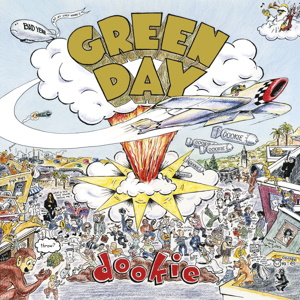
If you're old enough, you probably know what happened next. In 1994, Green Day put out their megahit third album, Dookie, which, like No Doubt's Tragic Kingdom (oddly, also their third album), would also go on to sell diamond numbers. It catapulted them from a fledgling indie punk band into one of the biggest bands on the planet with a year. Not a bad for a bunch of weirdos copying the Ramones blueprint.  That would change, but we will get to that later.

The question we must ask again is: was Dookie a sellout album? Punk isn't allowed to be popular or signed to a major label (except when it's convenient to the argument, like Never Mind the Bullocks or London Calling) so surely they must have cashed in their integrity?

The answer is no. Sorry hipsters, but Dookie wasn't a sellout album.


Dookie did not go against anything Green Day had done up to that point. In fact, it expanded on their strengths to tremendous success. They even did the opposite of what most sellout artists do: the album was harsher and darker than their earlier work, with less love songs, but more songs about the drudgery of modern life and the emptiness that follows. Sort of, again, copying what The Ramones did. The songs hit harder, are both shorter and longer than what came before, and demonstrate a band that used the budget of a major to strengthen their production and songs. All in all, this is the ultimate example of what a band jumping from the indies to the majors was supposed to do. They took what they had, and they built on it.

You'll also excuse me if I don't believe charges of selling out from people who unironically listen to Bad Religion records (a band that jumped ship to the majors then crawled back to the indies afterwards because they blew it) and still buy Nirvana merchandise after 1994. The point of the majors to begin with was to help artists succeed, and that's exactly what they did here, whether you like the results or not. They did everything right.

For about three years, Green Day was on top of the world. Their next album (1994's Insomniac) was also hugely successful and even darker and heavier than Dookie. It seemed like Green Day could do no wrong. Of course, it didn't last.

After they released Nimrod in 1997, Green Day began to hit a rough patch commercially. The album eventually sold off the back of the hit Good Riddance (Time of Your Life) which you've probably heard a million times, and will for years to come. But before that hit the album wasn't doing too well. This is partially because lyrically, the band was getting too nihilistic yet their sound was getting broader and beginning to go back to early rock sounds. They were sonically at odds with each other and the conflict showed in the album.

This is where it gets interesting.

Then in 2000, Green Day released what I think is objectively their best record under their moniker with Warning, a 1960s-style pop rock album with hooks to spare. The lyrics were a bit mixed in intent this time, however they were less dark than before, actually showing someone looking for hope amidst despair. Unfortunately, it also only went platinum, making it their first major label disappointment. Like Return of Saturn, it showed they were on the way out with their genre.

Coming out at the advent of file sharing and rock's creative nadir probably didn't help. Nonetheless, this is the point where the band had a decision to make. They would either continue down the road they were going towards rock n roll rebirth, or jump in on the trends of mid-00s emo to cash in. It was one of the other.

If you're knowledgeable about 2000's rock then you probably know what happened next, and if you're old enough you're definitely rolling your eyes, but we have something else to discuss before we get to that album.

Green Day was known for recording side project albums under pseudonyms during those days. They released some under the name Pinhead Gunpowder featuring members of bands like Screeching Weasel, but the entire band itself also put out an album called MoneyMoney 2020 under the name "The Network" which was fairly different from their usual stuff. It was very Devo-ish and not amazing, but it showed that the band really was limiting itself to some kind of image of whatever Green Day needed to be to the mainstream. They could be doing more. Anyone who was a fan of the band at the time, as I was, became well aware that Warning was the tip of the iceberg. That they were capable of more than angsty radio rock for teenyboppers. They could be a great rock n roll band!

The band must have thought so too, because they recorded an album called Stop, Drop, & Roll, during this post-Warning period, which was a full fledged retro rock n roll album stained in 1950s and 1960s influences and totally without the nihilism that tainted their other work. No one was doing this in 2004/2005. It was great, it was masterful, it was deliberately suppressed and labeled a "lost album" so the band could instead release their true sellout album, American Idiot, in 2005.

That's right, Green Day deliberately threw away an actual rock n roll record so they could instead cash-in on the craze of the moment. A craze, I might add, that was completely 180 degrees of what made them popular to begin with. But it was the '00s, and the '00s was about the time most rock bands lost 50 IQ points and began putting out garbage. It was not a good time to be into the genre.

Why didn't they put the other album out in 2005? I don't know. Listen to the below song and tell me if you think Clear Channel would have let mainstream radio play it in 2005.


So instead the album was shelved, only to be released under a pseudonym when it was "safe" to put it out, years after the band had taken the ticket to by the poster boys for '00s crybaby angst emo rock, a far cry from the early years as the rambunctious clowns who made some good hooks. No one remembers American Idiot for the painfully dated lyrics, they remember it for the sounds. And I'm sorry to say that the sounds were a step back from what they were capable of.

They could have become a rock n roll band and helped a real genre revival when it was dying. Instead, they pandered.

American Idiot is the album of a band trying to cash in on every early '00s trend, weaponizing their penchant for pop hooks with an ice bucket of nihilism, shallow political commentary, and a full court press from music journos and the industry that heaped praise on this album for obvious reasons outside of the music. 

Nothing was said at the time about how it deliberately, and awkwardly, abandoned the retro sound they were heading towards, covered topics no one came to the band for (and to which they were pretty ignorant on . . . and would only get worse with over time), and abandoned connecting to the audience to selling them an image out of tune with a bunch of 40 year olds putting on makeup and eyeliner who were only years before putting on leather jackets and jeans. It was a full court press sellout vehicle that was pushed so hard many didn't see what it was for years. I know I didn't.

But was the album good? Sonically? Sure. For about a year. Maybe less if the whiny lyrics and gimmicky songwriting didn't wear on you or made you cringe. Listening to it today, however, is simply impossible. Unless you were a thirteen year old who had never heard a Ramones or Who album, or Dookie, then you probably haven't willingly listened to the album in near 15 years. It really didn't offer anything new or interesting, despite what the industry told you.

And like a true sellout effort, it eventually derailed the band's career. All the members have since reported multiple substance abuse problems and checked into a plethora of establishments, the band is completely irrelevant (yet still trying with their laughably dated, '00s image of cool rebels), and every album since American Idiot has been complete garbage, unable to move on from the unnatural evolution they forced themselves into.

The final straw for me as a fan was when they were hyping up the follow-up to American Idiot (the absolutely wretched, and functionally retarded Bowie ripoff, 21st Century Breakdown) and went into interviews saying the stupidest things I'd ever heard from supposed masters of contemporary politics. Talking about how they were using The River by Bruce Springsteen as a blueprint for their awful album to criticize those stupid Christians who are totally a cult guys and we're going to show them.

This from a bunch of sellouts telling the crowd to mindlessly sing along about how their country is evil after paying money on the way in. I'm fairly certain nobody listening to When I Come Around in 1994 would look at what the band became and think it was the same people. It really wasn't. Those goofy punks were dead.

But it gets worse.

The band soon recounted an incident where a family friend invited them to a baptism for his son and the three big brains were so confused about the service that they literally called them all hypnotized and in a cult. They couldn't process what they were seeing, so clearly these people must be stupid and in a cult. Now they were going to show those evil members of the Bad Guy team with their newest album. We're gonna change the world!

Now, I might not have been a Christian at the time, but I also wasn't completely idiotic. I had at least a few IQ points in my skull left. The sneering contempt and hostility they had for people they didn't understand in the slightest was the final attempt for me to give the band, that was once one of my favorites, another chance. I gave them up completely. These weren't those silly punks writing songs about being lost in modernity or looking for a ray of hope in the dark. Now they were thugs of the system, sneering at those who were lesser than they were and reveling in hedonism and misery they willingly embraced along with terrible fashion sense from the worst period of rock music.

They were complete sellouts.

This path started with American Idiot, when the band took the ticket for success and threw away credibility (and apparently their brains) and sound for fame. It has left them empty shells of what they once were with nothing of value left to say or impart on others.

As an aside, to proof how stupid their comments on Christianity were. The River by Bruce Springsteen was inspired by Flannery O'Connor's writing, and wouldn't exist without her. Springsteen himself mentioned how he stole from her for that record. He might have whittled down the Christianity (because of course he would) but you can't remove it from her work. It's essential for who she was, and what she was writing. Nonetheless, Springsteen was indebted to Flannery O'Connor, and it helped make that album a success. She essentially gave him credibility.

So Green Day was essentially trying to criticize Christianity by aping and stealing from one of the most devout Christians to ever live in their country, the one that they hated.

Selling out also apparently makes you stupid.


A song about selling out


As we've demonstrated, selling out is real and it definitely exists. When one sells their credibility down the drain to hop on trends, or take the ticket to do their corporate master's bidding, it consumes them whole. And it always only works in the short term. In the long run, you might as well not even have bothered. It actually would have been better to go down with the ship. But that would require no fear of death. Modernists fear death more than anything.

Thankfully, these days selling out is next to impossible. At least, it's impossible without anyone noticing or without gathering any backlash for it. The ubiquitous nature of our present online situation means every artist and entertainer is always being watched and scrutinized for everything they do. While this can lead to terrible real world results, it also means that getting caught in a lie, or pandering to people who hate them, almost always leads to a riot, shaking the monkey cages of every online scene. You can't get away with saying one thing and doing another without someone seeing, and if someone is seeing it they are also recording it.

Not that musicians have to worry about any of this. The record companies have their trained monkeys in charge now and have no need for you to get in their way to sell formulaic junk to the three teenagers in the world that haven't discovered streaming, YouTube, or their parents' old CD collection. Essentially, selling out isn't really an option for musicians anymore.

But you've definitely seen it in other subcultures and scenes from comic books to video games to the OldPub industries. Certain people will bend over backwards to get liked by the right people and be allowed past the gatekeepers. It isn't a new thing. What is new is that we used to stop the poseurs from getting in the door to begin with. When it comes to sellouts, however, that's a whole other issue. That isn't something you can see coming.

Poseurs are people with ill will to begin with. Sellouts are spineless wimps who will do anything to get ahead, but only when tested. You will never know a sellout until the time to cash in comes. Poseurs are eternal and easy to spot.

When tasked with making the hard choice of credibility and growth or the easy choice of quick cash and momentary popcult attention, the sellout will always go with the latter. Unfortunately, you won't ever know who a sellout is until the opportunity arises. It's just an unavoidable truth about any art or entertainment scene.

It hardly matters. Eventually truth wins and things set themselves right again, regardless of which path you've chosen to take. It's more for your own soul that you would be better tasked taking the right one, lest your art die with your integrity and your audience sees you for what you really are. Sellouts have ugly souls. They will see who you are no matter what, because art reveals the truth. You can't escape what you really are.

And that is what we are here for, at the end of the day. Art is a window to truth and it is our duty to keep it clean. Otherwise, we're just screaming into the void and stabbing each other in the back for a few dollars to be as comfortable as we can before we become worm food. You can see by the modern state of entertainment how well that approach has gone. Selling out just isn't an option anymore. It's already done enough damage.

Instead, let us gather pieces of truth to share together. We can form the whole picture. If we do that then there is no telling just what we'll find out when we're finished.

I can say one thing: it will definitely be better than a few extra bucks!