Showing posts with label overlooked. Show all posts

Monday, October 30, 2023

Terror Season


I'm already back! Time to make up for lost time.

Usually for Halloween, people tend to talk about corny goofball movies or real life terror to try and get themselves into the holiday mood. For myself, I prefer to refresh myself of some of the darker parts of the world we live in, a reminder of how bad it could get and how grateful I should be that I do not share such a terrible fate. There is much value in a horror story.

Instead of posting about the usual outlandish Halloween fare, or overly frothy products that have been recommended so many times, I instead want to share films that hit in a different way. These are movies you might not have seen or heard about (or maybe you never even thought of them as horror movies) that will have you pondering a bit on your own choices between the chills. It's nothing all that heavy, but it does work to keep you on your toes--as all the best horror does.

It also goes without saying that none of these films are appropriate for younger audiences. Do not watch them with any young ones. A guarantee these will give them nightmares.

Before I get started, I also want to mentioned that the 2024 lineup for Cirsova Magazine was just announced, and I'm in it! They are also near the end of their current Kickstarter, so please check it out before it's done.

Without any further ado, here is my list of my favorite lesser known Horror movies worth checking out this season:


1. Society (1989)


There is very little I can say about this movie without spoiling it or diluting its impact, but this might be the most effective horror movie I've seen. It plays off of stereotypes that were tired even then, morphing them into an unsettling look at the border between humanity and artificiality and what being real actually means. And it does this without any ambiguity at all. The title itself is a play between the general setting of High Society and the umbrella term, showing what society actually is--and what it's not.

The paranoia, horror, and mind games, are not quite what you would expect of a movie from this era, but it's also not much like anything else regardless of the time it was made. You definitely won't see where it's going until the credits roll.

Now, this is no art film, it can actually get quite graphic, but that is all in the service of the general theme of alienation, dehumanization, and entropy, a bit of an early look at where we were already heading as a society even then. It all culminates in an ending that might be one of the most disturbing and horrific ever put to film. The pacing might be a little deliberate, but it all sets an effective mood that makes what happens later all the more unsettling. It works better to slowly slide you into this world instead of just throwing you in the deep end.

Warning: Do not watch this one if you have a weak stomach. I mean it.


2. Alone in the Dark (1982)


No, this has nothing to do with the video game franchise from the 1990s or its remakes. This is instead one of the many films that came out during the Halloween (1978) slasher craze, an attempt to cash in on a craze. In fact, it was one of the last from that era--and possibly the best of them all. This one has aged surprisingly well.

Alone in the Dark is about the compartmentalization of evil to keep it apart and secluded from the good. It is a rejection of then-popular hippie-inspired therapeutic reform trend. When the lights go out, you will very quickly find that they can't be put on quite so easy again. There is much Alone in the Dark covers from that insane period of the criminal reform industry, where evil didn't actually exist--it could be fixed with enough pills and pretty speeches. Remember, no one is ever truly evil. We are all the same, in the end!

Donald Pleasance plays the exact flipside of his famous character of Dr. Loomis in Halloween, showing exactly what kind of warped delusion it is that allows true evil room to flourish in a world that has little reason to do so. In fact, the entire cast is incredible, with an a knockout ending that presents its thesis of what happens to a society that thinks good and evil is a whim, a mere fancy with nothing to define their borders. In many ways, this is just as great a watch as the original Halloween, and is highly overlooked to this day.


3. The Stuff (1985)


I've already posted about this before, so there isn't much to add here. I can only say that this is not your typical monster movie, given that the monster, while tangible, is really more of an idea--a concept that is allowed to roam free by a world that just wants comfort and ease above truth and love. In a lot of ways, it is combination of the previous two movies mentioned so far.

Though inspired on classic creature features, The Stuff is interested in the concept of subversion, twisting the natural law for unnatural gains, and shows exactly how that ends up--how it eats you from the inside out. The effects are also surprisingly solid for such a low budget flick. Really sells how otherworldly this thing is.

Many incorrectly believe this is a film about consumerism, but that is missing the core message: The Stuff itself is delicious and addictive and those in control of it will do anything to make sure to justify consuming it, including pushing it onto you and making you accept it as normal. Shouldn't everyone experience bliss, after all? Everything is used as a means to an end to justify pleasure at the expense of everything else. And we know where such a mentality eventually ends up, especially in the Current Year we now live in.


4. Assault on Precinct 13 (1974)


The first thing you might be wondering is why a John Carpenter movie of all things is on a list like this? The answer is simple, this movie is incredibly overlooked to this day and is not recognized for what it is--Carpenter's most supernaturally focused film.

The first thing that should be clarified, Assault on Precinct 13 is a siege movie, possibly the best ever made, detailing a sparse world bordering on apocalyptic (as the 1970s were frequently portrayed) with an enemy force that is more demonic and terrifying than any actual demon he ever tried to put to film after this. The film is instead about the remaining vestiges of civilization in a dying city fighting with what they have left, including a mysterious criminal whose crime we never fully learned, as they must put their differences to combat an evil far darker than they've ever known.

For the type of movie this is, little is outright explained to the viewer, including just who the enemy actually is (as they have no real lines), but with pure visual mastery we are given the stakes, the set up, and the pieces on the game board--and a question of how anyone will actually survive. Just how do you fight an evil that comes and goes without rhyme or reason?

There is a lot to this movie that can't be appreciated if one only goes into it expecting the usual Carpenter mastery of special and practical effects--it is what you don't see in this movie that makes it work. And it is still one of his best films.


5. The Hidden (1987)


From the director of Alone in the Dark, and starring Kyle MacLachlan from Twin Peaks and Blue Velvet, comes a movie that could only have been made when it was and by the people who made it. Think part invasion of the body snatchers, part buddy cop movie, and part 1980s weird horror, and you end up with a movie far more enticing and exciting than you might expect. It is a blockbuster that somehow never ended up a blockbuster.

The film explores relationships inside and out as it also tackles an invasion by those who think little of what makes humans what they are. In the end, we are more than the sum of our parts. What we are cannot be replicated quite so easily, and our protagonists learn this quite well by the end. There is more to us than what can be seen on the outside.

The weird aspect of The Hidden is that it feels like a lost 1980s blockbuster with tremendous set pieces and characters, and a memorable ending that will stick with you. It feels like this should have been huge, but it wasn't at all. In fact, it bombed. It is kind of amazing this one has been under the radar as long as it has been despite how good it truly is. This is a movie more than do for a second wind of popularity.

I'm also not unconvinced it doesn't take place in David Lynch's head. It just has that whole feel to it that's hard to nail down. (As an aside, I also recommend Blue Velvet as a film that fits the season and has a similar idea about expunging evil so that the good can flourish.)


6. Altered (2006)


This one is a bit further apart from the rest in release date, coming out in an era when the genre was more or less in hyper irony mode and falling apart at the seams, something it had been doing since Scream. This movie is a horrific tale of friendship pulled apart by interior and exterior evil, of relationships run through the wringer of paranoia, and a supernatural presence that smashed them like a hammer through thin glass. Some things should be left in the dark.

Altered explores the survivors of an abduction years later as they attempt to hold their lives together and use what little sanity they have left to capture the thing that took one of their own. However, the creature they catch ends up being a lot more than they bargained for. Sometimes the past should be left to the past.

This is a dark film, in a lot of ways. It doesn't revel in postmodern irony and tongue in cheek humor the way a lot of flicks around this time did. This is a serious horror tale of the dark and what it does to the soul, and it's quite an unsettling watch.

Despite all that, the entire thing is engaging from start to finish. Unfortunately, it's quite nearly unknown these days. Hence why I've mentioned it here.


7. Maniac Cop 1 & 2 (1988-1990)


You might be wondering why I included not just one, but two movies in this entry. That's partially because I consider the two of these one long story, split into two parts. You might also be wondering why I would be putting a slasher movie on a list like this--aren't those nothing but excuses for mindless carnage? Well, the Maniac Cop movies (the original two, the only ones that matter) are not quite what you think they are.

The first film starts off as a simple noir-inspired film of a cop serial killer that has to be stopped. However, as the film goes on, you soon realize there is more to this murderer than you first realized, the escalation leading to some crazy places. This spills over into the sequel, which does exactly what something like, say, Halloween II does not, and raises the stakes, turns the heat up to max, and soon enough everything boils over in a chaotic ending where justice is finally served and everything is wrapped up perfectly. It becomes a lot more than a slasher by the end. The entire experience is one you will not soon forget.

Maniac Cop has a bit of a noir tinge at times, leaning a little on old detective movies for menace in its tone along with peak 1980s practical effects to really emphasize the unknown nature of the threat. Because what that ends up being is tied up in the theme of the perversion of true justice and the evil it brings out on the innocent and guilty alike. Only by setting things as they should be can order be brought back again.

These two movies are a strange experience and better than you would think, being that they came out during the slasher movie mascot craze. This isn't really like any of them, though. Thankfully, there is much more to these movies than an excuse of mayhem, and watching them back to back remains quite the experience.


8. House 1 & 2 (1985-1987)


Unlike the last entry I'm only including two here because they are totally different despite sharing the same writer and yet billed as sequels. The original House is a horror movie about a missing son and a mad house while the second is more of a strange surreal comedy about family. You can watch either on their own, but both are very much worth seeing, even if unrelated plot-wise.

For those unaware, the writer of both was involved in 1980s cult horror favorites Monster Squad and Night of the Creeps, two movies much more well known than these are. That said, they are every bit as good, despite how different they are tonally from his other films. You won't watch anything else like them.

That said, they're both good movies that center on the importance of family and home, a surprising thematic overlap between them that helps each of them stand out. It also helps that the special effects are incredible, even for their time. There it little chance you'll see anything like them from their time or even now.


9. Just Before Dawn (1981)


As I alluded to earlier, I am not very big into slasher movies. For the most part, I don't get a joy out of watching unlikeable people get murdered. Unless there is an intense atmosphere (the original Halloween), a twist on the framework (A Nightmare on Elm Street), or a compelling dive into the themes (Alone in the Dark), they mostly end up falling flat for me.

That said, 1981's Just Before Dawn is a strange beast, even for the genre. It leans more on the survival movie aspect but also lends itself to a surreal nightmare quality of unaware normal folk stumbling into an eerie reflection of what they know, much like people unused to nature would feel like if they were stranded on a nature trail. There is a supernatural bent that is hard to put into words, despite nothing about it being explicit. It's the atmosphere and the tone as well as the nature survival story aspect that makes it stand out from the pack.

All that and the final reveal at the end is a nice bow on a film that is better and more unique than you might think. It also contrasts the harsh unforgiving natural world with the world man made for himself quite beautifully in a harsh finale that will make you consider thinking twice about where you choose to wander and lay down your head. Perhaps the world isn't our playground? It is surprisingly effective at what it does.


10. VFW (2019)


This is quite the jump forward, but VFW from 2019 is a hidden gem that deserves to be better known. Essentially a modern take on a John Carpenter movie starring old genre favorite actors, VFW manages to sidestep a lot of the bad trends of modern cinema to deliver an engaging experience. You probably wouldn't have known this came out in 2019 if I didn't say so.

Much like Assault on Precinct 13, this movie is a siege film. However, unlike that classic, this film keeps the apocalyptic 1970s feel but transports it to the modern day with a slightly different focus and concern. The theme is around aging veterans, those in their final days, as they live on the edge of a world that passed them by and one those who came after them let crumble. There are two sets of characters, divided by age. The first are the elderly veterans backed into a corner and the other are the youthful anarchists driven by additions and bloodlust to crush whatever is in their way. It takes a young woman fleeing from them and begging for help among the elders that sets the entire conflict off. By the end of it, who will be left standing?

That is the horror of this movie. When it seems like the world is already over and your life is already near its end, should you keep fighting? Was it all for nothing? The answer is not what you would expect from a movie released in 2019.

VFW probably wouldn't work as well as it does if it wasn't a deliberate 180 on all the bad trends of modern filmmaking. The practical effects, the camera work, the lighting and clear sound, the focus on masculine themes, the clear dialogue, and the ending, are all the sort of things one does not see too much in the modern era of movie making. Given that the whole story is about the aged and the forgotten fighting against the crushing tide of progress, one that cares nothing for them at all, the older film techniques serve the whole experience exceedingly well. It is a movie out of time. And that's where we should end this list.


That's all for this time. Enjoy the season, and remember to think about higher things while you do. We are quite lucky to be alive.

Only two months left in the year to go--we're almost at the finish line. Keep your eyes on the road and we'll make it through.

Have a good holiday, and I will see you next time!


Saturday, April 22, 2023

Weekend Lounge ~ Old Internet Tales


Hello! Good to see you again. I'm sorry for the silence for the past week, but I've been working very diligently on finishing off the Gemini Man trilogy and preparing for the crowdfund and some stuff in real life has also taken priority. It's sure going to be nice once this hill has been climbed, I can tell you that much!

So, today I wanted to share with you this little nugget from a forgotten era of Gen Y internet history, but before it got defined by what it is now. The subject is early YouTube and the wild west days of the internet; the topic is an early internet series known as Captain S. No, not Captain N: The Game Master, and not the web comic Captain SNES, but nearly work from the now defunct ScrewAttack (who also had another little series called the Angry Video Game Nerd), itself a relic of the way things were before everything became corporatized and stock.

Captain S was an early attempt to create a TV series on a much smaller budget with a bit of a quirky idea. Think old early 1990s series like Saved By the Bell or Full House mixed with the game hopping adventures of the Captain N: The Game Master cartoon, and in a strange rubber band reality where the console wars are eternally stuck in 1990 (though the games themselves can be from later years) and you might be able to guess what they were attempting. It's worth seeing, if only for the fact there is nothing really like this made anymore, and couldn't be without too much winking irony or intrusive computer effects. They don't make them like this anymore.

It is also nice hearing from a member of a younger generation who doesn't have quite the same context for why things were what they were and has to puzzle it out himself. Again, it really highlights how much has changed, even when it is difficult to understand just how much it has at times. The old internet is gone, but it can never really be replaced.

So check out the above video and immerse yourself in the way things were once done and learn what we might have tomorrow. It's only by learning from the past that we can truly grow, after all. Captain S seems to highlight exactly this lesson.

Perhaps I keep looking this stuff up because of how stock and standard so much of our climate of art and entertainment has become, but you will note how different the expectations and view of the world was back before it all was poisoned with bitter irony and an overwhelming sense of self-hatred that permeates everything now. Despite how silly it might be, there is still something to be gained from even this. There is always something to be gained from the past, whether we like it or not. No matter how much we might dislike it--that is never going to change.

Thanks for reading and I will see you again next time! Hopefully by then I will have some good news to share with you. Until then, have a good spring. The cold has finally departed and the warmth is here. Enjoy it until the summer screw it up!

BONUS Video: The same creator also made a video tracing the early days of the Nostalgic Critic. The perfect irony of a nostalgic look at a nostalgic character is interesting enough, but it is another look at just how different the early days of internet video making really was compared to now. It was a whole different world--before it went insane.


Have a good weekend! Stay safe and I will see you next time. By then I will have much more to share with you, God willing!


Thursday, November 18, 2021

Savage Planet


This is one weird world, but I think you already knew that. It would be very difficult to live in these times and not see how strange things can get, especially in regards to how our perception of things has changed so tremendously over the years.

Ostensibly, we don't live in the same world we did even a few years ago, and it doesn't look like we're going to stop changing any time soon. In this sort of climate, can we even agree on much anymore? It seems like everyone is going their own way.

But I do believe there are things we can still come together over. Most notably, we can agree on where reality ends and where fiction begins.

Or can we?

I often wonder about the line between reality and fiction and where it really exists in the stories we tell. Of course one understands that the events we see in the stories we read or watch aren't physically occurring around us at that moment in a way that we can participate in, but there are parts of them that stick with you no matter what happens.

By the same token, advertising and word of mouth reputation can also alter your perception of stories before or even after you've already seen them. This is, after all, why advertising, propaganda, and word of mouth, are so important to sell stories to others. It's difficult to get someone interested via blurbs or elevator pitches, regardless of what experts may tell you. You need to sell "experiences" and "feelings" and such immaterial things, not the stories themselves.

What matters is selling you, not so much reaching you. As someone who has watched a lot of b-movies over at Cannon Cruisers for the last few years, I've slowly realized the difference between what a story offers versus what you are told a story should offer is often immense. Throughout the 20th century, it took a lot of trial and error to get it right.

For an example of this, take 1980s action movies, supposedly stupid films filled with poorly written dialogue that you are supposed to laugh at for being bad. But if you actually watch them you will find this is revisionism crafted by irony-poisoned hipsters. 

Action movies tend to be stories where heroism is rewarded, and the heroism is depicted as being larger than life, which requires larger than life action to match. You'll also find the "dumb" one-liners you laugh at actually are funny and clever, meant to make you laugh to begin with. At some point what you were being sold by those you trusted ends up being very different than what you are getting. Take a look at many internet critics from the '00s mocking Schwarzenegger's Commando over things that are meant to be funny to begin with. It is bizarre.

One would then have to question how many other things we have partaken in have been sold to us wrong. Perhaps we have also engaged with stories that were not presented as what they truly are and ends up successfully driving us off in the process?

I say this because of the obvious dumbing down of popular entertainment into fabricated genres that has been occurring over the past century. You need to check certain boxes to be placed into certain shelves in the correct stores. We've actually gone over this subject before. This obsession with classification overrides actual storytelling intent and leads many creators distracting themselves from what is more important in the creation process.

There is no medium or genre that has escaped this problem, just individual creators that know how to work around these unnecessary expectations.

So let us go into a story that falls into this exact crevice.


One such story I wish to talk about is 1984's b-movie favorite, Savage Streets. This film stars Linda Blair in her second most famous role, and for good reason, though I would argue she only really becomes the central character by the end. However, this is a movie that, in this writer's opinion, has negatively suffered over the years due to what it was sold as being and what others still praise it for. Truth be told, if you've seen it then you probably know what I mean. Savage Streets is not really what you would expect it is based on its reputation among exploitation film fans and those who love so-called trash cinema.

First, let us describe what the movie is actually about before we touch on things like reception or general advertisement required to sell it. The story is actually not that straightforward, despite what the poster at the top of the post or the taglines will have you believe.

Savage Streets is about a group of young urbanites in early '80s New York, all of which have no future or respect for the hopeless world they live in. We follow a group of men and a group of women as they collide and their worlds melt down into nothing.

The story starts as we center on the lone father figure in the movie, an inept middle-aged boomer who impotently wags his finger at his emasculated son not to go out on a school night. The son rolls his eyes, sneaks off and changes into his leather jacket, joining his cool friends for a night on the town. From there we see what the world he is truly living in feels like.

And this clueless kid's experience is pretty much our position going into this movie. We are watching a lost, amoral generation navigate a cruel and uncaring world, flailing in their attempts to interact with and understand the madness around them.

This setup tells us everything we need to know going forward, about the city, about the characters, and about what kind of story this actually is.

Our group of male punks soon comes across the equivalent fiery group of modern women and the two exchange heated words after the former almost accidently runs over the deaf-mute sister of Linda Blair's character. At this point it is established these guys aren't all there, but also that the women are kind of lost themselves, drifting about life without any aim. They hate and disrespect each other, though not for any reason in particular.

Eventually, however, they will push each other to the point that one of them will go too far. And then it all goes to hell.

But despite what the poster at the top of the page says, this isn't really a revenge story. It actually shows us both groups like they're gangs ready to clash with each other repeatedly, only instead we see them disintegrating in real time as things continually go bad for them. 

Without any glamor was see an uncaring world step aside as one group moves to more vicious acts such as rape and murder, doing them as naturally as they breathe without anyone stopping them. It just so happens that each victim in this spree is someone Linda Blair knows intimately, but she doesn't learn this until near the end of the movie. Until then, the movie is focused on the disintegration brought about by a lack of love or Justice from or towards anyone involved. Things are constantly happening, and getting worse, until a boiling point is eventually hit.

By the last half hour, she has hit her limit, learning from one of the turncoats what truly happened to those she loves (who is then unceremoniously murdered by his own supposed friends) and fresh in the knowledge that the law and all authority figures will not help her, she sets out to take the perpetrators down herself.

This happens around an hour into the movie and what follows is the entire climax. As I said, revenge only really comes into play late.


Now compare this with a Death Wish-style revenge movie. They don't work like this one does, because they aren't the same type of story.  The inciting act happens within the first half hour, and the rest of the film is spent seeking Justice for wrongs until the final showdown at the end. It is a very different set of events.

But Savage Streets doesn't do this. It is more interested in the disintegration that leads one to become that type of person that would murder Paul Kersey's family in Death Wish. What kind of a world fosters this sort of behavior? This is a generation with nothing and nobody--no hopes and no dreams and nothing to aspire to besides another dopamine hit before the inevitable overdose. Our main character has nothing she wants to do except live with her friends and family in peace, but she can't have even something simple like that. The world will not allow it.

By the time she goes out for her revenge in the last half hour it isn't quite like Paul Kersey snapping, but more like a long series of events resulting in a downhill slide into a bog of poison. This is what causes her to throw off all care and concern for herself and the law to do what needs to be done. This actually makes the last leg of the film more cathartic than it would be in a proper revenge movie, because it isn't about the revenge itself at this point. It is about doing what no one throughout the movie would do--set things the way they need to be and fix the damage. No one stepped up, leaving this fatherless hopeless case to put aside her ego and embracing her anger with the world into the right channel needed. You aren't necessarily cheering for revenge--you're cheering for this madness to be put right. And by the end, it is.

So while it does have revenge as a plot element and is a movie about Justice, I would be hard-pressed to advertise it the way the movie studios did when it came out. I wouldn't even sell it the way the film's fans do now. This isn't Death Wish and neither is it a "femme fatale" movie with a sexy lead in revealing clothing showing bad men how good women are. Sure, this was directed by the man behind Friday the 13th Part V, but it has little in common with that sort of sleaze. There isn't any sort of triumph at any point in the story.

Linda Blair essentially traps the three (that's right, there are only three) villains using her wits, twisting their vices against them, and surviving by the skin of her teeth. The entire climax is portrayed as, and is, an incredibly stupid thing for her to do on her own, almost ending in her gruesome death. She doesn't celebrate her narrow victory.

But if she didn't act to begin with then who would have?

We all know that it would have been no one. The entire movie proved that to us over and over. They would have continued to escalate in their insanity, hurting more innocents along the way to get their braindead pleasures of vice. Justice needed to be dealt out swiftly and unmercifully to those involved, and it was.

Even the finale of the movie ends with the above graveyard sequence to honor those who died due to this carelessness of modernity. There is no real victory here because none of this should have happened to begin with. Unlike Death Wish, however, Linda Blair at least as her remaining friends and family to help her through this trying time and they can hopefully move on from this. Though, of course, left unsaid is that little prevents this insanity from occurring again in the future.

Because this is the modern world.


I should also go into how one of the taglines is about "the battle of the sexes" or something silly like that. It truly isn't. This would imply each side consisted of one sex purposefully doing battle with the other, when the truth is that there is nothing of the sort happening. Weak people are responsible for letting this craziness happen to begin with.

There are male characters on the good side, some of which even fist fight against the villains at one point. The villains openly assault and violently threaten males all the time just as they do women. It just so happened that it was a female at the end of her rope that they (inadvertently, I might add) antagonize in their spree of terror. Their uncontrolled chaos of malice, lust, and greed, is what eventually led to their downfall. And they were rewarded by the world for being this way, until someone finally acted with Justice against them.

That there were no strong or competent adults to stand up against any of this is the actual tragedy of the picture. Everything would have been prevented with something substantial beyond finger-wagging at those darn youths to just be normal, dang it. The entire movie is about decay, so fat chance of that happening.

But none of this sells movie tickets, does it. You can't exactly fit all of this into an elevator pitch or a catchy tagline.

I would wager if you watched Savage Streets it was either like I did when it was on a late night station back in the day and got absorbed in the lunacy, or because you bought it based on the advertising and were either pleasantly surprised or horribly disappointed with the final result. This is because it isn't quite what it is sold as.

To get straight to it: Savage Streets isn't a gritty action movie. It isn't a "feminist" statement, or whatever that means among modern film snobs. It's not really exploitative: the rape scene is definitely not for the squeamish. It's not really a revenge movie or a thriller either. It's just a story about the youth generation struggling for air and failing in an amoral world of material pleasure-seeking. There is no glamor here.

So how would you even sell something like that? Not only that, but how do you explain it to someone else who might want to know if it's for them? Going on past experience this isn't really the type of thing that comes across easy.

There are times when a short and simple sales pitch is a good thing, but sometimes you need a bit more than that. Sometimes you just can't sell something others might want to buy. That's just the way it is, I suppose.

And we really should be doing more than just selling stories, anyway.


I'm not going to say Savage Streets is one of the best movies ever made, but I do have to say that recently re-watching it for the first time in a dog's age made me appreciate it much more than I did when I was younger. It isn't the sort of film it was being sold as and I couldn't quite understand that at the time.

But now I'm older and am far more used to the tricks and strategies behind basic storytelling and can see the intent for what it really is, I can say it deserves the cult status it has attained. Even if I think it still sold incorrectly most of the time. However, it could never be anything more than a cult favorite, purely because it can't be elevator pitched. This is why they resorted to selling the last half hour as the whole movie.

What else could they do?

It's also a movie that could only have been made at the time it was made. The 1970s were too nihilistic to allow movies where Justice wins gets made, and when they actually did were called "fascist" and any number of juvenile names by elitist snobs who tried to bury them. The 1990s were the age of edited down films which meant it would have been gutted entirely of what it was. Post-Cultural Ground Zero? Forget it. Not in a million years would this ever get made. They would have put everyone in this movie on a list.

Through the packaging of 1980s grit, everyone involved in this piece made a flick that couldn't have existed at any other time without diluting the impact of the story they wanted to tell, of a modern world of madness where Justice is needed more than ever. And it isn't quite like anything else you'll see, even from its time period. 

Whether the story it tells is up your alley or not is tough to decide. It is a cult classic for a reason and requires a certain taste for a certain type of move. Though I can say that I like it I don't know how I could possibly recommend it. The movie is a tough watch.

Nonetheless, it is one where the reputation of the piece does not really do justice to what the product actually is, which is the larger point of today's subject.

Not everything can be "sold" or even really marketed as what they really are.


The question arises then about how much out there might we have missed out on because we were sold a false, or misleading, bill of goods? How much of this is also more about perception than it is simply selling things to the wrong audience? Not everything can be sold in today's world, and yet everything has to be sold in order to be successful.

How much of life have we missed out on because we were given the wrong directions to the wrong location? There isn't any way to know how much we could have lost, of course, but it is definitely more than nothing. There is no way we would have seen it all. We can't.

Sort of like last week's New York Ninja, the truth is that we haven't seen it all. There is a lot out there we haven't seen, and will never see.

But I'm not so certain this is an entirely bad thing.

The fact that there is so much out there we will never see or experience, things that might have been great in life, speaks to just how much there really is in this world we will never truly get to do, even if we spend the rest of our mortal lives living to the fullest and doing everything we can. No matter what you do, there will also be an incalculable number of things you will never get to do. There is always more out there waiting to be discovered.

I suppose this post just exists to muse on the sort of thing one might miss by looking at, or being sold things from the wrong, or a different, angle. Perhaps it would do us good to always keep an eye and ear out for that which we might not otherwise consider, one foot in the hope of the unknown and the other in the knowledge that we will never see the full picture. You never know what you will find and where you will find it. Sometimes going outside of yourself can be exceptionally rewarding, sometimes not. I suppose this is a case where it was the former for me.

When I was a kid I thought horror was just slasher movies because of everything shoveled onto my plate when I was younger. I avoided the genre until I went out of my comfort zone and found not only horror that was out of that sector, but also some films in that category that are very much worth watching beyond the drek I had been continuously exposed to. I even covered some of them on Cannon Cruisers.

The point is that you never know what you're going to find out there. As long as you keep looking, who knows what you can come across?

To take a scene from a different, though similar in a lot of ways, movie:


"Integrity" is more than closing yourself off to the world around you


In the world today it is considered being "inclusive" and "welcoming" to create communities around the most trivial things and invite everyone in, but that isn't necessarily a good thing. Sometimes you need to find inaccessible spaces to challenge yourself and expand the scope of your world, to keep it growing. It won't always work, or be successful, but it is always worth trying. You won't always be the person you are today.

The world is an unpredictable, bizarre, and savage, place where anything can happen at any moment. You can hide from it, or embrace the weird and learn from it. Who really knows what will happen next? Definitely not you or me.

The boxes and categories made up during the last century are already falling by the wayside, having long since worn out their usefulness. Soon enough they will be far away in the rearview window before they are forgotten. When that happens will we still be clinging to these failed attempts at filing reality away, or will reconsider the way we see everything? Eventually, we are going to have to make that choice.

One day this will all be over and done. When that happens, where will we be, and how badly will we find ourselves lost at sea? And what will we use to guide the way forward as the current ways die around us?

I don't know, but here's hoping it's something better than the world we're leaving behind. There is so much ahead that it is hard to take in where we are right now. It's a savage planet, but that doesn't mean we have to be at the mercy of it.

We can go far. So let's go there. What's the worst that could happen? All we have to do is keep our perception sharp and our expectations open. That's enough for me. 

I'm ready and waiting to see what this new world has waiting for us ahead. Aren't you?


Tuesday, May 4, 2021

A Tooth Fairy Detective?!

Find it Here!


In the tradition of weird stories, let us take a look at a particularly weird one today. This one is a fantastical detective story that stars . . . the tooth fairy? I suppose they wouldn't call them weird tales if they weren't weird.

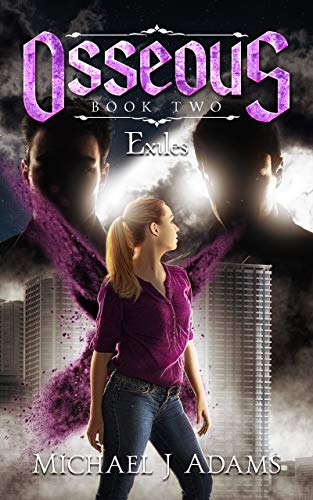
And thanks to NewPub you can get all the bizarre stories you want. There is no one to gatekeep it out any longer. Michael J. Adams' Osseous series is no exception to that rule.

Regardless, here is the description:


Who needs detective skills when you can track down missing children by swallowing their lost teeth?

PI Tiffemory Greenstone treats each missing person case like she would her own child. But when Mallory Sanderson is kidnapped for the second time, Tiff takes it especially personally. It's hard not to when the kidnapping is her fault.

Jeck, the rogue fairy she banished six months prior, has returned and is seeking revenge. In a world that believes the tooth fairy is only a myth, Tiff is the only one who can stop him.

But finding her nemesis will be an uphill battle. And facing a foe who's more than her equal may cost Tiff her life. The other option is watching the city's youths disappear one at a time.


Once again, you can find it here.

Sounds off the wall, I know. But you won't get fresh ideas like this in OldPub. In fact, if the writing climate wasn't as it was now, there would be no chance for things like this to even have an opportunity to be published.

There's far more to come in NewPub, and I plan to tell you about as much as I can. So strap in, this is going to be a long ride! We've got a ways to go.

Check out A Tooth Fairy's Promise today!


You can also read the second instalment, which is out now!

Thursday, December 10, 2020

The Missing Spirit


As I've mentioned before, horror in the 1980s was a tricky thing. The movies might have been on a upswing, but the books were a more mixed affair. It isn't that they were bad (though one was), but more that they didn't quite know what they should be. I've covered about three different horror books from this period on the blog, all with oddly different results from authors who clearly had different view of what true horror entails. 

Today, I am going to cover a book that is also horror of a sort slightly different than you might expect from the time period. This novel is called The Spirit by Thomas Page, and it's not very typical. This one is a bit of an odd duck.

For one, it's not an '80s horror novel: it came out in 1978. Yet, it feels a lot more like a 1980s horror story than it does 1970s. Unlike The Keep which felt like a 1970s novel released too late, The Spirit feels like a novel released before its time. It's much more pulp influenced than eve the 1980s horror I have read.

The Spirit is a story about bigfoot, and two men who are hunting this one specific creature for very different reasons. That's about it. You might see that description and scratch your head as it what it has to do with the title, or even how that can carry a whole book. It turns out to be quite a lot. In fact, of the three horror novels from this era I've talked about so far, it might be the best one. If not then it is close. There are several reasons for this, but the most important is that of all the horror I've covered here on Wasteland & Sky recently, this one gets the horror, and the threat that spins out from it, the most right. It truly understands the horror of its own concept.

So, what are other things that make it unlike those other books that I've covered? Let us review.

Nightblood by T. Chris Martindale is a book that got a much more affordable reprint in the Paperbacks from Hell line which was focused on 1970s and '80s horror reprints. The summary to that one is "Salem's Lot with an active protagonist and an actual ending" which was a joy to read. It's action-packed, horrifying, and contains a battle between good and evil that works. This is the sort of book that was hurt by coming out in 1990 after OldPub had begun to ditch horror. I recommended in the review, and I still recommend it now.

I then looked at Ghost Train by Stephen Laws, a novel about a Ghost Train (natch) and a man's quest to face his demons and put an end to them. It was the author's first book which meant a lot of first book issues, none of which were helped by the poor editing that should have cut the length down by a good 100 pages. However, the strengths of the story were enough to get it by and make me interested enough to read future books by the author.

Finally, I discussed The Keep by F. Paul Wilson, which was the worst horror novel I've yet read in this excursion into the era. It might be the worst horror novel I've ever read. The problems were plentiful, from wasted setup, characters, and plot elements, to hackneyed plot and worldbuilding decisions that destroy any atmosphere or tension, all to be hip with the then-current 1970s zeitgeist. How this became a giant hit, to the point that it even got a movie adaption, is far beyond me, especially when none of the other books I have reviewed have. It was terrible.

So how does The Spirit by Thomas Page differentiate itself from all of these? Surely it must have something to help it stand out. And it does.

First we should cover what similarities it has. Just like Nightblood it has plenty of action and peril, and the enemy is well defined without every truly taking away from its mystique. Just like Ghost Train it stars dual protagonists facing down a roadblock preventing them from moving forward with their lives, all of which is tied in with the horror. And just like The Keep it was written in the 1970s. That's about all it has in common with that one, thankfully.

I've said before that the one issue with most 1970s storytelling, regardless of what genre or medium, is the preponderance of nihilism and celebrated defeatism that poisons the proceedings. The Keep was exactly that, though masked in a fog of New Age emptiness that slowly choked the air of the art world before turning lethal in the 1990s. As well made as many things from that era are, they are more difficult to go back to because of the poison baked into the crust. Watch Chinatown for craft: don't watch it for the narrative or moral guidance. Whichever of these is more important to you is what is going to make the difference as to how well this era holds up. For me, this is why I have much difficulty enjoying anything from this period.

So it says something that I really like The Spirit. It doesn't feel like it is part of the era it was written in.

We must now discuss the work itself. The Spirit follows two men: Raymond Jason and an Indian (known as "Moon" legally, but not in the narration, for many reasons) who are both hunting a creature that does not seem to be of this world. They need to catch it, and not for fame or glory. Those that do don't tend to have a pleasant time in this book. The pair of protagonists are opposites but the same, and their journey in the story is to help find what the other is missing. Bigfoot has what they both need more than life itself.

Jason is businessman, a rich materialist, who wants for nothing yet finds something missing inside of him. It is a whole that can't be filled no matter what he does, and this gives him anger he cannot quite control and a rage that overwhelms him. This is exacerbated when on a camping trip his friends are ambushed and killed by a creature that shouldn't exist. He is the only survivor, and the only thing he remembers beyond his prey is a strange Indian who knocked him out with a rifle butt before he could catch the beast. Jason then goes on a quest, stopping at nothing to get this bigfoot. At first what begins as mere revenge turns into something more. No longer is it a prize, but far more personal. By the end he might find what he seeks, but does he really understand what he's searching for? This is Jason's journey through the story.

Moon is a Vietnam veteran who is Jason's opposite. Having nothing and no one throughout his life and then getting thrown into a war he didn't quite understand, caused him to abandon the physical world that his never offered him anything beyond pain and despair. Moon doesn't live in the material world, he has both feet in the spiritual world, and that's what guides him forward. This gives him a material blindness and an inability to see things the way Jason does. Because of this he sees the bigfoot as his Spirit, the one that will give him his name and lead him into completeness, finally filling the hole in him. He is very superstitious, carrying charms and trinkets, even rosaries, despite not really understanding the purpose or use to any of them. Moon is unanchored to the world, and he is very nearly ready to fall away from it entirely. He needs the Spirit to give him that purpose.

As you can tell, the title doesn't actually refer to the monster, but what both protagonists are actually seeking. They aren't hunting for a monster, though that is what they are going after in the plot. And what the monster actually is might tie into the title better than you would think. Especially by the ending.

Normally this is about as far as it goes with these sorts of stories. There is the obvious symbolism and then there is the slightly related plot to theme. But not in this case. What has the story work is that the bigfoot in this novel is a complete enigma, all the way to the end.

For one, there are many theories floated in the story as to what this creature actually is. "Bigfoot" is a vague term, especially for those who have looked up anything about these odd things. This story plays with that by offering much speculation and many hints wrapped in some scraps of truth. There might even be more than one kind of them! Naturally, Jason jumps on any material explanation, while Moon assumes every spiritual one. Neither can really reconcile with the other. However, by the end of the story they are both right and wrong, in ways neither of them expected. The entire thing comes full circle.

What you have is a quest about becoming whole in the midst of this story about a killer monster hiding in the shadows. It is all extremely effective at setting mood, tone, and atmosphere. By the end, it all comes together.


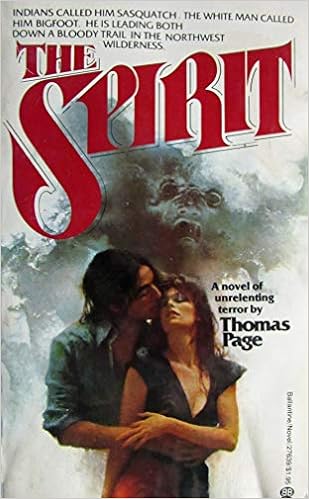
The Original (and wildly inaccurate) Cover


Of course, none of this would matter if the book didn't work where it counted: the execution. This is where I have to say that The Spirit is easily the best of the four horror novels I've reviewed so far (with Nightblood coming close) and it is stunning that it isn't more well known. Though perhaps the above cover didn't help.

This is a sharp book. It is under 250 pages, which is a miracle for the time period. Its pulp-pacing keeps it moving. We follow our two main characters and watch as tension builds, threats appear, tragedies stop them, and yet they are pushed onward again to reach their goal. It doesn't stop moving. The pacing is phenomenal. Even when we see some more of the side characters through the climax the story never lulls for a moment.

The only real fault with the book is the original cover (pictured above) which might have irreparably damaged its chances of success. There is no romance or sex in this book: it's not that kind of story. Its a book about spiritual dryness: neither would make much thematic sense. Thankfully, the Paperbacks from Hell line completely revamped the presentation and gave the work a phenomenal cover the book deserved to begin with. You can see it at the top of the post.

This is the second book I've covered in the Paperbacks from Hell line, and it is yet another homerun. I'm not sure if they are that good at picking them or the ones I choose just so happen to be the best ones, but much credit should go to Valancourt Books for bringing stories like this and Nightblood back into print, because they never should have left it to begin with.

I do not know why The Spirit never got a big movie adaption or more acclaim than it has, because it is definitely worth the attention. Especially when turkeys like The Keep received so much attention and baffling acclaim, it is a mystery as to how this work got ignored and nearly forgotten over the decades. One is clearly better than the other.

What makes The Spirit much better than The Keep is how seriously it treats its worldbuilding and its threat. There are no edge-lord nihilist theological bombshells in The Spirit to undercut tension. Instead we are given various different legends and myths from different cultures and religions centered around the bigfoot, or similar giant creatures, and how they might apply to the monster. By the end of the story it remains unclear just what it actually is (spoiler: the specific creature Jason and Moon are hunting might not even be one by the end) and yet that helps retain the mystery all the way to the exciting conclusion. It succeeds where it counts the most.

Speaking of the ending, I really do want to talk about it, but that requires summing up the rest of the book and our character's journeys to really explain properly. Needless to say that the final chapter is intensely rewarding for those who can wrap their head around what this book is actually about. It satisfies even on the thematic level.

But if you want to see monster-related carnage, this book doesn't disappoint there either. It's still a horror novel, which means an unflinching level of violence, blood, and death. However, it is the drive the protagonists have to push through this horror and come out the other side that makes the story what it is. It's very much a male horror story for guys, about men who need to win for more reasons than their surface level goal permits.

The best horror requires the threat to be more than just physical for the story to work. It's one of the reasons something like American Psycho succeeds in such a powerful way. You need a piece to connect to a more transcendent theme beyond the events in the plot. In American Psycho, it is the dehumanizing grind of modernism; in The Spirit, it is the hunt for purpose. There is no good horror story that doesn't have something like that on some level. It is what a disappointment such as The Keep is entirely missing, for instance.

I've said before that horror is all about rules, and that is true. Whether it is someone going against the natural order to destroy, or a monster that shouldn't be unleashing havoc on the normal, or an unexplainable event that defies explanation, horror is about the unnatural intruding on the natural in an attempt to subvert it replace what should be with what should never be. It isn't mindless carnage, gore, or profane sights and sounds, but how the absence of the good is a terrifying prospect that will lead to nothing but ruin.

This is what The Spirit succeeds at getting across. Is the material world enough? If it isn't, then what do we need to fill it, and what will we do when we get the opportunity to do so? How far will you go to fill a whole inside your soul? By the end of the story you will have your answer.

So, is The Spirit worth your time? I would definitely say it is. Pulp action, stomach churning horror, and a strange poignancy, all in a book about a bigfoot monster might seem odd, but it comes together to make it an experience I won't soon forget.

Keep in mind that this really a guy book. It's grimy, harsh, and fierce, but it's also one where doing the right thing is rewarded in the end, and where doing the wrong thing will not have things end well for you. Should you enjoy horror I would definitely give this a read.

With this book we are now back at a healthy ratio of recommends for this era of paperback pulp horror. I'm not sure if I'm just really good at picking them or they really are this good as a whole, but it has been fun. This is the sort of weirdness we could always use more of, especially in the horror genre. I've got a few more in my backlog to go through, but I still don't know which one to choose next. But at least my confidence has been restored.

I know this post was a bit out of season to talk about a horror novel near Christmas, though I do think it was worth mentioning for those into this sort of thing. 

As for a more seasonal title with a similar name, I do have another book to bring up.

Find it Here!


Check out The Christmas Spirit by Lou Aguilar. This is a paranormal romance with a season appropriate Christmas theme, unlike the book I just talked about! The description is as follows:

"A jaded women’s magazine writer becomes obsessed with the dynamic lighthouse keeper who rescued her at sea just before Christmas then mysteriously vanished. She sets out to write a story on him, much to her rich fiancé’s displeasure and the Coast Guard’s discouragement. The deeper she delves into the mystery, the more she uncovers a romantic Christmas magic she never imagined but will take all her courage to embrace."

Once again, you can find it here!

That's about it for this week. Christmas is on the way, as is 2021. This long year is almost at an end, and I for one will be glad to see it go.

We've got better things waiting ahead of us.


Thursday, September 17, 2020

It's Eating You

"Do you think you, with these guns you got in your hands, do you think you can shoot anything you don't like? Well, what if what you don't like is inside you? How you gonna shoot it?"


With Hollywood's death spiral currently unfolding before our eyes, those who enjoy cinema are a bit out of luck if they're in the mood for new movies to watch. That is a shame. However, there are decades of films yet to be seen by everyone, and many movie buffs are taking advantage of that fact. Streaming and torrenting are a reality now, so just about any film you've ever wanted to see from and time or place is available at the tip of your fingers.

Just one click is all it takes and you can watch anything that's ever been made. Sounds great, doesn't it? Well, it is. Some of them you won't even find via official channels and, one everything goes digital, will eventually be censored or flushed down the memory hole. The past must destroyed in order to shape the future, after all.

There are certain movies Hollywood wouldn't want you to see or know about these days, and we're going to talk about one of them today. This is a movie you've probably never seen, and if you have you probably only heard of it in passing or offhand, but never gave it much of a shot. This is a film that deserves much more attention than it gets.

I am referring to 1985's The Stuff directed by Larry Cohen (It's Alive!, God Told Me To, Q), which is a smaller, unknown film from the golden age of B-movies. It released right in the center of said golden era. Despite that, unless you're an '80s film buff you've probably never heard of this one, and that's a shame. The fact is that it's more relevant today than when it was first released, but not fully in the way you might think, and possibly not in the way the director intended. Unfortunately, Mr. Cohen died a few years ago so there is no way to ask him about his real intent.

In The Stuff, railroad workers discover a white foam and cream-like substance coming out of the ground. One of them tastes it, like an idiot, and finds it delicious. Not too long later, due to forces well beyond the scope of this movie's plot, the material ends up being sold on store shelves as a pseudo-ice cream and branded The Stuff. Everyone who tastes this food loves it. How can they not? It's tasty, it has no calories, and it gives you incredible energy. This is the exact thing we've been waiting for! Needless to say the Stuff quickly becomes a sensation.

However, there is more to this Stuff than meets the eye. One boy swears he's seen it move, though nobody believes him. Elsewhere, former fed turned industry saboteur, David "Mo" Rutherford, is hired to investigate this meteoric rise of new junk food by the negatively affected ice cream industry. What each protagonist finds ends up turning out to by much worse than they first thought it would be. The Stuff is alive, and it has sinister motives of its own.

By this point you're probably guessing The Stuff is a typical '80s horror movie, and you'd be partially right. There are a lot of horrific happenings to be seen on screen, and there is an obvious bit of satire that you certainly already caught. However, it is mainly an adventure story when it all comes down to it, based on old 1950s horror B-movies.

Going a bit further, there is something to The Stuff that is rarely discussed. While there is a satire element at play, it goes a bit deeper than you might think. 


"See this hole here? It's getting bigger and bigger, isn't it? So you better eat that, or you're gonna eat this."


The obvious element here is the satire of consumerism. It wasn't that uncommon for the 1980s to parody the absurd buy, buy, buy, nature of the era. Eat, devour, and swallow, everything we give you, but don't actually think about anything you're actually eating. We know this is a bad thing, and it was treated as such back when it was a growing problem in the 1980s, but what The Stuff actually ends up saying is that the root cause comes from something deeper than being tricked by slick corporate advertisement. The Stuff is able to thrive in a world were the hollowness of modern life is trumpeted as normality. The pit in your soul that you can't quite fill exists because something is missing. And what comes in its place? Well, it's what allows subversion to thrive. The main theme of the story is about how humans will consume anything to fill that hole inside of them.

The Stuff represents subversion, not consumerism. This film is actually about this poison and how it destroys a functioning society with empty promises, all stemming from a spiritual vacuum. We all know rampant consumerism exists because of a need for something higher and more fulfilling than what the world offers us, and the Stuff is the poor substitute for what you actually need and crave. But the Stuff doesn't care about you--it attracts you with dopamine hits and high promises before it ends up turning you inside out.

The worst part of the Stuff, is that every one of its victims welcomed it in. They will take anything to fill that pit in their soul, even if it is willing to kill them to do it. It's a higher cause, isn't it? That's more than modern life offers. This is what makes the Stuff far more dangerous than most threats in a horror movie. It actually will give you what you want.

You see, this isn't quite like Invasion of the Body Snatchers where your neighbors are involuntarily being replaced with strangers. Nothing is being forcefully taken--at first.

In The Stuff your neighbors are consuming because it gives them a good feeling, a perfect, healthy high, one they will fight for the death for, even though it is subverting their own lives and warping their insides, turning them to dust. They are fine to give themselves over to some higher cause because the high they achieve from obeying it is the best they can hope to get. This is all they have, and the promises of the Stuff are worth dying for.

To drive the point home, there is a obvious parallel with communism in the movie. Some have tried to state that both the original Body Snatchers and the Twilight Zone episode The Monsters Are Due on Maple Street were parodies of the red hunting going on in Hollywood at the time (even though the writers have said they were not), and at first glance you might be mistaken for thinking this is the same. There is, after all, a good bit of satire ad goofy humor in the movie. But it goes a bit deeper than to say The Stuff is parodying McCarthy. If anything, it's the opposite.

You see, the film is actually about subversion as a whole. It is not shown how the megacorp got its hold on the Stuff to sell it, but the process is mentioned in passing a few times. This might have seemed unbelievable back in the '80s, but seeing how many megacorps actually hate you these days makes it far clearer how something like this could happen. Greasy palms, back alley dealing, and buttering up the right government stooges allowed the untested substance to slide by with minimal checking or deep study. There are no known chemicals or diseases, so what's the problem? It's not like it's being sold as medicine! It isn't poison, so what's the big deal?

But it is poison. The Stuff is used as a weapon in order to get what the megacorp wants. It is even shown how these megacorps devour mom and pop businesses along the way to consuming what they want, which is iron fist control over the Stuff. They are subverting the entire system and the normal supply and demand process in order to get that high they want: mindless profit. They are filling a hole themselves.

However, the secondary effect is that the Stuff they are putting out to be eaten by the masses is turning into something that will usurp the entire system that got them rich to begin with. Those who consume the Stuff become a slave to it, devoted to its very whims. Stuffies won't fraternize with their own family members unless they too accept this pleasant high into their lives, but all they want is that feeling. If everyone is a Stuffie than everything will be alright. The megacorp has no idea what it has unleashed. Anything that gets in the way of the high is to be destroyed, and that includes the ones who let them in the door. Everything must be consumed.

To make the message clearer than a freshly washed window there is a moment in the movie where our heroes meet up with a retired Colonel who lives off the grid with his own platoon of soldiers. He is distrusting of the entire political system. He is spurred into action to help our heroes destroy the Stuff because Mo deliberately draws parallels to communist espionage in government to the way the Stuff is currently operating to destroy the system. This conversation before the climax of the movie really needs to be seen to be believed, because it is not one they would allow in a movie today. To drive the obvious intention home, the Colonel calls the consumer puppets "Stuffies" which is why I used the term above earlier. No, I didn't make that up. This is what the movie is really about.

It takes our heroes going to the Colonel and getting his soldiers together to storm the plant and take it out of operation. Mo and his friends simply can't trust anyone else to help them fight the subversion, and it turns out to be the right call. The Colonel then uses the radio stations he owns in order to broadcast his warning against this subversive infiltration across the country: Stop eating the Stuff because it is deadly and turning your insides upside down! Hurry up before it's too late!

You might be thinking that there is an obvious outcome here, especially if you've seen modern movies in this vein. Clearly no one is going to listen to the conspiracy nut warning them about what gives them fuzzy feelings, and the entire country, then the world itself, is going to be consumed by this unknown substance. This is a horror movie, after all, and what better way to drive home the point that it is all futile then by showing the Stuff winning over our empty material nature.

But that isn't what happens.

Instead, the message goes through and doubt seeps into the populace. There are riots and the masses eventually turn on the Stuff. Stores are blown up, factories demolished, and containers are burned in bonfires on the street. The people come together and turn against the Stuff. The scourge is eradicated. All because they listened to the crazy retired gun nut veteran who lives off the grid and was right about the subversion taking over. You really can't make this up.

To put a capper on it, Mo then travels to the home of the billionaire that funded this entire mess. You see, even though he was stopped, it doesn't matter. This fool will re-brand the Stuff and start anew, even though the last batch almost wiped out the world and would eventually consume him. He doesn't care what he sells, even if it will end up killing him, so Mo does the only thing he can do to stop this. He force-feeds the billionaire the Stuff at gunpoint. Only after the fool's own appetite is satiated on the same garbage he sold the masses will he understand just what he has done. The police arrive shortly after and our heroes walk out triumphant. The menace was defeated.

The final scene shows a black market sale of the Stuff, implying that as long as man craves something to scratch his itch this new drug will always be around. Emptiness asks to be filled, and the Stuff still promises to do it for you. Only when you defeat the deeper problem will the Stuff be truly eradicated for good.

And that's the end.


"Are you eating it, or is it eating you?"


The Stuff wasn't very successful at the box office, due to many reasons surrounding its troubled release, and it still doesn't have much in the way of a cult following today. The movie doesn't have the best effects or grossest horror, though they are effective at what they are trying to get across. Most just see the general concept and write the movie off as typical. Reviews were mixed at the time with some such as the Chicago Sun Times giving it a low score stating it had a lack of plausibility and no movie to house the ideas it had. This isn't quite true.

Being that The Stuff was very clearly a throwback to 1950s horror didn't help, as these were rarely successful at the time. See Tobe Hooper's underrated remake of Invaders from Mars for proof of that. In fact, aside from a handful of swears, you could put the movie in black and white and most people wouldn't be able to tell it wasn't from that distant decade. Mr. Cohen was very successful with his aesthetic and works for the movie.

The story itself is straightforward, which it needs to be since it is about subversion overturning the normal. The main character speaks like a snake oil salesman yet he ends up being the most honest man in the movie due to having a nose for liars. It is the normality of heroism that saves the day against the poisonous nature of subversion. The monster itself, the weird element, is never explained even after it is defeated at the end. All of this are marks in its favor as a true successor to the Weird Tales legacy. The Stuff definitely follows a tradition older than itself.

Technically it might not be the greatest movie, but as far as execution, ideas, and general entertainment value, The Stuff is easily one of the most overlooked B-movies from an era where they were at their best. It's a shame it is so passed over, because it has quite a lot of value and has dated surprisingly well despite its existence as a deliberate throwback to a now-forgotten age. It is in fact probably more relevant now than when it came out. In an era where subversion is seen as an unquestioned synonym for good, it speaks truth against it.

In this day and age the worst thing you can be is well. Healthiness is unhealthy. Wholesomeness is unwholesome. But there are still those out there who believe in something more than the mire of modern life. The Stuff celebrates the good at the expense of evil.

Eventually this will all pass and the truth will reclaim its place again. Just like in The Stuff, the junk that consumes you will one day fall by the wayside. Then what will you have left to show for yourself? Hopefully more than a dried out husk of a skeleton. Truth always wins, in the end. Be sure you are there to meet it.