Showing posts with label Movie. Show all posts

Sunday, July 12, 2026

The World Braindead


Welcome back to the wasteland!

I don't know where you are, but here the weather is beating me down and taking no prisoners. It's not unbearable so much as it is annoying, much like today's subject. As bad as the weather might get, you always know it's going to go the other way eventually. The world isn't ending, no matter how much some of us wish it was, but it has also always had its antis: people who just hate everything and want it to die. Sometimes they disguise it very well.

Today lets take a look at one particular movie that disguises itself as one of peace and love but is actually one of death and misery. It also took a long time for this movie to be exposed for what it was, even though it seems so obvious to us today.

We could talk about some of the most obvious subversive movies made. Pleasantville and American Beauty the most obvious ones people still talk about quite a lot. There are some less obviously subversive flicks like Forrest Gump or Wag the Dog, but are no less corrosive than the former two. Even though these films say one thing, they tend to mean something else, which is a nasty trick Hollywood used to be very good at pulling offer. 

However, back in the day it was also a lot less subtle and a lot more blatant about what the message, not that unlike how it is today after decades of trying the poison pill technique instead. The difference is how they focused more on selling a specific worldview back then that is currently fading in the world of Current Year, mostly because it failed and everyone knows it failed, even if they won't admit it. This makes the movie extremely hard to go back to.

The above video speaks about the movie The Day the Earth Stood Still which, for a long time, was looked on as a siffy classic film on par with Forbidden Planet, Invasion of the Body Snatchers, and Invaders from Mars. It was seen as one of the Big Ones--and important, to boot. They even had a popular band for a while named after the main character! To this day the film is also studied and looked on as an important building block in modern cinema. It goes without saying that the movie was popular and influential back then. Few movies surpass its cultural importance.

It's also not a good movie.

While the earlier mentioned three movies in this set still hold up, this particular movie does not. The reason is, even from people who agree with its general thesis, because the film is a clunky and ham-fisted lecture with plenteous logic gaps meant to make the audience take one lesson away from the movie in question with no wiggle room or alternate solution. It's a religious tract for the progressive world order of its day. You can see its entire playbook from the above video itself. Suffice to say, the movie does not hold up.

The message being sold in The Day the Earth Stood Still is the same as HG Wells book The World Brain that I discussed in The Last Fanatics. It is the beating heart of 20th century materialism that runs the engine of the siffy mutation formed through convention consensus in 1939. This thesis is the idea that humanity all subconsciously and collectively will come to the same beliefs and conclusions that are, shockingly, the exact same as the siffy author's worldview of the time period. In essence, it says humanity is destined to have an epiphany that siffy authors are actually their superiors and had it all figured out before the rest of you plebs. Do what they say and reach paradise or you are an evil monster who must be put down. As you can tell, things have not changed that much since The Day the Earth Stood Still released.

Therefore, keeping this philosophy in mind, the trick for these writers is to create a specific sort of protagonist, a creature above man that is not supernatural (because the supernatural is infantile and evil) which will guide humanity down the right path. He is clearly above the common piece of filth that is man, and must be portrayed as without progressive sin (progressive sin of its era) with all the solutions that lesser humans are too inferior to figure out on their own.

Once you see this is the one trick, much of what is called "classic" siffy absolutely falls apart, because this is what it is all hinged on. You can even see it done today, complete with new progressive sins and designated acceptable classes of acceptable targets filling in the villain role. It does not work anymore because the trick is obvious to everyone, but said writers have no other one to use, so they just keep using it over and over to diminishing returns and ever-shrinking cliques that do little more than decay into even more bitter beings. Truly the class of betters that should be ruling the world. At least, so they are still told by the people in charge.

This corrosive view of existence is also why adventure stories have always been demonized by these same types. In The Last Fanatics I covered the prevailing view of this set that aliens could never be portrayed as evil or malevolent. Humanity always had to be inferior, the lesser, or the most evil, because the other, the alien, was the Higher Being above them. This is because said anti-social writer considered themselves the outcast and the other, and always saw themselves as above the common man. Portraying an alien as evil is tantamount to calling them bad people. And that's just not possible! They're smarter and more special. The Important People tell them so!

Therefore, aliens could not be cast as anything else than Higher or else the writer and story would be labeled as x-ist or y-phobic and therefore discarded without further thought. Aliens are your betters, just like the other, and you need to process this immediately or get sent to a camp. (Or in the case of a particular siffy con, beat your chest about open minded tolerance while having your convention a few hours away from literal concentration camps). 

You see, Humanity is bad because Humanity isn't like the writerOther. Therefore, it's a personal affront to these types to express any creativity outside this narrow ruleset. Truly the "genre" of imagination and wonder.

Human beings being cast as an irredeemable evil is key to the playbook, since this framework is created by anti-social types who dislike reality and believe it would be changed for the better if they were in charge, but all they have done is made everything worse. You have to ignore reality, you can't argue, you can't discuss, and you can't offer alternatives. You are to shut up and be led by your betters, the ones who decided they know better but have yet to prove it even with having decades upon decades of institutional support from those who hate humanity even more than they do. What we are left with is a World Braindead, not a World Brain.

This attitude is what set the stage for the climate we are currently living in right now. That is also why it's falling apart and in constant need of propping up. It's a little like a circus tent falling down while those under it frantically run around to prop it back up. The end result is obvious, and those panicking are simply wasting their time.

All of this could have been avoided with the one thing such stories don't allow: self-reflection. This means self-reflection of the writer, not an attempt to project a faulty view of the world onto the audience so they can worship at your feet.

The Day the Earth Stood Still does not understand that change always starts with the self. The movie is obsessed with tearing everything down simply because it has its own superman to bully the world into compliance. It centers on demonizing locality and shared culture to prop up a bizarre individuality that is also part of a worldwide collective of acceptable beliefs and rules decided by the strongman. The one world future of Klaatu requires the right creature being put in charge to rule it all, somehow also embodying the everchanging goals of Progress at the same time. This is the world these anti-socials want. It isn't possible, but that's also why it's dying.

The movies, and these people, don't understand that if you want a solution to a wider problem, you have to start local. You have to connect with people you might not understand or might not understand you and come to a new consensus on how to build something better through both of your contributions. You can't wait for some top down revolution to do it for you. As has been shown, that isn't how we got here to begin with. We got here through laziness and flippancy, allowing rot to take hold and telling ourselves its Natural or some nebulous thing like History leading the charge. Decay is easy; growth is hard. We haven't really tried to grow anything in decades, just complain and hope for others to do it for us or punching holes in the boats of those trying. Well, that isn't going to happen by doing this. The proof for that is Current Year.

The only solution to the current state of the World Braindead is to not follow its example. To start small and focus on that. Give attention to what we can. It's the only option we have to counteract the destruction of Klaatu-types who want us to fall in line with their rotting materialistic view of existence. We need to build, not destroy.

The good ending to The Day the Earth Stood Still would have been to throw Klaatu into a furnace and call his bluff. But the narrative was specially made to not give the characters the choice: it's willful and blissful enslavement Vs deserved genocide of the human race. Bow to Satan or die. He'll give you the world and all you have to do is give him power to tell you white is black and black is white for the rest of your life. Isn't that a small price to pay for tolerance? For a world where everyone can be equal some of the time?

It starts with a rejection of the premise these 19th century materialists set up. Not just Doing The Opposite as many online stylize themselves and their image, but understanding what they got wrong in their initial thesis of what humanity is and correcting with a better and healthier vision. Live a better way free of paranoia, bitterness, and tired memes. Instead find one of belonging and growth. Start local, always. It won't start anywhere else.

We can only start from ourselves, not to change but to understand. What we've lost, what we need, and what we have, is more important than what could be. There is no Eden on Earth and there never will be. We have to start living for something better than failed utopias built by people who have proven time and time again to be full of nothing.

Klaatu's false premise and promises need to be rejected. The World Brain must be allowed to finally die. Only then can we finally move on from this pit we've lodged ourselves into, and only then can we finally have a new vision of the future.

It starts with ourselves and those around us, and that's where the focus should be. Until then, at least we can laugh at the absurdity of the Klaatu class and the World Braindead they have left in the wake of their failed ideas.

Not like the movie has much else of value of offer these days, just like the mentality that thought it up in the first place. It's all dead and rotted, so let's finally put it all to rest.


Thursday, May 21, 2026

All Mixed Up


Welcome back to the wasteland!

This week's post didn't take a lot of time in the oven because I wanted to get it out as quickly as possible. The reason for that is because it's not only a timely topic, but one I have a lot to say on. Today's subject also contains several elements I've wanted to go over for some time now, and this is the perfect opportunity to discuss it all. I also recorded an hour long episode of the podcast on my Patreon on the subject, so you can also hear more about it here. Suffice to say, I had a lot to say about this topic.

I grew up in the 1990s. I think that's very clear for anyone who has read anything from me. I am a member Generation Y (born in the '80s and grew up mainly in the '90s), also called the baffling moniker Older Millennial sometimes. My childhood memories are all encased in this decade, and impossible to remove from it. One of my own books, Y Signal, was set in 1995-1996 and I did my best to make it as accurate as possible for the story being told. Suffice to say, the decade means a lot to me, even if I am well aware of its flaws and criticize it all the time.

All this is to say that I loathe what the decade has been turned into in the modern age. Whether by my own cohort or not, it has been transformed into a theme park for bitter burnouts who also hate the era they are trying to profit off of.

I once covered the failed Netflix series Everything Sucks, which took place in 1996 and got absolutely everything wrong about it, from the fashions to the attitudes to just plain misunderstanding what normal people thought and believed back then. This turkey turned the decade into an amusement park ride of media kitsch and sarcastic eyerolls in order to sell a stock "finding yourself" story that has been told a million times before. In other words, the '90s shell was a cynical gimmick to sell garbage to both nostalgic adults and curious kids. The moral, as always, is that the past is terrible and you've always been miserable and will always be miserable in every era to come. That isn't true, of course, but it's the only reason these uncreatives use any 20th century time period to tell a story. They have no other story to tell.

Unfortunately, that failed series is not alone, as the video above highlights. In the years since, cynical nostalgia revisionism has only gotten worse. With the rise in physical media, vinyls making a comeback, and older TV and movies being enjoyed by younger generations than ever before, it is clear there is an interest in What It Was Like. Unfortunately this means propagandists and opportunists are using this thirst as a way to poison the well.

You might wonder why this subject annoys me so much, and I'll tell you: I don't like the decade I grew up in treated as a playhouse for cynical hipsters stuck in 2000s irony poisoning posturing to fool around in and lecture me over. This isn't just about historical accuracy, but about general respect for both the people who lived in that era and those who want to know about it. Basically, I hate lying, and that's all this amounts to.

I should also clarify that I'm not criticizing works that aren't 100% accurate. That is not the argument being made. When doing a period piece, things will go wrong. It happens. The difference is in the authorial intent: why those inaccuracies exist.

For instance, I once read a Dean Koontz book that took place in 1997 or so and it was fairly accurate to the time period (which it had to be before the time jump to present times for the latter half of the story) and more or less got it right except for a single mention of Pokémon cards, which were not on these shores for another year. The author probably got them confused with the game and assumed they came out at the same time and would be just as popular. He mentioned other things that were correct from what I could recall, but that wasn't. This, however, was not a big deal because Mr. Koontz tried and he did his best to treat the time period with basic respect. The book is good, too. Therefore, it doesn't matter.

The opposite of the above example is a piece of hackwork that cynically exploits the time period as an aesthetic to cash in on blanket "nostalgia" to sell the audience phony memories and attempts to rewrite the past to suit their own selfish ends. Material like the above Everything Sucks is like this. It's meant to sell a lie wrapped in a candy coating of an era it doesn't understand. Another product like that failed series is the recent Mixtape movie-disguised-as-a-video-game.

For those unaware, Mixtape is a "video game" that was made to invoke '90s nostalgia, though from what I heard the writer director of it did not even grow up in America, where the thing takes place. Regardless, there's no defined year, but you can parse it down to being around 1997 (again with that year) simply due to the music selections and the level of technology mentioned. There is no file sharing mentioned, which means it has to be before 1999. Though even that gets dicey (more on the subject later). The selling point of the game is to fool burnout adults into misremembering what the '90s were like and tricking Gen Z kids into thinking this is what it was really like back then. There is no other selling point here. Why else would you tell the story?

It certainly isn't the gameplay, as there is basically none. I can't even say the soundtrack is a selling point, because it is oddly chosen and extremely inaccurate to the time period. More on both of those later. For now it's enough to say that "recapturing" the era is its selling point, so let us talk about how it fails at that before anything else.

Mixtape lives or dies on whether it successfully inspires nostalgia in '90s kids or not, so let me start this criticism out first as a '90s kid.


The story concerns soon to be high school graduates named Stacey, Slater, and Cassandra. They were supposed to go on a road trip, but Stacey (the game calls her by her last name "Rockford" for some reason instead of her first name) decided she needs to go to New York to catch some kind of soundtrack programmer (this plot point is very vague, I'm doing the best I can) by running into this woman she has never met randomly in the street so she can get a job making mixtapes as a Music Supervisor professionally. Therefore she has to leave tomorrow morning for this one extremely vague chance to define her future. Yes, this is the inciting event of the story.

I will talk about the absurdity around the music later, but for now I want you to remember that this is 1997. While she has a computer that certainly has Windows 95 on it, there is nothing saying she has the internet. It's not even mentioned. Even if she had the dialup internet required, how would she know any of these things about this random music industry woman's daily schedule she wants to run into? It's never explained. Given that, again, this is before the internet was ubiquitous and there was no social media, coming across even vague information would not have been easy, never mind a random employee's personal schedule in a place like New York. Anyone who lived in the 1990s in North America would know how hard it was to get any deeper information on anything you liked. Again, it isn't even like the character is a computer whiz. It never comes up.

And that's just the tip of the iceberg, by the way. No one talked the way any of these kids talked in the '90s. No one used the expression "Big if True" in the '90s. No one liked things ironically for "cheese" in the '90s. No one talked in stilted smirking above-it-all aphorisms that would make Joss Whedon blush in the '90s. All of this is hyper irony hipsterism that emerged out of the 2000s. The writing is no different than flops like Dustborn or Forspoken, or even older punching bags like Life Is Strange. Unless you believe teenagers have been talking exactly the same with no differences for the last 30 years, it's obvious this is fake and put on.

Everything about this game is dated, not because of the era it's supposed to take place in, but because it feels like a product of the empty-souled 2000s that produced a million Ramona Flowers wannabes. It would be like if the anti-80s slander of the '90s were still the default of today, or if tastemakers still stereotyped the '70s as disco world with giant mustaches. It's an outdated frame that should have been discarded years ago, but still it persists.

The tired revisionist '00s hipsterism is what makes this fall so flat. The core trick is to present nostalgia full of winking nods to tell you that the person writing this is just as uninvested as you should be because nothing means anything. Don't ever be invested, don't ever stick your neck out and try, just do as little as possible and convince others that you should be rewarded for doing it, or, like, you know, realize it's not for you. If '90s nostalgia is not for me, someone who grew up in the decade, then who is it for? I am the exact audience for this, which is why I'm going to tell you why it doesn't work. The '90s might not have been a pristine decade, but it was not this dead-souled as outdated '00s irony hipsters portray it as. Accuracy should not be this hard.

Not to mention that there are countless hours of home movies from the 1990s, in contrast to previous decades, one could watch for research. It should be the easiest decade to get right, and yet is the one portrayed incorrectly the most. There are also actual films from the decade starring kids and teenagers one could watch, too. They might not be 100% accurate to the times, but they are far more accurate than nostalgia pieces being made today. When the kids from the Mighty Ducks sound more mature and realistic than these supposed teenagers do, in a zany kids comedy of all things, something is very wrong with what you're doing. Fulton Reed might have had a ridiculous slapshot, but he still talked like a normal person. No one in Mixtape does.


All this to say is that I hate that '90s kids are not allowed to have our own Stand By Me or Wonder Years. By that I mean a TV show or movie that legitimately tries to adapt the time period as accurate as possible. We can't even get a Dazed & Confused or That '70s Show (both made in the '90s, ironically), a more comedic take that at least treats the decade with respect. We can't get anything at all that actually even tries. It's all dated ironic hipster-brained slop from burnouts who can't leave their warped 2000s philosophy behind. Instead of something made to try to understand the past of an era of real people, we get smirking backwash slop slathered in lies. It's hard not to get even a little miffed at this repetitive pattern of disrespect.

The 90s kid factor is only part of it: what of the music? After all, the game prides itself on nostalgia for the '90s and music as well. Music is part of the title, even. Surely this means the soundtrack is a mix of songs teenagers from the '90s actually listened to. You have an unlimited budget for your "indie game" to get songs in perpetuity that not even Rockstar could get for the million selling blockbuster Grand Theft Auto games, after all. Accuracy here should be even easier with that crutch. How could it possibly fail on that level? 

Well, it does. Spectacularly, even.

To be fair, Mixtape doesn't fail because the songs are necessarily bad. It fails because it undercuts its own nostalgic selling point (the entire reason this is being made) by completely disconnecting with the music selection of what '90s kids listened to. Let me explain what I mean by this, because it's hard to get across in only a few sentences.

The point of Mixtape is to sell nostalgia to a mass of people who actually lived in the time period in question. This means the soundtrack should have things teenagers listened to at the time, specifically delinquent loser kids since this is what the main character ostensibly is supposed to be. and yet the soundtrack comes across as, yet again, a 2000s hipster's music selection. '90s kids did not listen to almost any of these songs. The game fails monumentally on getting this aspect right. It fails so badly it ruins any hint at nostalgia its trying for.

To get to the point: No teenager in 1997 was listening to music from 1969-1989. You might have been, as in you as an individual or a few of your friends, but this was not how teenagers listened to music in the '90s. It was a constant battle to be seen as fresh and cool. The '90s were defined by an endless series of fads and no one wanted to be the one caught listening to old stuff, because it meant you were not cool. That's just how it was.

As an example, I had to convince a friend to listen to Led Zeppelin, of all things. He didn't listen to "old music" back then. Beaming over discovering Boston's self-titled in a used CD store was considered weird for a teenager. Isn't that music for old people? None of the people I'm talking about were hipsters, either. Hipsterism wasn't really a thing for teenagers. All of my examples were ordinary kids. They did not listen to old people music.

If you want to get the era right, the soundtrack should be songs from the era it was in that kids listened to. Even if its something as varied as Megadeth's "Sweating Bullets" or Teenage Fanclub's "The Concept" or at least something that was playing on the radio in 1997. Rap, ska, swing, jangle pop . . . there was a lot, and Mixtape contains absolutely none of it.

The point is that this is what the majority of these kids listened to back then. If you want to connect through nostalgia then you need to connect to what the majority of the people at the time were doing, even if you weren't. No teenager was putting Rainbow, Stan Bush, Rush, or Devo, on mixtapes in 1997. Kids at the time would have thought they were old people music. I know because I saw it for myself. You would have been seen as a massive weirdo for listening to "your parents'" music. It's only in the 2000s with the combination of irony music hipsterism, file sharing, and the rise of video games like Rock Band and Guitar Hero, which helped introduce younger generations to this stuff that changed this perspective around. In the 90s, it was very different.

On top of this, there is the practicality of how a teenager in a small town would acquire this music in the first place. Vinyl was a relic and forgotten by teenagers in 1997 and cassettes were already fading. They bought CDs. If anything, the '90s were the decade of the CD. Therefore, the local music shop is probably the only way the main character is getting music, which would certainly only contain newer music since, again, vinyls were shoveled out by that time and not everything old had been re-released on CD yet. This is a lot to keep track of, but, well, of course it is. It's a lot of work to get things right, but it doesn't mean I shouldn't expect people to try.

If the answer to inaccuracies is "Don't think about it" then why am I tasked to think about any of this? Does any of it matter at all? If it doesn't then why was this made in the first place? If you aren't taking the music seriously, then why should I?

Lastly, in regards to music, why does the main character have burned CDs in 1997? They barely existed then due to insane cot and availability, and were in no way common until the 2000s around the time file sharing was. I know because I was burning mix CDs myself at the time. Yes, they existed in extremely rare places, but again, this is not a common or shared experience. Most people only started burning CD once Napster blew up. Why are burned CDs in a nostalgia product that is trying to sell common and shared experiences? No mass group of people were making mix CDs in 1997. On top of it, why is the movie game then called "Mixtape" at all then? The soundtrack used in the story is on a burned CD. It's all so baffling.

This is also supposed to be a "video game" that takes place right in the center of the Golden Age of the medium, and yet video games play absolutely no role in the character's lives. None of them, not even side character. Everyone in my class growing up in the '90s from kid to teenager played video games, owned a console, or knew someone who did. They were massively popular among the under 25 set. When Tony Hawk Pro Skater came out my entire class was buzzing about it, and that close to the time this movie game takes place in.

You have the premise of a nostalgic video game supposedly centered on the '90s and you don't include your own supposed medium in it. I don't even think the rental store included in the game carries video games. They're just not there at all. Strange choice. Then again, Mixtape features none of what games at the time did. There is no challenge, no lives, no score system, and no fail states. So what makes it a game when it doesn't contain what even Sierra adventure games from that same era had? It is possible to pass entire sections of this "game" without touching the controller. So why is it considered a "game" or "interactive" at all. It even gets the part where you rewind the cassette tape with a pencil wrong. It not only ignores video games as a medium, it isn't one itself. No wonder game journos love it. They've wanted movies with minimal button presses instead of video games for decades now, and here is something that gives them the bare minimum.

We went through how Mixtape failed at reflecting the '90s, how it failed at using nostalgia, how it didn't get the music right, and how it failed at being a video game or even paying tribute to them, so let's move on to the last one: the writing.


The best way to describe the writing of Mixtape is that it's written by someone who doesn't remember the '90s, loves '80s "cheese" ironically, and still thinks '00s hipsterism is cool instead of annoying like it's been for the last quarter century. No one acts like a person here. The main character is a vapid selfish idiot who talks like a listicle from Cracked circa 2004. Her guy friend is trying to channel Bill & Ted with quirk chungus random one-liners that make no sense while adding nothing to what little story is here. The two of them only seem to be friends because it's convenient and have nothing in common aside from their generic hatred of normal people, because these stories always have to star losers and never actually contain normal people except to sneer at them. The other girl is possibly the worst one, a psychotic narcissistic airhead with anger problems brought on by a cartoon strict dad stereotype that folds the instant she threatens criminal activity on him. Every other character is a non-entity that all talk in the same repetitive cadence.

The story, such as it is, contains pointless asides, one-note minigames, and dialogue straight out of a Scott Pilgrim fanfic, all on the way to . . . nothing. Whatever story just ends suddenly because it decides to. There's no real climax or satisfying denouement. It just stops. Perhaps you're supposed to take away that life is fleeing so always take a chance. That might work if the main character didn't initiate this story of leaving her hometown for a stupid reason that will never work out and would have been stopped if a single person had bothered to mention that impossibility. So no it's a series of pointless absurdities that would have been easily avoided if anyone had decided to be what hipsters like these hate more than anything in the world: normal.

You see "normal" people have problems, too. They have fears, hopes, and dreams, and they actually do matter. "Freaks" who choose to be freaks, who choose to reject normality because they think they are above it, are not more interesting people for it. Those who fall through the cracks by accident or unwillingly, then work to find their way out of the dark, are more compelling characters than those who wear their deliberate anti-social posing like a badge. You could be normal but you chose different because you're Special and Better. Good for you. You have nothing of substance to offer anyone, normal or on the fringes, because you just admitted to believing you are above them. You have no story to tell that will connect to those you dislike..

That, if anything, is the ultimate failure of Mixtape's story. It wants you to care about people who don't care, people who would actually hate you. It wants sympathy for the unsympathetic. In short, it a whole lot of nothing for those who believe in nothing.

All of this comes around to the fact that right now the past is popular even with younger kids. They want to know it better. Products like Mixtape are trying to sell them a past that never existed. They're lying to them to sell product and profit off a past they never experienced themselves. These kids are looking for honesty, for hope, and maybe a window into a world they never knew to add onto their own: and they'll find none of that here. They can tell, too. You'll find plenty of clips online of streams, reviews, and Vtubers, dogging it for its "Millennial writing and humor." They can see through it all, and that's certainly a good thing. It's saying this doesn't work anymore.

The original intent of this whole project, however, still rubs me the wrong way. It's indicative of a generation that won't move on, and I'm not talking about the 1990s. I'm talking about the revisionist brain worms that cause nonsense like this "game" to be made in the first place. That didn't exist in the '90s and no one needs it to exist now.


Much has been made of "grifting" in the current entertainment spaces. One aspect of it not elaborated on is the reason it is so prevalent is because those doing it have no respect for the people they're trying to wrestle money out of. They only want money and kudos from cliques of people like them. They have no interest in normal people, which is why they have no qualms fleecing them.

If these irony poisoned types don't want to sell honesty, then what are they trying to sell and why is it so important that you buy it from them? Every piece of art exists for a reason. Why does this lie exist to do? Who is it for?

Nostalgia might be a feeling as much as it is a time and place, but if the feeling is built on a lie, then you have been lied to by the feeling. Lies are fake which in turn makes the nostalgia phony. To what end is this lie meant to take you? What benefit do you get beyond giving money for a product pumped out for consumption? How does it benefit you, in the end?

The reason I live in a wasteland is because of lies like Mixtape, because of those who care nothing of truth or honesty beyond what they can get materially. The reason '90s nostalgia exists is because so many people want to get away from the grifters crowding in on all sides to hose them and are looking for a window to a world different from this one. For the jailer, to sell the key to another cell, then lock it up and say the prisoner is now free, is an evil act. It is wrong.

You might ask why all this matters. Why do you care so much about your past, old man? It's just a product: either consume it or shut up. I care because it's fake, it's cynical, and I am well within my right to loathe an attempt to cheaply exploit my past and lie to my face because it's easy. Art should mean something, even a silly throwaway video game, and it is silly to not expect more. At some point we need to expect more than the bare minimum.

You deserve more than to be exploited. We all do, and asking for a little bit more from people you are giving money to should be normal. What is all this for, in the end, anyway?

Hopefully more than this.


Tuesday, May 12, 2026

People Who Hate You


Welcome back to the wasteland!

It's been a bit, but I'm finally back with a new post. This time I wanted to expound on the way modern studios think of their audience. Mostly in that they don't, at all. Well, they do, but not in the way they really should.

You've heard the phrase before: Don't Give Money to People Who Hate You. This means that refusing to reward people who dislike you should be paramount in your decision making. Even if you like something, you shouldn't reward the people making it both so that it doesn't encourage poisonous behavior and so that you aren't complicit in rewarding it. It's been a growing notion, the phrase getting a lot more use these days than it used to, partially because of the buying public's increased apathy towards those trying to sell them products while simultaneously spitting on them.

Truth be told, separating the art from the artist is not not totally possible. The artist will always have something of himself in what he does. However, what matters is not whether you agree with his philosophy or way of life, but if what he creates is genuine art: an attempt to connect with people outside himself. This is increasingly difficult in a world where Hollywood and the music industry (and most other industries) can't help but wag their finger and sneer at those not like themselves, and inform the audience that unless they believe 100% in lockstep with them they are not only not Good People but also unworthy of purchasing their product and engaging in their wares. This unearned arrogance is why such folk should not be rewarded for what they do.

That said, most customers understand this now. The issue comes from after that realization that these people do not see you as people.

In today's art and entertainment climate, finding someone who doesn't hate you is surprisingly difficult, even more so to find one who doesn't see you as little more than a wallet with legs even if you do believe 100% of the same things they do. The only places one can seem to find and reprieve is among scattershot independent artists. It just seems as if everyone has an ulterior motive and, unfortunately, they do.

The above video from Real Life Fake Wizard highlights a recent example of a grift played with audiences that have long since gotten tired of being played with. It is what happens when you don't see the audience as people. This grift is particularly malicious since it requires many layers of lies to be explained. Check the video to see it in detail.

It once used to take a long time to discover these sorts of schemes. It could be decades before you learned that author you enjoyed secretly hated everything about you or that a certain musician was some kind of a criminal deviant as opposed to a normal drug addict. Now, we find out almost instantly because modern artists and creators (and the money men) no longer care about even trying to lie to the people they're trying to get money from. Now they just outright tell them that they hate them, if not with words than with direct action, like this. Whatever level of respect that once used to exist is gone, and the audience knows it.

There was a lot of talk recently about the destruction of "Christian Art" industries and the revelations that there never actually were any to begin with. It was an artificial genre ghetto construct no different than what happened with siffy way back in the 1940s. The people in charge catered to a fringe demographic and pretended it was now the mainstream one, and in the process alienated the majority in order to profit solely from the obsession of Fanatics. In this case, instead of anti-social materialist zealots it is Bookstore Betty, an archetype that barely even seems to exist anymore.

And not only that, they are perfectly willing to throw Bookstore Betty under the bus if it gets them a seat at the big boy table. As seen below:


This is what everyone can sense now about how things are. It's all about grifting now. There is nothing that puts the audience first before opposing sides over silly political games. The worst part is that it always ends up here, in the end.

The issue with most studios/groups/artists/whatever today is that the audience comes secondary to either monetary compensation or fame. Such people are wannabe Hollywood insiders using acceptable verbiage and rubbing the right shoulders to get what they want. They never believed in anything to start with. At some point we bought into the idea that however you make money doesn't matter. All that matters is that you make it. It's either that or become a true believer of some ideology and obtain infamy instead (which will also somehow get you tons of money from your masters for doing what they tell you). This is where the industries have ended up.

But that's never been the reason to create.

You create because something inside you stirs you to put something forth: and it's something only you can put forth. It's not so you can be famous or become showered in praise and money. You create because you have to, because there's no other choice but to create. There's a spark begging to be lit, and when it is lit it cannot be stopped. This is creation only you can make and give to the audience, and it's your responsibility to do just that.

Nothing else will do. There is no other option but to do it.

For one who creates, you can't hate your audience. You can tell yourself you do, or misdirect your frustrations at them (countless examples of that happening), but people who create never actually hate their audience. It's impossible. The reason is because the entire spark to create is due to the need to express this idea, this piece, this work, that no one else can express, in order to connect with other people so you can help make sense of it in some context. At the base of it, this need requires an audience or it's not really creation, it's just vanity. Even if it's unintentional, all art does exist for audience enjoyment. We can't keep pretending otherwise.

Therefore the way many modern companies and creators treat their audience is wrong and backwards. It is also why the audience is shrinking and walking away, and why the monoculture is gone and more or less forgotten now. There is no attempt at connection, only leeching, and there is no industry or medium that can survive for the sole purpose of leeching. This is the reverse of how it should be, and why it is not sustainable.

Lecturing in art is also leeching, by the way. It implies that you deserve an audience to berate and browbeat into submission with your work. All anti-audience motives in creation are also anti-art, a sign of death, and will not lead to any growth. Lecturing isn't connecting. If you want to learn, find a teacher, not an artist.

In fact, that subverted view of the world is why we are where we are right now.

There are plenty of creators aiming to do better than this dead end state of being, and those are the types to support in order to get the art and the work you desire. Eventually the dead wood will be cleared away and all that will remain will be the path forward.

After that? Hopefully we can finally leave this era dead and buried. I don't know about you, but I'm beyond sick of the grifting and the lecturing. I just want something to connect with again, just like it used to be.

I think we all do.


Saturday, May 24, 2025

Weekend Lounge ~ No Space


Welcome to the weekend!

One of the most beloved movies of the 1990s is the film Office Space, which came out at the tail end. Must has been written and spoken of how it succeeds as a comedy, but little is expressed about why it works from a thematic perspective, or why it has aged as well as it has. For an in depth look, I recommend the above video for an analysis on how it has managed to remain relevant.

The subject also tackles what the purpose of work might actually be and why we've seemed to have lost perspective on the subject leading to the way things are in Current Year. As good as Office Space is, it isn't just interested in blandly declaring Work Is Bad. In fact, the main plot is more determined to show viewers that the issue stems not from Work, but Meaningless Work which poisons both the mind and the soul. The way the working world is currently set up is dated to a time and place when technology is not what it was, but also when we knew less about the effectiveness of certain jobs and rules that have been proven to not work so well.

I appreciate that the video attempts to go into these various topics that the movie brings up, including the ending that was almost ruined before rewrites saved it. The ending, also, is good at showing how much things have changed in the quarter of a century since Office Space has been made and how perhaps we are deliberately missing the point as to how we should advance in how things are currently operating.

It's interesting how one comedy movie from the 1990s (that more or less flopped in theaters) can manage to remain so relevant, and it isn't just because of the office setting. It is because it has a surprising amount of things to say on the very subject of work itself. Definitely watch the above video to see for yourself.

There is more to the film than we might have noticed on the surface. They really don't make them like that anymore.

In other news, Rock and Roll Mercenaries is out now, my story "Spirit Rock" one of the tales within. As mentioned before, it is the fourth tale in my Night Rhythm series. Let's talk a bit about the short story series next. We've got a bit to go over.

The Night Rhythm stories all star a three piece rockabilly band in the distant future on a far off forgotten backwater planet, hoping to bring some life to their drab surroundings. They are named Three Wolves, their members Daniel, Jordan, and Edward.

The first story, "Black Dog Bend" was first released in 2020 (Five years ago!) and stars Jordan, the upright bass player and romantic, as he is caught in a motel that repeats events in a permanent loop caused by a witch! Is that a hitman? This one was released in StoryHack #5.

The second story in the series, "Living Land" was released in 2021, starring the headstrong drummer Edward. After following a troubled fan to a mysterious back alley shop, they are pulled into a painting that is both dead and alive. But what is the secret? You'll have to read to find out. This one was in the first volume of Sidearm & Sorcery.

The third story, "Mad Wind" was released in 2022, and stars the mysterious guitarist Daniel. A fan spills his guts at the bar and reveals something sinister is haunting him. But what exactly is it? And how do you stop something you can't touch? This one was put out in Pulp Rock!

As mentioned, the newest story, "Spirit Rock" was just released! This one stars all three members (and their manager) as they stumble upon the ruins of a forgotten town by the coast. But is it really forgotten? And can they find their way home again? This tale is long, the longest I've released in any anthology so far! And, yes, it's in Rock and Roll Mercenaries, out now!

And that's all four of the stories (so far) of Three Wolves. There's more to come, but for now, if you want to read more, you now have the full available list! Thanks for reading and following the band's adventures! I'm sure the guys appreciate it, too.

That's all for this week! Have a good end of May is we soon spin into June and, hopefully better and more suiting weather. We're about due for some real warmth and some sun.


Saturday, April 6, 2024

Weekend Lounge ~ Interface


Welcome to the weekend!

Not much this week to share, other than I wish the weather would settle down. It's been all over the place and very hard to do anything because of. It's a shame because after a winter that was far less intense than the last few I was hoping to get into the spring easier. But alas . . .

Anyway, this week I wanted to share a bizarre animated film shared with me called Interface. It's a throwback to the old cable TV and rental store days with both its animation style and aspect ratio. It feels like both an obscure lost VHS movie and a modern generation flick at the same time, which, if that's what you go for, might be up your alley.

I'm not sure how many people who visit Wasteland & Sky might be into this, but if you remember finding this obscure animated movies in the corner of your old rental shop where the grey carpet was a little stained and you could smell the rain leakage in the ceiling, this might jolt you back to a different time and place. Even if you weren't there, Interface has such a strange style that evokes both lost eras and uncertainty for the future that it's hard to not give it a recommendation. A story of missing self in a world that has both changed and not changed, has moved on yet remains stuck, it's a fascinating look into a present that doesn't exist but also does.

Again, if you don't like dry humor and slow pacing, or story that relies almost exclusively on visual and obscure dialogue to carry you along, Interface might not be for you. But I quite liked it, and that's why I'm sharing it with you today. This early spring time with uncertain weather is probably the best time to give it a viewing.

That's all for this week! As you know by now, I've got a project I'm putting together with Cirsova called Star Wanderers, and it's almost ready to unleash on the world. Until then, I'm still scrambling behind the scenes to keep up with myself. 2024 has been all over the place so far. Here's hoping it straightens out a bit as the year goes on.

Have a good weekend, and I will see you next time!


Saturday, February 25, 2023

Weekend Lounge ~ On the Wagon


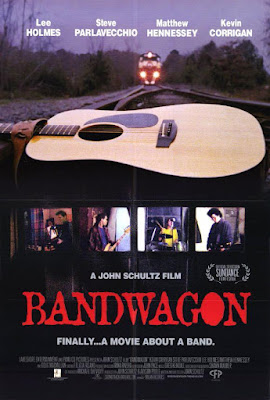
This week I wanted to share an obscure movie from 1996, one of my personal favorites and one that has been out of print since the VHS days. Yes, this one doesn't even have an old DVD release. And that is a shame, because it's a good time.

Bandwagon is a movie about a band, inspired by director John Schultz's time in a band of his own, back in the Midwest in the early 1980s. This story follows a young band from the same time period who become a unit, learn how to work together, and find their sound as the tour across the US. Just like the band portrayed in the movie, Circus Monkey, the film is an underground favorite, despite the premise that has been done millions of times. It still manages to stand out.

Like SLC Punk, this came from that brief period where Gen X kids were allowed to make movies based on their youth, thereby capturing a sound and time period that is in the process of being erased by modern revisionism as we speak. Unlike SLC Punk, this movie a positive reflection on a time and period that still existed at the time the movie was made, a time that no longer exists today. Something like Bandwagon could never be made now, which actually adds to the film's charm and mystique around the power of music.

Aside from the typical salty language you would expect from young adults in the 1980s (some of which would never be allowed in a movie now), it is a rather lighthearted watch, uplifting in a strange way. You won't be taken by surprised by the events of the film, but the likeable characters, surprisingly well crafted songs, and the atmosphere, will carry you along to the end. The end, by the way, which reaffirms the power of art and the spirit that creates.

Normally, I would link to an official release of this movie, but it's been buried. You can't even watch it on a streaming site, for whatever reason. Nonetheless, it is worth setting some time aside to watch, especially if you like music or wish to see what the world looked like before Cultural Ground Zero swallowed everything.

There is nothing else quite like it!

You can watch Bandwagon on YouTube here:


Thursday, November 18, 2021

Savage Planet


This is one weird world, but I think you already knew that. It would be very difficult to live in these times and not see how strange things can get, especially in regards to how our perception of things has changed so tremendously over the years.

Ostensibly, we don't live in the same world we did even a few years ago, and it doesn't look like we're going to stop changing any time soon. In this sort of climate, can we even agree on much anymore? It seems like everyone is going their own way.

But I do believe there are things we can still come together over. Most notably, we can agree on where reality ends and where fiction begins.

Or can we?

I often wonder about the line between reality and fiction and where it really exists in the stories we tell. Of course one understands that the events we see in the stories we read or watch aren't physically occurring around us at that moment in a way that we can participate in, but there are parts of them that stick with you no matter what happens.

By the same token, advertising and word of mouth reputation can also alter your perception of stories before or even after you've already seen them. This is, after all, why advertising, propaganda, and word of mouth, are so important to sell stories to others. It's difficult to get someone interested via blurbs or elevator pitches, regardless of what experts may tell you. You need to sell "experiences" and "feelings" and such immaterial things, not the stories themselves.

What matters is selling you, not so much reaching you. As someone who has watched a lot of b-movies over at Cannon Cruisers for the last few years, I've slowly realized the difference between what a story offers versus what you are told a story should offer is often immense. Throughout the 20th century, it took a lot of trial and error to get it right.

For an example of this, take 1980s action movies, supposedly stupid films filled with poorly written dialogue that you are supposed to laugh at for being bad. But if you actually watch them you will find this is revisionism crafted by irony-poisoned hipsters. 

Action movies tend to be stories where heroism is rewarded, and the heroism is depicted as being larger than life, which requires larger than life action to match. You'll also find the "dumb" one-liners you laugh at actually are funny and clever, meant to make you laugh to begin with. At some point what you were being sold by those you trusted ends up being very different than what you are getting. Take a look at many internet critics from the '00s mocking Schwarzenegger's Commando over things that are meant to be funny to begin with. It is bizarre.

One would then have to question how many other things we have partaken in have been sold to us wrong. Perhaps we have also engaged with stories that were not presented as what they truly are and ends up successfully driving us off in the process?

I say this because of the obvious dumbing down of popular entertainment into fabricated genres that has been occurring over the past century. You need to check certain boxes to be placed into certain shelves in the correct stores. We've actually gone over this subject before. This obsession with classification overrides actual storytelling intent and leads many creators distracting themselves from what is more important in the creation process.

There is no medium or genre that has escaped this problem, just individual creators that know how to work around these unnecessary expectations.

So let us go into a story that falls into this exact crevice.


One such story I wish to talk about is 1984's b-movie favorite, Savage Streets. This film stars Linda Blair in her second most famous role, and for good reason, though I would argue she only really becomes the central character by the end. However, this is a movie that, in this writer's opinion, has negatively suffered over the years due to what it was sold as being and what others still praise it for. Truth be told, if you've seen it then you probably know what I mean. Savage Streets is not really what you would expect it is based on its reputation among exploitation film fans and those who love so-called trash cinema.

First, let us describe what the movie is actually about before we touch on things like reception or general advertisement required to sell it. The story is actually not that straightforward, despite what the poster at the top of the post or the taglines will have you believe.

Savage Streets is about a group of young urbanites in early '80s New York, all of which have no future or respect for the hopeless world they live in. We follow a group of men and a group of women as they collide and their worlds melt down into nothing.

The story starts as we center on the lone father figure in the movie, an inept middle-aged boomer who impotently wags his finger at his emasculated son not to go out on a school night. The son rolls his eyes, sneaks off and changes into his leather jacket, joining his cool friends for a night on the town. From there we see what the world he is truly living in feels like.

And this clueless kid's experience is pretty much our position going into this movie. We are watching a lost, amoral generation navigate a cruel and uncaring world, flailing in their attempts to interact with and understand the madness around them.

This setup tells us everything we need to know going forward, about the city, about the characters, and about what kind of story this actually is.

Our group of male punks soon comes across the equivalent fiery group of modern women and the two exchange heated words after the former almost accidently runs over the deaf-mute sister of Linda Blair's character. At this point it is established these guys aren't all there, but also that the women are kind of lost themselves, drifting about life without any aim. They hate and disrespect each other, though not for any reason in particular.

Eventually, however, they will push each other to the point that one of them will go too far. And then it all goes to hell.

But despite what the poster at the top of the page says, this isn't really a revenge story. It actually shows us both groups like they're gangs ready to clash with each other repeatedly, only instead we see them disintegrating in real time as things continually go bad for them. 

Without any glamor was see an uncaring world step aside as one group moves to more vicious acts such as rape and murder, doing them as naturally as they breathe without anyone stopping them. It just so happens that each victim in this spree is someone Linda Blair knows intimately, but she doesn't learn this until near the end of the movie. Until then, the movie is focused on the disintegration brought about by a lack of love or Justice from or towards anyone involved. Things are constantly happening, and getting worse, until a boiling point is eventually hit.

By the last half hour, she has hit her limit, learning from one of the turncoats what truly happened to those she loves (who is then unceremoniously murdered by his own supposed friends) and fresh in the knowledge that the law and all authority figures will not help her, she sets out to take the perpetrators down herself.

This happens around an hour into the movie and what follows is the entire climax. As I said, revenge only really comes into play late.


Now compare this with a Death Wish-style revenge movie. They don't work like this one does, because they aren't the same type of story.  The inciting act happens within the first half hour, and the rest of the film is spent seeking Justice for wrongs until the final showdown at the end. It is a very different set of events.

But Savage Streets doesn't do this. It is more interested in the disintegration that leads one to become that type of person that would murder Paul Kersey's family in Death Wish. What kind of a world fosters this sort of behavior? This is a generation with nothing and nobody--no hopes and no dreams and nothing to aspire to besides another dopamine hit before the inevitable overdose. Our main character has nothing she wants to do except live with her friends and family in peace, but she can't have even something simple like that. The world will not allow it.

By the time she goes out for her revenge in the last half hour it isn't quite like Paul Kersey snapping, but more like a long series of events resulting in a downhill slide into a bog of poison. This is what causes her to throw off all care and concern for herself and the law to do what needs to be done. This actually makes the last leg of the film more cathartic than it would be in a proper revenge movie, because it isn't about the revenge itself at this point. It is about doing what no one throughout the movie would do--set things the way they need to be and fix the damage. No one stepped up, leaving this fatherless hopeless case to put aside her ego and embracing her anger with the world into the right channel needed. You aren't necessarily cheering for revenge--you're cheering for this madness to be put right. And by the end, it is.

So while it does have revenge as a plot element and is a movie about Justice, I would be hard-pressed to advertise it the way the movie studios did when it came out. I wouldn't even sell it the way the film's fans do now. This isn't Death Wish and neither is it a "femme fatale" movie with a sexy lead in revealing clothing showing bad men how good women are. Sure, this was directed by the man behind Friday the 13th Part V, but it has little in common with that sort of sleaze. There isn't any sort of triumph at any point in the story.

Linda Blair essentially traps the three (that's right, there are only three) villains using her wits, twisting their vices against them, and surviving by the skin of her teeth. The entire climax is portrayed as, and is, an incredibly stupid thing for her to do on her own, almost ending in her gruesome death. She doesn't celebrate her narrow victory.

But if she didn't act to begin with then who would have?

We all know that it would have been no one. The entire movie proved that to us over and over. They would have continued to escalate in their insanity, hurting more innocents along the way to get their braindead pleasures of vice. Justice needed to be dealt out swiftly and unmercifully to those involved, and it was.

Even the finale of the movie ends with the above graveyard sequence to honor those who died due to this carelessness of modernity. There is no real victory here because none of this should have happened to begin with. Unlike Death Wish, however, Linda Blair at least as her remaining friends and family to help her through this trying time and they can hopefully move on from this. Though, of course, left unsaid is that little prevents this insanity from occurring again in the future.

Because this is the modern world.


I should also go into how one of the taglines is about "the battle of the sexes" or something silly like that. It truly isn't. This would imply each side consisted of one sex purposefully doing battle with the other, when the truth is that there is nothing of the sort happening. Weak people are responsible for letting this craziness happen to begin with.

There are male characters on the good side, some of which even fist fight against the villains at one point. The villains openly assault and violently threaten males all the time just as they do women. It just so happened that it was a female at the end of her rope that they (inadvertently, I might add) antagonize in their spree of terror. Their uncontrolled chaos of malice, lust, and greed, is what eventually led to their downfall. And they were rewarded by the world for being this way, until someone finally acted with Justice against them.

That there were no strong or competent adults to stand up against any of this is the actual tragedy of the picture. Everything would have been prevented with something substantial beyond finger-wagging at those darn youths to just be normal, dang it. The entire movie is about decay, so fat chance of that happening.

But none of this sells movie tickets, does it. You can't exactly fit all of this into an elevator pitch or a catchy tagline.

I would wager if you watched Savage Streets it was either like I did when it was on a late night station back in the day and got absorbed in the lunacy, or because you bought it based on the advertising and were either pleasantly surprised or horribly disappointed with the final result. This is because it isn't quite what it is sold as.

To get straight to it: Savage Streets isn't a gritty action movie. It isn't a "feminist" statement, or whatever that means among modern film snobs. It's not really exploitative: the rape scene is definitely not for the squeamish. It's not really a revenge movie or a thriller either. It's just a story about the youth generation struggling for air and failing in an amoral world of material pleasure-seeking. There is no glamor here.

So how would you even sell something like that? Not only that, but how do you explain it to someone else who might want to know if it's for them? Going on past experience this isn't really the type of thing that comes across easy.

There are times when a short and simple sales pitch is a good thing, but sometimes you need a bit more than that. Sometimes you just can't sell something others might want to buy. That's just the way it is, I suppose.

And we really should be doing more than just selling stories, anyway.


I'm not going to say Savage Streets is one of the best movies ever made, but I do have to say that recently re-watching it for the first time in a dog's age made me appreciate it much more than I did when I was younger. It isn't the sort of film it was being sold as and I couldn't quite understand that at the time.

But now I'm older and am far more used to the tricks and strategies behind basic storytelling and can see the intent for what it really is, I can say it deserves the cult status it has attained. Even if I think it still sold incorrectly most of the time. However, it could never be anything more than a cult favorite, purely because it can't be elevator pitched. This is why they resorted to selling the last half hour as the whole movie.

What else could they do?

It's also a movie that could only have been made at the time it was made. The 1970s were too nihilistic to allow movies where Justice wins gets made, and when they actually did were called "fascist" and any number of juvenile names by elitist snobs who tried to bury them. The 1990s were the age of edited down films which meant it would have been gutted entirely of what it was. Post-Cultural Ground Zero? Forget it. Not in a million years would this ever get made. They would have put everyone in this movie on a list.

Through the packaging of 1980s grit, everyone involved in this piece made a flick that couldn't have existed at any other time without diluting the impact of the story they wanted to tell, of a modern world of madness where Justice is needed more than ever. And it isn't quite like anything else you'll see, even from its time period. 

Whether the story it tells is up your alley or not is tough to decide. It is a cult classic for a reason and requires a certain taste for a certain type of move. Though I can say that I like it I don't know how I could possibly recommend it. The movie is a tough watch.

Nonetheless, it is one where the reputation of the piece does not really do justice to what the product actually is, which is the larger point of today's subject.

Not everything can be "sold" or even really marketed as what they really are.


The question arises then about how much out there might we have missed out on because we were sold a false, or misleading, bill of goods? How much of this is also more about perception than it is simply selling things to the wrong audience? Not everything can be sold in today's world, and yet everything has to be sold in order to be successful.

How much of life have we missed out on because we were given the wrong directions to the wrong location? There isn't any way to know how much we could have lost, of course, but it is definitely more than nothing. There is no way we would have seen it all. We can't.

Sort of like last week's New York Ninja, the truth is that we haven't seen it all. There is a lot out there we haven't seen, and will never see.

But I'm not so certain this is an entirely bad thing.

The fact that there is so much out there we will never see or experience, things that might have been great in life, speaks to just how much there really is in this world we will never truly get to do, even if we spend the rest of our mortal lives living to the fullest and doing everything we can. No matter what you do, there will also be an incalculable number of things you will never get to do. There is always more out there waiting to be discovered.

I suppose this post just exists to muse on the sort of thing one might miss by looking at, or being sold things from the wrong, or a different, angle. Perhaps it would do us good to always keep an eye and ear out for that which we might not otherwise consider, one foot in the hope of the unknown and the other in the knowledge that we will never see the full picture. You never know what you will find and where you will find it. Sometimes going outside of yourself can be exceptionally rewarding, sometimes not. I suppose this is a case where it was the former for me.

When I was a kid I thought horror was just slasher movies because of everything shoveled onto my plate when I was younger. I avoided the genre until I went out of my comfort zone and found not only horror that was out of that sector, but also some films in that category that are very much worth watching beyond the drek I had been continuously exposed to. I even covered some of them on Cannon Cruisers.

The point is that you never know what you're going to find out there. As long as you keep looking, who knows what you can come across?

To take a scene from a different, though similar in a lot of ways, movie:


"Integrity" is more than closing yourself off to the world around you


In the world today it is considered being "inclusive" and "welcoming" to create communities around the most trivial things and invite everyone in, but that isn't necessarily a good thing. Sometimes you need to find inaccessible spaces to challenge yourself and expand the scope of your world, to keep it growing. It won't always work, or be successful, but it is always worth trying. You won't always be the person you are today.

The world is an unpredictable, bizarre, and savage, place where anything can happen at any moment. You can hide from it, or embrace the weird and learn from it. Who really knows what will happen next? Definitely not you or me.

The boxes and categories made up during the last century are already falling by the wayside, having long since worn out their usefulness. Soon enough they will be far away in the rearview window before they are forgotten. When that happens will we still be clinging to these failed attempts at filing reality away, or will reconsider the way we see everything? Eventually, we are going to have to make that choice.

One day this will all be over and done. When that happens, where will we be, and how badly will we find ourselves lost at sea? And what will we use to guide the way forward as the current ways die around us?

I don't know, but here's hoping it's something better than the world we're leaving behind. There is so much ahead that it is hard to take in where we are right now. It's a savage planet, but that doesn't mean we have to be at the mercy of it.

We can go far. So let's go there. What's the worst that could happen? All we have to do is keep our perception sharp and our expectations open. That's enough for me. 

I'm ready and waiting to see what this new world has waiting for us ahead. Aren't you?


Friday, November 12, 2021

Blast From the Future Past


Here is a funny story.

What do you get when you make a movie in 1984, shelve it before production is finished, let it sit for 35 years, only to have it finally completed and released in the year 2021?

The answer to that would be the movie known as New York Ninja. This is an unreleased 1980s action movie that was completed and put out today.

The reason I wanted to talk about this is because of how absurdly rare something like this is to happen. Imagine getting the chance to release a long lost project from a bygone age in contemporary times. That doesn't happen very often.

And yet this is what boutique label Vinegar Syndrome actually did with the release of New York Ninja. You can see the trailer for yourself here:


What happened was that Vinegar Syndrome acquired the rights to long shuttered film production company 21st Century Entertainment and went through their archives. They soon found tons of footage for an unreleased movie named New York Ninja. There was no sound and the film was completely unedited, but there was something there.

Eventually one of the staff took this on as a project in his spare time. He went through the footage, edited it into a coherent movie, then Vinegar Syndrome helped him by getting a new score done and finding voiceovers for the dialogue.

You see, the lack of any sort of sound meant that this glaring flaw needed effort to overcome. They hired b-movie greats like Don "The Dragon" Wilson, Linnea Quigley, Leon Isaac Kennedy, Cynthia Rothrock, among others, to play the main characters. Because even though they discovered who the main actor was (the reclusive John Liu who disappeared from sight not long after this was shot) they knew nothing about the shooting, the rest of the cast, or anything about the history surrounding this film's creation. They were essentially going in blind.

And yet, they did it. The project was completed, and a movie was made. They did their best to take what they had a create a 93 minute action movie out of it. All their efforts made this a 1984 movie completed in 2021--not something that happens too often.

In fact it was so uncommon and bizarre that we talked about it on Cannon Cruisers. You can find the special episode here. Though I can also post it below for easier access. Listen to it wherever you would prefer. Just keep in mind that it is nearly half an hour long!


What is interesting about this project, to me, is the sincerity. They treated the material, as silly and goofy as it can be, as seriously as they could. They tried to match the lip flaps and follow the obvious plot through line than John Liu intended it to have, and the actors all do a decent job of taking you back to 1984 by way of 2021.

It is a very surreal experience to watch, but it never feels like the people making it are taking the experience anything less than seriously. And that benefits the final product tremendously. The last thing we needed was another purposefully bad movie trying to wink and nod with the irony crew that almost ruined b-movies for the rest of us.

What the movie does is take you back to a time when a movie could just be a fun night out with the guys. You never expect to see something on the level of Heat with low budget action flicks like this. That isn't the point. It is to feel good seeing a man take revenge on those that did him wrong, and set it right.

And in the process, make it as outlandish as possible. That is what makes movies like this so fun to watch and enjoy. They don't make them like this anymore, so it is nice to see someone got out of their way to fix one back when they were still being made.

I'll just end this shorter post by saying that if you enjoy low budget b-movies or general action movies from a time when they were as crazy as all get out and unafraid of being judged by small-souled bugmen then you should see this movie. Even if you think you've seen it all, you definitely haven't seen this one before.

It's guaranteed to put a smile on your face, and that is definitely worth your time. I guarantee it. We need more of that in the 21st century.

Sorry for the shorter posts this week. It just shook out that way! I'll see you next time for something brand new.