Thursday, November 29, 2018

Black & White


This entire post was spawned from a twitter discussion later spun out into a blog post by Rawle Nyanzi. I recommend reading it to see where this post comes from.

Here's the secret to good storytelling: Dynamics. Contrasting elements that cause the audience's neck to snap back and forth over which one might prevail over the other. It is the key to all the best stories when one side is clearly set apart from the opposite and their differences lead to what is ostensibly the plot.

And every story has this. There exists no great story where the antagonist is a better person than the protagonist (unless we are following the villain's POV) and in which the antagonist is someone we want winning over the protagonist, and if there is it usually equates to a bad story. We want one side to win over the other because one is better (even if microscopically) than the opposite. Even mobster and crime stories are like this.

For instance, sword and sorcery stories are tales of morality, as is good fantasy in general. The sword represents that natural state and humanity and the sorcery represents unnatural evil intended to warp and rot the natural world. Are all protagonists of sword and sorcery good people? I don't know, are human as a whole perfectly good? No. But they are objectively superior to those dabbling in the dark and who wish to overturn the natural state for their own selfish ends. One is, and always will be, the superior and more morally compelling side. So yes, sword and sorcery is about black and white morality. It does not mean the hero cannot have flaws or the villain cannot have good points. It means that one is still the morally preferable choice despite this clash. They are still dynamically opposed, and those differences are compelling.

"Grimdark" fantasy tends to miss this point by sinking all characters in mass of mud. Classic fantasy is already plenty dark, but it is not because the morality is weak and cowardly like modern fiction, but because evil is terrifying and destructive to both the soul and the world. There is nothing compelling about a cast of terrible characters murdering each other until one wins. This haze relies on shock and shallow violence to keep an audience's interest until eventually the story rolls to a stop. Nobody cares who wins because it doesn't matter. A terrible person will get their wish and continue being terrible. Rinse and repeat until the heat death of the universe.

It's like I'm talking to that kid in high school who hung out at Hot Topic and wore Slipknot and My Chemical Romance shirts. It's all about image. Instead of a moral battle between two opposing forces, we are left with mindless violence and sex and characters without any passions or aspirations aside from their appetites.

And audiences want more than that.

Listen to any discussion about Watchmen. Rorschach is still the most popular character despite Alan Moore working hard to try to make him despicable. But the audience rejected his attempts. Why? Because they instinctively want someone to root for. Therefore the only character who has any values he is willing to fight and die for (and is still clearly morally superior to the villain) is who the audience will attach themselves to.

How many discussions of A Game of Thrones involve readers and viewers frantically trying to attach themselves to the least terrible characters still alive and hope for them to win? If they wanted grey goo instead why would they do this at all? Despite George R. R. Martin's best attempts, the audience is still searching for the black and white in his attempt to paint only in greys. Even if he can't give them what they truly want, they dig for it anyway. His experiment backfired. (And that is why he will never finish it.)

Deep down we all want the good guy to win. It's embedded into our bones and brains. This is why despite Hollywood's constant failures and inability to have a hit, superhero films still reign supreme at the box office. The most black and white depiction of morality there is remains the most popular genre. Meanwhile, former titans of this mentality like Star Wars have flailed due to their weak attempt at eschewing morality. Superheroes are the only place audiences can currently get what they want. And if nothing fills that void when the genre falls in popularity? Well, Hollywood is going to have a lot of problems.

In fact, the entire entertainment industry is having this problem. Book sales are down, TV networks have had a terrible year, and the comic industry will not survive the oncoming decade. Perhaps instead of force-feeding audiences their pedestrian and unthinking view of morality they might consider giving the customer what they want. And what the audience wants are excitement, dynamics, and perhaps a healthy dab of Truth.

Truth is real. Morality is real. Everyone instinctively knows this, and they want to be reminded of it. Truth be told, we need to be reminded of it. It's good for us. It keeps us on the straight and narrow.

Storytelling is about sharing truths through dynamic exaggerations. Truth is real, and we all know it deep down. This is why black and white morality is unavoidable, and why it will never go away. We crave it, and we always will.


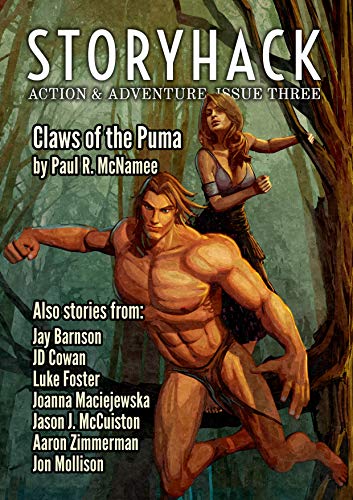
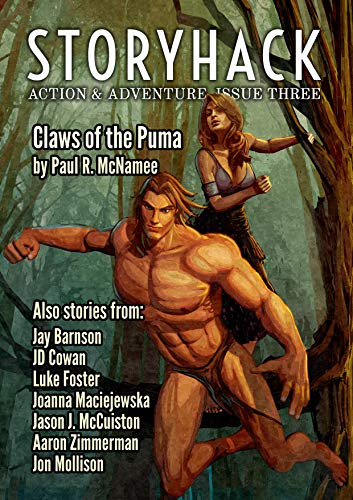
If you're looking for fun action adventure stories to read, I recently had two different short stories released. One is in issue #3 of StoryHack, and the other is in DimensionBucket magazine. Check them out! I should also hopefully have news on my superhero novel, Gemini Warrior, sometime very soon. Exciting times!

Friday, November 23, 2018

Adapting to Adaptions


Stories are universal, as a rule. They are made to connect with audiences, which means their goal should be to do so on the widest scale possible for the story. But sometimes it isn't the original work that does the job. Sometimes it's the adaption of the story that ends up reaching the widest possible audience. It happens more than you would think.

In fact, let's go over some examples here.

One of the most interesting aspects of being into anime and manga is the relationship between the two.. One story transfers across two different mediums in Japan all the time. Comparing adaptions will be clearer if I talk about these.

In the early days when anime was just getting a foothold the adaptions were usually loose. Merely taking the concept and adapting what they could while adding their own ideas. In the 1970s with the advent of super robots, space opera, and fantasy, adaptions had a whole new meaning.

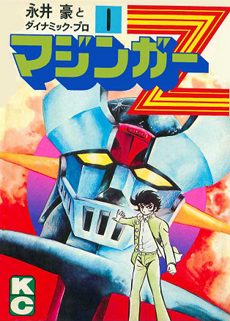
Some manga were made from the anime staff specifically. Go Nagai's Mazinger Z ran in Shonen Jump at the same time the anime did. Since he was the writer he knew the general plot and where it would go. It's about a teenage boy who finds a giant robot and must use it to battle the evil Dr. Hell from ruling the world. But because the anime was for spectacle and selling toys, the manga ended up not having monster of the week battles. Instead it had a rapid fire plot that rocketed from Point A to B. Whie the anime ran for 92 episodes from 1972-1974, the manga ran for 5 volumes in the same time period. The sequel series Great Mazinger did the same, running for 56 episodes from 1974-1975 and 2 manga volumes at the same time. The third series, Grendizer, is more less the same format as the other two. The last series spread across mediums, God Mazinger, is entirely different in every adaption.

Personally, I like this approach. This makes the various versions seeing for different reasons. It's engaging in a way a simple panel by panel adaption would be. But, of course, most franchises are not Mazinger Z. And despite how popular it is they are not all easily available. For instance, the western market has yet to see any of Nagai's original Mazinger manga (in my opinion, his best by far). So this tact has its downsides.

A different series that ran a similar course was the ever popular and influential Space Battleship Yamato. If you don't know, it's about the crew of a spaceship trying to find a way to defeat alien invaders of Earth. While the original 26 episode series was running, directed by Leiji Matsumoto, he also put out a manga based on the story at the same time. It ran for three volumes, and although I have yet to read it, actually has been licensed for release over here by Seven Seas. I would assume it follows the plot of the series tightly.


But in the '80s is where things changed the most. The economic boom in Japan meant a growth for many industries, but entertainment is where things really ballooned. More anime and manga was produced than had ever been produced before. Magazines, timeslots, and companies were opening up, and more productions sprang up. OVAs opened the floodgates as to what animation could do. Movies as well were at their peak. This continued into the 90s and is regularly considered the Golden Age of anime and manga. Everything sold, creativity was encouraged, and the overseas market was being cracked.

It only stands to reason that adaptions would continue in this era, and continue they did. Some adaptions were like psychic romance story Kimagure Orange Road and followed the main story while adding in their own idiosyncrasies along the way. Episodic series like City Hunter created whole new scenarios which allowed it to run longer. Post apocalyptic martial arts slobberknocker Fist of the North Star stretched out the material to create a longer anime. Others were more plain adaptions.

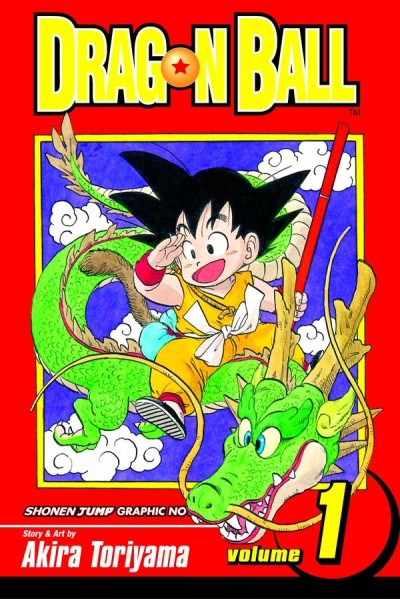
But the most important and popular adaption, and the most infamous, was the one for Akira Toriyama's adventure comedy Dragon Ball.

The original manga ran for 42 volumes, spit into two anime series. The first anime series covers the original 16 volumes over 153 episodes. This anime was simply called Dragon Ball. This adaption works surprisingly well despite the pacing issues one would expect. The staff added whole new events and smaller arcs (known as filler to wider anime fans) that did not interfere with Toriyama's original pacing or intent. It starts and ends strong. As a rule, this is the best Dragon Ball adaption.

The second anime series, called Dragon Ball Z, takes place after a time skip in the original manga to cover the remaining 26 volumes. However, it covers them in 291 episodes. Unlike the first series, this one succumbs to a myriad of issues. There are long stretches of episodes where nothing happens, there is a lot of filler that goes nowhere and (unlike the original anime) adds nothing to the story, and most importantly the animation is incredibly inconsistent. As an adaption it is quite weak.

It managed to succeed at the time due to Dragon Ball's manga being so good and because there was little on television like it at the time. But there is a reason it has an official edited version, Dragon Ball Kai, which cuts the fat to 159 episodes. The original Z anime is close to unwatchable today without heavy skimming.


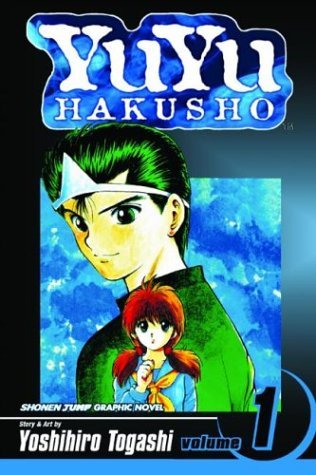
But when we head into the 90s there are two more series worth discussing. Oddly enough they are by two different individuals who would end up marrying. The first is Sailor Moon, the second is Yu Yu Hakusho. Both are two of the biggest series of the period.

Sailor Moon is the premier Magical Girl series, created by Naoko Takeuchi in the early 90s. It's about a teenage girl named Usagi Tsukino (Serena in the North American dub) who is made a warrior for love, Sailor Moon. She fights evil creatures at night and deals with normal teenage stuff during the day joined by her friends. The story soon involves a legendary kingdom on the moon from the far past as well as a new earthly kingdom in the future. That's about the only similarity between the manga and later adaptions.

The original manga is loopy, but it's also quick paced. The entire series takes 18 volumes to complete when the original anime series takes 200 episodes and doesn't really end. The later anime series, Sailor Moon Crystal attempts to be a straightforward adaption of the manga. Despite all of this, I think the original anime is the best version of the series.

Yes, despite being full of filler episodes and arcs, as well as a lot of tangents, I feel the anime gets to the heart of the series better than the manga does. The manga is dry and fat much of the time whereas the anime adds good characterization, including character arcs for villains, as well as has much stronger direction. It's also a lot more fun. The original, and the later anime as a consequence, simply doesn't stack up.

In contrast, Yu Yu Hakusho is almost a straight adaption of the original manga, only with trims and additions of its own. Yusuke Uremeshi is a punk kid with nothing in the world. He sacrifices himself to safe a child and is rewarded with a new chance at life. He then learns there is more to the world than he first thought.

The manga starts off with many one-shot chapters centering around Yusuke helping various people in the world with their problems as a ghost before coming back to life. It also ends with two volumes of the most cynical, nasty, and stupid material in the entire series that almost ruins the entire thing. The anime trims the start of the story to get to the action quicker, and completely revamps the final arc of the series to wrap everything up with a more consistent tone and removes all the garbage. There are also other tweaks along the way such as giving a few more scenes and moments to other characters to give the series more flavor.

In this case the 19 volume manga is vastly inferior and less consistent than the 112 episode anime series. The adaption ended up saving the series from the author.


So as you can see, the differences between adaptions can be pretty extensive. In some cases, the adaption could utterly ruin the original in transition (such as Flame of Recca) or go a different way while keeping the core intact (such as Ushio & Tora), which give the consumer far more options to choose from.

This is a long way to say that adaptions really should be adaptions. They should take the original and create the best adaption possible, but the fact is that the original still exists and these are separate mediums. Changes are a certainty, and sometimes they are for the best.

My point is simply that stories can be fascinating in how many different ways they can be told. There's something universal that links even across mediums, and even despite changes that might be made. Even going over them here I am surprised at how much there is to go through.

And I didn't even cover some of the weirder examples. But that will be all for today. I have to get back to editing! Enjoy your Black Friday and watch some anime. It'll do you good.


In case you're interested, I recently had stories in issue 3 of StoryHack and in DimensionBucket Magazine. Please check them out if action, adventure, fantasy, and horror stories are your thing. They are quite good at what they do.

Thursday, November 15, 2018

The End of Wonder

One of the best
Nobody reads anymore. This is universally agreed upon by both the literate and illiterate alike. Big book chains have closed because less customers are shopping there, and because amazon simply offers more for those still around. All in all the landscape for literature is not looking healthy.

The highest selling books not propped up by television shows are all by authors who have been dead for decades. It's a small crowd and it's only shrinking. When was the last time traditional publishing introduced a new author that broke out big? And I mean bigger than your best friend who works at the library or indie bookstore. When was the last time you saw a man on the street talking about hot new author X? If you're honest without yourself then you'll realize it has been a very long time.

This is no small issue. By all accounts the industry is flailing and utterly failing to draw in customers or satisfying existing ones, and is unable to offer anything fresh. And no one in those high positions knows how to fix any of this.

Despite shorter attention spans, short stories and anthologies sell as bad as ever. Smaller pulp-length books have been abandoned since the 80s when the old classics were sabotagedleft without shelf-space and replaced with fat unedited tomes the size of Stephen King's ego and former coke habit. They went in the opposite direction of audience trends, and while it might have worked for a bit, they sure are paying for it now. The readership is shrinking.

But television is also dying, as are most traditional art mediums. No one can fight the creeping nihilism hanging like the Damocles blade above their necks. It's going to fall. The difference is that literature has been around so much longer than the other forms that it should be the one with the highest chance of recovery. It has competed with beer money before. It fought off plays, radio, cinema, television, and video games over the years. Why should the internet by any different?

Well, I hinted at why that is one paragraph back. Those in charge of the industry are not catering to the changing audience. They're instead trying to change the audience. Not in the individuals, but in what they like and see as good and quality so they can shape tastes and forever milk money from their paypig readership. So instead of aiming for blue oceans where the big fish are they throw nets into aquariums over and over, and the goldfish inside hardly realize how often they are being drug out over and over.

The problem is the damage the industry has done to writing itself. And I'm not talking about prose or plotting. I'm not even talking about creativity or stale formats like the 400-page-paperback factory mainstream literature has become. I don't even have to mention all the strange and fetishistic anthologies and magazines that need to be kickstarted because no one is interested in buying them normally. Where the industry suffers the most is in a more basic place.

It is the complete lack of wonder. Romance and adventure are seen as quaint and even problematic. Sincerity is seen as a fool's errand.

And all of that is needed if you want a sustainable audience. This should be obvious. It's no secret that few people who leave high school will ever pick up a book again after graduation. Why is that? It is what they were taught to consume and think of as high art, "real" literature. You will find no wonder or wild imagination in those books. That is by design, sure, but also doesn't foster a love for reading when they could just as easily go download Thief Gold from Steam or GOG and get what they were already looking for. The question is are these schools supposed to be teaching students to love reading or to embed messages in their brains? You probably already know the answer but it is pretty obvious which path is healthier regardless.

I was fortunate to have good teachers as a kid who encouraged me to read The Hobbit, and we even put on MacBeth, but most aren't lucky enough to have instructors going that extra mile. Most get stuck with The Lottery and The Giver and have no reason to think other books are any different. That's if anything even gets assigned at all.

And the people writing fantasy don't help either. For a genre that has its roots in history and legend, it is amazing how few writers have any sort of connection with their own genre's legacy. In fact, the more I learn about the early days of pulp publishing the more I realize how disconnected we are to our roots.

Case in point is this video of fantasy author Brandon Sanderson talking about his own genre. This video was a real eyeopener to me. Pay special attention to how one of the biggest authors in the genre makes up categories, forgets important authors, and works backwards from where wonder should start. And he is one of the biggest fish in the drying pond of his genre.


Here is where I must make a disclaimer. I am not posting this to mock Brandon Sanderson. I don't know how much about the genre he knows (it's probably more than me since David Gemmell is one of the few post-1980 authors in the genre I read), and he clearly knows a lot about worldbuilding. The man is knowledgeable. There are far worse authors with terrible advice (and attitudes, to be quite frank) than him out there. Most are on social media. I have nothing against Mr. Sanderson and think he is very talented.

I also think his focus is incredibly misguided and part of the problem as to why post-Tolkien fantasy is so bland and toothless.

For one encapsulating example, take a random Lord Dunsany short story and get any random modern fantasy novel off a Barnes & Noble shelf and put them side by side. Dunsany's stories are rarely longer than a page and he fills them with wondrous sights, sounds, adventures, and ideas that leave the reader enthralled and possibly mystified. Rarely are you left without at least some semblance of satisfaction. Modern fantasy stories stretch on for near a thousand pages, they dig into minutia and world details that aren't very important, go deep into character histories, and you need sequels to get the entire tale. It spends books and years to finish a single story that doesn't contain half the weight or an eighth of the wonder of one Dunsany short. They are focused on precisely the opposite thing they should be leaning on. Wonder is fantasy's biggest strength.

Both the industry doesn't notice. They care more about the hard shell then the appetizing lobster inside. Audiences will go to where they can get the most bang for their buck, and fantasy is losing that battle more and more as the years go by. Why is it chefs can understand what writers and publishers can't? Customers aren't interested in how lovingly you place the lobster on the plate--they care about what it tastes like.

There is no wonder to a magic system. There is no wonder to nihilistic violence that ends with the least terrible person getting what they want. There is no wonder to a romance that is filtered through modern post-porn sex. There is no wonder to any story filtered through "reality", "content checkers", or hackneyed writer formulas that have been stale since the '70s. In other words, there is no wonder to modern fantasy.

Fantasy authors are more obsessed with the aesthetics then they are sufficiently wowing the audience. As long as the rules are consistent, the reader won't care what you do.

But it isn't about the reader, is it? At some point it became about telling the customer what they should want then calling them entitled and/or stupid when they don't want it. They should feel lucky enough to slurp up the gruel they are handed and praise the muddy texture accordingly. Have you figured out why the industry is shrinking yet?

Fantasy is no different than other mediums and genres in that area. Think of science fiction and John W. Campbell for an example. How hard revision killed that genre is quite the tale. It's also impressive to the extent certain fans still think he created a Golden Age. This despite his influence completely being erased from every book currently on the stands and a sharp decrease in sales following on him taking control of the genre. This while the rest of the world reveled in tropes and ideas the pulps invented before him, and still engage in to tremendous success. A Golden Age is marked by record high sales and quality output--the Campbell Age was the complete opposite of that and started the downward trend leading to where the genre is now. The audience wanted Merritt, and instead he was airbrushed out of the picture and his genre rendered unrecognizable by gatekeepers just like Campbell.

We know what the Golden Age of fantasy is, even if some of us don't want to admit it for whatever reason. It is what it is.

So what can we do going forward? I would say to keep an eye out. Personally I'm still working on my Heroes Unleashed project with Silver Empire, and just had two short stories put out in StoryHack and DimensionBucket Magazine. But there are other authors trying their best to put out something different and better than what the mainstream is squeezing from their rotting lemon trees. You can do better, and you will if you look for it.

It's going to take a long time, but it will eventually turn around. One day you might even see a group of kids passing around an old Anthony Hope paperback and discussing the incredible ending to the book they just went through. Bit out there, no? But that sure would be something.

We've just got a ways to go. Hold tight.

It's coming!

Thursday, November 8, 2018

Where Are We?

Before I start I would like to mention the fact that two of my stories have been released recently via two different outlets.


The first I've already brought up, but I was included in StoryHack #3 with my story Inside the Demon's Eye. This is a fantasy about a lone adventurer wandering through the Black Lands in search of a precious item while another pursues him. Enter a world of demons where humans constantly find themselves under assault--in more ways than one. I was inspired by quite a few things in writing this from CL Moore to an old legend of a sinking city that isn't Atlantis. Can you guess what it is? Probably. I'm not very subtle.

Check out and let me know what you think! It's new territory for me.

But that's not all!


Also just released is my story Endless Nights in Villain City in the Autumn issue of DimensionBucket Magazine! Also different from me, this one is story from the perspective of the villain. Not very surperversive, I suppose, but maybe you'll disagree. It was definitely fun writing this from a different angle.

This is the first issue of a brand new magazine, so please check it out even beyond my story. There are plenty of great stories by talented authors here.

And now for our regularly scheduled post.


Before we start this time, I'd like to draw your attention to this episode of Half in the Bag by RedLetterMedia. You do not have to watch the entire thing (these are always long) but there is something I want to point out. Just skip to their general impressions of each movie. You'll know why I'm bringing this up pretty quick.


One of the reasons most enjoy RedLetterMedia is their deadpan and deflated reaction to the end of pop culture and Hollywood's slow death. The movie Mandy is a rarity in that it shows the last remaining sparks of creativity left in Hollywood, even if it is still coated in nihilism. At the very least it is a creative attempt at a story. This is becoming rare in that industry.

Where Hollywood fails is when they have to write heroics. This might seem strange in the era of the MCU, but you also have to remember that the MCU is still the only proper success in the superhero film world. DC has floundered and, unlike the 90s, no one is taking a chance on more obscure comic books or heroes (like The Shadow or The Phantom) or creating new ones (like Darkman or Mystery Men) to capitalize on the trend. Even if you think superheroes are big their success is limited and not leading to any larger trend. And when the final Avengers movie happens they will never again reach the level of popularity.

But aside from heroics, Hollywood also doesn't understand their own properties--even those who worked on them. For an example check out the video above. The Predator is a colossal failure both critically and commercially.

The Predator is a shallow, spiritually dead movie of stolen imagination and rehashed ideas with a message that could only have been thought up by someone too pathetic to grow up beyond adolescence. And it was written by someone who was there when the original film was being made. And not a talentless man, either. He wrote the original two (and best) Lethal Weapon films as well as Kiss Kiss Bang Bang. He knows action and how to give the audience what they want.

And yet not only is this film completely out of joint with the franchise, it is completely out of tone with the genre it is supposed to be. It doesn't give the audience what it wants, and it doesn't do so on a scale that is as impressive as it is inept.

Which sums up the dead end state of pop culture as it is right now.

I didn't expect to write a post about this movie, but I had to do so after recent events involving bad decisions by Marvel. The fact of the matter is that the MCU has peaked. There will never be another film like the original Avengers' impact on the genre, and there will never be another Infinity War of building up around a decade of work to one event. It will never happen again.

So we begin our downhill slide of the company telling audiences what they want and cramming uninteresting characters into their own films to replace beloved ones. The MCU has passed its peak with these two new Avengers movies, like every other trend, and will never be the same again.

And that's fine. Trends come and go all the time. Superheroes first hit it big with X-Men and Spiderman back in the early 00s and we're nearing two decades. Just like westerns, action films, noir, and fantasy films, we're nearing the end. But there is a problem.

The difference this time? There is no trend coming.

Hollywood didn't pounce on John Wick's success. Outside of Marvel, they've sidestepped superheroes. Star Wars is dying as a brand. Their award shows go down in ratings every year because no one is interested in the movies they're making and dumping directly into the 5 dollar movie bin at Walmart. How can they pounce on trends when they either ignore them or, like The Predator, completely misunderstand them?

An industry can't survive on low selling auteur wank, and product that has no respect for the audience.

But that's another reason I posted my work at the top of the post. It wasn't just for promotion but to highlight that the future are people like those in StoryHack and DimensionBucket. It's about creators willing to give the audience what they want while trying new and exciting things at the same time.

Much has been written about the Pulp Revolution and other similar movements in other places and industries, but they exist for that reason. The big boys are fading and have no intention of changing their ways. Their too bloated, arrogant, oblivious, and low energy for that.

So while the old guard crumbles to dust, I suggest strapping in for a ride. 2018 has been one strange twist after another, and that's not going to change any time soon.

I'm not exactly sure where we are in the overall scheme of things, but we're definitely in an interesting position.

Let's see what happens next.

Wednesday, October 31, 2018

Happy Halloween!


As promised, I wanted to deliver a small surprise for readers of this blog in time for Halloween.

And what better than include some fun content?

So what I've done is include both Halloween episodes I recorded with my friend on our podcast in this post. In case you are unaware, Cannon Cruisers is a podcast I do with my partner centered around the filmography of Cannon Films with some works of the same era by different studios.

Last year we recorded an episode centered on the movie franchise Halloween (the first three movies) before we were even aware of the recent film's existence.

You can listen to out long and unedited discussion here:


But as was said earlier, we recorded that last year.

For this year we included a discussion on another seasonal franchise favorite. In the new episode we talk at length about A Nightmare on Elm Street 1 and 3. Why those two? Well, you'll have to tune in and listen for yourself!

You can hear that at the Cannon Cruisers blog here.

Everyone, have a great Halloween and I will see you next week.

Thursday, October 25, 2018

Out of the Pan and into the Pit (Final Part)

Now that's a horror cover!

And so we end off our short series with this final batch from the odd 27th Pan Horror anthology. It's been a bizarre ride filled with violence (a lot of violence), sex (a lot of sex), and horror (not as much as the other two), with pieces ranging from insane to far too predictable, but these last three should help put the final nail in my evaluation of this collection. Twelve stories down and what did I think? Well, we'll get to that.

Let us continue where we left off.

Joint Family by B. Seshadri is about an extended Indian family and the man who is in charge. He is in his mid-forties and still single, but begins plotting a way for his family to get ahead and up the social ladder. This requires using a disease from the backwards and superstitious Medieval era. Yes, the Black Plague. But he's a smarter and more modern man, so he can control it to do his bidding and plot everything out. His Machiavellian schemes depend highly on modern medicine and the way the current era works in order to team up with a disease in order to win out. As you can imagine, this doesn't go as well as he hopes it will.

I was pleasantly surprised by this story. The themes are strong and the main character not being so good while his family is works with the plot so that you want him to fail and them to succeed. My only real problem with this story is that it takes a long time to get going and leaves a far shorter time to deal with the consequences of his actions. This leads to the ending being abrupt and the tension draining right at the end, hurting the entire story a bit in the process. But it doesn't hurt it that much.

Otherwise it is a good story about a man who has his ego run out of control, thinks he can control nature and the modern world, and leads to unforeseen destruction. It's a solid entry and easily one of the best in this collection.

What comes next is The House That Remembered by Jonathan Cruise. As you might imagine it is a haunted house story. This one follows a newlywed couple as they travel to a small Irish town and overlook a new property they inherited. But there is a history behind this place, and it is quite dark. Nonetheless, they are hoping to build themselves a new life on this old family property. What follows is a tale of ghosts, legends, and curses, and an ending that brings an entire eerie history to a close.

As you might be able to tell, this is a Weird Tale, and it is a very good one. This wouldn't have been out of place in the titular magazine. In fact, it is my personal favorite story in the collection. The tension is high, the pacing ramps up, the horror is well defined and palpable, and the ending is satisfying (if a bit too quick for my tastes) and left me wanting more after the final line. If you're looking for a reason to read through this book I would say it is worth picking up for this story alone. It is quite good.

So far, these last two were surprisingly strong compared to the absolute weirdness that the anthology started with, but we're not done yet. There is still one last tale to go. Surely Mr. Paget will end it with a banger, though? Let's have a look.

The final story in the anthology is Rothschild's Revenge by Jay Wilde, a tongue in cheek story about a serial killer who goes after the people who did him wrong. He hunts them down and murders them in absurd ways. That is the entire plot of this shorter piece. It is lighthearted and leaves with an ending that leaves the reader with the lingering question as to why it was chosen to be the last story in the collection. It doesn't leave the reader with any particularly strong feeling, it has no weight, and it is brief on top of it all.

This doesn't make it the weakest story in the collection (it would be difficult to usurp Red Recipe), but it does mean it is placed in a bad spot. Sequencing in anthologies is important to keeping the audience engaged, and using a small comedic piece at the end of what is supposed to be a horror anthology doesn't leave the reader with the right impression. It leaves them slowly closing the cover and filing the book away.

But the biggest problem is that the story just exists. There isn't any tension in the tale due to the comedic bent, the kills are meant to make the reader laugh, and the ending is so ridiculous it can't possibly be taken seriously. There's nothing for the reader to sink their teeth into for a final story. It's funny if you like black comedy, I suppose, but that's about all. This is all fine, but it is a tonal shift from the stronger last two pieces which also works against it. This is what I mean by its placement not doing it any favors.

Overall, these problems would factor into my impression of this collection as a whole. There's no coherence or logical placement of the stories within. The tale chosen for the cover was not one of the stronger pieces and doesn't represent this anthology well.

This emphasizes another issue: this anthology is confused. It does not choose an identity for itself, and the sequencing makes the problem worse than it could be.

The style of horror varies, but most of the explicit material is placed near the start leaving the creepier content at the back, aside from Red Recipe being placed between two of the strongest ones in the last half. It's a mess. The strongest stories are buried, and the comedic ones front-load the selection with a random light piece at the end to fizzle out the building tension and reader expectations. It's not very well paced, and most of the stories are simply not enjoyable. This is a weak anthology.

Would I pick the best pieces to check out it would be Stephen King's I Know What You Need, B. Seshadri's Joint Family, and Jonathan Cruise's The House That Remembered. 3 out of 12 is not a good batting average, but if you like comedic satire that is not very scary then you'll find a bit more to enjoy in these pages, but to a much more limited degree. Unfortunately most of the stories simply contain over the top gore, slow plotting, and lean on the crutch of terrible characters you can't root for which bring them down from heights they could otherwise reach. This all holds it back tremendously. It's just not a good collection.

Now I can see where the state of horror writing was by the late 80s and it is no wonder this series died on the vine not long after this volume released. The unexpected success of Goosebumps in the 90s (and Are You Afraid of the Dark? for television) by using simple horror stories and monsters with a basic underlying morality must have been a revelation for the audience at the time. There was a reason, I suppose, that more than just children were reading them at the time.

I was unaware that written horror was in such a bad state by this time, although perhaps the lousy movies of the period should have clued me in. Most of the stories in these pages really could have used some of that old magic and because they don't have it they feel far more of their time and less universal than a classic story like Dracula or Frankenstein does. Most of these stories have no actual point, and as such they have little to offer outside of violence and sex. And in the age of readily available pornography and video games they offer even less.

Because of this, I don't think anyone other than a horror zealot will find much enjoyment in these pages. It reads as a genre out of gas and stranded on an abandoned back road with nothing but a dying flashlight. What you'll find out there is nothing you would want. This is a genre that has lost its way with no idea how it happened.

As a whole this has been a fun read, and I enjoyed sharing it here, but this not something I will be passing around to others. There just isn't any reason to. Look up the best stories and find something else to read.

Not recommended.


And that's all for this short series. See you on Halloween for a special surprise!

Friday, October 19, 2018

Out of the Pan and into the Pit (Part 3)

I wish this was a story in the book. (I'm still not posting the cover)
Welcome to the third part of this mini-series covering volume 27 of the Pan Book of Horror Stories. In the first part we covered a set of odd shorts that were vaguely horror-ish but more in the vein of satire (at least, I hope so), and in the second part we went over three stories that each had their own weaknesses. Halfway through this book and I've started to question just how this once vaunted series had fallen so far. I keep hoping the back half will improve in quality.

And it sort of has. In a way.

The first story covered is Norman P. Kaufman's Dead or Alive. A man has a woman who is sick. He begins to have sex with her mother, then soon learns the daughter has an inheritance. The narrator and the mother-in-law argue about how to kill the daughter, and the latter ends up dead. But the attraction he has for her remains high even in death. Look at the title and you should understand what the horror element in this story is.

Unfortunately, this one is very similar to Spiders in that the characters are really just awful people you can't get behind. It's also . . . not really a horror story. This is about a degenerate with a libido problem who accidentally commits murder and hides it. Nothing else happens, and the story just stops without a real ending.

If you're just looking for schlock I suppose it works despite its brief length, but it isn't anything you've probably seen a hundred times by now. This is the man problem with shock horror. It simply doesn't age well.

Next is I Know What You Need by the famous Stephen King. You should be able to tell from the author, but this is the strongest story in the collection, written by King during his peak period of the late 70s before drugs and ego enveloped him entirely. But I digress.

This is a story about college students, specifically a geeky young man who seems to know a lot about the female main character to the point that she finds herself attracted to him. Or does she?

This is the strongest story here for two reasons. For one, there is a moral point to the story. I'm not talking about message fiction: this wasn't written for the purpose of lecturing the audience on some political point. I mean that all horror has a message about how important morality and good is and how evil and disfigurement is not ideal. It doesn't have to come out and say it, but the horror has to clash with the normality that it is replacing enough to jostle the audience and want it to end. If normality is awful then the audience isn't going to care about returning to it. Early King understood this exceedingly well. For instance, this story actually has an ending where normality is celebrated.

It is the way horror is meant to be. Therefore it is by default the best story in this anthology. The fact that it is well done only adds to it.

That would be the second reason it is the best story here. It has a complete arc. The main character starts in one place, goes through an experience, and ends up in a new place. As do the other characters. This is a crucial piece every other story (whether deliberately or not matters little) does not have. It is the best inclusion in this anthology.

My only issue with this one has more to do with an observation about King as a writer, and not so much about this story specifically. He can't seem to write normal, untainted men very well. There aren't any male characters in the story beyond the main foil, and the few that there are only have a handful of lines each that say nothing much about them at all. I've read a few of his books and I'd say The Stand is one of the few were there are some normal male characters without major hang-ups, but it's rare. Anyway, I'm getting way off track.

Last we look at Red Recipe by Ray Askey. This is once again more of an anecdote than it is a story and doesn't really go anywhere.

A woman arrives at a country bed and breakfast, eats dinner, falls asleep, and is tortured and cut up by the owners who turn out to be cannibals. That's it.

Much like I said with Dead or Alive, and many other stories in this collection, there's just nothing here under the hood. The main character has no character or motivation, there's no real plot aside from an exposition dump at the end, and you can tell everything that is going to happen from the first paragraph of the story.

I've gone on record saying I've never been a horror fan, and this collection is showing me why. If I want to see empty violence I could watch a bad 80s action movie or an anime satire like Mad Bull 34. At least then I would still be getting some semblance of morality out of it, regardless of how shallow, and still get hyper-violence on top of it. After reading this I'm merely reminded as to why I don't like what the slasher fad started in the late '70s did to horror as a whole.

Bad people suffering grisly deaths in an uncaring world is not horrific. It's boring and more pathetic than it is entertaining. I guess I just don't see the point. I could watch or read true crime if I want to see horrible people get away with horrible acts. Mindless bloodshed is just empty.

For blood to have purpose it must be shed for a reason. Effort, sacrifice, love, hate: blood should be the result of an action and leads to another action. It's not the end. Blood by itself means nothing. Just like a random sex scene in the middle of a slasher film, it only exists to titillate, not to entertain. At that point it's mere pornography.

And in the age of the internet it is easy to see why these stories don't work so well today. Titillation is everywhere and far more explicit. As a result there is little to recommend here.

But we still have one part to go, so let us hope the final stories really pick up the slack. I sure hope they do!


In case you missed it last time I have my own short story appearing in StoryHack #3! My piece is called Inside the Demon's Eye, a fantasy that takes place in a dark place called the Black Lands. It stars a young adventurer on a quest who finds that he may be the one being hunted. If you've read my material before then you may expect things to go sideways.

This was a story that I constructed after reading too much CL Moore, and is the first outright traditional fantasy I've ever written. Though there is some horror to be found. Please check it out and let me know what you think.

Next week we look at the final set of stories in the anthology. I should also have a surprise for you on Halloween itself, but you'll have to wait and see on that.

Until then!

Tuesday, October 9, 2018

Out of the Pan and into the Pit (Part 2)

Still not the collection cover.

I'm back with more horror for you today! After last week's trio of stories, it was pretty clear Mr. Paget would really have to outdo himself here to keep up with the craziness. But these stories are not as insane as those were, though a few have some issues of their own. Let us continue the spooky fun with my ongoing look at The 27th Pan Book of Horror Stories. It promises to be an interesting ride.

First let's look at Spiders by Buzz Dixon. This one centers on an unattractive lower middle class man named Marvin who has a phobia of spiders. The plot has Marvin seeing spiders, calling an exterminator, dealing with his woman, and then dealing with more spiders. I'm simplifying it a good deal, but its a pretty typical monster tale, and not too badly done. There is some decent creature craziness here. But the bigger problem is how nasty it is.

In around the 1970s, horror began to change from being about fear of the uncertainty and sin to being about how normality is just as bad as the unknown. Every character in this story is a dirtbag. Every single one. You don't feel anything when bad happens to them because they're such bad people, and when the ending comes you simply shrug and turn to the next story. This obsession with staining normality with "Realism" and making the people just as bad as the monsters is what killed horror in the mainstream to where all that is left are these sorts of stories.

Horror is supposed to be about dread and terror, and the hope of escape to something better. Even Lovecraft didn't have to rely on normal people being terrible to get his point across, and they still held the hope that maybe they could get away from the terror. A fundamental rule of the universe is broken and the protagonist has to get it back in order. Whether they succeed or not is up to the author.

But if there's nothing to fight for? If there is no one to fight for? If nothing matters to begin with?

And there is the problem with modern horror.

The next story we'll look at is J. Yen's A Weird Day for Agro. A man hears a story in a pub from a guy with a nigh incomprehensible accent obscuring most of the anecdote.

I'm not a fan of frame stories. If a writer is telling me a story, I would like to get as close to the action as possible. This was my problem with Abraham Merritt's Through the Dragon Glass. He was telling a story from the point of view of a man telling a story to the main character. It pulls me too many steps away from what is going on. That said, I can deal with them.

The bigger issue is the accents. If you write that the character has a brogue to him, I can use my own imagination to understand his voice. Writing out incomprehensible words to mimic an accent is torture for the reader. Any writers out there, please take my advice. Do not write out accents unless they are a word or two every now and then. Few things will completely take readers out of a story harder than not understanding what the heck you just wrote.

All that aside, those two devices work against anything this story has, which is a horror that isn't well explained at all.

Lastly, there is Pebbledene by Alan Temperley. A convict gets released from jail and, because he has no family, gets taken to a farm to work and gets pampered by the women living there. You probably already know the ending to this without knowing the rest of the story. It's a really long piece despite having such a predictable plot and characters. Any chance the author has of using a Chekov gun to take a detour into an interesting direction is never fired for barreling to a conclusion that I'm sure readers in the '80s already saw coming.

There isn't really a point to the story except to see an ex-con have sex with random women and then get his just desserts in the end. There's nothing here.

And that's probably the most disappointing part of this batch of stories. There's nothing really to talk about because there's nothing scary or interesting here. I thought horror was supposed to frighten or shock? Well, I'm still waiting. So far, about halfway through and I've laughed far more than anything, and I don't think I'm supposed to. Hopefully the second half of the collection delivers.


In other news, StoryHack #3 is out today, and I have a story in it! My piece, Inside the Demon's Eye, is fantasy quest inspired by the likes of CL Moore. An adventurer gets dragged into the Black Lands in his hunt for a treasure, but a mysterious creature is also in pursuit of him. Can he make it out in one piece, or his destined to die like so many others have in the land under demon eye?

I had a lot of fun writing this one, so I hope you enjoy reading it. This was really new territory for me, and I would be grateful to hear your thoughts.

And that's all for today. Until next time!