His name is Jonathan. He's retired. His wife died. He's devastated. He wants to be left alone.
Then someone kills his dog and steals his car.
That someone soon learned that the unassuming quiet man is named John Wick. The Baba Yaga of the underworld. A retired monster who left his life behind to live in the light. And this idiotic punk took the last bit of light away. And he isn't happy about it.
What you get is one of the best action movies of the last twenty years. John Wick is a classic revenge film with phenomenal action choreography, an intriguing backstory and world, and manages a real sharpness to the writing. You could even see the action on screen! It came out of nowhere to surprise everyone and quickly became a favorite of many.
And now the sequel's here. So how does it compare?
John Wick Chapter 2 starts off wrapping up the loose ends of the first film with John Wick reclaiming his car, and dealing with the repercussions of coming out of retirement even for a moment. What he ends up doing is getting pulled back into the underworld of professional killers and finding himself at odds with what he is and where he's probably going when it's all over and he's dead. This leads to classic John Wick action, but also a plot that quickly spirals out of control as the deeper he digs into the darkness, the deeper the hole goes. And by the ending you get the sense that there is much more to it all.
I'll be frank, I thought this movie was great. The lore from the first movie is expanded upon and given a real kick in the pants, John Wick himself shows even more charisma and surprising depth, and the supporting cast is even stronger than the one from the original. Everything is a step up.
But what about the action? Of course you want to know about the action.
Well. Um.
Let's put it this way. There's a scene where John Wick buys a bunch of different weapons (at least five by my count) and like some hyper-violent Chekov, ends up using them all until the ammo runs dry . . .
By the halfway mark of the film.
You do the math.
Look, man. If you're still reading this, you probably like action movies. Do you like action movies? Then you are going to go see this one.
If you aren't, well, maybe that porn movie they released today is more your speed. You clearly can't handle the action.
With the recent hoopla concerning Jeffro Johnson's Appendix N book, I decided to dedicate a post to that intentionally buried source. If you want some background on what Appendix N is, and why it matters, I suggest watching the below video from Geek Gab which goes into a bit more depth.
The reason I wanted to make this post is because I've never actually expressed my full opinions on Appendix N as a whole. I've mentioned it in passing but have never actually expressed any concrete thoughts. I guess it's because it isn't anything new to me.
No, I don't mean Appendix N itself-- I mean I've been in this situation before. Let me give you a bit of background to illustrate what I'm talking about. Please be patient: I swear this is going somewhere.
When I was growing up, one of the few things that endured throughout the strangeness of my teenage years was my love of stories. But not my love of books. I was up for any good story you could give me, but you would have to fight me to get me to read a book. I was a very suspicious teenage boy.
So why didn't my love of books endure while my love of stories flourished? Easy. Because every book I picked up was a nihilistic slog filled with sex, drugs, celebrating the pointlessness of life, and how special it was to be an artist and be above the stupid common man. I'm not just talking about modern literature that no one reads either. I'm talking about everything on the bookshelf that was published while I was growing up. Not to mention that the "classic" books foisted on me as a teenager were the most boring and flavorless things you could imagine.
Maybe you had to be there, but can't you just imagine? Should I read a book about a sainted alien who teaches the world the truth about orgies, or read a manga about a mysterious gunslinger on a distant planet who has to stop his nihilistic brother from purging humanity from their new world? How is that a choice? I still have trouble imagining anyone preferring the first as genre defining art, while telling me that latter is juvenile trash. But that's how it was.
Then I got to college and read a pile of the most hateful stories you could ever thumb through. Two in particular made me give up entirely. They were called Generals Die in Bed and Catcher in the Rye, and they were considered classics. If you've ever read them you have my condolences.
Suffice to say, I was done. This was the best of the best? This was all the literary world had to offer? I went back to my comics and manga, and largely left reading books behind. I didn't know any readers. I didn't know any writers. I didn't know anybody who really cared about stories at all. So as far as I could tell, this was how it always was and always would be.
Years later a lot of things happened in my personal life and I everything changed. I was rejuvenated. Made whole. I began reading about this new world that opened up to me. And things got better.
Then I read someone named G.K. Chesterton and his book Orthodoxy. It fundamentally changed how I saw the world. He was the first person I'd ever read that made perfect sense. It was as if he was talking directly to me over a hundred years after writing that book. I'd never experienced anything like that before. Looking into him led me along an odd string of events to find a book called The Prisoner of Zenda by Anthony Hope which honestly might be the best book ever written. It had everything: action, adventure, comedy, romance, and it was fun. It made me realize that I'd missed so much, and I never even knew it.
But what really shifted the way I saw things was Mr. Chesterton as a person. He was friends with H.G. Wells and George Bernard Shaw. He was a well known figure. He wrote scores of books, fiction and non-fiction, and he was highly respected even among those he opposed. He even wrote a pretty good play called "The Surprise" that earns its title.
That lead me to a very important question: Why had I never heard of him?
This was a man who was big (pun intended) in his time, was massively influential, and helped change my life. And I've never met another person in my life who has ever heard of him. He certainly isn't taught in schools. It was as if he was intentionally written out of history.
Keep that in mind for later.
In the midst of all this was my attempt to write. I'd been flailing around trying to learn on my own and not getting anywhere. My conversion helped allow me a focus and purpose for writing, but I couldn't nail down what to write or the best way to do it. There were no writing courses to take where I live, and as I said earlier, there were no writers to talk to. So I learned on my own and tried to ask around online.
Eventually I threw my hands up and decided to write a story I would have read as that disappointed thirteen year old. There had to be a good way to write a fun book, right? I buckled down in NaNoWriMo in 2014 and cranked out a novel. It took me a while to fix it up, but I eventually got it out the door with many people helping me along the way. That story ended up becoming Knights of the End, something I'm very proud of writing. It also helped solidify story construction for me. I successfully captured that feeling I wanted to bottle.
But while editing Knights, I came across a series of posts on the Castalia House blog on a topic called "Appendix N" written by a fellow named Jeffro Johnson. It was fascinating to me.
Now I knew about D&D. Everyone who has ever touched a video game, comic, genre film, anime or manga series, or genre fiction book, in the last half-century knows what it is. The game encapsulates everything that people steal from for their own fantasy stories. But the game didn't appear out of thin air. What I wasn't aware of was that there was a list of books that inspired its creation. But I was more surprised at some of the names on the list.
After Knights was in the can I sat down to read some of these stories. I'd already known Tolkien, and The Hobbit is still one of my favorite books, but I'd never gotten into the many writers who cribbed directly from him. Some of the other names I'd also heard before. Burroughs I'd only known from Tarzan and what I was told about his other works which were not glowing. You know where this is going.
I've already said I didn't read much genre fiction. This will make me unpopular among certain people, but I don't like stories about wizards throwing fireballs around like grenades, or tales about men with screwdrivers. I like stories about adventure, excitement, good and evil, and out-there ideas. That's why I went to places other than books to get them. My impression of genre fiction was that it was just another way to tell Important Stories about Things That Matter in a different setting, and that the stories I wanted to read died with John Buchan, George MacDonald, Anthony Hope, and J.R.R. Tolkien.
So I read a few of the books on the list. Some even older. Poul Anderson, A. Merritt, and Mr. Burroughs himself. The Worm Ouroboros. Manly Wade Wellman. I even finally read The Three Musketeers.
I was flabbergasted. I had found what I had been looking for years for. This is what those trashy stories actually were? Had I been lied to? I picked up Cirsova magazine, I started getting into old radio shows of The Shadow, and I started posting about a lot of this here. Everything changed. Like taking an old jalopy through the car wash and finding out its actually a corvette.
The stories I wrote after Knights began turning out a bit different than I first expected, I began looking at other stories in a different light, and I even found some other writers that felt the same way. Appendix N changed a lot. That's not to say I've taken up writing pure pulp, but it did affect me quite a good deal.
Genres didn't exist. There were no constraints. No lessons. No berating the audience. There was no whining. It was about the story. There was action. There was adventure. There was romance. There was speculation, history, and impossibilities, all mixed together to shape whatever story the author wanted. They weren't held back by anything except their imagination, as cheesy as it sounds. But it's true.
It was as if I finally understood just what made books so great in the first place. Whether I can capture that feeling in my future works is to be seen, but now that I have a clearer path I can at least be thankful to see the forest for the trees.
This even affected how I read more modern books. David Gemmell became a light in a rather dim field of modern fantasy, and even old superheroes like The Shadow and The Question took on a whole new meaning to me. It wasn't just the books. Everything changed.
That lead me to another very important question: What the heck happened?
Why did I have to go to manga, comics, video games, genre films, and anime, to get what I was looking for in the first place? Why was something intentionally hidden from me again?
Mr. Chesterton was a man who aided in saving my life, in more ways than one, but the world wanted him buried. The old pulp works would have sparked my imagination, and others, when I was younger, but they were scrubbed out of existence by the "right people" long before I was born. This was happening over and over.
And it's happening to a whole new generation. In the comic world, Marvel is currently taking a hammer to their brand as DC endlessly reboots themselves into irrelevance. Video games has seen the collapse of the middle market for AAA blandness while "journalists" joyfully insult their audience enjoying what they want. Manga and anime have been smothered in an overabundance of perversity and uniform sterility. Hollywood is dying from their own hubris.
There is ample reason for me to be upset about all of this. And I am. Were I born now, there would be nothing to sustain me in the empty modern age. I would be trapped in a room without windows. The thought of that is disturbing.
This is partially why I started this blog. We all wander the wasteland looking for something more than the barrenness surrounding us. We all look to the sky to find something above it. We are constantly stuck between them. There has to be a way out and beyond the boundaries.
Without imagination, without stories, without hope and wonder, we would have no hope of higher and more important things. And to think there are those deliberately destroying and hobbling those that are lost and searching? That is a game-changer for me.
So yes, Appendix N is important just as G.K. Chesterton is important. They are evidence that those who lived before us have much to offer us now. The past has a lot to offer. So why don't we connect with it once more? How can that possibly hurt?
It's that time of year again! Cirsova has just put out their Kickstarter for their 2017 output. If you are looking for some adventure and excitement you should jump on this as soon as possible. You are looking at prices as low as $1. Who can pass that up?
I must confess that I have fallen behind. I haven't even cracked into issue #4 and yet there's more on the way. That didn't stop me from hitting the pledge button so fast I somehow became the first backer.
So if you're interested, let's see if we can help push Cirsova to new heights. You definitely won't get stories like this from most magazines these days.
I mentioned I would be posting less this year, and this is one of those weeks. However, I won't leave you with nothing.
Recently I have buckled down re-writing a story that I never felt came out right. It's a bit of an oddball tale, and I'm not sure how it'll turn out, but I can tell you it's not like Knights of the End. This story is one of the first ideas for a story I had since converting, so it is close to me. Of course there will still be action; I'm not writing the Great Gatsby all of a sudden.
How I decided to rewrite it was a story in itself. Mainly, I was listening to the defunct(?) Rockabilly/Swing/Punk band known as the Deluxtone Rockets and the scenario and events played crystal clear in my mind. Music can be quite a powerful tool for imagination.
You might be wondering how that has to do with the story being odd. Well, the Deluxtone Rockets sounded like this:
I'm not sure how that will give you an idea of what I'm writing, mind. But that's how it rolls sometimes.
In other news, I might have an update coming in the next week or two about something I've been working on. But that's out of my hands, so we'll see.
"The Stormtroopers looked at the staff, then each other, nodded, and sent out a BOLO order for Donatello."
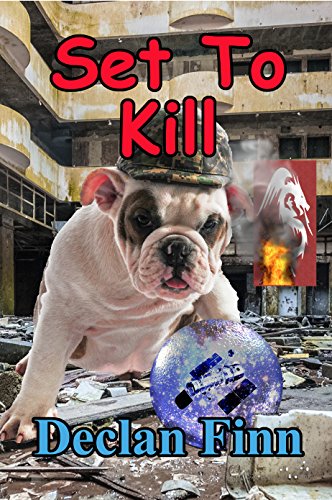
So you want to know about Set To Kill by Declan Finn? Well that's a bit of a tale. If you've read the author's first published novel It Was Only On Stun! then you're halfway to understanding it. Me, I've read the book in question, and I'm not sure I fully comprehended the madness in these pages. What you're in for is a story filled with action, mystery, and more than a bit of comedy. That quote above is not even the most insane thing in the book.
After the events at the Vatican (long story), Sean A.P. Ryan is back in the protection game. Not only that, but he's working another con! Unfortunately, he soon finds himself in over his head as mercenaries, bounty hunters, crazed fans, stalkers, and just plain nutty people, assail him from every angle. Again! No wonder he doesn't like working at these things.
But it soon gets weird.
If there is one thing Mr. Finn excels at (there are a few) then it would have to be the action scenes. I'm hard-pressed to think of an author with so many details in their action scenes. Everything flows, the events are described clearly and fit together, and they are usually quite surprising. And funny.
Despite the action and the comedy there are several pretty good mysteries going on. Someone is killing guests at WyvernCon and it is up to the ever-overwhelmed Sean A.P. Ryan to put a stop to it. Oh yeah, and he has to make sure he stays alive with a several million dollar bounty (and growing!) on his head. That's kind of difficult with explosions, rifle shots, and assassins slipping in from every crevice, while he's trying to do his job. I'm starting to think he doesn't get paid enough for this.
Now if there is any complaint to note it is that there is a bit of inside baseball to some of the background elements of the story. Mr. Finn changes the names, but the events are very much based on a real "fandom" event. And it is just about as silly as he describes it as. I'm not going to explain it here because either you already know what it is or you don't care. Nothing I can say will add to it, so I'll just say that you might feel a little lost getting your head around the central conflict. Mr. Finn does his best to explain it at length, but it is what it is. Nonetheless, he does parody the events, and the players involved, quite well.
This is a hard book to really nail down. Would it be correct to call it something like if Dashiell Hammett wrote an episode of Murder, She Wrote thinking it was a sequel to Commando? I'm just not sure. If you enjoyed the previous book in this series, It Was Only On Stun!, then you should enjoy this one more. Whatever it is, Set To Kill accomplishes exactly what it sets out to do.
Should you read this book? Only if you like wanton destruction and humor popping up in strange places. And, really, why wouldn't you like those things?
I can't wait to read the sequel. Surely by then Sean Ryan will have enough of a handle on the con experience to run his own. I could just imagine.
I hope everyone reading this is having a good 2017 so far. For my first post of the year, I thought I'd put out a rambler of a post.
When I was a boy I found myself drawn to stories. I could never figure out why. As I grew older I began listening to less music, playing less videogames, and dropped out of most every fandom. But one thing that remained the same, and grew, was my love of story. The big change happened when I realized that what I was most concerned with in the stories I read was the fate of the characters' souls. This only really happened about five years ago.
Not to say I don't care if people die in stories, but that is not what fascinates me in them. What draws me into their tales is the struggle with a deeper evil or ill, and how they conquer them. It's not just about one man versus another. This is about conquering an evil that doesn't just wish to destroy, but eat souls for breakfast. It's about more than it seems at first.
If you want to know why I have enjoyed Brian Niemeier's Soul Cycle saga, Declan Finn's Love At First Bite series, David Gemmell's hero tales, shonen manga, old superhero comics, or the stories in Cirsova magazine, it is because there is often much more at stake than mere life or death. This is also why I really got into writing material like Knights of the End, and what I'm going to put out next year. Whether it is facing down Eternity, sin, alienation, extinction of one's kin or species, or the loss of Paradise, it is the struggle between despair and hope that drives the best stories. This is why I'm still a reader.
That is why every good story needs a good guy. Readers need someone to connect with in the grand battle between two opposing forces. This is why even in stories without them, readers will focus their attention on the brightest burnt bulb in the basement they can find. Rorschach in Watchmen is popular for this reason alone. Anti-heroes are subversive enough to draw in the smirking, nose-holding crowd, and the character might even be interesting on some level, but they ultimately fall flat in the long run. If you stain the white with too much black it eventually all blurs into a drab, murky mess of grey. This is all well and good for teenagers of a certain type and age, but for those of us escaping the despair of college deconstructionism, it offers very little beyond that first course sampler. My second reading of Watchmen left me freezing cold.
Heroes and villains work because opposing sharply contrasted ideals are dynamic. Competing visions and characters are exciting. This creates a conflict bigger than the protagonist that he might not even see at all. But the reader will see it on some level. Even in a story with no physical enemy, it is entirely reliant on the protagonist not succumbing to something intangible. There are still enemies.
Life is a battle for the souls. This is what pulses through every single great story, and why I still read them.
There are so many stories out there that I'll never get to them all, but this year opened my eyes to a lot of stories I might have otherwise never touched. As someone who avoided much modern fiction, it was one where I was introduced not only to much pulp, but newer authors more interested in telling a good story than lecturing their audience, as well as other authors I missed entirely that were also crafting their own tales. I learned a lot in 2016.
But 2017 is going to be a bit of a different year for me. I'll still be writing, and hopefully getting closer to my goal to write the sort of story people would want to read, but I'll be cutting my online time way down. What I said earlier about life being a battle for souls is very true, and I'm still going to fight it, however it is also a battle i need tor regain my focus on. This means prioritizing on a certain things at the expense of others. Therefore, this blog will probably only be updated twice a month next year, and there will be less posts overall.
Now, I still have reviews to post, in fact I'll have one this month, and I'll still do posts like this, but they will be less common. I apologize to any frequent readers, but it needs to be done.
As we enter 2017 I want every reader here to have a very blessed new year. I hope this will be a year of growth and improvement for you.
I know I rail a lot on anime these days. What can I say, moe just isn't for me. And I don't watch as much as I used to: heck, I've gone years without watching anything new. That said, 2016 was actually a big change.
Starting in 2015, with the first season of Ushio & Tora and Blood Blockade Battlefront, I began to see a slight change in what was being put out. I had only sought those shows out of curiosity and found myself pleasantly surprised. Sure, there were still plenty of interchangeable moe shows and nihilistic psychological ramblers to go around in 2015, but the change continued into 2016 where I have watched more new anime series in one year than I have in easily a decade. I also watched more anime than I did TV shows or movies, though that is mostly do to Hollywood's continual failing to entertain instead of proselytize.
So what changed in the anime world? I wonder. Apparently the industry has started to reach out again to those it had begun to alienate. For an example of what I mean let me list for you some of the series that came out this year that ended up impressing me a great deal. If you haven't seen these, and they seem like your kinda thing, then go track them down on Crunchyroll or Funimation's site. I promise that they are as good as they look.
This isn't a ranking, but in general release date order. So keep that in mind when reading these.
Erased started 2016 off remarkably strong. What starts as a standard supernatural story of turning back time Groundhog Day style ends up being something much different. Satoru Fujinuma is dissatisfied with modern life and ends up detached from the world. This has happened ever since a murder occurred in his small town neighborhood when he was a boy. He finds he has the involuntary ability to time travel a few minutes back in time in order to prevent something bad from happening. It's up to his quick thinking to figure out the bad thing that is going to happen and how to fix it in time.
What ends up happening is that his ability kicks in at the absolute worst moment of his life, and he is thrown back deep in time to when he was a boy. Now he has to figure out why he was sent back. Hmm, did anyone remember me mentioning that murder that happened when he was a boy? Maybe that's why he was sent there? Or maybe not.
But, of course, there's a lot more going on than he first thought.
My only gripe will be a quick spoiler, so you may want to skip this paragraph. *SPOILER*The killer ends up not being much of a surprise since we didn't spend enough time with all the suspects to really gauge who they are. *SPOILER* It takes away from the mystery element a bit, but in this case its Satoru and the other characters' journey that makes this show so good.
Erased ends up being a series about redemption and second chances, and the ending is easily one of the best I've seen in a long time. Every character's choices are examined and reflected on, and the time travel element shows more sides than you would first think. It's really no wonder this was a huge hit, it was more than earned. If you're a fan of thrillers then this is right up your alley.
Rakugo is a strange bird. It's based on a ten volume manga (the anime covers the first five, the second season will cover the rest) based on a recently released convict named Yotaro. A former member of the Yakuza, Yotaro instead decides to devote his life to pursuing the art of Rakugo, which is a traditional comedic form of Japanese storytelling. He strikes up an apprenticeship with Yakumo Yuurakutei, a master storyteller from a bygone age in order to learn the craft. He then learns there is more to this tradition than meets the eye.
What makes the series work is the focus on storytelling and its power to affect lives and inspire. This part of the series focuses mainly on the past of Yakumo and how he got to be so good at what he does. Its a bit hard to go into detail without spoilers, so I'll spare them. Needless to say, its relaxed pacing really sells it as both a drama and a piece of a larger story. The subdued nature of the series sells also Rakugo as an art form.
Of course, most Rakugo performances last an hour, so every episode of the series also lasts an hour to compensate. While this adds to the atmosphere, and to the story, it unfortunately means some, like myself, haven't finished it up yet. It takes a good amount of spare time to set aside to watch one episode. That makes it engrossing as a story, but some will find it off-putting.
There's a good chance you probably haven't heard of this show, and that's a shame. There hasn't been much written about it. Rakugo is easily one of the best of 2016.
Alright, I'm not gonna spend too much time on this one. You already know that it's my favorite current running manga--I mean I'm writing reviews on every volume that comes out--so I'm not going to bore you with repeating myself.
Long story short is that BONES, the original author, Kohei Horikoshi, and anime writer, Yousuke Kuroda (writer of the Trigun anime and a ton of great shows) have put out one of the best superhero shows there has ever been. It's bursting with energy and hope. Listen to the track from the soundtrack posted above and you'll understand. My Hero Academia is a show about heroism, the fight against evil, the push to reach new heights, and that transcendent quality that pushes a man to fight the ever encroaching darkness of an imperfect world.
The only fault is really that there are currently only 13 episodes. Season 2 starts in April 2017 and covers material that will dwarf what season 1 offered in quality, and there is an OVA (made for video) episode not yet released, but it doesn't change the fact that season 1 was much too brief. Some might have written it off already. But that's a shame. Forget any shonen series you've ever seen: this is one of the best.
I suspect if I do this next year, season 2 will be listed here. There really isn't much else to say. My Hero Academia is a must-watch.
This is a franchise that is love it or hate it. I personally like it, but it's hard to recommend. It's incredibly silly and over the top, but it doesn't wink at the audience or think its above what it is. It's a genuine action comedy and embraces what it is, and that's what saves it. The first three parts of the series were basically a Gothic Horror action series, a jet-setting fantasy adventure, and a globe-spanning episodic fighting show, respectively. Diamond is Unbreakable, Part 4, is about a small town which harbors a super powered serial killer and the hunt our heroes go to find them. It's part slice of life and part mystery.
The series stars normal teenager, Josuke Higashikata, as he puts the pieces together (literally!) on this mystery while his town becomes flooded with super-powered freaks disrupting his quiet life. There are carryovers from previous parts in the franchise, but they aren't necessary to understand to enjoy this one. You can watch this completely standalone to see if the franchise is for you.
The only real problem is that sometimes the violence can get overly graphic in uncomfortable ways, though it is at least usually used to establish villains as evil. Just be wary if you're squeamish. The silliness might not be everyone's cup of tea, but if you can engage and wrap your head around what is going on, you'll find an extremely fun series. The action sequences and fights are some of the best you'll probably ever see on television. Every piece is effectively used.
JoJo's Bizarre Adventure's ongoing manga is still running, though the original timeline is six parts long and finished, so there is still material to adapt after this. However, if you only were to watch one part, I recommend this as both the best starting point and overall best part on an execution level. Just make sure it's your cup of tea before you dive in.
Another show I've gone on about, Ushio & Tora aired its second season this year after a break at the end of 2015, and it only got better this year. See that video above? The entire remaining 13 episodes are like that. Ending off the story with one of the best climactic battles in recent memory, Ushio & Tora cemented itself as one of my favorites.
What makes the series work so well is its age. Ushio & Tora ran as a manga in weekly serialization between 1990 and 1996 which means it came along before modern unbreakable cliches were set in stone. This means Ushio is more of a naive ignorant kid instead of overwhelmingly stupid, and Tora has a reason for his anger beyond the surface level "tough guy" stereotype. The plot is allowed to spin out and expand and doesn't get locked down to stagnant stories of school troubles or characters that exist only to try to hook a bigger audience. It isn't restricted by the where the industry is now.
What Ushio & Tora does is remind you of how different manga and anime storytelling was before the '00s, and, in my opinion, how much more potential it offered before it was dumped. Satoshi Nishimura (director of the Trigun anime) knows how to tell a story, and keeps everything that made that era so different than what we have nowadays. Watch it for that if nothing else.
It also helps that the series is really good at what it does. You won't see anything like it being made in the industry now.
However, the early episodes tend to turn some off because they're seemingly episodic. I say "seemingly", because they're actually not. Every encounter ends up adding to a story where every piece matters. Some might also be turned off because of it being old. But hey, if you don't like old stuff, I can't imagine why you'd be reading this blog. Tradition exists because it works.
From the author of One Punch Man (one of 2015's best anime series) comes Mob Psycho 100, about a normal boy with psychic powers who fights restless spirits and psychics. Mob, the main character, is a good kid who wants to do the right thing, and only wants to be normal. But if his psychic abilities are pushed too far . . .
Another series I haven't gotten around to finishing, Mob Psycho 100 is as bizarre with its animation as its character designs. ONE, the author, has this strange habit of creating an over the top premise that he treats lightly, yet never disrespects or subverts. One Punch Man was about a superhero who could effortlessly beat anyone with a single punch, yet ONE never once disrespects the concept of heroes or belittles his characters (except those who are not honorable or attempting good) in his story, and Mob Psycho 100 is exactly the same with the supernatural here.
This clash of old school sensibilities and modern indie art is what makes ONE the good writer that he is. Mob's journey as an extremely powerful psychic might have plenty of jokes, but it is never taken as something to be mocked. That is a rarity in the modern world, and yet, this is his appeal as a writer and artist.
Honestly, the only people who might hate this are those who hate the art style. It isn't as good as One Punch Man since that's drawn by a different artist, but this is very underground and gritty, and BONES' animation suits the style perfectly. Still, that might not be your thing at the end of the day.
But you will probably not see another series like this for a long time.
From one show about a psychic to another, The Disastrous Life of Saiki K. is about a boy who has extraordinary psychic powers which should make the world simple for him, and yet he hates everything about his life. His powers are over the top and overpowered, his classmates, family, and friends constantly bother him with their insane quirks, and he can't quite reign his powers in. Only his parents know the truth of his abilities, but that doesn't stop some crazy stuff from happening. Saiki tries to lead a normal life while holding back his powers, staying out of the spotlight, and avoiding the crazy schemes his family and friends try to rope him into.
I'll be honest, this show is incredibly stupid. And that's why it's so funny. You just never know what direction the comedy will go in next. The show works by taking a situation with normal comedic potential (school, shopping, work, vacations, days off) and adds Saiki's incredible powers into the mix which ends up blowing every situation up to insane levels. Most anime comedy leaves me flat these days, being about obscure otaku references, boring visual gags, or "anti-humor", but Saiki always keeps me laughing by sticking to its guns of keeping true to the comedy and the characters.
What helps it work is that even though Saiki is incredibly cranky and irritable, he still clearly loves his family and friends and will help them out . . . even when they do something really stupid. It would be very easy to make this a misanthropic show, but its wacky humor and over the top situations, as well puncturing cliches with so many pinpricks that they become total Swiss Cheese, make it a delight to sit down and watch week to week. Comedy is a very subjective thing, I get it, but I haven't laughed this hard at anime comedy in a long time.
It isn't perfect. There are some dirty jokes (not as many as most anime, mind) which go against the grain of the show, though Saiki always points them out as unacceptable and they are treated as such. One of the characters is a major pervert, but his schemes always backfire, and Saiki is usually the one to deal him damage in return. Also, each episode is actually 5 shorts pasted into a single episode. This makes them really fast (I recommend watching in English since the voice actors don't have to talk so fast to deliver certain lines) and therefore might be hard for some to digest while reading subtitles.
But it's still a funny show. Thankfully, season 2 is coming next year, so hopefully it will pick up in popularity. It really deserves it.
Alright, so this is an odd inclusion. Season 2 started in 2015, but finished at the beginning of 2016, while season 3 ran at the end of this year. So I'll just count it here as a whole since it book-ended 2016 so perfectly.
Haikyu!! is a sports series about high school volleyball players striving to be the best and bring back the former reputation of their rural school. The characters all have different quirks, but they all strive for the same goal. Watching them coalesce as a team is a treat. The first season set up all the characters and showed how they grew, but season 2 upped the stakes and put more on the line. Season 3 was even better, leading to an ending that has me wanting even more. And this is after 60 total episodes so far.
The show has some phenomenal animation and music, as well as voice actors that know their characters inside out, but there's always been something appealing about sports series where teams grow both in ability and camaraderie that always gets to me. I suppose there's a reason this show is so obscenely popular in Japan (and growing in popularity here), and that probably has to do with how well executed it is. There have been a lot of sports series out there (my personal favorite is Slam Dunk) but this is one of the few that manages to hit all the marks, even if you don't care for the sport. Haikyu!! is great at what is does. You'll be on the edge of your seat at the end of every episode.
Of course sometimes events can feel dragged out due to how much can happen in one game, and there isn't as much downtime drama between games as I'd like at times, but that's really nitpicking. Unless you absolutely hate sports as a concept, I can't see you not enjoying this on some level. It really does get better as it goes, just like the characters.
It's all about perseverance, really.
Next year has a few shows that interest me, but I can't see 2017 hitting the mark like 2016 did. Blood Blockade Battlefront and My Hero Academia's second seasons are high on my "To Watch" list, and One Punch Man, Full Metal Panic, and Saiki's new seasons should also prove fruitful whenever they run. Heck, maybe we'll finally get season 2 of Tiger & Bunny! I just don't think 2017 will quite hit the heights of this year.
That said, I know there are a lot of old school anime fans who gave up in recent years. I can't really blame them. Around the mid-00s things changed in the industry so abruptly that most ex-fans still aren't even aware of the reason they stopped watching. It just sort of happened.
But there are some gems buried in the stuff you don't like, and they've become far more pronounced than they have been in near a decade. Ignore the endless light novel adaptions, and check out the shows on my list. If there isn't a single show on there that interests you then I don't know what else to do. Maybe we just don't have matching tastes.
Still, things are changing. The growing realization that the industry needs to cater to the larger fanbase lead to a year that had more to offer an old school fan like me than I've seen in years. If you like the weird storytelling Japan offered through anime and manga years ago then there is stuff out there for you. Hey, there's stuff I didn't even list that I'm sure is more up your alley than mine. Point is, there are options now.
Hopefully that will only improve in the years to come.
Before this last year I hadn't read too many modern authors. The reasons for that is fairly obvious to anyone familiar with the modern climate for fiction. Pointlessness, perversity, and prevailing sickness, reigns supreme . . . and are all thought of as cardinal virtues that heroes should revel in. This climate is why I began looking into older authors and books and finding what I was looking for.
What has surprised me is the amount of authors I've seen recently that have gone against the grain.
Take Declan Finn, for instance. He's an author as fearless with his stories as he is with genres. He writes comedy thrillers, speculative swatting, and horror romance tales, all with the same energy and spirit as one would take a torch to a vampire. And there isn't a lick of subversion to be found in any of them.
I already reviewed the first book in his Dragon nominated Love at First Bite series, Honor At Stake, so how does the second installment live up to the original?
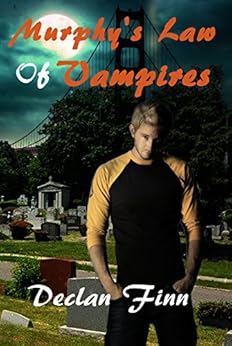
Murphy's Law of Vampires starts the second after Honor At Stake ends, dealing with the aftermath of the previous book. This sets the narrative in place, avoiding that annoying trope of trilogies where the second book is superfluous and is merely treading water to the final book. It makes sure you're caught up right away. Mr. Finn does not beat around the bush.
The main characters, Marco and Amanda, are a strange pair. One is a vampire, and the other is a monster. This dichotomy makes them as different as they are the same. It makes their interactions and burgeoning romance far more interesting to watch than when things blow up. And that's saying a lot coming from me.
Coming off of the first book, Amanda and Marco are still struggling. They have inner demons that push at their passions and feelings. This would be utterly dull in a modern novel, but not here. Their battles against their vices, the interior war, is just as compelling as the outer skirmish.
And that skirmish? Well, let's just say the title is what it is for a reason.
One of this series' strongest attributes is its ability to add enough development and introspection to the main characters without dragging the story of navel gazing. Not only are the characters always active, but the pace never really settles down. Gears are always turning, even in the low key moments. Both Amanda and Marco learn a lot about themselves and their relationship through this story, leading to an ending that had me frustrated-- in a good way.
Stories with no genre boundaries are fascinating to me in proving the universality of certain truths, particularly in love and heroism. The Love at First Bite series effortlessly combines romance, horror, thriller, fantasy, comedy, and science fiction, in a way that feels organic and exciting. They are all one and the same, just as they were always meant to be.
But most importantly: it's fun. If you are looking for something a bit different than stale vampire fiction and perverted romance stories where there's more sex than plot then you should really check out the Love at First Bite series. There is nothing like it out there.