Sunday, April 24, 2016

Burn, Demon, Burn! ~ A review of Brian Niemeier's "Nethereal"


Nethereal by Brian Niemeier is a different kind of book. I'm not the most well-read in science fiction, but then, this isn't totally a science fiction book. It's not really fantasy, either. But then, it's also not horror. It's a mixture of all those genres as if they are the same thing. Genre boundaries are sort of an annoyance to me as it is, so reading a book that just does what it wants to do was a real treat.

Imagine if Abraham Merritt read Galactic Patrol and said "Pshaw! I can do that!" then while writing his space opera he read Dune and watched some classic anime and decided to throw those in too. Of course, he couldn't do any of that being that he died so long ago, but that's not my point. That's the closest I can come to describing what reading Nethereal is like.

Imagine a universe where space pirates descend into space hell accompanied by a strange band of rogues and misfits that might not all be what they seem. This hell is split into levels, each as strange as the last as our main characters begin to learn more and more that maybe this job was not only a bad idea, but a horrifying mistake. Oh, and they have to deal with horrifying monstrosities from the depths at every turn. Can't forget about those, can we?

The story follows a core group of four pirates: Jaren Peregrine, the captain of the pirates who has tunnel vision on whatever task he sets his mind to, and his second-in-command, Nakvin, a woman with a lot more to her than there may be, are the main characters. There is also Teg Cross, a hired mercenary who has as quick a sword arm as he does a mouth, and Deim, their apprentice steersman, a young man with ore passion than sense, who fill out the main cast quite well. There are other characters, but getting into them would probably spoil the story. Needless to say, you are always wondering just what each character is really playing at even when they're playing it straight.

Probably the most interesting, in my opinion, is a character named Vaun Mordecai, a necromancer wearing a mask and missing his soul who has a vague motivation to join our crew that is only really revealed later on. He is evil, but he plays by his own rules and has no problem eating his own should it suit his agenda. It makes him a fascinating character to follow along with even though there is no ambiguity in who he is.

How I imagined Vaun
Now, for the negative points, of which there aren't many. The plot bogged down a bit in the middle and became a bit convoluted before finally straightening out for the last part of the book. I'm a bit of a slow reader, but I almost lost myself in the middle a few times. Some characters also sort of vanish then reappear, leaving you to wrack your brain to remember what they were doing when you last saw them hundreds of pages ago. The climax is also short considering it took almost 600 pages to get to it, as well.

Where the author most succeeded, however, was the sense of dread and unease about the entire journey. Hell, of course, is not a pleasant place anyone would want to visit, but space hell is not even a place you want to think about. Demons and baals at every turn, mysterious and horrifying landscapes, even death isn't an escape from the torture, and those who revel in their basic instincts come to regret them soon enough. Though this is a space opera, it manages a bit of thought on basic morality along the way giving it a nice touch you wouldn't expect from such a story.

Of course, as I said, this is a space opera through and through. You have dramatic reveals, over the top fights and encounters, a story that twists as it goes, and an ending where everything (more or less) falls into place. Just don't go into it expecting unblessed ray guns and in-depth politics, but Workings and damnation instead and you're on the right track.

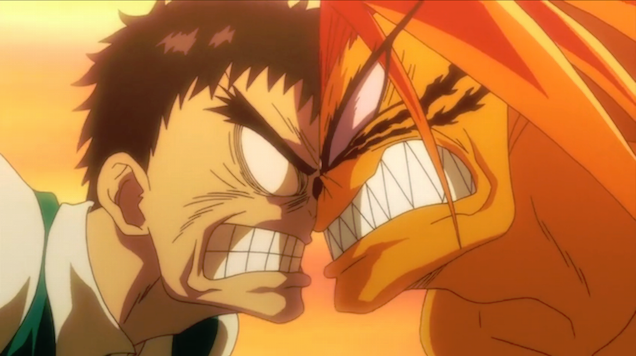
As a classic anime fan, I couldn't help but picture this as a 26 episode series by Studio Deen made way back in 1992 or so. This is not a criticism. That is not a feel anime can even get down anymore, but a point for the book in matching a feel and spirit that isn't really done today. I'm not sure if non-anime fans would get as much out of the Nethereal's style as I did, but that does help to make it totally unique and wrapped in with the world-building that Brian Niemeier sets out to accomplish. By the end, you just want a second season right away. Unlike that season 2 of Outlaw Star I've been waiting around fifteen years for, the Soul Cycle series already has a second book out, Soul Dancer, which I hope to get to eventually.

The sequel

Now, despite my issues, Nethereal is a unique treat in the current world of genre fiction. The industry revels in sluggish books that hide the genre from their covers (this fools no one, by the way) in order to make a bid for respectability from an "elite" group of people who write books that the general populace couldn't care less about. Nethereal makes no apologizes for what it is, doesn't bog down in navel-gazing, or forget that the first rule of entertainment is to entertain. In that aspect, Nethereal succeeds admirably where so many modern genre books fail.

Looking for a fun space opera with horror and fantasy elements and a distinct old school anime vibe? Then Nethereal is for you! Give it a read today.

*NOTE: The author has released an updated version of the book as of April 23, 2016. Being that I finished the book on that date, this is clearly a review of the older version. To see a list of changes, please visit his blog here.

Wednesday, April 20, 2016

Ushio & Tora: The Truth of the Superversive


Following up on my last anime post, I wanted to expand a bit on what I meant about a show based on a 25 year old manga being better than most of what is being put out now.

This might be very easy to misconstrue as an old man longing for the "good old days" who can't understand that things are different now, consarnit, we are a more evolved people and therefore the stories we see now are better because they are newer and therefore more true than those icky old things.

To the first point: Watch your mouth, kid. I ain't that old! To the second: Well, no. You're wrong. Not even a little wrong, you're so wrong that you wouldn't know right unless it sliced apart your cinderblock heart into tiny cubes to wake you from your lucid dream of "realism" and despair.

Stories are meant to be Superversive. To lift up. To brighten someone's day. To give them hope. To show them that the dark can be fought against and driven back. These are what stories used to be before the 20th century began to upturn that tradition which fully toppled the cart over in these early years of the 21st. Good is evil, bad is good, true is false, and . . . is it no wonder we're so messed up we have to take pills to sleep through the night?

But not everyone is sitting tight letting the darkness overtake the world any more than it already has.

The goal of the Superversive Movement has always been for those who refuse to take this lying down. We all have this inkling that things are not as they should be, we live in a broken world that will not be fixed, and stories are made to reflect this drive we have to live to brighter times and in a wider world. Not only to live to those dreams, but to show they exist at all. To prove they are real.

From Mrs. L. Jagi Lamplighter Wright's post on the blog:

"Why give a book like this to children to read? What are we trying to teach them? That life is difficult and meaningless? That sometimes its okay to kill something we love for a “good reason”? That life is pointless? That dreams and hopes are a sham? That no matter how you try, you cannot improve upon your circumstance, so it’s better not to even hope? (That was what The Pearl was about.)
What possible good is such a message doing our children?"

 She then goes on to end with this:

"This is what the Superversive Literary Movement is for—to whisper to the future Trisha’s, Don’s, and Andrea’s that miracles are possible. 
That hope is not a cheat. 
The goal of the Superversive is to bring hope, where there is no hope; to bring courage, where without courage, hope would never be manifested. 
The goal of the Superversive is to be light to a benighted world. 
The goal of the Superversive is:

To tell the truth.
"

Though a term invented by writer and master essayist Tom Simon, "Superversive" has taken a life of its own for those tired of all the pointless subversion pulling the world down into the muck with stories about nothing but pointless negativity and stories that poison the soul blacker and blacker. The world is not getting any better, but we don't have to sink with it.

I bring up Ushio & Tora as an example of a Superversive story, as it is indicative of a story that seeks to rise up. This does not mean author and artist, Kazuhiro Fujita, set out to make a story to highlight attributes like friendship, heroism, and the greatness of being good, just that those are the features that underpin his story. His is an action/adventure story, yet it manages to be more than that for telling truths we all know beneath its action-packed exterior.

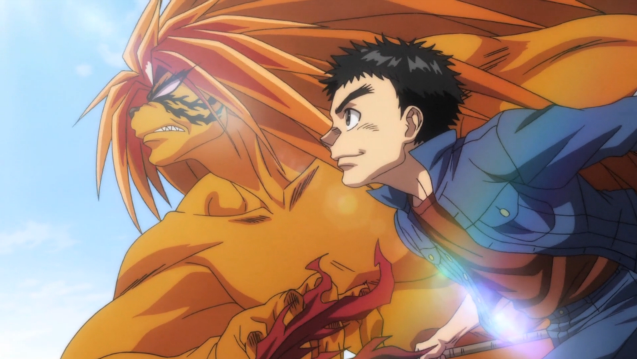
Ushio & Tora is about a boy named Ushio Aotsuki who lives in a shrine run by his father, who is the priest of the place they live in as their home. Ushio is a normal rough-housing teenager who gets into arguments with his dad and his crush, and lives a relatively average life that he enjoys very much. He's just an average boy.

But his father tries to warn him of something else. He tells Ushio there are spirits and monsters in the world and he must take care to watch out for them, but Ushio, being a teenager, doesn't believe in things he can't see. He thinks his dad is full of it, and isn't afraid to tell him. This all changes one day when his dad has to head out on business and leaves Ushio to clean up the storehouse. Ushio begrudgingly complies, but stumbles upon an opening cellar to a basement he never knew about under his home.

He finds his way down into the basement and into the dark where he finds his whole world changed in an instant. There he meets a creature called a Youkai, a monster, colored like a tiger, who has been pinned to the rock of the basement for hundreds of years by a mystical spear called the Beast Spear which chooses its wielder and has not been removed since the Youkai was pinned there. His dad's stories were true after all.

Ushio removes the spear and is granted immense strength, speed, and agility, as the Beast Spear has chosen him to wield it for whatever duty he will have fulfill. Now since he has come in contact with supernatural, he can see spirits and monsters, and pledges that he will not let them hurt anyone. He quickly tames the formerly trapped Youkai and takes responsibility for letting him go by keeping watch that he does no evil.

He names this orange Youkai "Tora" and takes him in as the two fight among each other over who will eventually get to destroy the other. This pair forms an unlikely duo that is destined to save the world from a terrible evil.

But I'm getting ahead of myself.


The story begins as we get to know the characters through monster-of-the-week scenarios for the first six episodes before we finally learn that everything we have seen has a purpose. Events that didn't seem to mean much, come matter a lot in the long run, as do characters you wouldn't first think would have much prominence eventually have quite a bit.

Ushio's character is established as a good-hearted kid that never gives up, but unlike modern anime heroes like Naruto, he isn't just good-hearted, but determined to do what is right. He aspires to do what is right, not for personal glory or recognition.

Tora is shown to be a monster who doesn't care about anyone other than himself, but as he spends time with Ushio he begins to understand that being good isn't all that bad. Unlike most modern stories, he does believe there is good and evil and he is proud to be evil. But Ushio and those he meets on his journey begin to change him slowly but surely.

Around the seventh episode is where the main story begins and Ushio & Tora comes into its own. This is where Ushio and Tora head out on a journey that ends up shaping their destiny and those around them.

You see, there is black and white in Ushio & Tora, but that doesn't mean there aren't flawed individuals doing the right thing for wrong reasons, or those on the borderline before choosing one or the other. And when you meet the main villain, you will believe that there are only two choices and eventually we all have to make a choice as to whether we choose to be on the side of angels or demons.

One of the things I have always liked classic anime and manga, especially the shonen genre, is how the main characters never mope, never whine, and never give up. They have a resolution and they stick with it even in the face of impossible odds. The cliche for this genre is called "Hot-blooded shonen" for a reason.

Ushio and Tora have a complex relationship

But Ushio Aotsuki is on another level for most of these series. He believes in good as a force (an early episode where he saves a cursed soul and sends it to Heaven is particularly touching) and sacrifices everything he has in order to save even complete strangers. And what is it that makes Ushio so strong and powerful? Well, it isn't just the Beast Spear. The weapon might choose its wielder, but the real strength of Ushio is that he is at heart a fundamentally good kid who always gets up again even when he screws up.

It is this good heart that slowly changes Tora into thinking there might be more to humans than what he knows, and it is that strong moral compass that draws others to him. His strength and spear is not what makes him special, though it does reinforce his inner strength to match.

This is anime at its best. It's inspiring, hopeful, exciting, truthful, funny, and a blast to watch. It is why I ever got into anime and manga in the first place.

So why am I saying that most anime and manga are not like this anymore.

Well, because they're not.

Can you name the last anime that had a main character that wasn't starring:

A) An anti-hero who is treated as being "cool" despite having no redeeming qualities
B) A dimwit who does things for personal reasons and nothing else
C) A coward weakling boy that doesn't change one iota to become better
D) A busty (or very young) girl that has no definable personality besides how attractive she is

Whoever you might be thinking of to dispute this, I doubt the examples are very plentiful, especially over the last ten years. There are a few I can personally think of, such as Izuku Midoriya from My Hero Academia, and Osamu Mikumo from World Trigger, but they are fairly obviously in the minority. There are certainly not as many like Vash the Stampede, Kenshin Himura, or Ushio Aotsuki as there used to be.

And don't think I'm mocking "rogue" characters. Gene Starwind, Spike Spiegal, or Gungrave, might have been more on the anti-hero side, but they were never treated as infallible or always right about everything and they did have good underneath the muck. They were outliers even back when their shows came out.

But if you want to use those as counter-examples, Outlaw Star has the crew essentially meeting God in a machine. Cowboy Bebop's ending is a classic for a reason. Gungrave is about rejection of Ultimate Good and the dead end it leaves you in. Shows and manga like Gantz, Attack on Titan, or Tokyo Ghoul, do not aspire to even things like that. Though they are fine for what they are, they are not aspiring to anything above themselves like those classics did.

Ushio & Tora was written in 1990 and ended in 1996. The world is supposed to be a different place now than it was then, but you wouldn't know it from watching this anime made in 2015/16. The good that Ushio inspires in us is as real in 2016 as it was back in 1990. The conflicted nature of Tora to choose between what he was and what he could be hasn't dated a bit in over 25 years. The story's adamant refusal to say good and evil are a matter of perspective, and it's insistence that one choose a side or else one will be chosen for you, is timeless.

While flashy anime with edgy plots and super cool protagonists with angry backstories fill the mainstream airwaves and shelves in Japan to decreasing market shares, stories like Ushio & Tora still float to the top to show that what is true will never truly stay down no matter how much we want to look away from it or pretend it is irrelevant.

Just like Ushio's insistence on the good, Truth always wins in the end.


Tuesday, April 12, 2016

Seen the Light

It's funny.

Did you notice in the last decade, rock music has become so self-serious and opposed to fun that it's become a self-parody of a genre that prided itself and goofy Chuck Berry and Little Richard songs. What happened to the fun? It doesn't have to be hedonistic or smirking, either. Sometimes it can just be tongue in cheek or off the wall.

But you don't really get those songs from rock bands any more, do you? The days of Barenaked Ladies is long since passed.

That's why I chose to post this song from Supergrass, a defunct brit-pop band, that was rarely ever serious. This is their enlightened message to super-serious angry rockers out there:


Seen the Light
Music and lyrics by Supergrass


Now that our eyes have seen the light
Well, the world lies twisted and weird
It's like our minds have taken flight
Heady load rises up to the sun

Well, what you do is up to you, 
I tip my hat and push on through 
Well, you can try and understand 
I'm a rock'n'roll singer in a rock'n'roll band 

Now that our eyes have seen the light
The road lies open and clear 
It's like our minds have taken flight 
Like the river runs down to the sea 

Well, what you do is up to you, 
I tip my hat and push on through 
Well, you can try and understand
I'm a rock'n'roll singer in a rock'n'roll band


Pay special attention to the delivery on the last line of the song. He even delivers it like Elvis. There's no message underlying the lyrics, they're just a rock n roll band having fun. They don't have a deep hidden message of the universe that you don't have. The key to getting through bad times is not whining endlessly, but pushing on through. They didn't need to write seven albums of angsty songs to get to that message either. That's what pop songs were made to be like, weren't they?

Anyway, enjoy. It's a fun song.


For a bonus, one of my favorite Brit-pop songs:


Melodies Haunt You
Music and lyrics by Dodgy


I need to open up my eyes 
to see what's in there deep inside 
I got to find out for myself 
cause there is no one, there's no one else

I'd wait for a thousand years 
to see what you would do 
I ain't got a thousand years 
so what you gonna do?

I need to venture out much more 
to get much closer, the need is pure 
I won't regret a moment from this day 
the key of life is calling out to stay

I'd wait for a thousand years 
to see what you would do 
I ain't got a thousand years 
now what you gonna do?

I can't find out why 
The way you're treating me you'll die

Those melodies haunt you, they make no sound 
Those melodies haunt you when there's no one around 
Those melodies haunt you, they make no sound

I can't find out why 
The way you're treating me you'll die 
Cause it's a sorry affair 
but you don't really care 
You don't even try

Those melodies haunt you, they make no sound 
Those melodies haunt you when there's no one around 
Those melodies haunt you, they make no sound 

Those melodies they haunt you now
Those melodies they haunt you how
Those melodies they haunt you now

Tuesday, April 5, 2016

The Difference: Anime Edition

So, the new anime season started this past week. Despite not really being into anime much in the last few years, there have been standouts recently.

I posted about Blood Blockade Battlefront and Ushio & Tora before. The former is a series made by the creator of Trigun and the later is based on a manga over 25 years old, which probably explains why they're so much better than a lot of the recent stuff.

You see, once upon a time, anime used to pride itself on crazy comedy, over the top action, fun adventure, and complex romance. You won't find many anime fans who would spurn classics like Irresponsible Captain Tylor, Cowboy Bebop, Dragon Ball (not Z) or Kimagure Orange Road, and for good reason.

But over the last decade there has been less and less to appeal me. Comedy has been replaced with the same jokes uttered from the same stock characters, action has been replaced by nihilistic gore, adventure has been neutered so badly by formula you can see every beat coming before it does, and romance has basically become glorified porn with flesh taking a backseat to character development.

All those aspects are still problems with the industry, but I've noticed a few gems slip through the cracks recently: there are several shows this season that I'm surprised are coming out at all.

The first is the second season of Ushio & Tora:


This barely counts being both the second season to something I listed earlier and also for being based on material 25 years old, but I mean LOOK at that video. Is that not everything you watch anime for in the first place? Action, adventure, comedy, romance . . . it's all there and from the director of Trigun. This is the type of show that got me into anime in the first place and this season will finish the story off, hopefully giving us a classic anime that will be looked back years from now as an example of how to do it right.

Seriously, I don't care if you're sick or shonen anime (boy's adventure) or not, this is one of the best examples of it and predates many of the awful cliches that have stigmatized it 25 years later. You will be amazed by how well it holds up. Just start with season 1. Season 2 starts very plot heavy out the gate.

Next is probably no surprise to classic anime/manga fans:


Yep, the next part of JoJo's Bizarre Adventure just started. Also a manga that started way back in the 80s, this part is actually from the 90s and deals with a mystery aspect to its usual over the top action/comedy focus. This is actually a fan favorite part (the fourth of six in the main series, though there are others after it) and has less of a grand adventure feel that the last two parts had and focuses on a smaller location, a small town, and explores every nook and cranny of it.

JoJo has always been a been mixed in that people either love it or hate it, but this is a good place to jump into if you want to see it for yourself. It is, after all, a fan favorite part. If you like old school anime, you'll probably lap it right up.

Third is actually something more recent:


(Update for April 10th: Official upload)

The very manga I've been reviewing on this blog. My Hero Academia is my currently favorite running manga and the first episode of the anime has not disappointed.

Kohei Horikoshi (the man behind the series) combines everything that makes Comics and Manga great, pours it in a big old pot with a dash of excellent character development, smooth buttery art, excellent action, and heaping dose of fun that hasn't been seen in years. Keep in mind, I don't really like modern shonen much. I thought Bleach fell apart after Soul Society, lost Naruto with the Chase Sasuke arc, and have never liked One Piece as much as others. But My Hero Academia hits that mark the three of them just couldn't hit for me.

If you have ever been or are a fan of manga or anime, you can't go wrong with this. Oh, did I mention the writer of Trigun is involved with the anime? That was a selling point to me, too.

Yeah, I'm watching three shows this season. I don't even remember the last time I've liked more than one show in a season, but here I am as surprised as anyone. If you've given up on manga and anime, and I don't blame you, I still think you should give these above listed shows a shot. You might be just as shocked that I do that the industry still has spark in it beyond glorified porn and empty bloodshed. It's not over yet.

Tuesday, March 29, 2016

A Quick One

Today is a bit of a slow one for me, so I'm gonna do a quick lyric post for one of the songs that anyone who was alive in the '90s (the better half) probably remembers. If you remember the first few notes of this song, then this post is for you:


This is not an altogether serious or deep song, I just wanted to post something a bit more fun. Listen and enjoy. Good sound and excellent lyrics. Just don't expect to hear something like this on the radio and time soon.


Run-Around
Written by: John Popper
Performed by: Blues Traveler


Once upon a midnight dearie
I woke with something in my head
I couldn't escape the memory
Of a phone call and of what you said

Like a game show contestant with a parting gift
I could not believe my eyes
When I saw through the voice of a trusted friend
Who needs to humor me and tell me lies
Yeah, humor me and tell me lies

And I'll lie too and say I don't mind
And as we seek so shall we find
And when you're feeling open I'll still be here
But not without a certain degree of fear
Of what will be with you and me
I still can see things hopefully

But you
Why you wanna give me a run-around?
Is it a sure-fire way to speed things up
When all it does is slow me down?

And shake me and my confidence
About a great many things
But I've been there I can see it cower
Like a nervous magician waiting in the wings

Of a bad play where the heroes are right
And nobody thinks or expects too much
And Hollywood's calling for the movie rights
Singing hey babe, let's keep in touch
Hey baby, let's keep in touch

But I want more than a touch I want you to reach me
And show me all the things no one else can see
So what you feel becomes mine as well
And soon if we're lucky we'd be unable to tell
What's yours and mine, the fishing's fine
And it doesn't have to rhyme, so don't you feed me a line

But you
Why you wanna give me a run-around?
Is it a sure-fire way to speed things up
When all it does is slow me down?

Tra la la la la, bombardier, this is the pilot speaking
And I've got some news for you
It seems my ship still stands no matter what you drop
And there ain't a whole lot that you can do

Oh sure the banner may be torn and the wind's gotten colder
Perhaps I've grown a little cynical
But I know no matter what the waitress brings
I shall drink it and always be full
Yeah, I will drink it and always be full

Oh I like coffee, and I like tea
I'd like to be able to enter a final plea
I still got this dream that you just can't shake
I love you to the point you can no longer take

Well, all right, okay
So be that way, I hope and pray
That there's something left to say

But you
Why you wanna give me a run-around?
Is it a sure-fire way to speed things up
When all it does is slow me down?

Monday, March 21, 2016

Last of the Heroes


Alright, so finishing off my last bit of these reviews is the rest of the issue. It's quite the packed issue for its size.

The final three stories (and essay!) in the first issue of Cirsova include Late Bloom by Melanie Rees, The Hour of the Rat by Donald Jacob Uitvlugt, A Hill of Stars by Misha Burnett, and an essay by Jeffro Johnson.

Of this set the first is Late Bloom. It is a story of a woman who is heavily abused by a petty tyrant and longs to be free of him. It involves a mad inventor, a time device, flying ships, and a daring escape. As an adventure story it is quite engaging with a lot of neat ideas, though the main story takes a while to get going. The fact that it is the weakest here shouldn't be considered a slight, because the other two stories are the best in the issue.

The Hour of the Rat is a hard story to explain without ruining the fun, so I'll let the blurb do it for me:

"Moving swiftly through the shadows and evading guards and servants, a girl means to retrieve an important heirloom, but Nezumi would soon find out she was not the only one looking for revenge in the house of Lord Tomigawa no Kana that night!"

Think ninjas, sword battles, and an epic monster confrontation, and you're pretty close to nailing it. This was probably my favorite story here, and there were some great ones like the next tale.

Finally, A Hill of Stars is the longest story here, and quite the treat. It's the story of a man who was once the servant of a being from the race known as the Great Ones who sets out on his own after his master dies to see the world for himself. On the way he meets new faces, races, places, and other things that might rhyme with "aces" ending in a final confrontation that is quite, uh, hairy.

It was a wise choice to put this at the end of the issue not only because it is the longest, but because it feels a bit like the culmination of the other stories ending with a finale that really sells the spirit of adventure.

The last thing to talk about is the essay by Jeffro Johnson on the novel, Toyman, by E.C. Tubb, and comparing the rules it established in space travel with the game Traveller which took much inspiration but forgot a lot of the appeal. As someone who had either never played Traveller or read the book in question I quite enjoyed his comparison between the two as it did shine a light on a problem I see a lot, especially these days. When we don't go to the source and consider the roots of what we love, we might not only miss out on seeing it from a new perspective, but we might even miss why it exists in the first place!

I know this from experience with my read of Three Hearts & Three Lions by Poul Anderson. I don't read much modern epic fantasy and this book emphasized a lot of the reasons why. That said, I thought the book was excellent as a fantasy tale and a story, but the elements that had been borrowed for D&D and in turn swiped for many other fantasy stories miss a lot of the heart (pun intended) that beat at the center of this story of a man fighting for a world he never knew could exist. Reading it was such a fresh experience because I had never read a modern fantasy novel that ignores unwritten rules because they simply didn't exist when the story was written.

The essay explains this much better than I can, which also helps it serve as a great final capper on the issue. Heroic Fantasy & Science Fiction was once standard for the genre(s) and reading these proved to me why that is. There's a great sense of timelessness in stories about those who bravely fight against the odds as the darkness encroaches on them. It's why Lord of the Rings is a classic despite so much gnashing of teeth and why magazines like Cirsova are such a breath of fresh air in such a stale climate.

In case these reviews haven't convinced you yet, well, what are you waiting for? Go read Cirsova and experience some fun adventure! Stuff like this doesn't come around every day, even if it should.

Thursday, March 17, 2016

More On Heroes!


Continuing from last time, I managed to read a few more stories in Cirsova's first issue, so I will let you in on my opinions on them. Next week I'll probably wrap it up.

First up is the poem "My Name is John Carter (Part 1)" by James Hutchings which is an epic poem retelling of A Princess of Mars by Edgar Rice Burroughs. I'm not an expert on poetry at all, but it managed to catch the feel of John Carter up to where the poem ends. It certainly made me want to read more epic poetry.

"This Day, At Tilbury" by Kat Otis and "At the Feet of Neptune’s Queen" by Abraham Strongjohn were the next two stories, and I wanted to talk about them both at once. Tilbury is mostly a war story involving a boy (who becomes a man) in the midst of a war and Neptune's Queen is a very John Carter type of sword and planet fantasy. They are very entertaining with cool fight scenes and good characterization, but I'm not a fan of either's ending. The ending to Tilbury is kind of a downer that makes it feel more typical to modern stories instead of the swashbuckling that is the genre's calling card. Neptune's Queen made me shake my head that the main characters did not see that coming even though it was fairly telegraphed what was going to happen. I also wasn't a fan of a cliched turncoat moment that added nothing to the story. Otherwise I highly enjoyed both of them.

The last one I'll be talking about today is "Rose by Any Other Name" by Brian K. Lowe. This one was a lot of fun. a tale of a time traveler lost in time and dealing with a pursued pair of strangers at the same time. There is a sex scene in the story (though not graphic) that turns out to be a little icky after a reveal later on and the ending isn't really an ending, but those are really the only faults here. Everything else is very old school science fiction adventure and I totally enjoyed the experience.

For those who want to read it themselves, Cirsova's first issue is FREE on Kindle until Saturday. You can get it here.

Oh, and happy St. Patrick's Day!

Tuesday, March 8, 2016

Going Old School


I was recently a backer on Kickstarter for Cirsova's Heroic Fantasy & Science Fiction Magazine which deals in short stories (there is a novel and poem as well!) of the genre listed. Though I have only read the first story so far, I have to say it was worth the money I backed it for.

Now, I don't have a background in anthology magazines or specialized genre mags like this. Most of my reading was confined to novels or graphic novels so I never really had the experience this offers me, but I have to say it does make me realize how much I've missed out.

People like me are why this had to be kickstarted in the first place. Heroic stories are not in vogue, and magazines which deal in them are even rarer still even though they are the stories which most enjoy partaking in whether on TV or in film. But this is still a neat little treasure that inspires me to know that stuff like this still gets written even amongst all the nihilism and message fiction that floats around in the mainstream. I'm glad I was able to be a part in helping to at least fund it, since I doubt another magazine like this will come around any time soon.

As I stated, I have only read The Gift of the Ob-Men by Schuyler Hernstrom, which instantly took me back to another era. It's the story of an exiled warrior named Sounnu who runs across a group of mushroom men that end up changing his destiny. There's a lot of good stuff in this story from sword fights to a really cool mystical plot device to an ending that really brings everything around. Sounnu is an honorable warrior thrown about in a world gone mad and rotting away, though he soon finds that everything is not as straightforward as he first believed it to be. This truly feels like the kind of story I would have read from a fantasy magazine ages ago, and I really can't wait to read more of what issue one has to offer.

Next week I'll see if I can get a post about more of the stories out. Until then, I've got more to read!

If you like what you've read, check out Cirsova here.