Thursday, May 2, 2019

The Big Book Blowout!

Which is why I take my time going through things

Have you ever gotten so off track that you find it embarrassing? 2018 for me was the year of distractions and as a consequence I didn't do quite enough when it comes to reviewing newer books. I read, but it was mostly older stuff. It is good to keep in contact with the old ways, but newer authors deserve the reading time, too. This is an attempt to make it up here. Today's post is an overlong set of reviews. So if you're looking for a good book to read then you've come to the right place.

Of course many of these works are Pulp Revolution being that I have been in contact with everyone of them before and that I know they are aware of what the movement is. It's also been about three years since the movement got going (as of now, anyway) so we should keep up with how it is progressing.

That said, there isn't really a theme other than I promised these reviews a while back but fell behind in producing them. So here they are! This post is meant to bring me up to date as best as possible and to hopefully spread the word about some good books. So everyone wins. The books I will talk about today are Reptilian Wanderer, A Traitor to Dreams, Going Native & Other Stories, and The Ophian Rising. That is quite the selection.

I've wanted to get these out for a while now so I stored them up in this one mega-post. I hope you are ready for a lot of reading because that is how much I had to do just to make these reviews reality.


*Note: I have met these authors before, and some of them gave me copies of these works to read. As usual it won't have any bearing on my reviews but I figure it is worth mentioning.
Find it Here

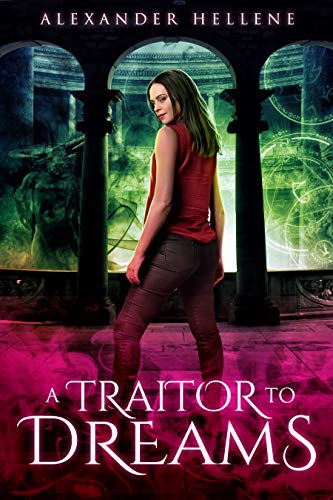
The first book to talk about is A Traitor to Dreams by Alexander Hellene, his first published novel. This is an Isekai fantasy story of the old sort. IE it's actually worth your time to read.

Elpida Kallistos is in her late-30s and is unable to establish a lasting relationship. Now, as doubt about the future creeps in on her, she begins to second guess her life choices. Instead of dealing with the problem beating her over the head, she finds herself an out. The Dream Trashcan! A new product for dealing with unwanted issues, it can give the user the sleep they desire and remove unpleasant thoughts. So Elpida uses it to remove her budding desire to build a family. All seems well at first, but did she make a mistake?

This is genre fiction, so yes.

She finds herself trapped in a strange dream world that looks suspiciously like ancient Greece. Crazy monsters from the myths, landmarks, and a strange sky all greet her at once. At the same time she is joined by a winged muscular man with the personality of a boy and wise-cracking bird who are not what they seem at first. Eventually the group is pulled into an adventure of creepy horrors, computerized knights, monsters and beasts, and some existential dread.

And that's just to begin with. There is far more to mention that I won't spoil here. Nonetheless, it is a quest for Elpida to find her way out again. But things will never be the same again.

This book is hard to peg. There are elements of Science Fiction with the creation of a device such as the Dream Trashcan, Elpida's desire also point to a sort of character piece as well. I could also mention the fantastical and horror elements, but I'll leave those surprises for those willing to dive into the book for themselves. Just talking about them is spoiler central. I would classify this story as pure weird fiction, the type that would have been serialized in a modern day edition of Weird Tales, if one existed, and still remembered its roots. The story manages to get stranger and stranger as it goes but it never loses its grounding as an adventure story.

It also manages to be a rare feat in that it stars an at-first unlikable main character who learns and grows as the story goes on into being someone you like hanging around with by the end. In an age where rotten characters are portrayed as ideal this is refreshing. There are other characters both good and bad that fit this mold, but not one of them is actively annoying or grating. In fact, the varied characters are probably the strongest part of the book.

If I had a complaint it is that some scenes stretch on for a good while past when a problem should be solved, though that might be a particularity of mine. Nonetheless, things are still happening which is usually not the case with modern Oldpub books these days. As long as things are happening on the page the author is doing their job.

I highly recommend this book for weird fiction fans and anyone who wants an example of how to modernize the old formula without ruining its mystique. It works great here and I eagerly await what Mr. Hellene has waiting for us next.


Find it Here

More weirdness!

Reptilian Wanderer by Dominika Lein is a novella about a strange spacecraft full of lizard people who appear lost at space without any clear direction and are very far from home. Ray wakes up from slumber with a bit of scrambled brain amnesia and is being trained to rejoin his brothers and re-learn how everything in the ship works. However, something is not quite right and he begins to think and remember things no one else who is reborn does. This slowly ends up building to an ending where everything around them is not what it seems and their quest turns out to be more important than any of them realize.

Along the way is romance, action, and wonder, the three keys to a good old pulp romp. The pulp revolution has attracted many authors with their own distinctive tastes, but so far of the ones I've read they all appear to value those three aspects of fiction above all else. This one is no exception.

For a shorter book Reptilian Wanderer has a slow build, which works to its favor. There's no padding and the suspense delivers its point without being blunted by being excruciatingly stretched like so many similar sff books these days to meet a corporate approved page count. I say "similar" but I only mean in their attempt to world build: most Oldpub books care more about aesthetics or background info that the reader finds trivial or gets in the way of the main plot. They are more impressed with themselves than they are the story. Here the background is very important for the plot but it also enhances the atmosphere as distinctly alien and the characters as both like us humans and different from us. We can understand them as far as we should be able to. You're learning about this spacecraft and its small society at the same time the story relies on it to slowly unfurl what is going on behind the scenes. By the end you will almost feel as if you are a part of the group and hate to see them go.

One of the aspects of the pulp revolution I have enjoyed is the shorter and sharper books that have come out of it to really emphasize how much unnecessary fat modern novels have and how much a good writer can really pack into a work under 300 pages if they really want to. Reptilian Wanderer would not feel out of step coming from C. L. Moore, Jack Vance, or even Roger Zelazny, and reads as the kind of book that would feel impossible coming out even five years ago. In fact, there is no chance a major publisher would touch this, and that's a shame.

Reptilian Wanderer is weird, sharp, distinct, and has a heart to it that I haven't read from an Oldpub book in a long time. You would be remiss skipping this one.

I eagerly await the next piece the author puts out. Surely even better works await than even this.


Find it Here

If you thought we were done with the weird stuff then you thought wrong.

This book is the most recent addition to this list, a short story collection by yet another writer of weird fiction (I think I might have a problem) this time it is Going Native & Other Stories by J. Manfred Weichsel. You might have recalled that I reviewed the title story during a review of a Cirsova issue. To refresh your memory it was an PSA against having casual sex with aliens. Yes, really. The story was utterly bizarre and horrifying but also funny at the same time, which is a hard trick to pull off. So when I was given the chance to read and review this collection of six stories including said weird tale I jumped at it.

After the clever title story is the first contact tale of "The Funniest Story Ever Told" about aliens that land on Earth and have a particularly odd effect on those who glance at their faces. In order to solve this problem and prevent the aliens from leaving Earth behind forever, a weird yet believable idea begins to be formed. This leads to an escalation of events leading up to an ending that does its title justice. Once again this is another humorous story with a great ending that will leave you smiling but also maybe a bit horrified.

Next is "Complicit in Their Bondage" about a soldier lost in the desert after a battle with the Taliban. Soon he is attacked by some monsters and meets a crazy broad with a thick British accent. He gets taken to a place where even stranger creatures are and certain people are held in a zoo. I'm not certain I can explain this one without giving the whole thing away, but it reminds me a bit of a certain horror story I read in a collection I reviewed a little while back. Except this one is less predictable with an ending I didn't see coming a mile away.

"The Garden of Prince Shi-Wiwi" is another curve-ball of a bit of an alien meets oriental yarn about plant monsters grown by the titular character. The story is really about a question of ethics and if they are as universal as we consider them here on Earth. It's a shorter piece but a good pace breaker and keeping with the weird theme. It also has another quite horrifying ending.

After that is "Alter Ego", by far the longest story in the collection and probably my favorite. A mental patient finds himself descending into a deeper sort of madness from the confines of the hospital. The main character goes on a strange journey about identity and what it means to be who you are. Oh, and his doctor is a Satanist in a pact with a demon that has a sexual urge to be with dudes. It brings a whole new meaning to the term "trap" and gives us the definitive answer as to their sexual preferences. This story reminded me of something you would read out of a later day Weird Tales issue considering how bizarre it is and how many turns it takes, although it s a bit more explicit. I was hooked until the end trying to figure out which character was where and doing what. I'm sure the author had fun trying to make as many weird turns as he could, and it pays off.

Finally we end on "We Might Not Have Fire, But We Sure As Hell Have Fury", and what a final story it is! A homeless Vietnam veteran is hired for a special job. At first this story starts out like a Cannon action movie might before it gets bizarre. Then it becomes Isekai, but good Isekai. Explaining where the protagonist ends up would involve quite a bit of spoiling but suffice to say that Burroughs, Kline, and Vance, would be proud. You're going to get your action and you're going to like it. The final speech at the end is a good place to leave the collection off, too.

This collection features six stories, all of which are remarkably strong pieces and very different from each other. The only similarities are that they are all weird tales, proving that genre really is more than aesthetic and has its own voice. If you are in a mood to read new pulp stories with the beating heart of the old tales then this collection is for you.

It doesn't get much weirder than this one.


Find it Here

Or does it?

Finally, here is a book I've been meaning to get to for far too long. This is The Ophian Rising, the final entry in Brian Niemeier's Soul Cycle quartet and since I've reviewed every entry in it so far I wanted to cover the final one. It only stands to reason that I should finish what I started.

I'm at a bit of a loss to explain this book without spoiling the others. It's not so much because it's the last book in a series and that it is unavoidable but because this story could standalone without them. However, I have read the other three so I will keep it brief.

There is a place much like Hell where the dead are trapped in endless torment. However, it is not like the cartoonish fire and brimstone Hell you see in old Bugs Bunny shorts or in equally silly online arguments with atheists but one where the world is much like ours with a fantasy and science fiction bent. "Magic" exists in so much that manipulation of the natural world is possible via different methods and systems that are, mercifully, not explained in detail. More than that death and rebirth is a prison where souls remained trapped in this hell world and demonic beings roam free to rule over and torment the masses. This is where the Soul Cycle series takes place.

Through the events of the last three books it has been learned that this world is not the real Hell and these demons playing gods are power hungry monsters looking to rule over this chaos for their own gain. It is an endless cycle of death and despair. But there is a bit of hope. There is escape from this hell, a crack in the abyss that points to something a fair bit different than the world the main characters know. By the end of the third book the good guys have finally discovered this and decide to share it with those trapped in the endless cycle. That is where we were left off. In this final entry many years have passed but it looks as things haven't changed all that much.

Or have they?

In many ways this book is an epilogue to the first three as the third entry wrapped up a lot of character arcs. This one closes off the final few and adds a couple more to be sure. However, it does confirm a theory I had about the universe since the first book in regards to what this place really is and lets you know why it has been such a struggle to turn the hell around. By the end of the story the pieces come together and it leaves you with the feeling that Good will eventually win over the Evil this place is infected with. It will not be easy, but it will happen. Considering how much carnage and destruction these books have this says a lot that such a positive takeaway can be gathered from only a single plot turn..

And of course, being that this is an action adventure story I am happy to report the author has them both in spades here. Even though we have seen this universe four times now I never get sick of exploding buildings, demonic pits, eerie magic, exotic monsters, and trippy spacecrafts. Every event is punctuated with an action set piece that would leave Chuck Norris giving a solemn nod, and the story moves briskly from intrigue and reveal to yet another escalation in stakes without breaking a sweat. Of all four books this one has the best flow.

One thing the author should be praised with doing is going in the opposite direction of epic fantasy and science fiction writers when it comes to the length. Each book in the Soul Cycle is sharper and quicker than the last with this entry being the shortest and sharpest. Rowling would have learned well from this series.

But the key to the success of this series is the wonder. Niemeier doesn't explain everything. He doesn't tie everything up in a neat bow. The story ends when the threat has been defeated and the main character arc has ended. There are questions that haven't been answered and there are events that still must play out. Not everything is shoveled out, but the story has still ended.

This is a good thing.

This is what brings the Soul Cycle from being just another fantasy series that explains everything for my feeble brain so I can forget all about it five minutes after reading to being an adventure that keeps me thinking about possibilities and events that might play out after the last page has been turned. It sticks because it leaves you with questions about the world you will want to figure out for yourself.

It's a feeling a try to get across in my stories, and Niemeier has done it here and made it look so very easy. As a writer I admire what he has done here, but as a reader I am even more pleased.

This usage of wonder has successfully made the Soul Cycle one of the best series I've read in recent memory. If you haven't jumped in by now then what are you waiting for? Get going! You won't read anything else like it today.


In fact, this wonder is the best part of everything reviewed in this post. None of these stories had to suck the life out of by giving my imagination training wheels like I had a slow brain. No endless back stories to explain why every bad action can be explained away or over-focused explanations on why a spaceship can fly through warp speed or an in-depth explanation on why monsters are what they are and how humans are to blame for everything. These stories gave me a fantastical adventure and let me have my fun and speculations, along the way.

It shouldn't be forgotten how important that is for readers. Art is communication, not preaching.

This is what stories are for. You want to get taken on a journey to a new world where anything is possible and the good wins out in the end. For that I do hope you check out all the above.

And I also hope I won't fall so far behind again.

See you next time for when I hopefully get back on track.


Tuesday, April 30, 2019

Signal Boost ~ "Queen of the Martian Catacombs" + Hardcover Omnibus by Leigh Brackett & Cirsova

Queen of the Martian Catacombs is Here.
The Stark Omnibus is Here.

Out today is a very special project from friend of the blog, and one of the favorite current running magazines of mine, Cirsova. No, this isn't another issue though those are still on the way.

These are the first of the three original Eric Stark pulp novels written by Leigh Brackett, one of the inspirations behind Star Wars and one of the greatest authors of the pulp era. The first, Queen of the Martian Catacombs, is out today in both e-book and physical forms, as well as the hardcover omnibus that houses all three stories in one package. Both include new illustrations by StarTwo, but the omnibus features even more art and an appendix on top of it. Each edition has an introduction from someone who knows more than a little about the pulp era. The first one is by the Pulp Archivist, Nathan Housley.

The other two books will be released standalone in the next two months if that's how you prefer them. Their covers are just as bright and exciting as the first.

The three pulp novels originally ran in Planet Stories in the late '40s and early '50s, the last of the Golden Age magazines. Starring a man with skin so black he might be sunburned to Hell and back, Eric John Stark, Brackett introduced her own touch to the classic pulp hero that the modern world has been trying to destroy ever since.

If you're curious about these old pulp tales and want to get your feet wet there are few better places to start than here.

The description of Queen of the Martian Catacombs is as follows:

MARS IS ON
THE VERGE OF WAR!
 
Trouble is brewing on Mars... With civil war about to erupt, Eric John Stark has been sent to investigate an apocalyptic warlord recruiting mercenaries. More disturbing than the promise of a full scale war to unify the Martian city states is the claim that Delgaun's ally, Kynon of Shun, has at his disposal ancient sorceries that grant him powers of life and death. 
When Kynon's mistress, the beautiful Berild, takes an interest in Stark, the mercenary swordsman finds himself caught in a web of lies, betrayal, and evil magic. Can Stark unravel the mysteries of the lost Martian tribe and pull Mars back from the brink of war? The mysterious Berild is prepared to kill to keep the secret buried in the deserts of Mars--or offer it up on a plate to Stark if he will help her conquer the Red Planet! 
An all-new, fully-illustrated edition of Leigh Brackett's classic Sword & Planet adventure!
All that in a 200 page paperback.

Cirsova really should be commended for this job of keeping the classics in print that the mainstream publishers have been trying to bury for decades. There is so much material out there begging for readers that have given up on the traditional book market with publishers such as Tor and Baen chasing smaller and smaller audiences with their more niche styles and degrading quality of their covers. That it took an up and coming publisher to do these stories justice is a sad reminder of the state of the industry, though it is good for smaller pubs such as Cirsova. With Star Wars movies still releasing and the lies about women representation in the pulp era it says something that these tales are still being hidden from you.

As I've previously said, there are many pulp era authors that have works out of print that have no business having them out of print. From Brackett, to Otis Adelbert Kline, to Ross Rocklynne, to Ray Cummings, to . . . well, to this day there are novels that ran in Weird Tales and Astounding Stories that have still never been compiled or re-released. The Campbellians dropped the ball hard on archiving their predecessors works and the Futurians deliberately set out to bury them.

God bless those such as Cirsova, Armchair Fiction, and DMR Books for keeping them in print. Someone has to do it, and thankfully they have stepped up to the challenge.

So if you're looking for a good pulp yarn you might want to keep your eye on this series. Brackett is one of the best and this edition gives her the justice she deserves.

And for those who want more pulp revolution I have a post coming up this week that should make you happy. It's been some time coming!

Thursday, April 25, 2019

The Good, the Bad, and the Giant Robot ~ A Review of Xabungle


Giant robots are synonymous with two things these days. It was once more, but the genre has really flat-lined as of late.

The first thing the genre is known for is the military science fiction story where those monstrosities replace tanks and another where they are glorified superheroes or ripped straight from the pages of some pulp magazine and gussied up to look pretty. In Japan they even have terms such as Real Robot to indicate the former and Super Robot to represent the latter. Those in the west, as far as I've seen, are completely incapable of the second form. That said, I'm not going to be talking about it today either. The anime I'm taking a look at today is a very loose entry in the "Real Robot" subgenre to the point that it blurs the lines.

Xabungle is a bit of an anomaly for mecha and giant robot series for many reasons, and I'd like to talk about why.

First, it should be noted that the series was spearheaded by the man who more or less invented the subgenre in Japan, Yoshiyuki Tomino, the creator of Mobile Suit Gundam. He started in the industry like so many others of the time did under Osamu Tezuka's Musha Productions. As a storyboard artist and screenplay writer for Astro Boy in 1963 he then moved to Sunrise where he started his long career of first putting interesting twists on Super Robot series and eventually helping to change the medium. However, unlike say Hideaki Anno (creator of Neon Genesis Evangelion) Tomino never stopped even after creating the series that influenced so much of his genre. In fact he is still creating today.

After creating Mobile Suit Gundam in 1979, he made the existential Space Runaway Ideon (over a decade before Evangelion), science fantasy Aura Battler Dunbine, and the overlooked Heavy Metal L-Gaim. This doesn't go into the plentiful Gundam sequels and unrelated series he made. It is a long career. But nothing he made is as weird as Xabungle from back in 1982.


Xabungle stars a young man named Jiron Amos wandering the desert planet of Zora alone. His parents have been killed and he's trying to find their murderer. However on this planet, Civilians: those who live in the desert, are forgiven their crimes after three days and cannot be prosecuted. So says those who live in domes and rule over Zora known as the Innocent. This means Jiron is the one breaking the law and is in the wrong. He comes across a bandit group named the Sand Rats and through their help ends up a pilot of a mecha called Xabungle and tied up with the trading merchant fleet that owns it. Hijinks soon ensue, but what does it all have to do with the killer Jiron is seeking? Well, more than you might think.

Despite this set up, which is different enough for mecha from the time (and even earlier, honestly) there are a few things that put Xabungle apart from the others. For one, most mecha series are named after the lead giant robot the main character pilots which is unique and adapted especially for the lead. This is true for both the Real Robot and Super Robot subgenres. In Xabungle, the titular mecha is not the only robot Jiron pilots and is only one piece of the Iron Gear's (the giant transforming merchant flagship) fleet. The title more matches the tone of the series ("The Bungle") that of which is an action comedy. That's right, this isn't a serious drama. But it isn't a farce, either.

The art style in reaction is more cartoony and expressive than Gundam or even Super Robot shows. Just as Matt Groening called The Simpsons "rubber-band reality" where the universe bends for a joke before snapping back for serious moments, Xabungle did it nearly a decade before he did. This isn't the typical modern weeb humor of perverted harem shenanigans, either, but full on pratfalls, slapstick, and character humor brought about through action. It's a lighter story for this, but not a goof. On top of this, Xabungle has the lowest death count of any Yoshiyuki Tomino series. For a man known for character death, this is saying a lot.

For why this is so bizarre you would have to understand the tone of mecha at the time. It was then about the horrors of war and how senseless it can be where it was once about heroes fighting villains. Tomino changed a lot of what mecha was known for even before he made Gundam with shows such as Zambot 3. Super Robots were no longer cool.

Xabungle is a throwback, not to Super Robots but to old adventure anime. Jiron is the manly hotblooded wandering gunslinger (there are gun battles in the series) protagonist after the sinister assassin of his parents. The series starts as a revenge story, but unlike a story such as GunXSword which forsakes all character development along the way just to kill the villain, Jiron's goal changes as he does throughout events into a loyal member of the traders who will do anything to correct injustices along the way to his goal. It's an adventure series where the mechs are merely a part of the arsenal and world. Not even like in a real robot show, in Xabungle most of the action might take place on foot. It might be a fistfight or a gun battle. The mecha are not the focus of the series, even though that was undoubtedly what Sunrise would have preferred.

There are good and bad guys in Xabungle, and Tomino is nothing if not skilled at portraying confrontations between rivals. There is one in particular around episode 20 that ramps up through mecha fights and shootouts as a giant base blows up around them. You want hotblooded fights? Well, you get them here.

And while this is a comedy at many times the core story isn't played for laughs. As said earlier the comedy comes from jokes and characters in goofy situations they sometimes get in. There are a handful of fourth wall breaks, but nothing as obnoxious or lazy as you would get today. The main plot, Jiron's quest for revenge, and the overall world are taken seriously. There's no winking in those aspects. Characters still die, despite what some people might tell you about this series, and the violence has consequences. But it is not as hard and gritty as the usual Tomino romp. It is more like the western adventure it models itself after.

The opening even screams old school, and most likely did so even at the time.

The Opening Theme

So why am I reviewing Xabungle? It's not the most well known mecha. It's not Tomino's most famous series, heck it is probably not in the top 5 for most. I'm not even certain modern anime watchers even know it exists.

Probably because this, like Zillion which I previously reviewed, is not a series that could get made now. Jiron is a hero Japan doesn't do so much these days: an unapologetic red-blooded male that uses his fists to seize justice from the closing jaws of villainy, who will not stay down, who is a great bro, who loves women and children, and who isn't afraid of anything that threatens the lives of others. The comedy is not so much "anime" comedy that you would know of today. It's much closer to old black and white slapstick that uses its animation to amplify the effect. The story features a large cast of characters that each play their part and are never forgotten or tossed to the side for convenience's sake. And despite this being partially a comedy they are far less trope-ish than what you would see in a modern anime today.

It is a bit strange that no one tried to bring it over here back in the day, though I suppose the 65 episode syndication rule might have been a factor. There's nothing heavy that the usual censorship job wouldn't do to allow it to air. At the same time I'm not sure how well it would have gone over had it been released here at the time. Xabungle is not Macross, Gundam, or even Voltron. Fans of those properties would have been stupefied by its existence.

There are a few problems with the show one could bring up. This isn't surprising, but the animation on a 50 episode weekly show from 1982 isn't exactly the strongest. At the same time 50 episodes, while it doesn't mean as much padding as you would think, do feature some repetitive plot moments that are tolerable because as a director Tomino knows how to keep it engaging and because he wrings out more comedic moments from the story. Finally, if you like your giant robot series 100% stoic and stone-faced you probably will not appreciate what the series does here.

For anyone else who doesn't mind their anime a few decades old with visible wrinkles you will find a series that is unlike most anything else out there. Even today it is wholly unique.

I watched Xabungle via Maiden Japan's recent SD-Blu Ray release of the series. It is DVD quality so you will see dirt and other artifacts on the picture. Not as if it matters much. Xabungle's animation is not the most fluid as it is and the dirty western feel is not hampered by it. The set includes all 50 episodes on two Blu-Ray discs and the compilation movie (that changes some things for the ending) put on the second thereby giving you everything in one package. For the price and ease of availability this set is undoubtedly worth it. Just don't expect Blu-Ray quality as the series has not been upgraded for it even in Japan.

In the end, Xabungle is one of my favorite mecha series. It is in my top 3 Tomino series. The non-stop action and adventure punctuated with comedy and unexpected character drama is a unique blend one will not find in many other series, even at the time of anime's golden age. If you don't mind a good laugh in between the over the top action then you will enjoy it just as much. Japan might not make them like this anymore, but that doesn't mean we still can't watch them.

If you want a pure old school pulp tale of revenge, loyalty, and justice, you can't go wrong with Xabungle. It is one of the mecha genre's hidden gems. Don't pass it by!

The Ending Theme


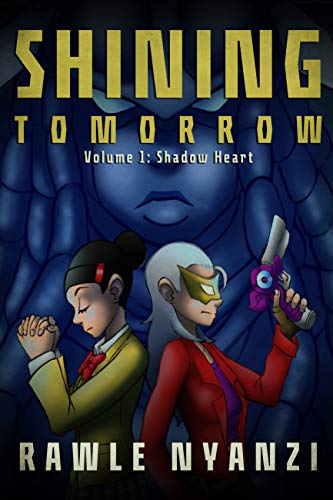
In addition to this review, friend of the blog Rawle Nyanzi has recently written the first volume in a new mecha novel series of his own. I reviewed his earlier novella Sword and Flower awhile back, which is an action packed romp that wouldn't feel out of place from an '80s anime OVA. But now he graces us with his first novel in this storied genre.

The description:
FROM YOUNG ELEGANT LADY...TO MASKED FURY! 
Irma wishes to be the perfect girl: chaste, feminine, and generous. But when a giant monster stomps through her hometown, her plans crumbled right along with the stores and apartments. 
In the chaos of acrid smoke and panicked civilians, the private military company Shadow Heart snatched her friend out of the crowd and took her captive. 
Now Irma must pilot the Grand Valkyur, a mechanical titan of steel more powerful than any weapon made by human hands. With a brilliant sword that could cut any matter and gleaming armor that could withstand any weapon, the Valkyur challenges all who dare to fight it. 
But piloting the Valkyur means using violence -- and to Irma, violence is men's work. How can she rescue her friend without betraying the feminine elegance she prides herself on?
You can find it here.

It goes without saying that I already have my copy. If you enjoy mecha I suggest checking it out for yourself. You certainly won't find another story like this whether in the sterile military sf world or in modern anime. But if Japan won't cut the mustard anymore then the rest of us will have to pull up the slack. That's just how it is. The pulp revolution continues unabated.

Giant robots aren't going anywhere, and thank God for that!

Thursday, April 18, 2019

Playlist for the Dead World

No one is united

There are a few other blogs out there that post about how music affects how they write. Some post what goes through their head when typing out an action scene or maybe what might play in the movie version of their work. This can be fun for some, but that's not quite how I picture music when it goes through my brain, or when I write.

That isn't to say music isn't fun, one of my favorite bands is the Stray Cats, after all. But because of the strange situations I found myself in during my life my views on it began to change.

When I was a younger dumber kid I used to travel at least three hours a day and all I had was my CD player and at one point, regrettably, an iPod (that's a long story I will not go into) to keep me company as I walked, rode both buses, and took the good old underground transit to get to my destination. About all I was missing was a ride on a train and plane to complete the set. Nonetheless it was a very isolating experience riding alone in a crowd through the city.

But what music helped me do was pull me out of my comfort zone as someone trying to ignore the world around me. Trapped in a moving cell it gave me little choice but to pay attention. I hated the world, didn't like my life situation, wasn't fond of people, and was a general edgelord moron. Eventually, in what seemed like pure chance at the time, music did change my life. It opened a crack and allowed me to face some of the worst aspects of my situation and the modern world and finally made me grow up.

This isn't the goofy teenager in high school trying to listen to the coolest and toughest music I could to stand out, or the boy who mimicked the radio and really wanted to fit in. I began to understand just how powerful music could be in a way that matters.

And I'll be upfront about it: my music of choice was never really metal. I know there are a lot of metalheads who come by here, and I do admit that I like some myself, but it's never been my music of choice. For one, the satanism was embarrassing for me even back as an agnostic. It was either pathetic Boomer-ish "I hate you, Dad!" slop or hipster-style irony which is even more cringe-worthy. Of course not all metal is like that but the other issue I have is that the music is constantly loud and the instrument variety is lacking outside of the occasional keyboard. My issue with listening to most metal albums is that I get bored rather fast.

That's just my very peculiar taste talking. It can be very invigorating to listen to.

There are a few bands that did directly affect in that being trapped alone on a moving prison cell full of bodies and dealing with some heavy stuff in my life allowed me time to think. And no, political songs didn't do it for me. Neither did rant songs about religion or specific issues that align with a political party ticket. If Jello Biafra's voice didn't make me want to smash my head against the bus window his try-hard lyrics would. Milo Auckerman did what he did with a better voice and lyrics that hit a lot closer to home. You can relate to others by still being yourself and not having to force a viewpoint down the listener's throat. Message fiction can exist in music, too.

Case in point, one of the first songs that really affected me, and I think many people a generation older than me was this one.

Are you satisfied?

It's not a love song. It's not about drugs. It's not even really a rant. It's Paul Westerberg talking about his life without giving any details about it. This was released back in the '80s long before I heard it and back at a time when most people thought the world was looking up and getting better. But he says something different.

I didn't know much about the band when I heard that album, which is still one of my favorites. I didn't know that Westerberg is a Catholic*, that Bob Stinson had a drug problem and OD'd only a decade later, or that the band was a staunchly traditionalist rock band that hated MTV, music videos, and even CDs. I didn't know that the band was ignored by radio because of their abrasive sound and uncomfortable lyrics that cut deep in ways pop listeners didn't like at the time. They did this without shoving anything down the listener's throat.

"Are you satisfied?" is a lyric that hits lot harder than "Are you experienced?" but one is a lot more uncomfortable for radio to advertise than the other is. It is not an easy song to listen to if your insides are a mess. Something not there on the surface amidst the glam of a better era.

To be sure, I only think rock music does this. Rap is either party music or political rants and tired whining about the streets. Metal is either loud triumphant declarations or lame satanism. Jazz is meant for you focus purely on the sound, same as Classical. Modern pop music is fluff meant to empower the listener with lies about being special in a world where drinking yourself to death and being a slut amidst a sea of hedonists is a way to find meaning. Rock music can engage in all those as well, but you don't see many groups that try to find a bit more to life beyond the surface. Few take advantage of what they have.

Marshall McLuhan called rock the music of the city with its loud and distracting sounds, and that's how it represents modernism so well. When modernism has been such a failure it is up to rock musicians to portray it as it is. And some do it, and do it quite well.

Is it someone who looks down from above? With a view of the rain

Urge Overkill was another band that had that sort of affect on me. During my music hipster phase I consumed much terrible junk that I was told was great but actually wasn't at all. Amidst that torrential downpour of mediocrity I stumbled across UO right in the middle of it.

Their history is strange. They started themselves as a hipster indie band that was an ironic goof on the excesses of '70s rock. As a result their first two albums are pretty much trash with few highlights. A bunch of noise, winking, and posturing. But eventually their desire to be real and genuine pushed them forward out of the indie scene (and pissing off a lot of people who deserved it, like Steve Albini) and forming a proper sound. Their first major label album, Saturation, was a genuine rock n roll record with clever lyrics that had no problem skewering excess and hedonism. It did this while still providing plenty of pop hooks. The song Positive Bleeding, for instance, is about being so liberal and free that you can choose when you want to bleed and die and how wondrous that fact is. Nonetheless, the album is still their most popular and quite excellent.

However, it was their second major label release (and for many years, their last album) Exit the Dragon that really did a number on me.

After the success of Saturation in the early 90s when alternative rock was at its commercial and quality peak, the band fell victim to its own success. They became what they were originally parodying. Drug problems, drinking into blackouts, and crushing depression nearly killed them all. Now they understood exactly what they were making fun of and it wasn't as funny as they thought.

What happened was that they put out Exit the Dragon in 1995 right at the end of the alternative explosion, really signalling the end of the genre. The album is completely unlike anything they did before. It starts with the first track acknowledging the existence of evil and ends with the final track about death and ascending to the afterlife. The album is a journey through rock bottom and clawing out and reaching at the other-side at the end and finding hope in what comes next. This is not something Nirvana or their peers could ever write. I enjoyed the album so much I even wrote a post on it a few years ago.

But the album is not very comfortable, despite its sound being their most accessible, both of which contribute it not being as liked by their hardcore fans. There are a few jokes here such as Need Some Air poking fun at the writer's own paranoia and crushing fear of the modern world, but there are no more parodies. There's no satire. Evil exists and it wants to kill you. Until you accept that you will never escape the pits of despair or a world that cares nothing for you. That isn't the kind of rebellion the record companies approved of.

At the same time I discovered the second (and best) Violent Femmes album, Hallowed Ground. While the band was mostly a jokey bunch of wiseguys having fun writing songs about girls and teenage stuff, their second album is about death by sin and choking pressure of the evil of the world. It was nothing like anything else they ever did before or since. Outside of one track being about girls (which honestly does not fit here) there is nothing that the band is known for. And yet it is their most powerful work without question.

I was so glad when I died

Of course because of this unpleasantness, the album is routinely ignored. The above song is never even included in any of their compilations despite being their best track. There is a bit of a pattern with the music in this post.

It was Kurt Cobain who made "darker" music more acceptable, though he did so the John W. Campbell way of stripping out the Gothic, the soul of the rage against the modern age and replacing it with a hollow facsimile of what came before. In this case he took out the justified anger, the rich sounds, and unique song writing of a deeper tradition, and replaced it with his bleak hopelessness, sick fetishes, and generic pop punk sound. He made rage corporately approved. It's no coincidence that every band inspired by them is garbage. Cobain made for a good pet rebel in making others think he stood for something righteous. That's what the labels wanted you to think and they cashed in big on you being unsatisfied.

And, if you noticed, they never sold you the cure.

That was the early '90s when record companies tried to cash-in on the fall of the modern world by slapping a flannel dressing on it, throwing in some generic rage, and manufacturing nihilism for the youth without the cure for a decade. Soul Asylum even wrote a song about it. Chart topper, of course.

This post isn't about those bands. This is about those who weren't content with just sneering and rolling in the sty as if it didn't affect them. After the '80s there were a few groups that managed to strike at something outside the acceptable target zone. If it wasn't about killing yourself through hopelessness it was about killing yourself through hedonism or blaming certain political or religious groups for their troubles thereby missing the mark. There was no hope of escape from this self-fulfilling trap. But a handful did break the mold.

Newer bands of the '90s such as Blur or the Hives managed to write songs that went a bit beyond the typical pleasure-seeker or misery porn tropes. The former helped jump Britpop as a reaction to the slimy pit of rock music at the time, though that eventually went full hedonist in response by decade's end. The latter aided in kickstarting the garage rock revival a decade later though label interference prevented them in really putting out as much as they could have. As a result I don't think either band really had as much success as they could have (though the former was very popular in their native land) with Blur's most famous piece being known as the "Woo Hoo" song.

It was almost a parody of what they were.

This isn't to say fast paced fun songs can't give similar experiences beyond throwaway thrills. For instance I was into Green Day before they became a political mouthpiece, though most of the "punk" movement lost their way at the time, as well. We were all miserable and searching for hope. Then when political parties exchanged the world was just fine again! Everything was all better! Funny how that worked. All you need for inner peace is to vote the right way. So simple!

Once these bands betrayed their rage as being from a political party and religious group instead of a sign of the times I instantly lost respect in them. They missed the forest for the leaves. They were posing. The songs that reach far past political party lines to strike at the heart of the issue to unite groups are the most powerful. You are more than what you vote for or against. A slogan is a sentence, not a way of life. I thought these bands knew this.

Those who reached for more could still do it within the bounds of a fast-paced pop nugget.

Anyway, I ain't got no place else to go

I'm choking on the silence and I want to scream out


Say something. Say something else.

She was still awake

Doomsday visions of commies and queers

Can't control the state I'm in: go back in line and repeat it again

If any of that sounds depressing to you it's because it should. This is supposed to be the Blues: where Rock came from. A way to deal with the grime of a world soaked in sin by a cathartic expression of noise. This is what made the music click so well with an audience who understood things aren't as they were meant to be.

The world is a mess and things as they are remain utterly hopeless. It will never satisfy or be good enough. It's a wasteland. Things are bad and they're getting worse. Those who create a career playing a secular music style will have to face the fact that there is nothing waiting at the next bus stop and eventually you will run out of gas stranded in a desert with people you don't know. Perhaps being trapped in such a unique situation allows us the grace of understanding it in a way our thick skulls would allow it to sink in.

None of these bands are saying any of those messages are good things. In fact, they all agree that things are terrible. This is the most honest way to portray a purely material existence. For a rock band they are tasked with singing and writing songs about the world around them and connecting with us in the audience. Were they honest they would either have to sing songs about sex and drugs and pretend that is all to live for or they would have to face the fact that none of that really means anything at the end of the day. You're going to need something more, or you're going to begin looking at nooses to wear.

Raging against suicide culture is the most moral thing to do. That might be why those bands all helped me through tough times while those like Cobain and his ilk in the corporate approved pack only made me sicker. It was also probably why no bands with that more honest message were ever given any radio play, and never will.

I think you can trace this to pop culture's treatment of rock music itself. While mergers and payola ultimately killed rock in the mid to late '90s I think there was more to it. The '70s was filled with fun music about hot girls and having a blast with the guys, but by the '90s Gen X was out into the world they and were being too honest with the state of things. They didn't want to sing songs about the wonders of heroin or whisky or whores when the world was burning down around them and no one appeared to notice the flames. As someone in Gen Y who saw things getting worse and worse and didn't see any hope, I related to what they were putting down. Perhaps a bit too much.

Then when Nu Metal and Bubblegum pop filled the airwaves as if plastering over unsightly holes in the drywall with trash like N*Sync trying to put the genie back in the bottle most of us finally lost the last shred of hope. This really was a dead end. The record labels pounced and purged the bad thinkers and that is why gangsta crap and build-a-bear pop straight out of 1998 is still all the mainstream labels put out to this day. They want you locked in a cage with despair and hedonism. Can't let pesky truth get in the door.

Now rock music is a memory, pop music has remained unchanged since 1998, and the industry is still trying to pass out sugar-coated cockroaches and garbage to an audience that has long since walked away.

As I write this I do remember the attitude of music fans being rather dour throughout the '00s. To this day I have never met anyone who didn't grow up in that miserable time ever seeing that decade as anything good. Especially in regards to music. Most of my music choices during that time came from the '80s and '90s with a few choice pre-Beatles bands for good measure. Did audiences tune out because music stopped being honest and began being used as social brainwashing instead? A perusal of your average pop "hit" these days would easily answer that question.

Go to sleep, wake up, have fun, then go to sleep again. Work sucks, right? Well maybe that one night stand will fix that itch. But don't worry because the weekend is just ahead and you can have all the junk you can jam into your body then. Don't think about it and just keep smiling.

This isn't a way to say that fun music does not have its place. It absolutely does. Music from before the British Invasion did this quite well. There's nothing wrong with escapism at all, but the pop music of today isn't escapism. It's delusion. A way to paint over the cracks while glorifying what caused them in the first place and encouraging deeper fractures. It isn't meant to raise anyone, but to keep them down and asleep at the wheel. It is music for a dying society.

True escapism in music is from those who aim for higher things. Raging against death is noble, but so is celebrating life. And life is about more than going through the motions in order to be able to afford a coffin when you're dead. The love of true romance, of better days, and of the big questions, is worth your time. That is what pop music does best, and hasn't in decades. Might be hard to get across with the same group of corporate-approved songwriters for every single song and from singers who are completely without original thought or ambitions.

I can give you examples of exciting, lighter music meant to lift the audience. There is plenty of it, even if it doesn't feel like it these days. There is a way to be honest and uplifting without having to rage at the way things are. But no one knows how to do it these days.

Something calls to me, I know

Will I not pass the test?

I think I know some things we never outgrow

This is where we're coming from, and we're not the only ones

This was a bizarre post meant to highlight how music can affect writers in ways beyond plot or character ideas, but in how it can shake you awake and inspire in whole other unexpected ways. I've been big into music since I was a kid, and although the candy-coated Boomer stuff of the mid-'60s and early-'70s has long since fallen out of favor with me I am amazed at how powerful music can still be.

Inspiration is not an easily quantifiable thing. I don't listen to a song and get inspired to write a story. I listen to a song and it gets me down a mental track that allows me to have inspiration. Though I suppose this works with any piece of art. As it should be. Art is a conversation, after all. We're all speaking to each other here, no one is in a void. No matter how much the record companies wish it were so: no one listens to music to indulge their vices--they do it to connect with others.

We aren't a bunch of strangers alone in a crowd hoping to just get through the day so we can get to the next one. We watch shows and movies about others struggling to get through far worse than what we do. We listen to music hoping to be inspired to greater heights beyond these. We hope and we dream to escape the wasteland.

Who knows what sounds we're dying to hear that we just can't yet imagine? There's much more to experience. It's going to be grand, and satisfying.

Now it's time to fill up all the cracks inside of me


*Interview here. I recommend reading it for a glance at what Rock was at the time, and how some music critics were. For instance, the '90s music critic hatred of hot blooded rock n roll is alive and well with the dismissal of their very influential early albums as "unexceptional" only in recent years to rate them up there with their classics. Nonetheless it is a good interview that touches on good questions and subjects.

Relevant excerpt:

Do you think growing up Catholic affected your songwriting at all?
I suppose it did, because it affected my life. It affects my way of thinking and everything. I mean, I’m still a religious person. I believe in God, although I never sit down to write “God” songs. I have my belief, and my faith, and I keep it private. But I try to live right and treat people fairly, so I suppose that comes through in the music.

I had a feeling most of the later and post-Cobain punk, rock, and grunge acts were missing something he had. Not one of them could write about social decay like he has then turn around and write a cheeky track about a cute cashier or a love song someone he saw once on a sky-way. None of them can make a bright and big hard rocking song like this:

I think big once in a while

Full lyrics for this one, because they're needed:


Yeah, kid, it's a-really hip 
With plenty of flash and you know it 
Yeah, dad, you're rocking real bad 
Don't break your neck when you fall down laughing 
Donna, wanna, Donna 

Yeah, I know I look like hell 
I smoke and I drink and I'm feeling swell 
Yeah, I hear you think it's hip 
But Rock don't give a single shit 

Yeah, man, it's a-hip, you know what I'm saying 
It's a-hip, you know what I'm saying, and I hear it
My heart aches, it's a-looking for a lolly
Looking for a dolly, can't you hear it? 
Wanna be something, wanna be anything!

Yeah, I know I feel this way 
But I ain't gonna never change 
Yeah, I hear, I think, I know 
Rock don't give a shit, you know 

You're my favorite thing 
Bar nothing! 

I think big once in a while


And without that love Rock is dead.

For now.

Thursday, April 11, 2019

Saturday Morning Sundown


One small loss of the modern age I've always been interested in is the death of the Saturday morning cartoon. For over half a century they have lingered in the memories of just about everyone alive in the western world as part of some long ago age that will never return. But nobody talks about them beyond nostalgic musings. The problem with that is they require a deeper look than that. I don't think it's clear exactly why they do not exist anymore, and it is important why they do not.

Ten years ago I could have been safe in assuming that anyone reading this would know what I'm talking about, but just like the mall, arcades, and rock music, this is another part of twentieth century culture that Gen Z has never truly experienced. They've been gone for a long, long time. It's a bit hard to believe but it's been nearly two decades. This is another tiny piece of culture lost to the mists of modernism.

But the question has always been to ask why they are gone. Why were they executed, buried, and forgotten? Because everyone knows they did not die a natural death, but no one will talk about why that is.

There are no books on this topic despite the plentiful material that is sitting out there. Regrettably, despite the nostalgia obsession of Millennials and youth glorification of the Boomers, no one has deemed it suitable to chronicle this phenomenon that towered over the childhoods of multiple generations of children before being take apart and forgotten. That is strange. There are a handful of books and articles about sharing memories of lost youth peppered with comments from Boomers about how the '60s (of course) were the Golden Age of Saturday morning cartoons or general summaries of the four decades of the practice at its peak from the late '60s to the end of the '90s. But that is all. There is no in depth look at where they came from or why they are gone.

For the interest of being fair to anyone who might read this I should first define what I'm talking about.

Saturday morning cartoons were not just cartoons made to air on Saturday mornings but entire blocks the major networks formed in order to grab kids' attention and hold them while their parents slept in or got ready for the day ahead. It was a prime focus for them. Every major network back in the day had a block, not always with the same title through the years, for their programming that competed for the majority share of ratings both for advertisers and for the attentions of kids. In other words Saturday mornings were the domain of children. Just like with the mall and arcades this completed their triumvirate of childhood past-times for those who grew up in the second half of the twentieth century.

It wasn't just profit and toy sales that made them important. These blocks also helped preserve works that would otherwise be forgotten.

Cartoon blocks kept the old Warner Bros. and MGM movie shorts alive thereby keeping Bugs Bunny and Tom & Jerry in the public consciousness years after they would have otherwise been lost and forgotten. Reruns of old series were given new reprieve and found wider audiences. That canard about kids not liking to view older works was a blatant lie back in the day. Before the '00s kids would watch anything as long as it was good. Daffy Duck, Rocky & Bullwinkle, Adam West Batman, it didn't matter what it was or what era it had been made in. They watched them all if they were good. This preservation of the past is routinely ignored these days but no one ever questions why it has shifted to the vague and unprovable "kids don't like old stuff." No one questions it even though it is observably false.

Best of all this created prime creative ground for fresh ideas and up and coming creators to come around and make something new. Shows that would never have otherwise existed were brought to life in this highly competitive area. There were new ones every week and season. Constant creativity. Kids had their pick of whatever they wanted to watch and there was a lot to choose from. In essence, the Saturday morning block was the Golden Age of western cartoons. This is inarguable, if ignored by hacks today.

It was a perfect storm for everyone. Advertisers and networks had prime audience material and kids had something to occupy their Saturday mornings (and a reason to not sleep in!) to look forward to on their big day off. After a hard week in their chain-gang schools it was nice to have something to look forward to. It worked out for decades.

But of course this was the western world in the 20th century. Once something successful exists there has to be someone to come in and ruin it for everyone else. Someone had to destroy it. And that is exactly what happened.

In the 1960s a group calling themselves The Action for Children's Television (ACT) was formed by Peggy Charren to fill this void. She did not like commercialism, violence, or anti-social behavior, in cartoons and wanted more educational programming instead. To do this she shoved her nose in and forced companies and the government to listen to her very special demands and alter the industry to her whims. ACT was the PMRC of cartoons but worse in that it ended up killing its medium in the end. She crusaded for decades with her vague quest to protect the children from escapism and fun.

But it wouldn't be an activist without clear bias. She was against censorship for adults and was for more sexual content on television. This woman's views on censorship were hypocritical at best.
Peggy Charren, head of Action for Children's Television, said the decision was chilling. "Too often, we try to protect children by doing in free speech," Ms. Charren said. "Indecency to some people might be sex education, and that's the problem. 
"Who defines indecency? The censors define it."
Rules for thee and not for me. Adults should be able to watch pornography on mainstream television but children can't watch a hero shoot a villain with a gun. Sex can be educating but violence can't be. This is how the world was supposed to work in her mind. And busybodies listened to her.

For those who don't get it, because I still see such arguments today, there is a difference between portrayals of violence in stories as opposed to sex. One is useful and the other never is. Violence is a fact of life that exists in stories to show that some threats cannot be solved with hand-holding and positive thoughts by the campfire and allows confrontations between heroes and villains to hit fever pitch. Nudity mostly exists in stories because the producer wants an excuse to masturbate and not look like a pervert. One has far more story potential than the other.

This is not to say that violence cannot go too far. Gore is rarely used correctly in most stories and should never be used for children as they do not need to see it to get the point of any story across. In a more complicated adult yarn it might have its place for effectiveness as they are more mature and able to understand the intensity. There is also nothing wrong with looking at an attractive person dressed sexily in a story for adults but explicit sex itself is never necessary. This should be obvious. Kids don't ever benefit from any sexual content in their stories. It says something about which of the two prudes such as Charren were more obsessed with ejecting from entertainment.

Clown world has been with us a long time.

As you can tell, throughout the twentieth century there was a push for more degenerate material on television for general audiences. The Rural Purge in the early 1970s was specifically created for social engineering purposes in making the city look cool and hip and the country to look antiquated and stupid. Of course crude sex jokes and racier plot lines soon followed. Ratings drops weren't far behind as were fractured audiences which continued on to this day. Note that there has never been any "Urban Purge" to date despite this failure. That's what happens when you create something intended to split the base.

Whether you like having more sexually explicit shows is a bit beyond the point. That is an argument worth having and discussing, but all of those in favor of more open portrayals of sex and drugs for adults on major networks at the time were also against portrayals of violence and commercialism in any forms in programming for kids. Kids should be kept in a hermetically sealed bubble prison and adults should be walking the red light district every time they leave the house. This act of talking out of both sides of their mouths is what led to the confused mess western culture is in now.

And for those of us who grew up with those cartoons . . . they were tame, even at the time. Compared to a network series like Miami Vice in cartoons like G.I. Joe conflicts are positively pacifistic. Compared to a comedy like All in the Family cartoons like Muppet Babies and its pop culture comedy was wholesome for the whole family. If anything the Saturday morning cartoons already offered healthy alternatives for those that didn't want that hardcore (for the time) content in their material. It all looks antiquated now because the push for more extreme content never stopped. This helped destroy any continuity in visual culture and the arts. But for the time their quest was asinine. There really wasn't anything to complain about on a moral level. But instead busybodies like Charren insisted that adults be served under-cooked sloppy junk food at a burlesque house and children sanitized and carefully manufactured pills served without any dessert in their locked rooms.

All to make a better and more free world, of course. What a bang up job that ended up being.

It didn't make any sense, but Boomers rewarded her regardless by giving her a Trustees award from the National Academy of Television Arts and Sciences in 1989 and passing an act named after her group to censor children's cartoons in 1990. This eventually spread to killing the form dead by the decade's end. And of course they gave her a Peabody in 1991 for anyone who ever thought that award was worth anything. Because of this she disbanded her group in 1992 after getting everything she ever wanted.

She also received a Presidential Medal of Freedom in 1995 from Bill Clinton. All for taking freedoms away from networks, advertisers, and children. Yes, from the same administration whose members helped to spearhead the PMRC. You can't make this up.

In fact, this was one of the times even classic Simpsons got it wrong:


Those pushing forward educational cartoons and censoring what kids wanted were members of ACT who were rewarded for the deeds by Bill Clinton's administration, the same one certain hack Simpsons writers in a commentary track insisted was one of the greatest presidents ever. Yes, the man who helped to murder their medium was one they look up to without a hint of self-awareness. The straw-man in the above clip is just that. It's simply not reality and Peggy Charren had no problem with degeneracy at all.

From the above:
"The activist, ignoring the surveyed facts of a substantial increase in children's programming, lacking congressional approval or court precedent," Quello says, "are playing the emotional 'C' - the children's card - for all it's worth. From a First Amendment perspective, they're dealing from the bottom of the deck."
Won't somebody please think of the children, indeed. The Simpsons didn't even realize who they were parodying with that one.


Swing and a miss, fellas.

This was after the 1980s was basically spent as a war-ground between Ronald Reagan and his chairman of the Federal Commission Mark Fowler against Charren's group because the former dictated that the marketplace should decide which children shows live or die and the latter decided the kids should be forced to watch only what was good for them. Of course she would be the one to decide what that entailed. She was the one arguing for good citizen propaganda while creators were still trying to put out what they wanted despite her interference. If you want to know why the '80s had so many adventure shows that previous decades didn't, this was the reason why. It was the closest they ever got to being able to make them the way they wanted due to audience demand being louder than ever. But it wasn't enough. Several shows were still successfully barred from air by ACT and many more were altered by her group's interference. So much for a group that prided itself on being anti-censorship and has been ignored by free speech champions to this day.

Peggy Charren won despite the people, the creators, and even the law at the time, being against her. She was shouted down and told she wasn't wanted. Subversives never admit defeat, they just sneak in through the back door. ACT succeeded in censoring Saturday morning cartoons entirely by government-mandated morality and the audience and advertisers left. Now they no longer exist.

And look at all those alternatives for kids around now.

What ended up killing Saturday morning cartoon blocks was nothing as obvious as changing trends or demographics, they did after all live for near half a century, but because of moral busybodies and self-proclaimed paragons of justice. You see, cartoons needed to "teach" children and instruct them in the proper ways to be a good citizen and worthwhile human being before becoming porn addicted and drug-addled adults getting drunk every night in the pleasure center. It never made sense, but then it was never meant to. The important part was that they won and you lost.

Peggy Charren led the charge to require cartoons to pass junk educational standards which ended up killing off both audience interest and companies from producing works. No one asked her to do this, and she had no right to do it either. Instead of entertainment cartoons were now required to foist proper education upon their audience to continue their school work into the weekend--the audience's only time away from their glorified prison cells. She took away what they wanted and the elite applauded and rewarded her as she did this heinous act.

Doesn't that sound familiar.

Of course Charren is not the only reason for the downfall of the practice of Saturday morning cartoons, but she led the charge in making them targets and western governments and elites helped her to make it as difficult as possible for them. Once she got in the damage from everything else flowed from there. Saturday morning cartoons still otherwise exist in other countries such as Japan, after all. Heck, because of her interference Japan had free reign over the rest of the world to import their uninfected anime which have long since overtaken those from the west. Want to know why anime has taken over while western cartoons died? You can thank Charren for that.

Many production companies and brands were dead by the end of the '90s, but few were able to come up after them due to these new restrictions she imposed. They turned to other avenues such as first run syndication and after school blocks. Eventually these blocks had to go away to make room for more profitable endeavors thanks to junk standards and practices weighing them down. Kids were the ones who missed out.

By the mid-00s Saturday morning cartoons were completely dead. Even afternoon blocks such as Fox Kids or The Disney Afternoon didn't make it through the '90s. The only networks that still aired cartoons on Saturday mornings were cable networks like Nickelodeon or Cartoon Network, both of which did not put anywhere near the focus the major networks did and are now shells of what they once were. Now there are no blocks remaining for kids to watch or get excited for. This is the end result of ACT's crusade.

The problem with looking back is not that you get trapped in a prison of nostalgia but that you start to see familiar patterns at work used to take apart good things that should still be around today. The nostalgia charge is a smokescreen for those in the Cult of the New pretending that things are better than they ever were and that the only reason one would ever want to look back would be to live in the past. They do not possess the means to self-reflect on anything. Don't live in the past! Things are better than ever! You're only looking back because you can't handle the wonderful future you live in now. You're afraid of change!

This couldn't be further from the truth.

There's a reason Gen X are overly cynical, Gen Y are overly nihilistic, and Millennials were taught to never look back and are incapable of doing so outside of empty novelty. How much has to be lost before it can be admitted that maybe a wrong was made turn somewhere? Even in this little sandbox of western youth no one is willing to admit that it should not have been filled in and paved over for an empty lot leaving the kids with nowhere to play. No one asks why and therefore nothing improves.

Instead we play definition games because we no longer have a shared vision of truth and are all acting in our own interests instead of working together. It's all just a bunch of individuals screaming at each other and using their muscle to get what they want and everyone else be damned. It will take more than getting the right individual in charge to fix this mess but a whole revamp in the way we see things. No more downhill slide. That's going to require a level of self-reflection we aren't currently capable of.

Nonetheless, it never should have gotten this far in the first place.

After Charren died there was not one piece written to charge her with what she did. No criticism, no reevaluation, and no reflection. Sure she might not have been John Money, but what she did had no positive affect on the state of the world. We are worse off due to what she did. But I suppose you can't expect much from journalists or the media these days. These are the same people that rushed to throw teenagers wearing red hats under the bus and gleefully insulted Norma McCorvey when she died due to her views. These people are not on your side. Expect worse things down the road due to their behavior. Covering up the past is only a part of it.

My youth was not perfect and I do not wish to ever go back to it. But by the same token the current generation has nothing I did when I grew up. They objectively have less, and that is not acceptable. For all of Charren's obsession with censorship children can now get exposed to pornography via one bad search term or click and the uncensored adult television she wanted is a disgusting wasteland of bland ideas, ugly desaturated colors, and hopeless themes. Peggy Charren and ACT failed the children she was apparently out to help and instead left them with nothing but a crater of filth where better things once were. There is no possible way I would have ever imagined things being this bad for future kids when I was an eight year old watching Garfield & Friends on CBS back in the day. Now what do they have to look forward to?

The older of us have to emphasize this to those we failed. Nothing we had as children is available to the kids of today. None of it. It was all taken away from them and disposed of before we even realized what happened. And we can't make up for it so easily. The old days are gone, and they aren't coming back.

So talk about it. Write it down. Share it. We can't hope to make anything better until we admit how bad we let things become. It's not hopeless, not yet, but we owe it to those who lost out to show them what they were robbed of and what we lost due to mindless progress. Saturday morning cartoons are just a piece of it. Maybe those coming up can build something even better.

We've got a lot of work to do, and a lot to make up for. This time let's try not to mess it up.

Thursday, April 4, 2019

Still Fighting: Sixty Years of Shonen


We talk a lot about forgotten traditions and warped ones, but how about those still holding the line? You would be surprised just how well following a formula that works could hold tight for so long but as those in Generation Y know, Japan had managed it for an absurdly long time. Nowhere is this more obvious than in their most popular export: the shonen story.

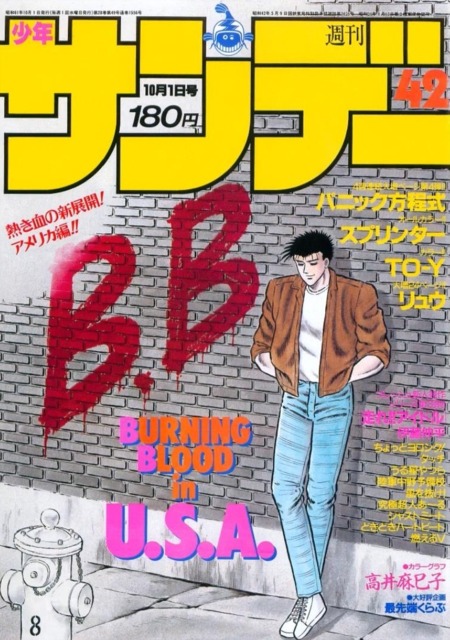
In March a milestone was hit for two of Japan's most popular magazines. While much was made about Weekly Shonen Jump reaching its 50th year of creating hits in 2018, this year marks the 60th anniversary for both Weekly Shonen Magazine and Weekly Shonen Sunday. It is hard to imagine from our perspective how a tradition could go for so long. These magazines started well after their format had all but went extinct overseas and yet they are still going to this day and running series that continue to get exposure all over the world. If you know Japanese entertainment then you know at least some of them.

There's that pulp tradition at work. Tales of action adventure never date, aesthetics be damned. No matter how much subversives try they can't stop it.

Weekly Shonen Magazine (WSM) is unique in that it is most known for running sports series such as Ashita no Joe, Ace of Diamond, Baby Steps, and Hajime no Ippo: Fighting Spirit, and romcom/ecchi romps such as Love Hina, School Rumble, Negima! and Yamada-kun and the Seven Witches. It's quite the split, but since Weekly Shonen Jump more or less owns the action genre, WSM managed to capitalize on what they had traditionally missed.

At the same time it did run its fair share of well known classics of the form such as the sf robot action story Cyborg 009, the tokusatsu Kamen Rider, one of the first cyborg comics in 8-Man, the highly subversive and controversial Devilman, the mega popular martial arts comedy Kotaro Makaritoru!, the thug with the heart of goal hit Shonan Junai Gumi and its sequel Great Teacher Onizuka, mystery Kindaichi Case Files, parody of tough guy manga Cromartie High School, and the most recent redeemed bully chronicle A Silent Voice. There is a lot more I could have mentioned that I just didn't get to, but the magazine has lasted for a reason.

In case you were wondering the magazine also ran traditional action shonen action series as well. The most infamous being the late 90s trio of the hired muscle escapades of GetBackers, the fantasy quest Rave Master, and split personality series Samurai Deeper Kyo, all of which are far more well known by their anime adaptions overseas. They were the first to really break WSM's name outside of Japan. But all three pale in popularity to the two more recent action series you've probably heard of named Fairy Tail and Seven Deadly Sins.

While it's not as popular as Weekly Shonen Jump is, you can clearly see how it competed with it for so long. There is something for everyone. The magazine is no slouch in content.

Of course the rise of digital means the physical edition's circulation has dropped in recent years it hasn't stopped the magazine from producing hits. It's still well known in Japan to this day. If anything Weekly Shonen Magazine should be more well known a name overseas than it is. Chances are if you're a consumer of anime you know at least some of what was mentioned above.

It put out many great series still being rediscovered today. See if you can recognize some of these titles!


The other magazine celebrating its 60th anniversary is Weekly Shonen Sunday. Sunday is a bit different than the other two of the Big Three in that its focuses are a bit more niche and catch all for whatever doesn't fit in the other two. Mostly it goes sideways in obscure directions for content. If it's weird or off the wall you are more likely to see it in Sunday.

Despite that strangeness, the reason it is called Sunday is because it is meant to evoke the calm and rest the reader would feel kicking back and relaxing. It actually comes out on Wednesdays. But the emphasis on Sunday tends to make the magazine focus a lot more on slice of life series in between its weirder content.

Because of this core concept Sunday has never been the most popular of the Big Three but has always been in third behind the other two. That said, when Sunday gets a hit it is always a titan. Of the three I liken it the most to that one shelf in the old comic store that always had the weirdest yet most engrossing stuff in the back. Because of this Sunday is overlooked way more than most would figure, especially overseas.

For some bizarre stuff you have Osomatsu-kun, Wonder Three, Blue Submarine No. 6, The Drifting Classroom, Urusei Yatsura, Hono no Tenkosei: Blazing Transfer Student, Detective Conan, Ranma 1/2, Kyo Kara Ore Wa!, Mai the Psychic Girl, Karakuri Circus, Cross Game, and Mermaid Saga. Many of these I would deem classics and I'm certain most readers will have heard of at least some of those.

Their straightforward stuff meshes in well with those. They even ran series by Mitsuru Adachi, quite possibly the most popular sports manga artist with works such as Touch, H2, and Rough. This isn't forgetting Major by Takuta Mitsuda about the life of a boy baseball player who the manga follows towards adulthood. You'll find a little bit of everything in Sunday.

But, of course, it wouldn't be shonen without traditional action series. You can't forget about Tezuka's Dororo, the classic mecha Giant Robo, supernatural buddy action Ushio & Tora, Isekai favorite Inuyasha, the unique mecha Getter Robo, the revolutionary manga version of Mobile Police Patlabor, the ninja action Flame of Recca, pulp adventure favorite Spriggan, monster hunting Ghost Sweeper Mikami, the obscure scientific experiments of Project ARMs, the Pokemon meets Ushio & Tora of Zatch Bell, the weird demon exterminating of Kekkaishi, and the Arabian Nights flavored Magi: the Labyrinth of Magic, just to name a small sample of what Sunday ran. Even their action series are a more on the weird end.

See if you recognize some of them here:


So why make a post on this? After all, certainly anyone interested in anime or manga knows these series. But the answer is obvious. To be sure that there is a place for tradition in entertainment and the arts. 

Too often we're told something is out of date, or antiquated, or even irrelevant, when what they are talking about is aesthetics. Does going back to black and white coloring or 1960s character design make sense? No. But that was not what links all the above series together despite their creation dates, is it? That's just an aesthetic, and not the soul of art.

For instance, when someone says they want new Star Wars, do you think they mean the same plot as the original movie wrapped in a new garb or a fresh plot wrapped in the original's garb? Which one do you think takes more effort? Which one do you think follows closer to a tradition instead of pandering?

How else is new art created then by following old formulas and the artist adding their own stamp to it? That is how you get 60 years of tradition with no end in sight. There is nothing in the western world with that level of commitment as Japan.

WSM and Sunday still run series just as they did back when they started except with more modern art designs (though not always) and different cliches (though, again, not always) and have put out hits for decades. They have managed just fine.

No one in Japan is eager to overturn tradition, and they benefit from it being around. Though the audience has moved to digital and physical is sliding away they are still there and as big as ever. Even overseas audiences have remained since Japan first broke in back in the '80s. Anime and its moe problem aside, manga doesn't have the same issue. It's still cleaning house and giving readers what they've wanted since the beginning.

Where do you see that attitude in western art today?

Certainly not in comic books that are hemorrhaging money while insulting anyone who pines for storytelling and art from the form's peak. Not in video games with AAA lobotomizing gameplay and player choice while insulting customers in their advertisements. Not in the publishing world where authors go on social media to insult customers who voted wrong and then telling them to not buy their work--something a Japanese writer would never do. Western art is sick and in need of cleansing.

A traditionally fresh attitude is something you can only get from the newpub types such as the pulp revolution who are more about forging that patron and artist bond anew and continuing on from where we left off.

Much is said about how anime is the last bastion of entertainment that isn't imploding, but it's really manga (which gets adapted to anime) where the source of that is. And until dying western companies begin invading the east, God forbid, it looks to remain that way for the foreseeable future.

Unlike how the pulp style was abandoned for "respectable" styles that aren't respected by anyone who matters and allowed western entertainment to fall into the rut it is currently in, manga kept its head and went the distance instead. And now it has taken over the worldwide stage.

So there is something we can learn from Japan and its sixty plus years of tradition in the arts. We can learn what we lost, go back and pick it up, and start anew. Until we do Japan will continue to leave everyone in the dust.

We're gonna need quite the revolution to catch back up again, but we can do it. We just have to remember what we lost.

Tuesday, April 2, 2019

Signal Boost ~ "Hollow City" by Kai Wai Cheah


We've got a live one for you. The next Heroes Unleashed book is here! This is the first in a new series by a Dragon Award nominee and it's quite the story. Hollow City is the story of Adam Song, a superhero cop with a score to settle.

You can get your hands on it here.

The description is as follows:
Six kills in six years.
Super powered cop Adam Song has dedicated his life to the law. In the military and the police force, Adam ruthlessly protects the innocent. 
But this time he’s killed the wrong bad guy. Now the local drug lord’s son is dead, and the boss is out for Adam’s blood. Even his secret identity won’t keep him safe. The police department hangs him out to dry, his years of exemplary service forgotten. Adam must take justice into his own hands to keep his family safe. 
Because Adam is a Song. And Songs take care of their own. No matter the cost. 
When does justice become murder? And just how far will he go to protect his clan? 
Dragon and Hugo Award nominated author Kai Wai Cheah steps onto the superhero scene with his debut Heroes Unleashed novel. His characteristic fast-paced action and attention to detail brings Adam Song and the Chinatown of Hollow City vividly to life. 
What makes a straight-laced hero cop go rogue? Buy the book or read it in Kindle Unlimited today to find out!
You read that right, this is a good 'ol fashion vigilante story. And if you know the author then you know he can deliver on it and then some. Heroes Unleashed is not like any other book universe you've seen, and this book is proof.

From what I've seen the author plans to take this one to some very cool places. You're definitely going to want to follow along.

Have a ball with this one, folks. It's well worth your time.